
Oregon

Portland Police Go Easy on Antifa…Again
Late on a Saturday evening, chaos erupted outside the U.S. Immigration and Customs Enforcement (ICE) facility in Portland. A large group of masked Antifa dressed in black clashed with conservative activists — one of whom wore a “Make America Great Again” flag. Federal agents fired rubber bullets and used smoke grenades in an attempt to break up the confrontations. The violence left several injured and reignited questions over the role of police in controlling unrest. Threat at the Gate What began as a demonstration quickly spiraled out of control. Witnesses described a chaotic scene as both sides hurled objects and shouted across barriers. Federal agents stationed at the ICE facility responded with crowd control measures to prevent the building from being overrun. Despite the heavy presence of law enforcement, the violence continued for hours, according to Breitbart News. Escalation in the Early Hours As the night progressed, tensions only intensified. Antifa threw fireworks and smoke bombs, and the masked group surged toward the facility’s entrance. ICE agents, facing a volatile crowd, deployed forceful deterrents to keep violent offenders back. Meanwhile, local police stood by and observed. No arrests were made during or after the melee. The Portland Police Bureau later stated that officers did not observe any crimes that required immediate action. (MORE NEWS: Rebuttal to Hakeem Jeffries: When Your Own Words Go Too Far) Why No Arrests? The lack of arrests triggered widespread criticism. City residents, reporters, and peaceful protestors questioned how a large-scale brawl could occur without a single person being detained. Police officials defended their response, explaining that their priority was to maintain safety and avoid escalating tensions. However, others accused the department of turning a blind eye to politically motivated violence. Video footage circulated online showing masked rioters standing behind city officers as federal agents tried to regain control of the scene. Funding, Structure, and Allegations The clashes appeared to be part of a larger, organized movement rather than a spontaneous protest. Investigators have pointed to potential funding and coordination among activist groups, including Antifa. Reports claim that several well-known advocacy networks and donors have supported these riots, possibly channeling funds through nonprofit organizations. Federal officials have also said that foreign contributors could be involved, adding another layer of complexity to the unrest. The Department of Justice has stated that it is actively investigating how these groups organize and sustain their operations. 🚨 Make no mistake: Antifa is a radical terrorist organization that explicitly calls for the overthrow of the U.S. Government, law enforcement authorities, and our system of law. Under the Trump Administration, Antifa’s days are over. MUST WATCH. ⬇️ pic.twitter.com/2M6qvzTQ29 — The White House (@WhiteHouse) October 9, 2025 The Federal Government Responds As the unrest continues, federal authorities have taken a closer interest in Portland’s recurring clashes. Officials are seeking to lift a restraining order that currently prevents the president from sending the National Guard into the city. The goal is to restore order around the ICE facility and reestablish peace in nearby neighborhoods that have endured months of nightly conflict. The request has drawn national attention, reigniting debate about the balance between federal and local control in crisis situations. Local Consequences and Public Reaction The ongoing turmoil has taken a toll on Portland residents. Fireworks and explosions echo through nearby neighborhoods, keeping families awake and anxious. Small business owners worry about property damage and dwindling foot traffic. Many locals feel caught between two extremes: violent Antifa on one side and an increasingly passive police response on the other. Critics argue that the Portland Police Bureau’s decision not to intervene sends a troubling message about public safety and accountability. At the same time, civil liberties advocates caution that increasing police or military presence could worsen tensions and threaten constitutional rights. The debate underscores the difficult balance between maintaining order and protecting free expression. Implications Going Forward The events outside the Portland ICE facility highlight a fine line between protest and riot. While peaceful activism is protected by law, the use of explosives, masks, and aggression pushes those boundaries. Without enforcement, future confrontations could become even more dangerous. (MORE NEWS: Trump’s East Wing Demolition and Ballroom Plan Explained) The potential funding and coordination behind these actions also raise questions about transparency and influence. If outside organizations or foreign donors are financing domestic unrest, lawmakers and investigators will likely pursue deeper inquiries. This could shape new laws on protest funding, national security, and law enforcement strategy. Finally, the division between local and federal agencies remains a critical issue. While federal officers took active measures to secure the facility, city police chose restraint. Determining when and how each level of authority should act remains an unresolved challenge, one that could shape the city’s policies for years to come. What to Watch Next Observers are watching several key developments. Federal investigators may soon reveal evidence about how protest groups coordinate and fund their activities. Portland’s police leadership might face public pressure to clarify its policies on nonintervention. Courts could also decide whether to lift restrictions on deploying the National Guard. Each decision will affect how Portland, and possibly other cities, respond to future unrest. Final Word The clash outside the Portland ICE facility reflects deeper divisions in American society. It raises questions about law enforcement’s responsibilities, the influence of political movements, and the fragile balance between civil rights and security. The absence of arrests after hours of Antifa-led violence has become a symbol of broader frustration — both with unrest in the streets and inaction by authorities. As Portland braces for what comes next, the outcome could redefine how the nation handles protest, policing, and public order. Cut through the noise. Drown out the spin. Deliver the truth. At The Modern Memo, we’re not here to soften the blow — we’re here to land it. The media plays defense for the powerful. We don’t. If you’re done with censorship, half-truths, and gaslighting headlines, pass this on. Expose the stories they bury. This isn’t just news — it’s a fight…
Portland: Trump Defies Court, Sends 300 CA Guard Troops
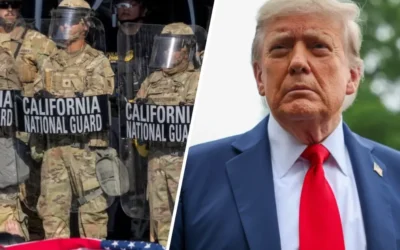
President Donald Trump ordered 300 California National Guard troops to Portland, Oregon, in open defiance of a federal court order. The decision, made on October 5, 2025, set off an immediate political and legal firestorm across the country. The deployment came one day after a federal judge temporarily blocked the White House from using Oregon’s own National Guard in the state. The court ruled that the administration’s justification lacked solid evidence and could violate constitutional limits on presidential authority. Despite that ruling, Trump directed troops from California to cross state lines, saying Portland needed protection from ongoing chaos and threats to federal property. President Trump reacted to the judge’s order: There’s the magic word again 👀 Trump says that “insurrectionists” are burning Portland to the ground. This is not an accident. Trump and his administration are beginning to use this word frequently for a reason. The Insurrection Act is coming. pic.twitter.com/8f9C3S0tki — Clandestine (@WarClandestine) October 5, 2025 Both Oregon Governor Tina Kotek and California Governor Gavin Newsom condemned the move. They accused Trump of abusing his power and ignoring the Constitution. Tension Builds in Portland Portland has faced waves of demonstrations since early summer. The protests began after several controversial immigration enforcement actions at a local federal facility. Over time, the gatherings drew national attention and occasional clashes between protesters and federal agents. In late September, Trump announced that his administration would send federal resources to Oregon to restore order. He blamed state leaders for failing to protect federal buildings and personnel. As part of that plan, he sought to federalize Oregon’s National Guard and place them under his command. Judge Karin Immergut halted the order. She ruled that the administration had not shown credible evidence of widespread violence or an immediate threat that justified federal intervention. Her ruling says that the president could not use the military to manage local protests without clear legal authority. Trump responded by directing troops from California instead, claiming the court’s order did not apply to National Guard units from another state. She has since issued a TRO prohibiting the Trump administration from relocating or deploying ANY federalized national guard troops to Oregon. Judge Immergut has issued her written TRO prohibiting the Trump administration from relocating or deploying federalized national guard troops to Oregon. Here it is: https://t.co/9xO5hwocck pic.twitter.com/WU11j6Or2F — Anna Bower (@AnnaBower) October 6, 2025 A Clash Over Constitutional Limits The confrontation in Portland has become a defining example of the struggle between state sovereignty and federal power. Legal scholars point to the Tenth Amendment, which reserves certain powers to the states, as central to the dispute. Governors Newsom and Kotek argue that Trump’s decision violates that principle by seizing control over state guard forces without consent. The White House insists the president has the right to protect federal property and enforce federal law. Yet critics say the order oversteps executive authority and blurs the line between military and civilian roles. The Posse Comitatus Act also lies at the heart of the debate. The law generally forbids using the military for domestic law enforcement unless Congress explicitly authorizes it. Opponents of the deployment argue that sending troops to monitor protests crosses that legal boundary. (MORE NEWS: Apple Pulls ICE-Tracking Apps from App Store) Judge Immergut’s earlier ruling complicates matters further. In her opinion, Portland had been relatively calm in recent weeks, contradicting the administration’s portrayal of the city as a “war zone.” Governors Weigh In California Governor Gavin Newsom called the order unconstitutional and reckless. He said his state would not allow its National Guard to be used for political stunts. Newsom promised immediate legal action to block the deployment and protect the rights of California’s soldiers. Oregon Governor Tina Kotek echoed his concerns. She warned that Trump’s actions could undermine federalism and increase tensions instead of reducing them. Kotek’s office confirmed that she is working with state attorneys to seek emergency relief from the courts. Both governors maintain that the situation in Portland does not justify military intervention. They insist that local and state law enforcement agencies are capable of maintaining order without federal troops. (MORE NEWS: Viral 2019 Debate Clip Shows Democrats Back Healthcare for Illegal Immigrants) On the contrary, Texas Governor Abbott authorized 400 members of the Texas National Guard. He is ready and willing to assist federal law enforcement if necessary. I fully authorized the President to call up 400 members of the Texas National Guard to ensure safety for federal officials. You can either fully enforce protection for federal employees or get out of the way and let Texas Guard do it. No Guard can match the training, skill, and… https://t.co/7SUk9XlMBn — Greg Abbott (@GregAbbott_TX) October 6, 2025 National Implications for Power and Protest The battle over Portland reaches far beyond one city or protest. It tests the boundaries of American democracy, the separation of powers, and the reach of presidential authority. The outcome could redefine how Washington interacts with state governments during times of unrest. Supporters of the deployment argue that the president is within his legal right to act, especially when local leaders order police to stand down or fail to protect federal personnel and property. Under the Insurrection Act, the president can lawfully deploy military forces if states cannot or will not uphold federal law. In this case, Trump’s allies say his decision reflects a duty to defend federal officers and facilities from escalating threats, similar to situations seen in Chicago and other cities where local enforcement retreated. The courts now face the task of determining how far the president’s powers extend under existing law. The restraining order remains in place until mid-October, giving judges time to weigh whether his actions fall within constitutional boundaries. The ruling will likely influence how future presidents handle civil unrest and the use of military forces on U.S. soil. Final Word The deployment of California National Guard troops to Portland stands as one of the most controversial moves of Trump’s second term. It has fueled intense debate over federal…