
Politics
Nancy Pelosi’s Stock Profits Raise Serious Questions
A recent report reveals that Nancy Pelosi and her husband, Paul Pelosi, earned more than $130 million in stock profits over her congressional career, including a return of approximately 16,930%, according to an exclusive from the New York Post. This startling number prompts concern about potential conflicts of interest, especially given Pelosi’s long tenure in powerful roles. The Figures Behind the Headlines When Pelosi entered office in 1987, she and her husband reportedly held between $610,000 and $785,000 in stocks. Over the decades, that portfolio is estimated to have grown to around $133.7 million in stock assets. Meanwhile, the couple’s net worth is now estimated at roughly $280 million. To put the stock return in context, the 16,930% gain vastly outpaces the roughly 2,300% rise of the Dow Jones in the same period. Why This Matters The sheer magnitude of the gain raises questions. A public servant—especially someone who has held the office of Speaker of the House—amassing this level of profit invites scrutiny. The overlap between legislative power and personal financial gain can erode public trust. After all, when a lawmaker benefits financially while in office, citizens may wonder whether decisions were made for policy or profit. Transparency and accountability become critical: the public deserves to know not only that officials invest, but how their trades relate to their legislative actions. More Stories AI Job Cuts Surge: How Automation Is Reshaping the U.S. Workforce in 2025 Holiday Travelers May Face Flight Delays as Shutdown Deepens Daylight Saving Time Debate Heats Up Across States Potential Conflicts of Interest Given Pelosi’s influence over fiscal policy, her significant stock holdings pose potential conflicts. When a lawmaker votes on legislation affecting markets, industries, or regulation, having substantial personal investments in those sectors could skew incentives. Moreover, the timing of trades—or the choice of companies—can look suspicious when a public official holds both policy-power and investment power. While no law necessarily says a member of Congress cannot invest, ethics rules demand care. Transparency Gaps and the Need for Reform Despite disclosure rules for members of Congress, critics argue that the system has gaps. For example, disclosures often list ranges, not precise amounts. Plus, many trades go unlinked to specific legislative actions. As a result, the public cannot always determine whether a trade happened before or after policy announcements. With Pelosi’s massive gain, these structural issues matter. Reformers say that to rebuild trust, Congress should require trades be reported in real time, provide full amounts rather than ranges, and perhaps ban lawmakers from trading individual stocks altogether. Otherwise, large gains by lawmakers risk being interpreted as “inside” or preferential. Why Some Argue This Is Not Enough Defenders of Pelosi might say her stock trading was legal and reported under the rules. They might also argue that she is free to invest and that Pelosi’s financial acumen is separate from her public role. Even so, legal is not always sufficient from a public perspective: ethics standards must reflect not only legality but fairness. When a public servant earns a fortune while holding significant legislative power, voters may reasonably ask: did the rules allow it, or did the rules permit it too easily? The Broader Implication for Public Trust Beyond one person, this case signals a larger issue: when lawmakers appear to profit from the system they serve, the public’s faith in government falters. Citizens expect elected officials to act without bias and to serve the public interest first. When a lawmaker becomes extraordinarily wealthy during tenure, it complicates the message. Even if innocently earned, the optics count. Therefore, the Pelosi case underscores how financial gains and policy power can blur the lines between public service and personal enrichment. Moving Forward: What to Watch The Pelosi stock controversy has reignited public debate over congressional ethics and financial transparency. As the spotlight grows brighter, several key actions and questions emerge that could shape the future of accountability in Washington. Check for any disclosure of timing: Did trades happen around major policy announcements or regulatory shifts? Timing often reveals intent, and close alignment with legislative events can raise red flags. Consider legislative impact: Review whether legislation she championed directly or indirectly benefited Pelosi’s portfolio. Lawmakers should ensure that public policy decisions never appear to serve private interests. Monitor proposed ethics reforms: Watch for any new reform efforts in Congress that may have been motivated by this revelation. These proposals could determine whether lawmakers are serious about preventing future conflicts. Evaluate stalled reform efforts: If reform efforts stall, that says something about how willing the legislature is to police its own. Inaction may signal complacency and a lack of political will to address corruption concerns. Demand accountability from representatives: Finally, voters should ask their representatives to commit to either divesting individual stocks, using blind trusts, or at least providing full transparency. Public servants must uphold integrity and restore faith in the system. Ultimately, the public’s response to this issue will determine whether ethics in Congress evolve or remain stagnant. True reform requires both pressure from citizens and courage from lawmakers willing to lead by example. Final Thoughts With Nancy Pelosi leaving public life, the issue isn’t only about legality — it’s about accountability. For years, banning congressional stock trading meant challenging one of Washington’s most powerful figures, and no one dared. But this isn’t just about Pelosi’s case — lawmakers on both sides of the aisle have profited under the same system. Now that its most visible participant is stepping down, Congress has no cover left. Will they act at last, or keep pretending the problem retires with her? Unmask the Narrative. Rip Through the Lies. Spread the Truth. At The Modern Memo, we don’t polish propaganda — we tear it to shreds. The corporate press censors, spins, and sugarcoats. We don’t. If you’re tired of being misled, silenced, and spoon-fed fiction, help us expose what they try to hide. Truth matters — but only if it’s heard. So share this. Shake the silence. And remind the powerful they…

MTG Political Pivot: What’s Going On With The GOP?
Let’s be honest — Marjorie Taylor Greene (MTG) is acting a lot different these days. The same outspoken Republican who used to rally crowds and challenge the establishment is now sitting comfortably on liberal talk shows like The View. For many conservatives in Georgia, watching their Congresswoman smile and nod along with the very media that once called her “dangerous” feels like betrayal. Greene has also started criticizing her own party leaders and even distancing herself from former allies. According to Fox News, Alexandria Ocasio-Cortez (AOC) says MTG’s recent “revenge tour” is payback after former President Trump stopped her from running for the U.S. Senate in Georgia. (MORE NEWS: Election 2025 Analysis: Democrats Sweep as Shutdown Continues) If that’s true, this isn’t about principles — it’s about payback. And that kind of motivation could cost her dearly at the ballot box. The Senate Snub That May Have Triggered Everything Here’s where things start to make sense. Fox’s report says MTG had her sights set on a Senate run, but Trump wasn’t on board. He reportedly ordered polling that showed she would lose badly in a statewide race. Once that information leaked, she suddenly announced that she was no longer interested in the Senate, claiming it “doesn’t work.” Then, not long after, she began publicly criticizing Trump and key members of the GOP. If AOC is right, MTG’s current behavior is less about independence and more about resentment. It’s a strange look for someone who built her brand as one of Trump’s most loyal defenders. Voters don’t usually reward politicians who turn on their allies when they don’t get what they want. Cozying Up To The View — A Risky Move Let’s talk optics. The View has never been a friendly venue for conservatives. Yet MTG showed up smiling, calm, and cooperative — even when the hosts threw softballs instead of insults. That appearance might have won her a polite round of applause from the audience, but it left her conservative supporters scratching their heads. For years, MTG branded herself as the one person willing to stand up to the mainstream media. Now, she’s being praised by it. It’s not hard to see why her base feels betrayed. She built her entire career fighting against the very system she’s now trying to fit into. When a politician starts looking for approval from their enemies, their supporters tend to take notice — and not in a good way. (MORE NEWS: Kamala Teases 2028 Run — Democrats Scramble for Strategy) Why This Could Hurt Her Reelection Chances MTG’s shift isn’t just a small adjustment — it’s a full rebranding. And that’s a risky play, especially in her Georgia district, where voters expect her to stay true to her roots. Here’s why it could backfire: Loss Of Base Enthusiasm: Her most loyal followers are already frustrated. If they feel she’s gone soft, they might not show up to vote next time. Identity Confusion: Voters like consistency. When MTG changes her message from “fighter” to “peacemaker,” it muddies her brand. Political Isolation: By attacking GOP leadership and cozying up to liberal outlets, she risks losing party support and funding. Mainstream Vulnerability: The left won’t truly embrace her, and the right could turn away — leaving her caught in political no-man’s-land. It’s hard to win reelection when you’ve alienated your base and can’t count on new friends to back you up. What Conservatives Should Watch For If you’re following MTGs career, there are a few key things to keep an eye on: Will she continue attacking GOP leaders, or try to make amends before campaign season? Will she keep doing friendly interviews with liberal media, or return to her tough, anti-establishment message? Will new challengers emerge in her district, promising to bring “real conservatism” back? Will her shift away from Trump come back to haunt her among die-hard MAGA voters? The answers to those questions will determine whether she survives the next election — or fades out as another politician who lost touch with her base. Final Thoughts Marjorie Taylor Greene made her name as a fighter. She stood up to the media, the Democrats, and even her own party when she had to. But now, she’s playing nice with people who once mocked and silenced her — and that’s not sitting well with the voters who put her in office. If this really is an “anti-Trump revenge tour” driven by personal disappointment, it’s a dangerous game. Conservatives want leaders who fight for them, not politicians chasing cable-news approval. At the end of the day, MTG might think she’s broadening her appeal. But in reality, she’s alienating the very movement that made her a star. And come election time, that mistake could be the one she can’t talk her way out of.
Election 2025 Analysis: Democrats Sweep as Shutdown Continues
The November 2025 election reaffirmed Democratic dominance in some of the nation’s bluest regions. From Virginia to New Jersey, Pennsylvania, and California, Democrats held control and even expanded their reach. These results weren’t shocking — they happened in states where Democrats already hold strong structural advantages. But what makes this election worth examining is why they performed so well now. Voters went to the polls as the federal government shutdown continues, disrupting lives and amplifying frustration with Washington. Many are exhausted by the constant partisanship and gridlock. Democrats stayed disciplined and united, running on a simple, emotional strategy: “Get Trump.” Republicans, meanwhile, struggled to translate frustration into votes. (MORE NEWS: Kamala Teases 2028 Run — Democrats Scramble for Strategy) Spanberger Makes History in Virginia Virginia delivered a full Democratic sweep in 2025, marking a turning point for a state that was once considered a swing battleground but now sits firmly in blue territory. Governor’s Race: Abigail Spanberger made history as Virginia’s first female governor, defeating Republican Winsome Earle-Sears. Her victory came despite controversy over her refusal to call on Attorney General candidate Jay Jones to step down after his violent comments about a political rival and his children. Attorney General’s Race: Jay Jones won despite the release of text messages showing violent rhetoric against a political opponent and their family. The scandal barely affected his campaign, and Democrats closed ranks around him. Lieutenant Governor’s Race: Ghazala Hashmi made history as Virginia’s first Muslim woman elected to statewide office, completing the Democratic sweep and underscoring how decisively the state has shifted left. Virginia’s election results highlight the power of party unity and message discipline — even when controversy and ethics questions hang over the campaign. New Jersey and Pennsylvania Stay Solidly Democratic In New Jersey, Mikie Sherrill captured the governorship despite questions about honesty in her past. In Pennsylvania, Democrats held onto their state Supreme Court majority, giving the party a key advantage heading into the 2026 midterms. Across these states, Democratic organization, turnout, and message discipline carried the night. Republicans couldn’t shift the conversation toward economic recovery or accountability in Washington. Mamdani’s Controversial Win in New York In New York City, Zohran Mamdani, a self-described democratic socialist, won the mayor’s race, energizing progressives and drawing sharp criticism from conservatives. Representative Andy Ogles (R–Tenn.) told Fox News, “Deport Mamdani! He’s an antisemitic, socialist, communist who will destroy the great City of New York.” Ogles also told Newsmax, “In 2018 when he was naturalized, he failed to disclose some of the things that he had been doing, one of which was joining the [Democratic] Socialists of America. That’s a communist organization which, quite frankly, at that time, would have disqualified him from becoming a United States citizen.” (RELATED NEWS: 2025 Elections: Five Key Races to Watch) U.S. immigration law bars naturalization for those affiliated with Communist or totalitarian parties. The application form explicitly asks whether applicants have ever been members of such groups. Mamdani denies being a communist, though his ties to socialist organizations continue to spark debate. President Trump called him a “communist lunatic” before the election in a Truth Social post: Then Mamdani taunted Trump in his victory speech: Zohran Mamdani has won the race to become the next mayor of New York City. Mr Mamdani – who will be the first Muslim, first South Asian, and youngest person in a century to be elected as the famous city’s mayor – used a victory speech to throw down the gauntlet to Donald Trump. pic.twitter.com/8IVr4kMQQH — Sky News (@SkyNews) November 5, 2025 The back and forth between these two will be interesting the next few years — to say the very least. California’s Prop 50: One-Party Control Locked In In California, Governor Newsom’s Proposition 50 solidified Democratic dominance through a last-minute sweeping redistricting overhaul that passed after more than $300 million was spent promoting it. Republicans were not left with enough time to properly prepare and fight it. Although roughly 40% of Californians vote Republican, the new map would leave the GOP with only 7% of the state’s congressional seats. That amounts to political engineering with no balance in sight. Democrats claimed Prop 50 would improve representation, but it is actually gerrymandering on a historic scale. They claim this is a counterbalance to Texas redistricting, but Texas doesn’t have anything close to this kind of structural bias. Prop 50 effectively locks Republicans out of power in California for the foreseeable future. That was their goal, and they achieved it. Why Democrats Dominated So why did Democrats sweep this election? The answer lies in timing, perception, and focus. These were deep-blue states where Democratic infrastructure was already strong. But the ongoing government shutdown, combined with national fatigue and slow economic recovery, set the stage for a default vote for “stability.” Many voters simply didn’t see a strong Republican alternative. Democrats kept their messaging unified and emotional. They tied every issue — from policy to personality — back to President Trump. Republicans, on the other hand, failed to connect their arguments to everyday voter concerns or to demonstrate how things would improve under continued conservative leadership. Economic Strain and the Trump Challenge The economy remains uncertain. Costs for essentials like food, gas, and housing are still high — the lingering effects of inflation that began under President Biden. President Trump’s economic strategy is aimed at long-term correction through tariffs, trade reform, and energy expansion. But that kind of recovery takes time, and many voters haven’t felt the benefits yet. The administration now faces the challenge of making progress visible. Americans don’t want to hear about macroeconomic data; they want relief they can see — at the pump, in the grocery store, and in their mortgage or rent payments. The Road to 2026 The lesson from the 2025 election is straightforward: Democrats win when Republicans fail to connect on the issues that matter most. The “Get Trump” strategy continues to energize the left and distract from their lack of sound policy. For President Trump,…

ICE Blocked by Pritzker’s Sanctuary Law After Fatal Crash
A heartbreaking crash in Coles County, Illinois, has reignited fierce debate between ICE and the state’s sanctuary policies. Michael and Gail Clayton — a respected Republican county official and his wife — were killed when an alleged illegal immigrant, driving under the influence, crossed into their lane and struck their car head-on. The Claytons were well known in Charleston for their kindness and community service. Their sudden deaths have shaken the town — and raised serious questions about whether Illinois Governor Pritzker’s decision to shield illegal immigrants from federal law enforcement contributed to this tragedy. The Crash and the Suspect On October 24, 34-year-old Edwin Pacheco-Meza, a Honduran national living illegally in the United States, allegedly veered his van into oncoming traffic. The impact killed both Michael, 71, and Gail Clayton, 66, at the scene. (MORE NEWS: Kamala Teases 2028 Run — Democrats Scramble for Strategy) Authorities reported that Pacheco-Meza appeared intoxicated. In his vehicle, police found open alcohol containers, drugs, and even an extended ammunition magazine. An 18-year-old Guatemalan passenger, Juan Morales-Martinez, also in the country illegally, was charged with drug and weapons offenses. Prosecutors quickly filed charges of reckless homicide and aggravated DUI against Pacheco-Meza. ICE officials later confirmed both men were in the country unlawfully and lodged detainer requests to take them into custody. Assistant Secretary for Public Affairs at the Department of Homeland Security Tricia McLaughlin said: “Two innocents were killed because this criminal illegal alien chose to drive under the influence. President Trump and Secretary Noem have unleashed ICE and CBP in Illinois to restore law-and-order and remove criminal illegal aliens from our communities. Anyone who is in the U.S. illegally and thinks they can roam free while breaking our laws and harming Americans is in for a rude awakening. If you are in our country illegally and break our laws, we will find you, arrest you, remove you, and you will never return.” How Illinois’ Sanctuary Law Comes Into Play Here is where the story becomes more complicated — and controversial. Illinois law bars local police and county jails from cooperating with federal immigration detainers. Under Governor J.B. Pritzker’s “Trust Act,” state and local agencies are prohibited from holding someone for ICE unless there is a federal court order. In practice, this means that even when immigration authorities ask to take custody of criminal suspects, local jails must ignore those requests. According to reports, detainers were placed on both men after the crash, but local officials initially refused to honor them. This policy undermines public safety and invites exactly the kind of tragedy that took the Claytons’ lives. There is a human cost when those laws shield people accused of serious crimes. Community Shock and Grief The deaths of Michael and Gail Clayton have devastated the small town of Charleston. Their obituary describes the couple as warm, dependable, and deeply involved in local life. They volunteered in civic projects, attended the farmers’ market, and supported small businesses. Their loss has left the community in deep shock and mourning. It’s a reminder of how policy decisions made in the state capital can reach into the heart of a small community. What Sanctuary States Get Wrong This crash has revived a national conversation about what sanctuary states owe their citizens. Opponents of these policies say Illinois’ refusal to cooperate with ICE leaves law enforcement powerless to prevent known offenders from remaining in the country. (RELATED NEWS: Portland Police Go Easy on Antifa…Again) When local officials ignore federal detainers, they effectively place politics above public safety. Federal immigration law exists to identify and remove individuals who commit crimes after entering the country illegally. When states block that process, they weaken both accountability and deterrence. Even those who support a compassionate immigration system are now questioning whether blanket non-cooperation makes sense. Compassion should not come at the expense of safety — and laws meant to protect the vulnerable should not allow reckless behavior that endangers innocent families. The Federal-State Divide This case highlights a growing rift between federal immigration enforcement and certain state governments. ICE and the Department of Homeland Security maintain that immigration law is a federal responsibility. Yet states like Illinois, California, and New York have passed legislation to limit cooperation, often citing civil rights concerns. The result is confusion, uneven enforcement, and, in tragic cases like this one, deadly outcomes. Local police are caught in the middle — bound by state restrictions yet facing the real-world consequences when things go wrong. Calls for Change As details of the crash spread, public pressure on state leaders has intensified. Lawmakers are calling for a review of Illinois’ sanctuary statutes, arguing that local agencies must be able to communicate with federal authorities when crimes involve non-citizens. Others insist on a balanced approach — maintaining trust with immigrant communities while ensuring that those who commit crimes are not protected from accountability. Regardless of where one stands politically, the deaths of the Claytons are forcing an uncomfortable but necessary conversation about the limits of sanctuary policies. A Case That Demands Accountability Michael and Gail Clayton should still be alive. Their deaths were not a random accident; they were the foreseeable result of a system that failed to put public safety first. When state officials choose to defy federal law, they assume responsibility for what happens next. Every ignored detainer, every preventable crime, every family left grieving — these are the consequences of decisions made in Springfield and echoed across other sanctuary states. The Takeaway The tragedy in Charleston, Illinois, is a national warning. When state leaders prioritize ideology over enforcement, the victims are often ordinary citizens like the Claytons. As the investigation continues, one thing is clear: the sanctuary model is under scrutiny. States that reject cooperation with federal law must reckon with the outcomes of that choice. The Claytons’ memory deserves more than condolences. It deserves action and a renewed commitment to laws that protect every American, regardless of politics or policy debates. Cut Through the Noise. Slice Through the…

Kamala Teases 2028 Run — Democrats Scramble for Strategy
Kamala Harris has once again thrown Democrats into confusion. In a recent BBC interview, she hinted that she might run for president in 2028. Her vague, awkward answers quickly sparked speculation. Harris didn’t officially announce a campaign, but her tease made it clear she isn’t stepping away from the national spotlight anytime soon. That single comment set off a chain reaction across both parties. Democrats suddenly face a difficult question: do they rally behind her again or move on? Republicans, meanwhile, seem thrilled by the prospect of another Harris run. (MORE NEWS: Rebuttal to Hakeem Jeffries: When Your Own Words Go Too Far) What Harris Said — And Why It Matters Harris didn’t offer any solid vision or policy direction. When asked about poll numbers and the future of her party, she brushed it off with what many observers called “nonsense.” The exchange ended awkwardly, giving critics more ammunition to question her communication skills and overall readiness. Still, the tease served its purpose. It reminded the public she’s still here — and that she might want another shot. But it also forced her party to confront its leadership vacuum and unsettled identity. 🚨 JUST IN: Kamala Harris declares to America that she’s “not done” and might run for president in 2028 to quash the MAGA movement. 😂pic.twitter.com/NUDzqXAO7J — Eric Daugherty (@EricLDaugh) October 25, 2025 Democrats’ Growing Problem Kamala Harris’s comments exposed a deeper issue for Democrats: they don’t have a clear successor or a unified message. After years of internal fighting between progressives and moderates, the party looks divided and uncertain. If Harris runs, she risks reigniting old rivalries from her previous campaigns. If she doesn’t, the scramble to find a new face could create chaos. The Democratic bench is thin, and enthusiasm among younger voters has dropped. That’s not a great position for a party hoping to hold the White House in 2028. Republicans Smell Opportunity While Democrats argue about who should lead them next, Republicans are celebrating. Harris has become a favorite target for conservative media and party strategists. They see her as an easy opponent — one who stumbles in interviews and struggles to connect with voters. (RELATED NEWS: 2025 Elections: Five Key Races to Watch) GOP strategists are already giddy at the thought of a 2028 matchup between Vice President J.D. Vance and Kamala Harris. They believe her candidacy could energize conservative voters while dividing Democrats further. Book Tour Effect Harris’s ongoing book tour has become a stage for speculation. Every weekend, new clips and awkward soundbites circulate online. While the tour promotes her memoir, it also serves as a soft campaign — keeping her visible, drawing media attention, and testing public reaction. Critics argue she’s trying to rewrite her political image without addressing the failures that defined her last run. Supporters say she’s simply staying relevant. Either way, the timing of the tour aligns perfectly with a pre-campaign strategy. Possible 2028 Democratic Contenders As Harris toys with another run, other Democrats are circling. Here’s who might step in the race: Kamala Harris – She’s the default option, but also the most polarizing. Her record and communication style still divide voters. Gavin Newsom – The California governor has built a national profile, but his leadership of a state facing homelessness, crime, and cost-of-living crises could weigh him down in a general election. His critics also fault him for the devastating fires in January 2025. Alexandria Ocasio-Cortez (AOC) – A hero to progressives and a lightning rod for critics. Her inexperience, strong ideological positions, and social media presence could alienate moderate voters. Josh Shapiro – The Pennsylvania governor’s traditional stance could alienate progressives. He also faces a party increasingly skeptical of centrists and full of antisemitism. He is Jewish, and that could play a role in the outcome of a primary. Many say that is ultimately why Kamala did not select him for her Vice Presidential candidate. Andy Beshear – A Democrat winning in a red state sounds good on paper, but his low national visibility and cautious tone might not inspire a national movement. Key Takeaways If Harris runs, the field may clear for her, even if many Democrats aren’t excited about it. If she doesn’t, figures like Newsom or Shapiro may step forward, but both face heavy scrutiny. Progressive voters might rally around AOC, creating more tension between party factions. Moderates may turn to Beshear or another governor to find someone “safe” — though that might not be enough to excite voters. What It All Means The tease wasn’t just a moment of media buzz — it revealed the Democrats’ biggest weakness: uncertainty. The party is struggling to balance progressive energy with electability concerns. It’s unclear who can unify those factions or inspire the kind of national enthusiasm needed to win. If Harris runs, Democrats could relive the internal divisions that cost them before. If she doesn’t, the vacuum might be even worse. Either way, Republicans will be ready, organized, and eager to exploit the chaos. The 2028 race hasn’t even begun, but Harris’s offhand comment might have just kicked off the first round. Unmask the Narrative. Rip Through the Lies. Spread the Truth. At The Modern Memo, we don’t polish propaganda — we tear it to shreds. The corporate press censors, spins, and sugarcoats. We don’t. If you’re tired of being misled, silenced, and spoon-fed fiction, help us expose what they try to hide. Truth matters — but only if it’s heard. So share this. Shake the silence. And remind the powerful they don’t own the story.
Rebuttal to Hakeem Jeffries: When Your Own Words Go Too Far
OPINION Democrats are once again accusing Republicans of dangerous rhetoric. House Minority Leader Hakeem Jeffries warned that Speaker Mike Johnson’s comment calling Democrats “legislative terrorists” would “get someone killed.” Rep. Hakeem Jeffries (D-NY) has a mental breakdown again, this time because Speaker Johnson correctly said Democrats are acting like terrorists by keeping the government shut down in order to try to get free healthcare for illegals.pic.twitter.com/N6XmiAKQeI — Paul A. Szypula 🇺🇸 (@Bubblebathgirl) October 23, 2025 That accusation rings hollow. For years, left-wing politicians and activists have used far more violent, dehumanizing language. They’ve called conservatives “Nazis,” “dictators,” and “racists.” They’ve labeled Donald Trump “Hitler.” They’ve threatened Supreme Court justices, cheered confrontations, and justified harassment. When that’s the language in the air, it only takes one unstable listener to turn words into bullets. (MORE NEWS: 2025 Elections: Five Key Races to Watch) Words Have Consequences Republicans have seen where this kind of talk leads: Charlie Kirk — Conservative activist shot and killed while speaking at Utah Valley University last month. Corey Comperatore — A citizen attending a rally in Butler, PA, was killed, and two others were injured during an assassination attempt on President Trump in July 2024. President Donald Trump — Shot and survived two assassination attempts. Justice Brett Kavanaugh — Narrowly escaped being murdered at his home after a would-be assassin traveled from California with weapons in 2022. Rep. Steve Scalise — Almost killed, along with four others injured, when a gunman opened fire at a congressional baseball practice in 2017. These attacks didn’t come from nowhere. They grew out of years of constant demonization — the left painting the right as monsters who must be “stopped” at all costs. When Democrats Spoke in Violence Hakeem Jeffries says Johnson’s phrase might provoke violence. But here are the Democrats’ own words — all on record, all public, all normalized by the media. How could anyone interpret these any differently? All it takes is one unhinged person to hear these words as a call to action. Sen. Chuck Schumer (2020): “You have released the whirlwind, and you will pay the price. You won’t know what hit you if you go forward with these awful decisions.” Two years later, Nicholas Roske traveled from California to Justice Kavanaugh’s home armed with a gun and knife, planning to assassinate him before surrendering. 🤔pic.twitter.com/0yK0YrloJC — Charlie Kirk (@charliekirk11) March 4, 2020 Sen. Chuck Schumer (2025): “There’s going to be a big protest on the 18th… He wants to be king. The American people have to rise up in every way!” More unhinged rhetoric from Democrat Chuck Schumer calling for Americans to “rise up” against President Trump: “We have to fight this in every way…” “There’s going to be a big protest on the 18th… He wants to be king. The American people have to rise up in every way!” pic.twitter.com/Wl7FuUyjaS — NRCC (@NRCC) September 24, 2025 Rep. Maxine Waters (2018): “If you see anybody from that Cabinet in a restaurant, in a department store, at a gasoline station, you get out and you create a crowd. You push back on them.” FLASHBACK: Maxine Waters tells Democrats to target Republicans: “If you see anybody from that Cabinet in a restaurant…you get out and you create a crowd. And you push back on them. And you tell them they’re not welcome anymore, anywhere” pic.twitter.com/5iRHcB2JjI — NRCC (@NRCC) September 13, 2025 Sen. Cory Booker (2018): “Get up in the face of some congresspeople.” Eric Holder (2018): “When they go low, we kick them.” Joe Biden (2016 campaign trail): “If we were in high school, I’d take him behind the gym and beat the hell out of him.” Kamala Harris: Repeatedly said, “Trump is a threat to our democracy and fundamental freedoms,” even after an attempt on his life. President Biden: “It’s time to put Trump in a bullseye.” (Later claimed it was “figurative.”) Rep. Dan Goldman: “It is destructive to our democracy, and he, President Trump, has to be eliminated.” Rep Dan Goldman (D-NY) calling for Trump to be “eliminated!” This is their wicked M.O. pic.twitter.com/uvnpKLA4Oo — 🇺🇸ProudArmyBrat (@leslibless) July 14, 2024 Del. Stacey Plaskett: “[Trump] needs to be shot.” (She later said she misspoke. Freudian slip?) Jay Jones (Nominee for Virginia Attorney General): Texted that if he had two bullets, he’d shoot a rival “two times in the head,” calling the man’s kids “little fascists” who he hoped would die in their mother’s arms. When Democrats Spoke in Violence — and Against ICE The same politicians now accusing Republicans of “dangerous rhetoric” have spent years vilifying America’s immigration enforcement officers. The White House statement titled “Democrats’ Unhinged Crusade Against ICE Fuels Bloodshed” documented dozens of examples: Gov. Tim Walz called ICE the “modern-day Gestapo.” Gov. Gavin Newsom likened ICE to “secret police” and said people have a “right to push back. Gov. JB Pritzker claimed America is becoming “Nazi Germany” because ICE “grabs people off the street.” 🚨 BREAKING: Gov. JB Pritzker COMPARES President Trump’s deportations to the HOLOCAUST by Hitler and the Nazis. This is absolutely inviting violence. “People’s rights started getting taken away—Right before the Holocaust really took place!”pic.twitter.com/HldwVRFLqN — The Patriot Oasis™ (@ThePatriotOasis) October 22, 2025 Rep. Robin Kelly smeared ICE as “the Gestapo” and a “betrayal.” Rep. Jasmine Crockett compared ICE to “slave patrols.” Rep. Sylvia Garcia called ICE agents “thugs.” Rep. Delia Ramirez labeled ICE “a terror force.” Rep. Pramila Jayapal said ICE agents are “deranged,” accused them of “kidnapping,” and claimed “resistance” is “inspiring.” Rep. Rashida Tlaib said ICE is “terrorizing our communities” and a “rogue agency.” Rep. Ayanna Pressley repeated that ICE is “terrorizing our communities.” Rep. Max Frost compared ICE to “some of the worst horrors and crimes against humanity.” Rep. John Larson called ICE “the SS” and “the Gestapo.” Rep. LaMonica McIver told people to “shut down the city” because “we are at war.” She pleaded not guilty to charges alleging she assaulted law enforcement officers outside of an immigration detention facility. That case is ongoing. Rep. Stephen Lynch called…

2025 Elections: Five Key Races to Watch
With just two weeks until 2025 Elections, five major races are drawing national attention. These contests go beyond local politics: they have significant implications for party momentum, national strategies, and the balance of power. As each campaign intensifies, voters will be watching closely. Virginia Governor’s Contest: Turbulence on the Trail In Virginia, the gubernatorial race between Democrat Abigail Spanberger and Republican Winsome Earle-Sears is undergoing turbulence. The Republican nominee has seized on a scandal involving Democratic attorney-general nominee Jay Jones to bring pressure on Spanberger. Spanberger’s lead appeared sizable in earlier polling, yet the controversy has stirred questions and could shift dynamics. (RELATED NEWS: Democrats Rally Behind Jay Jones Despite Disturbing Texts) As a result, the race in Virginia is now more uncertain than it seemed. Sears is closing the gap. The outcome of this one is drawing serious attention, given the state’s competitive nature and national focus on statewide offices. New Jersey Governor’s Race: A Photo Finish? In New Jersey, the contest for governor between Republican Jack Ciattarelli and Democrat Mikie Sherrill has tightened dramatically. While Sherrill held a roughly five-point lead in the latest Fox News poll, that advantage has shrunk from earlier in the year. New Jersey remains a largely Democratic-registered state, yet Republican governors have succeeded here before. Sherrill has also faced growing scrutiny over questions about her transparency and past conduct at the Naval Academy, which have fueled voter doubts about her credibility. The result in New Jersey will serve not only as a state result but as an indicator of broader party strength heading toward the midterms. Ciattarelli just might pull this one out. One thing is for certain — this race will be a nail-biter until the very end. New York City Mayoral Election: Big Spotlight, Big Implications In New York City, the mayoral race is shaping up as one of the most-watched campaigns of the year. The Democratic nominee, Zohran Mamdani — a 33-year-old state lawmaker — stands out as a possible first Muslim and first millennial mayor of the city. He faces a crowded field, including former governor Andrew Cuomo, running as an independent, and Republican Curtis Sliwa. Current mayor, Eric Adams, dropped out of the race in September. Mamdani, a democratic socialist, has sparked controversy over his past associations and statements — including refusing to directly condemn Hamas and meeting with controversial figures. Meanwhile, many critics and prominent figures are urging Sliwa to drop out because of his weak polling numbers — a move that would boost Cuomo’s chances in a direct two-way race — but Sliwa has so far refused to withdraw. Mamdani will be almost impossible to beat as long as Sliwa remains. Given New York’s size and influence, the mayoral outcome will ripple outward. It may affect how national strategists view urban elections, how policy priorities are framed, and how parties attempt to reach key demographic groups. California’s Proposition 50 & Redistricting Battle In California, voters will decide a ballot measure known as Proposition 50. This proposal would turn redistricting power over to the state legislature. This would alter how congressional districts are drawn for the next three election cycles. Supporters argue it gives accountability to elected officials; opponents warn it undermines independent maps. Polls suggest a majority might support it. (MORE NEWS: Viral 2019 Debate Clip Shows Democrats Back Healthcare for Illegal Immigrants) Given California’s size and its congressional delegation, the vote has national significance: it could shift how many seats lean Democratic or Republican in future U.S. House battles. Analysts say the new maps could create as many as five additional Democratic congressional seats. This would effectively answer the five new seats Texas lawmakers are attempting to add with a newly drawn congressional map. Pennsylvania Supreme Court Retention Elections: Quiet but Critical In Pennsylvania — a major battleground state — three justices on the state Supreme Court face retention elections this year. Democrats currently hold a 5-2 majority on the court. Though these races don’t get as much attention as governor or mayor contests, their impact is substantial. The composition of the court can influence rulings on cases regarding elections and abortion. So while the spotlight may be lower, the stakes remain very high. These judicial outcomes could influence legal decisions for years and shape the balance of power across state government. Why These Races Matter — Across the Board Taken together, these five races illustrate a larger trend: parties are fighting not just for seats but for narratives, momentum, and control of key levers of power. Democrats are attempting a rebound after setbacks in recent national elections; they point to special-election wins as evidence of momentum. At the same time, Republicans are pushing back by highlighting major challenges facing Democrats, including low approval ratings and voter losses. Furthermore, these contests serve as early tests ahead of the 2026 midterms — giving both sides data on what works, where voters are shifting, and how campaigns should operate. What to Watch the Next Few Weeks Voter turnout: With less attention than presidential years, mobilizing voters in these five races will be key. Campaign messaging: How candidates frame issues like the economy and public safety will matter. External endorsements and funding: Big money and national players are already involved, especially in states like Pennsylvania and New Jersey where outside spending has soared. Polling movement: Shifts of even a few points can signal momentum — as seen in New Jersey where the lead narrowed. Local issue resonance: Issues specific to each region — such as redistricting in California or taxes in New Jersey — may sway undecided voters. Conclusion In short, these five races — in New Jersey, Virginia, New York City, California, and Pennsylvania — are far more than just elections. They are barometers of national political energy, tests of party strategies, and indicators of the shape of American politics heading into 2026. As we count down to Election Day, every campaign move, every polling shift, and every turnout effort will carry outsized weight. These last few…
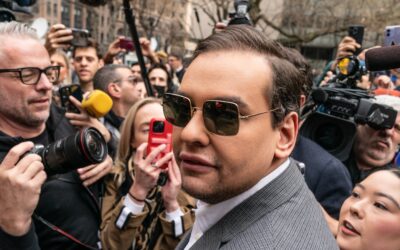
George Santos a Free Man After Trump Commutes His Sentence
President Donald Trump has commuted the sentence of former U.S. Representative George Santos, bringing an unexpected end to a high-profile federal prison term. The decision followed Santos’s public appeals from solitary confinement and has sparked debate about justice, loyalty, and presidential power. A Long Sentence Cut Short George Santos began serving an 87-month sentence in July 2025 after pleading guilty to wire fraud and identity theft. In addition to his prison term, he was ordered to pay over $373,000 in restitution and serve two years of supervised release. His conviction followed months of national attention for misrepresentations during his time in Congress. For many observers, his sentence seemed the final chapter in a story of scandal and deception. Yet Trump’s decision changed that narrative overnight. On Truth Social, Trump announced, “I just signed a Commutation, releasing George Santos from prison, IMMEDIATELY. Good luck George, have a great life!” He described Santos as “somewhat of a rogue,” but argued that others who committed worse acts had avoided severe punishment. Trump claimed Santos had been “horribly mistreated” and held in solitary confinement for long stretches. (MORE NEWS: Democrats Rally Behind Jay Jones Despite Disturbing Texts) He went further, comparing Santos’s wrongdoing to that of Senator Richard “Da Nang Dick” Blumenthal, accusing the Democrat of falsely claiming to be a Vietnam veteran — behavior Trump called “far worse” than Santos’s crimes. “He never went to Vietnam, he never saw Vietnam, he never experienced the battles there,” Trump wrote, calling Blumenthal’s war story “totally and completely made up.” The Plea from Solitary Santos’s open letter, “Santos in Solitary: A Passionate Plea to President Trump,” published in The South Shore Press, may have been the turning point. Writing from the Special Housing Unit, he described months of isolation and fear after what he said was a credible death threat. He wrote that he had been “locked inside a small steel cage twenty-four hours a day, with almost no contact with the outside world.” His description painted a grim picture of confinement — limited communication, no human interaction, and endless hours alone. More than a cry for help, the letter was part confession and part reflection. Santos admitted to past mistakes but said he was seeking redemption. He explained that he was “not asking for sympathy, but for fairness — for the chance to rebuild.” His tone was humble and personal, portraying a man who had come to terms with his failures and was desperate for a second chance. He appealed directly to Trump’s well-known sense of loyalty and belief in redemption, writing that the president had always been “a man of second chances.” A Glimpse Inside Prison Life In a previous South Shore Press exclusive essay, “George Santos My Life Behind Bars,” Santos offered a glimpse into his daily existence and the emotional toll of imprisonment. He described the monotony of prison life and the loss of identity that came with it: “Every morning, I wake up to the same gray walls and the same questions — how did I get here, and how can I make this right?” That earlier piece showed a different side of Santos — no longer the confident politician, but a man struggling to find meaning behind bars. He reflected on faith, remorse, and gratitude for those who still reached out to him. The letters he received from supporters, he wrote, reminded him that his story “isn’t over.” Together, his essays revealed a narrative of regret and hope that humanized him at a time when his name was synonymous with scandal. Trump’s Reasoning and Political Message Trump’s commutation fits a pattern familiar to his supporters. Throughout his political career, he has used presidential clemency to make statements about fairness, loyalty, and political bias. In this case, his comparison to Blumenthal’s misstatements about military service framed the move as an act of balance. Trump said it corrected what he views as a double standard in the justice system. The decision also highlights Trump’s ongoing emphasis on loyalty. Santos had remained publicly supportive of Trump even after his conviction. By granting clemency, Trump not only showcased his power but also reinforced his image as a leader who stands by his allies. His mention of Santos’s alleged mistreatment in solitary confinement brought moral weight to the decision. It tied the act to broader concerns about prison conditions and human dignity. (MORE NEWS: John Bolton Pleads Not Guilty to Classified Documents Charges) Supporters and Critics React Reactions to the commutation have been deeply divided. Supporters praised Trump’s decision as compassionate and fair. They said seven years for financial crimes was excessive, especially for a first-time offender. Many pointed to Santos’s letters as proof that he had shown genuine remorse and deserved a chance to start over. Critics, however, saw the move as political favoritism. Legal experts noted that Santos pled guilty to multiple felonies and argued that his confinement resulted from safety concerns, not abuse. They say the commutation undermines accountability and sends a message that political connections can outweigh justice. Even among skeptics, though, Santos’s letters drew sympathy. His descriptions of loneliness, fear, and regret resonated beyond politics. To some readers, his plea was less about self-interest and more about survival. The Moment of His Release George Santos learned about his commutation in a moment as unexpected as the decision itself. According to a post from The South Shore Press on X, he was using a prison computer when other inmates began shouting, “Hey… you’re on TV!” At first, Santos ignored them. He was used to being on the news and assumed it was another report about his case. About thirty minutes later, he looked up and read the news crawl at the bottom of the screen: “Santos Sentence Commuted.” In that instant, everything changed. The same media coverage that had followed his downfall now carried his freedom. Santos reposted the story on X, confirming that he had been released from custody at 11:30 p.m. 🚨 INSIDE SCOOP 🚨@MrSantosNY was on a computer when…

Trump Orders Military Pay Amid Government Shutdown
President Donald Trump has directed his administration to ensure that U.S. military personnel receive their paychecks on October 15 despite an ongoing government shutdown. In a post on Truth Social, Trump said he had ordered Secretary of War Pete Hegseth to “use all available funds to get our Troops PAID on October 15th.” He added: “We have identified funds to do this, and Secretary Hegseth will use them to PAY OUR TROOPS. I will not allow the Democrats to hold our Military, and the entire Security of our Nation, HOSTAGE, with their dangerous Government Shutdown.” Trump cast this move as a direct pushback against what he called Senate Minority Leader Chuck Schumer’s “radical left” wing, accusing Democrats of threatening the security and stability of the nation by failing to fund essential government operations. (MORE NEWS: Letitia James Indicted: Virginia Grand Jury Charges NY AG) Shutdown Threatens Military Pay The government shutdown began October 1, after Senate Democrats repeatedly blocked clean continuing resolutions that would preserve funding at current levels. Because of this impasse, the Treasury and Department of Defense face constraints on processing regular payroll. Traditionally, Congress must act before October 13 to allow payroll mechanisms to run smoothly. Without such action, many active-duty personnel and National Guard members risk missing their standard mid-month pay. Trump, however, insists that military pay is nonnegotiable. He framed the issue as a moral and security imperative, vowing not to let politics jeopardize the livelihoods of those who serve. Republicans Criticize Democrats’ Position At the same time, House leadership has escalated criticism of Senate Democrats, particularly Schumer, according to Breitbart. Speaker Mike Johnson accused Democrats of shutting down the government to appease the “Marxist wing” of their party. He added that federal workers — including military families — are already feeling the effects of delayed pay. House Majority Whip Tom Emmer also blamed Schumer for leveraging federal employees and service members “as hostages.” He argued that Democrats are responding to pressure from more extreme factions within their caucus. Notably, some Republicans have claimed that Democrats plan to attend a political retreat in Napa Valley October 13–14, even while funding remains unresolved — a decision Republicans decry as tone-deaf during a shutdown. (MORE NEWS: Melania Trump Helps Reunite Ukrainian Children Amid War) Financial Strain on Military Families The shutdown has generated serious financial stress across military and civilian ranks. To ease the burden, institutions like Navy Federal Credit Union have already activated bridge loan and paycheck protection programs. During the last shutdown in 2019, Navy Federal processed more than $50 million in loans for about 19,000 recipients. Meanwhile, advocacy groups such as the National Military Family Association report a surge in letters to Congress. Nearly 100,000 messages have been submitted in support of the so-called “Pay Our Troops Act,” introduced by Representative Jennifer Kiggans (R-VA). Over 100,000 letters sent and counting. Military families have spoken: #PayOurTroops We’re waiting on Congress to act, but we’re not done yet. Every voice matters. Keep the pressure on until this becomes law. #MilitaryFamiliesServeToo #TogetherWereStronger #NMFA pic.twitter.com/ClXvuUcP03 — National Military Family Association (@military_family) October 11, 2025 Yet despite mounting pressure, Senate Democrats have repeatedly defeated short-term funding proposals purportedly designed to reopen agencies and restore pay. Trump’s Strategy: Bypass the Impasse In issuing his executive direction, Trump seeks to circumvent legislative gridlock altogether. By tapping into available or reserve funds, he aims to prevent service members from suffering due to congressional dysfunction. He reaffirmed that reopening the government should come first: “The Radical Left Democrats should OPEN THE GOVERNMENT,” he wrote, after which other priorities — including healthcare reform — could be addressed. Trump contrasts his approach with what he describes as Schumer’s willingness to gamble with national security and troop morale. He warns that unless Democrats act, they will be responsible for destabilizing the military’s financial footing. Political Stakes and Public Perception This move carries significant political implications. Ensuring troop pay during a shutdown allows Trump and Republican leaders to spotlight Democratic inaction. It also positions the GOP as defenders of military welfare, regardless of broader legislative standoffs. On the other hand, critics may challenge the legal or constitutional authority for deploying funds outside of congressional appropriation. The question of whether the executive branch can unilaterally direct pay during a lapse in appropriations is likely to spur debate. The Takeaway As the October 13 deadline looms, Congress will face intense pressure. If lawmakers refuse to act, Trump’s executive order may become a test case for how far a president can go to shield essential services during shutdowns. Still, without broad legislative cooperation, many government operations remain suspended. Even if troops get paid, other agencies will remain nonfunctional until Congress and the White House reach an agreement. In sum, Trump’s directive to pay U.S. service members amid a shutdown marks a bold attempt to sidestep gridlock, shore up military morale, and cast blame on Democratic leaders. Whether that gambit holds — legally, politically, and practically — depends on how both sides respond in the days ahead. Cut through the noise. Drown out the spin. Deliver the truth. At The Modern Memo, we’re not here to soften the blow — we’re here to land it. The media plays defense for the powerful. We don’t. If you’re done with censorship, half-truths, and gaslighting headlines, pass this on. Expose the stories they bury. This isn’t just news — it’s a fight for reality. And it doesn’t work without you.

Democrats Lose Media Cover as CNN Blames Them for Shutdown
OPINION CNN’s Jake Tapper made headlines when he said, “Based on the way we have always covered shutdowns, Democrats are to blame for this shutdown.” That moment wasn’t a casual comment — it was a revelation. When a mainstream media figure like Tapper admits Democrats are responsible, it means the truth is too clear to spin. The government shutdown didn’t happen because Republicans refused to govern. It happened because Democrats refuse to prioritize American citizens. Democrats’ Shutdown Gamble Just Collapsed Every time Washington hits a budget wall, Democrats try to frame it as Republican obstruction. But this time, the facts tell a different story. Republicans control both chambers of Congress and the White House. They put forward bills to fund the government responsibly and prioritize the needs of everyday Americans. Republicans in the House pushed to keep spending under control and to prioritize essential services. They passed funding bills. Democrats, instead of working with them, stonewalled and delayed. Their goal was simple: force another crisis they could exploit politically. But this time, the tactic backfired. Even journalists who usually carry water for the Democratic Party couldn’t ignore reality. CNN’s Tapper said plainly that, based on the way shutdowns have always been covered, this one rests on the Democrats’ shoulders. That admission undercuts years of media spin. (RELATED NEWS: Leavitt: $37 Trillion Debt Forces Layoffs, Shutdown Cuts) The Media Can’t Ignore the Obvious For decades, Democrats have relied on friendly coverage to cushion political failures. Most major networks frame Republican actions as cruel or extreme, while portraying Democrats as responsible and compassionate. That script fell apart this week. When even CNN — the network conservatives love to criticize for bias — admits Democrats are at fault, it exposes how undeniable the situation has become. The shutdown is not a “shared blame” issue. It’s a direct result of Democratic refusal to compromise. Tapper’s comment matters because it represents a crack in the media wall. When that wall starts to crumble, ordinary Americans get to see what’s been true all along. Democrats Overplayed Their Hand The White House thought it could spin another shutdown to its advantage. The strategy was simple — blame Republicans, count on media allies to amplify the message, and let the pressure force the GOP to cave. But that playbook failed. Americans are tired of political theater. They know inflation is still high, debt is out of control, and Washington keeps wasting taxpayer money. Democrats, instead of offering solutions, pushed for even more spending and refused to cut anything. When Republicans stood their ground, Democrats decided to shut it all down rather than make tough choices. Voters can see through the act. And now, even mainstream media hosts are admitting the truth. A Turning Point in Media Credibility Jake Tapper’s acknowledgment might seem small, but it represents a shift. When a high-profile CNN anchor says Democrats are to blame, it cuts through years of one-sided coverage. It suggests that even the media’s loyalty has limits. When reality is this obvious, spin no longer works. This could be a turning point for American journalism. If reporters begin holding both parties to the same standard, the public wins. The truth becomes clearer, accountability increases, and voters can make informed decisions. Whether the rest of the media follows Tapper’s lead remains to be seen, but his statement has already sparked a necessary conversation. Democrats’ Divide Grows Deeper Also this week, Joe Scarborough, host of Morning Joe, called out Democrat Jay Jones, who fantasized about murdering a Republican official and his children. Scarborough didn’t hedge his words. He said Jones “should probably be forced to withdraw from the race.” That statement was stunning not just for its bluntness but for where it came from — one of the most reliably liberal morning shows on television. Even more troubling, Representative Abigail Spanberger still endorses Jones despite the vile comments. That kind of moral blindness shows just how far some Democrats are willing to go to protect their own, no matter how extreme the behavior. When leading voices in their own party start publicly demanding accountability, it signals a deeper problem: the left has drifted too far left for even its own allies to defend. (RELATED NEWS: Democrats Rally Behind Jay Jones Despite Disturbing Texts) MORNING JOE: Jay Jones, who fantasized about murdering a Republican official and his kids, “should probably be forced to withdraw from the race.” Abigail Spanberger still endorses Jones.pic.twitter.com/rvPwNc0Hko — RNC Research (@RNCResearch) October 6, 2025 And it’s not just Scarborough breaking ranks. Senator John Fetterman of Pennsylvania, once celebrated as a progressive icon, has begun to distance himself from the far-left agenda. He even praised President Donald Trump for his work in the Israel-Gaza peace deal, posting, “I congratulate @POTUS on this historic peace plan that releases all the hostages. Now, enduring peace in the region is possible. Our parties are different but we have a shared ironclad commitment to Israel and its people.” Fetterman’s words highlight a rare moment of bipartisan respect — and a quiet admission that strength and leadership matter more than ideology. When prominent Democrats and media figures start acknowledging that the left has gone too far, it confirms what Americans have sensed for years: the Democratic Party has lost touch with reality. I congratulate @POTUS on this historic peace plan that releases all the hostages. Now, enduring peace in the region is possible. Our parties are different but we have a shared ironclad commitment to Israel and its people. pic.twitter.com/iGb1PE93VH — U.S. Senator John Fetterman (@SenFettermanPA) October 8, 2025 Conclusion: The Truth Always Breaks Through Democrats tried to turn the shutdown into a political weapon, counting on the usual protection from sympathetic reporters and friendly headlines. But this time, even their media allies couldn’t carry the narrative. The facts were too obvious to hide. When CNN itself calls out Democratic failure, that’s not partisan spin — that’s reality breaking through. The American people see it. They’re tired of excuses and empty rhetoric. They want honesty, accountability,…