

Politics

Kennedy Center Board Votes to Close Over Financial Crisis and Trump Naming Dispute, Names New President
The Kennedy Center’s board of trustees voted Tuesday to close the storied Washington performing arts institution, citing both severe financial distress and an unresolved legal dispute over the board’s push to add President Trump’s name to the building, according to sources familiar with the closed-door meeting. Board members characterized the center’s physical condition as dire and the institution as nearing insolvency, describing the extensive renovations the building requires as “a very large and complex job” that the center’s current finances cannot support. The board’s private meeting Tuesday, which Trump and Commerce Secretary Howard Lutnick both attended, ultimately resulted in a vote to cease Kennedy Center operations, according to people familiar with the proceedings who spoke to the Associated Press. As part of the shakeup, Matt Floca — who previously served as the center’s vice president of operations with a background in facilities management and construction — was installed as the new president and executive director, replacing Richard Grenell, who had led the institution through a turbulent stretch marked by budget warnings to staff about impending cuts that would leave the organization running on “skeletal teams.” The closure vote caps months of controversy that began earlier this year when Trump moved to reshape the Kennedy Center’s leadership and, subsequently, sought to attach his name to the federally chartered cultural institution. The board went so far as to erect signage placing Trump’s name above that of President John F. Kennedy, for whom the center has been named since it opened in 1971 as a living memorial to the assassinated president. When the naming move drew immediate legal challenges, the board did not remove Trump’s name but instead installed what has been described as “an elevated tarp which obscures Trump’s name and most of Kennedy’s” while the underlying legal fight played out in federal court. Federal Judge Christopher Cooper ultimately blocked the board’s effort to formally rename or add memorial signage honoring Trump, ruling unambiguously that “Defendants cannot install memorials for President Trump or anyone or anything else at the Kennedy Center without Congress’s blessing” — a reminder that the Kennedy Center, unlike a privately run cultural venue, operates as an independent federal institution whose formal name and memorial designations fall under congressional authority rather than the discretion of its board or any single administration. Despite the ruling, board members reportedly floated alternative inscription language that would have recognized Trump’s financial contributions to the renovation effort, with the board suggesting that “without such appropriate recognition,” continued presidential support for funding the needed repairs was unlikely to materialize — a framing that drew criticism from lawmakers and arts advocates who argued that federal cultural institutions should not be treated as bargaining chips tied to a single benefactor’s desire for personal recognition. The controversy also produced a separate legal skirmish over who gets a voice in the Kennedy Center’s governance. A federal judge determined that Rep. Joyce Beatty, an Ohio Democrat who serves as an ex officio board member by virtue of her congressional position, was entitled to participate in Tuesday’s closure vote meeting, though the judge stopped short of guaranteeing her an actual vote on the board’s decisions — a narrower procedural ruling that nonetheless underscored how contentious even basic governance questions at the institution had become amid the broader fight over its leadership and branding. The upheaval has triggered a wave of departures and public criticism from the artistic community that has long relied on the Kennedy Center as one of the nation’s premier venues for theater, music and dance. Actress Issa Rae and banjo virtuoso Bela Fleck are among the performers who have withdrawn from planned Kennedy Center engagements in protest, while pianist and songwriter Ben Folds and celebrated opera soprano Renée Fleming both resigned from advisory roles at the institution earlier this year. Jean Davidson, who had served as executive director of the National Symphony Orchestra, one of the resident companies that performs at the Kennedy Center, also departed for a position elsewhere amid the turmoil. Trump has publicly tied his willingness to support the center’s renovation funding to the naming dispute, suggesting on social media that his financial backing for the extensive repairs the building needs was contingent on receiving what he considers appropriate recognition — a linkage that critics say inappropriately conditions taxpayer-adjacent support for a national cultural institution on personal branding concerns rather than the institution’s underlying public mission. For a facility that has hosted presidents, foreign dignitaries and the country’s most prominent performing artists for more than five decades, Tuesday’s closure vote represents an unprecedented disruption. The Kennedy Center receives federal appropriations to help maintain its facilities as the nation’s official memorial to President Kennedy, but has historically relied heavily on private donations, ticket sales and its endowment to fund programming — a funding model that board members now say has proven unsustainable given the scale of deferred maintenance the aging building requires alongside the institutional turmoil of the past several months. Arts advocates and congressional Democrats have called the closure vote a direct consequence of the leadership upheaval Trump initiated earlier this year, arguing that the departure of experienced arts administrators and donors amid the branding fight left the institution financially weaker and less capable of executing the ambitious renovation plans now being cited as justification for shutting down. Supporters of the administration’s involvement counter that the center’s financial problems predate this year’s leadership changes and that a substantial infusion of private funding, potentially including from Trump himself, represents the institution’s best realistic path toward the kind of comprehensive renovation its aging infrastructure genuinely requires. With a new president now in place and the underlying legal dispute over Trump’s name still not fully resolved, the Kennedy Center’s path back to normal operations remains uncertain. Congressional oversight committees are expected to examine the closure decision and the institution’s finances in the coming weeks, given the center’s unique federal charter and the public funding it receives, even as the board and new leadership under Floca begin the…

Supreme Court Rejects Trump’s Mail Ballot Restrictions Ahead of 2026 Midterms in Major Election Ruling
The Supreme Court rejected the Trump administration’s bid to impose new restrictions on mail-in voting ahead of the 2026 midterm elections, a decisive ruling handed down Monday that allows states to continue running their existing vote-by-mail systems even as ballots are already being cast in some jurisdictions. The ruling marks the definitive resolution of a legal fight that had been winding through federal courts since spring, when President Trump signed an executive order directing the U.S. Postal Service to play a central role in verifying mail-ballot eligibility. The administration framed the mail-voting restrictions as an election-integrity safeguard, but the justices found the plan “unlikely to succeed on the merits,” a phrase that effectively ended the administration’s chances of implementing the order before November’s midterm elections. Notably, the coalition that rejected the mail-in voting restrictions was not drawn along the predictable ideological lines that typically define high-profile Supreme Court election cases. Justices Neil Gorsuch, Amy Coney Barrett and Brett Kavanaugh — all three appointed by Trump himself during his first term — joined the majority in ruling against the administration’s position, while Justices Samuel Alito and Clarence Thomas publicly dissented. That alignment complicates any straightforward narrative about the court simply protecting a Republican president’s agenda, underscoring instead a genuine split among the court’s conservative wing over the limits of executive authority in setting election procedure. The mail ballot restrictions case traces back to Trump’s original executive order, which sought to have USPS compile and rely on eligibility lists supplied by state election officials before delivering mail ballots to voters. A federal judge had already found that the Postal Service, as an independent federal agency, lacks the legal authority to condition ballot delivery on the kind of citizenship and eligibility verification scheme the order envisioned — a finding the Supreme Court’s Monday ruling effectively left intact by declining to revive the administration’s approach in time for this election cycle. Data on the scale of mail voting in the United States helps explain why Monday’s ruling carries such high stakes for how the 2026 midterms will actually be conducted. Roughly one-third of American voters now cast their ballots by mail rather than in person, and eight states — California, Colorado, Hawaii, Nevada, Oregon, Utah, Vermont and Washington — conduct their elections almost entirely through mail-in voting, meaning any successful restriction would have reshaped how a substantial share of the electorate participates in this fall’s elections. The administration had defended the push for tighter verification by citing concerns about noncitizen voting, though independent research, including a 2025 Brookings Institution analysis, has found that instances of noncitizen voting occur at a rate of approximately 0.000043% of all ballots cast — a figure voting rights advocates have repeatedly cited as evidence that the restrictions targeted a problem far smaller in practice than in political rhetoric. Reaction from state election officials, who have spent months preparing for the possibility that mail-voting rules could shift dramatically and suddenly, was one of relief tempered by continued vigilance given how contentious the underlying legal fight has been. Oregon’s Secretary of State framed the ruling in stark terms, emphasizing that “presidents don’t run elections, the people do,” a line that captured the broader argument voting rights groups have made throughout the litigation: that election administration authority under the Constitution rests primarily with states and Congress, not the executive branch. Nevada’s Secretary of State described the mood among election officials as “one of relief,” while still urging voters to remain confident in the process regardless of the legal turbulence surrounding it in recent months. Monday’s ruling is the latest and most consequential chapter in a case that has moved through the courts in fits and starts since Trump signed the original order. An earlier Supreme Court order in August had paused a lower-court injunction specifically as it applied to roughly two dozen Democratic-led states, allowing partial implementation to proceed in a narrower set of circumstances while a separate, broader nationwide injunction remained in place. That fragmented earlier ruling had left election officials genuinely uncertain about which rules would apply where, a limbo that Monday’s more sweeping rejection appears to resolve in voters’ favor nationwide, at least for this election cycle. The timing of the decision — arriving as voting is already underway in some states with early and mail balloting — added urgency to the court’s ruling, since any further delay in resolving the legal uncertainty risked disrupting ballot printing, mailing schedules and voter confidence in the weeks immediately preceding the election. Legal analysts following the case say the practical effect of Monday’s ruling is to lock in the status quo for mail voting through the 2026 midterms, even though the broader constitutional questions about presidential authority over election administration remain technically unresolved and could resurface in future litigation well before the next presidential election cycle. Republican officials who had supported the push for tighter mail-ballot verification expressed disappointment but signaled the fight over election security is far from over, pointing to state-level efforts to tighten voter ID rules through legislative channels. Democratic officials and voting rights organizations characterized the ruling as a necessary check on executive overreach into an area the Constitution reserves primarily to states and Congress. The decision lands amid a broader wave of election-related legal battles playing out simultaneously across the country this election cycle, including ongoing redistricting fights in more than half a dozen states that have reshaped House maps ahead of November. Voting rights advocates argue that taken together, the mail-ballot litigation and the redistricting battles reflect a coordinated push to influence the midterm playing field through the courts and executive action alike, while administration officials continue to insist each initiative addresses a distinct and legitimate concern about fairness or integrity in how elections are run. With the mail-voting question now largely settled for this cycle, attention is likely to shift toward how those redistricting disputes and other pending election-law cases are resolved in the final stretch before voters head to the polls in November….

Iran Accuses US of Using Nuclear Watchdog as Pretext for Strikes as IAEA Reports Tehran Still Blocking Inspectors
Iran has accused the United States of using the International Atomic Energy Agency’s inspection findings as political cover to justify military strikes on its nuclear facilities, escalating a standoff that shows no sign of resolution more than a year after American and Israeli warplanes bombed some of the country’s most sensitive atomic sites. The accusation, leveled by Iranian officials this week, comes just days after the IAEA’s confidential quarterly report documented that Tehran continues to deny inspectors access to more than 20 nuclear-related sites and has refused to account for its stockpile of roughly 440 kilograms of uranium enriched to near weapons-grade levels — enough material, according to nuclear experts cited in the report, to produce several nuclear weapons if enriched further. Iran maintains, as it has throughout the crisis, that it has no intention of building a nuclear weapon and says its program exists solely for civilian energy and research purposes. IAEA Director General Rafael Grossi has repeatedly pressed Tehran to restore the access it suspended in the aftermath of last year’s strikes, telling the agency’s Board of Governors in Vienna on September 7 that he was calling “on Iran to engage with the Agency constructively in order to make possible the full and effective implementation of Agency safeguards in Iran.” Iranian officials have responded by casting the IAEA’s reporting itself as compromised, arguing that Washington and its allies have weaponized the agency’s technical findings to manufacture justification for military action rather than to genuinely verify the peaceful nature of Iran’s program. The dispute traces back to June 2025, when Israel launched a 12-day bombing campaign against Iranian military and nuclear infrastructure, a campaign the United States joined less than two weeks later with strikes on the heavily fortified enrichment facilities at Natanz, Fordow and Isfahan. Iranian Foreign Minister Abbas Araghchi has previously dismissed the notion that the strikes were prompted by an “imminent nuclear threat” from Iran as a “heinous lie,” arguing the claim had been “thoroughly debunked” even by Grossi’s own agency and by Oman’s foreign minister, who had been mediating indirect talks between Tehran and Washington before the bombing campaign began. Those talks, which had reached five rounds of negotiation aimed at easing American sanctions in exchange for constraints on Iran’s nuclear activities, collapsed once the strikes began. Araghchi has insisted Iran did not “kill diplomacy,” saying instead that “those who blew up the negotiating table did.” Tensions flared again in February 2026, when a second round of conflict brought additional strikes on Iranian nuclear facilities, further hardening Tehran’s position toward international inspectors. In June 2026, American and Iranian negotiators reached a framework agreement under which Iran would dilute its stockpile of highly enriched uranium under IAEA supervision, a deal that both sides hoped might de-escalate the standoff and restore some measure of international oversight. That agreement, however, remains unimplemented three months later, with Washington and Tehran each accusing the other of failing to uphold its end of the bargain — a dynamic that has left the IAEA effectively locked out of much of Iran’s nuclear infrastructure even as international concern over the unaccounted-for enriched uranium stockpile continues to grow. Iran suspended its cooperation with IAEA inspectors almost immediately after the June 2025 strikes, arguing that continuing to grant international access to facilities that had just been bombed by two of the same countries pushing for that access amounted to a security risk it could not accept. Tehran has also pointed to what it characterizes as a pattern of politically motivated resolutions from the IAEA’s Board of Governors, arguing that the agency has allowed itself to become an instrument of pressure from Washington and Israel rather than functioning as a neutral technical body. Iranian state media and officials have periodically floated the idea that the agency’s own reporting effectively provided Israel and the United States with a roadmap for targeting, a claim the IAEA has firmly rejected as both false and dangerous, since it undermines the case for the kind of transparency that would actually reduce the risk of further military action. For the Trump administration, the unresolved standoff presents a genuine dilemma. Officials have continued to cite Iran’s stockpile of near-weapons-grade uranium and its refusal to grant inspectors access as justification for maintaining maximum economic pressure and keeping the option of further military action on the table. At the same time, the administration has faced criticism from arms-control advocates who argue that walking away from verified inspections — even inspections Iran itself suspended — leaves the international community with far less visibility into Iran’s actual nuclear activities than it had before the strikes, potentially making it harder, not easier, to detect a genuine dash toward weaponization if Tehran ever decided to pursue one. Regional dynamics add further urgency to the standoff. Israel has continued to describe Iran’s nuclear program as an existential threat and has signaled it would consider additional strikes if it judged Tehran to be reconstituting its enrichment capacity at any of the damaged or newly hardened facilities. Gulf Arab states, meanwhile, have expressed a mix of relief that Iran’s program has been set back and anxiety that the unresolved standoff could reignite into a broader regional conflict with little warning, particularly given the unrelated but overlapping tensions already playing out between Saudi Arabia and Iran-aligned Houthi forces in Yemen. Diplomats tracking the dispute say a durable resolution likely requires Iran to accept some restoration of IAEA access in exchange for tangible sanctions relief, mirroring the broad contours of the framework agreement reached in June — but implementing even that limited arrangement has proven difficult given the deep mistrust on both sides following two rounds of military strikes in less than a year. Grossi has continued to describe the situation as urgent, warning that the international community’s ability to verify Iran’s nuclear intentions deteriorates further with each month that inspectors remain locked out, while Iranian officials counter that restoring the access Washington and Israel now demand would mean trusting the same governments…

Mexico Claims 46% Drop in Homicides Under Sheinbaum, But Watchdogs Warn the Numbers Don’t Tell the Whole Story
Mexican President Claudia Sheinbaum’s government says intentional homicides have fallen 46% since she took office, a dramatic decline her administration is holding up as proof that its aggressive campaign against cartel operators is working — even as independent researchers warn that other forms of criminal violence are quietly rising in the shadow of the falling murder count. According to figures presented by Sheinbaum’s government, the daily average of intentional homicides dropped from 86.9 in September 2024, when she took office, to 47.3 by May 2026, making that May the lowest for the month in twelve years. Officials say 28 of Mexico’s 32 states recorded year-over-year reductions in homicides, with some of the improvements especially dramatic: San Luis Potosí saw an 81% decline, while Zacatecas, long one of the country’s most violence-plagued states amid competition between rival cartel factions, posted a 63% drop. High-impact crimes more broadly — a category that includes homicide, kidnapping and extortion — fell 31% from October 2024 through May 2026, according to the government’s figures. The security gains, if they hold up, would represent one of the most significant declines in criminal violence in Mexico’s recent history, a country that has struggled for nearly two decades with cartel-driven violence that has claimed hundreds of thousands of lives since the government’s military confrontation with drug trafficking organizations began in earnest in the mid-2000s. Sheinbaum’s administration has pointed to a substantial law enforcement push behind the numbers: officials report more than 56,000 detentions tied to high-impact crimes, nearly 30,000 firearms seized, and approximately 420 tons of drugs confiscated, including a naval operation that alone secured more than 71 tons of cocaine. The government has paired that enforcement push with social investment it argues addresses violence at its root, enrolling more than 385,000 young people in job-training and education programs such as Jóvenes Construyendo el Futuro, alongside plans to create 200,000 new high school spaces aimed at keeping at-risk youth out of cartel recruitment pipelines. The approach marks a notable shift from the “hugs, not bullets” strategy associated with Sheinbaum’s predecessor and political mentor, former President Andrés Manuel López Obrador, whose government favored addressing the social roots of cartel violence over direct military confrontation. Sheinbaum has instead leaned into more assertive, at times militarized operations against cartel leadership structures, including a major operation in Jalisco earlier this year targeting the Jalisco New Generation Cartel, one of the country’s most powerful and violent criminal organizations. Her government has also drawn a harder line than some anticipated on U.S. relations, at one point refusing to extradite certain Mexican officials wanted on drug trafficking charges in the United States even while separately transferring dozens of cartel suspects to American custody in what her administration described as a “sovereign decision” rather than a concession to U.S. pressure. Violence remains heavily concentrated in a handful of states even as the national numbers improve. Officials say eight states now account for 54% of all homicides nationwide, led by Guanajuato, which alone represents 8.8% of the national total, followed by Baja California, Chihuahua, Sinaloa, Morelos, the State of Mexico, Guerrero and Veracruz — a list that reads as a rough map of where major cartel factions continue to compete most fiercely for territory and trafficking routes. Independent researchers and security analysts, however, have urged considerable caution about reading the declining homicide figures as evidence that Mexico’s underlying violence problem is actually improving. The 2026 Peace Index, a widely cited annual assessment of security conditions across the country, found homicides fell 22.7% over the year it examined — a smaller but still substantial decline that nonetheless came paired with concerning increases in disappearances across multiple regions and the expansion of extortion networks tied to increasingly fragmented criminal groups. Researchers behind the index cautioned that these trends reflect “the persistence of criminal structures” and continuing gaps in Mexico’s investigative and judicial capacity, warning that “structural risks threatening the sustainability of these advances persist” even as the topline homicide numbers move in the right direction. Some analysts have gone further, suggesting that at least part of the decline in reported homicides may reflect a shift in how criminal violence manifests rather than a genuine reduction in its overall scale — with disappearances, in particular, sometimes serving as a way for both criminal organizations and, in some documented cases, state actors to obscure killings that might otherwise be counted as homicides. The Peace Index report noted that domestic violence has become Mexico’s most commonly reported offense even as firearm use in street crime has risen, and pointed to Mexico’s prison population reaching a record 256,000 inmates alongside what it described as a severe deficit in the investigative and judicial capacity needed to actually process that volume of cases and hold perpetrators accountable. For the Trump administration, which has made pressuring Mexico on both cartel violence and fentanyl trafficking a signature element of its broader Western Hemisphere policy, Sheinbaum’s numbers present a complicated diplomatic dynamic. A genuine, sustained decline in cartel violence would support continued cooperation between the two governments on security matters, while persistent skepticism from independent monitors gives U.S. officials who favor a harder line on Mexico ample grounds to argue that the underlying crisis remains far from resolved regardless of which statistics get emphasized on either side of the border. U.S. law enforcement agencies have continued to report large fentanyl seizures tied to Mexican trafficking networks even as Sheinbaum’s government touts its own record hauls, underscoring that whatever progress has been made against cartel violence domestically within Mexico has not yet translated into a comparable slowdown in the flow of drugs across the border. That disconnect has fueled ongoing friction between Washington and Mexico City over how much credit Sheinbaum’s security strategy actually deserves, with American officials in border states frequently pointing to seizure statistics on their own side of the border as a more reliable gauge of cartel activity than homicide figures reported by a foreign government with an obvious political incentive to showcase improvement. Whether…

Taiwan Approves $7.5 Billion Drone Budget as Chinese Naval Presence Surges Fourfold
Taiwan’s legislature approved a NT$240 billion — roughly $7.5 billion — special budget for unmanned military systems late last month, a major investment in drone warfare capability that comes as official data shows Chinese naval activity around the island surging to levels far beyond anything recorded a year ago. Taiwan’s Coast Guard Administration reported that 244 Chinese vessels were observed in Taiwan’s surrounding waters in July alone, compared with just 58 vessels during the same month last year — more than a fourfold increase. Taiwanese officials say that since May, they have documented approximately 1,247 Chinese vessels operating in waters around the island, part of what analysts describe as a sustained campaign of naval presence intended to normalize China’s military footprint near Taiwan without crossing the threshold that would trigger a more forceful international response. China’s People’s Liberation Army also continued its long-running pattern of aerial incursions into Taiwan’s Air Defense Identification Zone, though the August numbers offered a partial counterpoint to the naval trend: the PLA conducted 125 such incursions during the month, less than half the rate recorded during the same period in each of the two previous years. Analysts tracking the shift say the decline in aerial incursions alongside the sharp rise in naval activity may reflect a deliberate strategic recalibration by Beijing, shifting the weight of its pressure campaign from more visible and internationally scrutinized air incursions toward a less dramatic, harder-to-counter buildup of maritime presence that accumulates gradually rather than in single, headline-grabbing incidents. China’s coast guard has maintained a steady drumbeat of incursions specifically near Taiwan’s outlying islands as well. Four separate China Coast Guard incursions occurred near Kinmen Island in August — on the 5th, 13th, 19th and 29th — continuing a pattern of roughly four monthly intrusions that has held steady since February 2024. Separately, two Chinese coast guard vessels entered restricted waters around Pratas Island on August 18, an atoll far to the south that sits closer to the Philippines than to Taiwan’s main island but that Taipei has controlled and garrisoned for decades. Taiwan’s government has responded with a combination of legislative and military measures aimed at hardening the island’s defenses against exactly the kind of gray-zone pressure campaign China appears to be waging. The newly approved drone budget, which cleared Taiwan’s Legislative Yuan on August 27 with support from opposition lawmakers who have not always aligned with the governing party on defense spending, is earmarked for unmanned systems procurement and for building out Taiwan’s domestic drone manufacturing industry — a recognition among Taiwanese defense planners that relying primarily on imported systems from the United States and other partners leaves the island vulnerable to supply disruptions in a crisis. The Executive Yuan formally endorsed the opposition-backed measure shortly after its passage, an unusual instance of cross-party alignment on a major defense initiative in Taiwan’s often fractious legislature. Taiwan’s military followed the budget’s passage with live-fire artillery drills on August 27 that specifically integrated unmanned systems alongside traditional platforms like howitzers and armored vehicles, a combination officials said was designed to incorporate “tactical lessons learned from the war in Ukraine,” where drones have transformed frontline combat in ways that militaries around the world have scrambled to study and adapt to. Taiwanese defense officials have been especially attentive to how cheap, mass-produced drones have been used in Ukraine both for reconnaissance and for direct strikes against armor and personnel, seeing clear parallels to how a Chinese invasion force crossing the Taiwan Strait might similarly be vulnerable to distributed, low-cost unmanned systems deployed at scale. Beyond the military dimension, Taiwan’s Central Election Commission has approved a referendum question asking voters whether to repeal the island’s long-standing “nuclear-free homeland” policy, which has kept Taiwan’s nuclear power plants offline or headed toward decommissioning for years. The push to revisit that policy reflects growing concern among Taiwanese officials about the island’s energy vulnerability in a potential blockade scenario, since Taiwan currently imports the vast majority of its energy needs, primarily as liquefied natural gas delivered by sea — precisely the kind of supply line that Chinese naval and coast guard vessels operating in the surrounding waters could threaten to interdict in a crisis, giving Beijing a coercive lever over Taiwan’s economy and daily life without firing a shot. On the U.S. side, the Commerce Department’s Bureau of Industry and Security has opened an investigation into Apex Logistics, a Singapore-based transportation and logistics firm, over allegations it facilitated illegal exports of advanced semiconductors to China in violation of U.S. export controls. If the investigation results in formal charges, officials say it would mark the first legal action taken against a transportation and logistics company specifically for its role in chip smuggling, rather than against the exporters or end-users more typically targeted in such cases — a potential expansion of enforcement that could have ripple effects across the broader logistics industry that moves sensitive technology components around the world, given how much of that industry currently operates on the assumption that liability rests primarily with shippers and manufacturers rather than the intermediaries that physically move the goods. Taken together, the naval buildup, Taiwan’s defense response, and the expanding U.S. enforcement posture on chip exports reflect a relationship between Washington, Taipei and Beijing that continues to grow more tense across multiple fronts simultaneously, even without a single dramatic flashpoint driving the headlines. U.S. officials have said China’s military activities near Taiwan “unnecessarily raise tensions,” a formulation that has become a standard part of Washington’s response to nearly every escalation in the strait over the past several years, even as the underlying trend lines — more ships, more coercive economic pressure points, and now a referendum revisiting one of Taiwan’s most fundamental energy policies — suggest the strategic picture is shifting in ways that go well beyond any single incident. The timing of Taiwan’s defense buildup is also shaped by the broader U.S.-China relationship, which observers say is being closely watched for signs of where the next Trump-Xi summit…
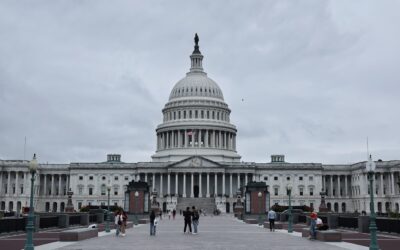
House Passes Stopgap Funding Bill, Averting Shutdown Before Midterm Elections
The House of Representatives passed a short-term government funding bill Tuesday by a lopsided 370-48 vote, sending the measure to President Trump’s desk and averting a government shutdown just weeks before voters head to the polls in the November midterms. The stopgap measure, known as a continuing resolution, keeps federal agencies funded generally at current spending levels through December 11, buying Congress additional time to negotiate full-year appropriations bills without the immediate pressure of an October 1 funding cliff. The Senate had already approved the measure by an overwhelming margin before it reached the House floor, and with Trump’s signature considered a formality, the bill is expected to become law well before the current funding deadline expires. The lopsided vote margin reflects a rare moment of bipartisan alignment on a piece of must-pass legislation, particularly notable given how badly the last two funding fights went. Lawmakers in both parties have been eager to avoid a repeat of 2025’s shutdown chaos, when the federal government endured a 43-day lapse in funding followed by a separate, even longer 76-day shutdown limited to the Department of Homeland Security — the longest shutdown of any single federal department in U.S. history. With midterm elections just two months away, neither party wanted to be blamed for a third disruptive funding lapse in as many years, a dynamic that appears to have driven Tuesday’s smooth passage far more than any newfound spirit of bipartisan cooperation on the underlying spending questions that remain unresolved. House Appropriations Committee Chairman Tom Cole framed the bill as straightforward good governance, telling reporters it provides “certainty that the government will remain open, certainty that our service members will be paid.” House Speaker Mike Johnson struck a similar tone, crediting Republicans for delivering the result and saying the House GOP is “continuing to do the grown-up thing, get the job done” — remarks aimed as much at midterm voters weighing which party can be trusted to keep basic government functions running as at colleagues on the floor. Democrats offered a more qualified endorsement. Rep. Rosa DeLauro, the top Democrat on the Appropriations Committee, pointed to a provision delaying a proposed rule that would have given Trump-appointed officials new authority to halt federal grants for programs they deem misaligned with the administration’s policy agenda, calling the delay “an important first step.” But DeLauro made clear Democrats see the underlying policy fight as far from settled, warning that “whether a community receives disaster relief should not depend on who they voted for in the last election” — a pointed reference to Democratic concerns that the administration could eventually use grant-approval authority to reward friendly states and jurisdictions while punishing others. The bill includes at least one other notable policy provision beyond the topline spending extension: language preventing the Department of Homeland Security from transferring funds internally to boost Border Patrol’s budget beyond what Congress has already appropriated, a restriction that reflects ongoing congressional efforts to maintain oversight over how immigration enforcement dollars are actually spent even as the administration has pushed to expand enforcement operations through other channels, including the National Guard deployments and ICE surges already underway in several major cities. The relatively narrow scope of the bill — a straightforward extension of current funding levels rather than a comprehensive rewrite of federal spending priorities — reflects a deliberate strategy by leadership in both chambers to keep the legislation simple enough to avoid the kind of ideological riders that have sunk previous funding bills. Appropriators on both sides have signaled they intend to use the roughly three-month runway before the December 11 deadline to try to negotiate full-year spending bills covering the various federal agencies individually, rather than relying on another continuing resolution when the current one expires. Whether that effort succeeds is an open question; previous attempts at regular-order appropriations have repeatedly broken down over disputes on individual agency budgets, immigration enforcement funding, and policy riders attached by both parties, which is part of why the government has now operated under a series of short-term patches for much of the past several years rather than the full-year budgets that were once the norm. The bill’s passage removes one significant source of uncertainty from the political landscape heading into the fall campaign season, allowing both parties to turn their full attention to the redistricting fights, the state of the economy, and other issues expected to dominate midterm messaging without the added complication of a government shutdown playing out in the final stretch before Election Day. Still, the December 11 deadline means the underlying funding fight has only been postponed, not resolved, and lawmakers on both sides say they expect a more contentious round of negotiations once Congress returns from the elections to face a lame-duck session that will need to produce either full-year spending bills or yet another short-term extension before the holidays. For federal workers and contractors who lived through last year’s back-to-back shutdowns, Tuesday’s vote offers at least a few months of certainty. Whether that certainty extends much beyond December remains very much in the hands of a Congress that has struggled repeatedly in recent years to complete its most basic constitutional task of funding the government it oversees. The timing of the new deadline is itself politically significant. By pushing the next funding cliff to December 11, congressional leaders in both parties effectively guaranteed that the fight over full-year spending bills will unfold in a lame-duck session immediately following the midterms, when the incentives facing individual lawmakers shift considerably. Members who lost reelection bids in November will have less political exposure to worry about when casting votes on politically difficult spending bills, while members who won will be looking ahead to a new two-year term rather than an immediate election. Congressional aides in both parties have said privately that lame-duck sessions, for all their reputation as chaotic and rushed, have historically proven more capable of producing genuine compromise on appropriations than sessions held in the shadow of an looming…

SNAP Turns 62 With Enrollment Down 11% Nationally as New Work Requirements Take Hold
The federal food stamp program marks 62 years since President Lyndon B. Johnson signed the Food Stamp Act into law on August 31, 1964 — an anniversary landing this year amid the steepest enrollment decline in the program’s modern history, as expanded work requirements and eligibility restrictions passed last year work their way through the system. More than 4 million people lost Supplemental Nutrition Assistance Program benefits between July 2025 and April 2026, according to federal data, with nationwide participation falling from roughly 42 million to 37 million recipients — an 11% decline in less than a year. More recent estimates put the total number of people who have lost benefits since the changes began at over 5 million, with enrollment continuing to decline in every state, according to Lauren Bauer, an economist at the Brookings Institution who tracks the program. The changes stem from the One Big Beautiful Bill Act, the sweeping tax and spending package Congress passed in July 2025. The law significantly expanded SNAP’s work requirements, mandating that more adults prove they are working or volunteering at least 80 hours a month to keep receiving benefits. Groups newly subject to those requirements include veterans, homeless individuals, young adults aging out of the foster care system, parents with children between 14 and 17, and adults between the ages of 55 and 64 — populations that had previously been exempted from SNAP’s work-requirement rules in whole or in part. The law also eliminated federal food aid eligibility entirely for certain categories of noncitizens, including refugees, asylum seekers, and victims of domestic abuse or human trafficking who had previously qualified for assistance regardless of immigration status. The Congressional Budget Office projects that the expanded work requirements alone will reduce SNAP participation by an average of 2.4 million people per month over the 2025-2034 period, a scale of reduction that budget analysts describe as one of the largest deliberate contractions of the program’s reach since its modern form took shape in the 1970s. Children have not been spared: at least 1 million children lost benefits across the 19 states surveyed in one recent analysis, even though most of the new work requirements are aimed at adult recipients rather than families with young children directly. The impact has landed unevenly across the country. Arizona has seen the steepest decline of any state, with enrollment falling to roughly half of the previous year’s level — a drop of more than 400,000 participants. Louisiana, Florida and Oklahoma have also recorded significant enrollment drops as the new eligibility rules and paperwork requirements take hold, according to state-level data reviewed by researchers tracking the rollout. Agriculture Secretary Brooke Rollins has offered a different read on the numbers, attributing the enrollment decline primarily to “a better economy” and arguing that many people leaving the rolls were “taking the program that shouldn’t have been” receiving benefits in the first place — framing the drop as evidence the new work requirements are successfully targeting the program toward those who genuinely need it. Policy analysts studying the data have pushed back on that explanation, noting that unemployment has remained essentially flat over the same period while food prices have continued to rise, a combination they argue points toward the policy changes themselves, rather than a strengthening labor market, as the primary driver of the decline. Beyond the immediate eligibility changes, the law sets up a more structural shift in how SNAP is funded starting in 2027, when states will be required to help cover the program’s costs for the first time in the program’s history. SNAP has historically been funded almost entirely by the federal government, with states responsible mainly for administrative costs rather than the benefits themselves. Tim Shaw, a policy expert at the Aspen Institute, said the new state cost-sharing requirement creates a serious long-term risk for the program’s reach, since most states are legally required to balance their budgets every year and have far less fiscal flexibility than the federal government to absorb a new, potentially large and unpredictable expense. “More than 60 years of food assistance could soon come to an end” in some states, Shaw warned, raising the possibility that a handful of states could eventually scale back their participation in the program altogether once the funding burden shifts. Some states have also begun restricting which specific food items SNAP recipients are permitted to purchase with their benefits, a separate trend that predates the 2025 law but has gained momentum alongside the broader push to tighten the program’s rules. Supporters of those restrictions argue they encourage healthier purchasing patterns among recipients; critics counter that they add administrative complexity for retailers and stigmatize recipients without meaningfully improving nutrition outcomes. Elaine Waxman of the Urban Institute pointed to what she described as one of SNAP’s core historical strengths now under strain: its universality. Before the recent changes, she noted, the program’s defining feature was that “it was available everywhere,” providing a consistent nutritional safety net regardless of which state a family happened to live in. With enrollment now falling unevenly by state and a state-funding requirement looming in 2027, that consistency is increasingly in question, with anti-hunger advocates warning that the practical experience of the program could soon vary dramatically depending on a family’s zip code in a way it has not for most of the program’s 62-year history. Food banks and local charitable networks in several of the hardest-hit states say they have already seen a noticeable uptick in demand as SNAP recipients lose eligibility, though most describe their capacity as strained rather than broken so far. Anti-hunger organizations argue that private charity was never designed to absorb the scale of need that a federal entitlement program covering tens of millions of people is built to address, and they warn that a further wave of state-level funding shortfalls in 2027 could push local food assistance networks well past their sustainable limits. Supporters of the new work requirements counter that a modest transition period of strained…

Supreme Court Lets Trump’s Mail-Voting Order Partially Take Effect, Injecting Uncertainty Into Midterms
The Supreme Court’s conservative majority handed the Trump administration a preliminary win Monday, pausing a lower-court ruling that had blocked key parts of President Trump’s executive order overhauling mail-in voting rules across two dozen states — even as a separate nationwide injunction keeps the order’s central mechanism frozen for now. Trump signed the executive order in March, directing the Department of Homeland Security to compile citizenship verification lists and requiring the U.S. Postal Service to obtain lists of eligible mail voters from state election officials. Under the order, USPS would deliver mail ballots only to voters confirmed on those lists, and election officials would be required to place specific verification barcodes on ballot return envelopes. The White House has defended the order as a necessary safeguard against noncitizen voting, though research on the subject has consistently found that noncitizen voting in U.S. elections is, in the words of election researchers, “infinitesimally rare.” U.S. District Judge Indira Talwani had blocked the order’s key provisions in June for 23 Democratic-led states and the District of Columbia, ruling that Trump “overstepped a president’s authority” under a Constitution that assigns election rule-setting power to state legislatures and Congress, not the executive branch. Talwani also found that the Postal Service, as an independent federal agency, has no legal authority to condition mail-ballot delivery on the kind of voter-list verification scheme the order envisions. The Supreme Court’s unsigned order Monday paused Talwani’s injunction specifically as it applied to those 23 states and D.C., allowing the administration to move forward with certain aspects of implementation there while the underlying legal fight continues. But the justices left a separate, broader nationwide injunction in place, meaning USPS still cannot actually begin restricting mail-ballot delivery based on the disputed voter lists anywhere in the country while the administration’s appeals proceed. The court was notably cautious in its own language, writing that its decision “does not mean that any measure taken by the Government to implement the Order will necessarily be lawful. On that score, time will tell” — a signal that the justices were resolving only a narrow procedural question about which injunction applies where, not endorsing the order’s ultimate legality. Justice Ketanji Brown Jackson dissented from the ruling, warning that the decision “needlessly injects chaos and uncertainty into the upcoming midterm elections” at a moment when state election officials are already deep into planning for November. New York’s attorney general, whose office has been among those challenging the order, called the ruling a “painful setback” while vowing to continue pursuing the underlying legal challenge through the appeals process. The practical stakes of the ruling are tied tightly to the calendar. Administration officials have acknowledged that full implementation of the order would need to begin “as soon as early to mid-August” to be operationally ready before the midterm elections in November — a deadline that has now effectively passed, meaning that even with Monday’s favorable ruling, the legal and logistical hurdles remaining make it increasingly unlikely the order will be fully in effect in time to reshape how mail ballots are processed in this year’s midterms. That timing crunch has left election administrators in the affected states in an awkward holding pattern, uncertain whether to prepare systems for a new verification regime that may or may not be operational before ballots go out. Republican-led states that intervened in the case have appealed the broader injunction, arguing that Talwani’s nationwide order improperly extended relief to states that were never party to the original lawsuit and that federal courts should not be able to block a presidential directive on a nationwide basis based on a challenge brought by a subset of states. Democratic attorneys general and voting rights groups, meanwhile, argue that the administration’s own timeline concessions undercut its claim of urgency, suggesting the order’s real purpose was less about closing a negligible security gap and more about making mail voting logistically harder in states that rely on it most heavily. The dispute now heads back to the lower courts for further proceedings on the merits, with the Supreme Court’s Monday order settling only which injunction controls in the interim rather than resolving the constitutional questions at the heart of the case. Legal analysts following the litigation say a final resolution — whether from the appeals court or eventually from the Supreme Court itself on the full merits — is unlikely before the 2026 midterms are decided, meaning the order’s ultimate fate will most likely be determined only after this election cycle has already played out under whatever patchwork of rules happens to be in effect this fall. For voters in the 23 states and D.C. covered by Monday’s ruling, the immediate practical impact remains limited given the separate nationwide injunction still blocking USPS implementation, but election officials in those states say they are watching the appeals process closely, given how quickly the legal landscape has shifted over the past several months. The ruling arrives against a backdrop of intensifying legal and political fights over election procedure in the run-up to November, following on the heels of the redistricting battles reshaping House maps in more than half a dozen states. Voting rights groups have argued that the mail-voting order, the redistricting fights, and a series of other state-level changes to voter ID and registration rules amount to a coordinated effort to tilt the midterm playing field in ways that will be difficult for courts to fully sort out before votes are cast. Administration officials reject that characterization, framing each initiative as a separate, good-faith effort to address a specific and distinct integrity or fairness concern, whether in how districts are drawn or how ballots are verified. Election law scholars note that the fractured nature of Monday’s ruling — one injunction lifted, another left standing — is itself a reflection of how unusual this case is procedurally, since it involves overlapping lawsuits filed in different jurisdictions raising similar claims against the same federal policy. That fragmentation means the order’s legal status could…

France’s Political Season Reopens With No Majority, No Budget, and a 2027 Race Already Underway
France’s political class returned from summer recess this week facing a familiar and worsening problem: a National Assembly with no working majority, a 2027 budget that must somehow pass anyway, and a presidential race that, with less than eight months to go before voters head to the polls, is already reshaping how every major party approaches the fall legislative session. Prime Minister Sébastien Lecornu, who has spent months trying to hold together a government that lacks a stable parliamentary coalition, has made passing a 2027 budget his central priority for the fall, but he is doing so under a self-imposed constraint designed to keep his own political future out of the equation. “I am not a candidate in the presidential election,” Lecornu said, an explicit attempt to signal that his budget proposals are being shaped by fiscal necessity rather than positioning for 2027 — a distinction he hopes will make it easier to find votes from lawmakers who might otherwise view any prime ministerial initiative through the lens of the coming presidential contest. Lecornu’s team has described the budget measures under consideration as deliberately “reversible,” a hedge intended to make the package more palatable to a fractured Assembly where no single bloc controls anything close to a majority. The budget fight is unfolding against a backdrop of sharpening ideological battle lines. Olivier Faure, first secretary of the Socialist Party, has staked out a position built around what he calls “ecological socialism,” combining traditional left-wing tax and spending priorities with climate policy, while explicitly ruling out any accommodation with the far right. Faure has warned that his party will not support any Lecornu-backed measure that draws backing from Marine Le Pen’s National Rally, declaring flatly that “if…the far right supports it, we will vote to censure it” — a warning that any bill perceived as dependent on far-right votes will trigger a no-confidence motion from the Socialists, regardless of the bill’s substance. That dynamic hands outsized leverage to Jordan Bardella, president of the National Rally, who has used the summer to prepare the party’s platform for the 2027 campaign rather than negotiate over the current government’s budget. Bardella said his party has “worked hard this summer on a programme to get the country back on its feet,” language aimed squarely at voters rather than at his colleagues in the Assembly, and reflecting the extent to which the National Rally now positions itself as a government-in-waiting rather than a conventional opposition party working the current legislative session for incremental wins. On the center-right and center, Édouard Philippe of the Horizons party has tried to carve out space as a unifying figure capable of pulling together right-of-center and centrist voters wary of both the National Rally and the hard-left France Unbowed. Philippe has paired that pitch with a call for fiscal restraint, positioning himself as the candidate of budgetary seriousness against both a far right he views as fiscally reckless in its own way and a resurgent left pushing for higher taxes and spending. Adding another layer to the field, former Socialist President François Hollande has signaled his own 2027 ambitions are gaining momentum, calling for tax increases to address France’s economic strains — a notable break from the fiscal caution favored by Philippe and much of the governing center, and a sign that Hollande, who left office deeply unpopular in 2017, sees an opening to reposition himself for a political comeback. The immediate legislative agenda facing Lecornu’s government extends well beyond the budget itself. Lawmakers are also expected to take up an agricultural “rescue plan” aimed at addressing financial strain among French farmers, along with a reform of the country’s sick leave policy — both politically sensitive measures in their own right that will require the same kind of fragile, ad hoc coalition-building the government has relied on for every major initiative since the last National Assembly elections left no party or bloc with a majority. The stakes of the budget fight are difficult to overstate in a political system still adjusting to a period of chronic parliamentary fragmentation. France has cycled through multiple prime ministers in rapid succession in recent years as successive governments failed to build durable coalitions, and a failure to pass a budget this fall would raise fresh questions about the viability of governing at all under the current Assembly’s composition — potentially reviving talk of new legislative elections or a fresh government reshuffle less than a year before voters choose a new president. Moderate figures across the political spectrum have used the start of the new session to warn against the further radicalization of French politics, cautioning that both a resurgent far right and an emboldened far left threaten the kind of pragmatic, compromise-based governance that a divided Assembly requires to function at all. Whether those warnings translate into actual cooperation on the budget, or whether the approaching presidential election simply accelerates the trend toward legislative gridlock as every major figure positions for 2027 rather than for the next fiscal year, is likely to become clear well before voters cast their first ballots. For now, Lecornu’s government remains dependent on a shifting, issue-by-issue patchwork of support from lawmakers who, in nearly every case, have far more to gain politically from distancing themselves from the current government than from helping it succeed — a structural problem that no amount of “reversible” budget language is likely to fully solve. The instability has broader implications beyond France’s own borders. As one of the European Union’s two largest economies alongside Germany, France’s ability to pass a credible budget carries weight for European bond markets and for the bloc’s broader fiscal credibility at a moment when several member states are already navigating their own debt and spending pressures. European officials have watched the past several years of French governmental turnover with concern, worried that prolonged instability in Paris could complicate joint EU initiatives that require French buy-in, from defense spending coordination to the bloc’s collective response to Russia’s war in Ukraine,…

Federal Judge Rejects Maxwell’s Bid to Keep Sealed Epstein-Case Documents Secret
A federal judge in New York has rejected Ghislaine Maxwell’s constitutional challenge to a law forcing the release of long-sealed documents from the Jeffrey Epstein investigation, clearing the way for another batch of previously secret materials from Virginia Giuffre’s 2015 civil lawsuit against Maxwell to become public. U.S. District Judge Loretta Preska ruled August 12 that the Epstein Files Transparency Act, signed into law in 2025, overrides the decade-old protective order that had kept the documents under seal. Maxwell, who is serving a 20-year federal sentence after her 2021 conviction for sex trafficking, had argued the law was unconstitutional on three separate grounds, all of which Preska rejected in her opinion. Maxwell’s attorneys first argued the law violated separation-of-powers principles by improperly reopening a final judgment and directing courts how to rule in a specific case — in effect, they argued, Congress was doing a judge’s job by legislating a particular outcome in ongoing litigation rather than setting general policy. Preska disagreed, finding that Congress has clear authority to modify the rules governing grand jury secrecy through legislation, and that the original protective order sealing the documents was never meant to be permanent in the first place. The order, she noted, was explicitly modifiable “by the Court at any time for good cause shown” — meaning the parties involved never had an ironclad guarantee that the records would stay sealed forever. Maxwell’s second argument leaned on Federal Rule of Criminal Procedure 6(e), which generally bars disclosure of materials gathered through grand jury subpoenas. Some of the documents at issue were produced by Boies Schiller Flexner LLP, the law firm that represented Giuffre, after the firm complied with a grand jury subpoena as part of the broader Epstein investigation; those materials were originally placed under seal by a March 2016 protective order. Preska found that Congress retains the authority to override grand jury secrecy protections through validly enacted legislation, undercutting Maxwell’s claim that the records were categorically off-limits regardless of what a later statute said. Maxwell’s third and final argument was that unsealing the documents now would violate her due process rights by stripping away a vested legal right to permanent secrecy that she claimed to have earned when the original protective order was issued. Preska rejected that framing outright, ruling that Maxwell never had “a vested right to total and perpetual secrecy” in the first place — a protective order, by its nature, protects information only for as long as a court determines that protection remains warranted, not as an unconditional promise that can never be revisited. The Epstein Files Transparency Act itself requires the Department of Justice to “make publicly available … all unclassified records, documents, communications, and investigative materials” tied to a list of specified subjects, including Epstein and Maxwell by name. The law was the product of sustained pressure from lawmakers in both parties, along with victims’ advocates, who argued that years of piecemeal, heavily redacted document releases had failed to give the public a full accounting of who knew what about Epstein’s abuse of underage girls and when they knew it. Since the law’s passage, courts and the Justice Department have released multiple rounds of material, including a batch of roughly 3 million documents and photos made public by the DOJ in January, though critics on the House Oversight Committee have repeatedly accused the department of slow-walking the fullest disclosures and continuing to withhold material that lawmakers say should be released under the statute. Preska’s ruling did not set a specific date for when the newly cleared documents will actually become public. Records released under the Transparency Act typically go through a redaction process first, intended to protect the identities of Epstein’s victims and other private individuals named in the files who are not themselves subjects of the underlying allegations — a process that has, in past rounds of disclosure, taken anywhere from several weeks to a few months after a judge clears materials for release. It remains unclear from the ruling itself whether Maxwell’s legal team plans to appeal Preska’s decision to the Second Circuit, though her attorneys have signaled in past filings that they intend to keep contesting individual releases of sealed material as they come up, even as the broader legal fight over the Transparency Act’s constitutionality has now been resolved, at least at the district court level, in the government’s favor. Giuffre, who died by suicide in April 2025, sued both Maxwell and Prince Andrew in the years before her death, alleging she had been trafficked as a teenager. Maxwell settled Giuffre’s suit against her in 2017; Prince Andrew reached his own settlement with Giuffre in 2022. Epstein died in federal custody in 2019 while awaiting trial on sex-trafficking charges, a death that was officially ruled a suicide but that has continued to fuel public skepticism and conspiracy theories, adding to the political pressure that eventually produced the Transparency Act. Lawmakers on the House Oversight Committee, which has spent much of the past year pressing the Justice Department for fuller compliance with the law, have said they view the ruling as a significant step toward the kind of complete public accounting they have been demanding since the statute’s passage, even as they continue to argue that millions of additional pages remain improperly withheld. Whether this latest release meaningfully advances that broader effort, or simply becomes the next flashpoint in an ongoing legal and political fight over how much of the Epstein investigation’s paper trail the public is ultimately entitled to see, is likely to become clearer only once the newly cleared documents are actually made public in the weeks ahead. Preska’s decision is notable partly because it is not the first time a federal judge has sided with disclosure advocates over Maxwell’s objections this year. Her ruling followed similar findings from other judges handling related sealed materials from the broader Epstein docket, part of a pattern that has emerged since the Transparency Act’s passage: courts asked to weigh decades-old secrecy orders…