

Politics

State Department Pulls More Than 175,000 Visas as Trump’s Crackdown on Foreign Criminals Hits New Milestone
The State Department announced this week it has revoked more than 175,000 visas from foreign nationals since President Trump returned to office, a milestone officials are touting as proof of the administration’s commitment to removing dangerous individuals from American communities — even as the sweeping scope of the crackdown, which now extends to political speech and long-settled birth tourism practices, continues to draw criticism from immigration and civil liberties advocates. What the Numbers Show According to a fact sheet the department released Monday, the vast majority of the 175,000-plus revocations stemmed directly from law enforcement encounters involving criminal conduct, with assault, driving under the influence, theft, and drug crimes topping the list of leading causes. Beyond those, officials say a significant share of revocations involved allegations of reckless driving, sexual assault, child abuse, fraud, and embezzlement. “Under President Trump, the United States Department of State has revoked more than 175,000 visas from foreign nationals who violated the terms of their visas, committed crimes, called for violence against U.S. citizens, defrauded Americans, abused our immigration system, or endangered national security,” the department said in its statement. Officials framed the effort in blunt terms: “A U.S. visa is a privilege, not a right,” the department said, adding that it remains “committed to using every tool available to protect our communities from those who abuse it.” The Cases Officials Are Highlighting The State Department released a series of specific case examples to illustrate the scope of the crackdown. Among the more serious cases cited: a foreign national charged with felony rape and sexual battery of a victim who is mentally disabled; another charged with felony kidnapping, human trafficking, and sexual exploitation of a minor; and a foreign national facing more than a dozen counts of possessing child sexual abuse material. Officials also flagged financial crimes, including a case involving a fraudulent Medicaid billing scheme that generated more than $5 million in fake claims, and a separate case involving fabricated company revenue and forged documents used to defraud investors and fraudulently obtain a visa in the first place. Secretary of State Marco Rubio also specifically pointed to a handful of cases tied to foreign policy and national security grounds, including a Cuban national connected to an influence operation tied to Havana’s communist government, Iranian nationals with ties to the Iranian regime, and a Kuwaiti national who reportedly expressed a desire for violence against the president and referred to Americans as his “enemy.” One additional case that drew particular attention involved a Laotian national convicted of a child sex offense who had previously received a pardon from Minnesota Gov. Tim Walz — a detail that ties the visa announcement to an ongoing state-level political controversy in Minnesota as well. A New Front: Political Speech Notably, this round of revocations extends into more contested territory than earlier rounds. Al Jazeera reported that some of the visa cancellations targeted foreign nationals who “celebrated the assassination of Charlie Kirk,” the conservative activist killed last year, including individuals who made public statements the State Department characterized as approving of his death. That marks a meaningful expansion of the criteria the administration is using to justify revocations — moving beyond criminal conduct and immigration violations into territory that touches directly on political expression, a shift that has drawn scrutiny from civil liberties advocates who argue that revoking a visa over protected speech, however distasteful that speech might be, raises different legal and constitutional questions than revoking one over an assault conviction or a fraud charge. Supporters of the administration’s approach counter that a visa is fundamentally different from citizenship, and that foreign nationals celebrating the assassination of an American citizen — regardless of the underlying speech protections that might apply to U.S. citizens making similar statements — do not have an inherent right to remain guests in the country whose laws and citizens they’ve expressed hostility toward. Targeting Birth Tourism The crackdown has also become a vehicle for the administration’s broader push against birth tourism, in which foreign nationals travel to the United States specifically to give birth so their children automatically receive U.S. citizenship. The State Department disclosed that a single U.S. embassy in North Africa revoked more than 100 visas connected specifically to birth tourism cases, describing the recipients as “birth tourist’ parents who came to the United States primarily to give birth so their children would get U.S. citizenship.” The move dovetails with a broader, ongoing effort by the administration — including a Texas executive order earlier this year targeting hospitals that market birth tourism packages to foreign nationals — to treat the practice as a form of immigration fraud rather than a simple byproduct of birthright citizenship under the 14th Amendment. Part of a Larger Pattern Monday’s announcement builds on a steadily escalating series of visa enforcement actions throughout Trump’s second term. The State Department had already announced revoking more than 100,000 visas back in January, which was described as a record at the time — meaning the pace of revocations has continued to climb substantially throughout the year rather than tapering off. The visa crackdown runs parallel to the administration’s broader immigration enforcement push: supporters of the administration’s approach point to figures suggesting roughly 900,000 illegal immigrants have been removed or deported since Trump returned to office, with as many as 2.2 million more believed to have self-deported amid the changed enforcement climate. Where the Criticism Lies Civil liberties and immigration advocacy groups have raised concerns about several aspects of the expanded enforcement effort, particularly the administration’s approach to social media vetting and screening of visa applicants and holders, which has grown considerably stricter. Rights advocates argue that expanded social media monitoring for visa enforcement purposes edges toward surveillance and risks chilling legitimate political speech among visa holders who may now feel they need to self-censor online commentary — even commentary that would be unquestionably protected if made by a U.S. citizen — for fear of losing their legal status in the country. The…

Minnesota GOP Rejects Trump’s Pick, Nominates Lisa Demuth for Governor Over Mike Lindell
Minnesota Republicans delivered a genuine primary night upset Tuesday, choosing state House Speaker Lisa Demuth as their nominee for governor over Trump-endorsed MyPillow founder Mike Lindell — setting up a general election matchup against Democratic Sen. Amy Klobuchar in a race Republicans see as one of their best pickup opportunities in a state that hasn’t elected a GOP governor in more than two decades. A Come-From-Behind Win The Associated Press called the race for Demuth just before midnight, with her holding more than 43% of the vote to Lindell’s less than 33% once the count was finalized. That represented a real reversal of fortune: Lindell had appeared to be leading in the limited public polling available heading into Election Day, and he had touted President Trump’s endorsement heavily in the campaign’s final stretch. “I have an advantage over everyone up here,” Lindell told supporters at an event just days before the primary. “I can call up and work with the President of the United States.” That advantage ultimately wasn’t enough. Notably, Demuth won the nomination despite not having the backing of either major GOP power center in the race — she’d been passed over by the state Republican Party’s own endorsement process, which instead backed businessman Kendall Qualls back in May, and she lacked Trump’s presidential endorsement as well, which went to Lindell. Demuth stayed in the race regardless, citing what she described as irregularities in the party’s convention voting process, and built a coalition strong enough to overcome both organizational disadvantages. Qualls, for his part, conceded graciously as Demuth’s lead widened on election night, congratulating her for “earning the support of the Republican primary voters.” What Sank Lindell’s Campaign Lindell’s defeat wasn’t simply a story of Demuth outperforming expectations — it also reflected real friction within his own campaign in its closing weeks. According to NBC News, attacks on Lindell from fellow Republicans, including pointed questions about his state residency raised publicly by the chairman of the Minnesota Republican Party, meaningfully hampered his campaign heading into the final stretch, as segments of the state GOP actively worked to consolidate support behind an alternative. Lindell, the report noted, has become better known nationally in recent years as an outspoken election conspiracy theorist than as a Minnesota political figure, a reputation that appears to have created real vulnerabilities even within a Republican primary electorate generally sympathetic to Trump’s endorsement. As of Tuesday night, Lindell had not formally conceded the race, continuing to raise claims about anomalies in the vote count even as the Associated Press, NBC News, CBS News, and other major outlets all called the race decisively in Demuth’s favor. Why the Seat Is Open in the First Place The race to replace term-limited Democratic Gov. Tim Walz has been shaped heavily by controversy well before Tuesday’s primary. Walz, who had originally planned to seek a third term, abruptly announced in January that he would not run for reelection after facing mounting scrutiny over allegations that his administration ignored repeated warnings about social aid fraud at daycare centers across the state — a scandal Minnesota Department of Human Services employees say they flagged internally long before it became public. Demuth referenced the episode directly on the campaign trail, blaming what she called “incompetent Democrat control” for the fraud cases and pointing to her own record establishing a Fraud Prevention Agency Oversight Committee while leading the state House. Klobuchar entered the governor’s race only a few weeks after Walz’s withdrawal, adding her name to a Democratic field that included four sitting U.S. senators nationally seeking governorships this cycle. She easily secured her party’s nomination Tuesday, defeating lesser-known primary opponents Kobey Layne and businessman Bill Gates Jr. — no relation to the Microsoft co-founder. Demuth’s Case to Voters Demuth, 59, has spent the current legislative session presiding over a state House that’s nearly evenly split between the two parties, and she leaned into that experience on the campaign trail, emphasizing her record of working across the aisle in a divided chamber as evidence she can govern effectively in a purple state. Speaking to reporters after her win was projected Tuesday night, she struck an optimistic tone about the race ahead. “This is our opportunity to really move Minnesota forward, and I’m excited about that,” Demuth said. An Uphill Fight, But a Real One Even with a clean primary win now behind her, Demuth faces a genuinely difficult path in November. Minnesota hasn’t elected a Republican governor since 2002, and the state has trended Democratic in recent presidential cycles — Kamala Harris carried it by roughly four percentage points in the last presidential election, and Trump has never won the state in any of his three runs for the White House. Klobuchar, a fixture in Minnesota politics since her election to the Senate in 2007, enters the general election with substantial name recognition and a well-established statewide fundraising network. That said, Republicans see real opportunity in this particular race that goes beyond simple partisan trend lines. The daycare fraud scandal that ended Walz’s political career gives Demuth a concrete, non-abstract line of attack against continued Democratic control of the governor’s office, and an open seat — rather than a Democratic incumbent seeking reelection — typically presents a more favorable opportunity for the out-of-power party. Trump’s team, despite backing the losing candidate in the primary, is likely to engage heavily in the general election regardless, given how closely national Republicans are watching Minnesota as a genuine midterm target after Lindell’s defeat scrambled expectations about the state of the race. The Bigger Picture for Trump’s Political Capital Tuesday’s result also carries a broader signal about the limits of a Trump endorsement within his own party. Lindell’s loss, despite the president’s public backing, suggests Minnesota Republican primary voters were willing to prioritize a candidate with concrete legislative experience and a clean campaign presence over one carrying more national baggage — even one with the president’s explicit support. Whether that dynamic reflects a uniquely Minnesota set…

Trump Signs Order Trimming Childhood Vaccine Schedule, Says It’s Time to “Bring It Back” to How Things Used to Be
President Trump signed an executive order Monday directing the federal government to scale back the number of vaccines universally recommended for American children, splitting the combined measles-mumps-rubella shot into three separate doses and reducing the list of diseases every child is advised to be vaccinated against from 18 down to 11 — the latest and most sweeping move yet in a yearslong push by the president and Health Secretary Robert F. Kennedy Jr. to overhaul how the country approaches childhood immunization. What the Order Actually Does Signed in the Oval Office with Kennedy, NIH Director Dr. Jay Bhattacharya, and White House domestic policy deputy Dr. Heidi Overton standing alongside him, the order calls for reducing the number of vaccines universally recommended for the youngest children from 17 to 11. Rather than eliminating the remaining shots — including those for RSV and hepatitis A and B — the order reclassifies them as recommended specifically for children considered higher-risk, or subject to what officials are calling “shared clinical decision-making” between a child’s parents and their doctor, rather than a blanket, one-size-fits-all recommendation. The order also specifically targets the MMR shot, currently administered as a single combined vaccine against measles, mumps, and rubella. Under the new guidance, the administration is recommending the three diseases be inoculated against separately, in individual shots given at separate doctor visits spread out over time, rather than combined into one dose. Notably, the order stops short of touching two of the most well-established childhood vaccines: the White House confirmed it continues to recommend the measles and polio vaccines specifically, even as it pulls back on the broader universal schedule elsewhere. Trump’s Own Framing Trump was direct in linking the changes to his long-stated views on autism, telling reporters in the Oval Office that reducing the number of childhood shots is meant to reverse what he characterizes as a modern epidemic. “Decades ago, children received only a small fraction of the vaccines required today,” Trump said. “In those times, people were much healthier and, of course, the high rates of autism now observed did not exist. So, there’s a reason for such epidemic rates of autism. And we’re going to bring it back to much closer to where it was.” He added that under the prior schedule, “we were requiring 72 jabs for our beautiful, healthy, lovely, delicate little children” — a figure he used repeatedly to underscore his case for scaling things back. The order also directs the Department of Justice to investigate whether individual states are complying with existing exemptions to childhood vaccine mandates, specifically citing parental authority, disability accommodations, religious objections, and medical exemptions as protections the administration wants more rigorously enforced nationwide. Framed Around Parental Choice, Not Restricting Access White House officials have been careful to frame the changes as expanding options rather than limiting them. A White House official told reporters the changes are meant to help parents who have questions about vaccine requirements, “especially post-COVID,” and to open up dialogue aimed at rebuilding public trust in the health system. Kennedy echoed that framing directly, saying the changes are meant to give parents choices rather than restrict access, and administration officials emphasized that the proposed changes would not prohibit access to any vaccine or limit insurance coverage for families who still want their children to receive the full existing schedule. Building on an Earlier Order — And Facing the Same Legal Roadblocks Monday’s action builds directly on Executive Order 14407, signed back in May, which committed the federal government to aligning the U.S. childhood vaccine schedule with what the administration calls “best practices” from peer developed nations. Administration officials have specifically pointed to Denmark as a model, noting that vaccines for flu, COVID, RSV, and chickenpox aren’t part of that country’s universal childhood schedule. That comparison isn’t universally accepted, however. Many public health researchers argue Denmark’s approach reflects a fundamentally different set of circumstances — including a universal healthcare system and a smaller, more homogeneous population — that don’t necessarily translate to a country as large and diverse as the United States, which faces a different underlying burden of infectious disease. The push has also already run into legal trouble. A related effort by the CDC to change the vaccine schedule back in January was blocked by a federal judge, and NPR reports Monday’s order is likely to face similar legal challenges. That history is part of why the administration appears to be pursuing the changes through an executive order this time, alongside continued efforts within the CDC and HHS. A Politically Risky Move, Even Within the Administration Notably, CNN reporting indicates the timing of Monday’s order came despite long-running reservations among some of Trump’s own political advisers, who have argued that pushing controversial vaccine policy is broadly unpopular with the electorate and risks alienating voters ahead of November’s competitive midterm elections. Earlier this year, some White House officials reportedly urged Kennedy to shift his public focus toward more mainstream health initiatives specifically because of concerns about the political fallout from his vaccine-related work — guidance that continued in the background even as Monday’s order moved forward regardless. The Medical Community’s Response The medical and public health community has pushed back forcefully. Physician groups have pointed to what they describe as decades of consistent scientific research affirming both the safety and effectiveness of the existing childhood vaccine schedule, and argue that repeated extensive studies have found no evidence connecting vaccines to autism — a claim the president has continued to make publicly despite that body of research. Critics characterize the pattern as part of a broader effort by the administration to reshape vaccine guidance through executive and political channels rather than through the traditional, transparent scientific review process that has historically guided U.S. immunization policy. Where Things Go From Here Supporters of the administration’s approach argue that giving parents more granular choice and shifting some vaccines to a risk-based rather than universal recommendation reflects a reasonable, modernized approach to children’s health — one…

Trump Administration Unveils Head Start Overhaul, Promising $2.2 Billion in Savings and Room for 268,000 More Kids
The Trump administration announced a sweeping overhaul of Head Start this week, stripping away a wide range of federal regulations governing the decades-old early education program in a move officials say will free up $2.2 billion and open enrollment to as many as 268,000 additional children — even as some early childhood advocates warn the changes could weaken protections for the country’s most vulnerable kids. The Core of the Plan The proposal, unveiled by the Department of Health and Human Services, would eliminate many of the federal rules that have long governed how local Head Start centers operate, shifting significant authority to states and local program administrators instead. The centerpiece of the savings comes from a sharp cut to allowable administrative overhead, dropping the cap from 15% to just 5% — a change officials project will unlock the bulk of the $2.2 billion in projected savings, which the administration says will be reinvested directly into expanding the program rather than diverted elsewhere. Alex Adams, who leads the Administration for Children and Families within HHS, framed the changes as empowering local decision-makers rather than stripping away necessary safeguards. “If their structure is working for their community and their governing board and the parents who sit on that affirm that, no changes will be needed,” Adams told reporters, emphasizing that centers retain the option to keep operating exactly as they have been if that’s what works for their community. Not a Pure Deregulation Story Notably, the proposal isn’t simply about cutting rules — it adds new requirements in at least two areas. The administration is introducing enhanced nutrition standards championed by HHS Secretary Robert F. Kennedy Jr., along with a new physical activity mandate requiring 30 minutes of physical activity for every 3.5 hours of classroom instruction. HHS Secretary Kennedy struck a notably protective tone about the program’s mission despite the broader deregulation push. “It’s a program that works for the most vulnerable, of course, kids in our society,” Kennedy told reporters. “And it’s really important we protect it.” The Case for Deregulation Supporters of the plan point to a simple comparison: state-level childcare licensing standards, which apply to the vast majority of non-Head Start preschool and daycare programs nationwide, are far less restrictive than what Head Start currently requires — and those state standards still focus on the fundamentals of keeping children healthy and safe. In Mississippi, for example, one Head Start teacher is currently permitted to supervise only up to four two-year-olds, while ordinary state childcare rules would allow that same teacher to supervise up to a dozen. Administration officials argue that gap has made Head Start increasingly expensive to operate relative to its private-sector alternatives, contributing to a decade-long enrollment decline as programs have been forced to scale back the number of children they can serve under current federal funding levels. From that vantage point, freeing up billions in administrative savings to reinvest directly into serving more children isn’t a step backward for a program meant to help disadvantaged kids — it’s arguably the most direct way to actually grow it after years of shrinking enrollment driven by costs outpacing federal support. Where the Concerns Lie Early childhood policy researchers have raised concerns that loosening federal standards could undercut Head Start’s longstanding reputation as, in their view, the gold standard for early childhood education quality. Advocates within the Head Start community have also expressed skepticism that deregulation alone will meaningfully reverse the program’s decade-long enrollment slide, since the underlying cost pressures driving programs to scale back may not disappear simply because administrative requirements have eased. Context: A Program Under Repeated Scrutiny This isn’t the first time the Head Start program has faced upheaval under the current administration. Earlier this year, a leaked administration budget document proposed eliminating Head Start’s funding entirely, a plan that was ultimately abandoned after significant public backlash. Since then, the administration has also moved to roll back a Biden-era plan to raise wages and benefits for Head Start workers, briefly attempted to freeze program funding altogether before rescinding that order, and moved to restrict eligibility based on immigration status — a change that was temporarily blocked by a federal judge. The administration has also consolidated the program’s regional offices, a reorganization that led to layoffs among Head Start staff. Head Start has historically enjoyed bipartisan support since its creation, and currently serves roughly 700,000 of the nation’s most vulnerable children nationwide, including kids who are homeless, in foster care, or living with disabilities. What Happens Next The proposed rule was formally posted for public comment this week, giving Americans 60 days to weigh in before any changes could take effect. Given the scope of the overhaul and the program’s history of drawing legal challenges over previous policy changes, further litigation attempting to delay or block implementation appears likely regardless of how the public comment period plays out. This story is developing.
Senate Committee Holds Fauci in Contempt After He Invokes the Fifth More Than 100 Times
A Senate committee voted along party lines Thursday to hold Dr. Anthony Fauci in contempt of Congress, after the former NIAID director refused to answer lawmakers’ questions about the government’s handling of COVID-19 and the pandemic’s origins at a hearing just one week earlier — a defiant stance that even members of his own legal team acknowledged put him on shaky procedural ground. What Happened at the Hearing Fauci, who once led the National Institute of Allergy and Infectious Diseases, appeared before the Senate Homeland Security and Governmental Affairs Committee on July 29, where he invoked his Fifth Amendment right against self-incrimination more than 100 times rather than respond to lawmakers’ questions. Republicans on the committee noted what they characterized as a contradiction: Fauci delivered opening testimony addressing the pandemic response, then declined to answer virtually any follow-up questions on the same subject matter. The Contempt Vote The committee voted 8-5 along party lines Thursday to advance the contempt resolution. Chairman Sen. Rand Paul, R-Ky., framed the vote narrowly, insisting it wasn’t about relitigating Fauci’s pandemic-era policy decisions but purely about whether a witness can defy a direct order to answer questions without consequence. “We are voting on whether a witness who has received the benefit of a sweeping federal pardon can be ordered by this committee to answer questions and then defy that order without consequence,” Paul said ahead of the vote. That pardon reference is central to Republicans’ argument. Fauci received a broad federal pardon in early 2025, and Paul and other committee Republicans argue that a pardon covering past conduct shouldn’t shield him from having to testify about that same conduct now — nor should it protect him from consequences for any false statements made during current testimony, since a pardon can’t retroactively cover perjury committed after the fact. Democrats Push Back, Question the Point Democrats on the committee, led by Sen. Gary Peters, D-Mich., attempted to table the contempt vote before it proceeded, arguing the whole exercise was symbolic and wouldn’t actually accomplish anything. “This resolution will not provide the committee with any additional information, or compel Dr. Fauci to provide answers to our inquiries,” Peters said. “Criminal contempt is punitive; it does not compel a witness to answer questions or produce the documents we’d all like to see.” Paul rejected the tabling motion, telling Democrats their effort to delay the vote was “intended to avoid accountability.” Fauci’s legal counsel, David Schertler, was similarly dismissive of the proceeding, calling Thursday’s vote “a crude political stunt.” What Happens Next Under normal procedure, a contempt resolution that clears committee would move to a vote on the full Senate floor, where it would need 60 votes to pass — a threshold this measure is highly unlikely to clear given the chamber’s makeup. Rather than send it there and watch it fail, Paul said he intends to refer the matter directly to the Department of Justice, leaving it up to federal prosecutors to decide whether to pursue the case. If prosecutors move forward, the matter would go to the U.S. Attorney for the District of Columbia, Jeanine Pirro, who could ultimately bring it before a grand jury. The Bigger Picture The vote is the latest chapter in a yearslong effort by congressional Republicans to hold Fauci accountable for decisions made during the COVID-19 pandemic, including gain-of-function research funding, mask and vaccine guidance, and the broader federal response that many conservatives argue caused lasting economic and social damage disproportionate to the actual threat. Supporters of the committee’s action argue that no witness — regardless of past government service or a prior pardon — should be able to simply refuse to answer legitimate congressional oversight questions without any consequence, and that letting this stand would set a troubling precedent for future oversight hearings of any administration. Whether the Justice Department ultimately decides to act on the referral remains to be seen, but the vote itself ensures the debate over pandemic accountability — and Fauci’s role in it — will remain a live political issue well into the fall. This story is developing.

Democrats Nominate Progressive Firebrand El-Sayed in Michigan, Setting Up Fall Clash With GOP’s Mike Rogers
Michigan Democrats have chosen progressive activist Abdul El-Sayed as their nominee for the state’s open U.S. Senate seat, rejecting the party establishment’s preferred candidate in favor of a further-left alternative — a result Republicans are already framing as a gift heading into what both parties agree is one of the most critical Senate races of the 2026 midterms. A Bruising, Narrow Win El-Sayed narrowly defeated Rep. Haley Stevens, D-Mich., in Tuesday’s primary, winning by roughly one percentage point after the race remained too close to call into Wednesday morning. The former Wayne County health director will now face Republican and former Rep. Mike Rogers in the general election for the seat being vacated by retiring Sen. Gary Peters — a race both parties view as essential to determining control of the chamber next year. El-Sayed’s win came despite a massive financial disadvantage. Stevens and her allies outspent El-Sayed and his supporters by nearly nine to one on advertising, according to ad-tracking firm AdImpact, with more than $30 million of that spending coming from the United Democracy Project, a super PAC affiliated with the American Israel Public Affairs Committee. Michigan Gov. Gretchen Whitmer also endorsed Stevens late in the race in what was widely seen as a last-ditch effort by the party establishment to block El-Sayed’s rise. The Most Progressive Wing Ascendant El-Sayed ran as an outspoken critic of both the Israeli government’s conduct in Gaza and continued U.S. military aid to Israel, positions that put him well to the left of most sitting Senate Democrats and drew sustained attacks from AIPAC-aligned groups throughout the campaign. “If you believe like me that rather than fund the genocide perpetrated by a foreign government, we better build schools right here in Grand Rapids, then we better put ourselves in democracy,” El-Sayed said at a recent campaign stop — rhetoric Republicans are already previewing as a preview of general-election attack ads to come. His win wasn’t an isolated data point. Michigan Democrats also nominated state Rep. Donavan McKinney, a self-described democratic socialist, over sitting Rep. Shri Thanedar in a competitive House primary the same night — suggesting Tuesday’s results reflect a broader leftward shift among Michigan’s Democratic primary electorate, not simply one unusually strong candidate. A Warning Sign for Democrats in a Swing State Michigan is a state Democrats effectively must hold to have any realistic path to a Senate majority in 2026, and Trump carried the state by roughly one point in the last presidential election, underscoring just how competitive the general electorate remains. Stevens, for her part, had attempted to cast El-Sayed as an extremist who would make things easier for Republicans, warning voters directly that the GOP was “propping up” his candidacy — a message that ultimately failed to overcome El-Sayed’s grassroots momentum and his argument that a nearly $65 million spending advantage represented exactly the kind of establishment influence voters were rejecting. Republicans see an opening. Rogers, who ran unopposed for the GOP nomination, now gets to run a general election campaign against a candidate who spent the primary sparring over U.S. aid to Israel and courting the most progressive wing of his party — a considerably different opponent than the more centrist, auto-industry-focused Stevens would have been. President Trump wasted little time weighing in publicly on the outcome, criticizing El-Sayed’s candidacy following the results. Democrats Try to Project Unity For his part, El-Sayed moved quickly to project a message of party unity following his narrow win, downplaying the closeness of the margin and telling supporters “we cannot wait to come together and win in November.” He also praised Stevens as a committed public servant, and Stevens herself offered her support to the nominee following the result, with Democratic Party leadership broadly coalescing behind him in the race’s immediate aftermath. Whether that unity holds through November remains to be seen. The race is expected to be one of the most closely watched and heavily funded Senate contests in the country, testing whether a candidate who won a Democratic primary by running to the left on foreign policy and criticizing his own party’s fundraising apparatus can still assemble a broad enough coalition to win a genuine swing state in a midterm year — a question that will likely shape how national Democrats think about candidate selection in competitive states well beyond this single race. This story is developing.
Blanche Vows DOJ Will Work to “Make Dobbs Permanent” in Every State, Drawing Praise From Pro-Life Groups and Fire From Democrats
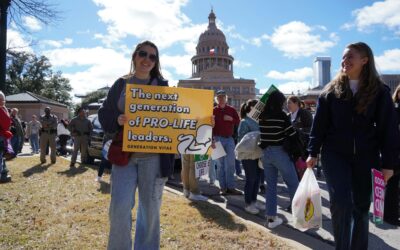
Acting Attorney General Todd Blanche privately assured a group of anti-abortion activists this week that the Justice Department is working to ensure the Supreme Court’s Dobbs decision becomes a lasting, nationwide reality — a pledge that thrilled pro-life advocates who’ve grown impatient with the pace of federal action since Roe v. Wade was overturned, even as it drew immediate pushback from Democrats and some abortion-rights groups. What Blanche Told the Group Blanche made the comments on a call hosted by the White House Faith Office with Intercessors for America, a Christian advocacy organization, in a recording the group later posted publicly. “We’re working, hand in hand with HHS and the FDA and the White House and President Trump’s team, to get permanent solutions, so that the Dobbs decision becomes permanent in every single state,” Blanche told the group. He went on to project confidence about the ultimate outcome: “We don’t have complete victory yet, but we will have victory, and victory will be soon, and it will be permanent.” Blanche also signaled that the administration is preparing new restrictions on the prescription and mail delivery of abortion pills such as mifepristone, specifically targeting states that have adopted “shield laws” allowing doctors to prescribe abortion medication to patients living in other states. That approach isn’t new — Blanche had already committed to addressing mail-order abortion pill access during his own confirmation hearing, after being pressed on the issue by Sen. Katie Britt, R-Ala. A Win Pro-Life Advocates Have Been Waiting For For supporters of the pro-life movement, Blanche’s comments represent exactly the kind of sustained federal commitment they’d hoped to see following the Dobbs ruling, and confirmation that the administration intends to use the tools available to the Justice Department — not just leave the matter entirely to individual states — to protect unborn life nationwide. Advocates have grown frustrated in recent years watching abortion pill access expand dramatically through telehealth and mail-order prescriptions, which now account for the majority of abortions performed in the country; a DOJ-led effort to close that avenue, working alongside HHS and the FDA, is precisely the kind of coordinated executive action many pro-life leaders have been pushing for since Roe fell. Democrats and Some Republicans Push Back The comments landed differently on the other side of the aisle. Sen. Patty Murray, D-Wash., seized on the remarks ahead of Blanche’s Senate confirmation vote, telling colleagues that a vote for Blanche was effectively a vote for an attorney general who would “attack abortion rights in every state” — repeating Blanche’s own “every single state” language back at him. Sen. Tina Smith, D-Minn., made a similar argument, saying the private call revealed Blanche’s true intentions more clearly than his public confirmation testimony had. Notably, the pushback wasn’t confined entirely to Democrats. Sen. Susan Collins, R-Maine, a longtime supporter of abortion rights within the GOP conference, announced she would oppose Blanche’s nomination, citing both his private assurances to anti-abortion groups and a separate controversy over an IRS audit shield for the Trump family. Collins’ defection illustrates that Blanche’s posture on abortion pushes further than some in his own party are comfortable going, even within a Republican-controlled Senate broadly supportive of his nomination. The Larger Legal Strategy Reporting on the episode suggests the administration’s approach centers heavily on regulatory and legal action rather than legislation — a strategy that avoids the difficulty of passing a nationwide abortion law through a closely divided Congress. Anti-abortion groups have spent months pushing to resolve Louisiana v. FDA, a case that could restrict the mail-order mifepristone system through the courts rather than through a congressional vote. Supporters argue this is simply smart, available use of existing federal authority; critics argue it’s an attempt to achieve through executive and regulatory action what couldn’t be achieved through the ordinary legislative process — though of course, that critique cuts both ways depending on which policy area and which administration one is examining. Where Things Stand Blanche’s confirmation vote in the full Senate is expected soon after clearing the Judiciary Committee earlier this week by a 12-10 vote. Given the Republican majority in the chamber, he is likely to be confirmed even with Collins’ opposition, positioning him to begin implementing the policy priorities he outlined to Intercessors for America almost immediately upon taking the job on a permanent basis. Advocates on both sides of the abortion debate are likely to be watching closely for the administration’s next moves on mifepristone access and the shield-law states in the weeks following his confirmation. This story is developing.

25 Blue States Sue to Block Trump’s Latest Tariffs, Setting Up Third Round of Legal Battles
A coalition of 25 Democratic-led states filed suit against the Trump administration this week over its newest round of tariffs, marking the third time in less than two years that blue-state attorneys general have gone to court to challenge the president’s trade agenda — and setting up yet another high-stakes legal showdown over just how far a president’s tariff authority actually extends. What the Lawsuit Targets The lawsuit, filed Monday in the U.S. Court of International Trade, takes aim at tariffs the administration announced on July 23, imposing duties of 10% to 12.5% on goods from more than 80 trading partners, including the European Union. The stated justification for the new levies was different from the administration’s earlier tariff push: rather than citing a national trade deficit emergency, the U.S. Trade Representative’s office said the tariffs were necessary because the targeted countries had failed to adequately ban and enforce prohibitions on imports made with forced labor. The states argue that rationale doesn’t hold up. The lawsuit, filed under Section 301 of the Trade Act of 1974, alleges the tariff action was “arbitrary, capricious, and contrary to law,” and claims that public comments and testimony gathered by the USTR actually undercut the forced-labor justification rather than support it. New York Attorney General Letitia James, who has led the multistate coalition through all three rounds of tariff litigation, didn’t hold back in her public response. “After losing at the Supreme Court, the administration is once again trying to illegally raise taxes on families and businesses with a new round of tariffs,” James wrote. “The president doesn’t have the power to impose sweeping tariffs.” A Familiar Legal Fight, Third Time Around This is not new legal territory for either side. The same coalition of states first sued the administration back in April 2025, arguing that Trump’s use of the International Emergency Economic Powers Act, or IEEPA, to impose sweeping “Liberation Day” tariffs on nearly every country in the world was unlawful. That argument found real traction: in February, the Supreme Court agreed, ruling that IEEPA simply doesn’t authorize the president to impose tariffs of that scope, forcing the administration to issue refunds to importers who had already paid the disputed duties. Rather than abandon its tariff strategy after that defeat, the administration pivoted to a different legal justification. It invoked Section 122 of the Trade Act of 1974 to impose temporary 10% tariffs on most imported products, arguing that statute gave it the necessary authority. States sued again, and in May, the U.S. Court of International Trade ruled that those tariffs, too, were unlawful. Now, with the clock having run out on that temporary tariff regime, the administration has turned to yet a third legal basis — Section 301 — to justify its latest round of duties. Unlike the two previous statutes at issue, Section 301 has a somewhat sturdier legal track record: Trump used it during his first term to impose significant tariffs on China, and those survived court challenges at the time. Whether that precedent will hold up against this newest and much broader application, covering dozens of countries rather than a single trading partner, is now squarely in the hands of the Court of International Trade. The States Involved Joining New York in the latest lawsuit are Arizona, California, Colorado, Connecticut, Delaware, Hawaii, Illinois, Kentucky, Massachusetts, Maryland, Maine, Michigan, Minnesota, Nevada, New Jersey, New Mexico, North Carolina, Oregon, Pennsylvania, Rhode Island, Virginia, Vermont, Washington, and Wisconsin — a coalition made up entirely of Democratic attorneys general, continuing the partisan pattern that’s defined all three rounds of tariff litigation so far. The Administration’s Defense White House officials are standing firmly behind the legal basis for the new tariffs. White House spokesperson Kush Desai defended the administration’s approach in a statement, arguing that “the United States is using its lawful authority to obtain the elimination of unreasonable acts, policies, and practices that burden U.S. commerce.” Desai further argued that Section 301 tariffs have “proven to be a legally durable tool since the president’s first term, and they remain so now” — a direct reference to the tool’s successful track record surviving legal challenges during Trump’s earlier term in office. Supporters of the administration’s broader trade strategy argue that repeated legal setbacks on specific statutory grounds don’t undermine the underlying policy goal: using tariffs as leverage to address unfair trade practices, protect American manufacturing, and hold foreign governments accountable for labor and environmental practices that put U.S. businesses at a competitive disadvantage. From that view, the administration’s willingness to pursue tariff authority through multiple different legal avenues — rather than abandoning the strategy after the IEEPA and Section 122 defeats — reflects persistence in pursuing a policy priority that voters supported at the ballot box, not a legal end-run around the courts. Why This Round May Be Different There’s an argument that the forced-labor justification behind these newest tariffs gives the administration firmer legal footing than its previous attempts. Unlike the emergency-powers rationale that the Supreme Court rejected, Section 301 is specifically designed by Congress to let the executive branch respond to unfair trade practices identified through a formal investigative process — precisely the kind of process the USTR says it followed here. Whether that process holds up to judicial scrutiny, particularly the states’ claim that the USTR’s own gathered evidence undercuts its stated rationale, will be the central question as the case moves forward. What Happens Next The lawsuit asks the Court of International Trade to both block enforcement of the new tariffs going forward and order refunds for duties already collected under the Section 301 action — the same remedy states won in their first successful challenge earlier this year. Given the pattern of the previous two cases, expect an expedited briefing schedule and likely appeals regardless of which side prevails at the trial court level, keeping the fate of a significant chunk of the administration’s trade policy tied up in litigation for months to come. For American businesses and…
Supreme Court Expands Trump’s Power to Fire Agency Heads, Carves Out Exception for the Fed
The Supreme Court delivered President Trump a major victory over the administrative state last month, ruling 6-3 that the president has broad authority to remove members of independent government agencies without needing to provide a reason — a decision that significantly reshapes the balance of power between the White House and the sprawling federal bureaucracy. The ruling strengthens the president’s hand across a wide range of independent commissions and boards that have historically operated with some insulation from direct presidential control. Supporters of the decision argue it restores accountability to unelected officials who wield significant regulatory power while answering to no one at the ballot box — a long-standing goal of conservative legal thinking about executive authority. An Exception for the Fed Notably, the court carved out a specific exception for the Federal Reserve. In a separate 5-4 ruling, the justices sided with Fed Governor Lisa Cook, allowing her to remain in her position for now, with Chief Justice John Roberts joining the court’s three liberal justices and Justice Brett Kavanaugh in the majority opinion. The court’s reasoning drew on the historical independence granted to the nation’s central bank, distinguishing it from other agencies subject to the broader removal ruling. The split decisions mean the president now has significantly more latitude to reshape independent agencies according to his priorities, while the Fed retains a firewall against direct political interference in monetary policy — at least for now. Part of a Consequential Term The rulings came alongside other high-profile decisions as the court wrapped up its term, including a ruling affirming birthright citizenship under the 14th Amendment and a decision upholding state bans on transgender athletes in women’s and girls’ school sports. Legal scholars note the executive power ruling in particular could have far-reaching implications for how future administrations — of either party — manage independent agencies overseeing everything from communications to nuclear energy to the civil service. Critics of the ruling have raised concerns that reduced insulation for agency leaders could open the door to more politicized decision-making across the federal government, while supporters counter that voters deserve a president who can actually hold the executive branch accountable rather than watching key decisions get made by officials insulated from any electoral consequences. This story is developing.
Supreme Court Backs Trump on Ending Temporary Protected Status, Restoring Program’s Original Intent
The Supreme Court handed the Trump administration a significant immigration enforcement win last month, upholding its authority to end Temporary Protected Status for hundreds of thousands of Haitian nationals — a ruling now playing out in real time in Springfield, Ohio, a city that became a flashpoint in the national immigration debate. The ruling affirmed that TPS, a humanitarian program meant to provide temporary relief rather than a permanent path to stay in the country, can be wound down at the administration’s discretion once the underlying conditions that justified it are reassessed. In Springfield, where a large Haitian population had settled in recent years to work in local manufacturing and warehouse jobs, the shift is already reshaping the local workforce. An Immediate Local Impact One Haitian resident who had worked at a local warehouse said employers moved quickly once the ruling came down. “When they heard the decision of the Supreme Court, they immediately told us not to come to work after July 1,” the worker said. Community organizers say the ruling triggered a wave of calls and messages throughout Springfield’s Haitian community as people scrambled to understand what the decision meant for their ability to legally work and remain in the country. Part of a Broader Legal Term The TPS ruling was one of several major decisions the Supreme Court issued as it closed out its term, in a stretch that saw the court hand the administration wins on some fronts while ruling against it on others — including a landmark decision affirming birthright citizenship under the 14th Amendment and a separate ruling protecting the independence of the Federal Reserve. The Bigger Debate Supporters of the administration’s approach argue Temporary Protected Status was never meant to be a permanent or indefinite immigration pathway, and that restoring the program’s original time-limited intent is both lawful and overdue, particularly as the administration works to enforce stricter overall immigration standards. Advocates for TPS holders counter that many recipients have built lives, jobs, and families in the U.S. over years of lawful presence, and argue that abrupt terminations put both workers and the local economies that depend on them in a difficult position with little time to adjust. Local officials in Springfield say they’re continuing to monitor the fallout as businesses work to fill gaps left by departing workers, while community groups help affected families navigate their legal options going forward. This story is developing.