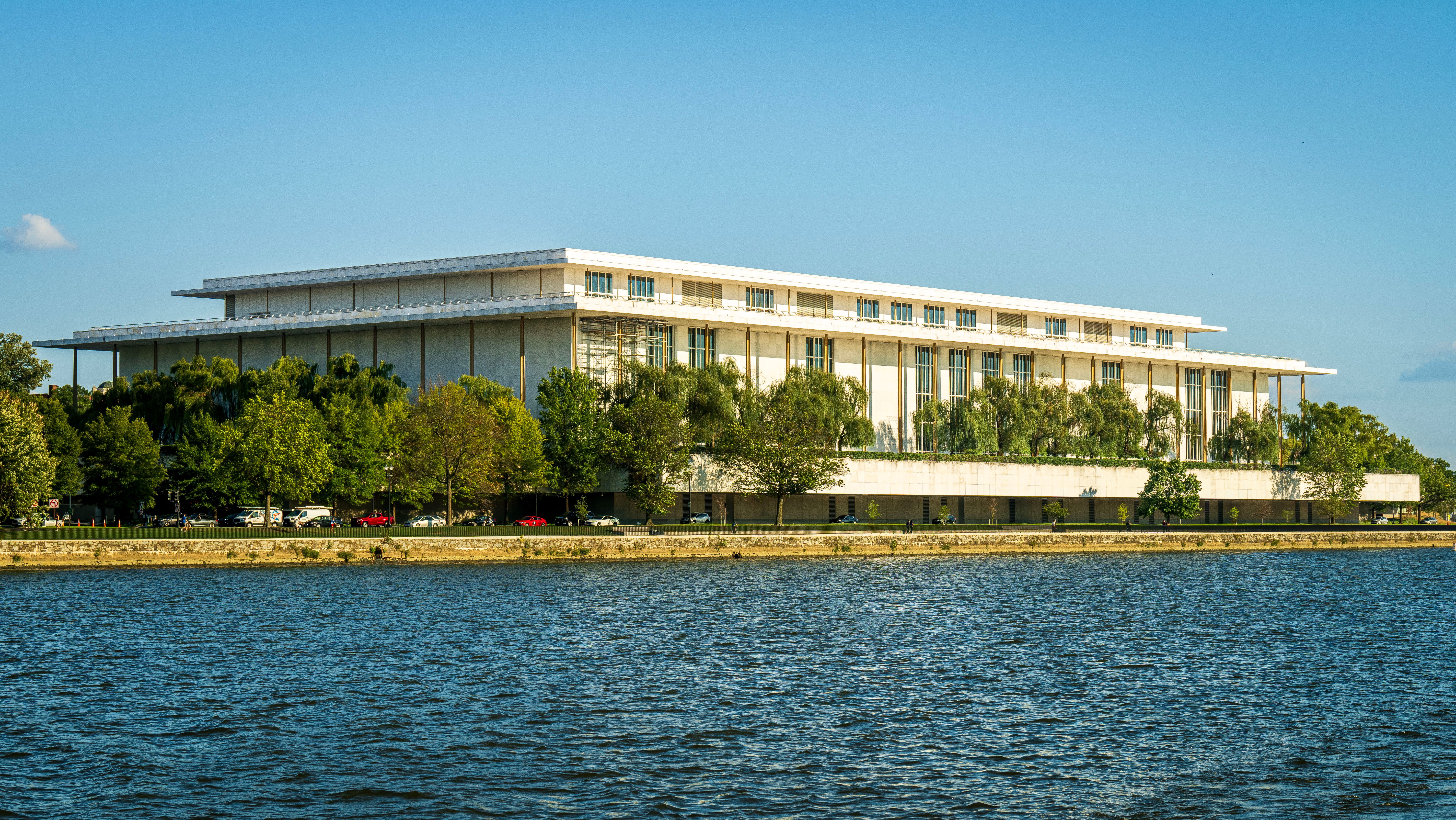

The Kennedy Center’s board of trustees voted Tuesday to close the storied Washington performing arts institution, citing both severe financial distress and an unresolved legal dispute over the board’s push to add President Trump’s name to the building, according to sources familiar with the closed-door meeting.
Board members characterized the center’s physical condition as dire and the institution as nearing insolvency, describing the extensive renovations the building requires as “a very large and complex job” that the center’s current finances cannot support. The board’s private meeting Tuesday, which Trump and Commerce Secretary Howard Lutnick both attended, ultimately resulted in a vote to cease Kennedy Center operations, according to people familiar with the proceedings who spoke to the Associated Press. As part of the shakeup, Matt Floca — who previously served as the center’s vice president of operations with a background in facilities management and construction — was installed as the new president and executive director, replacing Richard Grenell, who had led the institution through a turbulent stretch marked by budget warnings to staff about impending cuts that would leave the organization running on “skeletal teams.”
The closure vote caps months of controversy that began earlier this year when Trump moved to reshape the Kennedy Center’s leadership and, subsequently, sought to attach his name to the federally chartered cultural institution. The board went so far as to erect signage placing Trump’s name above that of President John F. Kennedy, for whom the center has been named since it opened in 1971 as a living memorial to the assassinated president. When the naming move drew immediate legal challenges, the board did not remove Trump’s name but instead installed what has been described as “an elevated tarp which obscures Trump’s name and most of Kennedy’s” while the underlying legal fight played out in federal court.
Federal Judge Christopher Cooper ultimately blocked the board’s effort to formally rename or add memorial signage honoring Trump, ruling unambiguously that “Defendants cannot install memorials for President Trump or anyone or anything else at the Kennedy Center without Congress’s blessing” — a reminder that the Kennedy Center, unlike a privately run cultural venue, operates as an independent federal institution whose formal name and memorial designations fall under congressional authority rather than the discretion of its board or any single administration. Despite the ruling, board members reportedly floated alternative inscription language that would have recognized Trump’s financial contributions to the renovation effort, with the board suggesting that “without such appropriate recognition,” continued presidential support for funding the needed repairs was unlikely to materialize — a framing that drew criticism from lawmakers and arts advocates who argued that federal cultural institutions should not be treated as bargaining chips tied to a single benefactor’s desire for personal recognition.
The controversy also produced a separate legal skirmish over who gets a voice in the Kennedy Center’s governance. A federal judge determined that Rep. Joyce Beatty, an Ohio Democrat who serves as an ex officio board member by virtue of her congressional position, was entitled to participate in Tuesday’s closure vote meeting, though the judge stopped short of guaranteeing her an actual vote on the board’s decisions — a narrower procedural ruling that nonetheless underscored how contentious even basic governance questions at the institution had become amid the broader fight over its leadership and branding.
The upheaval has triggered a wave of departures and public criticism from the artistic community that has long relied on the Kennedy Center as one of the nation’s premier venues for theater, music and dance. Actress Issa Rae and banjo virtuoso Bela Fleck are among the performers who have withdrawn from planned Kennedy Center engagements in protest, while pianist and songwriter Ben Folds and celebrated opera soprano Renée Fleming both resigned from advisory roles at the institution earlier this year. Jean Davidson, who had served as executive director of the National Symphony Orchestra, one of the resident companies that performs at the Kennedy Center, also departed for a position elsewhere amid the turmoil.
Trump has publicly tied his willingness to support the center’s renovation funding to the naming dispute, suggesting on social media that his financial backing for the extensive repairs the building needs was contingent on receiving what he considers appropriate recognition — a linkage that critics say inappropriately conditions taxpayer-adjacent support for a national cultural institution on personal branding concerns rather than the institution’s underlying public mission.
For a facility that has hosted presidents, foreign dignitaries and the country’s most prominent performing artists for more than five decades, Tuesday’s closure vote represents an unprecedented disruption. The Kennedy Center receives federal appropriations to help maintain its facilities as the nation’s official memorial to President Kennedy, but has historically relied heavily on private donations, ticket sales and its endowment to fund programming — a funding model that board members now say has proven unsustainable given the scale of deferred maintenance the aging building requires alongside the institutional turmoil of the past several months.
Arts advocates and congressional Democrats have called the closure vote a direct consequence of the leadership upheaval Trump initiated earlier this year, arguing that the departure of experienced arts administrators and donors amid the branding fight left the institution financially weaker and less capable of executing the ambitious renovation plans now being cited as justification for shutting down. Supporters of the administration’s involvement counter that the center’s financial problems predate this year’s leadership changes and that a substantial infusion of private funding, potentially including from Trump himself, represents the institution’s best realistic path toward the kind of comprehensive renovation its aging infrastructure genuinely requires.
With a new president now in place and the underlying legal dispute over Trump’s name still not fully resolved, the Kennedy Center’s path back to normal operations remains uncertain. Congressional oversight committees are expected to examine the closure decision and the institution’s finances in the coming weeks, given the center’s unique federal charter and the public funding it receives, even as the board and new leadership under Floca begin the work of assessing exactly how extensive — and how expensive — the building’s needed repairs actually turn out to be.
