

Trump

Supreme Court Lets Trump’s Mail-Voting Order Partially Take Effect, Injecting Uncertainty Into Midterms
The Supreme Court’s conservative majority handed the Trump administration a preliminary win Monday, pausing a lower-court ruling that had blocked key parts of President Trump’s executive order overhauling mail-in voting rules across two dozen states — even as a separate nationwide injunction keeps the order’s central mechanism frozen for now. Trump signed the executive order in March, directing the Department of Homeland Security to compile citizenship verification lists and requiring the U.S. Postal Service to obtain lists of eligible mail voters from state election officials. Under the order, USPS would deliver mail ballots only to voters confirmed on those lists, and election officials would be required to place specific verification barcodes on ballot return envelopes. The White House has defended the order as a necessary safeguard against noncitizen voting, though research on the subject has consistently found that noncitizen voting in U.S. elections is, in the words of election researchers, “infinitesimally rare.” U.S. District Judge Indira Talwani had blocked the order’s key provisions in June for 23 Democratic-led states and the District of Columbia, ruling that Trump “overstepped a president’s authority” under a Constitution that assigns election rule-setting power to state legislatures and Congress, not the executive branch. Talwani also found that the Postal Service, as an independent federal agency, has no legal authority to condition mail-ballot delivery on the kind of voter-list verification scheme the order envisions. The Supreme Court’s unsigned order Monday paused Talwani’s injunction specifically as it applied to those 23 states and D.C., allowing the administration to move forward with certain aspects of implementation there while the underlying legal fight continues. But the justices left a separate, broader nationwide injunction in place, meaning USPS still cannot actually begin restricting mail-ballot delivery based on the disputed voter lists anywhere in the country while the administration’s appeals proceed. The court was notably cautious in its own language, writing that its decision “does not mean that any measure taken by the Government to implement the Order will necessarily be lawful. On that score, time will tell” — a signal that the justices were resolving only a narrow procedural question about which injunction applies where, not endorsing the order’s ultimate legality. Justice Ketanji Brown Jackson dissented from the ruling, warning that the decision “needlessly injects chaos and uncertainty into the upcoming midterm elections” at a moment when state election officials are already deep into planning for November. New York’s attorney general, whose office has been among those challenging the order, called the ruling a “painful setback” while vowing to continue pursuing the underlying legal challenge through the appeals process. The practical stakes of the ruling are tied tightly to the calendar. Administration officials have acknowledged that full implementation of the order would need to begin “as soon as early to mid-August” to be operationally ready before the midterm elections in November — a deadline that has now effectively passed, meaning that even with Monday’s favorable ruling, the legal and logistical hurdles remaining make it increasingly unlikely the order will be fully in effect in time to reshape how mail ballots are processed in this year’s midterms. That timing crunch has left election administrators in the affected states in an awkward holding pattern, uncertain whether to prepare systems for a new verification regime that may or may not be operational before ballots go out. Republican-led states that intervened in the case have appealed the broader injunction, arguing that Talwani’s nationwide order improperly extended relief to states that were never party to the original lawsuit and that federal courts should not be able to block a presidential directive on a nationwide basis based on a challenge brought by a subset of states. Democratic attorneys general and voting rights groups, meanwhile, argue that the administration’s own timeline concessions undercut its claim of urgency, suggesting the order’s real purpose was less about closing a negligible security gap and more about making mail voting logistically harder in states that rely on it most heavily. The dispute now heads back to the lower courts for further proceedings on the merits, with the Supreme Court’s Monday order settling only which injunction controls in the interim rather than resolving the constitutional questions at the heart of the case. Legal analysts following the litigation say a final resolution — whether from the appeals court or eventually from the Supreme Court itself on the full merits — is unlikely before the 2026 midterms are decided, meaning the order’s ultimate fate will most likely be determined only after this election cycle has already played out under whatever patchwork of rules happens to be in effect this fall. For voters in the 23 states and D.C. covered by Monday’s ruling, the immediate practical impact remains limited given the separate nationwide injunction still blocking USPS implementation, but election officials in those states say they are watching the appeals process closely, given how quickly the legal landscape has shifted over the past several months. The ruling arrives against a backdrop of intensifying legal and political fights over election procedure in the run-up to November, following on the heels of the redistricting battles reshaping House maps in more than half a dozen states. Voting rights groups have argued that the mail-voting order, the redistricting fights, and a series of other state-level changes to voter ID and registration rules amount to a coordinated effort to tilt the midterm playing field in ways that will be difficult for courts to fully sort out before votes are cast. Administration officials reject that characterization, framing each initiative as a separate, good-faith effort to address a specific and distinct integrity or fairness concern, whether in how districts are drawn or how ballots are verified. Election law scholars note that the fractured nature of Monday’s ruling — one injunction lifted, another left standing — is itself a reflection of how unusual this case is procedurally, since it involves overlapping lawsuits filed in different jurisdictions raising similar claims against the same federal policy. That fragmentation means the order’s legal status could…

US-Canada Trade Talks Collapse as Trump Imposes 50% Tariffs, Threatens More on Autos
Trade negotiations between the United States and Canada broke down late Friday, triggering 50% U.S. tariffs on roughly $20 billion worth of Canadian goods and prompting Canadian Prime Minister Mark Carney to declare his country is “at war” economically with its largest trading partner. The tariffs took effect just after midnight Friday into Saturday, August 22, after last-minute talks collapsed. U.S. Trade Representative Jamieson Greer said Canada “declined to finalize the trade deal” and came back with “new demands and walk backs” despite what he called an American offer of “the best treatment of any major exporter.” The new duties hit a range of Canadian products, including dairy, alcoholic beverages, cement and hockey equipment. Carney rejected the U.S. characterization of how talks fell apart. “You’re at war when you get attacked. We got attacked,” he told reporters at a Saturday press conference, arguing that Washington had introduced unfair, last-minute changes that undermined the reliability of any deal. “Canada has what the world wants,” Carney said. “And we will not allow any nation to determine our future.” Canada has announced it will respond with matching, dollar-for-dollar tariffs beginning September 8, targeting American steel, dairy, appliances, agricultural equipment, pulp and paper, and electronics — an attempt to mirror the economic pain on industries and states that export heavily to Canada. The dispute escalated further this weekend when Trump threatened an additional round of 50% tariffs on Canadian cars, trucks, auto parts and steel, this time set to take effect January 1, 2027, unless a deal is reached. Trump urged automakers to shift production to the United States, promising “ZERO TARIFFS” for companies that manufacture domestically. He accused Canada of imposing steep tariffs on American farmers and blamed the imbalance for what he described as a $60 billion U.S. trade deficit with Canada, writing that the current arrangement is “not sustainable, and NOT ANYMORE!” The latest tariffs follow months of on-and-off negotiations. U.S. steel and aluminum tariffs on Canada had already doubled to 50% back in June, and the two countries pledged at the G7 summit in June to reach a broader deal within 30 days — a timeline that slipped after Washington briefly suspended talks in late June before restarting them at month’s end. U.S. officials have downplayed the near-term economic impact on the American side. Greer noted the newly tariffed goods represent roughly 5% of overall Canadian trade and just 0.06% of total U.S. consumption, though he acknowledged the effect “may be different” for Canada, which sends the large majority of its exports south of the border. Economists on both sides of the border are watching how the dispute filters through to consumers. Tariffs on dairy, alcohol and construction materials like cement are likely to show up in retail prices in both countries, while a prolonged standoff over autos and steel — industries deeply intertwined across the two countries’ supply chains — could raise vehicle prices and squeeze manufacturers in the U.S. Midwest and Ontario alike if it drags into 2027. No new talks have been publicly scheduled between the two governments as of this weekend.
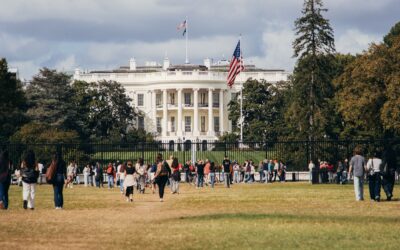
Trump Taps Pro-Life Physician Heidi Overton to Lead FDA, Setting Up Fight Over Abortion Pill Policy
President Trump announced this week that he is nominating Dr. Heidi Overton, a physician and White House domestic policy aide, to serve as the next commissioner of the Food and Drug Administration — a pick that instantly reignited the long-running national fight over access to the abortion drug mifepristone and drew sharp opposition from Democratic senators before her confirmation process has even begun. Who Is Heidi Overton Overton currently serves as a deputy assistant to the president for domestic policy, a role in which The Atlantic has described her as one of the most influential public health officials in Trump’s second term, regularly briefing the president directly on health matters. Before joining the White House, she served as vice chair and chief policy officer at the America First Policy Institute, a conservative think tank closely aligned with the administration’s broader agenda. If confirmed by the Senate, she would replace Dr. Marty Makary, who resigned from the position in May following friction with the White House over issues including vaping regulation and abortion pill access. Trump’s Case for Her Announcing the pick on Truth Social, Trump was effusive in his praise, calling Overton a “rockstar” who is “smart and respected by all” and describing her as central to what he called the most transformative health agenda in American history. “She is known to take on the hardest issues, and bring me solutions that work best for the country,” Trump wrote, adding that Overton would work closely with Health Secretary Robert F. Kennedy Jr. and Dr. Mehmet Oz to advance his priorities, including faster drug approvals — a goal the pharmaceutical industry has long pushed for — and continued progress on Kennedy’s “Make America Healthy Again” agenda. A Long, Public Record on Abortion Overton’s nomination has drawn intense attention primarily because of her extensive public record opposing abortion. After the Supreme Court’s 2022 decision overturning Roe v. Wade, Overton celebrated the ruling as a “huge victory for life,” saying it would “allow Americans to reevaluate the value of the potential of every baby in the womb and choose life through a democratic process.” She has separately advocated for Congress to place strict limits on mifepristone and misoprostol, the two drugs most commonly used in medication abortions, arguing such restrictions are necessary “to protect women and children.” That record matters significantly for the position she’s been nominated to fill: the FDA is currently in the midst of an ongoing safety review of mifepristone, a drug first approved by the agency in 2000 and later authorized for mail-order dispensing under a Biden-era policy. Whoever leads the FDA will have substantial influence over how — and whether — that review affects the drug’s availability nationwide. Democrats Signal Fierce Opposition Senate Democrats wasted no time announcing their opposition. Sen. Patty Murray of Washington, a member of the committee that will consider Overton’s nomination, didn’t mince words. “Heidi Overton is a far-right, anti-abortion extremist who has no business leading the FDA,” Murray said in a statement. “The American people deserve someone who will put science and facts FIRST, not another Trump sycophant who will make it their mission to attack medication abortion. I will vote NO.” Reproductive rights organizations echoed that opposition. Mini Timmaraju, president and CEO of Reproductive Freedom for All, argued the nomination reflects a broader strategy by the administration. “Donald Trump is trying to put an anti-abortion extremist in charge of any agency that could seriously undermine reproductive healthcare — including the agency that could roll back access to mifepristone nationwide,” Timmaraju said, adding that Overton’s nomination represents “another alarming step in Trump’s plan to weaponize every part of the federal government to restrict abortion nationwide.” Even Some Republicans Have Concerns Notably, opposition to the pick hasn’t been confined strictly to Democrats. Sen. Bill Cassidy of Louisiana, the Republican chairman of the Senate Health, Education, Labor, and Pensions Committee that will oversee Overton’s confirmation hearing, raised his own reservations — though his concerns centered on managerial experience rather than her policy positions. “While I respect Dr. Overton’s experience as a physician, I have strong concerns about her nomination to be FDA commissioner,” Cassidy wrote on X. “Her lack of managerial experience does not prepare her well for leading a large organization that is already struggling with turnover and low morale.” A Balancing Act Ahead Whoever ultimately leads the FDA under the current administration faces competing pressures that have already proven difficult to navigate. Kennedy has pushed the agency toward looser restrictions on certain unproven peptide treatments, anti-abortion lawmakers and advocacy groups are pressing hard for tighter restrictions on mifepristone, and Trump himself has pushed the agency to approve flavored e-cigarette products for the first time — a move public health advocates worry could fuel renewed teenage vaping. Overton’s predecessor, Makary, ultimately resigned amid friction generated by exactly this kind of competing pressure, leaving several major policy questions — including the future of ultraprocessed food regulation, antidepressant labeling, and COVID-19 vaccine guidance — unresolved when he departed in May. Supporters See a Needed Course Correction Backers of the nomination argue that after a series of FDA leaders who drew criticism from anti-abortion advocates and industry alike for insufficient decisiveness, Overton represents a clear, values-aligned choice who will finally give the administration’s health priorities a fully committed advocate at the top of the agency. From this perspective, her extensive policy background and closeness to the White House’s broader health agenda — rather than being liabilities — position her to implement reforms more effectively than a commissioner operating at arm’s length from the administration’s core priorities. What Happens Next Overton’s nomination will need to clear the Senate HELP Committee, where Republicans hold a narrow one-seat majority, before advancing to a full Senate floor vote. Given both the unified Democratic opposition already on display and Cassidy’s own stated reservations as the committee’s Republican chairman, her path to confirmation — while still likely given the overall Republican Senate majority — is not guaranteed to be smooth. A confirmation…

Trump Declares “Economic D-Day” Against Iran, Warns Any Nation Aiding Tehran Will Face “Tremendous” Consequences
President Trump announced an all-out escalation of economic pressure against Iran this week, declaring what he called “the most crushing economic operation ever taken against any country” and warning that any nation helping Iran evade sanctions — from oil buyers to shipping registries — will face severe financial retaliation of its own. What Trump Announced In an all-caps Truth Social post Wednesday evening, Trump declared “ECONOMIC D-DAY” against Iran, writing that the country’s military has been effectively dismantled and its economy is on the brink. “Their navy is gone, their air force is destroyed, their military factories are now rubble, their currency is worthless, and their country is hanging by a thread,” Trump wrote. He went on to warn that “ANY country that allows its financial institutions, businesses, airports, or government entities to provide any type of lifeline to Iran will itself face TREMENDOUS Economic Consequences.” Trump specifically called out the mechanisms he wants shut down: “Oil smuggling, swap lines, cash transfers, exchange houses, ship registries, front companies — It all needs to stop NOW. You know who you are,” he wrote, without naming specific countries. “This will be an ECONOMIC D-DAY, and we need all of our Allies to stand with the United States of America to isolate, and defeat, the Iran threat.” Building on an Existing Pressure Campaign Wednesday’s announcement extends a sanctions effort the administration has waged since April under the name Operation Economic Fury. Treasury Secretary Scott Bessent had previewed the escalation in comments the prior week, signaling that a fresh round of financial pressure was coming as diplomatic talks over ending the war remained stalled. The timing is notable: Trump’s announcement came just two days after the 60-day deadline for a comprehensive U.S.-Iran peace deal quietly expired without an agreement, and after Trump had said Tuesday he wasn’t interested in resuming talks with Iran at all — only to strike a somewhat more open tone by Wednesday, saying he remained willing to negotiate even as he unveiled the new economic offensive. Who Could Be in the Crosshairs Trump did not name specific countries in his post, but analysts note the threat carries real weight for several major economies. According to World Bank data, Iran exported to 147 countries and imported from 114 countries as of the most recent figures available, with China standing out as by far Iran’s largest trading partner, accounting for the bulk of both its oil and non-oil exports. That means Trump’s threat could realistically put pressure on relationships with China, India, and even Germany, depending on how aggressively the administration chooses to enforce it — a reminder that “economic D-Day” rhetoric, if followed through, carries diplomatic complications well beyond Iran itself. Notably, the announcement came just a day after the United Arab Emirates — a longtime U.S. ally — announced it would sever all financial and economic ties with Iran, following a fresh missile threat from Tehran. That move suggests at least some regional partners are already moving to align themselves with Washington’s posture ahead of any formal enforcement action. Iran’s Response Iranian Foreign Minister Abbas Araghchi dismissed Trump’s announcement as a distraction from problems at home. “Economic D-Day’ is a diversion from America’s own crisis: unprecedented debt and surging interest costs,” Araghchi wrote on X, pointing to a New York Times report that the U.S. national debt has now surpassed $40 trillion. He went on to accuse Washington of “economic terrorism,” arguing the campaign threatens the broader global economy and the sovereignty of countries well beyond Iran itself. “Doubling down on failed policies will only bring further defeat — and enmity of Iranians,” Araghchi added. A Pattern of Escalating Rhetoric Araghchi’s dismissal echoes a pattern he’s followed throughout the conflict, having previously accused Washington of ratcheting up sanctions every time an earlier round failed to change Tehran’s underlying position. That said, independent data on Iran’s economic condition lends some credibility to Trump’s framing: Iran has been grappling with a serious economic crisis since well before this latest round of pressure, with inflation having climbed above 48% at points over the past year and a substantial share of the population living below the poverty line, according to various estimates. The Market Reaction Trump’s threat had an immediate effect on global energy markets. Oil prices rose to their highest levels in a month following the announcement, as traders weighed the possibility that a serious crackdown on Iranian oil exports and the shipping networks that move them could tighten global supply. That’s a familiar dynamic in this conflict: virtually every major escalation, on either side, has rippled through energy markets given the ongoing standoff over the Strait of Hormuz, one of the world’s most critical oil shipping chokepoints. Reading the Strategy Supporters of the administration’s approach argue that after nearly six months of war and a missed diplomatic deadline, ratcheting up financial pressure on Iran and the networks helping it evade existing sanctions is a logical and appropriately aggressive next step — one that avoids further direct military escalation while still working to force Tehran back to the negotiating table on more favorable terms for the U.S. From this view, targeting the shadow economy that has allowed Iran to partially sustain itself despite existing sanctions is precisely the kind of comprehensive pressure that could finally break the current stalemate. Skeptics, including voices within Iran’s own government, argue that repeatedly escalating sanctions without offering a credible diplomatic off-ramp risks entrenching the conflict indefinitely rather than resolving it, and that framing the campaign in maximalist terms — an “economic D-Day” — sets an extremely high bar for what would actually count as success. Iran’s pointed counterattack referencing America’s own debt crisis also underscores a broader rhetorical strategy Tehran has employed throughout the war: reframing U.S. pressure campaigns as evidence of American overreach and financial strain rather than a position of strength. What Happens Next Trump has not yet specified exactly what mechanisms or timeline the new sanctions regime will follow, leaving considerable uncertainty about…

Iran Rejects Trump’s Claim of Controlling the Strait of Hormuz, Insists Waterway Is Fully Under Its Command
Iran’s military dismissed as “lies” comments from President Trump this week in which he claimed the United States now controls the Strait of Hormuz, with Tehran insisting the strategically vital waterway remains fully under Iranian control — the latest sign that the diplomatic momentum touted by American officials in recent weeks remains far shakier than the administration’s public messaging has suggested. The Dispute Over Who’s Actually in Control President Trump has repeatedly claimed in recent public remarks that the sustained American and allied pressure campaign against Iran has succeeded in securing the Strait of Hormuz for international shipping, framing it as a direct outcome of the administration’s military and diplomatic strategy toward Tehran. Iran’s military flatly rejected that characterization Thursday, calling the claim false and asserting that the waterway — one of the most critical oil shipping chokepoints in the world — remains under Iranian jurisdiction and control, not American. The disagreement underscores a pattern that has persisted throughout recent negotiations over the strait: American officials have repeatedly signaled optimism about breakthroughs in shipping arrangements, while Iranian officials have just as consistently pushed back on the specifics of that optimism, insisting that any agreements reached are narrower, more conditional, or more favorable to Iran than U.S. statements have implied. A Familiar Pattern of Mixed Signals This isn’t the first time the two sides have offered conflicting accounts of the same negotiations. Iran and Oman had separately announced progress toward agreeing on shipping corridor coordinates through the strait, but Iranian officials were careful at the time to insist that any Oman-specific arrangement was entirely separate from, and did not represent, a broader resolution involving the United States. Iran’s deputy foreign minister said explicitly that “the path of understanding is between Iran and Oman, and no negotiations with the U.S. have taken place during this period” — a direct contradiction of Trump’s own public statements insisting that talks with Iran were underway “whether Iran wants to admit it or not.” Adding another layer of complication, Iranian lawmakers have separately advanced legislation in parliament that would permanently bar U.S. and Israeli vessels from the strait altogether, alongside a broader fee structure targeting other commercial shipping — hardly the posture of a country that considers the waterway’s control question settled or resolved in America’s favor. Why the Strait Matters So Much The Strait of Hormuz sits at the mouth of the Persian Gulf and is one of the most strategically significant shipping corridors on Earth, with roughly a fifth of the world’s oil and liquefied natural gas exports passing through it. At its narrowest point, the strait is just 21 miles wide, meaning any dispute over territorial control and shipping lanes carries substantial weight for global energy markets — a fact reflected in oil price movements that have swung repeatedly in recent weeks based on even incremental developments in the standoff. Iran effectively closed the strait to normal shipping traffic in March in response to joint U.S.-Israeli strikes that launched the broader war in late February, and Iranian forces have since repeatedly threatened commercial vessels attempting to transit the waterway. An earlier ceasefire framework covering safe passage collapsed in July, reigniting both the fighting and the shipping disruption that has weighed on global energy prices for months. The Administration’s Framing Versus the Reality on the Ground Trump administration officials, including Secretary of State Marco Rubio and Treasury Secretary Scott Bessent, have continued to express public confidence that a comprehensive resolution to the shipping standoff is close at hand, pointing to the progress in Iran-Oman talks and the resumption of some vessel traffic through the strait in recent days as evidence the pressure campaign is working. Supporters of that framing argue that Iran’s public denials and defiant rhetoric are standard negotiating theater from a government that doesn’t want to appear to be capitulating to American pressure, even as its actual conduct — allowing more ships through, engaging in serious talks with Oman — tells a different story. Skeptics of that optimistic reading point to Thursday’s blunt rejection of Trump’s control claim, together with the parliamentary bill targeting American and Israeli shipping specifically, as evidence that Iran continues to view itself as negotiating from a position of real strength and sovereign authority over the strait — not as a country capitulating to outside pressure. From that perspective, American officials’ repeated public claims of progress may be running ahead of what Tehran has actually agreed to accept. What Happens Next With Iran continuing to publicly and directly contradict American claims about the state of affairs in the strait, and with hardline legislation targeting U.S. and Israeli shipping still moving through Iran’s parliament, a fully resolved, mutually acknowledged agreement over Hormuz appears to remain elusive despite months of on-and-off negotiations. How much further diplomatic progress can realistically be made while the two sides can’t even agree on the basic factual premise of who currently controls the waterway is likely to remain one of the more difficult underlying questions shaping the broader path toward ending the conflict. This story is developing.

State Department Pulls More Than 175,000 Visas as Trump’s Crackdown on Foreign Criminals Hits New Milestone
The State Department announced this week it has revoked more than 175,000 visas from foreign nationals since President Trump returned to office, a milestone officials are touting as proof of the administration’s commitment to removing dangerous individuals from American communities — even as the sweeping scope of the crackdown, which now extends to political speech and long-settled birth tourism practices, continues to draw criticism from immigration and civil liberties advocates. What the Numbers Show According to a fact sheet the department released Monday, the vast majority of the 175,000-plus revocations stemmed directly from law enforcement encounters involving criminal conduct, with assault, driving under the influence, theft, and drug crimes topping the list of leading causes. Beyond those, officials say a significant share of revocations involved allegations of reckless driving, sexual assault, child abuse, fraud, and embezzlement. “Under President Trump, the United States Department of State has revoked more than 175,000 visas from foreign nationals who violated the terms of their visas, committed crimes, called for violence against U.S. citizens, defrauded Americans, abused our immigration system, or endangered national security,” the department said in its statement. Officials framed the effort in blunt terms: “A U.S. visa is a privilege, not a right,” the department said, adding that it remains “committed to using every tool available to protect our communities from those who abuse it.” The Cases Officials Are Highlighting The State Department released a series of specific case examples to illustrate the scope of the crackdown. Among the more serious cases cited: a foreign national charged with felony rape and sexual battery of a victim who is mentally disabled; another charged with felony kidnapping, human trafficking, and sexual exploitation of a minor; and a foreign national facing more than a dozen counts of possessing child sexual abuse material. Officials also flagged financial crimes, including a case involving a fraudulent Medicaid billing scheme that generated more than $5 million in fake claims, and a separate case involving fabricated company revenue and forged documents used to defraud investors and fraudulently obtain a visa in the first place. Secretary of State Marco Rubio also specifically pointed to a handful of cases tied to foreign policy and national security grounds, including a Cuban national connected to an influence operation tied to Havana’s communist government, Iranian nationals with ties to the Iranian regime, and a Kuwaiti national who reportedly expressed a desire for violence against the president and referred to Americans as his “enemy.” One additional case that drew particular attention involved a Laotian national convicted of a child sex offense who had previously received a pardon from Minnesota Gov. Tim Walz — a detail that ties the visa announcement to an ongoing state-level political controversy in Minnesota as well. A New Front: Political Speech Notably, this round of revocations extends into more contested territory than earlier rounds. Al Jazeera reported that some of the visa cancellations targeted foreign nationals who “celebrated the assassination of Charlie Kirk,” the conservative activist killed last year, including individuals who made public statements the State Department characterized as approving of his death. That marks a meaningful expansion of the criteria the administration is using to justify revocations — moving beyond criminal conduct and immigration violations into territory that touches directly on political expression, a shift that has drawn scrutiny from civil liberties advocates who argue that revoking a visa over protected speech, however distasteful that speech might be, raises different legal and constitutional questions than revoking one over an assault conviction or a fraud charge. Supporters of the administration’s approach counter that a visa is fundamentally different from citizenship, and that foreign nationals celebrating the assassination of an American citizen — regardless of the underlying speech protections that might apply to U.S. citizens making similar statements — do not have an inherent right to remain guests in the country whose laws and citizens they’ve expressed hostility toward. Targeting Birth Tourism The crackdown has also become a vehicle for the administration’s broader push against birth tourism, in which foreign nationals travel to the United States specifically to give birth so their children automatically receive U.S. citizenship. The State Department disclosed that a single U.S. embassy in North Africa revoked more than 100 visas connected specifically to birth tourism cases, describing the recipients as “birth tourist’ parents who came to the United States primarily to give birth so their children would get U.S. citizenship.” The move dovetails with a broader, ongoing effort by the administration — including a Texas executive order earlier this year targeting hospitals that market birth tourism packages to foreign nationals — to treat the practice as a form of immigration fraud rather than a simple byproduct of birthright citizenship under the 14th Amendment. Part of a Larger Pattern Monday’s announcement builds on a steadily escalating series of visa enforcement actions throughout Trump’s second term. The State Department had already announced revoking more than 100,000 visas back in January, which was described as a record at the time — meaning the pace of revocations has continued to climb substantially throughout the year rather than tapering off. The visa crackdown runs parallel to the administration’s broader immigration enforcement push: supporters of the administration’s approach point to figures suggesting roughly 900,000 illegal immigrants have been removed or deported since Trump returned to office, with as many as 2.2 million more believed to have self-deported amid the changed enforcement climate. Where the Criticism Lies Civil liberties and immigration advocacy groups have raised concerns about several aspects of the expanded enforcement effort, particularly the administration’s approach to social media vetting and screening of visa applicants and holders, which has grown considerably stricter. Rights advocates argue that expanded social media monitoring for visa enforcement purposes edges toward surveillance and risks chilling legitimate political speech among visa holders who may now feel they need to self-censor online commentary — even commentary that would be unquestionably protected if made by a U.S. citizen — for fear of losing their legal status in the country. The…

Minnesota GOP Rejects Trump’s Pick, Nominates Lisa Demuth for Governor Over Mike Lindell
Minnesota Republicans delivered a genuine primary night upset Tuesday, choosing state House Speaker Lisa Demuth as their nominee for governor over Trump-endorsed MyPillow founder Mike Lindell — setting up a general election matchup against Democratic Sen. Amy Klobuchar in a race Republicans see as one of their best pickup opportunities in a state that hasn’t elected a GOP governor in more than two decades. A Come-From-Behind Win The Associated Press called the race for Demuth just before midnight, with her holding more than 43% of the vote to Lindell’s less than 33% once the count was finalized. That represented a real reversal of fortune: Lindell had appeared to be leading in the limited public polling available heading into Election Day, and he had touted President Trump’s endorsement heavily in the campaign’s final stretch. “I have an advantage over everyone up here,” Lindell told supporters at an event just days before the primary. “I can call up and work with the President of the United States.” That advantage ultimately wasn’t enough. Notably, Demuth won the nomination despite not having the backing of either major GOP power center in the race — she’d been passed over by the state Republican Party’s own endorsement process, which instead backed businessman Kendall Qualls back in May, and she lacked Trump’s presidential endorsement as well, which went to Lindell. Demuth stayed in the race regardless, citing what she described as irregularities in the party’s convention voting process, and built a coalition strong enough to overcome both organizational disadvantages. Qualls, for his part, conceded graciously as Demuth’s lead widened on election night, congratulating her for “earning the support of the Republican primary voters.” What Sank Lindell’s Campaign Lindell’s defeat wasn’t simply a story of Demuth outperforming expectations — it also reflected real friction within his own campaign in its closing weeks. According to NBC News, attacks on Lindell from fellow Republicans, including pointed questions about his state residency raised publicly by the chairman of the Minnesota Republican Party, meaningfully hampered his campaign heading into the final stretch, as segments of the state GOP actively worked to consolidate support behind an alternative. Lindell, the report noted, has become better known nationally in recent years as an outspoken election conspiracy theorist than as a Minnesota political figure, a reputation that appears to have created real vulnerabilities even within a Republican primary electorate generally sympathetic to Trump’s endorsement. As of Tuesday night, Lindell had not formally conceded the race, continuing to raise claims about anomalies in the vote count even as the Associated Press, NBC News, CBS News, and other major outlets all called the race decisively in Demuth’s favor. Why the Seat Is Open in the First Place The race to replace term-limited Democratic Gov. Tim Walz has been shaped heavily by controversy well before Tuesday’s primary. Walz, who had originally planned to seek a third term, abruptly announced in January that he would not run for reelection after facing mounting scrutiny over allegations that his administration ignored repeated warnings about social aid fraud at daycare centers across the state — a scandal Minnesota Department of Human Services employees say they flagged internally long before it became public. Demuth referenced the episode directly on the campaign trail, blaming what she called “incompetent Democrat control” for the fraud cases and pointing to her own record establishing a Fraud Prevention Agency Oversight Committee while leading the state House. Klobuchar entered the governor’s race only a few weeks after Walz’s withdrawal, adding her name to a Democratic field that included four sitting U.S. senators nationally seeking governorships this cycle. She easily secured her party’s nomination Tuesday, defeating lesser-known primary opponents Kobey Layne and businessman Bill Gates Jr. — no relation to the Microsoft co-founder. Demuth’s Case to Voters Demuth, 59, has spent the current legislative session presiding over a state House that’s nearly evenly split between the two parties, and she leaned into that experience on the campaign trail, emphasizing her record of working across the aisle in a divided chamber as evidence she can govern effectively in a purple state. Speaking to reporters after her win was projected Tuesday night, she struck an optimistic tone about the race ahead. “This is our opportunity to really move Minnesota forward, and I’m excited about that,” Demuth said. An Uphill Fight, But a Real One Even with a clean primary win now behind her, Demuth faces a genuinely difficult path in November. Minnesota hasn’t elected a Republican governor since 2002, and the state has trended Democratic in recent presidential cycles — Kamala Harris carried it by roughly four percentage points in the last presidential election, and Trump has never won the state in any of his three runs for the White House. Klobuchar, a fixture in Minnesota politics since her election to the Senate in 2007, enters the general election with substantial name recognition and a well-established statewide fundraising network. That said, Republicans see real opportunity in this particular race that goes beyond simple partisan trend lines. The daycare fraud scandal that ended Walz’s political career gives Demuth a concrete, non-abstract line of attack against continued Democratic control of the governor’s office, and an open seat — rather than a Democratic incumbent seeking reelection — typically presents a more favorable opportunity for the out-of-power party. Trump’s team, despite backing the losing candidate in the primary, is likely to engage heavily in the general election regardless, given how closely national Republicans are watching Minnesota as a genuine midterm target after Lindell’s defeat scrambled expectations about the state of the race. The Bigger Picture for Trump’s Political Capital Tuesday’s result also carries a broader signal about the limits of a Trump endorsement within his own party. Lindell’s loss, despite the president’s public backing, suggests Minnesota Republican primary voters were willing to prioritize a candidate with concrete legislative experience and a clean campaign presence over one carrying more national baggage — even one with the president’s explicit support. Whether that dynamic reflects a uniquely Minnesota set…

Trump Signs Order Trimming Childhood Vaccine Schedule, Says It’s Time to “Bring It Back” to How Things Used to Be
President Trump signed an executive order Monday directing the federal government to scale back the number of vaccines universally recommended for American children, splitting the combined measles-mumps-rubella shot into three separate doses and reducing the list of diseases every child is advised to be vaccinated against from 18 down to 11 — the latest and most sweeping move yet in a yearslong push by the president and Health Secretary Robert F. Kennedy Jr. to overhaul how the country approaches childhood immunization. What the Order Actually Does Signed in the Oval Office with Kennedy, NIH Director Dr. Jay Bhattacharya, and White House domestic policy deputy Dr. Heidi Overton standing alongside him, the order calls for reducing the number of vaccines universally recommended for the youngest children from 17 to 11. Rather than eliminating the remaining shots — including those for RSV and hepatitis A and B — the order reclassifies them as recommended specifically for children considered higher-risk, or subject to what officials are calling “shared clinical decision-making” between a child’s parents and their doctor, rather than a blanket, one-size-fits-all recommendation. The order also specifically targets the MMR shot, currently administered as a single combined vaccine against measles, mumps, and rubella. Under the new guidance, the administration is recommending the three diseases be inoculated against separately, in individual shots given at separate doctor visits spread out over time, rather than combined into one dose. Notably, the order stops short of touching two of the most well-established childhood vaccines: the White House confirmed it continues to recommend the measles and polio vaccines specifically, even as it pulls back on the broader universal schedule elsewhere. Trump’s Own Framing Trump was direct in linking the changes to his long-stated views on autism, telling reporters in the Oval Office that reducing the number of childhood shots is meant to reverse what he characterizes as a modern epidemic. “Decades ago, children received only a small fraction of the vaccines required today,” Trump said. “In those times, people were much healthier and, of course, the high rates of autism now observed did not exist. So, there’s a reason for such epidemic rates of autism. And we’re going to bring it back to much closer to where it was.” He added that under the prior schedule, “we were requiring 72 jabs for our beautiful, healthy, lovely, delicate little children” — a figure he used repeatedly to underscore his case for scaling things back. The order also directs the Department of Justice to investigate whether individual states are complying with existing exemptions to childhood vaccine mandates, specifically citing parental authority, disability accommodations, religious objections, and medical exemptions as protections the administration wants more rigorously enforced nationwide. Framed Around Parental Choice, Not Restricting Access White House officials have been careful to frame the changes as expanding options rather than limiting them. A White House official told reporters the changes are meant to help parents who have questions about vaccine requirements, “especially post-COVID,” and to open up dialogue aimed at rebuilding public trust in the health system. Kennedy echoed that framing directly, saying the changes are meant to give parents choices rather than restrict access, and administration officials emphasized that the proposed changes would not prohibit access to any vaccine or limit insurance coverage for families who still want their children to receive the full existing schedule. Building on an Earlier Order — And Facing the Same Legal Roadblocks Monday’s action builds directly on Executive Order 14407, signed back in May, which committed the federal government to aligning the U.S. childhood vaccine schedule with what the administration calls “best practices” from peer developed nations. Administration officials have specifically pointed to Denmark as a model, noting that vaccines for flu, COVID, RSV, and chickenpox aren’t part of that country’s universal childhood schedule. That comparison isn’t universally accepted, however. Many public health researchers argue Denmark’s approach reflects a fundamentally different set of circumstances — including a universal healthcare system and a smaller, more homogeneous population — that don’t necessarily translate to a country as large and diverse as the United States, which faces a different underlying burden of infectious disease. The push has also already run into legal trouble. A related effort by the CDC to change the vaccine schedule back in January was blocked by a federal judge, and NPR reports Monday’s order is likely to face similar legal challenges. That history is part of why the administration appears to be pursuing the changes through an executive order this time, alongside continued efforts within the CDC and HHS. A Politically Risky Move, Even Within the Administration Notably, CNN reporting indicates the timing of Monday’s order came despite long-running reservations among some of Trump’s own political advisers, who have argued that pushing controversial vaccine policy is broadly unpopular with the electorate and risks alienating voters ahead of November’s competitive midterm elections. Earlier this year, some White House officials reportedly urged Kennedy to shift his public focus toward more mainstream health initiatives specifically because of concerns about the political fallout from his vaccine-related work — guidance that continued in the background even as Monday’s order moved forward regardless. The Medical Community’s Response The medical and public health community has pushed back forcefully. Physician groups have pointed to what they describe as decades of consistent scientific research affirming both the safety and effectiveness of the existing childhood vaccine schedule, and argue that repeated extensive studies have found no evidence connecting vaccines to autism — a claim the president has continued to make publicly despite that body of research. Critics characterize the pattern as part of a broader effort by the administration to reshape vaccine guidance through executive and political channels rather than through the traditional, transparent scientific review process that has historically guided U.S. immunization policy. Where Things Go From Here Supporters of the administration’s approach argue that giving parents more granular choice and shifting some vaccines to a risk-based rather than universal recommendation reflects a reasonable, modernized approach to children’s health — one…
Supreme Court Expands Trump’s Power to Fire Agency Heads, Carves Out Exception for the Fed
The Supreme Court delivered President Trump a major victory over the administrative state last month, ruling 6-3 that the president has broad authority to remove members of independent government agencies without needing to provide a reason — a decision that significantly reshapes the balance of power between the White House and the sprawling federal bureaucracy. The ruling strengthens the president’s hand across a wide range of independent commissions and boards that have historically operated with some insulation from direct presidential control. Supporters of the decision argue it restores accountability to unelected officials who wield significant regulatory power while answering to no one at the ballot box — a long-standing goal of conservative legal thinking about executive authority. An Exception for the Fed Notably, the court carved out a specific exception for the Federal Reserve. In a separate 5-4 ruling, the justices sided with Fed Governor Lisa Cook, allowing her to remain in her position for now, with Chief Justice John Roberts joining the court’s three liberal justices and Justice Brett Kavanaugh in the majority opinion. The court’s reasoning drew on the historical independence granted to the nation’s central bank, distinguishing it from other agencies subject to the broader removal ruling. The split decisions mean the president now has significantly more latitude to reshape independent agencies according to his priorities, while the Fed retains a firewall against direct political interference in monetary policy — at least for now. Part of a Consequential Term The rulings came alongside other high-profile decisions as the court wrapped up its term, including a ruling affirming birthright citizenship under the 14th Amendment and a decision upholding state bans on transgender athletes in women’s and girls’ school sports. Legal scholars note the executive power ruling in particular could have far-reaching implications for how future administrations — of either party — manage independent agencies overseeing everything from communications to nuclear energy to the civil service. Critics of the ruling have raised concerns that reduced insulation for agency leaders could open the door to more politicized decision-making across the federal government, while supporters counter that voters deserve a president who can actually hold the executive branch accountable rather than watching key decisions get made by officials insulated from any electoral consequences. This story is developing.
Supreme Court Backs Trump on Ending Temporary Protected Status, Restoring Program’s Original Intent
The Supreme Court handed the Trump administration a significant immigration enforcement win last month, upholding its authority to end Temporary Protected Status for hundreds of thousands of Haitian nationals — a ruling now playing out in real time in Springfield, Ohio, a city that became a flashpoint in the national immigration debate. The ruling affirmed that TPS, a humanitarian program meant to provide temporary relief rather than a permanent path to stay in the country, can be wound down at the administration’s discretion once the underlying conditions that justified it are reassessed. In Springfield, where a large Haitian population had settled in recent years to work in local manufacturing and warehouse jobs, the shift is already reshaping the local workforce. An Immediate Local Impact One Haitian resident who had worked at a local warehouse said employers moved quickly once the ruling came down. “When they heard the decision of the Supreme Court, they immediately told us not to come to work after July 1,” the worker said. Community organizers say the ruling triggered a wave of calls and messages throughout Springfield’s Haitian community as people scrambled to understand what the decision meant for their ability to legally work and remain in the country. Part of a Broader Legal Term The TPS ruling was one of several major decisions the Supreme Court issued as it closed out its term, in a stretch that saw the court hand the administration wins on some fronts while ruling against it on others — including a landmark decision affirming birthright citizenship under the 14th Amendment and a separate ruling protecting the independence of the Federal Reserve. The Bigger Debate Supporters of the administration’s approach argue Temporary Protected Status was never meant to be a permanent or indefinite immigration pathway, and that restoring the program’s original time-limited intent is both lawful and overdue, particularly as the administration works to enforce stricter overall immigration standards. Advocates for TPS holders counter that many recipients have built lives, jobs, and families in the U.S. over years of lawful presence, and argue that abrupt terminations put both workers and the local economies that depend on them in a difficult position with little time to adjust. Local officials in Springfield say they’re continuing to monitor the fallout as businesses work to fill gaps left by departing workers, while community groups help affected families navigate their legal options going forward. This story is developing.