
Trump
The Legislative Ultimatum: Trump Allies Freeze House Floor to Force Senate Vote on Voter ID Mandate
A high-stakes, scorched-earth legislative war has ground the United States Capitol to a complete standstill. In a coordinated, aggressive maneuver designed to break a monthslong Senate deadlock, a powerful coalition of staunch congressional allies of President Donald Trump successfully froze the House floor, vowing to hold the entire federal legislative process hostage until the Senate passes sweeping election integrity reforms. Leading the charge on the house floor, Representative Anna Paulina Luna (R-FL) delivered a blunt ultimatum to both Democratic leadership and establishment Republicans. Luna announced that the populist faction will systematically block, delay, or attach the Safeguard American Voter Eligibility (SAVE) America Act to every single piece of upcoming legislation, regardless of its bipartisan support. The structural blockade has thrown the capital into absolute chaos, coming mere hours after President Trump blindsided lawmakers by abruptly weaponizing a landmark, bipartisan housing affordability bill as his own leverage tool to force a national voter ID showdown. At The Modern Memo, we break down the tactical legislative freeze executed by House populists, the mechanics of the SAVE America Act, and the sudden sacrifice of a rare, bipartisan housing package that has left both parties reeling. The Floor Freeze: “As Long as It Takes” The tactical paralysis on the House floor represents a massive escalation in the ongoing power struggle between the populist-led House and the more moderate, filibuster-constrained Senate. The Luna Declaration: Appearing on high-profile national broadcasts and addressing colleagues from the chamber floor, Rep. Anna Paulina Luna made it explicitly clear that the days of business-as-usual governance are over. “The SAVE America Act is no different than banning insider trading,” Luna argued, framing election integrity as a foundational crisis. “We will hold up every piece of legislation until it passes. We are prepared to do this as long as it takes.” The Procedural Hostage Tactics: Working alongside a disciplined bloc of hardline conservatives, the coalition is utilizing a series of procedural maneuvers—including voting down standard rules for debate and threatening to deny quorums—to effectively kill the legislative pipeline. The Democratic Backlash: Democratic lawmakers immediately blasted the floor freeze as a dangerous, anti-democratic stunt. Critics accuse the populist faction of paralyzing vital government functions and holding the American taxpayer hostage to satisfy a singular, highly partisan narrative regarding the 2024 and upcoming election cycles. The SAVE America Act: Dismantling the Current Voting Grid The piece of legislation causing the monumental gridlock is a sweeping, comprehensive overhaul of the American voter registration system that election experts call one of the most restrictive packages ever introduced in Congress. Current National Voting Framework The Proposed SAVE America Act Mandate Honor System Registration: Under the 1993 National Voter Registration Act, applicants can check a box swearing under penalty of perjury that they are U.S. citizens. Documentary Proof Required: Applicants must physically present hardcopy proof of citizenship—such as a U.S. passport, birth certificate, or naturalization certificate—to register. State-Managed Voter Rolls: Individual states independently maintain their voter registries with variable cleanup schedules. Federal DHS Purges: States are legally mandated to hand over all registration data to the Department of Homeland Security for mandatory monthly purges of non-citizens. Widespread Mail-In Options: Many states maintain universal mail-in ballot distributions and lenient drop-box laws. Structural Restraints: The act institutes strict bans on universal mail-in voting and heavily curtails unmonitored ballot drop boxes. While civil rights groups like the Brennan Center for Justice warn that the strict documentary requirements could disenfranchise up to 21 million eligible American citizens who do not have immediate, easy access to birth certificates or passports, Luna and her allies counter that the measures are bulletproof protections necessary to restore absolute public faith in the electoral process. The Housing Bill Sacrifice: Trump’s “National Emergency” Leverage The legislative fires on Capitol Hill were aggressively fanned by a stunning executive intervention from the White House, where President Trump abruptly sacrificed a major bipartisan victory to tighten the screws on the Senate. The Road to Housing Act: Just 24 hours prior, the White House was actively preparing to take a massive victory lap. Both chambers of Congress had passed the 21st Century ROAD to Housing Act with historic, veto-proof majorities (358–32 in the House; 85–5 in the Senate). The landmark bill cut red tape, streamlined environmental reviews, and limited institutional investors from buying single-family homes to lower housing costs for everyday families. The Abrupt Cancellation: Hours before a scheduled high-profile bill-signing ceremony, Trump took to Truth Social to completely blow up the deal. “Today’s Housing News Conference and Signing is hereby cancelled until such time as we pass the desperately needed SAVE AMERICA ACT, which I consider to be a National Emergency,” Trump announced. The Strategic Diminishment: Dismissing the very bill his own press secretary had hailed as a “historic promise kept” a day earlier, Trump added that the sweeping housing package was of “minor importance” compared to passing the voter ID mandate, putting him in lockstep with the House floor freeze. Final Word The total paralysis of the House floor by Trump’s congressional allies is the definitive proof that the populist movement views election structure as an existential, zero-sum conflict that supersedes all standard governance. When you look past the theatrical partisan screaming matches and focus entirely on the hard data—the absolute freezing of a historically productive, veto-proof bipartisan housing bill, a hardline faction systematically shutting down the House floor, and a proposed mandate forcing 21 million Americans to adapt to strict citizenship tracking—you gain an unvarnished view of raw leverage politics. Quality information replaces the corporate media’s narrative of “republican chaos” with the reality of a highly calculated, top-down legislative squeeze. By willing to burn down popular, consensus economic policies like housing reform to force a vote on the SAVE Act, Luna and the White House have laid down a permanent, unyielding marker for the Senate: either bring the voter ID bill to a vote, or watch the gears of the United States government completely grind to dust.

The Mall Sabotage: Trump Blasts ‘Deranged’ Vandals for Slashing Newly Minted Reflecting Pool Liner
The National Mall has descended into a high-profile battleground of political optics and infrastructure warfare. Just days after the completion of a highly publicized, multimillion-dollar renovation project designed to give Washington, D.C., a pristine makeover ahead of America’s 250th birthday, the iconic Lincoln Memorial Reflecting Pool has been ordered drained once again following what the White House has condemned as a coordinated string of partisan sabotages. President Donald Trump took to Truth Social to slam “sick” and “deranged” perpetrators, revealing that the U.S. Park Police have executed multiple arrests after an initial investigation discovered razor-blade-like slashes carving a massive, 300-foot gash directly into the pool’s freshly applied protective liner. At The Modern Memo, we dismantle the conflicting claims surrounding the high-desert-style political theater in the capital, the mechanics of the “American Flag Blue” epoxy failure, and the ongoing federal investigations into chemical and cryptographic warfare on the National Mall. The Incident: A 300-Foot Gash in the Dawn of Reopening The crisis reached a tipping point over the weekend after the 7-acre rectangular monument, which had just officially reopened to the public following a $14.7 million overhaul, rapidly deteriorated in front of thousands of tourists and news cameras. The Slashed Facade: Speaking to reporters, President Trump detailed a devastating act of physical property destruction, claiming that bad actors successfully targeted the pool under the cover of darkness. “They took some form of knife or blade, and put a 290- to 300-foot slit right through it—probably a box cutter or a knife of some kind,” Trump stated, later amending the estimated damage to a 350-foot gash. The Crackdown: U.S. Attorney Jeanine Pirro and the U.S. Park Police confirmed that at least six individuals have been arrested and seven others issued federal citations in connection with the escalating vandalism wave. Among those detained was 67-year-old former Olympic canoe racer David Hearn, who was hit with a misdemeanor charge for destroying government property after reaching into the pool to interact with the structural lining. The Maximum Mandate: The administration has signaled that it intends to use the full weight of the post-2020 monuments protection laws to deter further disruption. “There is a 10-year prison sentence for the destruction, or even the attempted destruction, of such things—Which will be fully enforced!” Trump warned on social media. The Counter-Narrative: Shoddy Contracting or Leftist Activism? As White House Press Secretary Katie Martin explicitly blamed the destruction on “leftist activists” and announced the early erection of security fencing, a fierce institutional debate has erupted over whether the pool’s failure was caused by malicious intent or sheer engineering incompetence. The Algae and the Peeling: Almost immediately after the basin was refilled with water, the hand-picked, deep-navy “Old Glory Blue” coating began to blister and flake off, floating to the surface alongside a massive, fluorescent green algae bloom. The Contractor Walkback: Atlantic Industrial Coatings, the firm awarded the project, issued a defensive statement insisting that the peeling did not indicate a total failure of the liner. Meanwhile, leaked internal documents obtained by The New York Times from the National Park Service indicated that the long “slashes” Trump referenced may actually be localized cuts in specialized foam filling the expansion joints between concrete slabs—a pre-existing maintenance issue unrelated to external sabotage. The Biological Toll: Making matters worse, the volatile mixture of algae-killing hydrogen peroxide and disintegrating polymers has turned the landmark into an ecological hazard. The Center for Biological Diversity has called for a formal federal investigation after multiple Mallard ducklings were discovered dead, floating face-down in the murky, chemical stew. Cryptographic Warfare: The “86 47” National Mall Mystery The administration’s absolute conviction that the Reflecting Pool was targeted by political saboteurs stems from a broader, unsettling pattern of high-profile vandalism that defaced the National Mall just one week prior. The Chemical Etching: Park rangers discovered that a highly corrosive chemical or specialized fertilizer had been intentionally poured out across the expansive lawns directly facing the Washington Monument. The Cryptic Threat: The chemical application permanently burned massive, discolored numbers directly into the pristine grass: “86 47.” The Investigation: Federal intelligence agencies and the U.S. Park Police are actively investigating the display as a targeted, cryptographic threat against the Commander-in-Chief. In American colloquial slang, to “86” something means to eject, discard, or permanently get rid of it, while Trump serves as the 47th President of the United States. Trump linked the two incidents together, insisting, “No different than the chemicals that were used on the National Mall, they used something similar in the Reflecting Pool to try to destroy and demean our beautiful work.” Final Word The total structural collapse and subsequent draining of the Lincoln Memorial Reflecting Pool is the definitive proof that Washington’s iconic monuments have become proxy battlegrounds for America’s unyielding cultural warfare. When you look past the political posturing and focus entirely on the hard data—a $14.7 million birthday renovation project left in absolute ruins within two weeks, over a dozen arrests and federal citations issued on the Mall decks, and highly symbolic threats burned directly into the national lawn—you gain an unvarnished view of a capital on a knife’s edge. Quality information replaces the sterile media narrative of a simple plumbing malfunction with the reality of an environment thick with political hostility. Whether the primary culprit is a box-cutter-wielding activist, a rushed contracting job, or a mixture of both, the result remains a severe embarrassment on the international stage. By ordering the pool drained and demanding maximum prison sentences, the administration is making it explicitly clear that the battle for the aesthetics of the capital will be fought with absolute legal severity.

The Bürgenstock Blueprint: U.S. and Iran Agree to 60-Day Peace Roadmap in Switzerland Despite Trump Threat Matrix
The high-stakes brinkmanship shadowing the Persian Gulf has yielded a remarkable, if highly fragile, diplomatic breakthrough. Following an intensive 18-hour negotiating marathon at the Bürgenstock luxury resort overlooking Lake Lucerne, Switzerland, U.S. and Iranian delegations officially concluded their first round of high-level peace talks by locking in a formal 60-day roadmap toward a comprehensive treaty to end the regional war. The summit—orchestrated under the joint mediation of Pakistan and Qatar—produced immediate, tangible structural guardrails designed to de-escalate the Middle Eastern theater. Chief among the breakthroughs is the creation of a direct military hotline to secure the volatile Strait of Hormuz and a “de-confliction cell” aimed at arresting the war in Lebanon. At The Modern Memo, we break down the operational mechanics of the Bürgenstock blueprint, the immediate sanctions waivers issued by the U.S. Treasury, and the profound policy contradictions between Vice President J.D. Vance’s diplomatic engagement and President Trump’s digital warnings. The Bürgenstock Deliverables: Hotlines and De-Confliction Cells The joint statement released by Pakistani and Qatari facilitators on Monday, June 22, 2026, details a structured framework designed to translate last week’s raw 14-point Versailles Memorandum of Understanding (MOU) into verifiable technical milestones. The 60-Day Runway: The high-level committee established a strict two-month timeline to resolve foundational disputes regarding Iran’s nuclear enrichment limits and long-term economic reintegration. While the principal political leaders have wrapped their initial sessions, lower-level technical working groups remain embedded in Switzerland to flesh out compliance tracking. The Hormuz Safety Valve: To mitigate immediate global energy shocks, the roadmap introduces a dedicated communication line between the U.S. Navy and the Islamic Revolutionary Guard Corps (IRGC). The channel serves as an emergency safety valve to prevent tactical miscalculations inside the world’s most critical oil chokepoint. Iran has pledged its “best efforts” to ensure the safe passage of commercial vessels, walking back a tense weekend threat to close the waterway. The Lebanon Buffer: Recognizing that proxy warfare could easily torpedo the talks, the framework introduces a localized de-confliction cell involving the Lebanese government. This mechanism aims to enforce a sustainable termination of military operations between Israel and Hezbollah, providing the essential geopolitical stability required for broader diplomacy to survive. The Economic Injections: Waiving the Oil Blockade To prove Washington’s immediate material commitment to the roadmap, the executive branch authorized swift, high-impact economic relief mechanisms right as the high-level talks concluded. The 60-Day Oil License: The U.S. Treasury officially issued a dynamic 60-day general license waiving structural sanctions targeting Iranian petroleum. The temporary mandate legally authorizes the production, delivery, and transparent commercial sale of Iranian crude through August 21, 2026—a move market analysts predict will instantly suppress global energy prices. The Assets and Reconstruction Framework: Iranian Foreign Minister Abbas Araghchi took to social media to celebrate what he termed a “major structural shift,” asserting that the U.S. had agreed to lift port blockades, release a portion of frozen sovereign financial assets, and support an expansive post-war reconstruction and development plan for the Iranian domestic market. The Double-Track Strategy: Vance’s Diplomacy vs. Trump’s Bombers The primary variable threatening the durability of the Bürgenstock roadmap is the starkly polarized messaging strategy simultaneously deployed by the White House and its negotiating team in the field. While Vice President J.D. Vance—who personally led the U.S. team alongside Jared Kushner—praised the Swiss talks as having established a “good foundation for a successful final house,” President Trump maintained a hyper-aggressive public posture on social media. Trump explicitly warned Tehran that if its regional proxies continued to instigate clashes in Lebanon, the U.S. military would resume targeted bombings. “If they don’t, we’ll hit Iran very hard again, just like we did last week, only harder!!!” Trump posted. The bellicose rhetoric briefly derailed direct talks, prompting Iranian Lead Negotiator Mohammad Bagher Ghalibaf to walk out of a session in protest before returning via international mediators. Ghalibaf issued a sharp warning of his own, advising the White House to be “careful with their statements” and noting that Iran’s armed forces are fully prepared to respond to any resumption of American hostility. Final Word The finalization of the 60-day Bürgenstock roadmap is the definitive proof that the administration is executing a classic double-track strategy: using Vice President Vance to methodically construct a complex diplomatic exit ramp while President Trump holds a cocked military revolver to the adversary’s head. When you look past the theatrical public warnings and examine the raw financial and structural metrics—a legally binding 60-day timeline backed by the immediate lifting of oil sanctions, the institutionalization of a direct naval hotline in the Strait, and an explicit de-confliction framework for Lebanon—you gain an unvarnished view of a superpower systematically locking in its leverage. Quality information replaces the fear of an inevitable regional war with the reality of highly calculated transactional diplomacy. Washington has successfully brought Tehran to a written schedule; the next two months will prove whether this roadmap is the foundation of a historic peace, or merely a temporary pause before the bombers are ordered back into the sky.
The One-Month Ultimatum: Chicago’s Deadly Juneteenth Weekend Sparks Fierce Federal-State Law Enforcement Clash
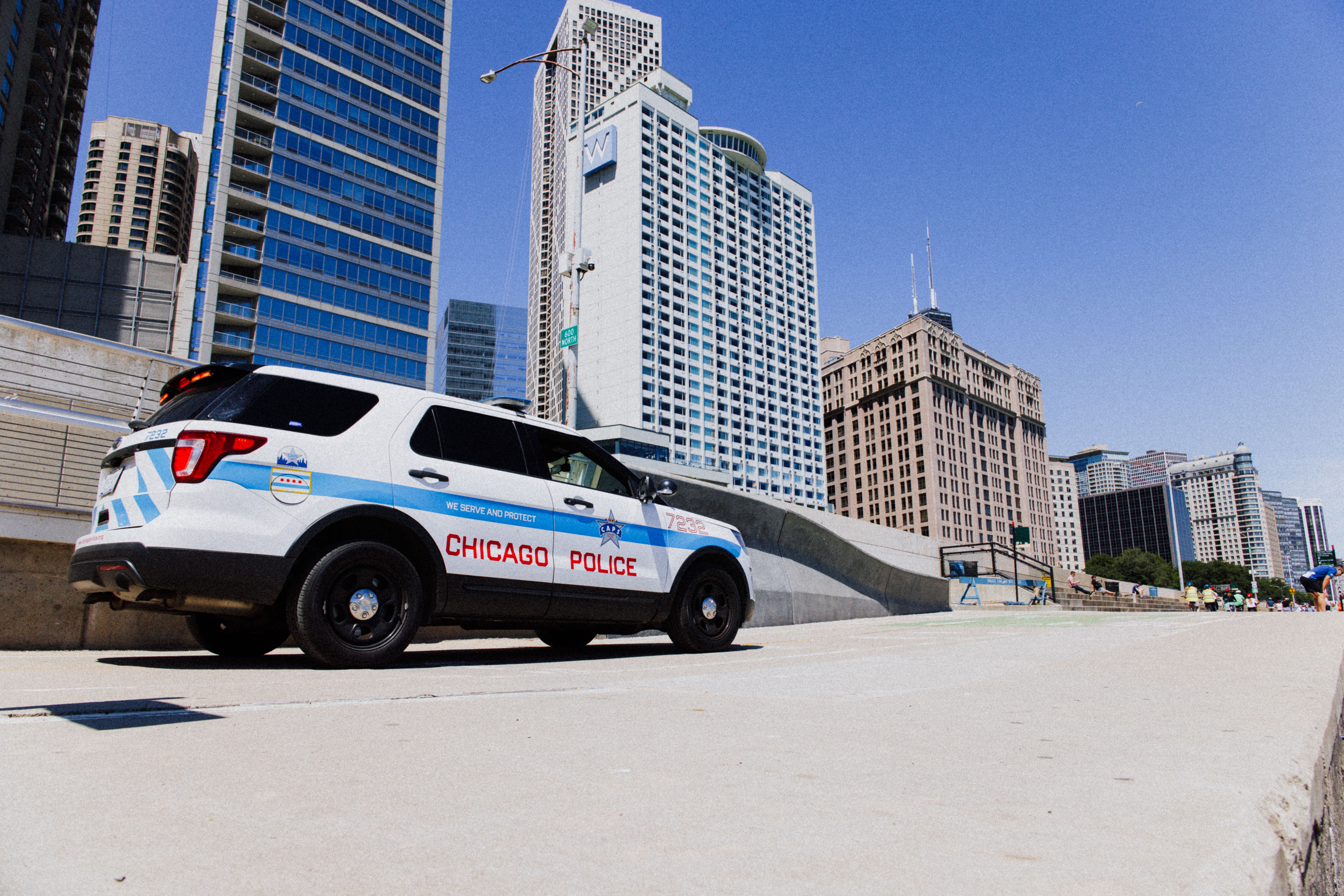
A bloody and chaotic extended holiday weekend in Chicago has plunged the nation’s third-largest city back into a bitter national debate over violent crime and federal military intervention. A heavy spate of shootings across the city over the Juneteenth holiday left at least 7 people dead and 38 others injured, triggering immediate, aggressive condemnation from Washington. Taking to Truth Social on Sunday morning, President Donald Trump lambasted Illinois Democratic Governor J.B. Pritzker for administrative inaction and repeatedly refusing federal assistance. Trump claimed that if given authorization to deploy structural military backing, his administration could permanently stabilize the city in a matter of weeks. At The Modern Memo, we break down the raw crime data from the holiday weekend, the mechanics of a horrific South Side mass shooting, and the intensifying constitutional standoff over urban National Guard deployments. The Holiday Toll: Drive-By Massacres and Rapid Violence The surge of violence completely overshadowed what local leaders intended to be a weekend of peaceful community celebration, including the high-profile opening of the Barack Obama Presidential Center on the South Side. The Princeton Park Drive-By: The most severe single incident materialized late Friday night near 95th Street and Wentworth Avenue. According to the Chicago Police Department (CPD), an SUV pulled up to a crowd gathered for a Juneteenth celebration and opened fire, unleashing a hail of bullets that left more than 100 shell casings on the pavement. The mass shooting wounded 12 people, ranging in age from 17 to 47. The Body Count: Preliminary metrics shared by CPD investigators confirmed at least two dozen separate shooting incidents across the extended weekend window. Among those killed by gunfire were a 50-year-old man shot in the chest on Friday, an 18-year-old shot in the armpit on Saturday evening, and a 21-year-old fatally struck in the chest on Sunday. The Mayoral Reaction: Chicago Mayor Brandon Johnson heavily condemned the bloodshed on social media, expressing deep frustration over the disruption of the holiday. “What should have been a night of celebration and community reflection for Juneteenth was shattered by a horrific act of violence,” Johnson stated. The Truth Social Broadside: “In ONE MONTH” The holiday statistics instantly caught the attention of the White House, prompting President Trump to revive his long-standing, aggressive push to override local municipal control with federal forces. “Lots of killing going on in Chicago,” Trump wrote Sunday morning. “Why isn’t Governor Pritzker calling me for help. I could make Chicago a safe City in ONE MONTH, in ONE YEAR, it would be one of the safest!!!” The Enforcement Precedents: The administration’s rhetoric is backed by a series of ongoing deployments. Under Trump’s current term, National Guard troops have already been aggressively sent on specific crime-fighting and perimeter-control missions inside several Democrat-led metropolitan hubs, including New Orleans, Memphis, and Washington, D.C. The Legal Standoff: The White House has consistently targeted Illinois executive leadership for failing to sign off on similar measures. Governor Pritzker—a prominent national Democrat and a frequently discussed contender for the 2028 presidential cycle—has repeatedly and fiercely rebuffed the administration’s pressure, labeling previous deployment attempts as an unconstitutional overreach of federal executive power. The Data Divide: Rising Friction vs. Falling Long-Term Trends The political battle over Chicago’s law-and-order landscape highlights a profound statistical divide between recent short-term holiday spikes and the city’s broader, long-term crime trajectories. While Trump’s Truth Social post pointed to a city in total collapse, independent think tanks and criminal justice analysts suggest the reality is more nuanced. While current CPD data indicates a slight, single-digit increase in shooting incidents compared to the exact same tracking period last year, Chicago’s overall violent crime rates have actually experienced a downward trajectory over the past three years—paralleling a broader, post-pandemic stabilization seen nationwide. However, for local violence prevention groups like the Peacekeepers and Violence Interrupters, the nuances of long-term percentages mean little when communities are actively ducking drive-by gunfire. Local aldermen and community leaders note that the continuous, high-volume shell casing counts left behind on holiday weekends demonstrate that access to illegal, modified firearms remains an unsolved emergency that local authorities are struggling to contain on their own. Final Word The deadly Juneteenth weekend in Chicago is the definitive proof that local progressive administrative strategies remain highly vulnerable to acute, devastating bursts of urban violence. When you look past the standard political spin and focus entirely on the hard data—7 people dead and 38 wounded over a single holiday weekend, 100 shell casings recovered from a single South Side street corner, and a president offering a one-month military stabilization blueprint—you gain an unvarnished view of a profound leadership failure. Quality information replaces the hollow platitudes of “community healing” with the cold reality of a paralyzed executive branch. By repeatedly rejecting federal National Guard support while families bleed out in Princeton Park, Governor Pritzker and local officials are forcing everyday citizens to pay the ultimate price for an ongoing partisan pride war.

The Shadow Primary: Why Ted Cruz is Breaking with Trump in Southern Gubernatorial Runoffs
The Republican Party’s internal battle for its long-term ideological center has quieted nationally, but it is reaching a fever pitch in the primary runoffs of the American Deep South. In a striking departure from standard party unity, U.S. Senator Ted Cruz (R-TX) has waded directly into high-stakes gubernatorial runoff elections in Georgia and South Carolina, backing insurgent conservative candidates running in direct opposition to President Donald Trump’s chosen picks. The sudden divergence has upended local races and put a national spotlight on a subtle, calculated test of regional influence between the populist MAGA kingmaker and the constitutional-conservative vanguard. At The Modern Memo, we break down the localized data defining the proxy battles in Atlanta and Columbia, how the two titans view the ideological definition of a “strong conservative,” and why Cruz insists this isn’t a declaration of war against the standard-bearer of the party. The Georgia Gridlock: Billionaire vs. The Electors Slate The most expensive and bitter proxy fight is playing out in the Peach State’s gubernatorial runoff, where a jaw-dropping $160 million combined campaign bill has turned a state race into a national laboratory. The Trump Anchor: President Trump has thrown his absolute executive backing behind Georgia Lieutenant Governor Burt Jones. Jones’ endorsement is heavily downstream of personal loyalty; he was a core member of Trump’s alternate Electoral College slate following the contested 2020 election cycle. “Burt has been with us from the very beginning,” Trump declared in a pre-election Truth Social statement. The Cruz Insurgency: Conversely, Senator Cruz traveled to Alpharetta, Georgia, to explicitly stump for billionaire healthcare executive Rick Jackson. Jackson, who has self-funded nearly $100 million of his own net worth into the campaign, has adopted a hardline, populist-outsider approach. “Rick looked at what’s happening… and he said we could lose our state,” Cruz told roaring crowds. The Kemp Variable: Adding to the structural chaos, sitting Georgia Governor Brian Kemp has also broken with Trump, aligning with Cruz to back Jackson. Kemp argues that wealthy, anti-establishment political outsiders have historically demonstrated the strongest metrics when attempting to defeat entrenched Democratic opponents in general elections. The South Carolina Split: The Attorney General vs. The Lieutenant Governor The divergence repeats almost identically across the state line in the Palmetto State’s upcoming Republican gubernatorial nomination runoff. Trump’s Pick: Looking to assert absolute control over South Carolina’s executive branch, President Trump endorsed Lieutenant Governor Pamela Evette. Evette has positioned herself as the institutional continuity candidate, running on a platform deeply intertwined with mainstream MAGA policy frameworks. Cruz’s Constitutionalist Selection: Rather than fall in line, Cruz formally backed longtime South Carolina Attorney General Alan Wilson. Wilson, a fixture of the state’s traditional conservative legal establishment, represents the exact flavor of strict, constitutionalist law-and-order politics that first launched Cruz into the national consciousness. The Cruz Defense: “The Strongest Conservative Who Can Win” As mainstream media networks immediately framed the dual endorsements as a calculated preview of a post-Trump power struggle within the GOP, Cruz went on a swift public relations offensive to defuse the primary-war narrative. The Mainstream Media Narrative Senator Ted Cruz’s Tactical Defense Factional War: Cruz is actively trying to separate himself from Trump and build a distinct anti-Trump coalition. Vast Agreement: Cruz explicitly states he agrees with Trump on the “vast majority of races” across the country. Picking Fights: The endorsements are designed to deliberately trigger and pick ideological fights with Mar-a-Lago. “Not Remotely”: Cruz insists he is not picking a fight, pointing out that both he and Trump are unified in other major races. Loyalty Metrics: Trump selects candidates based on structural personal loyalty and historic electoral alignments. Electability Metrics: Cruz asserts his system focuses entirely on finding “the strongest conservative who can win.” For Cruz, the calculus isn’t about subverting Trump; it is about protecting the ideological purity of the down-ballot ecosystem. The Texas senator’s endorsement strategy continues to prioritize ideological rigidity and movement-conservatism over pure populist alignment. By backing Rick Jackson’s self-funded independence or Alan Wilson’s legal track record, Cruz is betting that state-level primary voters still hunger for institutional, policy-driven conservatism rather than candidates whose main qualification is proximity to the top of the ticket. Final Word Ted Cruz’s calculated departures in Georgia and South Carolina are the definitive proof that the Republican Party remains an empire of competing internal dynamics, even under a dominant national banner. When you look past the noise of the “GOP Civil War” headlines and focus entirely on the hard data—a $160 million self-funded media blitz in Georgia, dueling endorsements splitting the sitting governor and the president, and a Texas senator defining conservatism by policy rather than personal loyalty—you gain an unvarnished view of a party refining its regional identity. Quality information replaces the theatrical narrative of a fractured party with the reality of standard, healthy primary friction. It allows you to see that while Trump commands the national stage, figures like Ted Cruz and Brian Kemp are actively molding the sub-structures of state power. By refusing to yield the gubernatorial mansions of the South without a primary debate, Cruz has reminded the conservative base of a permanent political rule: loyalty may win a headline, but it is ideological conviction and local electability that must ultimately govern the state.

Decapitation Strike: U.S. Military Eliminates Tren de Aragua Leader in Coordinated Venezuela Raid
The global war against transnational organized crime reached a dramatic, kinetic climax deep inside South America. In an extraordinary cross-border operation, U.S. forces executed a precision strike inside Venezuela that successfully eliminated Héctor Rusthenford Guerrero Flores, better known by his street alias “Niño Guerrero,” the notorious kingpin of the ultra-violent Tren de Aragua criminal syndicate. President Donald Trump announced the successful operation on Truth Social, characterizing the mission as a “swift and lethal kinetic strike” that strips safe haven from international syndicates. The cross-border deployment represents a massive geopolitical shift, executed in close coordination with the newly recalibrated Venezuelan government following the forced removal of autocratic leader Nicolás Maduro earlier this year. At The Modern Memo, we break down the operational intelligence behind the strike, the history of the bloodthirsty prison gang, and how the administration leveraged shifting diplomatic dynamics to hunt down America’s most wanted narco-terrorist. The Operation: Blowing Up the Compound The high-stakes mission, carried out by U.S. Southern Command (SOUTHCOM), targeted a heavily fortified hideout used by the gang’s leadership structure. The Lethal Strike: Defense Secretary Pete Hegseth confirmed the operation took place in a remote, southeastern region of Venezuela’s Bolívar state. Trump’s social media announcement included unclassified, overhead surveillance footage capturing the exact moment a precision projectile struck a green-roofed building, instantly engulfing the compound in flames. The Firefight on the Ground: Venezuela’s communications ministry corroborated the timeline, issuing a formal statement confirming that local security forces engaged in fierce firefights with Tren de Aragua militants on the perimeter, culminating in the verified death of the 43-year-old gang lord. The Intelligence Pipeline: According to administration officials, the operation relied on extensive intelligence sharing, with the CIA reportedly mapping the target’s movements. SOUTHCOM Commander General Francis Donovan expressed profound gratitude to the local Venezuelan security services for their tactical support during the combined assault. The Target: Inside the Empire of ‘Niño Guerrero’ Héctor Guerrero Flores was not a standard street-level cartel boss; he was the primary mastermind behind an expansive criminal network that stretched from the lawless interior of South American prisons all the way into major American metropolitan hubs. The Prison Fortress: More than a decade ago, Guerrero assumed total control over the infamously corrupt Tocorón prison in Aragua state. Under his rule, the prison was transformed into a luxurious, fortified command center complete with a pool, a private zoo, a casino, restaurants, and a baseball field, allowing him to run international operations from a lavish private suite. The Transnational Army: Utilizing the mass migration of millions of Venezuelans escaping economic collapse, Tren de Aragua weaponized human smuggling pipelines to embed operatives throughout Peru, Colombia, Chile, and the United States. The gang established an empire built on extortion, contract murder, drug trafficking, and the severe sexual exploitation of women and children. The Federal Hunting License: Late last year, federal prosecutors in New York indicted Guerrero on sweeping racketeering, drug conspiracy, and material support for terrorism charges. The U.S. State Department had placed a $5 million bounty on his head, while the Trump administration formally designated Tren de Aragua as a Foreign Terrorist Organization. The Geopolitical Pivot: The New Alliance in Caracas The ability of the U.S. military to safely drop munitions inside Venezuelan territory marks a complete rewriting of Western Hemisphere defense strategy, made possible by the dramatic collapse of the old regime. The Maduro Arrest Factor: For months, the White House maintained that Tren de Aragua operated under the protection of Venezuelan dictator Nicolás Maduro. That protection permanently dissolved in January, when a daring U.S. military operation whisked Maduro out of the country to face federal drug trafficking charges in the United States. Partnering with Rodríguez: Following Maduro’s capture, the administration backed Acting President Delcy Rodríguez. In exchange for a gradual rollback of paralyzing economic sanctions and the opening of oil reserves, the temporary Venezuelan government has completely aligned its security forces with Washington to aggressively clean out transnational cartels. Retribution for the Victims: In his victory address, Trump tied the execution of Niño Guerrero directly to his domestic borders-and-justice platform. He explicitly dedicated the military strike to the families of American citizens killed in high-profile violent crimes involving undocumented gang members, including 12-year-old Jocelyn Nungaray and 22-year-old Laken Riley. “Tren de Aragua terrorists no longer have safe haven in Venezuela or anywhere else,” Trump wrote. “Under my leadership, we will find these vicious murderers and drug lords anytime, anyplace, and send them to the depths of hell where they belong.” Final Word The precision elimination of Niño Guerrero in his own backyard is the definitive proof that the administration has completely discarded the traditional, passive boundaries of international law enforcement to wage an offensive war against global cartels. When you look past the political noise and look directly at the data—the absolute decapitation of a Foreign Terrorist Organization’s supreme leader, the deployment of U.S. strike packages inside sovereign Venezuelan airspace with the explicit invite of local authorities, and the complete reversal of a decades-long anti-American regime in Caracas—you gain an unvarnished view of raw power politics. Quality information replaces the narrative of “unstoppable migrant gangs” with the reality of targeted military liquidation. It shows that when a rogue criminal empire expands its theater of operations into American suburbs, it forfeits its safety everywhere on earth. By executing a kinetic raid on the compounds of Bolívar state, Washington has delivered an unyielding message to the underworld: no prison wall, no remote jungle, and no foreign border will ever be enough to hide from an American missile.

The Propaganda Battle: Trump Slams ‘Dishonorable’ Iranian Leaks as Fake News, Denying Major Concessions
The diplomatic tightrope between Washington and Tehran has degenerated into an aggressive, public war of words. Less than twenty-four hours after abruptly halting a massive U.S. airstrike package to allow space for a peace accord, President Donald Trump aggressively pushed back against a wave of media leaks originating from Iranian state television. Trump blasted the purported terms published in the Middle East as flat-out “Fake News,” accusing Tehran’s envoys of acting in profound bad faith to salvage public perception at home. At The Modern Memo, we contrast the contradictory terms leaked by Tehran against the White House’s strict performance blueprint, look at Vice President J.D. Vance’s rejection of a “cash-for-peace” giveaway, and examine the fresh drone skirmishes keeping the Strait of Hormuz on a knife’s edge. The Truth Social Broadside: “No Relation to the Truth” The diplomatic whiplash peaked on Friday morning when President Trump took to his Truth Social platform to utterly disavow the narrative being pushed by the official Islamic Republic News Agency (IRNA). The Written Boundaries: Trump explicitly stated that the public leaks completely distorted what had actually been negotiated behind closed doors. “The terms that Iran leaked out to the Fake News have NOTHING to do with the terms that were agreed to, in writing,” Trump wrote. The Character Rejection: Refusing to mince words, the president tore into the integrity of his Iranian counterparts. “What they said, including their weak and pathetic statement on having a deal, bears no relation to the truth,” Trump continued. “Very dishonorable people to deal with. With them, there is no such thing as dealing in good faith. AMAZING!” The Islamabad Framework: While the baseline text of the tentative “Islamabad Memorandum of Understanding” was hammered out by phone through international mediators, the public rollout has dissolved into a chaotic messaging war as both regimes attempt to sell the framework to their domestic audiences. Dueling Realities: What Iran Claimed vs. What the White House Demands The severe friction stems from two radically different portrayals of the draft agreement, highlighting major structural contradictions regarding nuclear concessions, funding, and maritime control. Leaked Iranian Narrative (IRNA / Mehr) The Actual White House Performance Blueprint $24 Billion Cash Release: Iran claimed the immediate unfreezing of $24 billion in blocked foreign assets. Zero Immediate Cash: No funds are released up front. Economic benefits only flow after strict verification metrics are met. Sovereign Strait Control: Tehran asserted it retains absolute authority and management over the Strait of Hormuz. Guaranteed Reopening: The Strait will be permanently opened to international shipping under a strict performance mandate. Preserving Enrichment Rights: State media insisted Iran will not give up its fundamental right to enrich uranium. Dismantling the Grid: The U.S. mandate requires all enriched nuclear material to be destroyed or removed, and the program dismantled. Proxy Funding Untouched: Leaks claimed the deal explicitly excludes Iran’s regional resistance networks and missile systems. Cutting Off Terror Capital: The blueprint legally binds Iran to completely halt all funding to regional proxy terror groups. The Vance Clarification: No Pre-Paid Blank Checks As political critics at home—including key Senate Republicans—sounded the alarm that the administration was preparing a weak, concession-heavy bailout, Vice President J.D. Vance stepped into the fray to anchor the administration’s red lines. Shattering the Fake Information: “I’m seeing a lot of fake information about a potential deal to reopen the Strait and end Iran’s nuclear weapons program,” Vance wrote on social media. The Performance Anchor: Vance categorically denied that Washington was handing Iran a financial windfall just for showing up. “First, the Iranians are not receiving any cash, and no funds are being released for simply signing a deal or attending a meeting,” Vance emphasized. Remaking the Region: The Vice President reinforced that the transaction is entirely “performance-based,” meaning that economic relief is downstream of absolute compliance. If implemented correctly, Vance argued the layout has “the potential to remake the region and lead to lasting peace,” but only on American and allied terms. Midnight Clashes: A Drone Attack on Commercial Shipping Proving that the situation on the water remains completely volatile despite the diplomatic breakthrough, a fresh military flashpoint erupted in the Gulf overnight. The Assault on Indian Vessels: In his Friday morning address, President Trump revealed that Iranian forces attempted a drone raid targeting commercial shipping. “Also, their totally rebuffed Drone attack last night against Indian Ships leaving the Hormuz Strait is TOTALLY UNACCEPTABLE,” Trump warned. The Defensive Shield: U.S. naval assets operating in the area successfully intercepted and downed a pair of one-way attack drones before they could strike the commercial targets. The Final Warning: The late-night escalation drew a sharp, final warning from the commander-in-chief, who signaled his patience has completely evaporated. “They better get their act together, and FAST!” Trump added, leaving the military option squarely on the table if Tehran continues to play double games. Final Word The explosive rollout of the Islamabad Memorandum of Understanding is the definitive proof that negotiating with a rogue regime is an exercise in structural deception. When you look past the noise of Iranian state media spin and focus entirely on the hard data—a president openly calling his negotiating partners ‘dishonorable’, a Vice President explicitly confirming that zero cash will be handed over, and U.S. warships actively shooting down Iranian drones overnight—you gain a clear picture of a deal built on extreme leverage, not mutual trust. Quality information replaces the illusion of an easy diplomatic victory with the reality of an aggressive, performance-enforced probation. It allows you to see that while Iranian negotiators are trying to mask a total structural retreat with empty public posturing, Trump has pinned them to a written, unyielding corner. By drawing a hard line against these desperate leaks, Washington has reminded Tehran of the ultimate geopolitical equation: if you lie about the terms on paper, the bombers will be back in the air before the ink can dry.

The Master Dealmaker’s Brake: Trump Abruptly Cancels Massive Iran Strike Package, Claiming Near-Certain Peace Agreement
The high-stakes game of geopolitical chicken between Washington and Tehran took its most dramatic, unexpected turn yet. Hours after vowing to unleash an devastating wave of military bombings that would hit the Islamic Republic “VERY HARD TONIGHT”, President Donald Trump abruptly pulled the plug on the scheduled operation. Taking to social media, Trump revealed that he issued a last-minute cancellation order after receiving direct confirmation that negotiations had successfully breached the highest echelons of the Iranian regime. The president boldly declared that the foundational components of a historic transaction have been approved by a massive multi-national coalition, signaling an imminent end to the localized war. At The Modern Memo, we break down the dramatic 24-hour timeline that brought the U.S. to the brink of a massive escalation, the structural terms of the purported draft agreement, and the permanent naval stranglehold Trump is maintaining until the ink dries. The Brink of Devastation: Threatening Kharg Island The sudden de-escalation followed an intense, multi-day military build-up characterized by direct hits on Iranian energy infrastructure and a dramatic escalation of public rhetoric. The Stalled Ultimatum: On Wednesday, Trump declared that regional ceasefires had become effectively “meaningless” over Tehran’s refusal to lock in a permanent peace deal. Following a series of retaliatory strikes executed by U.S. Central Command (CENTCOM) against Iranian radar and surveillance hubs, Trump warned that a massive, secondary air campaign was finalized for Thursday night. Targeting the Economic Core: In a series of provocative statements, Trump laid bare his ultimate preference: seizing control of Kharg Island, the vital heart of Iran’s domestic oil industry through which roughly 90% of its petroleum exports flow. “At some point in the not too distant future, we will be taking Kharg Island, and other oil infrastructure points, and assume total control of their Oil and Gas Markets,” Trump had warned. The “Appetite” Restraint: Despite the heavy posturing, Trump pulled back from a full land-invasion narrative during a Thursday phone interview with Fox News, acknowledging a desire to avoid an endless military occupation. “My preference has always been to take Kharg Island,” Trump told the network. “I don’t know that America has the stomach for it to be honest… I don’t want to have boots on the ground.” The Truth Social Pivot: Citing a Breakthrough at the Top Just as fighter jets were preparing for deployment, Trump completely shifted the regional dynamic with an emergency declaration posted to Truth Social, announcing that the planned bombings were officially stood down. “Based on the fact that discussions with the Islamic Republic of Iran have been brought to the highest level of Iranian leadership and approved, I have, as President of the United States of America, cancelled the scheduled strikes and bombings against Iran this evening,” Trump announced. The Multi-National Blueprint: The president insisted that the final points and structural concepts of a comprehensive peace package have been vetted “in both concept and great detail” by an expansive roster of regional powers. According to Trump, the parameters have already received explicit sign-offs from the United States, Israel, Saudi Arabia, the UAE, Qatar, Turkey, Pakistan, Bahrain, Kuwait, Jordan, and Egypt. The Proposed Pillars: While Iranian state media has remained conspicuously quiet regarding a final endorsement, diplomatic mediators close to the talks indicate the draft agreement rests on three strict pillars: a formalized extension of regional ceasefires, the immediate reopening of the Strait of Hormuz to international shipping, and the launch of an aggressive, 60-day negotiation window strictly focused on dismantling Iran’s nuclear enrichment capabilities. A Deal on Deck: Trump concluded his statement by teasing another signature foreign policy triumph, noting that the specific “time and place of the signing to be announced shortly”. Maximum Pressure Remains: The Stranglehold Extends While the bombs are staying on their racks for now, the administration made it explicitly clear that Washington is not letting its guard down or offering pre-signature concessions to Tehran. The Blockade Stands: Trump issued a stern warning to Iranian commanders that any attempt to stall or exploit the pause will result in an immediate resumption of hostilities. “The Naval Blockade will remain in full force and effect until this Transaction is finalized,” Trump emphasized, guaranteeing that Iranian oil vessels attempting to break the defensive line will continue to be aggressively intercepted by U.S. warships. Draining Frozen Accounts: To reinforce the economic pain of the maximum pressure campaign, U.S. Treasury Secretary Scott Bessent announced a new punitive financial directive. The U.S. will begin actively extracting funds directly from frozen Iranian bank accounts to offset the exact costs of military damage sustained by American regional allies—such as Jordan, Bahrain, and Kuwait—during previous proxy missile exchanges. Final Word The eleventh-hour cancellation of the Iranian strike package is the definitive proof of the Trump Doctrine in action: utilizing the credible threat of total economic and military annihilation to force an adversary to the negotiating table. When you look past the whiplash of the fast-moving news cycle and focus on the raw data—a target package that included the core of Iran’s oil economy stood down at the absolute zero hour, a 12-nation consensus claim approved by regional partners, and a heavy naval blockade remaining firmly locked in place—you gain an unvarnished view of high-stakes transactional diplomacy. Quality information replaces the fear of an endless Middle Eastern quagmire with the cold reality of a calculated leverage play. It allows you to see that while Trump prefers the theater of a signing ceremony, the threat of flattening Kharg Island remains fully loaded on the Resolute Desk. By choosing to pause the bombers, Washington has handed Tehran one final, ultimate choice: sign the deal, or watch your entire economic lifeline evaporate overnight.
The Proportional Hammer: U.S. Jets Flatten Iranian Air Defenses After Hormuz Helicopter Ambush
The fragile regional peace between Washington and Tehran completely went up in flames. Following the downing of a U.S. Army AH-64 Apache attack helicopter by an Iranian Shahed-type drone over the Strait of Hormuz, President Donald Trump made good on his promise of swift retaliation. At the President’s direct command, U.S. Central Command (CENTCOM) unleashed a massive, concentrated wave of precision airstrikes against strategic military assets deep inside sovereign Iranian territory. The kinetic exchange marks the most severe disruption to the region’s shaky ceasefire since it was implemented, turning the strategic waterways of the Persian Gulf back into an active combat theater. At The Modern Memo, we break down the raw operational metrics of the American bombing run, the locations left in ruins along Iran’s coast, and the high-stakes political math defining Trump’s “powerful” message to the Islamic Republic. The Retaliation: Blasting the Radar Grid The operation, executed under the umbrella of the U.S. military’s ongoing campaign—Operation Epic Fury—began precisely at 5:00 p.m. Eastern Time (after midnight local time in Iran) and concluded after a devastating four-hour window. The Strike Package: Utilizing a combined arm of U.S. Air Force and Navy fighter jets—including F-16 Fighting Falcons and carrier-launched F/A-18F Super Hornets—the military deployment targeted a total of nearly 20 distinct strategic infrastructure sites along Iran’s southern coast. The Target Profile: CENTCOM confirmed that precision-guided munitions systematically neutralized primary Iranian air defense nodes, surface-to-air missile batteries, ground control stations used to pilot attack drones, and long-range surveillance radar sites tracking the Strait of Hormuz. The Destruction Zones: Open-source intelligence reports and satellite data confirmed massive secondary explosions lighting up the night sky near the heavily fortified Iranian port cities of Jask and Bandar Abbas, as well as critical military facilities embedded on Qeshm Island. The Trump Doctrine: A “Warning Shot” to Enforce a Deal Speaking to reporters on Tuesday evening following the conclusion of the bombing run, President Trump fiercely defended the military intervention, shifting his rhetoric from flexible diplomacy to unyielding deterrence. The Strong Message: “I believe the response should be very strong, very powerful,” Trump stated, confirming he personally authorized the strike package the moment intelligence established a Shahed drone caused the Apache crash. “The operation was a proportional response to recent attacks on U.S. forces and international commercial ships transiting regional waters.” The “Not a Big Deal” Paradox: While Trump authorized a heavy kinetic response, he simultaneously sought to downplay the crisis to preserve his broader foreign policy goals, telling media outlets that the downing itself “wasn’t a big deal” because the two American pilots were successfully rescued by a Task Force 59 Corsair sea drone. The Final Throes Strategy: White House insiders note the strikes were intentionally engineered as a severe “warning shot” rather than the start of a regime-change campaign. Trump insists the U.S. remains in the “final throes of what will be a very, very good deal” to permanently entomb Iran’s nuclear enrichment capabilities, using the swift destruction of their coastal radars to show Tehran exactly what will happen to their entire infrastructure if they walk away from the negotiating table. The Escalation Sequence: Tehran Fires Back The American strikes did not occur in a vacuum. Refusing to absorb the blow silently, the Islamic Revolutionary Guard Corps (IRGC) instantly activated its regional proxy network, triggering a massive, multi-theater missile and drone exchange across the Middle East. The Regional Firefight: Hours after the U.S. jets returned to their bases, Iran launched a coordinated barrage of ballistic missiles and one-way attack drones targeting American and allied military installations across neighboring countries. The Interception Metrics: Defense officials confirmed that the overwhelming majority of the incoming Iranian assets were successfully intercepted by regional air shields. The Jordanian military confirmed its air defenses shot down five incoming Iranian missiles targeting the Muwaffaq Salti Air Base—which hosts American F-35 fighter jets—while base alerts were also triggered across Kuwait and Bahrain. No American casualties or significant infrastructure damage have been reported. The Diplomatic Fallout: The exchange has pushed regional diplomacy to the absolute brink. Iranian Foreign Minister Abbas Araghchi took to social media to warn that Tehran “will leave no attack or threat unanswered,” threatening Gulf nations that allow the U.S. to use their airspace. Meanwhile, Iranian negotiators in Islamabad announced they are officially “reviewing” whether to permanently freeze all ongoing peace talks with Washington. Final Word The U.S. precision strikes inside Iran are the definitive proof that the Trump administration will not allow a diplomatic transition to be used as an open season on American service members. When you look past the noise of the “proportional response” messaging and focus entirely on the hard data—nearly 20 Iranian military targets vaporized in four hours, five Iranian missiles shot down over Jordan, and a multi-billion-dollar nuclear negotiation dangling by a thread—you gain a clear picture of a superpower enforcing boundaries at the edge of a bayonet. Quality information replaces the illusion of a stable regional ceasefire with the reality of a high-stakes geopolitical poker game. It allows you to see that while Trump wants to sign a historic accord and exit the region, he is entirely willing to flatten Iran’s defensive architecture to protect American military credibility. By turning the radar stations of Bandar Abbas to rubble, Washington has delivered an uncompromised mathematical reality to Tehran: the cost of hunting an American helicopter is the systematic dismantling of your own sky shield.

The Hormuz Ambush: Trump Vows Retaliation After Iranian Drone Downs U.S. Apache Helicopter
A fragile regional ceasefire completely shattered over the Persian Gulf. In an escalation that threatens to plunge the Middle East back into all-out war, President Donald Trump announced that Iranian forces shot down a U.S. Army AH-64 Apache attack helicopter patrolling near the strategic Strait of Hormuz. While initial military reports were guarded, U.S. defense officials subsequently confirmed that Iran utilized an uncrewed aerial vehicle (UAV) to down the American aircraft off the coast of Oman. The high-stakes shootdown occurred just hours after Trump declared that long-sought peace negotiations with Tehran were in their “final throes.” At The Modern Memo, we break down the tactical data behind this unprecedented drone-on-helicopter engagement, the historic maritime robotic rescue that saved the American crew, and the retaliatory options sitting on the Resolute Desk. The Engagement: A Drone In The Dark The shootdown materialized around 3:30 a.m. local time on Tuesday during a routine maritime patrol mission conducted by the U.S. Army’s attack helicopter fleet. The Fateful Patrol: The AH-64 Apache—the heavy backbone of American low-altitude deterrence in the gulf—was flying a defensive perimeter to cover commercial shipping vessels navigating the narrow chokehold of the Strait of Hormuz. The Drone Strike: Two U.S. defense officials confirmed that an Iranian drone was the kinetic mechanism responsible for taking down the multi-million-dollar attack helicopter. Investigators are actively parsing telemetry data to determine whether the Iranian drone executed a deliberate ramming maneuver or deployed specialized air-to-air munitions to destroy the helicopter’s rotor systems. The War of Attrition: The loss adds to a growing list of American hardware consumed by the conflict. A Congressional Research Service report reveals that the U.S. military has lost or sustained damage to dozens of aircraft since major hostilites erupted on February 28, highlighting the extreme lethality of Iran’s layered asymmetric air defense network. The Rescue: First-Ever Sea Drone Recovery While the loss of the aircraft is a major strategic blow, the survival of the crew has been hailed as a triumph of cutting-edge robotic warfare, marking a definitive first in the history of the United States Armed Forces. The Search Window: Following the impact, both Army aviators managed to successfully emergency-land or eject into the dark waters off the coast of Oman. Stranded in hostile territory, a frantic countdown began to locate the airmen before Iranian fast boats could capture them. Task Force 59 Steps In: Operating out of the U.S. Fifth Fleet in Bahrain, the military deployed a Saronic Corsair unmanned surface vessel (USV)—a high-tech autonomous sea drone operated by the elite Task Force 59. The Operation: Within approximately two hours, the autonomous sea drone successfully localized the two pilots, pulled them from the water, and transported them to a secure maritime staging point where a crewed helicopter hoisted them to safety. U.S. Central Command (CENTCOM) confirmed both soldiers are currently in stable, uninjured condition. The Trump Ultimatum: “Of Necessity, Respond” The downing of the Apache has completely upended Washington’s diplomatic calculus, forcing President Trump to shift from projecting imminent peace to projecting overwhelming military deterrence. The Truth Social Threat: Taking to social media on Tuesday morning, Trump directly blamed Tehran for the assault. “I have just been informed by our Great Military that last night the Iranians shot down one of our highly sophisticated Apache Helicopters while patrolling over the Strait of Hormuz,” Trump wrote. “There were two pilots involved, both are safe and uninjured. Nevertheless, the United States must, of necessity, respond to this attack.” The Stalled Accord: The attack directly torpedoes a wave of diplomatic optimism. Just hours prior, while speaking to journalists at JFK International Airport after watching the NBA Finals, Trump insisted that a comprehensive peace deal with Iran was “largely negotiated” and could be signed within “two or three days.” The Bombing Option: Trump laid bare the stark choices now facing his administration, warning Tehran that the U.S. possesses the immediate capability to decisively flatten its remaining leadership structure. “If we go and bomb—which we could do very easily if we want, and we spend another two or three weeks bombing—they’ll have nothing left whatsoever,” Trump warned, though he noted a massive kinetic campaign would keep the vital oil transit strait locked down for months. Final Word The downing of an American Apache helicopter by an Iranian drone is the definitive proof that Tehran views diplomatic negotiations as a weakness to be exploited rather than a pathway to peace. When you look past the noise of the “final throes” peace rhetoric and focus entirely on the hard data—a U.S. attack helicopter dragged out of the sky, an unprecedented rescue executed entirely by autonomous sea drones, and an adversary willing to strike U.S. assets during a active ceasefire window—you gain an unvarnished view of a geopolitical conflict that cannot be solved by a handshake. Quality information replaces the illusion of a diplomatic breakthrough with the reality of an unyielding proxy war. It allows you to see that while Trump prefers a historic signing ceremony, the Islamic Revolutionary Guard Corps is only interested in testing American resolve. By promising an uncompromised, necessary response, the administration must now prove that the cost of striking an American pilot is a price the Iranian regime simply cannot afford to pay.