

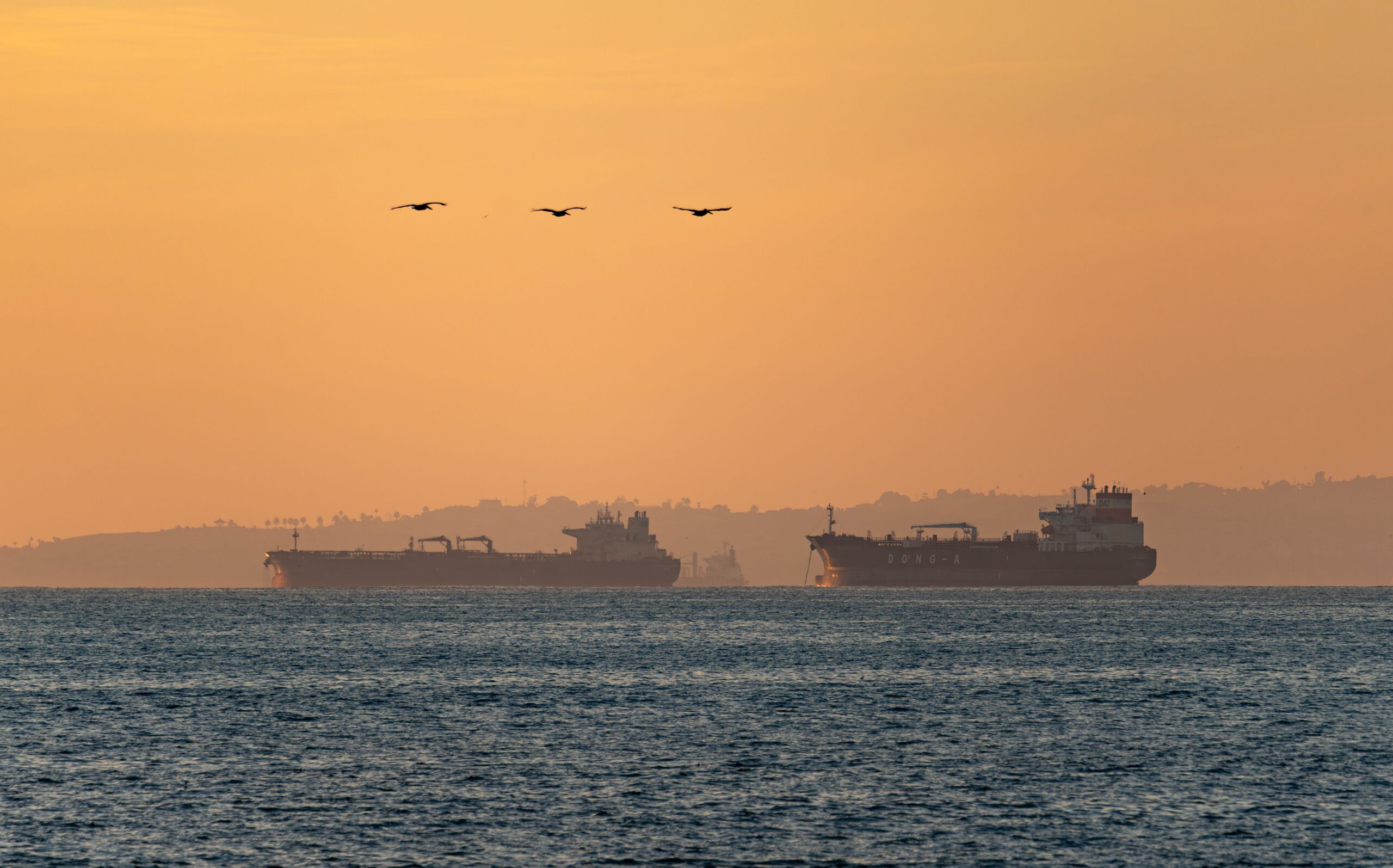
The operational standoff over the world’s most critical energy artery has escalated into a direct economic and military takeover. Following a massive weekend wave of U.S. airstrikes that hit roughly 140 targets across Iran, President Donald Trump officially declared the temporary, interim ceasefire dead, announcing a complete reimposition of the naval blockade on the Islamic Republic.
In a characteristic and unprecedented policy shift announced Monday morning during a phone interview with Fox & Friends and detailed further on Truth Social, Trump proclaimed that the United States military would assume absolute control over the vital trade corridor. Declaring that the nation will henceforth be known as “THE GUARDIAN OF THE HORMUZ STRAIT,” the President announced that the U.S. will begin levying a mandatory 20% transit fee on all eligible commercial cargo passing through the waterway to reimburse Washington for the cost of securing the region.
The drastic executive action has completely upended global maritime trade protocols, drawing immediate legal resistance from the United Nations and sending fresh shockwaves through international oil markets as the conflict slides back into full-scale kinetic warfare.
At The Modern Memo, we break down the operational parameters of the U.S. Navy’s newly ordered port blockade, the financial math behind the 20% guardian toll, and the immediate multi-national legal resistance forming against Washington’s maritime decree.
The Blockade Restored: Strangling the Iranian Port Grid
The primary military directive signed by the President transitions U.S. forces from defensive escort missions to an aggressive, offensive stranglehold on Iran’s entire commercial shipping footprint.
-
The Total Maritime Lockout: The U.S. Navy-led Joint Maritime Information Center confirmed that the blockade will formally commence at 20:00 GMT on Tuesday, July 14, 2026. The mandate covers all Iranian ports, coastal zones, and major crude oil terminals, legally barring any Iranian-flagged vessel or country doing business with Tehran from entering or exiting.
-
The “Fair and Open” Exception: In his policy blueprint, Trump emphasized that the naval blockade is explicitly targeted, not a general shutdown of global shipping. “We are reinstating THE IRANIAN BLOCKADE, so named because it is only stopping Iran’s ships or customers from entering or leaving,” Trump posted. “All other countries will have fair and open use of the Strait.”
-
The Preceding Kinetic Blast: The enforcement order arrives on the heels of devastating U.S. airstrikes that neutralized dozens of coastal threats, systematically erasing Iranian air defense networks, radar arrays, drone launch pads, and the IRGC fast-attack boat fleets that Tehran had previously deployed to assert control over the passage.
The Guardian Toll: “We Expect to Be Reimbursed”
The most disruptive element of the administration’s new Middle East strategy is the introduction of a premium security tariff imposed directly on global commerce.
The 20% fee represents a massive geopolitical counter-strike against Iran’s recent attempts to establish a localized “Strait Authority” to tax merchant vessels. Trump made it clear that if American service members are going to absorb the physical risk of neutralizing Iranian aggression, foreign beneficiaries must foot the bill.
“We’re going to keep the strait, and we’ll probably run it,” Trump told Fox & Friends. “Maybe we’ll call it the guardian angel of the strait. And we should be reimbursed for that… because the other nations are very wealthy. They’re on our side, and we can’t be expected to do that for nothing.” The collected revenues are slated to directly offset the ballooning operational costs incurred by CENTCOM naval deployments.
The Legal and Diplomatic Chasm: UN Pushes Back
While the White House frames the 20% fee as a matter of baseline structural fairness, the policy has triggered immediate, intense friction with international maritime organizations and even members of Trump’s own cabinet.
| Global Entity | Official Position on Waterway Tolls | Immediate Policy Impact |
| International Maritime Organization (IMO) | Stands firmly against any mandatory tolls used simply to transit international straits. | Asserts there is no international legal basis to charge merchant ships for safe passage. |
| European Union (EU) | Foreign Policy Chief Kaja Kallas demands total freedom of navigation. | Reaffirms that passage through the strait must remain free of arbitrary local charges. |
| U.S. State Department | Secretary Marco Rubio previously insisted international law bars any waterway fees. | Creates an immediate internal diplomatic alignment challenge for U.S. envoys. |
The tension is particularly acute given that just last month in Bahrain, Secretary of State Marco Rubio explicitly told reporters that there was “zero support among the Gulf countries for any sort of toll or fees,” asserting that international law strictly guarantees unimpeded, non-discriminatory transit passage. By completely overriding existing global maritime conventions, the administration is betting that the physical reality of American naval dominance will force international shipping conglomerates to comply with the 20% toll, regardless of theoretical objections raised in Brussels or Geneva.
Final Word
The unilateral declaration of the United States as the sovereign “Guardian of the Hormuz Strait” is the definitive proof that the Trump administration has permanently discarded conventional international law in favor of raw transactional realism. When you look past the panic reverberating through European diplomatic suites and analyze the hard data—a total naval blockade of all Iranian ports taking effect tomorrow night, a 20% security fee levied on a passage that carries one-fifth of the world’s energy supply, and a decisive sequence of 140 airstrikes proving the U.S. possesses the absolute kinetic power to back its financial demands—you gain an unvarnished view of a total strategic reset.
Quality information replaces the idealistic narrative of free global navigation with the cold reality of a fee-for-service security grid. Iran gambled that it could use its geographical proximity to hold global oil markets hostage; instead, Washington has physically seized the toll booth, ensuring that the clerical regime is completely starved of maritime revenues while forcing the rest of the world to pay the American military to keep the lights on.
