
President
Kennedy Center Board Votes to Close Over Financial Crisis and Trump Naming Dispute, Names New President
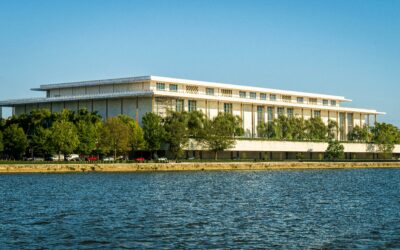
The Kennedy Center’s board of trustees voted Tuesday to close the storied Washington performing arts institution, citing both severe financial distress and an unresolved legal dispute over the board’s push to add President Trump’s name to the building, according to sources familiar with the closed-door meeting. Board members characterized the center’s physical condition as dire and the institution as nearing insolvency, describing the extensive renovations the building requires as “a very large and complex job” that the center’s current finances cannot support. The board’s private meeting Tuesday, which Trump and Commerce Secretary Howard Lutnick both attended, ultimately resulted in a vote to cease Kennedy Center operations, according to people familiar with the proceedings who spoke to the Associated Press. As part of the shakeup, Matt Floca — who previously served as the center’s vice president of operations with a background in facilities management and construction — was installed as the new president and executive director, replacing Richard Grenell, who had led the institution through a turbulent stretch marked by budget warnings to staff about impending cuts that would leave the organization running on “skeletal teams.” The closure vote caps months of controversy that began earlier this year when Trump moved to reshape the Kennedy Center’s leadership and, subsequently, sought to attach his name to the federally chartered cultural institution. The board went so far as to erect signage placing Trump’s name above that of President John F. Kennedy, for whom the center has been named since it opened in 1971 as a living memorial to the assassinated president. When the naming move drew immediate legal challenges, the board did not remove Trump’s name but instead installed what has been described as “an elevated tarp which obscures Trump’s name and most of Kennedy’s” while the underlying legal fight played out in federal court. Federal Judge Christopher Cooper ultimately blocked the board’s effort to formally rename or add memorial signage honoring Trump, ruling unambiguously that “Defendants cannot install memorials for President Trump or anyone or anything else at the Kennedy Center without Congress’s blessing” — a reminder that the Kennedy Center, unlike a privately run cultural venue, operates as an independent federal institution whose formal name and memorial designations fall under congressional authority rather than the discretion of its board or any single administration. Despite the ruling, board members reportedly floated alternative inscription language that would have recognized Trump’s financial contributions to the renovation effort, with the board suggesting that “without such appropriate recognition,” continued presidential support for funding the needed repairs was unlikely to materialize — a framing that drew criticism from lawmakers and arts advocates who argued that federal cultural institutions should not be treated as bargaining chips tied to a single benefactor’s desire for personal recognition. The controversy also produced a separate legal skirmish over who gets a voice in the Kennedy Center’s governance. A federal judge determined that Rep. Joyce Beatty, an Ohio Democrat who serves as an ex officio board member by virtue of her congressional position, was entitled to participate in Tuesday’s closure vote meeting, though the judge stopped short of guaranteeing her an actual vote on the board’s decisions — a narrower procedural ruling that nonetheless underscored how contentious even basic governance questions at the institution had become amid the broader fight over its leadership and branding. The upheaval has triggered a wave of departures and public criticism from the artistic community that has long relied on the Kennedy Center as one of the nation’s premier venues for theater, music and dance. Actress Issa Rae and banjo virtuoso Bela Fleck are among the performers who have withdrawn from planned Kennedy Center engagements in protest, while pianist and songwriter Ben Folds and celebrated opera soprano Renée Fleming both resigned from advisory roles at the institution earlier this year. Jean Davidson, who had served as executive director of the National Symphony Orchestra, one of the resident companies that performs at the Kennedy Center, also departed for a position elsewhere amid the turmoil. Trump has publicly tied his willingness to support the center’s renovation funding to the naming dispute, suggesting on social media that his financial backing for the extensive repairs the building needs was contingent on receiving what he considers appropriate recognition — a linkage that critics say inappropriately conditions taxpayer-adjacent support for a national cultural institution on personal branding concerns rather than the institution’s underlying public mission. For a facility that has hosted presidents, foreign dignitaries and the country’s most prominent performing artists for more than five decades, Tuesday’s closure vote represents an unprecedented disruption. The Kennedy Center receives federal appropriations to help maintain its facilities as the nation’s official memorial to President Kennedy, but has historically relied heavily on private donations, ticket sales and its endowment to fund programming — a funding model that board members now say has proven unsustainable given the scale of deferred maintenance the aging building requires alongside the institutional turmoil of the past several months. Arts advocates and congressional Democrats have called the closure vote a direct consequence of the leadership upheaval Trump initiated earlier this year, arguing that the departure of experienced arts administrators and donors amid the branding fight left the institution financially weaker and less capable of executing the ambitious renovation plans now being cited as justification for shutting down. Supporters of the administration’s involvement counter that the center’s financial problems predate this year’s leadership changes and that a substantial infusion of private funding, potentially including from Trump himself, represents the institution’s best realistic path toward the kind of comprehensive renovation its aging infrastructure genuinely requires. With a new president now in place and the underlying legal dispute over Trump’s name still not fully resolved, the Kennedy Center’s path back to normal operations remains uncertain. Congressional oversight committees are expected to examine the closure decision and the institution’s finances in the coming weeks, given the center’s unique federal charter and the public funding it receives, even as the board and new leadership under Floca begin the…
Colombia’s Deadliest Earthquake in a Generation Kills More Than 160, Tests New President’s First Crisis
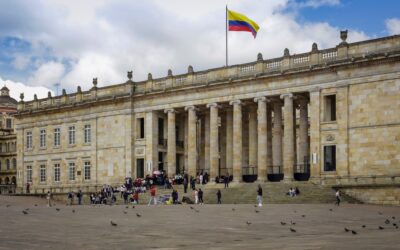
A powerful 7.4-magnitude earthquake tore through western Colombia early Monday morning, killing more than 160 people, collapsing dozens of buildings, and leaving hundreds still missing — the strongest quake to strike the country in more than two decades and an immediate, defining crisis for a president who had been sworn into office only days earlier. What Happened The earthquake struck near San José del Palmar on Colombia’s Pacific coast shortly after 7:30 a.m. local time Monday, with a depth of roughly 103 kilometers. Colombia’s Geological Service confirmed it as the strongest quake to hit the country so far this century, and it was followed by multiple aftershocks. The tremor was powerful enough to be felt across the border in neighboring Ecuador and Panama. By Monday evening, officials with the Colombian Association of Capital Cities put the death toll at 132, with 570 people reported injured — figures authorities warned were likely to keep climbing as search and rescue operations continued. By Tuesday morning, NBC News reported the confirmed death toll had risen further, to at least 169. The hardest-hit areas were concentrated in the Risaralda region, home to the city of Pereira, where at least 60 deaths were reported, and the Valle del Cauca region, home to Colombia’s third-largest city, Cali, where at least 27 people died, including three children. Widespread Destruction Across Multiple Cities The quake caused damage across a wide swath of western Colombia, hitting Cali, Pereira, Quibdó, and Manizales in particular. Local officials reported that at least 86 buildings had fully collapsed and hundreds more were damaged, with President Abelardo de la Espriella saying the quake destroyed or seriously damaged more than 1,500 homes, along with more than a dozen health centers and numerous schools. Seven airports across the affected region suspended operations in the quake’s immediate aftermath, and five capital cities were placed under a red alert. In Cali, city officials said at least 188 people remained missing as of Monday evening. Eyewitnesses described scenes of chaos and destruction. Jorge Moncayo, a 64-year-old taxi driver in the city, told the Associated Press he watched plumes of dust shoot into the air as buildings came down around him. Juan Carlos Osorio, who helped dig through rubble at a collapsed structure, told Colombian broadcaster Caracol Television that the sound of the building coming down “sounded like a bomb.” Neighbors organized themselves into human chains to help move debris by hand while waiting for heavier equipment to arrive. Álvaro López, a Cali resident who watched search efforts unfold while holding his dog, described the scope of the damage bluntly: “Our building has basically been left in ruins, and the building next to ours? Completely collapsed.” In Pereira, rescue crews evacuated 16 people who had been trapped for six hours inside a cable car system used for public transit in the mountainous city. A Region Especially Vulnerable The earthquake’s epicenter fell near Colombia’s Chocó region, one of the country’s poorest and most remote areas, nestled deep in Pacific coastal jungle and reachable in many parts only by boat or small aircraft. That remoteness has significantly complicated damage assessment and relief efforts, with communications outages in the hours after the quake leaving some areas without any mobile phone service and delaying an accurate accounting of the toll from the region closest to where the quake actually struck. Colombia sits along the Pacific “Ring of Fire,” the extensive chain of seismic fault lines encircling the Pacific Ocean responsible for the majority of the world’s earthquakes, making the country and its neighbors chronically vulnerable to major seismic events. Colombian officials noted that the country has taken concrete steps to prepare for exactly this kind of disaster since a devastating 1999 earthquake, including instituting evacuation drills conducted at least twice annually in major cities such as Bogotá, Medellín, Barranquilla, and Cali. An Unwelcome Echo of Venezuela’s Recent Disaster For many in the region, Monday’s earthquake carried an especially painful resonance: memories remain fresh of the devastating twin earthquakes that struck neighboring Venezuela in June, which together killed more than 6,000 people and left thousands more displaced, with recovery efforts there still ongoing more than a month later. NPR noted that residents and rescue workers searching through rubble in Cali described scenes strikingly similar to those still playing out across the border in Venezuela. A Test for a Brand-New President The timing of the disaster carries particular political weight in Colombia. The earthquake struck just days after Abelardo de la Espriella was sworn in as the country’s new president, thrusting his administration into a major national crisis before it had barely begun. De la Espriella declared a national state of emergency Monday afternoon, pledging the full resources of the federal government toward rescue and relief efforts. “The national government has all of its capabilities deployed to protect lives, assist affected communities and deliver aid wherever it is needed,” he said in a national address. “The first priority is rescuing the people trapped under the rubble.” International Response The United States moved quickly to offer support. The State Department announced it is committing $15.5 million to Colombia specifically for shelter, food, protection services, and ongoing earthquake damage assessments. The U.S. Embassy in Bogotá also confirmed it is actively assisting American citizens affected by the disaster — a notable point given that hundreds of thousands of Americans visit Colombia annually, making the U.S. the largest single source of tourists to the country. What Comes Next With search and rescue operations still actively underway in hard-hit cities and communications still limited in some of the more remote areas near the epicenter, officials caution that the full scope of the disaster — both in terms of lives lost and total economic damage — likely won’t be clear for days or even weeks. For a president barely into his first week in office, the response to this disaster is likely to shape public perception of his administration’s competence and priorities well beyond the immediate crisis itself, as reconstruction in…