

Politics

Staking the Control Grid: Supreme Court Strikes Down Blue-State ‘Vampire Laws’ in Landmark Second Amendment Victory
The Supreme Court handed gun rights advocates a historic, structural victory, permanently dismantling a wave of highly restrictive “default gun-free zones” enacted by blue states looking to subvert the expansion of concealed carry rights. In a divided 6–3 decision in Wolford v. Lopez, the high court struck down a sweeping Hawaii statute that criminally barred licensed concealed carry permit holders from bringing firearms onto any private property open to the public—including restaurants, gas stations, supermarkets, and malls—unless the property owner explicitly displayed permission or provided “express authorization.” Writing for the conservative supermajority, Justice Samuel Alito effectively drove a stake through these regulations—colloquially dubbed “vampire laws” because they required gun owners to be explicitly “invited in” by a household or proprietor. The ruling establishes that states cannot weaponize private property laws to create a de facto blanket ban on carrying firearms outside the home. At The Modern Memo, we break down the operational mechanics of the ruling, the legal failure of the blue-state “Bruen response” loop, and how the decision guarantees unconstrained self-defense metrics for lawful gun owners nationwide. The ‘Vampire’ Trap: How Blue States Presumed Guilt The legal battle in Wolford v. Lopez directly traces its lineage back to the Supreme Court’s watershed 2022 decision in New York State Rifle & Pistol Association v. Bruen, which established that the Second Amendment guarantees an individual’s right to carry a firearm in public for self-defense. The Anti-Bruen Rebellion: In the immediate aftermath of Bruen, five heavily progressive states—Hawaii, California, Maryland, New York, and New Jersey—scrambled to pass massive legislative workarounds to neutralize the expansion of carry permits. Flipping the Default: Rather than banning permits entirely, Hawaii’s Act 52 and California’s Senate Bill 2 flipped the legal default of public spaces. Under the progressive framework, every private business open to the public was automatically presumed to be a criminal “gun-free zone” unless the owner explicitly opted out by placing state-approved signs in their windows or verbally granting permission. The Interception Math: Trump administration attorneys joined forces with a coalition of Hawaii gun owners to aggressively challenge the restriction. They presented data showing that if a state can legally criminalize carrying a weapon into a routine grocery store or coffee shop without advance permission, a lawful permit holder faces an impossible criminal matrix simply by stepping out of their vehicle to go about their daily lives. The Ruling: Second-Class Status Shattered The 6–3 ideological division on the bench saw the conservative majority thoroughly reject the progressive legal architecture, asserting that Hawaii’s rule placed an unconstitutional, undue burden on fundamental rights. “This regime hobbles what the Second Amendment protects: the right of Americans to carry arms for self-defense as they go about their daily lives,” Justice Samuel Alito wrote for the majority. “We hold that the law is unconstitutional.” Rejecting Second-Class Status: The ruling solidified warnings Alito delivered during oral arguments, where he pointedly blasted state lawyers for trying to relegate the Second Amendment to a “second-class status” compared to other constitutional protections. The Historical Text Failure: Under the Bruen standard, if a state wishes to regulate firearms, it must prove the restriction is rooted in the nation’s historical tradition of firearms regulation dating back to the founding era. The majority found that Hawaii utterly failed to produce any relevant historical analogue from the late 18th or 19th centuries showing American citizens were routinely required to obtain advance municipal permission to carry tools of self-defense onto public-facing commercial property. The Dissenting View: Writing for the three liberal justices, Justice Sonia Sotomayor issued a sharp dissent, arguing that the majority had severely overreached. Sotomayor contended that states possess a vital public safety interest in preventing gun violence and should retain the authority to balance the property rights of business owners against the desires of armed citizens. The National Domino Effect: Stripping Control Maps The structural fallout from the Wolford decision will immediately vaporize identical restrictive frameworks implemented by other deep-blue state capitals across the country. The Coast-to-Coast Collapse: Beyond Hawaii, the ruling directly torpedoes major components of California’s SB 2 and New York’s Concealed Carry Improvement Act. Gun rights litigators are already filing emergency motions to permanently strike down matching “vampire provisions” currently tied up in lower federal court backlogs across Maryland and New Jersey. The “Sensitive Places” Boundary: Crucially, the Supreme Court’s ruling leaves intact traditional restrictions on narrowly tailored “sensitive places.” Governments can still legally bar firearms inside core state infrastructure—such as schools, government buildings, polling stations, and courthouses—but they can no longer expand that definition to include an entire city’s commercial economy. Final Word The Supreme Court’s striking down of Hawaii’s restrictive property law is the definitive proof that the conservative supermajority will not tolerate state-level subversion of the Bruen precedent. When you look past the noise of the political fallout and focus entirely on the hard data—a 6–3 constitutional decision securing public-facing businesses, the structural collapse of ‘vampire laws’ across five separate states, and the re-anchoring of gun regulations strictly to historical traditions—you gain an unvarnished view of an ascendant Second Amendment doctrine. Quality information replaces the progressive narrative of “protecting private property” with the reality of an aggressive bureaucratic attempt to construct a backdoor gun ban. By declaring that the right to self-defense does not pause the moment an American citizen walks into a grocery store, the high court has delivered a permanent, unyielding message to blue-state legislatures: the right to keep and bear arms is an active reality, and the era of creative constitutional avoidance is officially over.

The Shadow Primary: Why Ted Cruz is Breaking with Trump in Southern Gubernatorial Runoffs
The Republican Party’s internal battle for its long-term ideological center has quieted nationally, but it is reaching a fever pitch in the primary runoffs of the American Deep South. In a striking departure from standard party unity, U.S. Senator Ted Cruz (R-TX) has waded directly into high-stakes gubernatorial runoff elections in Georgia and South Carolina, backing insurgent conservative candidates running in direct opposition to President Donald Trump’s chosen picks. The sudden divergence has upended local races and put a national spotlight on a subtle, calculated test of regional influence between the populist MAGA kingmaker and the constitutional-conservative vanguard. At The Modern Memo, we break down the localized data defining the proxy battles in Atlanta and Columbia, how the two titans view the ideological definition of a “strong conservative,” and why Cruz insists this isn’t a declaration of war against the standard-bearer of the party. The Georgia Gridlock: Billionaire vs. The Electors Slate The most expensive and bitter proxy fight is playing out in the Peach State’s gubernatorial runoff, where a jaw-dropping $160 million combined campaign bill has turned a state race into a national laboratory. The Trump Anchor: President Trump has thrown his absolute executive backing behind Georgia Lieutenant Governor Burt Jones. Jones’ endorsement is heavily downstream of personal loyalty; he was a core member of Trump’s alternate Electoral College slate following the contested 2020 election cycle. “Burt has been with us from the very beginning,” Trump declared in a pre-election Truth Social statement. The Cruz Insurgency: Conversely, Senator Cruz traveled to Alpharetta, Georgia, to explicitly stump for billionaire healthcare executive Rick Jackson. Jackson, who has self-funded nearly $100 million of his own net worth into the campaign, has adopted a hardline, populist-outsider approach. “Rick looked at what’s happening… and he said we could lose our state,” Cruz told roaring crowds. The Kemp Variable: Adding to the structural chaos, sitting Georgia Governor Brian Kemp has also broken with Trump, aligning with Cruz to back Jackson. Kemp argues that wealthy, anti-establishment political outsiders have historically demonstrated the strongest metrics when attempting to defeat entrenched Democratic opponents in general elections. The South Carolina Split: The Attorney General vs. The Lieutenant Governor The divergence repeats almost identically across the state line in the Palmetto State’s upcoming Republican gubernatorial nomination runoff. Trump’s Pick: Looking to assert absolute control over South Carolina’s executive branch, President Trump endorsed Lieutenant Governor Pamela Evette. Evette has positioned herself as the institutional continuity candidate, running on a platform deeply intertwined with mainstream MAGA policy frameworks. Cruz’s Constitutionalist Selection: Rather than fall in line, Cruz formally backed longtime South Carolina Attorney General Alan Wilson. Wilson, a fixture of the state’s traditional conservative legal establishment, represents the exact flavor of strict, constitutionalist law-and-order politics that first launched Cruz into the national consciousness. The Cruz Defense: “The Strongest Conservative Who Can Win” As mainstream media networks immediately framed the dual endorsements as a calculated preview of a post-Trump power struggle within the GOP, Cruz went on a swift public relations offensive to defuse the primary-war narrative. The Mainstream Media Narrative Senator Ted Cruz’s Tactical Defense Factional War: Cruz is actively trying to separate himself from Trump and build a distinct anti-Trump coalition. Vast Agreement: Cruz explicitly states he agrees with Trump on the “vast majority of races” across the country. Picking Fights: The endorsements are designed to deliberately trigger and pick ideological fights with Mar-a-Lago. “Not Remotely”: Cruz insists he is not picking a fight, pointing out that both he and Trump are unified in other major races. Loyalty Metrics: Trump selects candidates based on structural personal loyalty and historic electoral alignments. Electability Metrics: Cruz asserts his system focuses entirely on finding “the strongest conservative who can win.” For Cruz, the calculus isn’t about subverting Trump; it is about protecting the ideological purity of the down-ballot ecosystem. The Texas senator’s endorsement strategy continues to prioritize ideological rigidity and movement-conservatism over pure populist alignment. By backing Rick Jackson’s self-funded independence or Alan Wilson’s legal track record, Cruz is betting that state-level primary voters still hunger for institutional, policy-driven conservatism rather than candidates whose main qualification is proximity to the top of the ticket. Final Word Ted Cruz’s calculated departures in Georgia and South Carolina are the definitive proof that the Republican Party remains an empire of competing internal dynamics, even under a dominant national banner. When you look past the noise of the “GOP Civil War” headlines and focus entirely on the hard data—a $160 million self-funded media blitz in Georgia, dueling endorsements splitting the sitting governor and the president, and a Texas senator defining conservatism by policy rather than personal loyalty—you gain an unvarnished view of a party refining its regional identity. Quality information replaces the theatrical narrative of a fractured party with the reality of standard, healthy primary friction. It allows you to see that while Trump commands the national stage, figures like Ted Cruz and Brian Kemp are actively molding the sub-structures of state power. By refusing to yield the gubernatorial mansions of the South without a primary debate, Cruz has reminded the conservative base of a permanent political rule: loyalty may win a headline, but it is ideological conviction and local electability that must ultimately govern the state.
Stripping the Robe: Sen. Tim Sheehy’s JAIL Act Aims to Shatter Judicial Immunity for Soft-on-Crime Judges
The escalating battle over America’s broken criminal justice system has officially breached the walls of the judiciary. Highlighting a pattern of radical leniency that leaves innocent citizens vulnerable, U.S. Senator Tim Sheehy (R-Mont.) has introduced a high-stakes legislative hammer: the Judicial Accountability for Irresponsible Leniency (JAIL) Act. The sweeping bill proposes an unprecedented structural shift by entirely eliminating long-standing judicial immunity for state and federal judges whose decisions to release dangerous, repeat violent offenders lead to new acts of violence. At The Modern Memo, we analyze the raw data behind the legislative push, the real-world tragedies fueling the backlash against the judiciary, and how this bill aims to legally dismantle the revolving door of American courtrooms. The Legislation: Piercing the Shield of Judicial Immunity For more than a century, American jurisprudence has protected judges from personal civil liability under the doctrine of absolute judicial immunity. The JAIL Act aims to utterly shatter that legal protection, transforming courtroom leniency into a potential personal financial disaster for radical judges. The Civil Action Loophole: Co-sponsored by Senator Marsha Blackburn (R-Tenn.) in the Senate and Representative Randy Fine (R-Fla.) in the House, the bill establishes a direct legal avenue for victims. If a judge releases a defendant pending trial who has a documented history of violent convictions, the victim—or their immediate family if the victim is deceased—can sue that judge for civil damages in federal district court. No More Excuses: The text of the legislation explicitly strips judges of using judicial immunity as a legal defense. Furthermore, it broadens the scope of liability to allow victims to seek damages from other involved government entities, including soft-on-crime prosecutors who refuse to request appropriate bail. The Legislative Philosophy: “The most solemn duty of government is to protect its people, but too often, radical judges in far-left jurisdictions prioritize soft sentencing for criminals over common sense and public safety,” Senator Sheehy stated. He argued that the bill targets the “revolving door” of the criminal justice system by imposing cold, financial consequences on the officials who enable it. The Tragic Catalysts: Why the Status Quo is Untenable The urgency behind the JAIL Act is driven by a horrifying list of preventable tragedies across the United States, where repeat offenders were cut loose by lenient courts only to claim innocent lives. The Murder of Iryna Zarutska: Senator Sheehy explicitly pointed to the tragic case of Iryna Zarutska in Charlotte, North Carolina. Zarutska was brutally murdered by a career criminal, Decarlos Brown Jr., who had been repeatedly released back onto the streets by local judges despite a staggering, lengthy record of violent offenses. The Police Backing: The National Police Association (NPA) has thrown its full organizational weight behind the bill, noting that law enforcement resources are being completely drained by re-arresting the exact same violent actors. “Allowing violent criminals to prey on the innocent is antithetical to our nation’s foundational values… this irresponsible behavior needs to be addressed via legal avenues,” warned Paula Fitzsimmons, Legislative Director for the NPA. The Establishment Pushback: A Constitutional Firestorm While the JAIL Act has generated intense enthusiasm among law-and-order advocates, mainstream legal analysts and progressive lawmakers are already panicking over its implications. The Independence Argument: Left-leaning critics and judicial associations claim the bill is unworkable, arguing that stripping immunity would destroy judicial independence. They contend that judges would be forced to rule out of fear of personal bankruptcy rather than balancing statutory law and individual constitutional rights. The “Fortune Teller” Defense: Institutionalists argue that judges cannot be treated as fortune tellers who are retroactively guilty for a defendant’s future actions. The Constitutional Showdown: If passed, the JAIL Act would trigger an immediate, historic separation-of-powers battle in the Supreme Court, testing whether Congress possesses the legislative authority to pierce the traditional immunity defenses of the third branch of government. Final Word The introduction of the JAIL Act is the definitive proof that the American electorate has run completely out of patience with an elite, insulated judiciary that faces zero consequences for endangering the public. When you look past the noise of progressive “judicial independence” complaints and focus on the raw data—innocent citizens slaughtered by career felons, judges repeatedly waiving bail requirements for violent offenders, and the complete exhaustion of front-line police resources—you gain a clear picture of a system that has lost its moral compass. Quality information replaces the narrative of “routine courtroom discretion” with the reality of an unmitigated public safety crisis. It allows you to see that if a surgeon can be sued for gross malpractice, a judge who signs the release papers for a violent predator should be held to the exact same standard of legal accountability. By choosing to put judges on the hook for the carnage they unleash, Tim Sheehy has finally introduced common sense to a system desperate for a hard reality check.

A City Divided: One Burning Issue Dominates as LA Voters Head to the Polls Over Spencer Pratt’s Mayoral Bid
Los Angeles voters head to the polls for a high-stakes, nonpartisan primary election that will permanently reshape the city’s political landscape. With more than a dozen names on a crowded ballot, Tuesday’s vote is mathematically guaranteed to narrow the field down to the top two candidates for a definitive head-to-head showdown in the November general election. Yet, as the lines form at voting precincts from East LA to the Westside, the entire election has been swallowed by one inescapable, burning crisis: the intersection of crisis management, public disorder, and the slow, agonizing recovery from the devastating 2025 Pacific Palisades wildfire. It is an issue that has transformed a reality television villain into a potent political disruptor and split America’s second-largest city right down the middle. At The Modern Memo, we look past the Hollywood aesthetics to analyze the polling numbers deadlocking the frontrunners, the raw data behind the wildfire fallout, and how an anti-establishment populist is testing the boundaries of a heavily blue stronghold. The Three-Way Deadlock: The Primary Data For months, incumbent Mayor Karen Bass—the first female mayor in Los Angeles history—was widely expected to glide toward an unencumbered re-election bid. But a late-stage surge from the political fringes has forced the establishment into a brutal fight for political survival. The Statistical Tie: A final UC Berkeley/Los Angeles Times poll released just ahead of Tuesday’s vote reveals a razor-thin, three-way statistical deadlock among likely primary voters. Bass holds a vulnerable lead at 26%, with progressive City Councilwoman Nithya Raman surging to 25%, and Spencer Pratt nipping at their heels with 22%. The Nonpartisan Filter: Because California utilizes a top-two primary system for municipal elections, party affiliations are stripped from the ballot. If no candidate achieves an absolute majority of 50% plus one on Tuesday—an statistical impossibility given the current polling—the top two vote-getters, regardless of ideology, will advance to a November runoff. The Reality Disruptor: Running as a MAGA-aligned, registered Republican, Spencer Pratt—the former breakout star of MTV’s The Hills—has upended the traditional playbook. Dismissed early on as a novelty candidate, Pratt’s unfiltered, social-media-heavy populist campaign has successfully capitalized on deep, localized voter exhaustion. The Defining Issue: The Smoke and the Sidewalks While traditional municipal campaigns focus on abstract budgetary allocations, the 2026 mayoral race is being fought entirely on the pavement. The collective trauma of the catastrophic 2025 Pacific Palisades fire has supercharged a broader debate regarding public safety and chronic homelessness. The Personal Catalyst: For Pratt, the crisis is intensely personal; his own family home was entirely incinerated during the 2025 wildfire. He has relentlessly weaponized his personal tragedy on TikTok and Instagram, running viral ads that blast Mayor Bass for being physically overseas during the disaster and slamming City Hall’s subsequently sluggish, heavily bureaucratic permitting process. The Law Enforcement Ultimatum: Pratt has blended his fire-recovery rhetoric with an aggressive, zero-tolerance platform targeting public encampments and street crime. “I don’t do the politician talk,” Pratt told reporters, pitching a platform aimed at mothers who no longer feel safe walking their children past encampments near schools and daycares. “I’m going to enforce the laws that exist… Common sense does not require an advisory committee.” The Progressive Fracture: The issue has split the traditional Democratic coalition in two. While Bass defends her administration’s record—pointing to documented decreases in street-level homelessness during her tenure—Councilwoman Nithya Raman, a democratic socialist, is attacking the mayor from the left. Raman argues the city’s current approach relies too heavily on temporary sweeps rather than permanent municipal housing infrastructure, leaving progressive voters fractured over how to solve the crisis. The Bel-Air Controversy: Authenticity vs. Optics As the race hit its final stretch, the establishment attempted to puncture Pratt’s populist narrative by targeting his lavish lifestyle, highlighting the stark contrast between his “everyman” campaign rhetoric and his reality-TV roots. The Trailer vs. The Hotel: Pratt faced intense media blowback after filming an anti-establishment campaign ad outside a parked Airstream trailer, declaring to viewers, “this is where I live.” Investigative reports later exposed that the candidate was actually residing in a luxury suite at the ultra-exclusive Bel-Air Hotel while his Palisades home was being cleared. The Ideological Uphill Climb: Even if Pratt’s “common sense” messaging sneaks him into the top two slots on Tuesday night, veteran California strategists point out that his long-term math remains incredibly bleak. To win a general election in November, he must somehow convince a heavily, historically blue Democratic metropolis to elect a conservative who has never held public office. Final Word Tuesday’s Los Angeles mayoral primary is the definitive proof that when a city’s core infrastructure and basic safety lapse, voters will look to the absolute fringes for answers. When you look past the noise of reality-television celebrity and focus on the data—the three-way statistical tie at 26%, 25%, and 22%, the lingering displacement of the 2025 wildfires, and widespread urban frustration over unenforced municipal ordinances—you gain a clearer picture of an electorate in open revolt against institutional inertia. Quality information replaces the narrative of a standard local election with the reality of a generational, systemic fracture. It allows you to see that whether Spencer Pratt is a temporary protest vote or a viable November contender, his platform has fundamentally shattered the political peace inside City Hall. By choosing to vote on the singular issue of urban functionality today, Angelenos are sending an unmistakable message: the era of business as usual is officially dead.

The Cover-Up Continues: Trump Lashes Out After Biden Sues His Own Former DOJ to Hide Ghostwriter Audio
The long-running battle over political transparency reached a stunning and chaotic milestone in Washington, D.C. In an unprecedented legal maneuver, former President Joe Biden filed a federal lawsuit against the Department of Justice in a desperate bid to halt the imminent public release of approximately 70 hours of private cand transcripts. The hidden files capture Biden discussing sensitive, classified information with the ghostwriter of his 2017 memoir. At The Modern Memo, we analyze the raw data of Biden’s sudden legal offensive, the impending June deadline that sparked the panic, and why President Donald Trump is blasting the move as one of the most dangerous and corrupt scandals in American history. The Lawsuit: An ‘Invasion of Privacy’ in the Twin Cities Pipeline The legal complaint, filed by Biden’s personal attorneys in the U.S. District Court for the District of Columbia, takes aim at a massive, sudden policy reversal within the Department of Justice regarding transparency standards. The Stolen Content: At the heart of the litigation are extensive recordings and transcripts from 2016 and 2017 between Biden and Mark Zwonitzer, the biographer who drafted his book Promise Me, Dad. The files were seized by federal authorities during the 2023 investigation into Biden’s systemic mishandling of classified documents. The Privacy Defense: Biden’s legal team argued that releasing the raw audio to congressional oversight panels and public interest groups would constitute an unwarranted invasion of privacy. “Every American, including a sitting or former Vice President, has a right to privacy in the personal conversations he has within his own home,” his lawyers wrote. The Sudden Pivot: Under the current administration, the DOJ notified Biden in February 2026 that it was abandoning its previous, defensive posture. Dropping prior exemptions, the department informed Biden it intended to fully comply with outstanding public records law demands and congressional subpoenas by turning over the unredacted files on June 15. Trump Hits Back: ‘What Is He Trying to Hide?’ The response from the White House was immediate and unsparing. President Trump utilized his platform to lambaste his former rival’s legal maneuver, framing the lawsuit as definitive proof of a deeply entrenched culture of evasion and cognitive shielding. The Executive Blame: Trump characterized the lawsuit as one of the most dangerous scandals in modern U.S. history, arguing that Biden is using a team of high-priced lawyers to weaponize the federal court system against the American public’s right to know the truth. The Memory Loophole: Conservative lawmakers have long suspected that the 70 hours of audio contain direct evidence of the severe memory lapses and cognitive decline that ultimately derailed Biden’s 2024 re-election campaign. Trump noted that if Biden’s memory was as flawless as his defenders claimed, he would welcome the release rather than filing emergency cross-claims to bury it. The Classified Double Standard: The White House has consistently pointed out the glaring asymmetry in how classified document retention has been treated. While the previous administration pursued aggressive, multi-count indictments over secure storage at Mar-a-Lago, Biden’s team is actively fighting to ensure the public never hears him read classified foreign policy notebooks aloud to a private, un-cleared biographer. The Hur Report Legacy: ‘Elderly Man with a Poor Memory’ The ghostwriter tapes were a foundational pillar of the 345-page report compiled by former Special Counsel Robert Hur. While Hur ultimately opted against pursuing criminal charges, his characterization of the former president created a political earthquake. The Willful Retention: Hur’s final report explicitly concluded that Biden had willfully retained and disclosed classified materials as a private citizen, including sensitive military logs and foreign policy documents regarding Afghanistan. The Rationale for Acquittal: Hur famously justified his decision not to prosecute by predicting a jury would view Biden as a “sympathetic, well-meaning, elderly man with a poor memory.” The Fuzziness on Display: While the printed transcripts of Biden’s separate, five-hour interview with prosecutors showed him becoming repeatedly fuzzy about dates, document trails, and the timeline of his own vice presidency, the Heritage Foundation and the House Judiciary Committee have argued the actual audio files are vital to evaluating his true fitness and intent. Final Word Joe Biden’s lawsuit against the Justice Department is the definitive proof that the architectural defense of the old establishment relies entirely on closed doors and sealed records. When you look past the noise of “privacy right” justifications and focus on the data—the 70 hours of sequestered biographer tapes, the willful dissemination of classified foreign policy data to an author, and the abrupt June 15 release deadline—you gain a clearer picture of an institutional cover-up running out of runway. Quality information replaces the narrative of “harmless personal conversations” with the reality of an elite political figure desperate to prevent the American electorate from hearing his own unedited voice. It allows you to see that while Biden wants to fight the transparency mandate in a Washington federal court, the demand for accountability is a force that no late-minute motion can permanently restrain. By choosing to sue to hide the receipts, the former president has inadvertently ensured that the countdown to June 15 is the most scrutinized timeline in Washington.
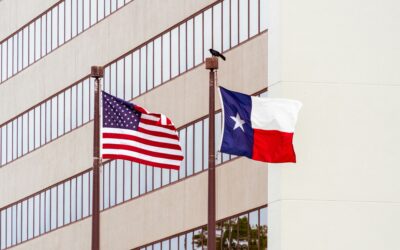
The Texas Red Wall Crack: GOP Fears Trump’s Late Paxton Endorsement Handcuffs Safely Red Senate Seat
The most expensive and vitriolic Senate primary in American history reached its boiling point, as Texas Republicans headed to the polls for a high-stakes runoff election. But beneath the campaign rallies and a staggering $135 million in ad spending, a deep anxiety is fracturing the state’s Republican establishment. A buzzer-beating, eleventh-hour endorsement from President Donald Trump has fundamentally altered the race, igniting fears that a seat safely held by Republicans for over three decades could be placed in serious jeopardy this November. At The Modern Memo, we analyze the proxy war between incumbent Senator John Cornyn and Attorney General Ken Paxton, the raw campaign data driving the panic, and why Democrats believe they have been handed a golden ticket in the Lone Star State. The Eleventh-Hour Intervention For months, President Trump kept both campaigns on ice, declining to tip the scales during the March 3 primary where neither candidate cleared the 50% threshold. The strategic silence frustrated party leadership, who desperately lobbied the White House to stay neutral or back the more traditional incumbent. The Sledgehammer Endorsement: Just days before the runoff, Trump shattered the stalemate by throwing his total support behind Ken Paxton, calling him a “true MAGA Warrior” and “our Country’s BEST Attorney General.” Altering the Terrain: Rice University political science professor Mark Jones observed that the late endorsement completely destabilized the race. “The moment Donald Trump endorsed Ken Paxton, he took a somewhat unlevel playing field and turned it into a steep cliff,” Jones noted, giving Paxton an immediate surge among the grassroots base. The Loyalty Reward: The endorsement is being viewed as a direct reward for Paxton’s unyielding fealty. While Cornyn has positioned himself as a Reagan-era constitutionalist who voted with the administration’s legislative agenda over 99% of the time, Paxton pitched himself as an aggressive political brawler willing to take a sledgehammer to the party establishment. The Primary Fallout: Why the GOP is Panicking While the endorsement has energized core conservative voters, veteran Texas strategists are privately sounding the alarm. They warn that selecting a nominee with significant political baggage could crack the state’s historic red wall. A Liability in November: Senator Cornyn has repeatedly warned that nominate-at-all-costs primary strategies will backfire in a general election. “If a Paxton were the nominee, this would be the first chance Democrats have had in 30 or 40 years to pick up a statewide office,” Cornyn told reporters, arguing that the Attorney General would hand the seat to the opposition “on a silver platter.” The Baggage Burden: Establishment concerns are rooted in Paxton’s turbulent legal history, including a highly publicized 2023 impeachment trial by the GOP-led Texas House over corruption allegations. Though he was ultimately acquitted by the state Senate, party leaders worry those vulnerabilities will become the central target of a relentless general election onslaught. The Resource Drain: Rather than allocating critical national funds to flip vulnerable seats in Maine or North Carolina, the National Republican Senatorial Committee (NRSC) may now be forced to spend tens of millions of dollars playing defense in a state that hasn’t elected a Democratic U.S. Senator since 1993. The Democratic Playbook: Enter James Talarico Waiting in the wings is the Democratic nominee, State Representative James Talarico of Austin. An articulate, formidable fundraising powerhouse, Talarico has deliberately run a disciplined campaign focused on infrastructure, public education, and working-class economic anxiety. The Strategic Target: Talarico’s team is actively praying for a Paxton victory in the runoff. Internal polling suggests that while outlasting an institutional fixture like Cornyn would be a near-impossible climb, facing a deeply polarizing figure like Paxton shifts the race entirely. The Suburbs in Play: Political scientists point out that the shifting demographics of the Texas suburbs—specifically around Houston, Dallas, and Austin—have made the state increasingly competitive. If moderate suburban women and independent voters independent of the MAGA base defect due to Paxton’s controversies, the traditional math of Texas elections collapses. The Knife Fight: Democratic strategists are realistic but highly energized. “Donald Trump’s approval rating is low, and there is a deeply flawed candidate at the top of the ticket, which could spell disaster for Republicans,” Jones added. Final Word The primary runoff in Texas is the definitive proof that the battle for the soul of the Republican Party is far from settled. When you look past the noise of campaign anthems and focus on the data—the $135 million spent on intra-party warfare and the looming vulnerability of a 30-year red stronghold—you gain a clearer picture of a party taking an immense strategic gamble. Quality information replaces the narrative of an easy November victory with the reality of an aggressive realignment that prioritizes ideological purity over general election insulation. It allows you to see that while Ken Paxton has proven he has the guts to win a primary, he may have just handed Democrats the exact opening they need to reshape the United States Senate. By choosing to intervene at the buzzer, Donald Trump has ensured that the road to the majority runs straight through a Texas knife fight.

‘Stolen Dreams’: Parents of California Track Star Blast Newsom as Title IX Crisis Hits State Finals
The finish line at the California state track and field championships in Moorpark this weekend represented more than just a race—it was the site of a breaking point for a family caught in the crosshairs of a national debate. As their daughter, a standout senior, competed in her final high school meet, her parents issued a blistering critique of Governor Gavin Newsom, accusing his administration of abandoning biological female athletes in a quest for radical gender ideology. At The Modern Memo, we analyze the emotional testimony from the trackside, the collapse of Title IX protections in the Golden State, and why the “Last Chance” for this senior has become a rallying cry for parents across the country. The Moorpark Standoff: A Final High School Chapter For the family of the “senior star”—whose name is being withheld to protect her from the vitriol of online activists—the meet in Moorpark was supposed to be the culmination of four years of grueling training and sacrifice. The Uneven Field: The athlete competed in the 400m dash against a field that included a transgender competitor who had previously competed in the boys’ division. The Parents’ Plea: Speaking to reporters outside the stadium, the girl’s father was visibly shaken. “Our daughter has worked every single morning since she was twelve for this moment,” he said. “To see a state championship taken by someone with a clear biological advantage isn’t ‘progress’—it’s a theft of her hard work and her future.” The “Last Chance”: Because the athlete is graduating, this was her final opportunity to secure a state title and the collegiate scouting interest that comes with it. Her mother noted that “seconds matter at this level, and you cannot train away a biological reality.” The Newsom Failure: “War on Women’s Sports” The parents directed their sharpest criticism at Governor Newsom, whose administration has doubled down on policies that allow biological males to compete in female divisions. Betraying Title IX: The family argued that Newsom’s office has effectively dismantled the intent of Title IX, the landmark 1972 law designed to ensure equal opportunity for women. “The Governor talks about ‘inclusion,’ but his version of inclusion means excluding our daughters from their own podiums,” the mother stated. The Sacramento Shield: Despite rising public opposition and the “fairness” concerns Newsom himself admitted to in early 2025, his administration continues to hide behind state laws like AB 1266 to maintain the status quo. Political Cowardice: “He knows this is wrong,” the father added. “But he’s more afraid of the activists in his party than he is of the parents who just want a fair shake for their kids.” The Federal Reckoning: Trump’s Title IX Reversal The plight of the California parents is being used as a primary case study for the U.S. Department of Justice (DOJ) as it prepares to dismantle California’s gender-identity-based sports policies. Withholding Funds: Under the direction of the President, the Department of Education has signaled that it will begin the process of withholding federal education grants from states that fail to protect “biological female” sports. The “Save Women’s Sports” Act: Pro-family groups are using this weekend’s events to lobby for the federal Protection of Women and Girls in Sports Act, which would codify biological sex as the only metric for female sports competition nationwide. Final Word The scene in Moorpark was a heartbreaking illustration of the real-world consequences of “progressive” policy. When you look past the noise of “inclusive” slogans and focus on the data—the thousands of hours of training rendered moot and the collapse of a 50-year-old civil rights protection—you gain a clearer picture of a state government that has lost its way. Quality information replaces the narrative of “bigotry” with the reality of biological fairness. It allows you to see that while the Newsom administration may see this as a “cynical weaponization,” the parents in the stands see it for exactly what it is: the end of fair competition for their daughters. By choosing to stay silent in Moorpark, Gavin Newsom has shouted his priorities to the world. Where Facts, Context, and Perspective Matter At The Modern Memo, our goal is simple: to provide clear, well-researched reporting in a media landscape that often feels overwhelming. We focus on substance over sensationalism, and context over commentary. If you value thoughtful analysis, transparent sourcing, and stories that go beyond the headline, we invite you to share our work. Informed conversations start with reliable information, and sharing helps ensure important stories reach a wider audience. Journalism works best when readers engage, question, and participate. By reading and sharing, you’re supporting a more informed public and a healthier media ecosystem. The Modern Memo may be compensated and/or receive an affiliate commission if you click or buy through our links. Featured pricing is subject to change. 📩 Love what you’re reading? Don’t miss a headline! Subscribe to The Modern Memo here!
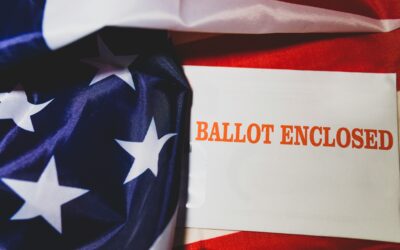
‘The Unemptied Box’: Nearly 600 Uncounted Ballots Discovered Months After Newsom’s Redistricting Victory
A deepening shadow has fallen over California’s election integrity after a county registrar revealed the discovery of nearly 600 unopened ballots from the November 2025 special election. The discovery comes months after Governor Gavin Newsom successfully campaigned for Proposition 50, a radical mid-decade redistricting measure that redrew the state’s congressional maps to favor the Democratic Party. At The Modern Memo, we analyze the “miscommunication” that left these votes in the dark, the potential impact on the thin margins of the redistricting vote, and why critics say this is the inevitable result of a rushed, “tit-for-tat” election cycle. The Discovery: A ‘Miscommunication’ at the Drop Box The ballots were reportedly found in a secure drop box that officials had believed was emptied on election night. According to county reports, a breakdown in protocol led to the box being locked and forgotten while the state moved forward with certifying the results of the Newsom-backed redistricting plan. The Tally: County officials confirmed that approximately 580 ballots remained sealed in the box for months. The Excuse: The registrar’s office attributed the error to a “miscommunication” between teams regarding which drop boxes had been fully cleared. The Late Count: While officials insist these ballots likely wouldn’t have flipped the statewide result of Proposition 50, the discovery has fueled outrage among voters who were told California’s mail-in system was “safe, secure, and transparent.” Prop 50: The High-Stakes Context The uncounted votes are particularly sensitive because of the nature of the election they belonged to. Proposition 50, dubbed the “Election Rigging Response Act” by its supporters and a “Democratic gerrymander” by its critics, was passed with 64.4% of the vote on November 4, 2025. Newsom’s “Punch Back”: Governor Newsom aggressively pushed the measure as a response to Republican redistricting in Texas, vowing to “punch back forcefully” to protect the Democratic path to a House majority in 2026. The Redrawn Map: The measure successfully replaced the maps drawn by the bipartisan Citizens Redistricting Commission with a new Democratic-leaning map designed to tilt at least five Republican-held seats toward the GOP’s opponents. Mid-Decade Chaos: Critics argue that the discovery of unopened ballots is a symptom of the chaotic, fast-moving special election timeline that Newsom forced through the legislature in late 2025. The Trust Deficit: “Playing Russian Roulette with Votes” Republican leaders and election integrity advocates are pointing to the “forgotten box” as evidence that California’s reliance on drop boxes and universal mail-in voting is prone to human error—or worse. The GOP Response: “We are told these systems are infallible, yet 600 people had their voices silenced because someone forgot to check a box,” said one state GOP official. “If this happened in one county, how many other boxes were left unemptied across the state?” The Legal Cloud: The discovery may provide fresh ammunition for the ongoing legal challenges against Proposition 50. While the measure was approved by voters, several lawsuits are still working their way through the courts, arguing that the mid-decade change violates the state constitution. Final Word The “unopened box” in Santa Cruz is a chilling reminder that in the rush to gain a political edge, the fundamental right to have one’s vote counted can become an afterthought. When you look past the noise of “administrative errors” and focus on the data—the 600 missing voices and the partisan redrawing of our entire state’s representation—you gain a clearer picture of a system that is struggling under the weight of political gamesmanship. 1Quality information replaces the narrative of “perfect elections” with the reality of a process that is only as good as the people running it. It allows you to see that while Governor Newsom got his new maps, a significant number of Californians got a locked box. Where Facts, Context, and Perspective Matter At The Modern Memo, our goal is simple: to provide clear, well-researched reporting in a media landscape that often feels overwhelming. We focus on substance over sensationalism, and context over commentary. If you value thoughtful analysis, transparent sourcing, and stories that go beyond the headline, we invite you to share our work. Informed conversations start with reliable information, and sharing helps ensure important stories reach a wider audience. Journalism works best when readers engage, question, and participate. By reading and sharing, you’re supporting a more informed public and a healthier media ecosystem. The Modern Memo may be compensated and/or receive an affiliate commission if you click or buy through our links. Featured pricing is subject to change. 📩 Love what you’re reading? Don’t miss a headline! Subscribe to The Modern Memo here!

Sacramento’s Standoff: Newsom Office Slams ‘Cynical’ Protest Against Trans Athlete at State Track Finals
As California’s high school track and field stars converge for the state postseason this week, the finish line has been overshadowed by a fierce political firestorm. A planned protest targeting the participation of a transgender athlete at the state playoff meet has prompted a sharp rebuke from Governor Gavin Newsom’s office, which accused critics of “weaponizing” a complex debate to target individual children. At The Modern Memo, we analyze the Newsom administration’s defensive crouch, the escalating threats from the Trump administration, and why a Jurupa Valley High School junior has become the flashpoint for the future of Title IX in the Golden State. The Response: “Cynical Weaponization” The Governor’s office issued a terse response to the “Protect Girls Sports” protest organized by former NCAA athlete Sophia Lorey and conservative advocates. The Governor’s Stance: A source from Newsom’s office stated that the Governor “rejects the right wing’s cynical attempt to weaponize this debate as an excuse to vilify individual kids.” The “Fairness” Flip-Flop: The forceful defense follows a period of ambiguity for Newsom, who made headlines in early 2025 by admitting to conservative commentator Charlie Kirk that the issue of biological males in girls’ sports is “deeply unfair.” Critics argue that the Governor is now pivoting back to his progressive base as the national spotlight intensifies. Legal Shield: The administration continues to point to AB 1266, California’s 2013 law that mandates students be allowed to participate in sports consistent with their gender identity, regardless of biological sex. The Athlete at the Center: AB Hernandez The controversy centers on AB Hernandez, a transgender junior from Jurupa Valley High School. After a dominant 2025 season where Hernandez won state titles in the high jump and triple jump, the athlete returns to the 2026 postseason as the clear favorite. The Competitive Gap: Opponents point to Hernandez’s “unbeatable” status as proof of a biological advantage. President Trump recently noted that as a male competitor, the athlete was “less than average,” but has become “practically unbeatable” against biological females. Rule Changes: In an attempt to mitigate the backlash, the California Interscholastic Federation (CIF) implemented a pilot policy last year allowing “biological female” athletes to share the podium and receive full team points if a transgender athlete medals. Critics have mocked this as a “participation trophy” for girls that fails to address the underlying issue of fairness. The Federal Hammer: Trump’s Title IX Probe While Sacramento stands its ground, the U.S. Department of Justice (DOJ) has launched a significant investigation into California’s enforcement of AB 1266. Funding at Risk: President Trump has threatened to impose “large-scale fines” and withhold federal funding from California school districts that allow biological males to compete in girls’ divisions, citing violations of Title IX. Aggressive Defense: Assistant Attorney General Harmeet Dhillon has stated the DOJ will “aggressively defend women’s hard-fought rights,” characterizing California’s policy as “perverse” and demeaning to female athletes. Final Word The standoff at the state track finals is no longer just about a trophy; it is a battle for the soul of women’s sports. When you look past the noise of “cynical weaponization” and focus on the data—the DOJ’s Title IX probe and the unprecedented rule changes created to placate frustrated families—you gain a clearer picture of a state government in conflict with its own citizens. Quality information replaces the “anti-bullying” rhetoric with the reality of a policy that even the Governor once admitted felt “unfair.” It allows you to see that while Newsom’s office calls the protest a “weaponization,” the families standing outside the stadium call it a defense of reality. By choosing to double down on AB 1266, Sacramento has ensured that the finish line this year is only the beginning of a massive legal war. Where Facts, Context, and Perspective Matter At The Modern Memo, our goal is simple: to provide clear, well-researched reporting in a media landscape that often feels overwhelming. We focus on substance over sensationalism, and context over commentary. If you value thoughtful analysis, transparent sourcing, and stories that go beyond the headline, we invite you to share our work. Informed conversations start with reliable information, and sharing helps ensure important stories reach a wider audience. Journalism works best when readers engage, question, and participate. By reading and sharing, you’re supporting a more informed public and a healthier media ecosystem. The Modern Memo may be compensated and/or receive an affiliate commission if you click or buy through our links. Featured pricing is subject to change. 📩 Love what you’re reading? Don’t miss a headline! Subscribe to The Modern Memo here!
‘What’s Your Favorite?’: Rep. Brandon Gill Stuns American University Scholar with Graphic Abortion Takedown
The euphemisms of the pro-choice lobby were stripped away on Capitol Hill on Tuesday, April 28, 2026, during a Judiciary Committee hearing that has sent shockwaves through the Beltway. In a clinical and relentless line of questioning, Representative Brandon Gill (R-TX) confronted Jessica Waters, a senior scholar at the American University School of Public Affairs, demanding she name her “favorite” abortion procedure. At The Modern Memo, we analyze the exchange that has the Left reeling, the strategic significance of Gill’s “graphic detail” approach, and why the pro-life movement is hailing this as a masterclass in exposing the reality of the abortion industry. The Clash: “What’s Your Favorite Type of Abortion?” The hearing, originally convened to discuss “reproductive access,” took a sharp turn when Gill—a Texas freshman who has quickly become a standout for the GOP—decided to bypass the usual political niceties. The Question: “What’s your favorite type of abortion?” Gill asked Waters, leaning in over his microphone. The room went silent as the scholar, who had been testifying about the “necessity” of abortion access, struggled to respond. The Follow-up: When Waters attempted to pivot to the “patient-provider relationship,” Gill pressed harder, describing various procedures in graphic, anatomical detail. “If this is a positive good, if this is healthcare, then you should have a preference. Is it the one where the child is chemically burned, or the one where it is surgically dismembered?” The Silence: Waters refused to answer the question, a move Gill’s supporters say proves that even the most seasoned academic advocates are uncomfortable defending the physical reality of the procedures they champion. Brandon Gill: The Texas Firebrand Representative Gill’s performance is being viewed as a significant shift in how the GOP handles the life issue in a post-Roe world. The Tactical Pivot: Unlike older generations of Republicans who often sought middle ground, Gill’s strategy is rooted in moral clarity. By using the word “favorite,” he effectively mocks the “Shout Your Abortion” movement, turning their own rhetoric of “abortion as a positive” against them. Exposing the Academic Shield: By targeting a senior scholar from American University, Gill aimed at the intellectual heart of the pro-choice movement, arguing that their academic theories cannot survive a brush with the physical reality of the procedure. The Left’s Reaction: “Ghoulish” vs. “Grounded” Predictably, the corporate press and Democratic lawmakers were quick to condemn Gill’s questioning as “inappropriate” and “ghoulish.” The Outrage: Pro-choice activists on social media accused Gill of “harassing” a witness. They argued that the question was designed solely for a “viral clip” rather than substantive policy debate. The GOP Defense: Conservative leaders in the House stood by Gill, noting that if the Left wants to treat abortion as “standard healthcare,” they shouldn’t be offended when asked to discuss the “standards of care” in detail. Final Word The Gill-Waters showdown is a landmark moment in the 2026 legislative session. When you look past the noise of the “outrage” and focus on the data—the witness’s refusal to describe the act she advocates for and the graphic reality of the procedures discussed—you gain a clearer picture of the current state of the debate. Quality information replaces the “healthcare” abstraction with the physical reality of what an abortion actually entails. It allows you to see that Brandon Gill isn’t just seeking a soundbite; he is seeking to bridge the gap between the sanitized language of D.C. and the reality of the clinic. By choosing to ask the “favorite” question, Gill has ensured that the “choice” can no longer hide behind a curtain of academic jargon. Where Facts, Context, and Perspective Matter At The Modern Memo, our goal is simple: to provide clear, well-researched reporting in a media landscape that often feels overwhelming. We focus on substance over sensationalism, and context over commentary. If you value thoughtful analysis, transparent sourcing, and stories that go beyond the headline, we invite you to share our work. Informed conversations start with reliable information, and sharing helps ensure important stories reach a wider audience. Journalism works best when readers engage, question, and participate. By reading and sharing, you’re supporting a more informed public and a healthier media ecosystem. The Modern Memo may be compensated and/or receive an affiliate commission if you click or buy through our links. Featured pricing is subject to change. 📩 Love what you’re reading? Don’t miss a headline! Subscribe to The Modern Memo here!