

Pete Hegseth

Top Trump Officials Move to Fort McNair Amid Rising Threats
Amid increasing security threats to senior U.S. officials, several members of the second Trump administration have moved into military housing near Washington, D.C. The decision highlights a proactive approach to safety and continuity — and it’s part of a longstanding American tradition of protecting public leaders. While the clustering of top officials in military quarters may seem unusual, this move is neither new nor partisan. Across administrations, senior defense and state officials have sought secure housing on military installations to safeguard themselves, their families, and the sensitive work they perform. Fort McNair Becomes a Safe Haven At the heart of this shift is Fort McNair, one of the oldest military posts in the United States. Nestled along the Anacostia River, the fort’s stately homes have long served as residences for the Army’s top generals. (MORE NEWS: ICE Blocked by Pritzker’s Sanctuary Law After Fatal Crash) Today, it houses several of the nation’s most prominent civilian leaders — including Defense Secretary Pete Hegseth and senior adviser Stephen Miller. Both men moved into the base following rising security concerns linked to personal threats, online doxxing, and escalating harassment. Hegseth occupies Quarters 8, the historic home traditionally reserved for the Army’s vice chief of staff. When that role became vacant earlier this tear, the property became available. The defense secretary seized the opportunity to live in a secure, strategically located environment. Miller, a longtime policy architect for Trump, also relocated to Fort McNair. According to a report from The Atlantic, his move followed an uptick in threats to his family and private residence. Living behind military gates ensures both safety and privacy while allowing him to remain close to the White House and Pentagon. A Storied Residence With Deep History Quarters 8 at Fort McNair is far more than a home — it’s a symbol of American military heritage. Guarded by two Revolutionary War-era cannons, the brick residence looks over the river with the elegance of a bygone era. Retired Army General Dennis J. Reimer, who lived there in the early 1990s, once described it as “like something out of the movies — you have that spiral staircase and you’re right over a riverbank.” The house carries other stories, too. One of its past occupants, General Maxwell R. Thurman, coined the Army’s 1980s recruiting slogan “Be All That You Can Be.” In a charming footnote to history, Thurman even buried his dog in the yard, marking the grave with a plaque that read: “Here lies Fido. He was all he could be.” These anecdotes show that Quarters 8 is more than a safe refuge — it’s part of a living tradition that blends history, honor, and service. Other Officials Follow the Trend Several other Trump officials have joined this quiet migration into secure government quarters. Secretary of State Marco Rubio moved into a nearby military residence, while his family remained in Florida. Homeland Security Secretary Kristi Noem resides in a Coast Guard–owned government representation facility, where she pays fair-market rent, according to DHS spokeswoman Tricia McLaughlin. Army Secretary Daniel P. Driscoll and Navy Secretary John Phelan also relocated to military housing. Phelan’s move followed a fire that damaged his Washington home earlier this year. Each of these decisions reflects a growing emphasis on security, operational readiness, and stability — not extravagance. A Tradition That Spans Administrations Although several cabinet officials moving into military quarters at once is rare, there is ample precedent for such arrangements. During President George W. Bush’s administration, Defense Secretary Robert Gates requested government housing and lived in an official residence near the State Department. His successor, Leon Panetta, was offered the same home, known as Navy Hill, which featured secure communications lines for classified discussions. Even during Trump’s first term, Jim Mattis and Mike Pompeo briefly lived in military housing. And decades earlier, Congress designated the Vice President’s Residence at the Naval Observatory in 1974. The home, once belonging to the Navy’s chief of operations, was made a government residence for security reasons. (MORE NEWS: Portland Police Go Easy on Antifa…Again) These examples demonstrate that the recent moves are part of a long, bipartisan tradition of ensuring that senior national leaders can operate safely and efficiently in a high-threat environment. Security and Readiness in Modern Times Experts note that the threats facing government leaders today are more complex than ever. Beyond physical risks, officials contend with digital harassment, online stalking, and targeted misinformation campaigns. By moving into military facilities like Fort McNair, leaders gain 24-hour protection, secure communication systems, and rapid emergency response access. Former Defense Secretary Chuck Hagel explained it simply: “Any time there’s an emergency, they’ve got to be able to respond quickly. Having that housing close by is important.” Far from symbolizing isolation, these relocations show adaptability in the face of evolving challenges. They also reflect a commitment to maintaining focus on national priorities. A Positive Step for Safety and Stability For Trump’s senior officials, moving onto military bases like Fort McNair represents a practical, measured response to modern threats. It also reinforces cooperation between civilian and military institutions — a partnership rooted in mutual trust and shared responsibility for national defense. These officials continue a tradition that stretches back half a century: ensuring leaders can “be all they can be,” protected and prepared. Final Takeaway From the historic corridors of Quarters 8 to the nearby Coast Guard facilities along the Potomac, today’s officials are walking in the footsteps of their predecessors. The motivation remains the same — safety, service, and stewardship. As public threats evolve, so too must the government’s approach to protecting those who serve at its highest levels. By taking these precautions, the Trump administration reinforces a timeless truth: safeguarding its leaders strengthens the nation itself. Unmask the Narrative. Rip Through the Lies. Spread the Truth. At The Modern Memo, we don’t polish propaganda — we tear it to shreds. The corporate press censors, spins, and sugarcoats. We don’t. If you’re tired of being misled, silenced, and spoon-fed fiction, help us expose what they…

Pentagon Hosts First Gold Star Advisory Council Meeting
The Pentagon made history by hosting the first-ever Gold Star Advisory Council (GSAC) meeting. This new body gives families of fallen service members a direct line to top Department of War leadership. The goal is simple yet powerful: ensure Gold Star families are heard, respected, and included in shaping policy. Why the Council Was Created The Gold Star Advisory Council was established in May to institutionalize a permanent channel between military families and senior leaders. Unlike past initiatives, which were often short-lived, the GSAC is designed to last and meet regularly. Members will gather at least twice a year to propose reforms, identify problems, and track solutions. By creating this council, the Department of War is signaling that remembering fallen service members also means caring for those they left behind. Secretary Hegseth’s Call for Change In a statement to Fox News Digital, Secretary of War Pete Hegseth underscored the significance of the event: “Today marks the first time a Gold Star Advisory Council convened at the Secretary of War level. This council is long overdue for Gold Star families to elevate their voices directly to Department leadership, tackle real concerns, and transform the casualty process for good. It has my full backing to call out the failures, shake up the bureaucratic status quo, and drive the changes that will stick.” (MORE NEWS: Trump’s Leaked Gaza Peace Plan: A Bold 21-Point Vision for Lasting Stability) His words highlight both urgency and accountability. For families who often felt sidelined, the council represents a major step toward reform. Leadership and Representation The GSAC is co-led by Under Secretary of War for Personnel and Readiness Anthony Tata and Gold Star spouse Jane Horton. Together, they bring institutional authority and personal experience to the table. Tata expressed optimism about the council’s mission: “The Gold Star Advisory Council will enable the Department to continue remembering our fallen Service members and delivering on our promise to take care of the families they left behind,” he told Fox News Digital. He also praised Horton’s impact. Tata recognized her “extraordinary efforts” to uplift Gold Star families by “telling their stories, and keeping the memories of our fallen heroes alive.” He added appreciation for her “advocacy, representation, and leadership.” This leadership structure ensures that both high-ranking officials and those with lived experience guide the council’s direction. Goals of the Gold Star Advisory Council The council has three main priorities: Elevating Family Voices The GSAC ensures Gold Star families move from the sidelines into meaningful conversations with Pentagon leaders. Driving Lasting Reform By focusing on systemic issues, the council aims to improve casualty assistance processes and create reforms that endure. Ensuring Accountability The council will act as a watchdog, pressing leadership to uphold promises and improve transparency. These goals demonstrate that the GSAC is not a symbolic gesture but a serious commitment to long-term change. The Significance for Families Gold Star families often face immense grief while also navigating complex military systems. The GSAC offers them something new: influence. For the first time, their experiences can directly inform policies on casualty assistance, survivor benefits, and memorial practices. (MORE NEWS: Miami Mayor’s Warning: NYC’s Mamdani Echoes Castro) This shift recognizes that no one understands the challenges better than those who lived them. By institutionalizing family voices, the Pentagon signals that remembrance and reform go hand in hand. Looking Ahead The council is expected to meet twice a year and issue recommendations to Pentagon leadership. Its effectiveness will be measured by whether proposed reforms are enacted and sustained. If successful, the GSAC could become a model for how the military connects with families. Instead of top-down decision-making, it would create a loop of listening, learning, and acting. Final Word The first meeting of the Gold Star Advisory Council is more than symbolic. It represents a promise to honor sacrifice through action. As Secretary Hegseth told Fox News Digital, the council has his “full backing” to challenge bureaucracy and deliver real results. With leaders like Anthony Tata and Jane Horton guiding the effort, the council has the potential to transform how the military engages with families of the fallen. By listening, reforming, and holding itself accountable, the Department of War takes an important step toward ensuring no sacrifice is ever forgotten. Unmask the Narrative. Rip Through the Lies. Spread the Truth. At The Modern Memo, we don’t polish propaganda — we tear it to shreds. The corporate press censors, spins, and sugarcoats. We don’t. If you’re tired of being misled, silenced, and spoon-fed fiction, help us expose what they try to hide. Truth matters — but only if it’s heard. So share this. Shake the silence. And remind the powerful they don’t own the story.
BREAKING ALERT: Crime in D.C.: Trump’s Historic Action to Restore Order
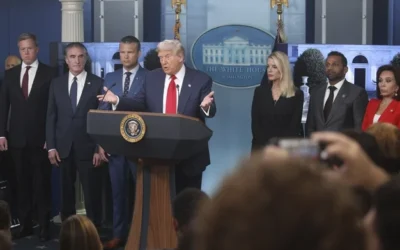
President Donald Trump made bold moves to address the escalating crime in Washington, D.C. His recent actions come in response to the rising violence, car thefts, and carjackings plaguing the city. Trump signed an Executive Order and outlined a comprehensive plan to restore law and order, signaling a new era of federal intervention in local crime control. (RELATED: Trump Takes On Crime in D.C.) The D.C. Crime Crisis The crime rate in Washington, D.C., has reached alarming levels. Trump pointed out that “The murder rate in Washington today is higher than that of Bogota, Columbia, Mexico City…” He continued, “The number of car thefts has doubled over the past five years, and the number of carjackings has more than tripled.” These shocking statistics underscore the urgent need for action. FACT: D.C. Crime Is Out of Control. ⬇️ Our nation’s capital should be a symbol of patriotism for the American people—NOT a city of lawlessness. It ends today. pic.twitter.com/TdLERGXVVP — The White House (@WhiteHouse) August 11, 2025 The situation became even more dire last week. Edward “Big Balls” Coristine, a former DOGE staffer, was injured while defending a woman from a carjacking. A group of about a dozen young men attacked the woman. Coristine intervened, resulting in a concussion. Police arrested two 15-year-olds involved in the attack, but others remain at large. This event and others prompted President Trump to take immediate action. Federalizing D.C. Law Enforcement In a historic move, President Trump invoked Section 740 of the District of Columbia Home Rule Act. This action places the D.C. Metropolitan Police under direct federal control. It gives the federal government the authority to oversee local law enforcement and take strong action to combat crime. Trump announced, “I am announcing a historic action to rescue our nation’s capital from crime, bloodshed, bedlam, squalor, and worse. This is Liberation Day in D.C. and we’re going to take our capital back.” His declaration marked the start of a major federal effort to restore safety in the city. It’s “Liberation Day” in Washington, D.C. “Today, President Donald J. Trump took bold executive action to liberate Washington, D.C., from the cesspool of crime and homelessness that it has become after decades of unilateral Democrat leadership.”https://t.co/mL6oRxBW4Y — Karoline Leavitt (@PressSec) August 11, 2025 National Guard Deployed to D.C. Trump also ordered the deployment of the National Guard. Secretary of Defense Pete Hegseth confirmed, “This morning, we have mobilized the D.C. National Guard… You will see them flowing through the streets of D.C.” A total of 1,000 National Guard troops have been sent to assist in law enforcement efforts. The deployment also leaves open the possibility of deploying active-duty military personnel if necessary. . @SecDef “Mr. President, it is an honor to be here and at your direction, this morning we’ve mobilized the D.C. National Guard… They will be STRONG and TOUGH, and they will STAND with their law enforcement partners.” pic.twitter.com/L6Bk5spgY2 — DOD Rapid Response (@DODResponse) August 11, 2025 Attorney General Pam Bondi, now in charge of the D.C. Metropolitan Police Department, was clear: “Crime in D.C. is ending and ending today. We are going to use every power we have to fight criminals here.” Immediate Law Enforcement Operations Trump’s plan includes aggressive law enforcement operations. These operations will target gangs, drug dealers, and criminal networks in D.C. U.S. Attorney for D.C. Jeanine Pirro emphasized, “We need to recognize that the people who matter are the law-abiding citizens! President Trump is going to make sure these emboldened criminals understand: We see you, we’re watching you, and we’re going to change the law to catch you!” FBI Director Kash Patel echoed this sentiment, pointing to a similar operation in Northern Virginia. “We stood up a task force in Northern Virginia, [and] we said ‘Let’s let good cops be cops.’ In one month, we arrested 545 violent felons,” Patel said. “That simplicity in law enforcement is what’s coming to Washington, D.C.” Addressing Homelessness and Public Safety Trump’s plan goes beyond crime. He is also addressing the issue of homelessness in the city. “We are going to be removing homeless encampments from all over our parks… We’re getting rid of the people from underpasses and public spaces,” Trump said. The president emphasized that while law enforcement will be the priority, helping the homeless will still be part of the solution. “We’ll help them as much as you can help,” he added. A Nationwide Push Against Cashless Bail In addition to federalizing D.C. law enforcement, Trump is targeting the issue of cashless bail. He has called on Republicans in Congress to outlaw cashless bail systems nationwide. “That is what started the problem,” Trump said, blaming the practice for the rise in crime. He pointed to the Democratic Party’s weak stance on crime, accusing them of enabling criminals to avoid consequences. Trump’s legislative push would ensure that violent offenders are held accountable before they are allowed to return to the streets. (RELATED: Newsome Attacks Republicans On Violent Crime — Data Tell Different Story) Expanding Federal Control to Other Cities While Trump’s immediate focus is on D.C., he hinted at expanding this strategy to other cities facing similar crime issues. Trump mentioned that after federalizing D.C., he is considering the same approach for New York City and Chicago. Both cities have also seen rising crime rates, and Trump’s federalization strategy could be a model for other urban centers. The Path Forward: A Vision for Safer Cities Trump’s actions represent a significant shift in how the federal government deals with crime in American cities. By federalizing D.C. law enforcement, deploying the National Guard, and focusing on aggressive law enforcement tactics, Trump is taking unprecedented steps to restore order in Washington. His push to outlaw cashless bail and sanctuary cities, and his plans for further federal involvement in other cities, show his commitment to cracking down on crime nationwide. As the operation in Washington unfolds, Trump’s efforts may serve as a blueprint for other cities struggling with rising crime. His federal approach to crime…