

Religion

Father, Sons Drown Muslim Teen Over ‘Western Lifestyle’
Her name was Ryan. And she was an 18-year-old young woman with her own hopes and identity. Her murder in the Netherlands shocked the nation and sent ripples across Europe. Authorities say she was drowned by her Islamic extremist father and two adult brothers for embracing a lifestyle they considered “too Western.” The brutality of the act, its planning, and its motive make this one of the most devastating cases of honor killings in recent memory. A Crime That Horrified a Nation Ryan disappeared in May 2024 after leaving her home in Rotterdam. When she did not return, police began searching for her. Six days later, a passerby found her body in a swamp outside the city. Her hands were tied behind her back, her ankles taped, and her mouth gagged — unmistakable evidence of a deliberate killing. Investigators uncovered that her brothers, 23-year-old Mohamed Al Najjar and 25-year-old Muhanad Al Najjar, abducted her and drove her to a remote location. There, according to prosecutors, their father, 53-year-old Khaled Al Najjar, waited to carry out the killing he had planned. DNA evidence found under her fingernails and intercepted communications point to all three being involved, according to The New York Post. Why They Targeted Her Authorities believe the motive was the family’s rejection of Ryan’s growing independence. She used social media, spent time with friends, had a boyfriend, and chose not to wear a hijab — normal and legal choices for any young woman in the Netherlands. Yet prosecutors say her father and brothers viewed these decisions as defiance, shame on the family, and a threat to the strict control they tried to enforce at home. Experts note that this pattern aligns with honor-based violence, where daughters or sisters are targeted for not conforming to rigid expectations around modesty, obedience, and reputation. Even small signs of independence — modern clothing, friendships, or online activity — can trigger escalating tension in families that operate under these Islamic extremist control systems. More Stories Drowning in Bills? These Debt Solutions Could Be the Break You Need Out-of-Town Renters Are Driving Up Demand in These Five Cities Under Siege: My Family’s Fight to Save Our Nation – Book Review & Analysis Part of a Larger Pattern Ryan’s murder reflects a broader pattern seen worldwide. Honor-based violence has taken the lives of countless young women whose only “offense” was wanting freedom, education, social connections, or the ability to make their own choices. These crimes are driven by extremist mindsets that treat family “honor” as more important than a woman’s life. In these belief systems, autonomy is punished, independence is viewed as shameful, and control is enforced through fear and, in the worst cases, deadly violence. They would rather kill their own blood than allow a woman in the family who they see as defying their extreme beliefs. A Clear Clash With Western Values Islamic honor-based ideology — the belief that a woman can be punished or killed for how she lives — is fundamentally incompatible with Western society. Western nations are built on personal liberty, gender equality, and legal protection for every individual. Violence used to enforce obedience violates every one of these principles. Full stop. Public Outrage and Legal Consequences Dutch prosecutors have condemned the killing, calling Ryan’s father “cowardly” for fleeing to Syria. Her brothers face up to 20 years in prison each, while the father could receive a sentence of up to 25 years if convicted in absentia. The case generated widespread outrage. Many people expressed sorrow for Ryan’s lost future and anger that her independence was used as justification for violence. Why Society Must Pay Attention Honor-based violence thrives in silence. Young women often feel trapped between family expectations and the fear of retaliation. Without intervention and open discussion, honor killings will continue to happen. Ryan’s death forces society to confront the danger posed by extremist beliefs that try to control women’s choices. These beliefs cannot coexist with Western freedoms or human rights in America or other free societies. Ryan’s Story Must Lead to Action Ryan deserved the freedom to make her own decisions and live her own life. Her death highlights how urgent it is to protect young women from Islamic extremist control. Her story must push communities, schools, and authorities to identify warning signs and intervene early. This case is heartbreaking and infuriating. Where are the feminists now? While American women wear hijabs in ‘solidarity,’ women across the globe are being murdered for taking them off. Cut Through the Noise. Slice Through the Lies. Share the Truth. At The Modern Memo, we don’t tiptoe around the narrative—we swing a machete through it. The mainstream won’t say it, so we will. If you’re tired of spin, censorship, and sugar-coated headlines, help us rip the cover off stories that matter. Share this article. Wake people up. Give a voice to the truth the powerful want buried. This fight isn’t just ours—it’s yours. Join us in exposing what they won’t tell you. America needs bold truth-tellers, and that means you. The Modern Memo may be compensated and/or receive an affiliate commission if you click or buy through our links. Featured pricing is subject to change. 📩 Love what you’re reading? Don’t miss a headline! Subscribe to The Modern Memo here! Explore More News Trump Designates Muslim Brotherhood a Terrorist Organization Trump and Elon Musk Reunite, Boosting GOP Unity Top 5 Essential Survival Gear Items For Any Adventure Epstein Files Bill Sparks New Questions as Jeffries Email Emerges

President of Nigeria Responds to Trump Criticism
Trump Warns Nigeria Over Christian Killings President Donald Trump has issued a shocking warning to Nigeria. He said he may send American forces “guns-a-blazing” if the killings of Christians do not stop. His bold words have drawn worldwide attention and put new pressure on Nigerian President Bola Tinubu, whose government already faces criticism for failing to protect citizens from extremist attacks. Thousands of Christians Killed Reports from human rights groups paint a tragic picture. In 2025 alone, more than 9,000 people have died in extremist attacks across Nigeria. About 7,000 of them were Christians, many killed in brutal assaults on villages, churches, and farms. Since 2009, over 125,000 Christians have been murdered and nearly 19,000 churches destroyed. Families in the north and middle of the country live in constant fear. Trump’s Explosive Threat On Truth Social, Trump wrote that the U.S. “will immediately stop all aid” to Nigeria and might “go into that now disgraced country guns-a-blazing.” He added, “If we attack, it will be fast, vicious, and sweet.” His post accused Nigeria’s leaders of ignoring the slaughter of innocent Christians. The statement caused a political storm both in Washington and in Abuja, Nigeria’s capital. Tinubu’s Defensive Response, President Tinubu pushed back, calling Trump’s comments a “threat,” according to Breitbart News. He said his government is already “addressing violent extremists.” Yet many Nigerians disagree. Critics say Tinubu’s words are the same promises every administration makes when violence gets worse. In many regions, armed groups act freely while police and soldiers arrive only after the damage is done. Government Denies Persecution Foreign Minister Yusuf Tuggar and Information Minister Mohammed Idris defended the government. They claimed that Nigeria’s constitution protects freedom of religion and that “state-backed persecution” is impossible. But human rights groups argue that denying the problem has only made it worse. Survivors say officials minimize attacks and fail to help displaced families rebuild their homes or lives. Communities Living in Fear In states like Plateau, Kaduna, and Benue, entire villages have been wiped out. Survivors describe night raids, kidnappings, and executions. Many have lost everything—homes, farms, and loved ones. The security forces, stretched thin and underfunded, rarely arrive in time. Locals say they no longer trust the government’s promises. Instead, they rely on prayer and community watch groups for safety. Critics Say Reforms Are Cosmetic Tinubu has replaced top military officers and promised reforms. However, experts say these changes are more about public relations than real results. Attacks keep happening, and civilians still feel abandoned. For many, government reshuffles are empty gestures that hide deeper problems such as corruption, poor intelligence, and low morale within the army and police. National Pride vs. Accountability In response to Trump’s warning, Nigerian officials have repeated one message: Nigeria is a sovereign nation and will not be bullied. While that may appeal to national pride, it does not solve the crisis. Critics say the government uses “sovereignty” to dodge responsibility and silence questions about its failures. Real sovereignty, they argue, means protecting citizens—not defending bad leadership. U.S. Reaction and Growing Pressure Trump’s statement also reignited debate in the U.S. Congress. Lawmakers such as Riley Moore are pushing for resolutions condemning what they call “the slaughter of Nigerian Christians.” Washington analysts say Trump’s words may be exaggerated, but they reflect growing anger among Western Christians who see Nigeria as a test of global religious freedom. Tomorrow I will introduce a new resolution condemning the ongoing persecution of Christians in Nigeria and supporting President Trump’s efforts to defend our brothers and sisters in Christ. Thousands have been killed for their faith – and the world has looked away for far too… — Rep. Riley M. Moore (@RepRileyMoore) November 6, 2025 The Role of Faith and Politics The conflict in Nigeria is complex. Extremists often use religion to justify violence, but economic hardship, ethnic divisions, and weak governance all play a role. Still, the government’s reluctance to admit that many victims are targeted for their Christian faith has fueled distrust. Religious leaders say the refusal to call the problem what it is prevents honest dialogue and lasting peace. Civil Society Demands Action Journalists, pastors, and aid groups continue to document the crisis despite intimidation. They call for better protection, accountability for attackers, and support for survivors. Many Nigerians believe that without pressure from abroad, their leaders will continue to downplay the killings. International attention, they say, might be their last hope for change. What Needs to Happen Experts agree that Nigeria needs more than speeches. It must strengthen local policing, share intelligence between regions, and ensure that soldiers protect civilians instead of abusing them. Transparency is also vital—accurate data and independent investigations can rebuild trust. Without these steps, violence will continue and outside powers may be forced to intervene. Final Word Trump’s “guns-a-blazing” threat may sound extreme, but it highlights a truth the Nigerian government can’t escape. Thousands are dying, and the world is watching. Until the government acts decisively to protect Christians and all Nigerians, its claims of progress will ring hollow. Nigeria stands at a crossroads—either it confronts the violence with honesty and action, or it risks losing both global credibility and the faith of its own people. Cut through the noise. Drown out the spin. Deliver the truth. At The Modern Memo, we’re not here to soften the blow — we’re here to land it. The media plays defense for the powerful. We don’t. If you’re done with censorship, half-truths, and gaslighting headlines, pass this on. Expose the stories they bury. This isn’t just news — it’s a fight for reality. And it doesn’t work without you.
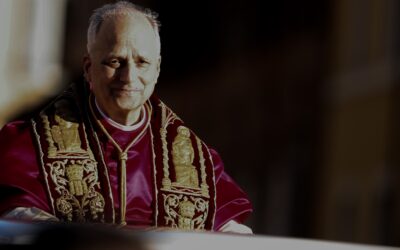
Shock at the Vatican: Muslim Prayer Room Approved Inside Historic Library
The Vatican made the decision to offer a prayer room for Muslim scholars marking a historic moment in interfaith relations. While many see it as a gesture of hospitality and respect, others raise serious theological objections. This article explores the background, responses, and deeper implications of this unprecedented accommodation. Historical Roots and the Vatican Library The Vatican Apostolic Library has stood as a center of Christian scholarship since its founding under Pope Nicholas V in 1451. Over centuries, it has collected manuscripts not only from Christian traditions but from across religions and civilizations. The library holds incredibly old Qurans alongside works in Hebrew, Arabic, Ethiopian, and Chinese, testifying to its universal scope. According to The Catholic Herald, “Today, the Vatican Library is estimated to contain some 80,000 manuscripts, 50,000 archival items, nearly two million printed books, and more than 100,000 engravings, prints, coins, and medals. New discoveries continue to emerge, including a rare manuscript of Spinoza’s Ethics unearthed in recent years.” Recently, Muslim scholars visiting the library requested a small space in which to pray. The library granted their request, offering a carpeted area for those moments of worship. According to Fr Giacomo Cardinali, Vice Prefect of the library, this was done simply in response to scholars’ needs. (MORE NEWS: Melania Trump Helps Reunite Ukrainian Children Amid War) Reactions: Respect, Concern, and Controversy Unsurprisingly, the announcement sparked immediate reactions across Christian and religious communities. Some welcomed it as a sign of openness, dialogue, and respect toward Islam. They argue that allowing fellow scholars a space to pray fosters goodwill, mutual understanding, and academic freedom. However, others voiced deep concern and even alarm. Critics see the move as compromising the sacredness of Christian spaces. As one commentary put it, “a place dedicated to preserving Christian truth” should not facilitate worship to beliefs that deny Christ’s divinity. Some warn that such gestures may lead toward religious compromise or syncretism—blending of religions. They fear that the boundary between hospitality and endorsement becomes dangerously thin when worship is permitted within Christian precincts. Theologically, the criticism draws on passages like Exodus 20:3, “You shall have no other gods before Me,” and 2 Corinthians 6:14, “What fellowship has righteousness with lawlessness?” For critics, welcoming prayers to a different god within Vatican walls inches into problematic territory. Supporters counter that the Vatican Library is not a sanctuary in the liturgical sense, but a research institution; its purpose is not worship but scholarship. They argue that accommodating Muslim scholars does not equate to endorsing their theology. Rather, it affirms respect for academic inquiry and human dignity. The Deeper Implications Beyond the surface-level dispute, this decision touches on issues of identity, theology, and the mission of the Church in a pluralistic world. Sacred vs. Secular Spaces This case forces a rethinking of what is “sacred” and who defines that. While the Vatican Library is a deeply Christian institution, its role is largely intellectual and archival rather than sacramental. That ambiguity opens a space for debate: Does a prayer room transform the library into a shared worship space? Or does it remain what it has always been—a scholarly site that simply accommodates scholars’ needs? Boundary of Hospitality Christian tradition emphasizes hospitality, yet always with limits. The question here is whether creating a worship space goes beyond mere hospitality into compromise. Where do we draw the line between welcoming and enabling? How can the Church affirm its own convictions while extending respect to others? Precedent Setting This act may set a precedent. If other Christian institutions follow suit, what standards will govern such accommodations? Who will decide when, where, and how worship by non-Christians is permitted within Christian spaces? Over time, small concessions can accumulate into significant shifts in institutional culture. Looking Forward: Questions and Paths Ahead As this decision unfolds publicly, several key questions deserve attention: Clarity of purpose: Will Vatican leadership issue a formal theological statement clarifying that hosting a Muslim prayer room does not imply doctrinal endorsement? Scope and boundaries: Will Muslims be allowed to pray only within limited times, areas, or under certain restrictions, or will more expansive worship follow? Response from local Christian communities: How will dioceses, parishes, and laity interpret and respond to this development? Future accommodations: Might other faiths request similar access? How will the Church respond to requests from, say, Hindu, Buddhist, or Sikh scholars? Dialogue outcomes: Could this gesture lead to formal conversations about shared values, theological disagreements, and joint social action? Final Word The Vatican Library’s granting of a prayer room for Muslim scholars is a bold and risky move—a dangerous crossing of sacred boundaries. In reality, this decision raises an uncomfortable question: would the same courtesy ever be extended in reverse? In most Muslim countries, Christian worship is forbidden in mosques and often even restricted in public. The Vatican’s choice highlights a striking contrast—one faith showing extraordinary accommodation, while the other would not allow similar access. For many believers, that imbalance is precisely why discernment and conviction are so essential when faith and diplomacy meet. Forget the narrative. Reject the script. Share what matters. At The Modern Memo, we call it like it is — no filter, no apology, no corporate leash. If you’re tired of being lied to, manipulated, or ignored, amplify the truth. One share at a time, we dismantle the media machine — with facts, boldness, and zero fear. Stand with us. Speak louder. Because silence helps them win.