

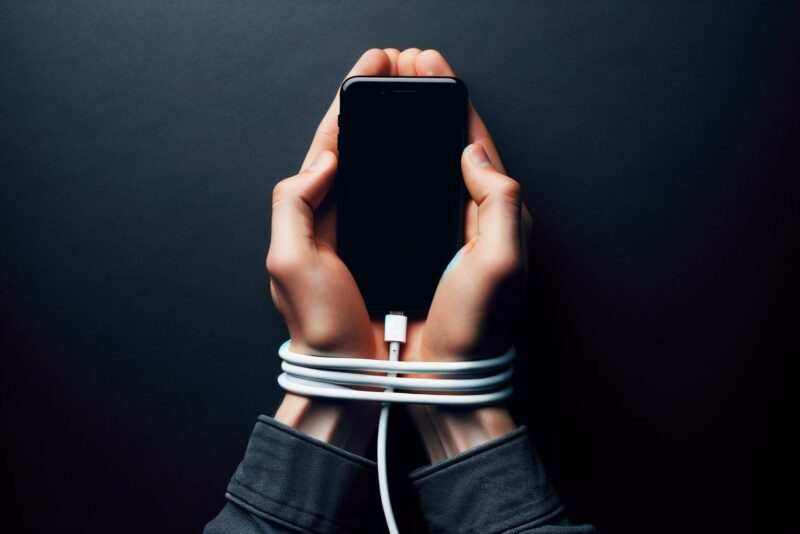
We scroll. A lot. Researchers at Toll Free Forwarding ran the numbers and found the states racking up the most phone “scrolling mileage. ”Their baseline is stark: “The average American spend[s] 6 hours and 35 minutes a day on screens, adding up to 2,403 hours annually… People check their devices an average of 58 times a day… Half of those checks happen within just three minutes of the last.” That’s not just habit. That’s a loop.
How They Calculated “Scrolling Miles”
First, they converted average daily screen time into seconds. Then they used a simple model of scrolling behavior. As the report explains, they multiplied seconds by “6.3 (length of an iPhone 16 Pro screen) over 10 (frequency of a scroll, in seconds), resulting in the distance traveled in inches per day.” Next, they converted inches to feet, feet to miles, and multiplied by 365 to find annual mileage. It’s an estimate. But it’s a vivid one. And it helps us picture the invisible distance our thumbs travel. (MORE TECH NEWS: Pregnancy Robots: Miracle or Ethical Nightmare?)
The Top 10 Scrolling States
Some states scroll far more than others. Here are the leaders:
- Arizona — 8h 50m daily — 115.37 miles/year
- Washington — 8h 17m — 108.18 miles/year
- Kentucky — 8h 3m — 105.18 miles/year
- Missouri — 7h 49m — 102.17 miles/year
- New Mexico — 7h 20m — 95.90 miles/year
- Texas — 7h 19m — 95.77 miles/year
- Maryland — 7h 14m — 94.59 miles/year
- Louisiana — 7h 9m — 93.42 miles/year
- South Carolina — 7h 6m — 92.76 miles/year
- Georgia — 6h 58m — 91.07 miles/year
Those numbers reflect daily habits. They also reflect a decade-long surge. According to HostingAdvice.com, “Mobile media consumption grew 460% from 2011 to 2021.” So the trend isn’t subtle. It’s a tidal shift in how we spend time.
The Productivity Price Tag
Constant checking has a cost. It fractures attention. It delays deep work. It turns minutes into hours. And it adds up globally. As the analysis notes, “Wasted productivity costs the global economy an estimated $8.8 trillion each year.” That number is staggering. But it matches what many feel at work: more notifications, fewer focused hours.
Here’s the kicker. Over half of those device interruptions “happen during work hours.” So the problem doesn’t wait until evening. It steals prime time.
Is It Phone Addiction? Key Symptoms to Watch
Not all heavy use equals addiction. But patterns matter. If you see several of these, take notice:
- You reach for your phone constantly.
- Dangerous situations, such as driving, don’t deter you from checking.
- Waking up at night to check notifications is commonplace.
- Anxiety, anger, or sadness take over when you can’t check your phone.
- Screen time is hurting work, school, or relationships.
- Any effort to cut back doesn’t last.
These behaviors fit a cycle. Check. Reward. Repeat. And that cycle runs on brain chemistry.
The Brain Behind the Scroll
Dopamine drives motivation. Phones can hijack it. Likes, pings, and fresh content act as micro-rewards. Over time, that can blunt the system. You may feel less pleasure from everyday life. Even loved ones. That’s why heavy scrolling can foster isolation. (MORE NEWS: Catherine Zeta-Jones and the U.S. Homeownership Divide)
Mood shifts follow — Anxiety rises, stress lingers, depression can deepen. Meanwhile, late-night use delays melatonin. That pushes sleep later. Then tomorrow’s focus suffers. And the loop strengthens.
Why “Short Checks” Aren’t Short
We tell ourselves, “Just a second.” But each check has a switch cost. The brain must get back in focus, and that takes time. It drains energy and it breaks momentum. When “half of those checks happen within three minutes of the last,” we don’t return to flow. We never got there.
How to Reduce Scrolling Mileage (Without Going Off-Grid)
You don’t need to ditch your phone. You need to design for focus. Start small. Then stack wins.
- Use friction on purpose.
- Move social apps off your home screen.
- Turn off non-essential alerts.
- Set your phone to grayscale to reduce visual appeal
- Create phone-free zones.
- No phones at meals.
- No phones in the bedroom.
- Buy an alarm clock and charge devices outside the room.
- Designate specific times for checks.
- Batch messages and social in two or three short windows.
- Use timers. Stop at the bell.
- Protect deep work.
- Schedule 60–90 minute focus blocks.
- Activate Do Not Disturb.
- Tell teammates when you’ll be back online.
- Rebuild dopamine the healthy way.
- Move your body daily.
- Get morning light.
- Seek real-world wins: a walk, a workout, a completed task.
- Fix sleep first.
- Set a screen curfew of 30-60 minutes before bed.
- Dim lights at night.
- Keep a consistent bedtime.
Each change lowers the urge to scroll. Each win brings clarity back.
What This Means for Leaders
If you run a team, design environments that respect attention. Shorter meetings. Clear “quiet hours.” Fewer chat pings for non-urgent items. And measure outcomes, not online presence. When you protect focus, you protect profit.
The Bottom Line
Screens aren’t the enemy. Unchecked habits are. Our “scrolling mileage” shows how far we go without moving an inch. But we can turn that around. Add friction. Guard focus. Prioritize sleep. Then your time—and your attention—start working for you again.
Cut through the noise. Drown out the spin. Deliver the truth.
At The Modern Memo, we’re not here to soften the blow — we’re here to land it. The media plays defense for the powerful. We don’t.
If you’re done with censorship, half-truths, and gaslighting headlines, pass this on. Expose the stories they bury.
This isn’t just news — it’s a fight for reality. And it doesn’t work without you.
