Daily Caller News Foundation

Another Major Hospital Drops Trans Treatments For Kids
By Daily Caller News Foundation reporter Melissa O’Rourke TAKE THE POLL: CLICK HERE The Children’s National Hospital in Washington, D.C., announced on Friday that it would no longer prescribe transgender-related medication to its patients under growing pressure from the Trump administration. Effective Aug. 30, Children’s National will no longer prescribe its patients so-called “gender-affirming” medications — such as puberty blockers and hormone therapy — citing “escalating legal and regulatory risks.” Children’s National is the latest major hospital system to discontinue its transgender-related services offered to minors after the Trump administration vowed to fight what it describes as the “barbaric practice of surgically and chemically maiming and sterilizing children.” (RELATED: USAID Quietly Sent Thousands Of Viruses To Chinese Military-Linked Biolab (DCNF Exclusive)) “We know this change will have a significant impact on affected patients, families and staff. Our care teams are working directly with families of current patients to support them,” the hospital said in its Friday announcement. Children Don’t Have ‘Gender Needs’ In January, the hospital announced that it would pause all puberty blockers and hormone therapy prescriptions to youth following Trump’s executive order eliminating all federal funding for the chemical and surgical mutilation of children and threatened legal consequences for institutions that support the practices. Attorney General Pam Bondi in April directed federal attorneys to investigate and prosecute doctors who perform or attempt to perform sex change surgeries on minors. Children’s National, through its Gender Development Program, has been “supporting the gender needs of youth and their families for the past 20 years,” according to its website. While Children’s National stated in January that it “does not perform gender affirming surgery for minors,” at least two children have undergone transgender-related surgeries at the hospital, according to Do No Harm, an advocacy group fighting back against gender ideology in the medical field. While the hospital system will cease prescribing gender transition-related medications, it will continue to provide “mental health and other support services for LGBT patients.” (RELATED: COVID-19 mRNA Shots Linked To Higher Death Toll Amongst Cancer Patients) Children’s National did not respond to the Daily Caller News Foundation’s request for comment. Other major hospitals, such as the University of Pittsburgh Medical Center and Rush University Medical Center in Chicago, have also announced in recent weeks that they will stop providing transgender services to minors, while the Center for Transyouth Health and Development at Children’s Hospital Los Angeles announced that it will be shutting down altogether on July 22. Between 2019 and 2023, U.S. hospitals billed nearly $120 million for transgender procedures carried out on nearly 14,000 minors, according to Do No Harm. TMM Analysis Let us hope that all hospitals follow suit, eh?
DAVID BLACKMON: Trump’s Big, Beautiful Bill Spells Bad News For Renewables
Written by David Blackmon for Daily Caller News Foundation A new report from big energy data and analytics firm Enverus finds that the rapid elimination of subsidies for wind and solar contained in the One Big Beautiful Bill Act of 2025 (OBBBA) is likely to have major impacts on those industries. The report finds that just 30% of solar projects currently proposed or in development and 57% of wind projects will be able to survive as the subsidies and tax breaks phase out by 2030. These findings are the latest in a string of bad news for the U.S. renewables sector since the inauguration of President Donald Trump in January. On July 16 it was reported via a leaked internal memo that proposed wind and solar projects must now obtain signoff from Interior Secretary Doug Burgum before they can begin development of new projects across tens of millions of acres of federal lands or on the federal offshore waters. (RELATED: California Dems Blame Wildfires On Trump After Their Party Created Tinderbox Of Regs) These findings are the latest in a string of bad news for the U.S. renewables sector since the inauguration of President Donald Trump in January. On July 16 it was reported via a leaked internal memo that proposed wind and solar projects must now obtain signoff from Interior Secretary Doug Burgum before they can begin development of new projects across tens of millions of acres of federal lands or on the federal offshore waters. ‘Dead In The Water’ In an interview, the author of the Enverus report, Enverus Energy Research Analyst Corianna Mah, told me she and her team limited their analysis to onshore wind and solar projects. “We did not analyze offshore wind,” she said, adding, “We believe it’s already dead in the water due to the high interconnection costs and supply chain inflation.” Notably, the report finds that the state which leads the nation in installed capacity for both wind and solar generation, Texas, ranks as the state which will see the lowest percentage of solar projects currently in the interconnection queue on the state grid managed by ERCOT – just 6% – will now be able to survive through completion. This compares to survival rates of 40% for Illinois solar, 41% in Indiana, and near-100% survival rates in both California and Arizona. Energy Realities Top 10 Issues hitting the Energy Markets this Week https://t.co/789FHiPiXw — David Blackmon’s Energy Absurdity (@EnergyAbsurdity) July 21, 2025 When I asked what factors would account for such a wide disparity, Mah said it is all driven by the respective values in each state for Renewable Energy Certificates, or RECs. These are marketable instruments that enable individuals or companies to support renewable energy without having to build their own projects. “Texas has met and surpassed its RPS (Renewable Portfolio Standard) targets,” she said, “and its RECs – now used primarily for voluntary compliance – trade at a steep discount, around $3/MWh, compared to other markets, like CAISO, where RECs command $20-$30/MWh due to mandatory compliance requirements.” (RELATED: Energy Department Admits Millions Of Americans Are At Risk Thanks To Grid Vulnerabilities) Mah’s report finds that Texas also ranks among the states with the lowest percentages of onshore wind projects expected to survive through completion, along with Iowa and Illinois, for the same reason. But, the report adds, “All evaluated wind projects in Montana and most in Oklahoma” are expected to make it into production.” The Enverus findings are consistent with findings from a study by FTI Consulting Sr. Director Dan Goodwin, which also finds wind and solar taking a significant hit from the provisions in the OBBBA. Energy Security? Coming as it does during a time of surging power demand driven by rapidly evolving AI technologies and their accompanying datacenters, this looming shortfall in anticipated wind and solar capacity must now be more than offset by rapid expansions in more traditional baseload generation. FTI’s study projects most of that need will be met by gas-fired generation in the near-to-mid-term, with more nuclear generation coming online in the out years. This week’s unveiling of $92 billion in new private sector investments to develop the nation’s largest AI datacenter hub outside Pittsburgh, PA, appears to confirm that assessment. One thing is for sure: It’s all a huge balancing act with major implications for America’s future energy security. (RELATED: Timeline On Catastrophic Global Events Reveals Chilling Imminent Threats) David Blackmon is an energy writer and consultant based in Texas. He spent 40 years in the oil and gas business, where he specialized in public policy and communications. The views and opinions expressed in this commentary are those of the author and do not reflect the official position of the Daily Caller News Foundation. TMM Analysis We highly recommend following David Blackmon on social media. His work is fascinating, and he’s a brilliant communicator.
Shuttered Nuclear Plant On Verge Of Revival As America’s Grid Buckles
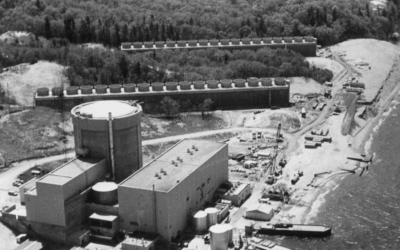
By Daily Caller News Foundation energy reporter Audrey Streb Michigan’s Palisades nuclear power plant is reportedly set to reopen in October as America’s grid strains under increasing power demand, a development that will mark the first reopening of a shuttered nuclear power plant in U.S. history. Holtec International’s nuclear plant closed in May 2022, and it will reportedly go live again this October, according to multiple reports. The Biden administration pledged a $1.5 billion loan guarantee for the plant’s revival in September 2024, and the Trump administration has continued to fund the project despite axing other Biden-era energy spending, all while the U.S. electrical grid is expected to struggle to meet rising power demand. (RELATED: Timeline On Catastrophic Global Events Reveals Chilling Imminent Threats) “We’ve got two administrations with very different philosophies on energy, both saying this makes sense to move ahead with bringing Palisades back,” Republican Michigan Rep. Bill Huizenga, who represents the district that is home to the returning Palisades plant, told E&E News. “All the infrastructure is there. There’s no long, drawn-out permitting process. It’s not like it’s a new greenfield development. It’s been there for decades.” Watch More .@SecretaryWright on reopening Palisades Nuclear Plant: “It’s a gigawatt or so of awesome power production capacity already built.” A gigawatt is enough to power 100,000 Michigan homes for a year. 😎 pic.twitter.com/g8swB8JcLr — U.S. Department of Energy (@ENERGY) March 18, 2025 The plant is expected to generate enough power for 800,000 homes, according to multiple reports. The Palisades plant reportedly will also host some small modular reactors (SMRs) that can power an additional 300,000 homes. The reactor provided power for more than 50 years before closing down as its power purchase agreement expired, according to multiple reports. Nuclear power plants are difficult to build due to strict regulations and permitting requirements, as well as environmentalist lawsuits and public fears of radiation, energy sector experts have previously explained to the Daily Caller News Foundation. (RELATED: WATCH: Kay Hill ERUPTS Over FEMA, NWS, And Why We Need New Systems Of Safety NOW) Blackouts are projected to roll across the U.S. as soon as within the next few years, including in the Michigan region, according to a recent Department of Energy report and analysis from Always on Energy Research. As energy infrastructure has aged and stringent regulations have helped shutter coal plants, America’s projected power demand has shot up, in part due to the expected proliferation of data centers that burn through large volumes of electricity to operate. President Donald Trump declared a national energy emergency on his first day back in the Oval Office and has championed nuclear technology, signing multiple executive orders to expedite its implementation. Holtec International did not respond to the DCNF’s request for comment. TMM Analysis When it comes to nuclear power, all you have to ask yourself is: do you trust nuclear power plants to be run successfully in the case of a war in the homeland, a natural disaster, or just with the quality of schooling provided to most American students? If you can sleep comfortably at night thinking these facilities are safe from terror attacks — or wouldn’t go into meltdown in the case of a massive natural disaster — then good for you. We can’t. And to us, it is that simple.