

Elections
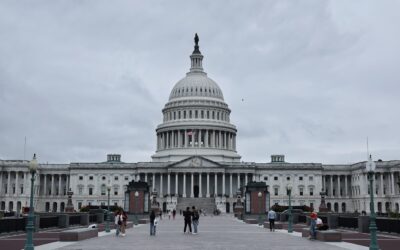
House Passes Stopgap Funding Bill, Averting Shutdown Before Midterm Elections
The House of Representatives passed a short-term government funding bill Tuesday by a lopsided 370-48 vote, sending the measure to President Trump’s desk and averting a government shutdown just weeks before voters head to the polls in the November midterms. The stopgap measure, known as a continuing resolution, keeps federal agencies funded generally at current spending levels through December 11, buying Congress additional time to negotiate full-year appropriations bills without the immediate pressure of an October 1 funding cliff. The Senate had already approved the measure by an overwhelming margin before it reached the House floor, and with Trump’s signature considered a formality, the bill is expected to become law well before the current funding deadline expires. The lopsided vote margin reflects a rare moment of bipartisan alignment on a piece of must-pass legislation, particularly notable given how badly the last two funding fights went. Lawmakers in both parties have been eager to avoid a repeat of 2025’s shutdown chaos, when the federal government endured a 43-day lapse in funding followed by a separate, even longer 76-day shutdown limited to the Department of Homeland Security — the longest shutdown of any single federal department in U.S. history. With midterm elections just two months away, neither party wanted to be blamed for a third disruptive funding lapse in as many years, a dynamic that appears to have driven Tuesday’s smooth passage far more than any newfound spirit of bipartisan cooperation on the underlying spending questions that remain unresolved. House Appropriations Committee Chairman Tom Cole framed the bill as straightforward good governance, telling reporters it provides “certainty that the government will remain open, certainty that our service members will be paid.” House Speaker Mike Johnson struck a similar tone, crediting Republicans for delivering the result and saying the House GOP is “continuing to do the grown-up thing, get the job done” — remarks aimed as much at midterm voters weighing which party can be trusted to keep basic government functions running as at colleagues on the floor. Democrats offered a more qualified endorsement. Rep. Rosa DeLauro, the top Democrat on the Appropriations Committee, pointed to a provision delaying a proposed rule that would have given Trump-appointed officials new authority to halt federal grants for programs they deem misaligned with the administration’s policy agenda, calling the delay “an important first step.” But DeLauro made clear Democrats see the underlying policy fight as far from settled, warning that “whether a community receives disaster relief should not depend on who they voted for in the last election” — a pointed reference to Democratic concerns that the administration could eventually use grant-approval authority to reward friendly states and jurisdictions while punishing others. The bill includes at least one other notable policy provision beyond the topline spending extension: language preventing the Department of Homeland Security from transferring funds internally to boost Border Patrol’s budget beyond what Congress has already appropriated, a restriction that reflects ongoing congressional efforts to maintain oversight over how immigration enforcement dollars are actually spent even as the administration has pushed to expand enforcement operations through other channels, including the National Guard deployments and ICE surges already underway in several major cities. The relatively narrow scope of the bill — a straightforward extension of current funding levels rather than a comprehensive rewrite of federal spending priorities — reflects a deliberate strategy by leadership in both chambers to keep the legislation simple enough to avoid the kind of ideological riders that have sunk previous funding bills. Appropriators on both sides have signaled they intend to use the roughly three-month runway before the December 11 deadline to try to negotiate full-year spending bills covering the various federal agencies individually, rather than relying on another continuing resolution when the current one expires. Whether that effort succeeds is an open question; previous attempts at regular-order appropriations have repeatedly broken down over disputes on individual agency budgets, immigration enforcement funding, and policy riders attached by both parties, which is part of why the government has now operated under a series of short-term patches for much of the past several years rather than the full-year budgets that were once the norm. The bill’s passage removes one significant source of uncertainty from the political landscape heading into the fall campaign season, allowing both parties to turn their full attention to the redistricting fights, the state of the economy, and other issues expected to dominate midterm messaging without the added complication of a government shutdown playing out in the final stretch before Election Day. Still, the December 11 deadline means the underlying funding fight has only been postponed, not resolved, and lawmakers on both sides say they expect a more contentious round of negotiations once Congress returns from the elections to face a lame-duck session that will need to produce either full-year spending bills or yet another short-term extension before the holidays. For federal workers and contractors who lived through last year’s back-to-back shutdowns, Tuesday’s vote offers at least a few months of certainty. Whether that certainty extends much beyond December remains very much in the hands of a Congress that has struggled repeatedly in recent years to complete its most basic constitutional task of funding the government it oversees. The timing of the new deadline is itself politically significant. By pushing the next funding cliff to December 11, congressional leaders in both parties effectively guaranteed that the fight over full-year spending bills will unfold in a lame-duck session immediately following the midterms, when the incentives facing individual lawmakers shift considerably. Members who lost reelection bids in November will have less political exposure to worry about when casting votes on politically difficult spending bills, while members who won will be looking ahead to a new two-year term rather than an immediate election. Congressional aides in both parties have said privately that lame-duck sessions, for all their reputation as chaotic and rushed, have historically proven more capable of producing genuine compromise on appropriations than sessions held in the shadow of an looming…

House Republicans Push Through $73B Pentagon Boost and $10B for Election Integrity in Major Budget Win
House Republicans notched another significant legislative win this week, advancing a budget package that pairs a major infusion of Pentagon funding with fresh money for states to implement voter ID and citizenship verification measures — all without a single Democrat vote. House Republicans passed more than $1 trillion for the Pentagon alongside a budget blueprint designed to fund the war with Iran and implement provisions of President Trump’s election overhaul bill. The package specifically directs $73 billion in new Pentagon funding and $10 billion toward voting-related measures, according to reporting on the bill’s contents. Election Security Front and Center The $10 billion carve-out is aimed at helping states implement citizenship verification and voter ID requirements similar to those in the SAVE America Act, which has stalled in the Senate amid unified Democrat opposition. By folding those provisions into the reconciliation process, Republicans lower the vote threshold needed for Senate passage from 60 to a simple majority — a maneuver that could finally get key election integrity measures across the finish line without Democrat cooperation. Funding the War Effort The bulk of the package goes toward military readiness and the ongoing conflict with Iran, reflecting the administration’s determination to make sure funding constraints don’t hamstring the war effort even as the conflict drags on longer than initially projected. Republicans have framed the bill as addressing two of Congress’s most basic responsibilities at once: protecting American elections and strengthening national defense. What’s Next The measure still needs to clear the Senate, where the parliamentarian will have final say over which election-related provisions survive under reconciliation rules. Republican leaders have expressed confidence that enough of the SAVE America Act’s core provisions can be preserved to make the effort worthwhile, even if the full text can’t be included wholesale. This story is developing.

Matt Van Epps Wins Decisively in Tennessee Special Election
Matt Van Epps, a West Point graduate and Lieutenant Colonel in the Tennessee Army National Guard, delivered a solid win for Republicans in the special election for Tennessee’s 7th Congressional District. Despite the race falling in an off year and just days after Thanksgiving, when turnout is typically low, Van Epps still secured a decisive and confident victory. His performance shows the GOP base remains energized and engaged. He ultimately defeated progressive Democrat Aftyn Behn by 9 points — a clear and commanding margin in any special election. The Power of a Trump Endorsement Van Epps ran with the endorsement of President Donald Trump, and that support still carries tremendous influence in conservative circles. Republican voters trust the president’s judgment, and his backing helped energize the district. Trump remains the leader of the Republican Party, and his endorsement continues to hold real power. Even so, candidates must build their own following. Van Epps showed he is well on his way with this election win. President Trump congratulated Van Epps tonight on a solid win for the Republican Party: More Stories Drowning in Bills? These Debt Solutions Could Be the Break You Need Out-of-Town Renters Are Driving Up Demand in These Five Cities Under Siege: My Family’s Fight to Save Our Nation – Book Review & Analysis Media and Polling Tried to Shape a Different Narrative Throughout the campaign, mainstream media coverage and selective polling pushed the idea that the race was neck-and-neck. Commentators repeatedly claimed Behn was within reach, creating a dramatic storyline that didn’t match the mood on the ground. When the votes were counted, that narrative collapsed. The final results made clear that the race was not the close contest the media tried to sell. Instead of a photo finish, voters delivered a confident Republican win that outpaced the predictions and undercut the polling hype. Realistic Expectations for a First-Time Candidate Some observers compared Van Epps to President Trump’s historic vote totals, but such expectations were unrealistic. Trump’s numbers are unique in modern American politics. No first-time congressional candidate — especially in an off-year special election — can replicate presidential-level turnout. Even with those inflated expectations circulating, Van Epps performed exceptionally well. He held the district with ease, energized Republican voters, and proved he can build momentum without relying on a presidential-year turnout surge. The Takeaway Matt Van Epps’ win deserves recognition for what it is: a firm, disciplined, and decisive Republican victory. He entered a uniquely timed race, faced a well-funded progressive opponent, and still delivered a strong and steady performance. Media outlets may try to downplay it, but his supporters saw a clear, well-earned win that positions him as a rising conservative voice. Republicans held the seat. President Trump’s endorsement proved influential. And Van Epps demonstrated that he has both the message and the momentum to make an impact in Congress. Cut Through the Noise. Slice Through the Lies. Share the Truth. At The Modern Memo, we don’t tiptoe around the narrative—we swing a machete through it. The mainstream won’t say it, so we will. If you’re tired of spin, censorship, and sugar-coated headlines, help us rip the cover off stories that matter. Share this article. Wake people up. Give a voice to the truth the powerful want buried. This fight isn’t just ours—it’s yours. Join us in exposing what they won’t tell you. America needs bold truth-tellers, and that means you. 📩 Love what you’re reading? Don’t miss a headline! Subscribe to The Modern Memo here! Explore More News Trump Designates Muslim Brotherhood a Terrorist Organization Trump and Elon Musk Reunite, Boosting GOP Unity Top 5 Essential Survival Gear Items For Any Adventure Epstein Files Bill Sparks New Questions as Jeffries Email Emerges
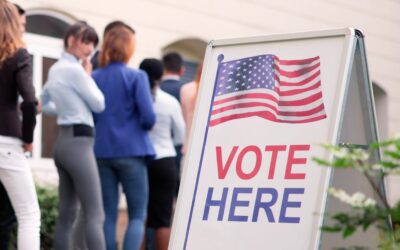
Election 2025 Analysis: Democrats Sweep as Shutdown Continues
The November 2025 election reaffirmed Democratic dominance in some of the nation’s bluest regions. From Virginia to New Jersey, Pennsylvania, and California, Democrats held control and even expanded their reach. These results weren’t shocking — they happened in states where Democrats already hold strong structural advantages. But what makes this election worth examining is why they performed so well now. Voters went to the polls as the federal government shutdown continues, disrupting lives and amplifying frustration with Washington. Many are exhausted by the constant partisanship and gridlock. Democrats stayed disciplined and united, running on a simple, emotional strategy: “Get Trump.” Republicans, meanwhile, struggled to translate frustration into votes. (MORE NEWS: Kamala Teases 2028 Run — Democrats Scramble for Strategy) Spanberger Makes History in Virginia Virginia delivered a full Democratic sweep in 2025, marking a turning point for a state that was once considered a swing battleground but now sits firmly in blue territory. Governor’s Race: Abigail Spanberger made history as Virginia’s first female governor, defeating Republican Winsome Earle-Sears. Her victory came despite controversy over her refusal to call on Attorney General candidate Jay Jones to step down after his violent comments about a political rival and his children. Attorney General’s Race: Jay Jones won despite the release of text messages showing violent rhetoric against a political opponent and their family. The scandal barely affected his campaign, and Democrats closed ranks around him. Lieutenant Governor’s Race: Ghazala Hashmi made history as Virginia’s first Muslim woman elected to statewide office, completing the Democratic sweep and underscoring how decisively the state has shifted left. Virginia’s election results highlight the power of party unity and message discipline — even when controversy and ethics questions hang over the campaign. New Jersey and Pennsylvania Stay Solidly Democratic In New Jersey, Mikie Sherrill captured the governorship despite questions about honesty in her past. In Pennsylvania, Democrats held onto their state Supreme Court majority, giving the party a key advantage heading into the 2026 midterms. Across these states, Democratic organization, turnout, and message discipline carried the night. Republicans couldn’t shift the conversation toward economic recovery or accountability in Washington. Mamdani’s Controversial Win in New York In New York City, Zohran Mamdani, a self-described democratic socialist, won the mayor’s race, energizing progressives and drawing sharp criticism from conservatives. Representative Andy Ogles (R–Tenn.) told Fox News, “Deport Mamdani! He’s an antisemitic, socialist, communist who will destroy the great City of New York.” Ogles also told Newsmax, “In 2018 when he was naturalized, he failed to disclose some of the things that he had been doing, one of which was joining the [Democratic] Socialists of America. That’s a communist organization which, quite frankly, at that time, would have disqualified him from becoming a United States citizen.” (RELATED NEWS: 2025 Elections: Five Key Races to Watch) U.S. immigration law bars naturalization for those affiliated with Communist or totalitarian parties. The application form explicitly asks whether applicants have ever been members of such groups. Mamdani denies being a communist, though his ties to socialist organizations continue to spark debate. President Trump called him a “communist lunatic” before the election in a Truth Social post: Then Mamdani taunted Trump in his victory speech: Zohran Mamdani has won the race to become the next mayor of New York City. Mr Mamdani – who will be the first Muslim, first South Asian, and youngest person in a century to be elected as the famous city’s mayor – used a victory speech to throw down the gauntlet to Donald Trump. pic.twitter.com/8IVr4kMQQH — Sky News (@SkyNews) November 5, 2025 The back and forth between these two will be interesting the next few years — to say the very least. California’s Prop 50: One-Party Control Locked In In California, Governor Newsom’s Proposition 50 solidified Democratic dominance through a last-minute sweeping redistricting overhaul that passed after more than $300 million was spent promoting it. Republicans were not left with enough time to properly prepare and fight it. Although roughly 40% of Californians vote Republican, the new map would leave the GOP with only 7% of the state’s congressional seats. That amounts to political engineering with no balance in sight. Democrats claimed Prop 50 would improve representation, but it is actually gerrymandering on a historic scale. They claim this is a counterbalance to Texas redistricting, but Texas doesn’t have anything close to this kind of structural bias. Prop 50 effectively locks Republicans out of power in California for the foreseeable future. That was their goal, and they achieved it. Why Democrats Dominated So why did Democrats sweep this election? The answer lies in timing, perception, and focus. These were deep-blue states where Democratic infrastructure was already strong. But the ongoing government shutdown, combined with national fatigue and slow economic recovery, set the stage for a default vote for “stability.” Many voters simply didn’t see a strong Republican alternative. Democrats kept their messaging unified and emotional. They tied every issue — from policy to personality — back to President Trump. Republicans, on the other hand, failed to connect their arguments to everyday voter concerns or to demonstrate how things would improve under continued conservative leadership. Economic Strain and the Trump Challenge The economy remains uncertain. Costs for essentials like food, gas, and housing are still high — the lingering effects of inflation that began under President Biden. President Trump’s economic strategy is aimed at long-term correction through tariffs, trade reform, and energy expansion. But that kind of recovery takes time, and many voters haven’t felt the benefits yet. The administration now faces the challenge of making progress visible. Americans don’t want to hear about macroeconomic data; they want relief they can see — at the pump, in the grocery store, and in their mortgage or rent payments. The Road to 2026 The lesson from the 2025 election is straightforward: Democrats win when Republicans fail to connect on the issues that matter most. The “Get Trump” strategy continues to energize the left and distract from their lack of sound policy. For President Trump,…

Kamala Teases 2028 Run — Democrats Scramble for Strategy
Kamala Harris has once again thrown Democrats into confusion. In a recent BBC interview, she hinted that she might run for president in 2028. Her vague, awkward answers quickly sparked speculation. Harris didn’t officially announce a campaign, but her tease made it clear she isn’t stepping away from the national spotlight anytime soon. That single comment set off a chain reaction across both parties. Democrats suddenly face a difficult question: do they rally behind her again or move on? Republicans, meanwhile, seem thrilled by the prospect of another Harris run. (MORE NEWS: Rebuttal to Hakeem Jeffries: When Your Own Words Go Too Far) What Harris Said — And Why It Matters Harris didn’t offer any solid vision or policy direction. When asked about poll numbers and the future of her party, she brushed it off with what many observers called “nonsense.” The exchange ended awkwardly, giving critics more ammunition to question her communication skills and overall readiness. Still, the tease served its purpose. It reminded the public she’s still here — and that she might want another shot. But it also forced her party to confront its leadership vacuum and unsettled identity. 🚨 JUST IN: Kamala Harris declares to America that she’s “not done” and might run for president in 2028 to quash the MAGA movement. 😂pic.twitter.com/NUDzqXAO7J — Eric Daugherty (@EricLDaugh) October 25, 2025 Democrats’ Growing Problem Kamala Harris’s comments exposed a deeper issue for Democrats: they don’t have a clear successor or a unified message. After years of internal fighting between progressives and moderates, the party looks divided and uncertain. If Harris runs, she risks reigniting old rivalries from her previous campaigns. If she doesn’t, the scramble to find a new face could create chaos. The Democratic bench is thin, and enthusiasm among younger voters has dropped. That’s not a great position for a party hoping to hold the White House in 2028. Republicans Smell Opportunity While Democrats argue about who should lead them next, Republicans are celebrating. Harris has become a favorite target for conservative media and party strategists. They see her as an easy opponent — one who stumbles in interviews and struggles to connect with voters. (RELATED NEWS: 2025 Elections: Five Key Races to Watch) GOP strategists are already giddy at the thought of a 2028 matchup between Vice President J.D. Vance and Kamala Harris. They believe her candidacy could energize conservative voters while dividing Democrats further. Book Tour Effect Harris’s ongoing book tour has become a stage for speculation. Every weekend, new clips and awkward soundbites circulate online. While the tour promotes her memoir, it also serves as a soft campaign — keeping her visible, drawing media attention, and testing public reaction. Critics argue she’s trying to rewrite her political image without addressing the failures that defined her last run. Supporters say she’s simply staying relevant. Either way, the timing of the tour aligns perfectly with a pre-campaign strategy. Possible 2028 Democratic Contenders As Harris toys with another run, other Democrats are circling. Here’s who might step in the race: Kamala Harris – She’s the default option, but also the most polarizing. Her record and communication style still divide voters. Gavin Newsom – The California governor has built a national profile, but his leadership of a state facing homelessness, crime, and cost-of-living crises could weigh him down in a general election. His critics also fault him for the devastating fires in January 2025. Alexandria Ocasio-Cortez (AOC) – A hero to progressives and a lightning rod for critics. Her inexperience, strong ideological positions, and social media presence could alienate moderate voters. Josh Shapiro – The Pennsylvania governor’s traditional stance could alienate progressives. He also faces a party increasingly skeptical of centrists and full of antisemitism. He is Jewish, and that could play a role in the outcome of a primary. Many say that is ultimately why Kamala did not select him for her Vice Presidential candidate. Andy Beshear – A Democrat winning in a red state sounds good on paper, but his low national visibility and cautious tone might not inspire a national movement. Key Takeaways If Harris runs, the field may clear for her, even if many Democrats aren’t excited about it. If she doesn’t, figures like Newsom or Shapiro may step forward, but both face heavy scrutiny. Progressive voters might rally around AOC, creating more tension between party factions. Moderates may turn to Beshear or another governor to find someone “safe” — though that might not be enough to excite voters. What It All Means The tease wasn’t just a moment of media buzz — it revealed the Democrats’ biggest weakness: uncertainty. The party is struggling to balance progressive energy with electability concerns. It’s unclear who can unify those factions or inspire the kind of national enthusiasm needed to win. If Harris runs, Democrats could relive the internal divisions that cost them before. If she doesn’t, the vacuum might be even worse. Either way, Republicans will be ready, organized, and eager to exploit the chaos. The 2028 race hasn’t even begun, but Harris’s offhand comment might have just kicked off the first round. Unmask the Narrative. Rip Through the Lies. Spread the Truth. At The Modern Memo, we don’t polish propaganda — we tear it to shreds. The corporate press censors, spins, and sugarcoats. We don’t. If you’re tired of being misled, silenced, and spoon-fed fiction, help us expose what they try to hide. Truth matters — but only if it’s heard. So share this. Shake the silence. And remind the powerful they don’t own the story.