EU
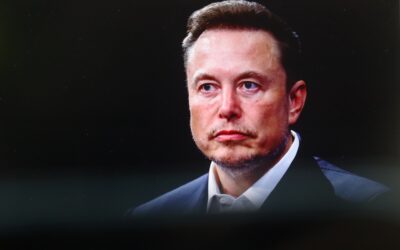
Elon Musk Calls for EU to be Abolished After Hefty Fine
Elon Musk made waves once again — and this time, he went straight for the European Union. On December 6, 2025, right after the EU hit his platform X with a massive €120 million ($140 million) fine, Musk fired back with a bold message. He said the EU should be abolished completely, and that member countries should take back full control of their own governments. As expected, his comments spread like wildfire. Everyone from policymakers to everyday social media users had something to say about it. The people of Europe should withdraw from the EU to regain their sovereignty https://t.co/QTbkSgePrh — Elon Musk (@elonmusk) December 6, 2025 Musk has never been shy about sharing his views, but this statement hit differently. It wasn’t just about a fine or a disagreement over rules. It was a full-on challenge to one of the world’s most powerful political institutions. Whether people agreed with him or not, it was clear that his comments struck a nerve across the globe. Fine: What Triggered the Outrage The spark that set everything off was the European Commission’s fine against X under the Digital Services Act (DSA). The DSA is the EU’s big effort to rein in online platforms by making them more transparent, more responsible, and more accountable for harmful or illegal content. According to regulators, X wasn’t doing enough — especially when it came to dealing with misinformation and extremist material. Musk didn’t take the accusation lightly. He said the fine had nothing to do with safety or compliance and everything to do with trying to control free speech online. To him, the EU’s enforcement felt like punishment for allowing open discussion, even when that discussion included unpopular or controversial opinions. Instead of quietly paying the fine, Musk escalated the situation in a way only he could. More Stories Drowning in Bills? These Debt Solutions Could Be the Break You Need Out-of-Town Renters Are Driving Up Demand in These Five Cities Under Siege: My Family’s Fight to Save Our Nation – Book Review & Analysis Growing US-European Diplomatic Strain Musk’s comments didn’t stay in the business world. They quickly became a diplomatic issue when top American officials weighed in. U.S. Secretary of State Marco Rubio slammed the fine, calling it an attack on American companies and American innovation. His message was clear: the EU was crossing a line by imposing such a heavy penalty on X. U. S. Ambassador to the EU, Andrew Puzder, also spoke out about the incident: Today’s excessive €120M fine is the result of EU regulatory overreach targeting American innovation. The Trump Administration has been clear: we oppose censorship and will challenge burdensome regulations that target US companies abroad. We expect the EU to engage in fair, open,… https://t.co/EAld2QJaen — U.S. Ambassador to the EU (@USAmbEU) December 6, 2025 All of this made a tense situation even more complicated. What started as a regulatory fine quickly turned into a broader political debate between two major global players. Musk’s Broader Pattern of Opposition to EU Influence If you’ve followed Musk over the past few years, his criticism of the European Union probably doesn’t surprise you. He has repeatedly questioned the union’s authority, especially when it comes to digital policy and speech regulation. Critics insist Musk is looking out for his own interests. After all, the EU’s regulations could affect everything from Tesla to SpaceX to X. They argue that he wants the union weakened because its oversight makes it harder for tech giants to operate freely. But his supporters see him as a champion of personal freedom and innovation. Whether people view him as a disruptor or a defender, one thing is clear: Musk has become one of the most vocal opponents of EU regulatory power. What’s at Stake: Democracy, Regulation, and Global Tech The fight between Musk and the European Union isn’t really about one fine. It’s part of a much bigger debate about how digital spaces should be governed. European officials say the DSA is essential for protecting citizens from misinformation, dangerous content, and foreign manipulation. They believe strong rules help maintain order and keep the online world safer. Musk, however, argues that too much regulation can become a threat in itself. He believes it limits creativity, restricts the exchange of ideas, and gives too much power to unelected officials. He sees X as a platform where people should be able to talk openly, even if those conversations get messy. From his perspective, the EU’s approach leans too far toward control, while his vision champions freedom and innovation. This clash of philosophies is at the heart of the debate. And because it involves global tech giants, European governments, and the United States, the consequences reach far beyond one company’s bottom line. Musk isn’t likely to let this go. His comments could inspire other tech leaders to question EU authority, and they may also influence public opinion in several countries already debating issues of sovereignty. The conflict may even shape upcoming elections or policy discussions as governments decide how much control they want to hand over to Brussels. Final Word Elon Musk’s stand against the European Union is a direct challenge to a system that has grown far too controlling. He’s calling out a bureaucracy that restricts free speech, slows innovation, and tries to dictate how tech platforms operate. Musk’s push for national sovereignty and open communication aligns with the values many Americans already champion. By confronting EU overreach head-on, he’s defending the principle that people and individual nations — not distant institutions — should shape the future of technology. His willingness to speak plainly and push back is driving a conversation that needed to happen, and he’s showing once again that he isn’t afraid to take on powerful systems when freedom is on the line. Cut Through the Noise. Slice Through the Lies. Share the Truth. At The Modern Memo, we don’t tiptoe around the narrative—we swing a machete through it. The mainstream won’t say it, so we will. If you’re…
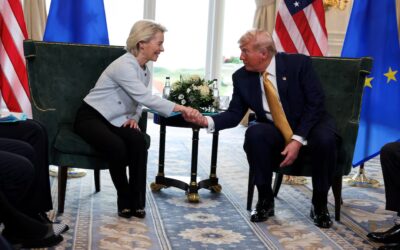
The Trade Deal That Changed Everything: U.S.–EU Breakthrough
In a bold move that will reshape the future of global trade, President Donald J. Trump announced a historic trade agreement with the European Union (EU). The deal redefines the economic relationship between the world’s two largest economies. The deal, hailed as a “generational modernization of the transatlantic alliance,” according to the White House, delivers unprecedented market access for American producers, workers, and innovators, while advancing U.S. economic and national security interests. A Monumental Economic Shift The agreement marks a pivotal victory for the United States. It positions the country as the world’s foremost destination for investment, manufacturing, and energy exports. Through 2028, the EU is expected to purchase a staggering $750 billion in U.S. energy exports. It will also invest an additional $600 billion into the American economy. These moves will drive growth in key industries and fortify the domestic manufacturing base. Furthermore, President Trump’s leadership continues to prioritize the American worker and bring jobs back home. This trade deal reflects his unshakable commitment to economic fairness, reciprocal trade, and revitalizing American industry. Structural Trade Reform for Generations The agreement goes far beyond symbolic diplomacy—in fact, it achieves real, enforceable structural reform with long-lasting impact. Under the new U.S.-EU Cooperation Agreement on Reciprocal, Fair and Balanced Trade, American farmers, ranchers, manufacturers, and small businesses will see sweeping new opportunities to grow and export their goods. One of the most groundbreaking aspects of the deal is the elimination of all EU tariffs on U.S. industrial goods. This change unlocks European markets for American-made products and reduces the longstanding goods trade deficit. The removal of these barriers will allow American products to compete and win in Europe’s lucrative markets, supporting high-quality U.S. jobs and production across various sectors. Strategic Tariff Restructuring As part of the agreement, the EU will adopt a new tariff framework that includes a 15% tariff on key sectors, such as autos, auto parts, pharmaceuticals, and semiconductors. Additionally, tariffs on steel, aluminum, and copper will remain at 50%. Both sides will engage in future discussions to secure critical supply chains. Altogether, this new tariff structure is expected to generate tens of billions in revenue annually, helping to restore trade balance and incentivize reshoring of critical industries. Major Trade Provisions and Breakthroughs This landmark agreement includes a comprehensive set of commitments that benefit the United States across multiple fronts: $600 Billion EU Investment: The EU will invest this sum in U.S. infrastructure, innovation, and job creation. This is in addition to the $100 billion EU companies already contribute annually. $750 Billion in U.S. Exports: Through 2028, Europe will depend more heavily on clean, reliable U.S. energy, reducing its reliance on adversarial nations and boosting U.S. energy dominance. Tariff and Quota Reforms: The EU will eliminate or significantly reduce tariffs and open up meaningful quotas across various sectors, allowing American goods to flow freely and competitively. Reducing Red Tape: The deal addresses non-tariff barriers that burden U.S. exporters—particularly small and medium-sized businesses—by streamlining EU regulations and procedures. Agricultural Access: U.S. pork and dairy products will face fewer bureaucratic hurdles, as sanitary certifications and other requirements are streamlined. Digital Trade Protections: The EU commits to not imposing unjustified digital trade barriers or network usage fees, and both parties agree to maintain zero customs duties on electronic transmissions. Economic Security and Innovation Alignment: The U.S. and EU will align on supply chain security, coordinate efforts on investment reviews, and guard against unfair practices and duty evasion from non-market economies. Military and Commercial Cooperation: The EU will increase purchases of U.S. military equipment and finalize new commercial deals in key sectors such as semiconductors and clean energy. Restoring Economic Sovereignty This deal is a direct result of President Trump’s “America First” agenda. That agenda is rooted in restoring national sovereignty, protecting American workers, and confronting decades of trade imbalances caused by one-sided policies and foreign protectionism. On April 2, President Trump declared a national emergency in response to persistent U.S. trade deficits driven by foreign practices that depressed domestic wages and consumer demand. That declaration laid the groundwork for a bold and necessary reset of America’s global trade posture. This agreement reflects the culmination of that reset. It liberates American producers from the stranglehold of unfair trade practices and builds a level playing field for U.S. industry. For too long, the U.S. tolerated foreign policies that stifled innovation and drained manufacturing capacity. That era is now over. A Historic Victory Where Others Failed Despite repeated attempts by past administrations, no American president had successfully negotiated a trade agreement of this magnitude with the European Union—until now. This historic win reaffirms America’s status as the global standard-bearer of economic leadership and strategic strength. In just six months, President Trump has catapulted the United States into a new era of industrial revival, global investment attraction, and energy supremacy. His approach combines bold action, strong negotiation, and an unyielding focus on results. He delivers what previous leaders promised but failed to achieve. A Triumph for the American Trade Future This U.S.-EU trade agreement is more than just a diplomatic milestone. It’s a victory for every American worker, farmer, inventor, and business owner. More importantly, it proves that bold leadership can reverse decades of economic decline. It reignites American industry and reclaims prosperity for future generations. President Trump’s historic deal with the European Union is a triumph of principle, power, and patriotism—and it has only just begun to reshape the world.