

Jobs

AI Job Cuts Surge: Reshaping the U.S. Workforce in 2025
In October 2025, U.S. employers announced 153,074 job cuts, the highest total for that month in more than two decades, according to Challenger, Gray & Christmas’s Challenger Report. Crucially, a growing number of these cuts are being directly tied to the adoption of artificial intelligence (AI) and automation. More than 31,000 of the cuts in October were explicitly attributed to AI-related restructuring. Overall, through the first ten months of 2025, employers have announced 1,099,500 job cuts — up 65% from the same period in 2024. AI Ramping Up Job Cuts — A Sharp Turn in the Labor Market While traditional cost-cutting remains the top reason companies cite, AI has moved from the periphery to a clear driver of workforce reductions. In September 2025 alone, approximately 7,000 job cuts were directly tied to AI. Through September, about 17,375 job cuts were explicitly tied to AI, with an additional 20,000 linked to “technological updates,” a category that often includes automation. The true number of AI-driven cuts may be even higher, since many layoffs are labeled under broader terms rather than “AI.” Put simply: AI is no longer a future worry — it’s already reshaping the job market. Sectors Being Disrupted First The impact of AI-driven cuts isn’t evenly spread across industries. Two sectors stand out. The Technology sector faced 33,281 job cuts in October — a massive jump from just over 5,000 the month before. Tech companies themselves are citing AI as a reason for restructuring. Meanwhile, the Warehousing and Logistics sector posted 47,878 cuts in October — a striking surge and a reflection of automation and AI adoption in supply-chain operations. According to the New York Post, major U.S. employers are leading this new wave of AI-driven restructuring across industries: Amazon recently announced plans to cut about 14,000 corporate roles as part of a reorganization meant to “reduce bureaucracy” and redirect resources toward artificial intelligence initiatives. Target, under incoming CEO Michael Fiddelke, revealed its first major layoffs in a decade — eliminating 1,800 corporate positions, or roughly 8% of its headquarters staff — in an effort to streamline operations and counter declining sales. Meanwhile, UPS confirmed it will trim 48,000 jobs company-wide in a sweeping cost-cutting plan tied to automation and efficiency upgrades. Other sectors, such as media and non-profits, are also feeling the effects as AI, automation, and cost-cutting converge. Across the economy, the shift is clear: companies are rethinking their human workforce in light of smarter, cheaper, and faster technology. Why AI Cuts Are Getting More Visible There are several reasons why AI is increasingly cited as a cause for job cuts. AI tools are now capable of taking on tasks once done by humans — from customer service chatbots to predictive analytics that replace manual roles. Employers are under economic pressure from softening demand and rising costs, and AI offers a way to streamline operations. Entry-level roles and predictable, repeatable work are the first to go. As AI becomes more integrated, companies are retooling departments and demanding employees with higher technical fluency. Put another way, AI is no longer just a tool for efficiency. It’s becoming a substitute for certain kinds of work. And that’s why it’s appearing more often as a listed reason for job cuts. What This Means for Workers If you’re a worker — especially early in your career — the AI disruption should prompt serious reflection. Roles that rely heavily on routine, predictable tasks are increasingly at risk of automation or AI replacement. Finding a new job may also be harder: hiring plans are slowing. Through October, U.S. employers announced only 488,077 planned hires — down 35% from the same period last year. Reskilling is becoming critical. Because AI is changing what skills employers value, upgrading your digital competency, understanding AI tools, and being adaptable will help you stay competitive. The report warns that those laid off now are finding it harder to quickly secure new roles, which could further loosen the labor market. Implications for Employers and the Economy From the employer side, adopting AI can boost productivity — but it also carries risks. Cutting too deeply or too quickly can damage morale, innovation, and long-term growth. Over-reliance on automation may save costs today but limit creativity tomorrow. Companies that balance AI efficiency with human capability will likely perform best in the long run. From an economic perspective, rising layoffs and slowing hiring pose real concerns. If too many workers lose jobs while few new roles emerge, consumer spending will weaken. That, in turn, can trigger more layoffs — creating a negative cycle. The fact that AI is now a named driver of job cuts suggests the labor market may be entering a structural shift, not just a temporary downturn. What to Watch Going Forward Several trends merit close attention: Will companies continue to list AI explicitly as a reason for layoffs? Some may categorize it under broader labels like “technological update,” so the real figure may be higher. Are hiring plans recovering? If not, it suggests companies aren’t just cutting now—they’re slowing growth and perhaps shifting operational models. Which types of roles are disappearing fastest? Watching whether entry-level and routine jobs shrink more rapidly can indicate the pace of AI disruption. What sectors are most exposed next? If warehousing and tech lead now, could administration, finance, customer service roles be next? Final Word The October 2025 job-cut data marks a turning point for the U.S. labor market. AI has moved from a promise to a tangible force in workforce reduction. While cost-cutting remains the top cause, the fact that over 30,000 jobs in one month were explicitly attributed to AI shows how fast the landscape is changing. For workers, this means being agile, proactive, and open to re-skilling. For businesses and policymakers, it means understanding that AI’s influence reaches beyond productivity — it affects people, communities, and the economy itself. The challenge now is to harness AI’s power responsibly while protecting the human workforce that drives innovation forward. Cut through the…

AI Is Taking Entry-Level Jobs and Shaking Up the Workforce
Generative AI Is Hitting Young Workers First If you’re fresh out of school and looking for that first job, the rise of generative AI may already be shaping your chances. A new Stanford University study tracked payroll data from millions of employees and found something troubling: early-career workers in AI-exposed fields are down 13 percent compared to where they were just a year ago. That’s not a small dip. It’s a sign that employers are quietly letting younger workers go in areas where AI tools can do the job faster and cheaper. And this isn’t about cutting pay. The study shows the real adjustment is happening through fewer jobs being offered in the first place. 1/ A recent Stanford study led by @erikbryn found that entry-level jobs for 22-25 year-olds in fields most exposed to AI have dropped 16%. Some reactions to the data, and why I believe we need to design a new on-ramp to work in the AI era: pic.twitter.com/oqcMw8jJve — Reid Hoffman (@reidhoffman) September 3, 2025 The Canary in the Coal Mine The researchers call young workers the “canaries in the coal mine.” They’re the first to feel the sting when new technology reshapes the workplace. Jobs in customer service, translation, and even parts of software development are especially vulnerable. (RELATED NEWS: The Dark Side of AI Chatbots: A Threat to Fragile Minds) The report puts it bluntly: “Our results suggest that young workers, who traditionally face steeper career ladders, are being crowded out before they can gain a foothold.” That single line captures the long-term risk. It’s not just about lost paychecks today—it’s about blocking career paths for an entire generation. Not all roles are shrinking. Positions that demand judgment, creativity, or human connection are holding steady or even growing. But the message is clear: for people just starting out, the ladder into the workforce is being pulled up faster than anyone expected. A Tech CEO’s Stark Warning If the numbers weren’t enough, Anthropic CEO Dario Amodei has doubled down on his own prediction: up to half of all entry-level office jobs could vanish in the next one to five years. In a recent interview on BBC Radical, Amodei told Business Insider that he remains deeply concerned about where things are heading. He warned again that AI could wipe out a huge share of entry-level jobs in as little as one to five years. As Amodei put it, “AI could eliminate half of entry-level jobs.” It’s a blunt warning that captures the scale of what’s at stake for workers just starting out. He points to law, consulting, finance, and administration as industries most at risk. These are jobs that used to give young people their start, but they’re exactly the kinds of repetitive, document-heavy tasks AI now excels at. Amodei says he’s hearing more executives openly discuss replacing people with machines, not just supplementing them. That shift in attitude is accelerating the change. The Data and the Forecast Line Up What’s striking is how closely the Stanford data lines up with Amodei’s forecast. On one side, you’ve got hard numbers showing a double-digit drop in jobs for young workers in AI-exposed roles. On the other, you’ve got a leading AI builder warning that the wave of disruption has barely begun. It’s rare for academic research and industry leaders to agree so neatly. But here they do. The evidence on the ground and the predictions for the near future both point to the same thing. Entry-level workers are standing directly in the path of the AI tidal wave. (RELATED NEWS: AI Stethoscope Spots Deadly Heart Conditions 15 Seconds) So What Can Be Done? It’s easy to get discouraged, but this isn’t all doom and gloom. There are steps that workers, employers, and policymakers can take. For workers: Focus on adaptability and build skills AI can’t easily copy, such as creativity, leadership, and interpersonal communication. For employers: Invest in reskilling programs that move employees into roles where they can complement AI rather than compete with it. Treat workforce development as a long-term strategy, not just an expense. For policymakers: Provide tax incentives for retraining programs. Offer support for job transitions to cushion the disruption. Consider rules that encourage businesses to blend human and AI workforces instead of replacing one with the other. The Ethical Side of the Equation Let’s not forget: tech companies themselves have a role here. When CEOs like Amodei issue warnings, they’re not just speaking as observers—they’re the ones building the systems. With that power comes responsibility. There’s a moral argument for balancing efficiency with the health of the workforce. Cutting costs by cutting people may look good on a spreadsheet, but it could carry long-term consequences that hit everyone. The Shift Is Already Here What’s important to remember is this: we’re not talking about a distant future. The shift is already happening. Young people are walking into the job market and finding fewer opportunities where there used to be plenty. And if Amodei is right, the next wave of automation could sweep through much faster than most expect. This is why the conversation can’t wait. Workers need to adjust, employers need to take a hard look at how they deploy Artificial Intelligence, and policymakers need to prepare safety nets before the disruption grows worse. The AI revolution isn’t on the horizon. It’s here. And unless we steer it in the right direction, the people who should be building their careers will be the ones paying the highest price. Forget the narrative. Reject the script. Share what matters. At The Modern Memo, we call it like it is — no filter, no apology, no corporate leash. If you’re tired of being lied to, manipulated, or ignored, amplify the truth. One share at a time, we dismantle the media machine — with facts, boldness, and zero fear. Stand with us. Speak louder. Because silence helps them win.
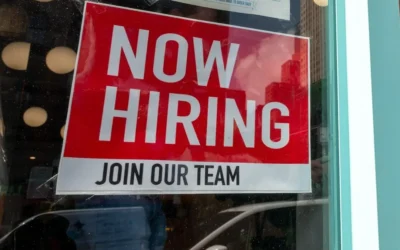
Fake Jobs Boom Exposed: Nearly 2 Million Vanish
OPINION Let’s be real. Numbers don’t lie—unless someone in Washington is manipulating them. That’s exactly what just happened with the Biden administration’s so-called “strong economy.” For months, they bragged about booming job growth. They paraded around charts, headlines, and talking points about how many millions of jobs were being created. And now? Almost a million of those jobs never existed. The Bureau of Labor Statistics (BLS) finally admitted it: from April 2024 to March 2025, the U.S. actually added 911,000 fewer jobs than we were told. That’s the biggest downward revision in history. Nearly a million jobs vanished with the stroke of a pen. Preliminary benchmark revision for March payroll employment is -911,000 (-0.6%) https://t.co/cooAntOaz6 #BLSdata — BLS-Labor Statistics (@BLS_gov) September 9, 2025 Spin First, Honesty Later Here’s the playbook. Announce good numbers early. Use them to score political points. Let the media pump out glowing headlines. Then, months later, when nobody’s paying attention, quietly slip out a revision that tells the truth. It’s dishonest, and it’s intentional. (MORE NEWS: LAPD Officers Pulled from Duties to Guard Kamala Harris) Jerome Powell at the Fed and Jared Bernstein at the White House used those inflated numbers to paint a rosy picture of Biden’s economy. They pointed to job growth as proof that things were humming along. Except it wasn’t real. It was smoke and mirrors. This wasn’t just a math error. It was a strategy: sell the sizzle now, hope nobody notices when they are heavily revised. Treasury Secretary Scott Bessent warned Kirsten Welker last week on Meet the Press and she pushed back: .@kwelkernbc pushed back last week when I warned that the BLS jobs data would show a massive downward revision. Now it’s official: 2024 job gains were exaggerated by nearly 1M workers, and this is on top of an already reported 577K in downward revisions. This brings the Biden… pic.twitter.com/Aaz0LirOxg — Treasury Secretary Scott Bessent (@SecScottBessent) September 9, 2025 Families Were Misled Think about what that means for everyday Americans. People decide whether to change jobs, buy a house, or start a business based on the state of the economy. Businesses plan hiring and investments based on job numbers. When Washington feeds them fake optimism, it’s not harmless—it leads people into bad decisions. The Biden administration didn’t level with the public. They wanted good headlines, so they chose spin over honesty. McEntarfer Shown the Door There’s a reason Erika McEntarfer, the BLS official is no longer on the job. Trump replaced her with economist E.J. Antoni, a guy who’s not afraid to call things like they are. Antoni has built his career on digging into numbers and telling the truth, even when it’s uncomfortable. That’s exactly the kind of leadership BLS needs. McEntarfer presided over years of inflated estimates followed by embarrassing revisions. At some point, it stops looking like bad luck and starts looking like a pattern. And a pattern like that demands accountability. (MORE NEWS: Insurance Drones: Hidden Home Inspections Spark Backlash) Honesty Should Trump Spin This is the heart of it: honesty should always trump the urge to cover up failings. If the jobs numbers are soft, say they’re soft. If early estimates are shaky, admit they’re shaky. Don’t pump sunshine into the headlines and then backpedal months later when the spotlight has moved on. America needs leaders who will tell the truth, even when the truth isn’t flattering. That’s how you build trust. That’s how you lead. A Pattern of Fake Wins And let’s not pretend this was a one-time slip. Last year, the numbers were quietly revised down by 818,000. Each time, Biden’s team bragged about how great things were going, only to have the rug pulled out later. It’s a pattern of fake wins followed by quiet corrections. When you add it all up, the Biden administration wasn’t just wrong—they were selling a story they knew wouldn’t hold up. .@PressSec: “This was one of the biggest revisions, in absolute terms, in decades… the job growth was VASTLY weaker during the Biden administration than ever previously reported.” pic.twitter.com/Qqehuo6bqs — Rapid Response 47 (@RapidResponse47) September 9, 2025 Trump’s Course Correction Trump didn’t just point out the problem; he acted on it. He brought in Antoni to restore credibility. The message is simple: the American people deserve real numbers, not fairy tales. If the job market is struggling, say it’s struggling. If revisions are coming, say revisions are coming. Antoni has already signaled that he’s going to stop the cycle of inflated estimates and shady revisions. That’s a good start. Transparency has to be the standard. The Bottom Line The Biden team used phony numbers to push a feel-good story. Powell and Bernstein played along. McEntarfer ran cover for a process that misled the country. And when the truth came out, it wasn’t shouted—it was whispered. Trump put a stop to it. He fired the official responsible and put in someone committed to honesty. That’s what accountability looks like. The lesson is simple: spin fades, but the truth always surfaces. Americans don’t need politicians telling them fairy tales about the economy. They need straight talk, real numbers, and leaders who won’t hide the ball. That’s how you rebuild trust and move forward. Forget the Headlines. Challenge the Script. Deliver the Truth. At The Modern Memo, we don’t tiptoe through talking points — we swing a machete through the media’s favorite lies. They protect power. We confront it. If you’re sick of censorship, narrative control, and being told what to think — stand with us. Share the story. Wake the people. Because truth dies in silence — and you weren’t made to stay quiet.