
NOAA
Hurricane Warnings Ramp Up For Summer With ‘Above Normal’ Forecast
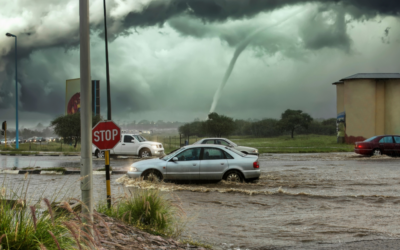
Atlantic hurricane season starts this month and pretty much no one is excited for it, especially since it may be an “above” average year. Hurricane season start on June 1 and runs through November 30 each year, according to Live Science. This turbulent time in our annual calendar could be 60% more active than normal, the National Oceanic and Atmospheric Administration said in late May. Anywhere from 13 to 19 named tropical storms are anticipated, with anywhere from six to 10 of them turning into hurricanes. Thankfully, NWS has predicted highly active hurricane seasons for as long as any of our editorial team can remember. It is smarter to over-warn and under-deliver when it comes to Mother Nature, especially with so many of our major cities and urban centers lying in flood zones. Is This A Fair Forecast? Even in the most recent forecast, LiveScience notes that “normal” years see roughly 14 named storms, seven of which become hurricanes, with three being classed as “major” hurricanes. Is it fair to say that a forecast ranging from under to slightly over the “average” is so significantly “above normal?” Technically, yes. Socially … no. This will probably (hopefully) be a hurricane season like any other … we pray. (MORE NEWS: Best Crops To Grow During A Nuclear Apocalypse, According To Scientists) “NOAA has a 70% confidence in its predictions of this year’s storm frequency. Last year, before the 2024 hurricane season, NOAA predicted that there would be 17 to 25 named storms, eight to 13 hurricanes, and four to seven major hurricanes — an even more severe forecast than this year’s outlook. However, the season actually resulted in 18 named storms, 11 hurricanes, and five major hurricanes,”the outlet wrote. What Prompted The Forecast? Warmer-than-average water temperatures in our oceans and potential for high activity throughout the West African Monsoon season. “This outlook is a call to action: be prepared. Take proactive steps now to make a plan and gather supplies to ensure you’re ready before a storm threatens,” NWS Director Ken Graham said in a statement. (RELATED: Guys, We May Have Found The Most Addictive New Outdoors Show On YouTube) Graham’s comments come a year after members of Congress wrote him to express serious concerns about reports of NWS network and equipment outages during extreme weather events. What Will The 2026 Storms Be Named? Andrea, Barry, Chantal, Dexter, Erin, Fernand, Gabrielle, Humberto, Imelda, Jerry, Karen, Lorenzo, Melissa, Nestor, Olga, Pablo, Rebekah, Sebastien, Tanya, Van, and Wendy. (RELATED: Soviet Spacecraft May Hit US Thanks To Uncontrolled Reentry) “NOAA and the National Weather Service are using the most advanced weather models and cutting-edge hurricane tracking systems to provide Americans with real-time storm forecasts and warnings,” Commerce Secretary Howard Lutnick said in a statement shared by NOAA. “With these models and forecasting tools, we have never been more prepared for hurricane season.” Hurricane helene, Boone NCpic.twitter.com/OYskw00jqW — Terrifying Nature (@TerrifyingNatur) October 2, 2024 Trucks hauled away debris piled up at a city park in Treasure Island, Florida, following Hurricane Milton. pic.twitter.com/Bs2tBvt0G0 — AccuWeather (@accuweather) October 28, 2024 HurricaneSandyAftermathHobokenFloodedStreet TMM Analysis Hurricane season is only a threat if you ignore the warnings. On the TMM Scale of Danger, we’d rank them a 0/10 if you get out of dodge; a 10 if you’re an idiot and stick around to ride out the carnage. Don’t believe us? Go back and watch the videos above. One of the other things we recommend most folks do is check out the NOAA Seven-Day Graphical Tropical Weather Outlook, which is a pretty accurate (and cool) tool for seeing storms as they develop over our oceans.
US ‘Unprepared’ For Major Solar Storm, Exercise Reveals
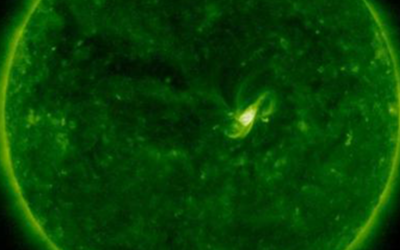
Details of a first-of-its-kind space weather emergency preparedness exercise conducted in May 2024 to test the U.S. response to a cataclysmic solar storm were released in spring 2025. Things didn’t go well. On April 28, 2025 (less than a month ago from the time of writing), a still-unknown incident caused the entirety of Europe’s Iberian Peninsula to crash into darkness. Any device not powered by batteries was rendered useless, transport systems were immobile, stranding countless people across the continent. It was described as the “blackout of the century” by Space.com, and may have been caused by a still-impending threat from our cosmos: solar storms. Somewhat bizarrely, almost a year to-the-day prior, the U.S. conducted its first ever space weather simulation exercise, the details of which were released in mid-April 2025. (MORE NEWS: Mainstream Media Finally Wakes Up To Massive Geological Threat To US) The exercise ran from May 8-9 and was designed to simulate and review our nation’s (specifically, our government’s) preparedness for a “severe space weather event,” such as a massive solar storm that interferes dangerously with Earth’s magnetic field. Interagency coordination, response protocols, and communications throughout industry and various critical infrastructure were all put through the test, which included: Intense radiation exposure to satellites, astronauts and commercial aviation Radio communications outages and disruptions Loss of functionality or degraded performance of GPS for precision navigation and timing Reduced ability to communicate with and track on-orbit satellites Local- to regional-scale power outages, affecting railways and even pipelines The hypothetical scenario was adapted from the Department of Homeland Security’s Exercise and Evaluation Program (HSEEP), included more than 25 federal, state, tribal, and local agencies, and ran participants through a “series of solar events with wide-ranging effects on Earth as well as the region between Earth and the moon.” What Happens During A Major Solar Storm? When the sun releases huge bursts of energy, particles, and other materials, we call it a “solar storm.” They range in scale from A (weakest) to X (strongest), according to NASA. The scale works similarly to the Richter scale, with each class adding a 10-fold increase in energy. Along with the aforementioned impacts to core modern technologies, such as GPS and other navigation systems, there are significant threats to aviation and satellites when they’re bombarded by these solar materials. And if there are threats to aviation and satellites, there are threats to those of us here on the ground. If you’ve a spare 15 minutes or so, we highly recommend watching this excellent episode of “The Why Files” to learn more about the potential impacts of minor and major solar storms. You can also listen to the podcast version by clicking here. How Significant Is The Threat of Solar Storms On the extremely biased “Modern Memo Scale of Danger,” solar storms are around an 8/10. Though not as physically destructive as an asteroid impact or nuclear apocalypse, there is a very real chance an extreme solar storm could cause the latter through disruptions to our nuclear facilities. The largest solar event known to science occurred around 12,350 B.C. (which oddly coordinates closely with the Younger Dryas, right at the end of our last major Ice Age), and was so massive its discovery “expands the timeline and intensity of known solar activity and sets a new upper boundary for such solar phenomena,” according to a 2025 study detailed by Astrobiology. These massive storms are called “Miyake events,” and increase the normal production of various isotopes such as radiocarbon (14C) in the atmosphere. The event and post-event impacts of solar storms on the scale of Miyake events are myriad, ranging from mass civil disruption, loss of life, infrastructural collapse, to all-out civilization reset. It all depends on how a storm impacts our energy grid. But again, we simply don’t know enough about them to know more than the major risks to our grid and modern lifestyles. “Understanding its scale is critical for evaluating the risks posed by future solar storms to modern infrastructure like satellites, power grids, and communication systems,” writes co-author Kseniia Golubenko. (MORE NEWS: Best Crops To Grow During A Nuclear Apocalypse, According To Scientists) “Grid failure is a real and imminent threat, a devastatingly deadly occurrence leading to life-threatening shortages of heat, food, and water. If protective measures are not taken, we will experience catastrophic failures leaving citizens in states of starvation, death, destruction, and darkness for months,” says the minds behind the documentary “Grid Down, Power Up.” Solar storms are uncontrollable, but we have more options to mitigate their impact than we would a major earthquake. Right now, we’re at our solar maximum. This is a time when our sun emits the most energy during its roughly 11-year solar cycle. If we’re going to be hit with a solar storm capable of disrupting all technologies across North America, it’ll be soon. What Did The Exercise Reveal? Here are the key findings, according to the National Environmental Satellite, Data, And Information Service (NESDIS): Demonstrated the need for better coordination to produce meaningful and understandable Space Weather notifications that are useful for operations and clearly describe the potential impacts on critical infrastructure. Emphasized the importance of a whole-of-government approach, especially federal-regional-state level coordination and awareness, while also highlighting existing gaps that need filling to ensure streamlined and rapid response. Provided opportunities to understand current technology limitations and discussed possibilities for improved forecasting capabilities, including suggestions to place spacecraft farther upstream to provide earlier warning of impending storms. Underscored the need for a national space weather education campaign to raise awareness of risks and improve public understanding. Demonstrated the need for a more coordinated and streamlined communications plan with the public through federal, state, and local agencies, and on social media, with particular emphasis on impact rather than technical science. Served as an exemplary event demonstrating the benefits of a whole-of-government exercise to prepare for scientifically complex threats. We absolutely agree that this was an exemplary event and exercise, but will we see any actual action…