
Robots
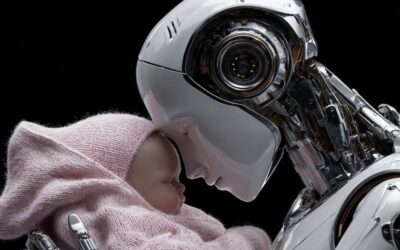
Pregnancy Robots: Miracle or Ethical Nightmare?
Humanoid robots may soon replace human surrogates in pregnancy for infertile couples. Reports from Chosun Biz suggest that China is developing a pregnancy robot with an artificial womb capable of carrying a baby to term. The idea has shocked many, but it reflects a growing effort to use technology to solve infertility. This innovation could replace the complex, expensive, and sometimes controversial process of human surrogacy. It also raises profound ethical, medical, and social concerns that the world is only beginning to discuss. (MORE NEWS: Court Nixes California AI Deepfake Law, Free Speech Wins) The Reality of Infertility Infertility is not rare. In the United States, about 19% of women ages 15 to 49 experience infertility if they have never given birth. 6% struggle to conceive even after having one or more children. 9% percent of men ages 15 to 44 also face infertility, according to CCRM Infertility. The causes are divided fairly evenly. One-third of cases are due to male factors, one-third to female factors, and one-third involve a combination. A 2019 NIH study revealed that African American women ages 33 to 44 are twice as likely to face infertility compared with Caucasian women. Couples often spend years and thousands of dollars on infertility treatments with no guarantee of success. Some pursue adoption. Others hold out hope for a biological child, even if it requires experimental or unconventional methods. That desperation fuels interest in surrogacy and even possibly technology like artificial wombs. According to Southwest Surrogacy, the CDC reports that the number of gestational carrier cycles rose from 3,202 in 2012 to 8,862 in 2021, with a high of 9,195 in 2019. The shortage of willing surrogates creates a gap that technology promises to fill. The question is whether a robot womb is an acceptable answer. The Birth of the Pregnancy Robot As reported in Chosun Biz, the pregnancy robot concept came from Dr. Zhang Qifeng, founder of Kaiwa Technology in Guangzhou, China. His company hopes to have a prototype ready by 2026. Qifeng says, “The artificial womb technology is already in a mature stage, and now it needs to be implanted in the robot’s abdomen so that a real person and the robot can interact to achieve pregnancy, allowing the fetus to grow inside.” (MORE NEWS: Catherine Zeta-Jones and the U.S. Homeownership Divide) The potential financial appeal is strong. Human surrogacy in many countries costs between $100,000 and $200,000. By comparison, Dr. Zhang claims that a pregnancy robot could carry a child for about 100,000 yuan, or $14,000. The enormous price difference alone is likely to attract attention from families who cannot afford traditional surrogacy. How a Robot Pregnancy Might Work Although details remain scarce, the idea is that the robot would replicate the biological environment of a womb. It would be filled with artificial amniotic fluid and connected to the baby through tubing that provides nutrients. The process would simulate every stage of pregnancy from conception to delivery. Experiments in animals suggest this may be technically possible. In 2017, researchers at the Children’s Hospital of Philadelphia successfully kept a premature lamb alive in an artificial womb. The lamb floated in a transparent vinyl bag filled with warm water, and a tube was connected to the umbilical cord. That system acted more like an incubator than a full womb, but it showed that external gestation could sustain life beyond a very early stage. Legal Barriers Across the Globe Surrogacy is already a highly regulated or even banned practice in many countries. Italy, Germany, France, and Spain ban all forms of surrogacy. They are unlikely to approve the use of robots for pregnancy. In the United States, laws vary. States like Nebraska and Louisiana have banned surrogacy altogether, while others allow it only under strict guidelines. Introducing robot surrogates would pose new legal challenges about parentage, liability, and regulation. Ethical Concerns Safety is the most immediate question. Who decides when artificial wombs are safe for human pregnancy? If a child is harmed due to technical failure, who bears responsibility—the parents, the doctors, or the company? Child development is another concern. A mother’s body contributes not only nutrition and protection but also hormonal and biological cues that influence brain growth, bonding, and immune system development. Removing the maternal connection could have consequences that do not appear until years later. There is also the risk of social stigma. Would children born from artificial wombs be viewed as engineered products rather than natural human beings? Commercialization adds another layer. If pregnancy becomes a product sold by corporations, children risk being treated as commodities. This shifts reproduction from a personal or family matter to an industry driven by profit. Gender roles would be disrupted as well. Technology that removes women from pregnancy undermines their unique place in human life. God made women to be in the role of mother and nurturer. Assigning a generic, emotionless robot to this role would move the needle in the wrong direction for women. The Slippery Slope Toward Designer Babies Artificial wombs would further the creation of designer babies, where parents select physical or intellectual traits before birth. What begins as a solution for infertility could evolve into a system of human engineering. Governments could misuse the technology. Artificial wombs could be used for population control, eugenics, or mass manufacturing of children selected for certain traits. The line between innovation and abuse is thin. (MORE NEWS: Sydney Sweeney ‘Good Jeans’ Outrage Explained) Final Thought Artificial womb robots may sound like a solution for infertile couples, but the risks far outweigh the promises. Children are not products, and motherhood cannot be outsourced to machines. This technology threatens the sanctity of life, the God-given role of women, and the very meaning of family. Without clear moral boundaries, artificial wombs would reduce babies to commodities in a marketplace driven by profit rather than love. Once we sever pregnancy from the mother, we risk erasing the bond that defines human nurture and dignity. True solutions to infertility should support families, protect children,…