

Russia
U.S. Imposes Major Sanctions on Russian Oil Giants to Cut War Funding
The Trump administration has taken one of its boldest foreign policy steps yet—issuing sweeping sanctions against Russia’s top two oil companies, Rosneft and Lukoil. The move aims to choke off the energy revenue that fuels Moscow’s war in Ukraine and to pressure Russian President Vladimir Putin into agreeing to a ceasefire. In announcing the decision, President Donald Trump emphasized the power and scale of the new measures. He expressed confidence that the measures will bite. The administration is leaning on economic strength—rather than direct military force—to confront foreign aggression and change behavior. “I think that they’ll certainly have an impact there. They’re massive sanctions and sanctions on oil. The two biggest oil companies, among the biggest in the world,” Trump said. .@POTUS: “These are tremendous sanctions. These are very big against their two big oil companies — and we hope that they won’t be on for long. We hope that the war will be settled.” https://t.co/6vbswraYmV pic.twitter.com/FONI7ECFAw — Rapid Response 47 (@RapidResponse47) October 22, 2025 A Clear Message: End the War, Stop the Killing Treasury Secretary Scott Bessent, in an interview with Fox Business, underscored the humanitarian and strategic purpose behind the move: “Now is the time to stop the killing and for an immediate ceasefire. Given President [Vladimir] Putin’s refusal to end this senseless war, the Treasury is sanctioning Russia’s two largest oil companies that fund the Kremlin’s war machine. The Treasury is prepared to take further action if necessary to support President Trump’s effort to end yet another war. We encourage our allies to join us in and adhere to these sanctions.” His remarks make the intent clear: apply economic pressure to push Russia toward peace talks and halt its aggression in Ukraine. Scott Bessent on a new round of Russian sanctions. pic.twitter.com/inNmFKbt9x — Praying Medic (@prayingmedic) October 22, 2025 Why the Sanctions Target Energy The sanctions focus on the lifeblood of the Russian economy: oil. Rosneft and Lukoil account for a large share of Russia’s crude output. That production funds the state budget and, by extension, the war effort. By freezing U.S. assets and barring Americans from doing business with these firms, the Treasury seeks to undercut Russia’s war chest. The measures also reach subsidiaries involved in exploration, refining, shipping, and trading to close common loopholes. (MORE NEWS: Government Shutdown Stalls Real Estate in 5 States) Global Reaction and Rising Oil Prices Global markets reacted quickly. Oil benchmarks moved higher as traders priced in potential supply disruptions. Energy equities rose in anticipation of stronger margins for non-Russian producers. However, higher energy prices can ripple through the economy. Transportation costs can climb. Inflation can pick up. European countries still adjusting away from Russian barrels may face supply-chain headaches and higher import bills. (MORE NEWS: Trump’s East Wing Demolition and Ballroom Plan Explained) Allies Urged to Join the Effort Bessent’s Fox Business interview included a direct appeal to partners to amplify the pressure. Coordinated action matters. When allies mirror sanctions and tighten rules on shipping, insurance, and financing, Russia has fewer paths to reroute oil. That unity also reduces the risk that third parties will undermine the policy by offering easy workarounds. Economic Pressure as a Path to Peace The strategy relies on financial tools to achieve diplomatic ends. Rather than deploying troops, the United States is betting that a sustained cutoff of oil income will strain the Kremlin’s calculus. Bessent made clear that the Treasury stands ready to escalate if Moscow refuses to change course. Future steps could include broader actions on tankers, service providers, and institutions that help move or insure sanctioned barrels. What This Means for Americans For U.S. households, the immediate concern is fuel costs. Prices at the pump may rise as markets digest tighter supply. Shipping and heating bills can also increase. Even so, officials argue that confronting aggression now can prevent larger conflicts and higher costs later. Meanwhile, U.S. energy producers may benefit from greater demand for reliable, non-Russian supply, supporting jobs and investment in oil and gas regions. Conclusion: A Defining Moment for U.S. Policy The sanctions on Rosneft and Lukoil mark a forceful use of economic power. By targeting Russia’s largest oil revenue sources, Washington seeks to constrict the funding of war and to drive momentum toward a ceasefire. As President Trump put it, these are massive sanctions aimed squarely at the energy sector. And as Secretary Bessent told Fox Business, now is the time to stop the killing and press for peace. The coming weeks will reveal whether coordinated economic pressure can help end a senseless conflict and restore stability. Expose the Spin. Shatter the Narrative. Speak the Truth. At The Modern Memo, we don’t cover politics to play referee — we swing a machete through the spin, the double-speak, and the partisan theater. While the media protects the powerful and buries the backlash, we dig it up and drag it into the light. If you’re tired of rigged narratives, selective outrage, and leaders who serve themselves, not you — then share this. Expose the corruption. Challenge the agenda. Because if we don’t fight for the truth, no one will. And that fight starts with you.
Trump Vows Tough Sanctions on Russia After Deadly Attack
President Trump responded firmly and vowed tough sanctions after Russia launched its most devastating assault on Ukraine since the start of the war. The strike involved 810 drones and multiple missiles aimed at Kyiv and surrounding areas. Ukrainian officials reported at least four people dead and more than forty injured. Among the targets was Ukraine’s central government headquarters, marking the first time Moscow directly hit that building. (RELATED NEWS: Trump and His ‘Art of the Deal’ for Ukraine Peace) Trump called the attack a deliberate escalation and promised to punish Russian President Vladimir Putin. He announced plans for a new wave of sanctions designed to cripple Russia’s ability to fund its war effort. The president emphasized that oil exports remain Russia’s economic lifeline, and those flows must be disrupted to reduce Moscow’s capacity to continue the assault. A “Phase Two” of Sanctions Trump described the upcoming measures as a “second phase” of economic pressure. While earlier rounds of sanctions restricted banking and trade, this next step will focus heavily on Russian energy. The president signaled that the United States will push for penalties not only on Russia itself but also on countries that continue to purchase Russian oil. Q: “Are you ready to move to the second phase of sanctions against Russia?” TRUMP: “Yeah, I am.” pic.twitter.com/ikRedacRms — Breaking911 (@Breaking911) September 7, 2025 Treasury Secretary Scott Bessent confirmed that Washington is exploring secondary tariffs on nations still engaging in oil trade with Moscow. These tariffs would place heavy costs on countries that attempt to skirt sanctions by buying Russian crude. The strategy is designed to make it more expensive for Russia’s largest buyers to continue their partnerships. India Already Targeted India quickly felt the impact of this new approach. The United States announced a fifty percent tariff on Indian imports, directly tied to New Delhi’s ongoing purchase of Russian oil. Ukrainian leaders praised the move, calling it a meaningful step toward weakening Russia’s funding pipeline. Critics, however, argue that tariffs will not achieve their full effect unless they target the largest consumers of Russian energy. China and India together account for most of Russia’s oil exports. Without stronger measures directed at both nations, sanctions risk losing their power. Energy analysts note that these penalties could disrupt global crude flows, raising costs for many countries. Europe and U. S. Push for United Strategy European leaders quickly rallied behind Washington’s strategy. Officials from the European Union met with U.S. representatives to coordinate the nineteenth package of sanctions since the war began. Talks focused on expanding restrictions on oil sales, tightening financial measures, and limiting access to key technologies. EU sanctions envoy David O’Sullivan stressed the importance of unity across the Atlantic. By working together, the United States and Europe aim to close loopholes and prevent Moscow from shifting its trade to willing partners. European Council President Antonio Costa added that the new sanctions would send a clear signal of resolve after the deadly strike on Kyiv. Ukraine Demands Swift Action Ukrainian President Volodymyr Zelensky condemned the Russian assault as a crime against civilians. He urged allies to respond with action, not just words. That is why statements by state leaders and institutions must be backed by strong actions – sanctions against Russia and individuals connected with Russia, tough tariffs and other restrictions on trade with Russia. Their losses must be felt. That is what is truly convincing. — Volodymyr Zelenskyy / Володимир Зеленський (@ZelenskyyUa) September 7, 2025 Prime Minister Yuliya Svyrydenko “condemned the assault as a blatant rejection of peace efforts.” Ukraine’s leaders framed the bombing as proof that Putin has no intention of de-escalating. Instead, they argued, Moscow is intensifying the war and must face the strongest possible response. The strike on the government headquarters underscored the danger of delay in international decision-making. Russia’s Defiance Despite growing pressure, the Kremlin dismissed the latest sanctions threats. Spokesperson Dmitry Peskov said: “No sanctions will be able to force the Russian Federation to change the consistent position that our president has repeatedly spoken about.” Still, analysts note that energy revenue is critical to Russia’s survival. If oil sales fall sharply, the Kremlin will face mounting difficulty in financing both the war effort and its domestic programs. Even if sanctions do not alter Putin’s political stance, they could weaken its ability to sustain military operations at the current scale. Economic and Global Impact The threat of secondary sanctions could reshape energy markets worldwide. Restricting Russia’s oil buyers would redirect global trade flows and potentially create shortages in some regions. Traders warn that costs may rise as markets adjust, though supporters argue that the sacrifice is necessary to limit Russia’s war chest. For Western nations, the sanctions also carry risks. Higher energy prices could strain households and industries already coping with inflation. Leaders in Washington and Brussels stress that the long-term goal outweighs the short-term discomfort. By targeting Russia’s oil trade now, they believe they can shorten the war and reduce future instability. What Comes Next The coming weeks will test Western resolve. Trump has committed to a second wave of sanctions designed to cut deeper into Russia’s economy than ever before. Europe is preparing to match those measures with its own package. Together, these actions could finally limit the resources Russia depends on to sustain its invasion. The global energy market may feel the strain, but the underlying message is clear: Western powers are no longer content with symbolic measures. They are moving toward sanctions that directly threaten Russia’s ability to wage war. Whether these efforts succeed will depend on coordination, persistence, and the willingness of nations like China and India to resist or adapt. Bottom Line Trump’s vow to punish Putin after the deadly attack on Ukraine signals a decisive shift in strategy. The focus on oil revenues and secondary sanctions marks an escalation in economic warfare aimed at crippling Moscow’s war machine. Trump has given Putin every opportunity to come to the table with a serious plan and to stop the strikes long…
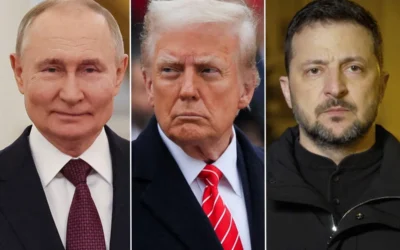
Trump and His ‘Art of the Deal’ for Ukraine Peace
President Trump met with Russian leader Vladimir Putin in Alaska on Friday to see if a deal could be reached to end the war in Ukraine. After the meeting, Trump told European allies that Putin proposed Russia take full control of the Donbas region. This move, Putin argued, would stop the fighting and bring peace. A European diplomat told Fox News that “President Trump supports the terms of this proposal.” Secretary of State Marco Rubio, however, pushed back on that claim on “Sunday Morning Futures,” saying, “The president has said that, in terms of territories, these are things that Zelenskyy is going to have to decide on. These are things that the Ukrainian side is going to have to agree to.” Another masterclass from Secretary Marco Rubio. A must watch! pic.twitter.com/7NY6EHZHyh — Brigitte Gabriel (@ACTBrigitte) August 17, 2025 Donbas at the Heart of the Deal The Donbas region, home to 6.5 million people, includes Luhansk and Donetsk, according to the Ukrainian Research Institute of Harvard University. Ukraine still holds about 30% of Donetsk. President Volodymyr Zelenskyy has vowed not to surrender that land. He insists giving up Donbas would be unconstitutional and warns it could enable future Russian offensives. NOW – Zelensky says Ukraine’s constitution makes giving up land “impossible,” and should only be discussed at a trilateral meeting; if Russia “refuses,” more sanctions “must” be imposed. pic.twitter.com/7wicKa5erW — Disclose.tv (@disclosetv) August 17, 2025 Despite this, Trump urged Zelenskyy to accept Putin’s offer. Zelenskyy will meet Trump at the White House on Monday to discuss the peace proposal. Trump Shifts Toward Peace Agreement Trump initially supported a ceasefire. But after his talks with Putin, he shifted toward a full peace deal. Russia, Trump said, wants a long-term settlement, not just a temporary fix. On Truth Social, Trump said on Saturday: “It was determined by all that the best way to end the horrific war between Russia and Ukraine is to go directly to a Peace Agreement, which would end the war, and not a mere Ceasefire Agreement, which often times do not hold up.” On Sunday, he said, “BIG PROGRESS ON RUSSIA. STAY TUNED! President DJT.” Mixed Reaction From Europe European leaders reacted cautiously. While they did not endorse Putin’s plan, they praised Trump’s leadership in seeking peace. (RELATED : The Trade Deal That Changed Everything: U.S.–EU Breakthrough) German Chancellor Friedrich Merz told ZDF television, “And the good news is that America is ready to participate in such security guarantees and is not leaving it to the Europeans alone.” About the possibility of a peace agreement, he said, “If that works out, it’s worth more than a ceasefire.” The European Commission issued a statement on Trump’s efforts, saying they: “welcomed President Trump’s efforts to stop the killing in Ukraine, end Russia’s war of aggression, and achieve just and lasting peace.” But skepticism remained. Czech Foreign Minister Jan Lipavský posted: “From Putin, we heard the same propagandistic nonsense about the ‘roots of the conflict’ that his state television promotes. The problem is Russian imperialism, not Ukraine’s desire to live freely.” (RELATED: Alaska Hosts Historic Summit Between Trump and Putin) EU foreign policy chief Kaja Kallas posted on X: “President Trump’s resolve to get a peace deal is vital. The EU and our European partners worked to coordinate with President Trump ahead of Alaska meeting. But the harsh reality is that Russia has no intention of ending this war anytime soon.” Hungarian Prime Minister and friend of Trump, Viktor Orban expressed optimism, writing: “For years we have watched the two biggest nuclear powers dismantle the framework of their cooperation and shoot unfriendly messages back and forth. That has now come to an end. Today the world is a safer place than it was yesterday. May every weekend be at least this good!” Putin and Zelenskyy Respond Putin said his talk with Trump was “very frank.” He added: “We, of course, respect the position of the American administration, which sees the need for a speedy end to military actions. We would like to move to resolving all issues by peaceful means.” Several European leaders will join Zelenskyy in Washington by invitation of President Trump to continue negotiations for a peace deal and to keep them part of the process, as they are close to the region. On Sunday, Zelenskyy met in Brussels with European Commission President Ursula von der Leyen, who will travel with him. Zelenskyy posted on X: “We agreed on the necessity of a ceasefire for subsequent diplomatic steps, effective security guarantees for Ukraine, and continued sanctions pressure on Russia.” I had an important meeting with President of the European Commission @vonderleyen in Brussels. Significant support for Ukraine in the context of the upcoming meeting with President Trump. Today, together and in several formats, we are determining what we will discuss in… pic.twitter.com/I8doSrACqR — Volodymyr Zelenskyy / Володимир Зеленський (@ZelenskyyUa) August 17, 2025 Tomorrow will be the day to watch. Will Trump be able to make progress with Zelenskyy? Up to this point, he has been unwilling to make concessions. It remains to be seen if both sides can agree on a lasting deal. If anyone can make it happen, it is the Dealmaker-in-Chief. For him, negotiation is an art form he has long mastered. Forget the Headlines. Challenge the Script. Deliver the Truth. At The Modern Memo, we don’t tiptoe through talking points — we swing a machete through the media’s favorite lies. They protect power. We confront it. If you’re sick of censorship, narrative control, and being told what to think — stand with us. Share the story. Wake the people. Because truth dies in silence — and you weren’t made to stay quiet.

Alaska Hosts Historic Summit Between Trump and Putin
Alaska Hosts Historic Summit Between Presidents Trump and Putin Next Friday, Alaska will serve as the backdrop for a historic summit between Presidents Donald Trump and Vladimir Putin. The meeting, focused on the future of the ongoing war in Ukraine, comes at a time of heightened geopolitical tensions. (MORE NEWS: Trump’s EPA Pushes Green New Deal Into Political Obscurity) Alaska’s Strategic Role Alaska Governor Mike Dunleavy expressed his support for the summit, emphasizing the state’s unique strategic position: “Alaska is the most strategic location in the world, sitting at the crossroads of North America and Asia, with the Arctic to our north and the Pacific to our south.” With just two miles separating Russia from Alaska, Governor Dunleavy highlighted the region’s crucial role in U.S. national defense, energy security, and Arctic leadership. I welcome the upcoming meeting between President Donald J. Trump and Russia’s President Putin being held here in the great state of Alaska. Alaska is the most strategic location in the world, sitting at the crossroads of North America and Asia, with the Arctic to our north and… — Governor Mike Dunleavy (@GovDunleavy) August 8, 2025 U.S. Legislative Reaction The announcement of the summit took many by surprise, particularly members of the three-member congressional delegation. Rep. Nick Begich III, who Trump endorsed during last year’s U.S. House elections, expressed cautious optimism. He stated: “The pursuit of peace requires open dialogue. And it’s encouraging that the dialogue will be occurring at the highest levels here in Alaska, where Russia and America share a historic relationship and geographic proximity.” The pursuit of peace requires open dialogue. And it’s encouraging that the dialogue will be occurring at the highest levels here in Alaska, where Russia and America share a historic relationship and geographic proximity. My prayer is that the conversations are productive and… pic.twitter.com/0HiaHngpnb — Congressman Nick Begich (@RepNickBegich) August 8, 2025 Putin’s Visit: No Risk of Arrest The United States remains a safe venue for President Putin, as the U.S. does not recognize the jurisdiction of the International Criminal Court, which has issued a warrant for Putin’s arrest for war crimes. This is the first time the two leaders have met since their 2019 summit in Osaka, Japan. It remains unclear whether Ukrainian President Volodymyr Zelensky will attend the summit. Historical Context: Alaska’s Russian Roots Alaska’s history adds another layer of significance to this meeting. Once part of the Russian Empire, Alaska was sold to the U.S. for $7.2 million in 1867 under President Andrew Johnson. The decision was largely motivated by Russia’s struggle to defend the region and fears of a potential British takeover, as Canada was under British rule at the time. Since the sale, no Russian leader has visited Alaska, although international meetings have taken place there twice before: President Richard Nixon met with Japanese Emperor Hirohito in Anchorage in 1971, and President Ronald Reagan met with Pope John Paul II in Fairbanks in 1984. Trump’s Controversial Proposal The summit’s timing is noteworthy, coming just hours after President Trump suggested that Ukraine might need to cede some territory to end the war. At a press conference, Trump remarked: “You’re looking at territory that’s been fought over for three and a half years, a lot of Russians have died. A lot of Ukrainians have died. It’s very complicated. We’re going to get some back, we’re going to get some switched. There will be some swapping of territories, to the betterment of both.” JUST IN: President Trump says Russia and Ukraine are looking at “some swapping of territories to the betterment of both” as part of peace negotiations pic.twitter.com/dbbSYVV2K2 — Fox News (@FoxNews) August 8, 2025 Diplomatic Backchannels and Offers According to CBS News, the White House is attempting to garner European support for a plan that would involve Russia taking control of the entire Donbas region, while Ukraine would cede the partially occupied Kherson and Zaporizhzhia regions. The Wall Street Journal reports that Putin presented a similar proposal during a meeting with Trump’s Envoy, Steve Witkoff, in Moscow. The plan would end the war if Russia could claim the eastern Donetsk region, including the annexed Crimean Peninsula. On Saturday night, several European leaders issued a joint statement on Trump’s meeting with Putin: “We welcome President Trump’s work to stop the killing in Ukraine, end the Russian Federation’s war of aggression, and achieve just and lasting peace and security for Ukraine… Ukraine has the freedom of choice over its own destiny. Meaningful negotiations can only take place in the context of a ceasefire or reduction of hostilities. The path to peace in Ukraine cannot be decided without Ukraine. We remain committed to the principle that international borders must not be changed by force.” (RELATED: The Trade Deal That Changed Everything: U.S.–EU Breakthrough) Zelensky’s Stance Ukrainian President Zelensky has steadfastly rejected any territorial concessions. In a statement on Telegram, Zelensky reaffirmed his commitment to Ukraine’s territorial integrity: “We will not reward Russia for what it perpetrated. The answer to the Ukrainian territorial issue is already in the Constitution of Ukraine.” He further stated: “Any solutions that are against us, any solutions that are without Ukraine, are at the same time solutions against peace.” He emphasized that Ukraine is ready for “real solutions” that can bring lasting peace, working alongside President Trump and other partners to achieve this goal. The Toll of War and the Need for Peace The ongoing Russia-Ukraine war has taken a devastating toll, with over a million lives lost and billions of U.S. taxpayer dollars spent. Despite the immense cost, little progress has been made toward ending the conflict. Both Presidents Putin and Zelensky continue to hold steadfast to their demands for peace, but neither side has achieved the necessary conditions for a resolution. Trump’s Track Record as a Peace Broker President Trump has a proven history of negotiating peace deals in seemingly impossible situations. Some of his notable successes include: Azerbaijan and Armenia Cambodia and Thailand Israel and Iran Rwanda and the Democratic Republic of the…
Soviet Spacecraft May Hit US Thanks To Uncontrolled Reentry
AccuWeather reported Friday that a defunct Soviet spacecraft may crash into Earth, possibly somewhere in the contiguous U.S., between May 9 and May 11. The spacecraft named Kosmos 482 launched in 1972 on a voyage to Venus, but an issue trapped it in orbit around Earth, where it sat in a state of limbo, according to AccuWeather. “Because the probe was designed to withstand entry into the Venus atmosphere, it is possible the probe (or parts of it) will survive reentry at Earth and reach the surface,” NASA said in a statement. The “uncontrolled” reentry could see the spacecraft hit anywhere in “Africa, South America, the contiguous United States, Australia and New Zealand, most of Europe and most of Asia,” AccuWeather noted. Even though this sounds like most of the inhabited world, a majority of this area is ocean. Should the craft land in our oceans, it likely wouldn’t pose any threat to human life. Before you ask, yes: the craft was fitted with a parachute for reentry, but given the existing issues and age of the materials, scientists think it’s unlikely to successfully deploy. (TAKE A POLL: Do You Believe in UFOs?) How Big Is The Risk Of Impact? The chances of Kosmos 482 hitting your home are astronomically low, but never zero. Earth is smashed about by bits of space debris — manmade and cosmic — on a daily basis. For the most part, we don’t notice when a meteorite hits the ground by our feet. All physical objects have to go through a heck of a lot of friction to reach Earth, and end up miniscule in size by the time they reach us. Then there are the space rocks that cause cataclysmic — near-extinction-sized events. When most people think of asteroids destroying the planet, their minds go back to the dinosaurs and the Chicxulub crater that turned these ferocious monsters into chickens. The Lost City of Atlantis is not a Disney Movie. The legend originates from the ancient Egyptians! 📍They said it was destroyed 11,600yrs (before present day) 📍The ‘Younger Dryas Climate Catastrophe’ was exactly 11,600yrs ago Not a coincidence. It’s evidence Atlantis existed. pic.twitter.com/SgqjXdOvLP — Jimmy Corsetti (@BrightInsight6) May 18, 2024 Just 12,800(ish)-years-ago, an asteroid may have temporarily restarted our ice age — an event known as the Younger Dryas cooling event. Geological evidence from this time period suggests mass amounts of cold, fresh water rushed into the North Atlantic, cutting off the flow of warm water north via the Gulf Stream and reshaping global coastlines entirely. (RELATED: Guys, We May Have Found The Most Addictive New Outdoors Show On YouTube) Experts and independent investigators suggest this sudden shift in climate was caused by an asteroid either hitting or bursting the ice coating our northern hemisphere. Take Action On Asteroids There are many other theories about, and surrounding, the Younger Dryas, and we’re going to talk about them as often as we can on The Modern Memo. Mounting evidence suggests we are not the first technologically advanced civilization to live on Earth. At the very least, Big Archaeology and mainstream institutions are hiding our history; either through lack of research or purposeful obfuscation. We hate that. A lot. Ignorance of our past leaves us blind to threats from the future. Right now, we don’t know exactly what you can do to help solve this issue — but a great place to begin is with educating yourself on the topic. We’ve included links to videos and our favorite experts in this article. Check back soon for more updates. Thanks for hanging out – TMM