

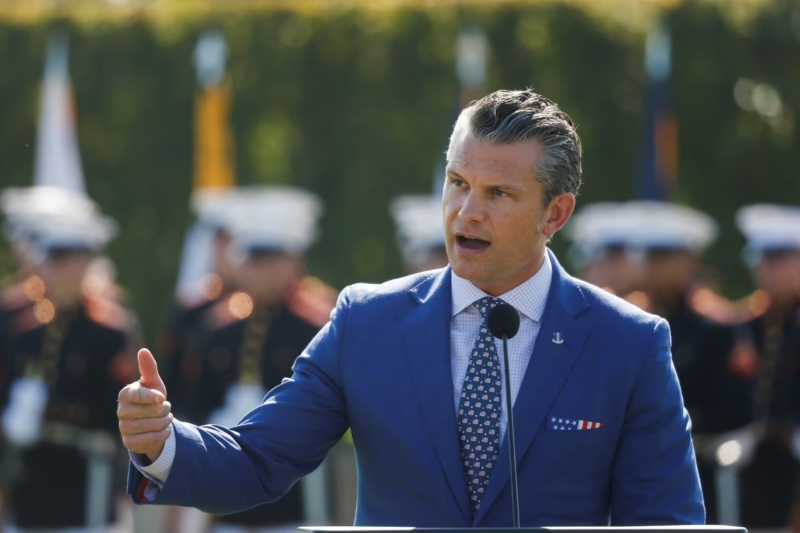
The Pentagon made history by hosting the first-ever Gold Star Advisory Council (GSAC) meeting. This new body gives families of fallen service members a direct line to top Department of War leadership. The goal is simple yet powerful: ensure Gold Star families are heard, respected, and included in shaping policy.
Why the Council Was Created
The Gold Star Advisory Council was established in May to institutionalize a permanent channel between military families and senior leaders. Unlike past initiatives, which were often short-lived, the GSAC is designed to last and meet regularly. Members will gather at least twice a year to propose reforms, identify problems, and track solutions.
By creating this council, the Department of War is signaling that remembering fallen service members also means caring for those they left behind.
Secretary Hegseth’s Call for Change
In a statement to Fox News Digital, Secretary of War Pete Hegseth underscored the significance of the event:
“Today marks the first time a Gold Star Advisory Council convened at the Secretary of War level. This council is long overdue for Gold Star families to elevate their voices directly to Department leadership, tackle real concerns, and transform the casualty process for good. It has my full backing to call out the failures, shake up the bureaucratic status quo, and drive the changes that will stick.” (MORE NEWS: Trump’s Leaked Gaza Peace Plan: A Bold 21-Point Vision for Lasting Stability)
His words highlight both urgency and accountability. For families who often felt sidelined, the council represents a major step toward reform.
Leadership and Representation
The GSAC is co-led by Under Secretary of War for Personnel and Readiness Anthony Tata and Gold Star spouse Jane Horton. Together, they bring institutional authority and personal experience to the table.
Tata expressed optimism about the council’s mission:
“The Gold Star Advisory Council will enable the Department to continue remembering our fallen Service members and delivering on our promise to take care of the families they left behind,” he told Fox News Digital.
He also praised Horton’s impact. Tata recognized her “extraordinary efforts” to uplift Gold Star families by “telling their stories, and keeping the memories of our fallen heroes alive.” He added appreciation for her “advocacy, representation, and leadership.”
This leadership structure ensures that both high-ranking officials and those with lived experience guide the council’s direction.
Goals of the Gold Star Advisory Council
The council has three main priorities:
- Elevating Family Voices
The GSAC ensures Gold Star families move from the sidelines into meaningful conversations with Pentagon leaders. - Driving Lasting Reform
By focusing on systemic issues, the council aims to improve casualty assistance processes and create reforms that endure. - Ensuring Accountability
The council will act as a watchdog, pressing leadership to uphold promises and improve transparency.
These goals demonstrate that the GSAC is not a symbolic gesture but a serious commitment to long-term change.
The Significance for Families
Gold Star families often face immense grief while also navigating complex military systems. The GSAC offers them something new: influence. For the first time, their experiences can directly inform policies on casualty assistance, survivor benefits, and memorial practices. (MORE NEWS: Miami Mayor’s Warning: NYC’s Mamdani Echoes Castro)
This shift recognizes that no one understands the challenges better than those who lived them. By institutionalizing family voices, the Pentagon signals that remembrance and reform go hand in hand.
Looking Ahead
The council is expected to meet twice a year and issue recommendations to Pentagon leadership. Its effectiveness will be measured by whether proposed reforms are enacted and sustained.
If successful, the GSAC could become a model for how the military connects with families. Instead of top-down decision-making, it would create a loop of listening, learning, and acting.
Final Word
The first meeting of the Gold Star Advisory Council is more than symbolic. It represents a promise to honor sacrifice through action. As Secretary Hegseth told Fox News Digital, the council has his “full backing” to challenge bureaucracy and deliver real results.
With leaders like Anthony Tata and Jane Horton guiding the effort, the council has the potential to transform how the military engages with families of the fallen. By listening, reforming, and holding itself accountable, the Department of War takes an important step toward ensuring no sacrifice is ever forgotten.
Unmask the Narrative. Rip Through the Lies. Spread the Truth.
At The Modern Memo, we don’t polish propaganda — we tear it to shreds.
The corporate press censors, spins, and sugarcoats. We don’t.
If you’re tired of being misled, silenced, and spoon-fed fiction, help us expose what they try to hide.
Truth matters — but only if it’s heard.
So share this. Shake the silence. And remind the powerful they don’t own the story.
