

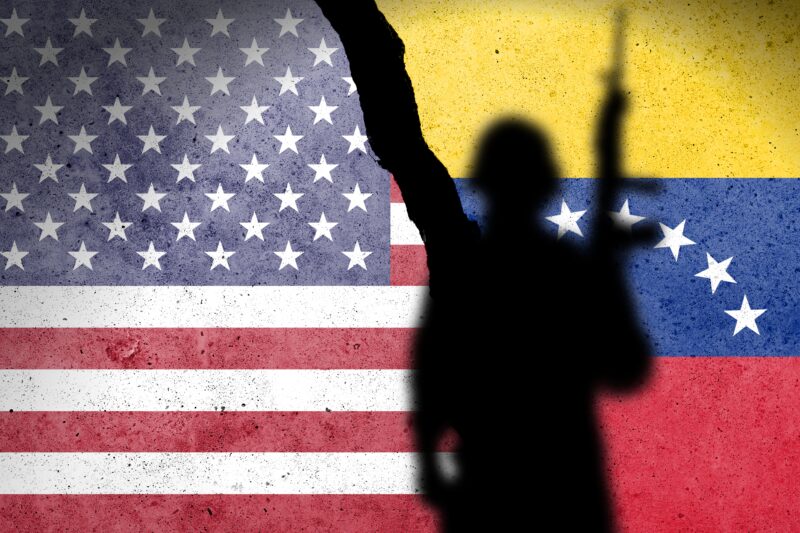
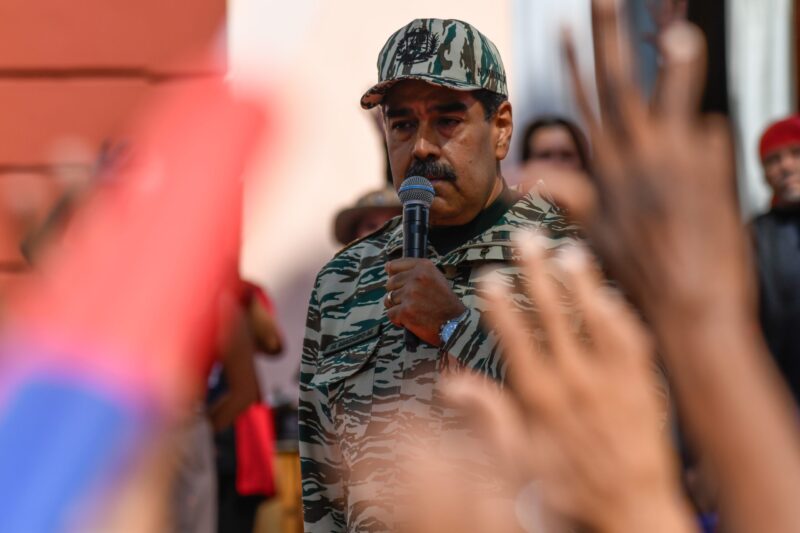
Venezuela has mobilized troops and weapons in response to a U.S. warship buildup in the Caribbean Sea. The move follows the deployment of the U.S. Navy’s aircraft carrier USS Gerald R. Ford to the region. President Nicolás Maduro claims the U.S. is threatening Venezuelan sovereignty and trying to destabilize his government.
Officials in Caracas say the mobilization is a defensive act meant to protect national borders. They argue that Washington’s increased naval activity represents an act of intimidation. For months, U.S. and Venezuelan leaders have exchanged accusations, and the tension now appears to be reaching a new level.
Venezuela’s Military Strategy
The Venezuelan military is activating small, mobile units at more than 280 locations across the country. These troops are trained for long-term, guerrilla-style resistance rather than traditional warfare. Commanders are emphasizing quick movement, local familiarity, and the ability to fight in dispersed cells.
According to Fox News, a source reportedly admitted, “We wouldn’t last two hours in a conventional war.” That blunt statement highlights the government’s acknowledgment that its forces cannot match U.S. firepower. Instead, the plan is to make any potential invasion costly and prolonged. Venezuelan officials call this the “resistance doctrine.”
The U.S. Strategic Mission
From Washington’s perspective, the increased military presence in the Caribbean is part of a broader mission to counter transnational crime and strengthen regional security. U.S. Southern Command has said its forces are focused on drug-trafficking routes and other illegal activities that threaten hemispheric stability.
The arrival of the aircraft carrier group sends a clear message of deterrence. American officials insist the operation is not directed at any one nation but rather at criminal networks. However, the timing and location of the buildup near Venezuelan waters have fueled suspicions about U.S. intentions.
Related News
U.S. Strike on Venezuelan Drug Cartel Boat Signals New Era
U.S. Confronts Venezuela Narco-State
Miami Mayor’s Warning: NYC’s Mamdani Echoes Castro
Economic Pressures and Domestic Strain
Inside Venezuela, the mobilization exposes deep economic cracks. Reports indicate that some units have had to negotiate directly with local farmers for food because of supply shortages. Government logistics are stretched thin, and inflation continues to erode purchasing power.
The strain is visible across the country. Fuel shortages, food insecurity, and crumbling infrastructure have created additional stress on the population. Critics argue that the government’s military focus diverts scarce resources from urgent social needs. Supporters counter that defending the homeland must come first.
Regional and Global Reactions
The international community is watching closely. Russia’s foreign ministry has expressed support for Venezuela and promised to respond to any requests for assistance. At the same time, Moscow has urged both sides to avoid escalation. Neighboring countries such as Colombia and Brazil have reinforced border patrols, wary of potential unrest spilling across frontiers.
Diplomatic channels remain open, but mistrust runs deep. Many Latin American nations prefer neutrality, fearing involvement in a confrontation between two powerful adversaries. Still, the buildup underscores how quickly local disputes can become part of a larger global contest.
Risk of Escalation
Analysts warn that miscalculation could lead to a dangerous spiral. The presence of advanced U.S. naval assets so close to Venezuelan territory increases the chance of accidental encounters. A single incident—an overflight, a radar lock, or an intercepted signal—could ignite conflict.
Maduro’s government insists that the mobilization is purely defensive. Yet the rhetoric has hardened on both sides. Washington has criticized Venezuela’s ties with authoritarian allies, while Caracas claims that the U.S. seeks regime change under the banner of democracy.
Implications for the Region
For the broader Caribbean and Latin America, the standoff carries serious implications. Increased militarization could trigger an arms buildup among neighboring nations. Regional trade routes and energy exports could also be disrupted if tensions escalate further.
Humanitarian concerns loom large. Venezuela already faces mass migration, and renewed conflict could force more citizens to flee. Aid organizations warn that another refugee wave would strain nearby economies and social systems. The situation remains fluid, with few signs of compromise.
What Comes Next
Looking ahead, both governments face pivotal choices. The U.S. may maintain its military posture to demonstrate strength, while Venezuela will likely continue mobilizing in the name of sovereignty. President Trump has hinted that “the land will be next,” raising fears of deeper engagement.
Whether diplomacy can defuse the crisis remains to be seen. Negotiations through regional partners could offer a path toward de-escalation. For now, the Caribbean stands at the center of a modern power struggle—one that blends politics, economics, and national pride in equal measure.
The next few weeks will be crucial. Every move, every statement, and every ship positioning will signal intent. In this high-stakes environment, one misstep could shift the balance of peace in the Western Hemisphere.
Cut Through the Noise. Slice Through the Lies. Share the Truth.
At The Modern Memo, we don’t tiptoe around the narrative—we swing a machete through it. The mainstream won’t say it, so we will.
If you’re tired of spin, censorship, and sugar-coated headlines, help us rip the cover off stories that matter. Share this article. Wake people up. Give a voice to the truth the powerful want buried.
This fight isn’t just ours—it’s yours. Join us in exposing what they won’t tell you. America needs bold truth-tellers, and that means you.
Subscribe to The Modern Memo here!
Explore More News

AI Job Cuts Surge: How Automation Is Reshaping the U.S. Workforce in 2025
ACA Premiums Are Rising — But Not Because of Expiring Subsidies

Daylight Saving Time Debate Heats Up Across States

Retirement 2025: America’s Safest and Wealthiest Towns to Call Home
