



ICE Cooperation Gets CO Deputy Sued By AG
Mesa County, Colorado, is at the center of a heated battle over immigration enforcement, law enforcement accountability, and controversial state sanctuary laws. The issue erupted after federal immigration agents detained a Utah college student who was in the U.S. illegally following a traffic stop. Instead of focusing on the individual violating federal law, Colorado’s Attorney General chose to sue a sheriff’s deputy for cooperating with ICE. This has sparked outrage across the state. The Traffic Stop That Sparked Outrage On June 5, 2025, Deputy Alexander Zwinck pulled over 19-year-old Caroline Dias-Goncalves near Fruita, Colorado. She was allegedly tailgating a semi-truck. Zwinck issued a warning and let her go. Roughly 20 minutes later, Immigration and Customs Enforcement agents stopped her vehicle and arrested her for overstaying her visa. Clearly, Colorado leadership should be holding non-citizens accountable for breaking U.S. law—not punishing officers for helping enforce it. This case raises a serious question that deserves repeating. How can someone trusted to handle patient medications as a future nurse fail to manage something as basic as a legal visa? Instead of holding her accountable, state leaders cast her as the victim, and punish those who did their jobs. How Information Was Shared with ICE Deputy Zwinck worked on a multi-agency drug task force. It included local, state, and federal officers such as Homeland Security and ICE agents. After the traffic stop, Zwinck shared Dias-Goncalves’ location and vehicle description in a Signal chat group used by the task force. As a result, ICE acted on that information and made the arrest. Nevertheless, Colorado’s new sanctuary law, Senate Bill 25-276, banned this kind of cooperation. It was signed by Colorado Governor Jared Polis only 13 days before the traffic stop. Many officers, including Deputy Zwinck, say they were unaware or confused about the sudden change imposed by the state. Long-standing practices conflicted with the new rules, leaving deputies exposed to legal action. Attorney General Sues Deputy for Doing His Job Colorado Attorney General Phil Weiser filed a lawsuit against Deputy Zwinck for sharing information with Immigration Customs Enforcement. This move shocked many in law enforcement. They believe the unfair lawsuit is politically motivated. (RELATED: EXCLUSIVE: Cash Flowing Into Anti-ICE Group’s Coffers Came From Chinese Gov’t-Linked Sources) To address the fallout, Sheriff Todd Rowell said in a statement, the lawsuit “sends a demoralizing message to law enforcement officers across Colorado—that the law may be wielded selectively and publicly for maximum political effect rather than applied fairly and consistently.” He asked the Attorney General to “apply the law equally to all law enforcement and government officials instead of making Deputy Zwinck an example.” Rowell revealed that other agencies in the same task force had also shared information with ICE. None of them faced lawsuits. Even the state’s governor reportedly violated a previous sanctuary law four times without consequences. Without a doubt, the actions by this attorney general show clear political bias in how immigration laws are enforced by the state. Deputies Disciplined Amid ICE – Sanctuary Law Confusion Rowell said an internal review resulted in the department disciplining all deputies involved: “Zwinck received three weeks of unpaid leave and was reassigned to patrol. Olson received two weeks of unpaid leave and the department also reassigned him. Joe LeMoine received two days suspension. Two other commanding officers received written reprimands or counseling.” Sheriff Rowell accepted responsibility for his office’s role. He admitted deputies needed more training to clarify state law changes. Sanctuary Laws Shield Lawbreakers and Negatively Impact Law Enforcement This case highlights a larger problem. Colorado’s sanctuary laws protect those breaking immigration laws while punishing those who enforce them. The laws safeguard immigrant communities, compromise public safety, and demoralize law enforcement. The facts are clear: Dias-Goncalves overstayed her visa, a federal violation. ICE agents enforced federal law. A deputy helped by sharing information. The state punished the deputy instead of the violator. The State of Colorado openly ignores federal immigration law while punishing those who assist in enforcing it. Ultimately, officers who cooperate with federal agents do so at their own peril, facing lawsuits, career damage, and public backlash. This is unfair and undermines law and order. Conflicting state and federal directives create chaos for law enforcement. Federal law is clear: overstaying a visa is illegal, and Immigration and Customs Enforcement is tasked with handling such violations. Yet Colorado’s sanctuary policies block local officers from even sharing information with federal authorities. State policies force deputies to choose between upholding federal law or protecting themselves from political retaliation by the state. This climate of fear has shaken deputies across Colorado. Many now hesitate to work with federal agents. Multi-agency task forces risk falling apart if officers fear legal action for sharing basic information. These task forces are critical for combating drug trafficking and other serious crimes. Sheriff Rowell has urged Homeland Security Investigations (HSI) to release the full Signal chat from the task force. Access to this information would show that Zwinck’s actions were not unique and that multiple officers followed long-standing protocols. Yet, state officials only singled one deputy out for legal action. In the end, this legal tug-of-war leaves law enforcement trapped. As long as political agendas override federal law, cooperation between agencies will erode and public safety will continue to suffer. What Comes Next: ICE, Accountability, and Colorado’s Crossroads
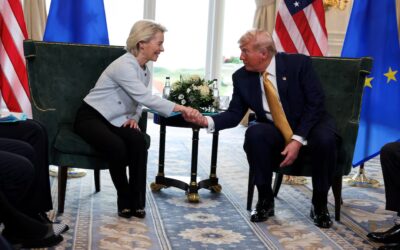
The Trade Deal That Changed Everything: U.S.–EU Breakthrough
In a bold move that will reshape the future of global trade, President Donald J. Trump announced a historic trade agreement with the European Union (EU). The deal redefines the economic relationship between the world’s two largest economies. The deal, hailed as a “generational modernization of the transatlantic alliance,” according to the White House, delivers unprecedented market access for American producers, workers, and innovators, while advancing U.S. economic and national security interests. A Monumental Economic Shift The agreement marks a pivotal victory for the United States. It positions the country as the world’s foremost destination for investment, manufacturing, and energy exports. Through 2028, the EU is expected to purchase a staggering $750 billion in U.S. energy exports. It will also invest an additional $600 billion into the American economy. These moves will drive growth in key industries and fortify the domestic manufacturing base. Furthermore, President Trump’s leadership continues to prioritize the American worker and bring jobs back home. This trade deal reflects his unshakable commitment to economic fairness, reciprocal trade, and revitalizing American industry. Structural Trade Reform for Generations The agreement goes far beyond symbolic diplomacy—in fact, it achieves real, enforceable structural reform with long-lasting impact. Under the new U.S.-EU Cooperation Agreement on Reciprocal, Fair and Balanced Trade, American farmers, ranchers, manufacturers, and small businesses will see sweeping new opportunities to grow and export their goods. One of the most groundbreaking aspects of the deal is the elimination of all EU tariffs on U.S. industrial goods. This change unlocks European markets for American-made products and reduces the longstanding goods trade deficit. The removal of these barriers will allow American products to compete and win in Europe’s lucrative markets, supporting high-quality U.S. jobs and production across various sectors. Strategic Tariff Restructuring As part of the agreement, the EU will adopt a new tariff framework that includes a 15% tariff on key sectors, such as autos, auto parts, pharmaceuticals, and semiconductors. Additionally, tariffs on steel, aluminum, and copper will remain at 50%. Both sides will engage in future discussions to secure critical supply chains. Altogether, this new tariff structure is expected to generate tens of billions in revenue annually, helping to restore trade balance and incentivize reshoring of critical industries. Major Trade Provisions and Breakthroughs This landmark agreement includes a comprehensive set of commitments that benefit the United States across multiple fronts: $600 Billion EU Investment: The EU will invest this sum in U.S. infrastructure, innovation, and job creation. This is in addition to the $100 billion EU companies already contribute annually. $750 Billion in U.S. Exports: Through 2028, Europe will depend more heavily on clean, reliable U.S. energy, reducing its reliance on adversarial nations and boosting U.S. energy dominance. Tariff and Quota Reforms: The EU will eliminate or significantly reduce tariffs and open up meaningful quotas across various sectors, allowing American goods to flow freely and competitively. Reducing Red Tape: The deal addresses non-tariff barriers that burden U.S. exporters—particularly small and medium-sized businesses—by streamlining EU regulations and procedures. Agricultural Access: U.S. pork and dairy products will face fewer bureaucratic hurdles, as sanitary certifications and other requirements are streamlined. Digital Trade Protections: The EU commits to not imposing unjustified digital trade barriers or network usage fees, and both parties agree to maintain zero customs duties on electronic transmissions. Economic Security and Innovation Alignment: The U.S. and EU will align on supply chain security, coordinate efforts on investment reviews, and guard against unfair practices and duty evasion from non-market economies. Military and Commercial Cooperation: The EU will increase purchases of U.S. military equipment and finalize new commercial deals in key sectors such as semiconductors and clean energy. Restoring Economic Sovereignty This deal is a direct result of President Trump’s “America First” agenda. That agenda is rooted in restoring national sovereignty, protecting American workers, and confronting decades of trade imbalances caused by one-sided policies and foreign protectionism. On April 2, President Trump declared a national emergency in response to persistent U.S. trade deficits driven by foreign practices that depressed domestic wages and consumer demand. That declaration laid the groundwork for a bold and necessary reset of America’s global trade posture. This agreement reflects the culmination of that reset. It liberates American producers from the stranglehold of unfair trade practices and builds a level playing field for U.S. industry. For too long, the U.S. tolerated foreign policies that stifled innovation and drained manufacturing capacity. That era is now over. A Historic Victory Where Others Failed Despite repeated attempts by past administrations, no American president had successfully negotiated a trade agreement of this magnitude with the European Union—until now. This historic win reaffirms America’s status as the global standard-bearer of economic leadership and strategic strength. In just six months, President Trump has catapulted the United States into a new era of industrial revival, global investment attraction, and energy supremacy. His approach combines bold action, strong negotiation, and an unyielding focus on results. He delivers what previous leaders promised but failed to achieve. A Triumph for the American Trade Future This U.S.-EU trade agreement is more than just a diplomatic milestone. It’s a victory for every American worker, farmer, inventor, and business owner. More importantly, it proves that bold leadership can reverse decades of economic decline. It reignites American industry and reclaims prosperity for future generations. President Trump’s historic deal with the European Union is a triumph of principle, power, and patriotism—and it has only just begun to reshape the world.
Hawley Champions $600 Tariff Rebate as Trump Signals Surge in Revenue
Senator Josh Hawley (R-MO) introduced the American Worker Rebate Act. The bill would deliver rebate checks to U.S. families using tariff revenue generated under President Donald Trump’s trade policies. The White House is reporting that tariffs have brought in $150 billion in revenues so far. Projections are over $300 billion for 2025. Hawley says it’s time for working Americans—not Washington insiders or foreign governments—to benefit from this surge. “Like President Trump proposed, my legislation would allow hard-working Americans to benefit from the wealth that Trump’s tariffs are returning to this country,” Hawley said on Monday. How the Rebate Would Work The American Worker Rebate Act would establish a direct payment program funded by tariffs: $600 per adult and dependent child, meaning a family of four would receive at least $2,400. Larger checks if tariff revenues exceed projections for 2025. Phase-outs for high-income households: $150,000 for couples, $75,000 for single filers. Unlike past stimulus payments, this plan doesn’t rely on borrowing or new taxes. Funds come straight from tariffs foreign companies pay to access the U.S. market. Trump: “The Big Money Starts August 1” President Trump emphasized that tariff revenue is just getting started, saying: “The big money will start coming in on August 1. I think it was made clear today by the letters that were sent out yesterday and today.” To keep America in control, Trump signed an Executive Order extending key tariff rates to August 1, 2025. He also notified dozens of countries of their new reciprocal rates. These actions came after months of talks where some nations ignored warnings of higher tariffs, while others agreed to lower their own tariffs and cut trade barriers. Despite this progress, Trump says the U.S. trade deficit remains unacceptable. He seeks to continue to bring countries to the table to negotiate, protecting U.S. interests. Boost from the New U.S.–EU Trade Deal Tariff revenue is set to climb even higher thanks to a landmark trade deal with the European Union. This week, Trump finalized an agreement that will: Adopt a new tariff framework: 15% tariffs on autos, auto parts, pharmaceuticals, and semiconductors. Maintain 50% tariffs on steel, aluminum, and copper. This deal is expected to funnel billions more into U.S. Treasury accounts, adding to the funding source for Hawley’s proposed rebate checks. Historic Trade Victories Under Trump This rebate proposal builds on what many call one of the most successful trade negotiations in U.S. history. For decades, past presidents failed to secure fair trade agreements with Europe. These failures allowed trade imbalances to harm U.S. industry. Trump changed that. In just six months, he achieved a historic trade breakthrough with the EU, resetting the economic relationship between the world’s two largest economies. His leadership has revived U.S. manufacturing, attracted global investment, and made America an energy powerhouse. What others promised for decades, Trump delivered—restoring the nation’s role as the global standard-bearer for economic leadership and strength. The U.S.–EU deal is a win for American workers, farmers, inventors, and businesses of all sizes. This proves that bold, decisive leadership can reverse years of stagnant growth and reclaim prosperity for future generations. Supporters Say It’s Time to Pay Families Back Supporters argue the rebate is long-overdue payback for American families. They say in the past, Washington has: Had lopsided trade deals that worked against Americans. Wasted trillions on foreign aid, bloated agencies, and benefits for illegal immigrants. Failed to protect U.S. workers and middle-class families for decades. Tariffs now generate unprecedented revenue. Supporters believe this money should go back to citizens, not into the hands of bureaucrats or foreign governments. The Other Side of the Rebate Debate: Pay Down the Debt First Not every conservative agrees with Hawley’s proposal. Many fiscal hawks argue that with the national debt at $36.72 trillion, new payments are irresponsible. They insist every dollar of extra revenue should reduce the deficit, not create new spending. Interest costs are already consuming taxpayer funds. Handing out checks could push inflation higher, repeating mistakes made during pandemic-era stimulus programs. Debt-focused conservatives say fiscal discipline must come first. Only after the U.S. gets its finances under control, they argue, should extra funds be returned to taxpayers. Treasury Reports Stronger Finances Trump administration officials counter that tariff revenue is already strengthening the budget, making rebates possible without harming fiscal health. Treasury Secretary Scott Bessent told Maria Bartiromo on Fox Business on June 22nd: “We’ve brought in nearly $100B in tariff revenue so far and are on track for $300B this year. That’s almost 1% of GDP. June delivered a budget surplus with higher revenue and lower spending. This is how we clean up the fiscal mess we inherited.” Supporters say this surplus proves tariffs can fund rebates and reduce deficits at the same time, undermining claims that the plan is reckless. We’ve brought in nearly $100B in tariff revenue so far and are on track for $300B this year. That’s almost 1% of GDP. June delivered a budget surplus with higher revenue and lower spending. This is how we clean up the fiscal mess we inherited. pic.twitter.com/JVfaj1ZAwU — Treasury Secretary Scott Bessent (@SecScottBessent) July 22, 2025 Political Fight Ahead Over Rebate Hawley’s proposal faces a challenging path in Congress. Many lawmakers from both parties prefer to keep tariff funds for pet projects, foreign aid, or deficit spending. But the idea is popular with voters, many of whom have endured high prices, high interest rates, and stagnant wages over the last four years. Trump’s backing makes the proposal a likely centerpiece in upcoming trade and economic debates, forcing lawmakers to take a clear stand. Bottom Line: Washington’s Choice Trump’s tariffs are generating historic sums. Hawley wants that money to go straight to U.S. families, not disappear into Washington’s bureaucracy or be sent overseas. Supporters call it long-overdue payback for decades of failed policies that hurt American workers. Critics say the nation must tackle its $36.72 trillion debt first. As Hawley presses forward, Congress faces a simple choice: use Trump’s trade revenue wisely or keep funding…
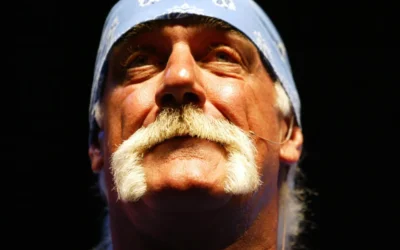
The Final Bell: Remembering Hulk Hogan, Legend of the Ring
Terry Bollea, known worldwide by his larger-than-life wrestling persona Hulk Hogan, passed away Thursday at the age of 71 in Clearwater, Florida. Local police confirmed they responded to a cardiac arrest call that morning. Hogan was pronounced dead shortly after being transported to a nearby hospital. Authorities stated there was no evidence of foul play or suspicious circumstances. His passing marks the end of an era—not just for professional wrestling, but for American pop culture itself. The Man Who Made Wrestling a Global Phenomenon To describe Hulk Hogan simply as a wrestler would be to undersell a legacy that reshaped the entire entertainment industry. With his iconic horseshoe mustache, bandana, and red-and-yellow ring gear, Hogan didn’t just dominate the ring—he became the face of professional wrestling worldwide. His presence helped catapult the WWE (then WWF) from a regional sports attraction to a mainstream global empire. In 1985, Hogan headlined the inaugural WrestleMania, teaming up with Mr. T to face off against Rowdy Roddy Piper and Paul Orndorff. The event wasn’t just a success—it was a cultural explosion. Over a million viewers watched via closed-circuit TV, and from that moment on, Hulkamania became a household term. Two years later, his legendary bout with Andre the Giant at WrestleMania III drew 80,000 fans to the Pontiac Silverdome—setting attendance records and redefining what a wrestling spectacle could look like. That match, and the iconic body slam seen around the world, remains etched in the minds of fans even decades later. Champion in the Ring and Beyond Throughout his WWE tenure, Hogan won the World Heavyweight Championship six times, holding the title for a staggering 1,474 consecutive days during his first reign. Only two other wrestlers in WWE history—Bruno Sammartino and Bob Backlund—held it longer in a single stretch. But Hogan was more than just a champion. He was a media powerhouse. He crossed over into television and film, playing Thunderlips in Rocky III and starring in his own series, Thunder in Paradise. His popularity extended beyond the ring, with appearances on countless talk shows and late-night television, cementing his place as a pop culture fixture. Reinvention and the Birth of the NWO As the 1990s ushered in a new generation of fans with different tastes, Hogan adapted. In 1996, he made wrestling history again by turning heel—becoming a villain—as the frontman for WCW’s notorious faction, the New World Order (NWO). Trading in his bright colors for black and white, “Hollywood Hogan” embraced a darker persona that mirrored the edgier, rebellious tone of the era. The NWO storyline rejuvenated wrestling at a critical time and led WCW to dominate WWE in ratings for 83 consecutive weeks. Hogan’s reinvention wasn’t just successful—it was transformative. Wrestling became appointment television again, and Hogan stood at the center of it. (MORE NEWS: Trump Takes on Crime in D.C.) A Hero’s Return By 2002, Hogan returned to WWE and faced off against The Rock at WrestleMania 18 in Toronto. Though he was technically the villain, fans refused to boo him. The crowd erupted in cheers for their childhood hero, prompting Hogan to dig out his classic red-and-yellow gear once again. That moment symbolized the deep emotional connection fans maintained with the icon—even after decades. Hogan was inducted into the WWE Hall of Fame in 2005, a formal recognition of his enduring impact on the industry. More Than a Wrestler In recent years, Hogan had faced various health struggles, including lingering issues from his many years in the ring. Still, he remained active in the wrestling world, most recently launching Real American Freestyle Wrestling and opening a bar in New York City directly across from Madison Square Garden—where so many of his iconic matches took place. Reactions poured in immediately upon news of his death. Wrestling legends like Ric Flair and Triple H paid tribute online, sharing memories of their time with the larger-than-life figure who helped shape the industry. Political Ally and Cultural Icon Outside of wrestling, Hogan remained engaged in public life. He made headlines in 2024 for speaking at the Republican National Convention in support of Donald Trump. In response to the news of Hogan’s death, Trump posted a tribute on Truth Social: “We lost a great friend today, the ‘Hulkster.’ Hulk Hogan was MAGA all the way—strong, tough, smart, but with the biggest heart… the cultural impact he had was massive… He will be greatly missed.” A Lasting Legacy Hulk Hogan’s journey from local Florida wrestler to worldwide megastar is nothing short of extraordinary. He wasn’t just part of wrestling history—he was wrestling history. His energy, charisma, and uncanny ability to capture the crowd’s imagination made him more than just a performer. He was a symbol of perseverance, showmanship, and the power of reinvention. To his wife Sky, his family, and millions of fans across the globe—he leaves behind a legacy that will live on in arenas, locker rooms, and living rooms for generations. So, to the man who told us to say our prayers, eat our vitamins, and believe in ourselves: thank you, Hulk Hogan. (RELATED: Hulk Hogan Celebrates Baptism On Social Media) You slammed giants. You turned boos into cheers. And you made the world believe in heroes—even if only for a three-count.
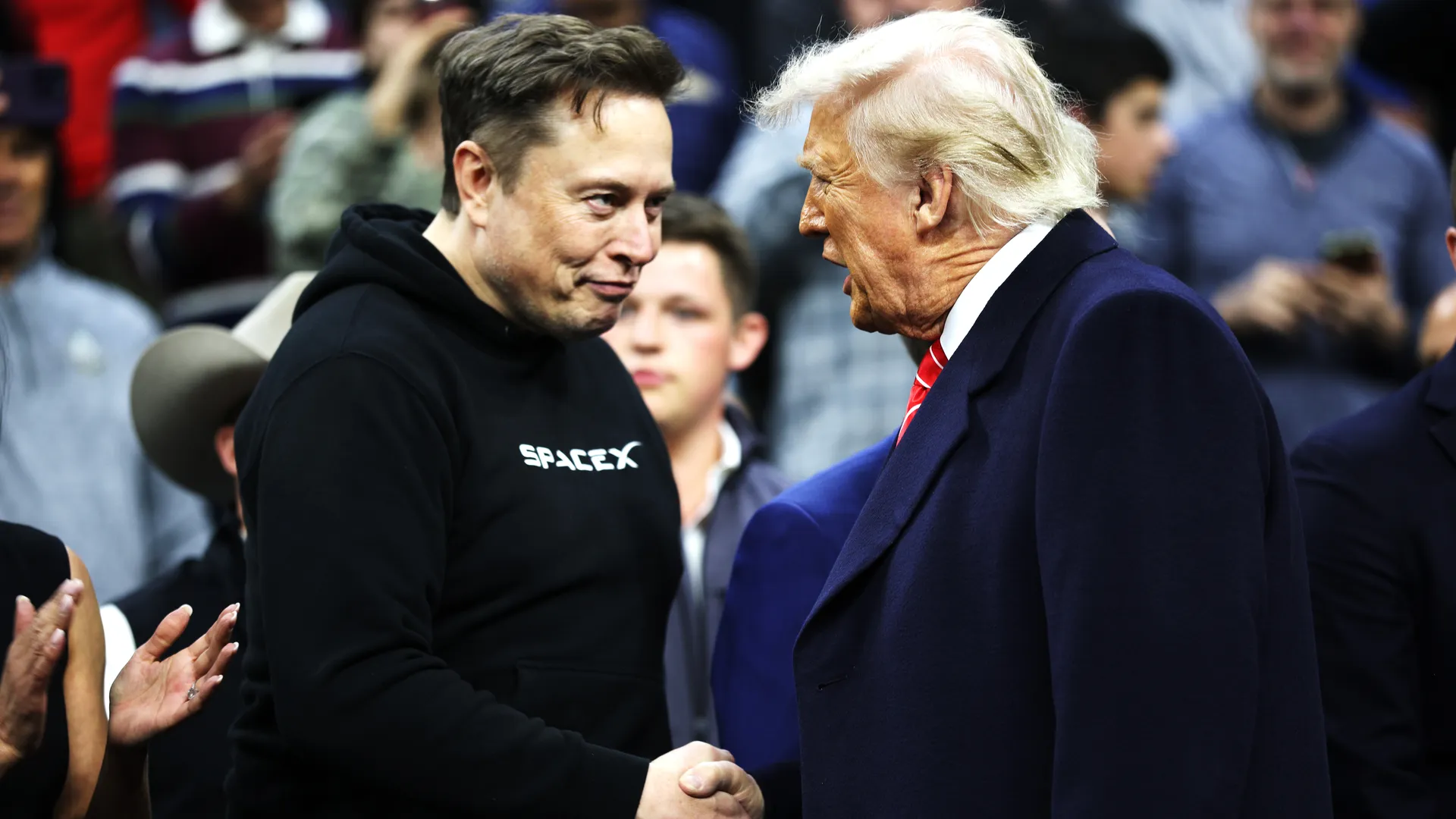
Trump Dismisses Rumors of Targeting Elon Musk’s Companies, Calls for American Business to “Thrive Like Never Before”
In a bold statement released Thursday, President Donald Trump shut down swirling rumors that he intends to cripple Elon Musk’s companies by cutting off federal subsidies. “Everyone is stating that I will destroy Elon’s companies by taking away some, if not all, of the large scale subsidies he receives from the U.S. Government. This is not so!” Trump declared in a Truth Social post. The president emphasized his support for American innovation and business success, distancing himself from speculation that his administration might take aim at Musk’s government-backed ventures like Tesla or SpaceX. “I want Elon, and all businesses within our Country, to THRIVE, in fact, THRIVE like never before!” Trump added. He framed business success as central to America’s broader prosperity: “The better they do, the better the USA does, and that’s good for all of us. We are setting records every day, and I want to keep it that way!” The comments come amid ongoing online chatter and political speculation about the future of federal subsidies, especially for green energy and tech firms. Musk, who has occasionally clashed with Trump in the past but also shared common policy interests, has not responded publicly to the statement. For now, Trump is making it clear: he’s not after Elon’s companies — he wants them, and all of American business, to soar.