



AI Job Cuts Surge: Reshaping the U.S. Workforce in 2025
In October 2025, U.S. employers announced 153,074 job cuts, the highest total for that month in more than two decades, according to Challenger, Gray & Christmas’s Challenger Report. Crucially, a growing number of these cuts are being directly tied to the adoption of artificial intelligence (AI) and automation. More than 31,000 of the cuts in October were explicitly attributed to AI-related restructuring. Overall, through the first ten months of 2025, employers have announced 1,099,500 job cuts — up 65% from the same period in 2024. AI Ramping Up Job Cuts — A Sharp Turn in the Labor Market While traditional cost-cutting remains the top reason companies cite, AI has moved from the periphery to a clear driver of workforce reductions. In September 2025 alone, approximately 7,000 job cuts were directly tied to AI. Through September, about 17,375 job cuts were explicitly tied to AI, with an additional 20,000 linked to “technological updates,” a category that often includes automation. The true number of AI-driven cuts may be even higher, since many layoffs are labeled under broader terms rather than “AI.” Put simply: AI is no longer a future worry — it’s already reshaping the job market. Sectors Being Disrupted First The impact of AI-driven cuts isn’t evenly spread across industries. Two sectors stand out. The Technology sector faced 33,281 job cuts in October — a massive jump from just over 5,000 the month before. Tech companies themselves are citing AI as a reason for restructuring. Meanwhile, the Warehousing and Logistics sector posted 47,878 cuts in October — a striking surge and a reflection of automation and AI adoption in supply-chain operations. According to the New York Post, major U.S. employers are leading this new wave of AI-driven restructuring across industries: Amazon recently announced plans to cut about 14,000 corporate roles as part of a reorganization meant to “reduce bureaucracy” and redirect resources toward artificial intelligence initiatives. Target, under incoming CEO Michael Fiddelke, revealed its first major layoffs in a decade — eliminating 1,800 corporate positions, or roughly 8% of its headquarters staff — in an effort to streamline operations and counter declining sales. Meanwhile, UPS confirmed it will trim 48,000 jobs company-wide in a sweeping cost-cutting plan tied to automation and efficiency upgrades. Other sectors, such as media and non-profits, are also feeling the effects as AI, automation, and cost-cutting converge. Across the economy, the shift is clear: companies are rethinking their human workforce in light of smarter, cheaper, and faster technology. Why AI Cuts Are Getting More Visible There are several reasons why AI is increasingly cited as a cause for job cuts. AI tools are now capable of taking on tasks once done by humans — from customer service chatbots to predictive analytics that replace manual roles. Employers are under economic pressure from softening demand and rising costs, and AI offers a way to streamline operations. Entry-level roles and predictable, repeatable work are the first to go. As AI becomes more integrated, companies are retooling departments and demanding employees with higher technical fluency. Put another way, AI is no longer just a tool for efficiency. It’s becoming a substitute for certain kinds of work. And that’s why it’s appearing more often as a listed reason for job cuts. What This Means for Workers If you’re a worker — especially early in your career — the AI disruption should prompt serious reflection. Roles that rely heavily on routine, predictable tasks are increasingly at risk of automation or AI replacement. Finding a new job may also be harder: hiring plans are slowing. Through October, U.S. employers announced only 488,077 planned hires — down 35% from the same period last year. Reskilling is becoming critical. Because AI is changing what skills employers value, upgrading your digital competency, understanding AI tools, and being adaptable will help you stay competitive. The report warns that those laid off now are finding it harder to quickly secure new roles, which could further loosen the labor market. Implications for Employers and the Economy From the employer side, adopting AI can boost productivity — but it also carries risks. Cutting too deeply or too quickly can damage morale, innovation, and long-term growth. Over-reliance on automation may save costs today but limit creativity tomorrow. Companies that balance AI efficiency with human capability will likely perform best in the long run. From an economic perspective, rising layoffs and slowing hiring pose real concerns. If too many workers lose jobs while few new roles emerge, consumer spending will weaken. That, in turn, can trigger more layoffs — creating a negative cycle. The fact that AI is now a named driver of job cuts suggests the labor market may be entering a structural shift, not just a temporary downturn. What to Watch Going Forward Several trends merit close attention: Will companies continue to list AI explicitly as a reason for layoffs? Some may categorize it under broader labels like “technological update,” so the real figure may be higher. Are hiring plans recovering? If not, it suggests companies aren’t just cutting now—they’re slowing growth and perhaps shifting operational models. Which types of roles are disappearing fastest? Watching whether entry-level and routine jobs shrink more rapidly can indicate the pace of AI disruption. What sectors are most exposed next? If warehousing and tech lead now, could administration, finance, customer service roles be next? Final Word The October 2025 job-cut data marks a turning point for the U.S. labor market. AI has moved from a promise to a tangible force in workforce reduction. While cost-cutting remains the top cause, the fact that over 30,000 jobs in one month were explicitly attributed to AI shows how fast the landscape is changing. For workers, this means being agile, proactive, and open to re-skilling. For businesses and policymakers, it means understanding that AI’s influence reaches beyond productivity — it affects people, communities, and the economy itself. The challenge now is to harness AI’s power responsibly while protecting the human workforce that drives innovation forward. Cut through the…

Holiday Travelers May Face Flight Delays as Shutdown Deepens
As the federal government shutdown continues, the Federal Aviation Administration (FAA) has announced a plan to reduce flight operations and air traffic by 10% across 40 of the busiest U.S. airports. Because air traffic controllers and Transportation Security Administration (TSA) agents continue to work without pay, the FAA says the move is necessary to maintain flight safety in the national airspace system. Starting Friday, Nov. 7, the cutbacks begin. Initially, flights will be reduced by about 4%, ramping up to 6% by Nov. 11, 8% by Nov. 13, and finally 10% by Nov. 14 if the shutdown persists. These reductions come just a few weeks before the holiday travel season ramps up, raising concerns about how airports and airlines will manage the upcoming surge in passengers. If the government shutdown continues into late November, millions of travelers could face longer wait times, fewer available flights, and widespread delays during one of the busiest travel periods of the year. 🚨 BREAKING: @SecDuffy announces a 10% reduction in scheduled flight capacity at the nation’s top 40 high-traffic markets due to the Democrat Shutdown’s strain on air traffic controllers. pic.twitter.com/g6yJygA96W — Rapid Response 47 (@RapidResponse47) November 5, 2025 Widespread Delays and Cancellations Already Underway Furthermore, the disruption is already affecting air travel. As of Thursday afternoon, more than 5,100 flights had been delayed in the U.S., and nearly 150 cancellations were reported. Some major airports seeing the worst impact include Newark Liberty International Airport, Boston Logan International Airport, Ronald Reagan Washington National Airport, and Chicago O’Hare International Airport. (MORE NEWS: SNAP Benefits Partially Restored as USDA Uses Emergency Funds) In addition, more than 620 flights were canceled on Friday alone and over 350 were already set to be canceled for Saturday — indicating the scale of the disruption is growing. Safety Concerns Amid Controller Staffing Issues Moreover, the staffing picture for air traffic control is increasingly dire. The National Air Traffic Controllers Association reports that training facilities are threatened with closure because new controllers aren’t being brought on amid the shutdown. In an interview with Fox News, association President Nick Daniels, certified controllers number about 10,800 when full staffing should be closer to 14,633. He warned that controllers are facing severe financial stress — unpaid for weeks, struggling with bills, childcare, and even eviction notices. As fatigue rises among controllers, aviation safety professionals are sounding alarms that the safety margin in the skies is narrowing. (MORE NEWS: Government Shutdown Stalls Real Estate in 5 States) What Airlines and the DOT Are Saying Turning to the airlines, several carriers have announced proactive steps. For example, United Airlines said it will offer refunds to any customers who choose not to fly during the disruption period. This is even if their flight isn’t directly canceled. The airline emphasized that international and hub-to-hub flights will mostly continue, while domestic regional flights may see more cuts. In a related move, the U.S. Department of Transportation (DOT) via Secretary Sean Duffy described the decision to reduce flights as “data-driven.” He affirmed the reduction targets were set because these 40 markets showed significant operational pressure due to the staffing shortfall. Despite the cuts, some airlines like Delta Air Lines and American Airlines say they expect the “vast majority” of their customers will not be affected. What This Means for Travelers For travelers, this means you should plan for disruptions — and act early. Expect longer lines at TSA checkpoints as officers call out and staffing remains strained. Acting TSA Administrator Adam Stahl told Fox News Digital that he recommends arriving two to three hours before your flight, and in some airports even earlier. Because airlines will have to cut flights to meet FAA directives, some flights may be canceled or delayed with little notice. Bookings in the next 10 days are particularly vulnerable. Customers should monitor airline apps and notifications for schedule changes, and consider backup plans — as suggested by some airline CEOs. Even if your flight remains on schedule, the risk of inbound or outbound delays increases. Connecting flights, especially at busy hubs, may be disrupted by ripple effects from reduced capacity and staffing limits. Political Fallout and Next Steps On the political front, Vice President JD Vance declared the shutdown risks reaching “an aviation emergency” as the nation braces for travel disruptions. Meanwhile, lawmakers are pointing fingers over who bears responsibility for the staffing shortages and the shutdown’s impact on air travel. What the Democrats are doing on the government shutdown is genuinely unprecedented, and while the administration has shielded the American people from the worst of the consequences, all of this is coming, and soon: An aviation emergency that will lead to significant travel… — JD Vance (@JDVance) November 6, 2025 Secretary Duffy stressed that the solution is in Congress reopening and funding the government. He stated that he cannot pay controllers because Congress says there is no money. Senator Ted Cruz weighed in, saying, “The FAA doesn’t want to do this, but they’re doing it to protect passenger safety. Enough is enough. The political stunt the Democrats are pulling is hurting real people. Starting Friday, you’re going to see a 10% cut in flights at the nation’s 40 largest airports. The FAA doesn’t want to do this, but they’re doing it to protect passenger safety. Enough is enough. The political stunt the Democrats are pulling is hurting real people. pic.twitter.com/NsSxpOtKK0 — Senator Ted Cruz (@SenTedCruz) November 6, 2025 Bottom Line In summary, as the government shutdown drags on, air travel in the U.S. is entering a phase of reduced capacity and higher risk of delays and cancellations. The FAA’s decision to cut flights at major airports is an attempt to protect safety amid mounting staffing shortages. Meanwhile, travelers should prepare accordingly: arrive early, check flight status frequently, and consider flexible plans. However, the timing could not be worse. With the busy holiday travel season approaching, the risk of widespread flight disruptions continues to grow. Families planning Thanksgiving or Christmas trips may face packed airports,…

President of Nigeria Responds to Trump Criticism
Trump Warns Nigeria Over Christian Killings President Donald Trump has issued a shocking warning to Nigeria. He said he may send American forces “guns-a-blazing” if the killings of Christians do not stop. His bold words have drawn worldwide attention and put new pressure on Nigerian President Bola Tinubu, whose government already faces criticism for failing to protect citizens from extremist attacks. Thousands of Christians Killed Reports from human rights groups paint a tragic picture. In 2025 alone, more than 9,000 people have died in extremist attacks across Nigeria. About 7,000 of them were Christians, many killed in brutal assaults on villages, churches, and farms. Since 2009, over 125,000 Christians have been murdered and nearly 19,000 churches destroyed. Families in the north and middle of the country live in constant fear. Trump’s Explosive Threat On Truth Social, Trump wrote that the U.S. “will immediately stop all aid” to Nigeria and might “go into that now disgraced country guns-a-blazing.” He added, “If we attack, it will be fast, vicious, and sweet.” His post accused Nigeria’s leaders of ignoring the slaughter of innocent Christians. The statement caused a political storm both in Washington and in Abuja, Nigeria’s capital. Tinubu’s Defensive Response, President Tinubu pushed back, calling Trump’s comments a “threat,” according to Breitbart News. He said his government is already “addressing violent extremists.” Yet many Nigerians disagree. Critics say Tinubu’s words are the same promises every administration makes when violence gets worse. In many regions, armed groups act freely while police and soldiers arrive only after the damage is done. Government Denies Persecution Foreign Minister Yusuf Tuggar and Information Minister Mohammed Idris defended the government. They claimed that Nigeria’s constitution protects freedom of religion and that “state-backed persecution” is impossible. But human rights groups argue that denying the problem has only made it worse. Survivors say officials minimize attacks and fail to help displaced families rebuild their homes or lives. Communities Living in Fear In states like Plateau, Kaduna, and Benue, entire villages have been wiped out. Survivors describe night raids, kidnappings, and executions. Many have lost everything—homes, farms, and loved ones. The security forces, stretched thin and underfunded, rarely arrive in time. Locals say they no longer trust the government’s promises. Instead, they rely on prayer and community watch groups for safety. Critics Say Reforms Are Cosmetic Tinubu has replaced top military officers and promised reforms. However, experts say these changes are more about public relations than real results. Attacks keep happening, and civilians still feel abandoned. For many, government reshuffles are empty gestures that hide deeper problems such as corruption, poor intelligence, and low morale within the army and police. National Pride vs. Accountability In response to Trump’s warning, Nigerian officials have repeated one message: Nigeria is a sovereign nation and will not be bullied. While that may appeal to national pride, it does not solve the crisis. Critics say the government uses “sovereignty” to dodge responsibility and silence questions about its failures. Real sovereignty, they argue, means protecting citizens—not defending bad leadership. U.S. Reaction and Growing Pressure Trump’s statement also reignited debate in the U.S. Congress. Lawmakers such as Riley Moore are pushing for resolutions condemning what they call “the slaughter of Nigerian Christians.” Washington analysts say Trump’s words may be exaggerated, but they reflect growing anger among Western Christians who see Nigeria as a test of global religious freedom. Tomorrow I will introduce a new resolution condemning the ongoing persecution of Christians in Nigeria and supporting President Trump’s efforts to defend our brothers and sisters in Christ. Thousands have been killed for their faith – and the world has looked away for far too… — Rep. Riley M. Moore (@RepRileyMoore) November 6, 2025 The Role of Faith and Politics The conflict in Nigeria is complex. Extremists often use religion to justify violence, but economic hardship, ethnic divisions, and weak governance all play a role. Still, the government’s reluctance to admit that many victims are targeted for their Christian faith has fueled distrust. Religious leaders say the refusal to call the problem what it is prevents honest dialogue and lasting peace. Civil Society Demands Action Journalists, pastors, and aid groups continue to document the crisis despite intimidation. They call for better protection, accountability for attackers, and support for survivors. Many Nigerians believe that without pressure from abroad, their leaders will continue to downplay the killings. International attention, they say, might be their last hope for change. What Needs to Happen Experts agree that Nigeria needs more than speeches. It must strengthen local policing, share intelligence between regions, and ensure that soldiers protect civilians instead of abusing them. Transparency is also vital—accurate data and independent investigations can rebuild trust. Without these steps, violence will continue and outside powers may be forced to intervene. Final Word Trump’s “guns-a-blazing” threat may sound extreme, but it highlights a truth the Nigerian government can’t escape. Thousands are dying, and the world is watching. Until the government acts decisively to protect Christians and all Nigerians, its claims of progress will ring hollow. Nigeria stands at a crossroads—either it confronts the violence with honesty and action, or it risks losing both global credibility and the faith of its own people. Cut through the noise. Drown out the spin. Deliver the truth. At The Modern Memo, we’re not here to soften the blow — we’re here to land it. The media plays defense for the powerful. We don’t. If you’re done with censorship, half-truths, and gaslighting headlines, pass this on. Expose the stories they bury. This isn’t just news — it’s a fight for reality. And it doesn’t work without you.

MTG Political Pivot: What’s Going On With The GOP?
Let’s be honest — Marjorie Taylor Greene (MTG) is acting a lot different these days. The same outspoken Republican who used to rally crowds and challenge the establishment is now sitting comfortably on liberal talk shows like The View. For many conservatives in Georgia, watching their Congresswoman smile and nod along with the very media that once called her “dangerous” feels like betrayal. Greene has also started criticizing her own party leaders and even distancing herself from former allies. According to Fox News, Alexandria Ocasio-Cortez (AOC) says MTG’s recent “revenge tour” is payback after former President Trump stopped her from running for the U.S. Senate in Georgia. (MORE NEWS: Election 2025 Analysis: Democrats Sweep as Shutdown Continues) If that’s true, this isn’t about principles — it’s about payback. And that kind of motivation could cost her dearly at the ballot box. The Senate Snub That May Have Triggered Everything Here’s where things start to make sense. Fox’s report says MTG had her sights set on a Senate run, but Trump wasn’t on board. He reportedly ordered polling that showed she would lose badly in a statewide race. Once that information leaked, she suddenly announced that she was no longer interested in the Senate, claiming it “doesn’t work.” Then, not long after, she began publicly criticizing Trump and key members of the GOP. If AOC is right, MTG’s current behavior is less about independence and more about resentment. It’s a strange look for someone who built her brand as one of Trump’s most loyal defenders. Voters don’t usually reward politicians who turn on their allies when they don’t get what they want. Cozying Up To The View — A Risky Move Let’s talk optics. The View has never been a friendly venue for conservatives. Yet MTG showed up smiling, calm, and cooperative — even when the hosts threw softballs instead of insults. That appearance might have won her a polite round of applause from the audience, but it left her conservative supporters scratching their heads. For years, MTG branded herself as the one person willing to stand up to the mainstream media. Now, she’s being praised by it. It’s not hard to see why her base feels betrayed. She built her entire career fighting against the very system she’s now trying to fit into. When a politician starts looking for approval from their enemies, their supporters tend to take notice — and not in a good way. (MORE NEWS: Kamala Teases 2028 Run — Democrats Scramble for Strategy) Why This Could Hurt Her Reelection Chances MTG’s shift isn’t just a small adjustment — it’s a full rebranding. And that’s a risky play, especially in her Georgia district, where voters expect her to stay true to her roots. Here’s why it could backfire: Loss Of Base Enthusiasm: Her most loyal followers are already frustrated. If they feel she’s gone soft, they might not show up to vote next time. Identity Confusion: Voters like consistency. When MTG changes her message from “fighter” to “peacemaker,” it muddies her brand. Political Isolation: By attacking GOP leadership and cozying up to liberal outlets, she risks losing party support and funding. Mainstream Vulnerability: The left won’t truly embrace her, and the right could turn away — leaving her caught in political no-man’s-land. It’s hard to win reelection when you’ve alienated your base and can’t count on new friends to back you up. What Conservatives Should Watch For If you’re following MTGs career, there are a few key things to keep an eye on: Will she continue attacking GOP leaders, or try to make amends before campaign season? Will she keep doing friendly interviews with liberal media, or return to her tough, anti-establishment message? Will new challengers emerge in her district, promising to bring “real conservatism” back? Will her shift away from Trump come back to haunt her among die-hard MAGA voters? The answers to those questions will determine whether she survives the next election — or fades out as another politician who lost touch with her base. Final Thoughts Marjorie Taylor Greene made her name as a fighter. She stood up to the media, the Democrats, and even her own party when she had to. But now, she’s playing nice with people who once mocked and silenced her — and that’s not sitting well with the voters who put her in office. If this really is an “anti-Trump revenge tour” driven by personal disappointment, it’s a dangerous game. Conservatives want leaders who fight for them, not politicians chasing cable-news approval. At the end of the day, MTG might think she’s broadening her appeal. But in reality, she’s alienating the very movement that made her a star. And come election time, that mistake could be the one she can’t talk her way out of.
Election 2025 Analysis: Democrats Sweep as Shutdown Continues
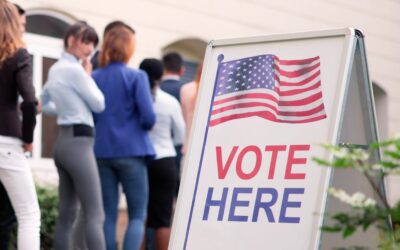
The November 2025 election reaffirmed Democratic dominance in some of the nation’s bluest regions. From Virginia to New Jersey, Pennsylvania, and California, Democrats held control and even expanded their reach. These results weren’t shocking — they happened in states where Democrats already hold strong structural advantages. But what makes this election worth examining is why they performed so well now. Voters went to the polls as the federal government shutdown continues, disrupting lives and amplifying frustration with Washington. Many are exhausted by the constant partisanship and gridlock. Democrats stayed disciplined and united, running on a simple, emotional strategy: “Get Trump.” Republicans, meanwhile, struggled to translate frustration into votes. (MORE NEWS: Kamala Teases 2028 Run — Democrats Scramble for Strategy) Spanberger Makes History in Virginia Virginia delivered a full Democratic sweep in 2025, marking a turning point for a state that was once considered a swing battleground but now sits firmly in blue territory. Governor’s Race: Abigail Spanberger made history as Virginia’s first female governor, defeating Republican Winsome Earle-Sears. Her victory came despite controversy over her refusal to call on Attorney General candidate Jay Jones to step down after his violent comments about a political rival and his children. Attorney General’s Race: Jay Jones won despite the release of text messages showing violent rhetoric against a political opponent and their family. The scandal barely affected his campaign, and Democrats closed ranks around him. Lieutenant Governor’s Race: Ghazala Hashmi made history as Virginia’s first Muslim woman elected to statewide office, completing the Democratic sweep and underscoring how decisively the state has shifted left. Virginia’s election results highlight the power of party unity and message discipline — even when controversy and ethics questions hang over the campaign. New Jersey and Pennsylvania Stay Solidly Democratic In New Jersey, Mikie Sherrill captured the governorship despite questions about honesty in her past. In Pennsylvania, Democrats held onto their state Supreme Court majority, giving the party a key advantage heading into the 2026 midterms. Across these states, Democratic organization, turnout, and message discipline carried the night. Republicans couldn’t shift the conversation toward economic recovery or accountability in Washington. Mamdani’s Controversial Win in New York In New York City, Zohran Mamdani, a self-described democratic socialist, won the mayor’s race, energizing progressives and drawing sharp criticism from conservatives. Representative Andy Ogles (R–Tenn.) told Fox News, “Deport Mamdani! He’s an antisemitic, socialist, communist who will destroy the great City of New York.” Ogles also told Newsmax, “In 2018 when he was naturalized, he failed to disclose some of the things that he had been doing, one of which was joining the [Democratic] Socialists of America. That’s a communist organization which, quite frankly, at that time, would have disqualified him from becoming a United States citizen.” (RELATED NEWS: 2025 Elections: Five Key Races to Watch) U.S. immigration law bars naturalization for those affiliated with Communist or totalitarian parties. The application form explicitly asks whether applicants have ever been members of such groups. Mamdani denies being a communist, though his ties to socialist organizations continue to spark debate. President Trump called him a “communist lunatic” before the election in a Truth Social post: Then Mamdani taunted Trump in his victory speech: Zohran Mamdani has won the race to become the next mayor of New York City. Mr Mamdani – who will be the first Muslim, first South Asian, and youngest person in a century to be elected as the famous city’s mayor – used a victory speech to throw down the gauntlet to Donald Trump. pic.twitter.com/8IVr4kMQQH — Sky News (@SkyNews) November 5, 2025 The back and forth between these two will be interesting the next few years — to say the very least. California’s Prop 50: One-Party Control Locked In In California, Governor Newsom’s Proposition 50 solidified Democratic dominance through a last-minute sweeping redistricting overhaul that passed after more than $300 million was spent promoting it. Republicans were not left with enough time to properly prepare and fight it. Although roughly 40% of Californians vote Republican, the new map would leave the GOP with only 7% of the state’s congressional seats. That amounts to political engineering with no balance in sight. Democrats claimed Prop 50 would improve representation, but it is actually gerrymandering on a historic scale. They claim this is a counterbalance to Texas redistricting, but Texas doesn’t have anything close to this kind of structural bias. Prop 50 effectively locks Republicans out of power in California for the foreseeable future. That was their goal, and they achieved it. Why Democrats Dominated So why did Democrats sweep this election? The answer lies in timing, perception, and focus. These were deep-blue states where Democratic infrastructure was already strong. But the ongoing government shutdown, combined with national fatigue and slow economic recovery, set the stage for a default vote for “stability.” Many voters simply didn’t see a strong Republican alternative. Democrats kept their messaging unified and emotional. They tied every issue — from policy to personality — back to President Trump. Republicans, on the other hand, failed to connect their arguments to everyday voter concerns or to demonstrate how things would improve under continued conservative leadership. Economic Strain and the Trump Challenge The economy remains uncertain. Costs for essentials like food, gas, and housing are still high — the lingering effects of inflation that began under President Biden. President Trump’s economic strategy is aimed at long-term correction through tariffs, trade reform, and energy expansion. But that kind of recovery takes time, and many voters haven’t felt the benefits yet. The administration now faces the challenge of making progress visible. Americans don’t want to hear about macroeconomic data; they want relief they can see — at the pump, in the grocery store, and in their mortgage or rent payments. The Road to 2026 The lesson from the 2025 election is straightforward: Democrats win when Republicans fail to connect on the issues that matter most. The “Get Trump” strategy continues to energize the left and distract from their lack of sound policy. For President Trump,…

SNAP Benefits Partially Restored as USDA Uses Emergency Funds
The federal government’s partial shutdown has now run into a critical phase, and the effects are spreading into key assistance programs. As the shutdown drags on, the Supplemental Nutrition Assistance Program (SNAP) is under strain. The United States Department of Agriculture (USDA) told a federal judge that it will partially resume SNAP benefits for November, according to Fox Business. Until this decision, recipients of SNAP — more than 40 million Americans — faced a sudden uncertainty about whether their food-aid would arrive. The government’s shutdown stems from a standoff over budget appropriations. This has left many federal programs functioning on limited or emergency funding. Background of the Shutdown and Food-Aid Impact The USDA announced that it will allocate $4.65 billion of its $5 billion contingency fund to keep SNAP running in November. That move covers only part of the expected cost, which USDA officials say is closer to $9 billion for full monthly coverage. (MORE NEWS: ACA Premiums Are Rising — But Not Because of Expiring Subsidies) As a result, the benefit level will be reduced. Secretary of Agriculture Brooke Rollins said: “We submitted to the courts our plan to get partial allotments to SNAP households. Both are STOPGAP measures that create unnecessary chaos in State systems and distribution of benefits.https://www.mlh9trk.com/cmp/2Z3GP8/2PKSM4/ It will take several weeks to execute partial payments. THIS MUST END. Senate Democrats need to quit the games, quit holding American families hostage to ridiculous demands like health care for illegals, and REOPEN THE GOVERNMENT. Once they do, FULL benefits can get to families without delay.” .@POTUS is doing everything he can to help our most vulnerable mothers and babies while Radical Left Democrats continue to obstruct. Today, full November WIC benefits will be disbursed to States. Additionally, we submitted to the courts our plan to get partial allotments to… — Secretary Brooke Rollins (@SecRollins) November 3, 2025 Rollins went on to say she expects the process to take weeks: 🚨This morning, @USDA sent SNAP guidance to States. My team stands by to offer immediate technical assistance. This will be a cumbersome process, including revised eligibility systems, State notification procedures, and ultimately, delayed benefits for weeks, but we will help… — Secretary Brooke Rollins (@SecRollins) November 4, 2025 Legal Pressure and Role of the Courts Twenty-five Democratic state attorneys general and governors sued the USDA. They argued that ceasing SNAP benefits would be harmful to the public health and well-being of millions of Americans. Two federal judges ruled that the USDA must use its contingency fund to keep SNAP benefits paid beyond November 1. In court filings, the Justice Department acknowledged the tight timeline and the burden posed by the shutdown in meeting the court’s order. “Defendants have worked diligently to comply … during a government shutdown,” the filing stated. What This Means for SNAP Recipients For the millions of people who rely on SNAP, this announcement brings some relief — but also new uncertainty. Many recipients may need to stretch existing food supplies longer than usual or reduce purchases as they wait for partial benefits to arrive. Moreover, because the contingency funds are being used now, there will be no remaining cushion for new applicants in November, for disaster assistance. There also won’t be a buffer against a full shutdown of SNAP. That means those who apply later in November or enter the program for the first time may face gaps or be excluded until full funding returns. States administering SNAP may face added administrative burdens. They must adjust allotments, handle delayed payments, and manage communication with beneficiaries about reduced benefits. This creates further risk of confusion, missed payments, or mis-processing. Broader Implications and Risks This scenario illustrates how federal shutdowns ripple out into social-safety-net programs. A funding gap does not just halt new enrollment; it cuts into lifelines for low-income families. The partial-resumption plan reflects triage — the government is choosing which obligations to meet partially while skipping or limiting others. Because the full funding shortfall of $9 billion is larger than the contingency plan, the USDA’s move is a short-term solution. If the shutdown continues, SNAP and other programs may face deeper cuts or longer delays. The mention that no funds remain for new applicants or disaster-related aid heightens the risk of erosion in the program’s reach. (RELATED NEWS: Trump Ally Donates $130M to Cover Military Pay Amid Shutdown) What to Watch Next Going forward, there are several key developments to monitor. How states handle the adjustment of benefit amounts: Are households correctly receiving about 50% of the usual allotment? Are there delays or administrative errors? What happens with new applicants in November: will they be excluded or delayed indefinitely? Additionally, one should look at how other federal programs respond. SNAP is a visible case, but other aid programs may face similar bottlenecks, meaning this could be part of a broader pattern of stress on the system. Final Word In short, while the USDA’s partial resumption of SNAP benefits offers a vital buffer for millions of Americans facing food uncertainty, it does not address the deeper issue — the political tug-of-war that often turns struggling families into pawns. Democrats are using the situation to score political points rather than solve the problem. Whether this strategy will backfire in 2026 remains to be seen. At the same time, the situation highlights the fragility of social safety-net funding during government gridlock. With only half of eligible households receiving their full benefit this month and new applicants excluded, the program continues to operate in crisis mode. The system also needs stronger accountability. Recipients should regularly requalify for benefits and demonstrate that they are either working or actively seeking employment. Assistance is meant to provide temporary relief — not become a permanent lifestyle. As the shutdown continues, the risk grows that benefit gaps will widen, assistance will weaken, and vulnerable populations will feel the impact even more deeply. It remains essential to watch how states manage the rollout and whether full funding — and lasting reform — can…

Daylight Saving Time Debate Heats Up Across States
Support for Daylight Saving Time (DST) in the United States has fallen to historic lows. According to recent Gallup poll, only about 40 percent of Americans now say they are in favour of the ongoing clock-shifts. That level is even lower than the 51 percent support seen back in 1937 and far below the 73 percent who approved of it in 1999. In short: many Americans are questioning whether changing the clocks twice a year still makes sense — and for good reason. What’s Driving the Shift in Opinion? First, the twice-yearly switch — moving clocks forward in spring and back in fall — has long been pegged to old energy-saving and productivity goals. Yet as daily lives have changed, the benefits of those shifts are less obvious. Meanwhile, people report irritation with losing an hour of sleep, changes in mood and rhythms, and confusion about time. In addition, many states are pushing legislation to end the practice of switching clocks — or to lock in one time year-round. All of these combine to erode public confidence in DST. (MORE NEWS: Retirement 2025: America’s Safest and Wealthiest Towns to Call Home) Which States Are Pushing to “Lock the Clocks”? Several states are actively working to eliminate the bi-annual clock changes. For example, states such as Texas, Florida, and Colorado have passed laws that would allow them to observe daylight saving time year-round — provided the federal government gives permission. Others, like Arizona and Hawaii, already observe standard time year-round and don’t change clocks at all. These efforts reflect a broader trend of states testing whether the traditional rhythm of DST remains relevant. The Complex Federal Landscape It’s not simply up to states. Under current federal law in the United States, states may opt out of daylight saving time and stay on standard time year-round — but they cannot switch to daylight saving time year-round without a change in federal legislation. For example, the Sunshine Protection Act has been proposed in Congress to make daylight saving time permanent, but so far it has not passed both the Senate and the House. So despite state-level enthusiasm, the path to a full shift away from switching clocks remains blocked by federal law. (MORE NEWS: High-Tech Bank Scam Leaves Victims Penniless in Seconds) What Could a Change Mean for People? If the U.S. were to adopt year-round daylight saving time, many people would enjoy lighter evenings all year. However, morning daylight would come later, particularly in winter months. That has sparked concerns about safety for children walking to school or more darkness in the morning commute. On the other hand, permanent standard time would give earlier sunrises and earlier sunsets — which some sleep and health experts prefer, because it aligns better with natural body clocks. Ultimately the trade-offs matter: whether the extra evening light is worth the later morning dawns. Why the Timing of the Latest Drop in Support Matters This shift in opinion comes at a key moment. As more states seek to abandon the spring-forward/fall-back routine, public support dropping to 40 percent signals that an idea once widely accepted is now in question. With the sky of federal change still cloudy, states pushing ahead arguably reflect the will of citizens rather than top-down policy. The timing is also relevant: as more people experience the negative side-effects of time changes — such as sleep disruption or safety issues after the switch — momentum grows to re-evaluate the status quo. What You Should Know Right Now If you live in a state that has passed legislation for year-round time, be aware: the change cannot take effect until federal rules allow it. The next time the clocks change (if you are in one of 48 states that observe it) could be one of the last — or at least one of the most debated. If you’re tracking health or productivity effects (for yourself or your children), know that shifting clocks has documented impacts on sleep, mood and accidents. Whether you prefer more light in the evening or prefer more early-morning light, the debate around permanent time changes is more than political — it may affect your day-to-day rhythm. The Takeaway In short, what we once accepted as a harmless ritual — flipping clocks twice a year — is becoming less acceptable. With public support at a historic low, state-level initiatives gaining traction and federal law lagging behind, the change may be coming. So if you’ve ever groaned when it’s already dark by the time you get home from work, take heart — the future of timekeeping may soon change. Forget the Headlines. Challenge the Script. Deliver the Truth. At The Modern Memo, we don’t tiptoe through talking points — we swing a machete through the media’s favorite lies. They protect power. We confront it. If you’re sick of censorship, narrative control, and being told what to think — stand with us. Share the story. Wake the people. Because truth dies in silence — and you weren’t made to stay quiet.

General Motors Cuts Over 1,700 Jobs as EV Demand Slows
General Motors (GM) has announced major layoffs as it adjusts production to meet cooling demand for electric vehicles. The company plans to cut roughly 3,400 hourly jobs across Michigan, Ohio, and Tennessee starting in January, according to The Detroit News. Of those, over 1,750 workers will be laid off indefinitely, while roughly 1,500 are expected to be called back by mid-2026. Why the Cuts? General Motors cited slower near-term electric vehicle adoption as a key reason for the job reductions. The market for electric vehicles has not grown as quickly as expected, prompting GM to realign its production capacity. (RELATED NEWS: General Motors CEO Pulls Back on EV Ambitions) Changes in the regulatory environment and incentives also played a part. For example, federal tax credits for new EV purchases expired recently, reducing incentives for buyers and adding pressure on manufacturers. GM reported it will take a $1.6 billion charge tied to scaling back EV production and restructuring. That means the company is rethinking how to build its EV business in the U.S. while staying resilient through change. What Exactly Is Being Cut? At the heart of the cuts is GM’s biggest all-electric assembly plant, known as Factory Zero in Detroit. There, GM will pause production on one shift and permanently eliminate about 1,200 jobs out of roughly 3,400 workers furloughed this summer. The plant will then resume on a single shift and determine which senior workers will return. Additionally, the battery-cell plants operated by GM’s joint venture Ultium Cells LLC in Warren, Ohio, and Spring Hill, Tennessee, will see temporary shutdowns beginning January 2026. About 850 workers in Ohio and 710 in Tennessee will face temporary layoffs, and another 550 in Ohio will be laid off indefinitely. GM emphasized that many affected employees may still receive a portion of their wages or salary plus benefits during the downtime. What It Signals for GM and the Industry In one sense, these job cuts show that GM is pivoting. The company says it remains committed to its U.S. manufacturing footprint and wants to build flexibility into its operations. But at the same time, it acknowledges that the EV roll-out will not follow the accelerated timeline it once expected. The timing also matters. With EV incentives declining and competition rising, automakers face pressure to manage costs and inventory. As a result, GM is reducing production to match demand and avoid a buildup of unsold vehicles. In the broader context, this is a reminder that the transition to electric vehicles is not a straight line. It involves shifts in consumer behavior, government policy, supply-chain constraints, and manufacturing strategy. The cuts at General Motors reflect those realities. What It Means for Workers and Communities Of course, the human side of this story matters. Workers at the Detroit plant and the battery-cell facilities face job uncertainty. Yet, GM has committed to supporting those people with benefits, continued pay in some cases, and union programs where applicable. Local communities around Detroit, Ohio, and Tennessee will also feel the impact. When major plants reduce shifts or pause production, the ripple effects extend to suppliers, service providers, and the regional economy. At the same time, General Motors says the pause in production will be used to upgrade facilities and build capabilities for the next generation of EVs — suggesting that the work may evolve rather than simply disappear. Why This Matters for Investors and Consumers For investors, the move carries both risk and opportunity. On one hand, scaling back electric Vehicle production may be seen as a setback in the race to electrify transportation. On the other, the acknowledgement of market realities and a shift toward flexibility may position GM more sustainably long term. For consumers, a slowdown in EV adoption signals that the marketplace for electric vehicles is still maturing. Factors like cost, charging infrastructure, range anxiety, and incentives continue to shape whether buyers move from internal-combustion vehicles to EVs. (MORE NEWS: High-Tech Bank Scam Leaves Victims Penniless in Seconds) Looking Ahead Going forward, several key questions will shape how the story unfolds: Will EV demand rebound? If incentives return, charging access improves or costs come down, demand could accelerate again. Can GM leverage its upgraded plants and battery facilities? The investments in flexibility and next-generation manufacturing could pay off if timed well. How will policy and regulation shift? Federal or state governments may revise incentives or emissions targets, which would change the cost-benefit equation for EVs. How will the workforce adapt? For the workers affected, retraining, redeployment, and transition support will matter. Final Word GM’s decision to lay off over 1,700 workers indefinitely — and furlough many more temporarily — marks a significant adjustment in its EV strategy. The shift is grounded in slower than expected EV adoption, changing regulatory incentives, and a need to scale manufacturing in line with demand. While challenging for workers and communities, GM frames the move as part of a long-term transition toward a more flexible, resilient manufacturing model. As the EV market continues to develop, what happens at GM may offer insight into how the auto industry evolves in the coming years. Forget the narrative. Reject the script. Share what matters. At The Modern Memo, we call it like it is — no filter, no apology, no corporate leash. If you’re tired of being lied to, manipulated, or ignored, amplify the truth. One share at a time, we dismantle the media machine — with facts, boldness, and zero fear. Stand with us. Speak louder. Because silence helps them win.

Train Stabbing in England: A Night of Terror on the Rails
On Saturday evening, a violent and shocking incident unfolded aboard a train in England. The train, traveling from Doncaster to London King’s Cross, came to a halt near Huntingdon railway station in Cambridgeshire after reports of multiple stabbings. What Happened The attack occurred at about 7:39 p.m. GMT when passengers on the 6:25 p.m. train service from Doncaster to London flagged down help. Victims described scenes of chaos: people fleeing, some stumbling through carriages covered in blood. Two men were arrested at the platform of Huntingdon station after armed police boarded the train. One of the suspects was reportedly wielding a large knife and was incapacitated with a Taser. (MORE NEWS: Javier Milei Declares “A Turning Point” After Midterm Victory) The Scale of the Attack Authorities said nine people were seriously injured, believed to have life-threatening injuries, and ten people in total were hospitalized. The severity prompted a major emergency response: ambulances, tactical teams, air ambulances, and a large number of police officers swarmed the scene. At this early stage, the motive remains unclear and the investigation is ongoing. The Response The regional train operator London North Eastern Railway (LNER) confirmed the incident happened on one of its services and warned of “major disruption” on the route. The station at Huntingdon was closed and travelers were advised not to travel unless essential. Meanwhile, British Transport Police (BTP), with the support of counter-terrorism units, declared the case a “major incident.” The “Plato” protocol—used when a potential marauding terror attack is suspected—was activated. Senior officials emphasized that at this time it would be inappropriate to speculate about motivations. Impacts on Passengers and Public Sentiment Eyewitnesses spoke of a “horror movie” scene: people screaming, hiding in train toilets and aisles, desperately seeking safety. Some described victims collapsing and being rushed away by emergency teams almost immediately. The attack has sent shockwaves through the community, raising concerns about transport safety and passenger vulnerability in public transit settings. Eyewitness Account from the Train One of the passengers, Olly Foster, shared a firsthand account of the terrifying ordeal on X. He described how the chaos unfolded as travelers realized someone was attacking people inside the train. “I only know of one attacker, he got on the train from Peterborough. He was black, mid-20s. We ran from the back of the train to the end as everyone was screaming to run, explaining there was somebody stabbing everyone and everything,” Foster wrote. He added, “At first I thought it was a joke, but quickly I realised they were serious… When I looked at my hand it was covered in blood.” Describing the panic and confusion, Foster said, “There was blood on the top of countless chairs. A young girl was distraught as the attacker tried to stab her, but a hero of an older man got in the way, taking a gash on his forehead.” He continued, “We all ran together, being completely unarmed against an attacker… you really did feel helpless.” Foster’s most haunting reflection captured the emotional weight of what he witnessed: Knowing somebody has weapons and you have nothing, knowing they’re willing to strike woman and I think children. It wasn’t the England I grew up in. That was barbaric. — Olly Foster (@Oliver_foster_) November 2, 2025 His full post can be read on X (formerly Twitter). Statements from Leadership Prime Minister Keir Starmer described the event as “deeply concerning” and expressed his thoughts and support for all those affected and for emergency workers. Local authorities also praised the “swift and effective” emergency response. Police asked anyone with information or footage of the incident to come forward and assist the investigation. (MORE NEWS: ICE Blocked by Pritzker’s Sanctuary Law After Fatal Crash) The appalling incident on a train near Huntingdon is deeply concerning. My thoughts are with all those affected, and my thanks go to the emergency services for their response. Anyone in the area should follow the advice of the police. — Keir Starmer (@Keir_Starmer) November 1, 2025 What We Know—and Don’t Know We know: Two suspects were arrested at the scene. Witnesses are saying one man was black, mid-20s. Nine people sustained life-threatening injuries and ten people were hospitalized. Police and specialist teams responded in force; the incident is under a “major incident” protocol. We don’t yet know: The motive behind the attack—whether it was random, targeted, or terror-related. Police are keeping all options open. Detailed profiles of the victims or suspects beyond the arrests. Whether further arrests or developments will emerge. What This Means for Rail Travel In light of this attack, rail operators and law enforcement will likely review security protocols aboard trains and at stations. Passengers may face increased checks, visible police presence, and changes in emergency communications. For travelers, being alert to unusual behavior and knowing how to contact authorities quickly remains vital. Final Thoughts The attack on the train near Huntingdon is a stark reminder of how vulnerable people in the UK can be in moments of sudden violence. Their ability to defend themselves has been taken away. This brutal attack is a prime example of how gun laws don’t prevent attacks. They just prevent self-defense. Although the investigation is still underway, what stands out is the bravery of the older gentleman who stood up for a young girl in the face of a crazed attacker. His actions showed courage in a moment of pure chaos. The speed and professionalism of emergency responders also deserve recognition. Inside a confined space with no way to escape, passengers faced chilling panic and fear. The incident highlights the urgent need for vigilance when traveling. The tragedy has reignited debate about how ordinary citizens can feel and be safe in public spaces without the right to self-defense. The truth is, they can’t. Expose the Spin. Shatter the Narrative. Speak the Truth. At The Modern Memo, we don’t cover politics to play referee — we swing a machete through the spin, the double-speak, and the partisan theater. The media protects the powerful and…

Top Trump Officials Move to Fort McNair Amid Rising Threats
Amid increasing security threats to senior U.S. officials, several members of the second Trump administration have moved into military housing near Washington, D.C. The decision highlights a proactive approach to safety and continuity — and it’s part of a longstanding American tradition of protecting public leaders. While the clustering of top officials in military quarters may seem unusual, this move is neither new nor partisan. Across administrations, senior defense and state officials have sought secure housing on military installations to safeguard themselves, their families, and the sensitive work they perform. Fort McNair Becomes a Safe Haven At the heart of this shift is Fort McNair, one of the oldest military posts in the United States. Nestled along the Anacostia River, the fort’s stately homes have long served as residences for the Army’s top generals. (MORE NEWS: ICE Blocked by Pritzker’s Sanctuary Law After Fatal Crash) Today, it houses several of the nation’s most prominent civilian leaders — including Defense Secretary Pete Hegseth and senior adviser Stephen Miller. Both men moved into the base following rising security concerns linked to personal threats, online doxxing, and escalating harassment. Hegseth occupies Quarters 8, the historic home traditionally reserved for the Army’s vice chief of staff. When that role became vacant earlier this tear, the property became available. The defense secretary seized the opportunity to live in a secure, strategically located environment. Miller, a longtime policy architect for Trump, also relocated to Fort McNair. According to a report from The Atlantic, his move followed an uptick in threats to his family and private residence. Living behind military gates ensures both safety and privacy while allowing him to remain close to the White House and Pentagon. A Storied Residence With Deep History Quarters 8 at Fort McNair is far more than a home — it’s a symbol of American military heritage. Guarded by two Revolutionary War-era cannons, the brick residence looks over the river with the elegance of a bygone era. Retired Army General Dennis J. Reimer, who lived there in the early 1990s, once described it as “like something out of the movies — you have that spiral staircase and you’re right over a riverbank.” The house carries other stories, too. One of its past occupants, General Maxwell R. Thurman, coined the Army’s 1980s recruiting slogan “Be All That You Can Be.” In a charming footnote to history, Thurman even buried his dog in the yard, marking the grave with a plaque that read: “Here lies Fido. He was all he could be.” These anecdotes show that Quarters 8 is more than a safe refuge — it’s part of a living tradition that blends history, honor, and service. Other Officials Follow the Trend Several other Trump officials have joined this quiet migration into secure government quarters. Secretary of State Marco Rubio moved into a nearby military residence, while his family remained in Florida. Homeland Security Secretary Kristi Noem resides in a Coast Guard–owned government representation facility, where she pays fair-market rent, according to DHS spokeswoman Tricia McLaughlin. Army Secretary Daniel P. Driscoll and Navy Secretary John Phelan also relocated to military housing. Phelan’s move followed a fire that damaged his Washington home earlier this year. Each of these decisions reflects a growing emphasis on security, operational readiness, and stability — not extravagance. A Tradition That Spans Administrations Although several cabinet officials moving into military quarters at once is rare, there is ample precedent for such arrangements. During President George W. Bush’s administration, Defense Secretary Robert Gates requested government housing and lived in an official residence near the State Department. His successor, Leon Panetta, was offered the same home, known as Navy Hill, which featured secure communications lines for classified discussions. Even during Trump’s first term, Jim Mattis and Mike Pompeo briefly lived in military housing. And decades earlier, Congress designated the Vice President’s Residence at the Naval Observatory in 1974. The home, once belonging to the Navy’s chief of operations, was made a government residence for security reasons. (MORE NEWS: Portland Police Go Easy on Antifa…Again) These examples demonstrate that the recent moves are part of a long, bipartisan tradition of ensuring that senior national leaders can operate safely and efficiently in a high-threat environment. Security and Readiness in Modern Times Experts note that the threats facing government leaders today are more complex than ever. Beyond physical risks, officials contend with digital harassment, online stalking, and targeted misinformation campaigns. By moving into military facilities like Fort McNair, leaders gain 24-hour protection, secure communication systems, and rapid emergency response access. Former Defense Secretary Chuck Hagel explained it simply: “Any time there’s an emergency, they’ve got to be able to respond quickly. Having that housing close by is important.” Far from symbolizing isolation, these relocations show adaptability in the face of evolving challenges. They also reflect a commitment to maintaining focus on national priorities. A Positive Step for Safety and Stability For Trump’s senior officials, moving onto military bases like Fort McNair represents a practical, measured response to modern threats. It also reinforces cooperation between civilian and military institutions — a partnership rooted in mutual trust and shared responsibility for national defense. These officials continue a tradition that stretches back half a century: ensuring leaders can “be all they can be,” protected and prepared. Final Takeaway From the historic corridors of Quarters 8 to the nearby Coast Guard facilities along the Potomac, today’s officials are walking in the footsteps of their predecessors. The motivation remains the same — safety, service, and stewardship. As public threats evolve, so too must the government’s approach to protecting those who serve at its highest levels. By taking these precautions, the Trump administration reinforces a timeless truth: safeguarding its leaders strengthens the nation itself. Unmask the Narrative. Rip Through the Lies. Spread the Truth. At The Modern Memo, we don’t polish propaganda — we tear it to shreds. The corporate press censors, spins, and sugarcoats. We don’t. If you’re tired of being misled, silenced, and spoon-fed fiction, help us expose what they…