


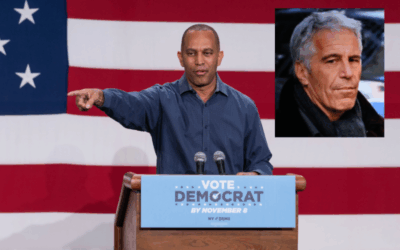
Epstein Files Bill Sparks New Questions as Jeffries Email Emerges
The Modern Memo may be compensated and/or receive an affiliate commission if you click or buy through our links. Featured pricing is subject to change. On November 19, 2025, President Trump signed the Epstein Files Transparency Act into law. It directs the Department of Justice to send both unclassified — and to the greatest extent allowed, classified — documents connected to Jeffrey Epstein to Congress within 30 days. The House approved the bill by a dramatic 427–1 margin, and the Senate agreed unanimously. Those votes highlight something rare in Washington: bipartisan agreement in favour of openness. What makes this especially significant is the subject: years of questions over how Epstein’s case was handled, which left many people feeling the story had been locked away. This law changes that dynamic. What the Bill Requires Here’s how the legislation works: All records, documents, communications and investigative materials — classified or not — must be turned over to Congress. Within 15 days, the Attorney General must provide a list of government officials and politically exposed individuals tied to Epstein’s case. The deadline to deliver the full set of materials to Congress is 30 days from the presidential signature. Because of the tight timeline, agencies will be under pressure to act fast. Some analysts warn quick deadlines may lead to redactions, omissions or legal push-back. The wording of the bill seems intentional: phrases like “all records” and “to the maximum extent possible” hint at a push to limit selective disclosures and hold the process accountable. More Stories Kamala Teases 2028 Run as Democrats Scramble for Strategy FBI Probes Hunting Stand Near Trump’s Air Force One Area Get Your Essential Survival Gear: Medical Go Bag and Trauma First Aid Kit Why the Shift Happened The movement toward this law didn’t come out of nowhere. It was led by Representatives Thomas Massie (R-KY) and Ro Khanna (D-CA) through a somewhat uncommon tool: a discharge petition to force the vote despite resistance. A key turn came when Trump reversed his earlier position and encouraged Republicans to support the disclosure. He said, “We have nothing to hide, and it’s time to move on from this Democrat Hoax.” Why the U-turn? Two things: One, public demand for transparency has been persistent and loud. Two, resisting disclosure could look like protecting all those involved. A New Layer: Jeffries Campaign Solicitation Interestingly, the story now has a new twist. Documents disclosed by the House Oversight Committee show that the campaign of Hakeem Jeffries sought contributions from Epstein years after his 2008 conviction. A May 2013 email invited Epstein to a fundraising dinner tied to Jeffries’ campaign and implied the rising star congressman was seeking support. This adds an extra dimension of oversight pressure and raises fresh questions. The outreach to Jeffrey Epstein puts issues of influence and access back in the spotlight. .@RepJamesComer: “I’ve taken to the floor today to respond to Minority Leader Hakeem Jeffries calling me a, quote, “stone-cold liar” during a press conference defending the recent discovery of Democrats’ communication with convicted sex offender Jeffrey Epstein.” pic.twitter.com/jKtejCvFa2 — CSPAN (@cspan) November 20, 2025 Why It Matters This law matters for multiple reasons: For the victims of Epstein’s criminal operation, this represents a long-awaited push for answers. For Congress, it shifts the balance: from questions about what was hidden to the full weight of oversight and demand for disclosure. From a political perspective, it’s a change of narrative: instead of secrecy, the governing side is now pushing openness. On top of that, the Jeffries campaign detail means this isn’t just about one administration or one individual — it runs through multiple years, multiple actors, and potentially multiple parties. That helps explain why people are paying attention. What’s Next So what happens now? With the 30-day clock ticking, here are the key questions: Will any materials still be withheld because of classification, ongoing investigations or executive privilege? Some legal experts say yes. How much will the public actually see? Will we have raw documents, or heavily redacted versions? What will the disclosures do to public figures, institutions or past investigations? Could there be renewed scrutiny or calls for reform? And finally: will this result in fresh revelations — or just repackaged versions of what we already know? There’s also a logistical question: How will these documents be released? If Congress makes them public online, the scale of review could be massive — think journalists, attorneys, researchers all digging in. Final Word By signing the Epstein Files Transparency Act, the White House triggered what could become one of the most significant document disclosures in recent political memory. Whether it delivers a full reckoning or simply opens new political chapters remains to be seen. What is clear, though, is this: the narrative has shifted from secrecy toward accountability. With fresh attention on not just the files, but also the fundraising and outreach tied to Epstein, we’re entering a new stage of this story. Releasing the files could bring clarity long sought by victims and investigators, or the disclosure may raise more questions than answers. Either way, the next 30 days promise to be a revealing chapter. Cut through the noise. Drown out the spin. Deliver the truth. At The Modern Memo, we’re not here to soften the blow — we’re here to land it. The media plays defense for the powerful. We don’t. If you’re done with censorship, half-truths, and gaslighting headlines, pass this on. Expose the stories they bury. This isn’t just news — it’s a fight for reality. And it doesn’t work without you. 📩 Love what you’re reading? Don’t miss a headline! Subscribe to The Modern Memo here! Explore More News AI Job Cuts Surge: How Automation Is Reshaping the U.S. Workforce in 2025 ACA Premiums Are Rising — But Not Because of Expiring Subsidies Daylight Saving Time Debate Heats Up Across States Top 5 Essential Survival Gear Items For Any Adventu

Drowning in Bills? These Debt Solutions Could Be the Break You Need
Across the country, families are tightening their belts and rethinking how they spend every dollar to pay their bills. With prices climbing and paychecks stretched thin, more Americans are realizing that traditional budget or debt advice — “skip the coffee” or “cut streaming services” — just isn’t enough. Real people need real solutions that make a real difference. From consolidating debt to reducing unnecessary interest and negotiating smarter repayment plans, there are now practical tools designed to help everyday individuals find relief without taking on new financial risks. These programs focus on one goal: making your money work for you, not against you. Budgeting isn’t just about cutting back — it’s about regaining control. Whether that means combining multiple bills into one manageable payment, trimming high-interest balances, or finally getting a clear picture of where your money goes each month, small, strategic changes can have a big impact over time. Financial stress can be overwhelming, but it doesn’t have to be permanent. More and more Americans are discovering proven ways to simplify their finances, lower monthly costs, and start building toward stability again — one step, one payment, one plan at a time. 1. Feeling Crushed by Credit Card Debt? This Simple Program Could Help If your paycheck isn’t stretching as far as it used to, you’re not alone. From groceries to gas to housing, rising costs are putting real pressure on the family budget nationwide. Many are dipping into savings, maxing out credit cards, or delaying bills just to make ends meet. But more and more Americans are discovering a new way to find relief — one that helps reduce debt, simplify payments, and ease financial stress without taking on new loans. It’s called debt consolidation, and it’s helping people regain control of their finances faster than they thought possible. These debt consolidation programs connect consumers with trained specialists who work directly with creditors. They negotiate lower balances on unsecured debts such as credit cards or medical bills. Instead of juggling multiple payments, participants make one manageable monthly deposit while experts handle the rest. (MORE NEWS: Should You Refinance Your Mortgage After Fed Rate Cuts?) Here’s what makes debt consolidation programs stand out: You could reduce your total debt by negotiating lower payoff amounts. No new loans — just a structured plan to help regain control of your budget. One monthly payment replaces multiple bills. Professional negotiators handle creditor calls and settlements. Many see substantial progress within months, with complete resolutions typically in 2–4 years. It’s not an instant fix, and credit scores may dip temporarily. But for thousands, debt consolidation offers a realistic path away from endless minimum payments and toward lasting financial stability. If you’ve been feeling the squeeze, now’s the time to act. See how Americans are finally finding financial breathing room — and how you can too! See If You Qualify 2. Seniors Are Saving Big — Get Full Coverage Car Insurance for Pennies on the Dollar! Many seniors are shocked to learn they could be paying far less for the same auto insurance coverage. If you’ve had a clean driving record or simply haven’t compared rates in a while, you might be missing out on major savings. Recent programs have made it easier than ever for drivers over 55 to qualify for exclusive senior auto insurance discounts — often cutting premiums dramatically. Some are finding ways to pay pennies on the dollar compared to what they used to spend, while still enjoying full coverage protection and dependable service. These discounts aren’t always advertised, but checking your eligibility only takes a minute. By comparing trusted providers, you can quickly see how much you could save — no hidden fees, no obligation. Find out if you qualify for full coverage car insurance for pennies on the dollar — and start saving today! Compare Rates Now 3. Finding Relief: Real Debt Relief Options Helping Americans Reclaim Control For millions of Americans, debt has become more than a number on a statement — it’s a source of constant stress that affects every part of life. Between rising prices, unexpected expenses, and interest rates that seem to climb overnight, many households are struggling to stay ahead. But now, a growing number of people are discovering real debt relief options that can finally make a difference. Unlike traditional loans or credit counseling, modern debt relief programs focus on helping you reduce what you owe — not just shuffle it around. These programs connect you with experts who negotiate directly with creditors to settle accounts for less than the full balance, often saving participants thousands. The goal is simple: to create a manageable path toward financial stability, without taking on new debt. Here’s what makes debt relief programs stand out: You could cut down your total debt by negotiating lower settlements. No new loans or long-term contracts to worry about. One affordable monthly deposit replaces multiple bills. Professionals handle creditor calls and negotiations on your behalf. Many participants become debt-free within 2–4 years, depending on their situation. It’s not a one-size-fits-all solution — and it’s not instant — but for thousands of Americans, debt relief offers a fresh start after years of financial stress. If you’re feeling buried by bills and high interest rates, there’s a way forward. Explore today’s debt relief options and see how you can finally get ahead! Get Relief While It’s Available #4 Medicare Open Enrollment: How Seniors Are Saving on Healthcare Costs Healthcare can quickly become one of the biggest expenses in retirement — but it doesn’t have to be. During Medicare Open Enrollment, seniors have a valuable chance to review and update their plans, often unlocking better coverage and lower costs. Many Americans over 65 don’t realize they could qualify for extra benefits, like vision, dental, hearing, and prescription coverage, all while reducing premiums. Comparing plans now could save hundreds — or even thousands — of dollars each year. Here’s why reviewing your Medicare options matters: You may qualify for new benefits at no additional cost. Lower…

Out-of-Town Renters Are Driving Up Demand in These Five Cities
The Modern Memo may be compensated and/or receive an affiliate commission if you click or buy through our links. Featured pricing is subject to change. If you feel like it’s getting harder to find a rental that fits your budget, you’re not alone. A new Realtor.com October 2025 Rental Report analysis highlighted in the New York Post shows that out-of-town renters are reshaping demand in five major cities: Detroit, Philadelphia, Sacramento, San Francisco, and Charlotte. These cities don’t have much in common at first glance. They’re spread across the country, with different economies, cultures, and housing histories. But they share one key trait: they’re all cheaper than nearby big-ticket cities, and that price gap is pulling in renters from outside markets. Why Out-of-Towners Are on the Move The boom in remote and hybrid work has given a lot of renters flexibility. At the same time, rents in traditional “winner” cities — like New York, San Jose, Los Angeles and Washington, D.C. — have climbed so high that people are looking for more affordable alternatives. According to Realtor.com’s rent report, between 2019 and the third quarter of 2025, demand has shifted sharply toward these five metros. In each one, the share of local renters viewing listings has dropped, while the share of people browsing from other cities has jumped. In simple terms, locals now have to compete not just with their neighbors, but with renters from wealthier or more expensive areas who can often pay more. Detroit: Motor City Becomes Magnet City Detroit saw the biggest shift of all five cities. In 2019, most rental interest there came from locals. By 2025, the local share had dropped by nearly 25 percentage points, down to just 45.1 percent of rental traffic. Who’s looking at Detroit rentals now? A large share of out-of-market views come from Indianapolis, Washington, D.C., and New York City. Detroit still offers far more affordable rents compared to those feeder cities. That makes it attractive for renters willing to move for lower costs and more space. But it also means local residents face new competition from people who may be used to paying a lot more in rent — and are willing to offer higher amounts to win the unit they want. More Stories Kamala Teases 2028 Run as Democrats Scramble for Strategy FBI Probes Hunting Stand Near Trump’s Air Force One Area Get Your Essential Survival Gear: Medical Go Bag and Trauma First Aid Kit Philadelphia: New York’s Affordable Escape Hatch Philadelphia has long been a quieter, cheaper alternative to New York City. Now the numbers prove just how strong that pull has become. In 2019, New Yorkers accounted for only a small share of Philadelphia’s rental views. By the third quarter of 2025, they made up more than a quarter of all rental traffic into the city. The price difference explains why. During that period, the typical asking rent in New York City was about $2,925 per month, while the median asking rent in Philadelphia was around $1,743. For a renter in the city, that gap can mean the difference between a cramped studio and a full-sized apartment. For locals in Philadelphia, it means more competition and faster-moving listings, especially in popular neighborhoods. Sacramento: California Renters Look for Relief Sacramento has quietly become a pressure valve for California’s sky-high rents. The share of local demand there has dropped as out-of-town renters from San Jose and Los Angeles increasingly set their sights on the city. In the third quarter of 2025, Sacramento’s median asking rent was about $1,858. That’s more than $1,500 cheaper than San Jose and nearly $940 less than Los Angeles. For tech workers burning out on Silicon Valley prices, Sacramento offers a chance to stay in California, keep relatively close to job hubs, and actually breathe when the rent is due. San Francisco: Still Pricey, but Less Impossible It might surprise some people to see San Francisco on a list of markets attracting out-of-towners, especially after so many headlines about people leaving during the pandemic. But the numbers show a more nuanced story. San Francisco had a sharp decline in local rental demand over six years. At the same time, interest from San Jose renters surged, growing significantly since 2019. Why would someone leave San Jose for San Francisco, another famously expensive city? Because San Francisco’s median rent, while high, is now about 16 percent lower than San Jose’s. For someone used to Silicon Valley prices, San Francisco can actually feel like a bargain. Charlotte: A Southern Standout for New Arrivals Rounding out the list is Charlotte, North Carolina, where local rental demand has fallen while out-of-town interest has grown, especially from Atlanta and New York City. Charlotte offers a strong job market, especially in banking and finance, with a lower cost of living than many East Coast hubs. A renter can lease an apartment in Charlotte for nearly half of what they would pay in New York City. For locals, that’s a double-edged sword. Growth brings new businesses, jobs, and amenities — but it also puts pressure on rents and makes it harder for long-time residents to stay in the areas they’ve always called home. Big Picture: Rents Down, Competition Up Even as out-of-towners push up demand in these five cities, national rents overall are slipping slightly. October 2025 marked the 27th straight month of year-over-year rent declines, with the median asking rent across the 50 largest metros at $1,696, down 1.7 percent from a year earlier. Smaller units — studios and one-bedrooms — have seen the largest price drops. For renters in general, that’s good news. But in these specific magnet cities, the story is less about falling prices and more about who is competing for the available homes. What This Means for Renters on the Ground For renters living in Detroit, Philadelphia, Sacramento, San Francisco, and Charlotte, the message is clear: you’re no longer just up against your neighbors. You’re now competing with renters from some of the most expensive markets…

Thomas Crooks Case: FBI Ignored Digital Red Flags
The Modern Memo may be compensated and/or receive an affiliate commission if you click or buy through our links. Featured pricing is subject to change. The investigation into Thomas Crooks, who attempted to assassinate Donald Trump in July 2024, has been marked by long delays, scant public communication, and critical procedural gaps. The New York Post highlights that despite the severity of the attack, federal agencies have yet to provide clear answers about motive, security breakdowns, and whether Crooks acted alone or was part of a larger plot. The Secret Service’s role has come under intense scrutiny. Reports suggest they identified Crooks as a threat — even monitored him — only for him to successfully scale a rooftop and open fire from an unsecured vantage. The breakdown signals major flaws in coordination and protective procedure. The Digital Trail and Its Blind Spots Crooks left a distinct online footprint: posts in the furry-subculture sphere, pronoun declarations like “they/them,” multiple alias accounts, and disturbing commentary on violence. But federal agencies failed to publicly explain how such indicators were assessed and what role they played in the investigation. The oversight raises uncomfortable questions. How thoroughly were digital leads pursued? Why was so little shared with the public? In the aftermath of the attack, silence has bred suspicion more than confidence. Related Stories Rebuttal to Hakeem Jeffries: When Your Own Words Go Too Far Under Siege: My Family’s Fight to Save Our Nation — Book Review Ryan Routh Attempts to Stab Himself After Guilty Verdict Neo-Nazi Links in the Digital Trail Another notable part of Crooks’ online activity involved a figure known as “Willy Tepes,” identified as a member of Norway’s Nordic Resistance Movement — a neo-Nazi organization designated as a terrorist group by the U.S. State Department. Tepes routinely promoted violent rhetoric and appeared to reinforce Crooks’ growing radicalization. A phrase he often repeated — “political power comes from the barrel of a gun” — later appeared in Crooks’ own messages, suggesting it had influenced his mindset. What stands out even more is that Crooks disappeared from the internet shortly after his interactions with Tepes. The sudden silence left a gap in his digital footprint at a critical point in time. And in a comment posted on October 5, 2025 — over a year after the Butler attack — Tepes claimed he had spoken to both Russian and American intelligence. These details add another layer of complexity to the case and raise questions about how thoroughly investigators examined Crooks’ ties to foreign extremist actors. The Case for Transparency Transparency matters — and this case has delivered very little of it. When massive failures occur at the protective and investigative levels, public trust erodes. The FBI and Secret Service have invited conspiracy theories simply by withholding details. In an era of heightened political tension, partial disclosures feel insufficient. For citizens to trust that justice was served, the facts must be openly shared: what was found, what wasn’t, and why some conclusions were drawn. Why This Matters for National Security The Crooks case is a tragedy, but also a warning. When protection of a high-profile figure fails this dramatically, the national security implications are vast. The failure to properly investigate, communicate, and safeguard sets a precedent that danger might strike again — and we may not know how or why. Federal agencies overlooked warning signs — digital activity, community ties, behavioral risk factors — aren’t niche problems anymore. They’re central to the future of threat identification and prevention. What Needs to Be Done Now The investigative agencies must release detailed findings: timeline, motive, digital trails, possible accomplices. The Secret Service must review and publicly report how Crooks gained access to his rooftop vantage point, what monitoring failed, and how similar vulnerabilities will be corrected. Congress should conduct a full oversight review, ensuring that systemic issues in protective services are resolved before the next crisis. The Cost of Silence When the facts are hidden, suspicion fills the vacuum. The public is left with unanswered questions: Was this a lone act of a disturbed individual? Or was it something far more organized? Without transparency, both narratives survive. The longer the silence drags on, the more conspiracy theories proliferate — and the harder it becomes to anchor truth in public understanding. Final Thought The attack by Thomas Crooks was a chilling breach of security and an alarm bell for our protective institutions. But it’s not only the event itself that demands attention — it’s what followed: half-answers, delays, and crucial information still locked away. If we truly want to prevent shock from turning into repeat tragedy, we need the truth to come out clearly, fully, and soon. Cut Through the Noise. Slice Through the Lies. Share the Truth. At The Modern Memo, we don’t tiptoe around the narrative—we swing a machete through it. The mainstream won’t say it, so we will. If you’re tired of spin, censorship, and sugar-coated headlines, help us rip the cover off stories that matter. Share this article. Wake people up. Give a voice to the truth the powerful want buried. This fight isn’t just ours—it’s yours. Join us in exposing what they won’t tell you. America needs bold truth-tellers, and that means you. 📩 Love what you’re reading? Don’t miss a headline! Subscribe to The Modern Memo here! Explore More News AI Job Cuts Surge: How Automation Is Reshaping the U.S. Workforce in 2025 ACA Premiums Are Rising — But Not Because of Expiring Subsidies Daylight Saving Time Debate Heats Up Across States Top 5 Essential Survival Gear Items For Any Adventu

25 Girls Kidnapped in Nigeria: Inside the Dawn Raid
The Modern Memo may be compensated and/or receive an affiliate commission if you click or buy through our links. Featured pricing is subject to change. Imagine being asleep in a quiet boarding school, only to be jolted awake by gunfire before the sun even rises. That’s exactly what happened to dozens of girls in northwest Nigeria when armed men stormed their school around 4 a.m. According to Fox News, the attackers didn’t hesitate. They went straight through the campus with deadly intent, killing a staff member and a guard before reaching the building where the girls slept. When the chaos settled, 25 girls had been taken. The attackers vanished into the darkness just as quickly as they arrived, leaving behind terrified students, grieving staff, and shocked families. It’s the kind of incident that makes every parent’s heart drop — and sadly, it’s not the first time something like this has happened in the region. Coordinated Tactics Used by the Attackers The details coming out of this incident paint a picture of a group that knew exactly what it was doing. Witnesses told authorities that the men arrived on motorcycles, which is a common tactic in rural Nigeria because it lets attackers slip in and out without relying on major roads. They were also carrying what officials described as “sophisticated weapons.” This detail suggests the operation was not random. Instead, it points to planning, coordination, and possible support from larger criminal networks. The attackers moved fast, took out the people who could fight back, and then focused on the students. Their precision made it clear that this wasn’t random violence. This was a calculated operation. More Stories Kamala Teases 2028 Run as Democrats Scramble for Strategy FBI Probes Hunting Stand Near Trump’s Air Force One Area Get Your Essential Survival Gear: Medical Go Bag and Trauma First Aid Kit Government Launches Urgent Rescue Mission As soon as news of the kidnapping reached authorities, security forces launched what they called a “massive search-and-rescue operation.” They’re searching forests, trails, and the remote areas where these groups often hide victims. Nigeria’s Information Minister, Mohamed Idris, stressed that the attackers don’t care about religious or ethnic identity. In his words, “These criminals attack anyone they believe is vulnerable.” Even though the government is responding quickly, rescue missions like these are extremely challenging. The terrain is difficult, the attackers move constantly, and the victims are often taken far from the attack site. Kidnapping Highlights a Troubling History This kidnapping immediately brought back memories of previous tragedies. The most infamous occurred in 2014, when more than 200 schoolgirls were abducted from the town of Chibok. Since then, the region has faced repeated mass kidnappings. In 2024, more than 280 schoolchildren were taken in Kaduna State. That same year, over 200 displaced women and children were kidnapped in Borno State while gathering firewood. These repeated incidents show how deeply rooted the problem has become. Kidnappings are no longer isolated crises. They are a recurring threat that hangs over families, educators, and entire communities. Why Schools Remain High-Risk Targets Schools in northern Nigeria face several challenges that make them easy targets. Many operate in remote areas with limited security. Guards often lack training and proper weapons. This leaves schools vulnerable when faced with heavily armed attackers. Girls’ schools carry symbolic weight. Educating girls represents progress, independence, and opportunity — all things extremist or criminal groups may want to disrupt. But the biggest reason is money. Kidnapping has become a profitable industry. Even when governments refuse to negotiate, communities sometimes raise funds to free their loved ones. Impact on Families, Communities, and Education Every time a school is attacked, fear spreads through nearby villages. Parents begin questioning whether it’s worth sending their children — especially daughters — back to class. For the girls who return or witness the attacks, the trauma can last for years. Some struggle with nightmares. Others develop anxiety or lose interest in school entirely. Local businesses feel the strain too. People stay indoors more often, markets close earlier, and farmers avoid remote fields. Life becomes restricted because everyone is constantly looking over their shoulder. Long-Term Measures Needed to Improve Security As the search effort continues, many Nigerians want the government to focus on prevention just as much as rescue operations. They want better security at schools, stronger intelligence-gathering, and better cooperation between federal and local authorities. While military responses are important, experts say they won’t be enough on their own. Nigeria needs long-term strategies that involve education, economic improvements, and community programs that reduce the appeal of joining armed groups. Schools must become safe places again. Without that, progress — especially for girls — becomes nearly impossible. The Takeaway The kidnapping of these 25 girls highlights how vulnerable many communities in northern Nigeria still are. Families are left waiting for answers, and schools continue to operate under constant fear of becoming the next target. Each new attack exposes gaps in security that can no longer be ignored. Stronger protections, better resources, and consistent support from leaders at every level are essential if real change is going to happen. Parents want more than promises. They want their children to be able to attend school without risking their lives. Until meaningful, long-term solutions are put in place, the cycle of fear and uncertainty will continue — and the future of girls’ education will remain at risk. Forget the Headlines. Challenge the Script. Deliver the Truth. At The Modern Memo, we don’t tiptoe through talking points — we swing a machete through the media’s favorite lies. They protect power. We confront it. If you’re sick of censorship, narrative control, and being told what to think — stand with us. 📩 Love what you’re reading? Don’t miss a headline! Subscribe to The Modern Memo here! Explore More News AI Job Cuts Surge: How Automation Is Reshaping the U.S. Workforce in 2025 ACA Premiums Are Rising — But Not Because of Expiring Subsidies Daylight Saving Time Debate Heats Up Across…

Michelle Obama Says U.S. Not Ready for a Woman President
The Modern Memo may be compensated and/or receive an affiliate commission if you click or buy through our links. Featured pricing is subject to change. Michelle Obama recently made headlines with a blunt message delivered during her appearance at the Brooklyn Academy of Music. While discussing the 2024 election and the role of women in politics, she argued that America is still not ready to elect a woman president. Her comment sparked immediate debate, because she spoke with emotion and certainty, saying, “As we saw in this past election, sadly, ain’t ready… Don’t even look at me about running. You’re not ready for a woman. You are not.” The audience reacted strongly, but the conversation that followed across the country was about much more than her personal decision not to run. It was about whether her conclusion makes sense in today’s political climate. Michelle Obama says America is NOT ready for a woman president. 🙄 Give us someone who is worthy and we’ll vote her in. Until then, sthu. 🙄 What’s YOUR response to her comments? 👇👇👇👇 pic.twitter.com/1uklM0JTC5 — Jannine.. #MagaMemeQueen ™️ 👑🇺🇸 (@janninereid1) November 16, 2025 The Election Context Behind Her Comments Obama’s remarks came after Kamala Harris’s loss to Donald Trump. While many analysts pointed to economic concerns, policy disagreements, and campaign strategy issues, Obama framed the defeat as a cultural one. She argued that sexism was the true barrier preventing Harris from winning. But a lot of voters don’t see it that way. Many people felt the election result wasn’t about rejecting a woman candidate but about rejecting that specific candidate. Voters questioned Harris’s leadership, communication, and record—not her gender. The distinction matters, because it shapes how Americans view what comes next. Her Personal Experience in the Spotlight During her discussion, Michelle Obama also opened up about her own time in the public eye. She explained that even members of her own party attacked her early on. “These were our people going after me,” she said, pointing out how heavily she was judged on things that had nothing to do with policy or leadership. She shared how she felt pressured to be perfect because she expected criticism. Whether it was the way she spoke or what she wore, she felt she had to think several steps ahead. That experience clearly shaped how she views the political world today. More Stories Kamala Teases 2028 Run as Democrats Scramble for Strategy FBI Probes Hunting Stand Near Trump’s Air Force One Area Top 5 Essential Survival Gear Items For Any Adventure The Deeper Message: Not About a Woman President — About the *Right* Woman While Obama framed her comments around America not being ready for a woman president, many Americans strongly disagree—not out of disrespect to her, but because they see the issue differently. For them, it has nothing to do with rejecting a woman leader. It has everything to do with who that woman is. Voters want someone competent, confident, steady, and deserving of the role. They want a leader who commands respect, communicates clearly, and stands firm in her beliefs. And the truth is, if America were presented with a strong female candidate—someone with conviction and leadership qualities similar to Italy’s Giorgia Meloni—she wouldn’t be sidelined. She would be embraced. The hesitation isn’t rooted in sexism; it’s rooted in the desire for a capable leader, male or female. Voters aren’t looking for symbolism. They’re looking for strength, authenticity, and results. Why Her Message Resonates With Some—but Not All Michelle Obama’s message resonates deeply with those who believe gender bias still plays a major role in politics. However, many Americans see the broader issue as one of leadership, not gender. They point to examples of strong female governors, senators, CEOs, and world leaders who have earned the trust of their people. When a woman demonstrates ability, courage, and clarity, voters respond well. This is why Michelle Obama’s assertion feels incomplete to many. Voters weren’t resisting a woman running for president—they were resisting candidates who didn’t inspire confidence. The Challenge Female Leaders Still Face Obama spoke about the double standards women encounter. If they’re tough, they’re called aggressive. If they’re warm, they’re called soft. There’s no denying women face unique challenges. That pressure is real. Women in leadership roles often feel they must prove themselves twice as much to be taken seriously. But again, this doesn’t mean voters won’t elect a woman. It means voters want a woman with a clear vision and the strength to execute it. Would America Elect a Woman President? Despite Obama’s doubts, much of the country believes the answer is yes—America *would* elect a woman president. The right woman. Someone with strong values. Someone who communicates like a leader. Someone who projects stability and purpose. Someone who earns the public’s trust. If a woman like Giorgia Meloni appeared in American politics—a woman with conviction, presence, and a firm worldview—many voters believe she would win decisively. Reactions to Obama’s Statement Her comments drew mixed reactions nationwide. Some praised her honesty. Others felt she painted too broad a picture, assuming that voters rejected women when they were actually rejecting unqualified or unconvincing candidates. Many people pointed out that women leaders around the world have been elected by populations with wide-ranging backgrounds and belief systems. That suggests the U.S. isn’t “behind”—it’s simply waiting for the right leader. The Takeaway Michelle Obama’s assertion that America must “grow up” before electing a woman president sparked national discussion. But for many Americans, the real story isn’t about a lack of readiness—it’s about wanting a leader who truly fits the moment. Voters want competence, confidence, substance, and strength. They want someone who earns the position, not someone placed on the ballot because of gender expectations. When a strong, capable woman steps forward—one who displays clarity, conviction, and leadership—Americans are ready. And they will elect her. Expose the Spin. Shatter the Narrative. Speak the Truth. At The Modern Memo, we don’t cover politics to play referee — we swing a machete through…

Bessent: U.S. Economy Will Accelerate Strongly in Early 2026
The Modern Memo may be compensated and/or receive an affiliate commission if you click or buy through our links. Featured pricing is subject to change. Scott Bessent, the U.S. Treasury Secretary, stated that he expects a “substantial acceleration” in the American economy during the first and second quarters of 2026. His comments, delivered during an interview, painted an optimistic picture of rising incomes, falling inflation, and renewed consumer confidence. Bessent’s outlook stands in contrast to the economic uncertainty many households have felt in recent years. The Key Drivers of His Optimism Bessent explained that several important factors are shaping his forecast. Among the most significant is the expectation that inflation will continue declining. Over the last several years, Americans faced higher costs for essential goods, including food, gasoline, housing, and utilities. Inflation reached levels not seen in decades. However, Bessent believes that this pressure is easing. He described the situation visually, saying, “Imagine two lines. There is the inflation line; that is going to start turning down. Then there’s the income line; real wages are going to increase.” The moment these lines move in opposite directions, households experience relief because their money stretches further. Another driver of Bessent’s optimism is the recent executive order that reduced tariffs on key imported goods. Items such as beef, coffee, and other essentials will enter the U.S. market at lower cost. This policy change intends to bring immediate downward pressure to price levels nationwide. Lower tariffs can reduce expenses for both businesses and consumers. The Inflation Challenge and Wage Growth During the interview, Bessent argued that the administration “inherited this terrible inflation.” He acknowledged that Americans have been burdened by higher costs, but he stressed that new policies are starting to work. “We are flattening it out,” he said, referring to inflation’s trajectory. What matters most to households is not only that inflation slows but that wages grow faster than prices. Bessent expects exactly that in early 2026. He predicted that “in the first two quarters of next year,” the U.S. will “see the inflation curve bend down and the real income curve substantially accelerate.” This shift could create more buying power, allowing families to spend on groceries, travel, savings, or investments with less financial strain. When real income increases, it often leads to increases in consumer spending, a key component of economic growth. 🚨 JUST IN: In an incredible development, Treasury Sec. SCOTT BESSENT announces the US economy will likely “substantially ACCELERATE” in Q1 or Q2 of next year Just in time for the midterms…all part of the plan. “The increase in real incomes – Americans will feel it in Q1, Q2… pic.twitter.com/4ieFi6RWld — Eric Daugherty (@EricLDaugh) November 16, 2025 The Role of Interest Rates and Energy Prices Another important part of Bessent’s prediction involves interest rates and energy prices. As borrowing costs decline, families and businesses may find it easier to purchase homes, finance equipment, or pay down debt. Lower interest rates can stimulate economic activity and help households feel more financially secure. Energy prices also contribute heavily to consumer costs. When gasoline and utilities become more affordable, it frees up spending for other areas. Bessent noted that improvements in energy markets should help fuel economic acceleration, especially early in the year when heating bills and transportation demand often mix. More Stories Kamala Teases 2028 Run as Democrats Scramble for Strategy FBI Probes Hunting Stand Near Trump’s Air Force One Area Trump Scores Legal Victory: $500M Fraud Penalty Overturned Potential Benefits for American Families If Bessent’s predictions prove correct, the first half of 2026 could bring relief for millions of Americans. Rising wages, combined with slower inflation, would mean greater financial stability. Families may notice they have more flexibility in their budgets. Parents might find it easier to manage childcare expenses. Young adults might feel more confident pursuing homeownership. Retirees might see their savings last longer. Stronger economic conditions can also influence job markets. As businesses feel more secure, they may hire more workers, offer better benefits, or invest in expansion. Job growth supports communities and boosts confidence across entire regions. Risks That Could Derail the Outlook Even with his optimism, Bessent acknowledged that certain risks remain. Global economic instability, supply chain disruptions, or geopolitical tensions could affect U.S. conditions. Economic recoveries rarely follow a perfectly smooth path. There is also the possibility that inflation could spike again due to unexpected factors, such as energy volatility or global shortages. If that happens, wage gains may not be enough to create meaningful improvement in people’s real earnings. Furthermore, wage growth historically lags behind broader economic indicators. Even if the economy strengthens, it could take time for the improvements to show up in paychecks. Indicators to Watch in 2026 Americans and policymakers will watch several key indicators to measure whether Bessent’s forecast holds true. These include: monthly inflation reports real wage growth hiring rates consumer spending levels small business optimism manufacturing and service sector data changes in interest rates trends in energy costs Each of these areas reveals important clues about the strength of the economy. If they move in the direction Bessent anticipates, his prediction of a “substantial acceleration” will gain credibility. Final Word In summary, Scott Bessent’s forecast suggests that the United States may enter a period of meaningful economic improvement in early 2026. His comments reflect confidence in declining inflation, rising wages, and more favorable conditions for families. Although risks remain, his view offers hope for a stronger and more stable financial landscape. If his predictions come to pass, American households could experience real relief and renewed optimism. The next several months will reveal whether the U.S. economy begins the acceleration Bessent believes is already underway. Forget the narrative. Reject the script. Share what matters. At The Modern Memo, we call it like it is — no filter, no apology, no corporate leash. If you’re tired of being lied to, manipulated, or ignored, amplify the truth. One share at a time, we dismantle the media machine — with facts, boldness,…

FAA Lifts Flight-Cut Mandate as Controller Staffing Rebounds
The Modern Memo may be compensated and/or receive an affiliate commission if you click or buy through our links. Featured pricing is subject to change. The Federal Aviation Administration (FAA) is officially ending its mandate that forced airlines to reduce flights at about 40 major U.S. airports. Beginning at 6 a.m. ET on Monday, the rule goes away—something many travelers and airlines have been waiting for. The move signals that things are looking up after a long period of staffing shortages, delays, and unpredictable schedules. For over a month, the FAA tried to manage an overwhelmed system that simply didn’t have enough air-traffic controllers to handle normal flight levels. Now, the agency says staffing has improved enough to step back. Airlines can plan without the looming threat of forced reductions. Why the Mandate Was Created This whole situation started during a messy period marked by a prolonged federal government shutdown. Hiring stalled, training slowed down, and many controllers ended up working exhausting amounts of overtime. With the FAA short about 3,500 controllers, flights were backing up everywhere. To keep things safe and somewhat stable, the FAA told airlines to cut flights by up to 10 percent at key airports. Eventually, those cuts were lowered to 6 percent and then 3 percent. Even then, carriers struggled to meet these numbers because flight schedules are planned months in advance. Trying to adjust them on the fly caused confusion and frustration for passengers and airlines alike. And let’s be honest—part of the problem was safety. Overworked controllers, fewer people in the tower, and constant pressure created a real risk. So, reducing flights was meant to protect both the workforce and the public. Ongoing Staffing Issues Still Matter The agency made it clear that it’s still reviewing cases of airlines not complying with the mandate when it was in effect. In other words, just because the rule is ending doesn’t mean the FAA won’t hold carriers accountable for past actions. This transition period is a bit of a balancing act. The FAA wants to give airlines more flexibility but also needs to ensure safety and oversight remain strong. Secretary Sean Duffy had a few positive words to say: 🚨The @FAANews has determined that normal flight operations can resume after multiple days of positive staffing with air traffic controllers in our towers. Now we can refocus our efforts on hiring and building the state-of-the-art air traffic control system the American people… https://t.co/28wQpOfKHD — Secretary Sean Duffy (@SecDuffy) November 17, 2025 Related Stories Kamala Teases 2028 Run as Democrats Scramble for Strategy FBI Probes Hunting Stand Near Trump’s Air Force One Area Trump Scores Legal Victory: $500M Fraud Penalty Overturned Impact on the Aviation System Lifting the mandate will affect more than just airlines and travelers. Airports themselves may see increased traffic, which means busier terminals and more demand on ground crews. Baggage teams, fuel providers, maintenance workers—they’ll all feel the ripple effects. This shift could be a good thing for regional airports too. If big hubs can operate without strict limits, it may open up more connecting options for smaller cities. That’s often a boost for local economies and regional travel. What Comes Next for Passengers and Airlines Travelers should still temper expectations. Just because the mandate is gone doesn’t mean the system will instantly return to pre-shortage performance. Staffing is still tight, and weather disruptions will still happen. But the overall picture looks much brighter now that airlines aren’t forced to cut flights at the last minute. Airlines may take a phased approach as they rebuild their schedules. They’ll look at which routes make the most sense to bring back and how best to balance operations with available staffing and aircraft. Some airports may feel the impact immediately, while others might see changes gradually. Final Word The FAA’s decision to lift the flight-cut mandate marks an important step toward a more stable aviation system. For airlines, it brings back flexibility and reduces operational risk. For travelers, it offers hope for more reliable schedules and fewer cancellations tied to staffing issues. Still, the job isn’t done. The U.S. aviation system must continue to build its controller workforce, improve training programs, and plan for long-term stability. But ending the mandate is a strong sign of progress—one that many people in the industry have been waiting to see—especially before the big holiday rush. If these improvements continue, air travel could feel smoother and more predictable in the future. Cut through the noise. Drown out the spin. Deliver the truth. At The Modern Memo, we’re not here to soften the blow — we’re here to land it. The media plays defense for the powerful. We don’t. If you’re done with censorship, half-truths, and gaslighting headlines, pass this on. Expose the stories they bury. This isn’t just news — it’s a fight for reality. And it doesn’t work without you. 📩 Love what you’re reading? Don’t miss a headline! Subscribe to The Modern Memo here! Explore More News AI Job Cuts Surge: How Automation Is Reshaping the U.S. Workforce in 2025 ACA Premiums Are Rising — But Not Because of Expiring Subsidies Daylight Saving Time Debate Heats Up Across States Retirement 2025: America’s Safest and Wealthiest Towns to Call Home

JD Vance: Illegal Immigration Drives Up Home Prices
The Modern Memo may be compensated and/or receive an affiliate commission if you click or buy through our links. Featured pricing is subject to change. Rising Home Costs and the Immigration Debate In recent months, Vice President J.D. Vance has linked the growing housing-affordability crisis in America to the increase in illegal immigration. He argues that when millions of people arrive without legal status, they create new demand for housing, and that in turn drives up home prices and rents for American citizens. Furthermore, he contends that regulatory burdens and insufficient home construction further amplify the problem, Breitbart News reports. Vance’s Key Argument: Demand Outpacing Supply Vance asserts that the U.S. is experiencing too much demand for housing and not enough new homes to match. He notes that younger Americans are “worried about the basics,” including the ability to buy a home. He connects this directly to mass illegal immigration under former President Joe Biden. If more people enter the country—especially those without legal status—they require housing. He claims that those demands compete with citizens and drive up prices for everyone. Additionally, he argues that regulatory and construction shortfalls worsen the crisis. For example, new-home building lags behind where it should be, and local regulations add costs and delay projects. Because of this, Vance believes the American Dream of owning a home is slipping out of reach for many, particularly younger generations. Related Stories Kamala Teases 2028 Run as Democrats Scramble for Strategy FBI Probes Hunting Stand Near Trump’s Air Force One Area Trump Scores Legal Victory: $500M Fraud Penalty Overturned Young Americans at a Disadvantage According to Vance, younger generations (millennials and younger) face steeper hurdles than previous ones. He pointed out that while older generations often acquired homes by age 30, many in the younger cohort cannot even begin that journey. This matters because homeownership has long been a major way for families to build wealth. With prices soaring and supply tight, the pathway has narrowed. Vance says the combination of rising costs, high interest rates, tighter lending, and increased competition means it’s harder for a young person to buy a first home now than it was decades ago. He casts the situation as less about individual failure and more about structural shifts in the economy and housing market. Immigration’s Role According to Vance Central to Vance’s viewpoint is the idea that large-scale illegal immigration has drawn more people into the housing market than the system can easily absorb. For instance, he has used figures suggesting “20 million” or “25 million” undocumented people competing for housing. He argues that every new person needing a home exerts pressure on limited housing stock, especially in tight markets. Furthermore, he says that when legal entry is lax and enforcement weak, the influx accelerates the problem. By linking immigration to housing, Vance hopes to shift some policy focus toward border-security, enforcement, and limiting illegal entries — as part of the broader housing-affordability agenda. Supply-Side Problems and Structural Constraints Although demand is an important piece, Vance also highlights supply-side issues. He says that too few homes have been built in recent years and that local zoning rules, building regulations, and high development costs delay or block construction. For young buyers, this means fewer entry-level homes and more bidding wars. Vance’s solution emphasizes unlocking supply: simplifying regulations, increasing production, and thereby easing price pressure. He argues that without such structural fixes, simply blaming demand alone will not suffice. Moreover, he draws comparisons to other countries that faced high immigration and housing-cost spikes, using that to support his claim that immigration and housing affordability are linked. 🚨 JUST IN — JD VANCE: “We need to build 5 MILLION new homes!” Yep, and we need to deport 20 MILLION illegals! If we do both of those things (and quickly), we can FINALLY start making housing affordable again. pic.twitter.com/TKfa7OcpYG — Nick Sortor (@nicksortor) November 14, 2025 What It Means for Homebuyers For young Americans trying to buy a home, the message from Vance is that they are caught in a confluence of pressures: high demand, tight supply, regulatory friction, and migration-driven competition. If his diagnosis is correct, then policy actions would need to address all these elements simultaneously. From a practical standpoint, this suggests that aspiring buyers may need to broaden their search areas, adjust expectations (in terms of size or location), and act quickly when opportunities arise. Meanwhile, policymakers may need to streamline permitting, incentivize construction of starter homes, and ensure that housing supply keeps pace with growing need. If, on the other hand, the primary challenges are supply-side rather than immigration-driven demand, then focusing resources entirely on border enforcement may miss the bigger housing-policy target. Moving Forward: Policy and Opportunity Looking ahead, if the government adopts Vance’s framing, we might see increased emphasis on stricter immigration enforcement, border control, and minimizing illegal entries — all linked to housing-affordability goals. At the same time, a supply-side push could involve incentives for builders, reduced regulations, tax breaks for starter homes, and faster development permitting. For homebuyers, that means staying informed about local housing-policy changes, monitoring interest-rate and credit-market trends, and preparing financially (saving for down payments, improving credit scores). In markets where supply is increasing or regulatory burdens easing, buyers may find better opportunities. Ultimately, as Vance argues, the goal should be to restore the possibility of homeownership for young Americans — enabling them to buy a home, build equity, and feel rooted in their communities. Final Thoughts In summary, J.D. Vance presents a bold argument: that illegal immigration has materially contributed to America’s housing-affordability crisis by driving up demand while supply lags. He combines this with a critique of regulatory barriers and the younger generation’s diminishing access to homeownership. While many experts agree that the housing supply shortfall is a central issue, they caution that immigration is only one part of a complex equation. For young Americans hoping to buy a home, recognizing both the demand and supply aspects of the challenge is critical. And…

Under Siege: My Family’s Fight to Save Our Nation by Eric Trump — Book Review and Analysis
The Modern Memo may be compensated and/or receive an affiliate commission if you click or buy through our links. Featured pricing is subject to change. Read it or Leave it? Under Siege: My Family’s Fight to Save Our Nation by Eric Trump offers a candid, heartfelt, and unfiltered look into one of the most influential families in modern American history. Eric, the third child of Donald and Ivana Trump, pulls back the curtain to reveal not only the political battles but also the emotional toll that came with his father’s presidency. This book goes far beyond headlines—it humanizes the Trumps in a way few accounts ever have. As I turned the pages, I found myself drawn into the family’s world. It was a great book, filled with insight into the history-changing moments of the Trumps’ lives. It felt honest, especially when Eric shared his mother Ivana’s struggles, which ultimately cost her life. Beneath the politics and media storms lies a family that loves one another deeply—and that truth shines through every chapter. A Family Bound by Loyalty and Love Eric Trump’s storytelling brings warmth and loyalty to the forefront. He writes openly about his father’s constant love for his children and grandchildren. Whether Donald Trump was leading the nation, traveling the world for business, or spending time at home, Eric shows how family always came first. That closeness—unshaken by criticism or crisis—defines the heart of this book. The Trump family dynamic is portrayed as a blend of discipline, affection, and unwavering support. Eric makes it clear that despite the fame and power, their home life was guided by strong values and rules. Through these glimpses, readers understand that their bond is real and enduring. Trials, Tribulations, and the Cost of Leadership Transitioning from private life to the very public eye brought unimaginable challenges. Eric details the endless investigations, lawsuits, and accusations his family endured once Donald Trump decided to run for president. He doesn’t shy away from the emotional strain or the gut-wrenching fear of moments like the assassination attempt in Butler, Pennsylvania. Reading about how Eric, his wife Lara, and their children handled that terrifying day was especially moving. It reminded me that this family, often portrayed as larger than life, faces the same fears and heartbreaks as any other. This section of the book reads like a political thriller, yet it’s grounded in human emotion. Eric presents his family’s trials as both literal and symbolic—a reflection of how deeply divided the nation has become. The narrative captures not just the fight to clear their names but also their determination to stay united in the face of unrelenting opposition. The War Against the Outsider Another key theme Eric explores is what happens when an “outsider” dares to challenge the establishment. He describes the intense backlash that followed his father’s campaign announcement. Long-time friends turned away. Political insiders pushed back. Yet through it all, Donald Trump remained focused on what he believed was right for the country. Eric’s voice carries pride and defiance. He emphasizes how his father refused to play political games or take bribes. Instead, Donald Trump stayed true to his promise to fight for everyday Americans. That refusal to conform, Eric argues, made him both a hero and a target. The book shines brightest when it portrays the family’s resilience. They faced what Eric calls “the war that was waged against the President”—and through persistence, they found victory in endurance. Candid Reflections and Honest Struggles What struck me most about Under Siege is its honesty. Eric doesn’t paint a picture of perfection. He acknowledges his mother Ivana’s pain and how her struggles affected the entire family. He discusses moments of vulnerability that many public figures would hide. That rawness gives the book emotional depth and credibility. Reading these parts reminded me that the Trumps are, above all, human. They have highs and lows, triumphs and heartbreaks, just like the rest of us. It’s easy to forget that amid the media noise. But this book forces readers to pause and see them not as symbols or celebrities—but as people. That realization became my biggest takeaway. Related Stories Kamala Teases 2028 Run as Democrats Scramble for Strategy FBI Probes Hunting Stand Near Trump’s Air Force One Area Trump Scores Legal Victory: $500M Fraud Penalty Overturned Insightful, Eye-Opening, and Relevant Eric Trump’s writing is straightforward and engaging. He blends personal stories with political insights, making complex events easier to follow. Each chapter includes quotes from Donald Trump’s past books, offering context for his mindset and leadership style. Those quotes add depth, connecting the man behind the movement to the father behind the family. What’s more, Eric injects warmth and even a little humor, giving readers brief moments of levity amid the weight of the story. From a reader’s standpoint, the book serves as both memoir and historical reflection. It’s a firsthand account of the pressures and challenges that come with transforming from a private business family into a global political force. It’s also a reminder of how quickly society can judge and how fiercely one must fight for truth. A Lesson for Everyone—Not Just Trump Supporters Although Under Siege will certainly resonate with Trump supporters, it’s not written exclusively for them. Readers from across the political spectrum can learn from it. Conservatives will appreciate the behind-the-scenes perspective, while liberals may find new context for events they thought they understood. Eric invites readers to re-examine what they believe about leadership, loyalty, and legacy. The book reads as a modern history lesson—one that captures the emotional and political turbulence of the last decade in America. Final Takeaway When I finished Under Siege: My Family’s Fight to Save Our Nation, one truth stood out above all others—the Trumps are human. They feel pain, joy, fear, and love just like any other family. Eric Trump’s devotion to his father and his family’s shared resilience make this book a powerful and emotional read. This story isn’t just about politics; it’s about perseverance, family, and…