

Finance

Feeling a Financial Squeeze? How to Find Relief Now
Right now, many households are feeling the financial pinch. The economy remains unsettled, layoffs continue across industries, and the number of open jobs is lower than before. At the same time, the cost of living keeps climbing. Groceries, rent, and everyday expenses have all gone up. Credit card balances are rising, and many families are using debt to make ends meet. This combination has created real financial pressure. Even people who have always paid their bills on time are struggling to keep up. While things are expected to improve in the future, the truth is we are going through a tight squeeze right now. If you find yourself buried under bills or unsure how to move forward, you are not alone. The good news is that help is available. There are ways to manage your debt, reduce financial stress, and begin rebuilding stability. Here’s what you need to know. Understanding Debt-Relief Services Debt-relief services are designed to help people who can’t keep up with unsecured debts, such as credit cards or medical bills. These programs negotiate with your creditors to lower the total amount you owe. Instead of paying your full balance, you may be able to settle for a smaller lump sum. (MORE NEWS: Retirement 2025: America’s Safest and Wealthiest Towns to Call Home) The process usually works like this: You stop making direct payments to your creditors. You deposit money each month into a special account. Once that account builds up enough funds, the company negotiates a settlement on your behalf. When an agreement is reached, your debt is marked as resolved after you pay the negotiated amount. These programs often take two to four years to complete. While they can reduce what you owe, they also require patience and consistency. Why More People Are Turning to Debt Relief In times of financial strain, more people consider debt-relief options. With prices up and incomes stretched, credit card use has surged. Interest rates a high been much higher since 2022, making it harder to pay off balances. The average credit card interest rate was 21.39% in August 2025, according the Federal Reserve. For many, debt-relief services provide structure and support. They can simplify payments and help reduce stress. Instead of facing several creditors, you work through one program that manages negotiations for you. Debt relief can also be an alternative to bankruptcy. For people who want to avoid that step, settlement programs offer a middle ground — a way to regain control without starting over completely. The Benefits of Working with a Debt-Relief Program Reduced balances: Creditors may agree to settle for less than what you owe. Simplified payments: You deposit one monthly amount instead of juggling multiple bills. Faster results: In some cases, people become debt-free in just a few years. Peace of mind: Having professionals handle negotiations can relieve stress during a difficult time. While it won’t fix everything overnight, this approach can give you a clear plan and a light at the end of the tunnel. Risks You Should Understand Debt relief isn’t a magic solution. There are trade-offs. Because you stop paying your creditors during negotiations, your credit score will likely drop. It can take time to rebuild it afterward. There is also no guarantee that every creditor will agree to settle. If they refuse, you could still owe the full balance. Additionally, forgiven debt may be considered taxable income, so it’s important to plan for that possibility. (MORE NEWS: Government Shutdown Stalls Real Estate in 5 States) Finally, not all companies operate honestly. Some charge high upfront fees or make promises they can’t keep. Always research thoroughly, check reviews, and make sure a company only charges after they’ve successfully settled your debt. Signs Debt Relief Might Be Right for You You have large unsecured debts you can’t manage under current terms. You’ve tried credit counseling, consolidation, or budgeting without success. You can make regular deposits into a settlement account for several years. You are willing to accept a temporary hit to your credit in exchange for long-term freedom. If those points describe your situation, talking to a reputable professional could be the next smart step. Other Ways to Find Relief Debt relief is only one option. You can also explore other paths: Debt consolidation: Combine several high-interest debts into one lower-rate loan. Credit-counseling programs: Work with nonprofit counselors who negotiate lower interest rates and help you create a manageable payment plan. Budget adjustments: Track spending closely, cut unnecessary expenses, and focus on essentials until prices stabilize. Side income or part-time work: Even temporary income can help you stay afloat and avoid deeper debt. Bankruptcy: As a last resort, bankruptcy can offer a clean slate, but it carries serious long-term effects. Tips for Getting Through This Moment If you’re struggling right now, remember that many people are in the same boat. Here are practical steps to make things a little easier: Track every dollar. Write down what comes in and what goes out each month. Cut unnecessary spending. Cancel unused subscriptions and reduce impulse purchases. Negotiate your bills. Some creditors will lower rates or extend deadlines if you ask. Focus on essentials. Prioritize food, housing, and transportation over unsecured debts. Build an emergency fund. Even small amounts add up over time. Ask for help early. Don’t wait until you’re behind — contact support programs before accounts go into default. A Hopeful Outlook The current economic challenges — job uncertainty, rising costs, and growing debt — are real. But they won’t last forever. Economic cycles always shift. Opportunities will return, wages will rise, and the cost of living will eventually stabilize. In the meantime, taking control of your finances is the best way to protect yourself. Whether you choose debt relief, consolidation, or budgeting adjustments, what matters most is that you take action. You are not alone, and things will improve. By learning about your options and making thoughtful choices today, you can build a stronger financial future tomorrow. Forget the narrative. Reject the script. Share what…

Trump Ally Donates $130M to Cover Military Pay Amid Shutdown
An anonymous ally of Donald Trump quietly stepped in to donate $130 million to the Department of War with the intention of covering U.S. troops’ paychecks during the current government shutdown. The gift came as military service members faced potential delays or interruptions in their paycheck issuance. The donation raises important legal and constitutional questions — and also highlights how the shutdown is affecting critical federal operations. (RELATED NEWS: Trump Orders Military Pay Amid Government Shutdown) What We Know So Far Pentagon spokesman Sean Parnell said in a statement to Fox News Digital: “On October 23, 2025, the Department of War accepted an anonymous donation of $130 million under its general gift acceptance authority. The donation was made on the condition that it be used to offset the cost of Service members’ salaries and benefits. We are grateful for this donor’s assistance after Democrats opted to withhold pay from troops.” Trump himself said the individual had contacted him, saying: “I’d like to contribute personally, because I love the military and I love the country.” He added that he believed the donor did not want recognition and that he would not identify the person unless given permission. Trump says a donor friend wrote him a check today for $130 MILLION to help pay the military during the Schumer shutdown. “He doesn’t want the recognition. THAT is what I call a patriot!” Amazing 🇺🇸 pic.twitter.com/Bs8yeUR3e7 — Sara Rose 🇺🇸🌹 (@saras76) October 23, 2025 The Legal and Constitutional Snag Despite the generous contribution, significant legal barriers remain. According to experts, only Congress holds the power under Article I of the U.S. Constitution to appropriate funds for federal employee salaries — including those in the military. In other words, while the funds were accepted, their actual use to cover troops’ pay may require further congressional action. The Department of War can accept donations for certain purposes, such as scholarships, museums, memorials, or assistance for wounded service members, but it may not unilaterally redirect donated funds toward covering salaries under current law. The only way around this restriction would be for Congress to reclassify troops’ pay as mandatory spending, which doesn’t require annual appropriations, or otherwise change the law. Why This Matters This situation signals how deeply the shutdown is impacting critical functions. The fact that a private individual felt compelled to intervene for troops’ pay underscores how close to the edge some military financial operations are. It raises broader questions about the role of private donations in funding government operations. If an individual can donate hundreds of millions to cover military pay, what precedent does that set? Moreover, how will oversight, transparency, and accountability work in such cases? It reminds us that even generous acts may hit institutional and legal walls. Without congressional authorization, the donor’s intent may not translate into actual disbursement. That gap creates uncertainty for service members who are counting on timely pay and benefits. (MORE NEWS: Trump’s East Wing Demolition and Ballroom Plan Explained) What Comes Next Congress must act if the funds are to be used for their intended purpose. If lawmakers do not move quickly, service members risk continued delays even with the donation in hand. Meanwhile, the Department of War must track the donation, confirm legal eligibility, and coordinate with the Treasury and other federal entities to ensure compliance. Additionally, this episode may prompt calls for reform around how the military and other federal agencies handle shutdowns, pay disruptions, and private funding. Some in Congress may see this as a push to ensure troop pay remains protected regardless of political stalemate. Final Word The anonymous $130 million donation to pay U.S. troops in the face of a government shutdown is a remarkable gesture. At the same time, it highlights the limitations of executive and private-sector actions when legal authority resides with Congress. Without legislative approval, the funds cannot guarantee the intended paycheck coverage. Nevertheless, this act shines a light on the deep sense of patriotism many Americans still hold. Even in times of political division and financial uncertainty, individuals are willing to step up and sacrifice for the men and women who defend the nation. The mystery donor’s generosity shows that support for the military transcends politics — it is rooted in gratitude and national pride. Ultimately, this episode may serve as both a warning and an inspiration: a warning about how political stalemates can threaten those who serve, and an inspiration reminding us that patriotic Americans will always find ways to honor and protect their troops. Expose the Spin. Shatter the Narrative. Speak the Truth. At The Modern Memo, we don’t cover politics to play referee — we swing a machete through the spin, the double-speak, and the partisan theater. While the media protects the powerful and buries the backlash, we dig it up and drag it into the light. If you’re tired of rigged narratives, selective outrage, and leaders who serve themselves, not you — then share this. Expose the corruption. Challenge the agenda. Because if we don’t fight for the truth, no one will. And that fight starts with you.

U.S. Imposes Major Sanctions on Russian Oil Giants to Cut War Funding
The Trump administration has taken one of its boldest foreign policy steps yet—issuing sweeping sanctions against Russia’s top two oil companies, Rosneft and Lukoil. The move aims to choke off the energy revenue that fuels Moscow’s war in Ukraine and to pressure Russian President Vladimir Putin into agreeing to a ceasefire. In announcing the decision, President Donald Trump emphasized the power and scale of the new measures. He expressed confidence that the measures will bite. The administration is leaning on economic strength—rather than direct military force—to confront foreign aggression and change behavior. “I think that they’ll certainly have an impact there. They’re massive sanctions and sanctions on oil. The two biggest oil companies, among the biggest in the world,” Trump said. .@POTUS: “These are tremendous sanctions. These are very big against their two big oil companies — and we hope that they won’t be on for long. We hope that the war will be settled.” https://t.co/6vbswraYmV pic.twitter.com/FONI7ECFAw — Rapid Response 47 (@RapidResponse47) October 22, 2025 A Clear Message: End the War, Stop the Killing Treasury Secretary Scott Bessent, in an interview with Fox Business, underscored the humanitarian and strategic purpose behind the move: “Now is the time to stop the killing and for an immediate ceasefire. Given President [Vladimir] Putin’s refusal to end this senseless war, the Treasury is sanctioning Russia’s two largest oil companies that fund the Kremlin’s war machine. The Treasury is prepared to take further action if necessary to support President Trump’s effort to end yet another war. We encourage our allies to join us in and adhere to these sanctions.” His remarks make the intent clear: apply economic pressure to push Russia toward peace talks and halt its aggression in Ukraine. Scott Bessent on a new round of Russian sanctions. pic.twitter.com/inNmFKbt9x — Praying Medic (@prayingmedic) October 22, 2025 Why the Sanctions Target Energy The sanctions focus on the lifeblood of the Russian economy: oil. Rosneft and Lukoil account for a large share of Russia’s crude output. That production funds the state budget and, by extension, the war effort. By freezing U.S. assets and barring Americans from doing business with these firms, the Treasury seeks to undercut Russia’s war chest. The measures also reach subsidiaries involved in exploration, refining, shipping, and trading to close common loopholes. (MORE NEWS: Government Shutdown Stalls Real Estate in 5 States) Global Reaction and Rising Oil Prices Global markets reacted quickly. Oil benchmarks moved higher as traders priced in potential supply disruptions. Energy equities rose in anticipation of stronger margins for non-Russian producers. However, higher energy prices can ripple through the economy. Transportation costs can climb. Inflation can pick up. European countries still adjusting away from Russian barrels may face supply-chain headaches and higher import bills. (MORE NEWS: Trump’s East Wing Demolition and Ballroom Plan Explained) Allies Urged to Join the Effort Bessent’s Fox Business interview included a direct appeal to partners to amplify the pressure. Coordinated action matters. When allies mirror sanctions and tighten rules on shipping, insurance, and financing, Russia has fewer paths to reroute oil. That unity also reduces the risk that third parties will undermine the policy by offering easy workarounds. Economic Pressure as a Path to Peace The strategy relies on financial tools to achieve diplomatic ends. Rather than deploying troops, the United States is betting that a sustained cutoff of oil income will strain the Kremlin’s calculus. Bessent made clear that the Treasury stands ready to escalate if Moscow refuses to change course. Future steps could include broader actions on tankers, service providers, and institutions that help move or insure sanctioned barrels. What This Means for Americans For U.S. households, the immediate concern is fuel costs. Prices at the pump may rise as markets digest tighter supply. Shipping and heating bills can also increase. Even so, officials argue that confronting aggression now can prevent larger conflicts and higher costs later. Meanwhile, U.S. energy producers may benefit from greater demand for reliable, non-Russian supply, supporting jobs and investment in oil and gas regions. Conclusion: A Defining Moment for U.S. Policy The sanctions on Rosneft and Lukoil mark a forceful use of economic power. By targeting Russia’s largest oil revenue sources, Washington seeks to constrict the funding of war and to drive momentum toward a ceasefire. As President Trump put it, these are massive sanctions aimed squarely at the energy sector. And as Secretary Bessent told Fox Business, now is the time to stop the killing and press for peace. The coming weeks will reveal whether coordinated economic pressure can help end a senseless conflict and restore stability. Expose the Spin. Shatter the Narrative. Speak the Truth. At The Modern Memo, we don’t cover politics to play referee — we swing a machete through the spin, the double-speak, and the partisan theater. While the media protects the powerful and buries the backlash, we dig it up and drag it into the light. If you’re tired of rigged narratives, selective outrage, and leaders who serve themselves, not you — then share this. Expose the corruption. Challenge the agenda. Because if we don’t fight for the truth, no one will. And that fight starts with you.

Government Shutdown Stalls Real Estate in 5 States
The federal government shutdown is stretching into its third week, and its effects are already rippling through the U.S. real estate industry. As key agencies scale back or furlough employees, critical housing services are slowing down. This situation is causing delays, financial stress, and growing uncertainty for buyers, sellers, and developers. Five states are expected to feel the greatest strain, according to WalletHub are: Florida, Delaware, Arizona, Hawaii, and Nevada. These states rely heavily on real estate as a major driver of their economies, so any slowdown in the housing market hits them harder. In Florida, for example, real estate made up roughly a quarter of the state’s economic activity last year. With mortgage processing and insurance programs affected, these states could see a sharp decline in real estate transactions if the shutdown continues. Source: WalletHub Federal Services That Are Slowing Down Several government agencies that support housing transactions are now working with limited staff or no funding. This means routine processes that buyers and lenders depend on are being delayed or paused altogether. (MORE NEWS: Silver Prices Hit Record High as Demand Surges and Supplies Tighten) Key areas affected include: Mortgage processing delays. Many loan approvals depend on income and tax verification from the IRS, but with fewer employees available, these checks are taking longer. This affects both federally backed and conventional loans. Flood insurance on hold. The National Flood Insurance Program has been suspended, leaving thousands of homebuyers unable to close deals in flood-prone areas. Lenders typically require flood coverage before finalizing a mortgage, so even short interruptions can derail pending sales. Permitting and development reviews. Federal offices responsible for environmental reviews, zoning approvals, and building inspections are operating at reduced capacity. This creates bottlenecks for developers and construction projects already under tight timelines. Compass Chief Evangelist Leonard Steinberg told HousingWire: “The big fear will always be the impact of mortgages. That’s because 90% of mortgages do run through Fannie Mae and Freddie Mac. While they aren’t directly impacted by government funding, they are indirectly impacted by IRS approvals and clearances. Each of these disruptions adds friction to an already complex housing market. When approvals or inspections stop, deals can stall, costs increase, and confidence drops. How the Market Is Reacting Beyond the immediate logistical delays, the shutdown is hurting consumer confidence. Buyers and sellers are growing cautious as they watch interest rates, government negotiations, and market trends with uncertainty. When consumers hesitate, transactions slow, and that cooling effect spreads quickly through the economy. The housing sector fuels about one-fifth of U.S. economic output, so any slowdown matters. In regions with heavy federal employment, such as Washington, D.C., the impact is even deeper. Unpaid federal workers may need to sell homes, delay purchases, or fall behind on mortgages. The longer the shutdown lasts, the more those local markets will weaken. Even in areas less dependent on federal programs, the loss of momentum has psychological effects. Buyers postpone plans, sellers hold off listing properties, and developers delay projects until the government reopens. Consequences for Buyers, Sellers, and Builders The effects of the shutdown can be seen across multiple parts of the real estate ecosystem. Stalled closings. Thousands of home purchases are on hold each day due to missing paperwork or halted insurance. In flood-exposed regions, many buyers cannot finalize sales at all until federal programs restart. Buyer frustration. Delays are causing some buyers to walk away entirely, especially when sellers refuse to extend deadlines. This can lead to lost deposits or failed contracts. Builder setbacks. Developers who rely on timely approvals or inspections now face mounting costs. Financing windows can close, and construction schedules can unravel. Smaller builders with tighter budgets are especially vulnerable. Regional differences. Some markets may fare better if they depend less on federal services or if local lenders step in with alternative financing. However, high-risk and high-cost areas like Florida and Hawaii face more disruption because they depend heavily on federal flood insurance and housing programs. What Real Estate Professionals Can Do Even in a crisis, proactive steps can limit the damage. Real estate agents, lenders, and developers are adapting to keep deals alive while government systems remain frozen. Here are practical strategies professionals are using to manage the uncertainty: Communicate early and often. Agents and lenders are keeping clients informed about possible delays so buyers know what to expect. Honest, timely updates prevent panic and preserve trust. Add flexibility to contracts. Extending closing dates, allowing for contingencies, or including clauses that account for shutdown-related delays can protect both parties from unexpected fallout. Seek alternative options. When federal loans or insurance are unavailable, buyers may explore private lenders or alternative flood insurance providers. These options can keep deals moving until programs resume. Focus on less affected transactions. Real estate professionals may temporarily shift attention to commercial properties or cash-based deals that don’t rely on government approvals. Stay informed. Because the situation changes daily, agents and developers are tracking legislative updates closely. The faster Congress reaches a funding deal, the quicker markets can recover. The Broader Economic Picture While most attention is on homebuyers and sellers, the broader economy also feels the shock. Fewer home sales mean less spending on furniture, appliances, renovations, and related services. These secondary effects can weigh on local businesses, contractors, and even state tax revenues. (MORE NEWS: China’s Rare Earth Clampdown Threatens U.S. Tech, Defense) In some markets, the slowdown could lead to temporary dips in home prices. That might sound like good news for buyers, but reduced lending availability offsets any savings. For most Americans, the housing slowdown simply adds more uncertainty to an already challenging market. Still, history offers a measure of comfort. Past shutdowns have caused short-term disruptions but not lasting damage. Once the government reopens and agencies resume operations, transactions typically rebound quickly as backlogged approvals clear. Confidence tends to return once people see progress. A Path Toward Recovery Although the current government shutdown has disrupted critical housing processes, it doesn’t spell long-term disaster for real estate….

Silver Prices Hit Record High as Demand Surges and Supplies Tighten
Silver prices have soared to their highest level in 45 years, reaching around $50 a troy ounce. This sharp rise comes decades after the infamous Hunt brothers’ attempt to corner the silver market in 1980—a moment that still echoes through the world of commodities trading. The rally marks a dramatic milestone for the precious metal, fueled by a combination of tight supply, rising industrial demand, and investor anxiety over inflation and global instability. A Record Nearly Half a Century in the Making Silver futures climbed more than 5% on Monday, breaking the long-standing record closing price of $48.70 set in January 1980. That earlier surge ended in disaster when the Hunt brothers’ speculative scheme collapsed, triggering market chaos and inspiring the classic comedy Trading Places. While silver has finally broken its nominal record, the metal would have to trade above $200 a troy ounce to beat that 1980 high after adjusting for inflation. Even so, this new rally underscores just how powerful the current appetite for silver has become. (MORE NEWS: Trump Orders Military Pay Amid Government Shutdown) A Market on Fire Silver’s 72% rise in 2025 has made it one of the year’s top-performing assets. It has outpaced gold’s 55% surge above $4,000 an ounce and even topped the Nasdaq’s 15% gain. Investors see both silver and gold as safe havens in a world of expensive stocks, volatile interest rates, and persistent geopolitical tensions. The frenzy is also tied to the booming industries driving modern technology. Silver plays a crucial role in the production of electric vehicles, solar panels, and electronics. As artificial intelligence and renewable energy expand, demand for the metal continues to grow. London Prices Surge Amid Shortages Normally, the silver markets in London and New York move together. But recently, prices in London have surged far above those in the U.S. Traders there have been scrambling to restock dwindling inventories, pushing up prices even more. Earlier this year, traders shipped large quantities of silver from London to the United States to get ahead of potential tariffs. Now, with U.K. supplies running low, that flow could soon reverse. The scramble for physical silver has only deepened the imbalance between supply and demand. The Growing Supply Crunch According to Shree Kargutkar of Sprott Asset Management, the world simply isn’t producing enough silver to meet demand. “Silver is in a fundamental deficit with demand outstripping supply,” he explained. That shortfall has created one of the clearest examples of a supply-demand imbalance in today’s markets. “Silver is in a fundamental deficit with demand outstripping supply,” Sprott Asset Management senior portfolio manager Shree Kargutkar told Yahoo Finance. “This development is being picked up by investors who are adding to their holdings through ETFs as well as physical silver.”… — Sprott Asset Management (@sprott) October 1, 2025 The situation has worsened because warehouses around the world are stockpiling silver in anticipation of possible U.S. tariffs. The U.S. Geological Survey recently proposed adding silver to its Critical Minerals List, which could classify it as essential to national security. Such a move would expose silver to new trade restrictions—another reason buyers are hoarding supplies. Solar Panels Drive New Demand Silver’s biggest source of growth now comes from the clean energy sector. Over the past decade, solar-panel manufacturers have more than doubled their silver use. Analysts at Citigroup believe real consumption could be even higher than reported, particularly in China, where installations are undercounted. The bank recently raised its price target for silver to $55 a troy ounce, citing inflation risks, tariffs, and rising geopolitical tensions as ongoing catalysts. As gold’s price soars past $4,000 an ounce, many investors and jewelry buyers are turning to silver as a more affordable alternative. (MORE NEWS: Tesla Launches Cheaper Model Y and Model 3 to Boost Sales) Investors Flock to Silver Funds The surge in investor demand is also evident in the flood of money pouring into exchange-traded funds (ETFs) backed by silver. These funds buy and store physical silver, and their rising popularity has pulled even more metal out of the market. Because silver’s overall market size is smaller than gold’s, these inflows have an outsized impact on prices. The result has been a scramble among traders to secure supplies. Interest rates for borrowing silver in London have shot up as dealers race to cover positions. This unusual activity suggests that some hedge funds and banks have suffered losses on trades that depended on more stable price relationships between London and New York. Lessons from History The 1980 silver crash remains a cautionary tale. The Hunt brothers—Bunker, Herbert, and Lamar—accumulated massive stockpiles of silver in the 1970s, betting on inflation. When they borrowed heavily to buy even more through futures contracts, prices skyrocketed from about $11 to nearly $50 an ounce. Ordinary Americans began selling their silverware and coins, flooding the market with supply. Regulators intervened, the bubble burst, and prices plummeted. Today’s surge is driven by different forces: industrial demand, geopolitical risk, and the green energy boom. But the lesson remains—when speculation and scarcity collide, markets can move with incredible speed, both up and down. Outlook: A Precious Metal in the Spotlight Analysts say silver’s outlook remains bright, at least in the near term. As long as inflation fears, tariffs, and energy transition trends persist, demand will likely stay strong. Investors searching for safety and growth are turning to silver as both a hedge and a bet on the future of technology. Still, history suggests caution. The same forces that lift silver to record highs can also lead to sharp corrections. Whether this rally becomes another legendary boom—or another cautionary bust—depends on how quickly supply catches up with the world’s growing appetite for this shining metal. Disclaimer: This article does not provide financial advice. It is intended strictly for educational purposes. Readers should consult a trusted financial advisor before making any investment decisions. Forget the narrative. Reject the script. Share what matters. At The Modern Memo, we call it like it is — no filter, no apology,…

Leavitt: $37 Trillion Debt Forces Layoffs, Shutdown Cuts
White House Press Secretary Karoline Leavitt recently defended the administration’s decision to carry out layoffs during the government shutdown. She argued that these actions are necessary because the nation’s debt has climbed to an astonishing $37 trillion and there is no revenue coming in while the government is closed. Leavitt stressed that the administration remains focused on restoring fiscal discipline and protecting taxpayers. “Why are layoffs now necessary in this shutdown?”@PressSec: “We are $37T in debt and the federal government is currently shut down. There is no more money… Democrats have given this Administration an unenviable choice.” pic.twitter.com/rejyrDqQnz — Rapid Response 47 (@RapidResponse47) October 3, 2025 She explained that the federal government cannot continue to pay for every program or project without money flowing in. Since the shutdown halts many normal functions, decisions must be made about what to keep and what to suspend. According to Leavitt, that means prioritizing essential services while cutting spending elsewhere. The Weight of the Debt Crisis The $37 trillion national debt looms large over this debate. Leavitt pointed to the figure as proof that America cannot keep spending at current levels. She insisted that ignoring the debt would only deepen the crisis and harm future generations. In her remarks, she described the layoffs and cuts as painful but unavoidable. The administration also emphasized its commitment to rooting out waste, fraud, and abuse. Leavitt said this moment calls for tough decisions, and she accused Democrats of creating an environment where those choices became inevitable. From her perspective, it is better to act now than to allow debt to spiral even further out of control. Cuts to Federal Spending One of the administration’s key strategies has been freezing or canceling large projects. Billions in federal funds earmarked for infrastructure in New York City and Chicago are now paused. Nearly $8 billion in funding tied to climate initiatives labeled the “Green New Scam” has also been canceled. These moves signal a new approach to federal budgeting during the shutdown. President Trump shared this on Truth: Leavitt framed the cuts as a way to ensure money goes toward what truly matters. In her words, the administration is drawing a line between essential services and excess spending. Supporters see this as a needed reset, while critics view it as harmful austerity during a time of economic uncertainty. Trump posted this about a meeting with Russ Vought, Director of the United States Office of Management and Budget: Political Battle in Congress The shutdown itself stems from a partisan standoff. House Republicans passed a short-term continuing resolution in September designed to keep the government open through November without additional spending provisions. However, the measure failed in the Senate, where Democrats blocked it and pushed their own proposals. According to Leavitt, some Democrats demanded increased Medicaid reimbursements for emergency care for illegal immigrants. She argued that such demands come at the expense of vulnerable American citizens. By highlighting this, she positioned Republicans as defenders of fiscal discipline and accused Democrats of placing politics above taxpayers. Because negotiations remain stalled, the administration insists it has no choice but to reduce staff and suspend operations. Leavitt maintained that the layoffs are not political theater but a fiscal necessity. (RELATED NEWS: Viral 2019 Debate Clip Shows Democrats Back Healthcare for Illegal Immigrants) Effects on Federal Workers and Services The decision to lay off workers and freeze programs has real consequences. Many federal employees face unpaid furloughs or risk permanent job loss. Communities that rely on government programs could see disruptions, from delays in services to outright suspension of projects. These impacts ripple outward, affecting families, businesses, and local economies. The government must choose the lesser of two harms. Temporary hardships from a shutdown are preferable to long-term collapse under runaway debt. There is difficulty in the moment, but fiscal responsibility requires sacrifice. Balancing Priorities The administration now faces the challenge of balancing core functions with limited resources. Defense, public safety, and essential regulatory agencies must remain funded. At the same time, projects seen as wasteful or politically motivated are being cut back. This balancing act shapes the administration’s narrative that it is acting responsibly under extraordinary circumstances. Critics counter that the shutdown itself is harmful and that bipartisan compromise would ease the pressure. However, Leavitt and others in the administration portray the shutdown as proof of their determination to rein in spending and enforce fiscal discipline. (MORE NEWS: Apple Pulls ICE-Tracking Apps from App Store) The Road Ahead The key to ending the shutdown lies in reaching a new budget deal. Unless lawmakers in both chambers of Congress agree, the cuts and layoffs could deepen. Pressure will continue to mount as federal workers and citizens feel the effects. Public opinion may also play a major role in shaping the next steps, as voters decide whether to support austerity or push back against it. For the administration, the central message remains clear. With a $37 trillion debt, officials believe they must act now to prevent further damage. Layoffs, cuts, and freezes are presented not as optional measures but as the only responsible path forward. Leavitt framed the situation as one of urgency, insisting that fiscal reality leaves no room for delay. Final Word The shutdown debate is no longer just about numbers on a ledger. It is about the lives and sacrifices of American workers who face layoffs, furloughs, and uncertainty while major projects in their communities are frozen. Families who depend on reliable government services now carry the burden of Washington’s gridlock. At the same time, billions of dollars are being debated for the healthcare of illegal immigrants, even as citizens see their paychecks halted and their projects canceled. For many Americans, this is the heart of the issue: their livelihoods and future are being placed on hold while resources are promised to those who entered the country unlawfully. This standoff underscores a painful reality. The people who work, pay taxes, and build communities are asked to make sacrifices, while lawmakers argue over priorities that leave…

General Motors CEO Pulls Back on EV Ambitions
General Motors once promised a fast transition to electric vehicles. The company spoke boldly about ending gas car production and moving fully into a new future. Now, under CEO Mary Barra, GM is slowing that plan. The auto giant is investing again in gas engines while softening its electric targets. This change shows how customer demand and practical realities are reshaping the future of cars. GM’s Original Bold EV Plan In 2021 and 2022, General Motors announced big goals. Mary Barra pledged that GM would stop selling internal combustion cars by 2035. She also promised that 30 new EV models would hit global markets by the middle of the decade according to the Wall Street Journal. At the same time, the company began converting plants to EV production. Those announcements positioned GM as a leader in the EV market. The automaker seemed determined to take on Tesla and other early electric players. For a time, GM looked like it would drive the industry forward. (MORE NEWS: 1 in 3 U.S. Drivers Lack Enough Car Insurance, Study Warns) But the Daily Mail said in July that General Motors “reported $1.89 billion in net income for the second quarter, a sharp $1.1 billion decline from $2.93 billion during the same period last year. That’s a 35 percent drop from the previous quarter alone.” The momentum and appeal ov EVs is waning. A Shift in Tone and Strategy Now GM’s tone has changed. The company no longer talks about ending gas cars by 2035. Instead, Barra describes the shift as a process that must follow what customers want. GM has delayed or canceled several EV projects. Some plants once meant for EVs now build trucks and SUVs with gas engines. This shift signals that GM is moving away from promises that may not match the market. The company insists it still believes in EVs, but it is not forcing the change. Why GM Is Slowing Down There are several reasons behind the slowdown. First, EV demand is weaker than expected. Many drivers prefer gas cars because they are familiar, flexible, and reliable. Families worry about charging stations and long charge times. High prices also push buyers away from EVs. Second, tax credits that helped EV sales are fading. Without these breaks, electric cars cost more than many people can afford. Third, political fights around fuel economy rules create uncertainty. General Motors has pushed back against stricter standards that do not line up with what drivers are actually buying. A Renewed Focus on Gas and Hybrid Vehicles While slowing EV plans, GM is doubling down on gas vehicles. The company is spending billions to upgrade factories that make trucks and SUVs. These vehicles remain GM’s most profitable products and are still in high demand. (MORE NEWS: Trump Admin and Musk’s xAI Launch Federal AI Partnership) GM is also investing in V-8 engines, showing its belief in the long future of gas power. At the same time, the company is exploring hybrids as a middle option. This dual strategy protects profits while keeping EVs available for those who want them. Lobbying and Political Pressure GM has also stepped up its presence in Washington. Leaders like California Governor Gavin Newsom have criticized the company for resisting stricter emissions rules. Fox Business reported his comments about the situation last week: “We’ve ceded that. GM sold us out. Mary Barra sold us ou. Eliminating Ronald Reagan’s work, eliminating the progress we’ve made under the California Resources Board of 1967 where we began the process of regulating tailpipe emissions. The Republicans rolled that back this year, Donald Trump’s leadership. But the American automobile manufacturers allowed that to happen, GM led that effort.” At the same time, GM is working to ensure that regulations reflect real-world consumer demand. This debate highlights a central issue: many Americans simply do not want electric cars. For them, gas and hybrid vehicles remain the best choice. Balancing Profit and Choice Mary Barra’s leadership reflects a clear balance. On one hand, General Motors is keeping EVs in its lineup for buyers who want them. On the other hand, the company is protecting its core market of trucks, SUVs, and traditional cars. By keeping both options open, GM avoids forcing drivers down a single path. That choice is important for families, businesses, and rural communities that rely on gas vehicles every day. Industry-Wide Challenges GM is not the only automaker adjusting. Ford, Toyota, and others have slowed their EV rollout. High costs, battery supply issues, and slower consumer adoption affect the entire industry. At the same time, companies like Tesla continue to focus only on EVs. The split shows that there is no single road ahead. Drivers want options, and carmakers are taking different approaches to meet that demand. Public Image and Reputation This new strategy could affect GM’s reputation. The company once branded itself as fully committed to an all-electric future. Now it is seen as more cautious. For drivers who want EVs, that may sound like backtracking. But for drivers who prefer gas vehicles, GM’s decision is welcome. In the end, the move highlights a basic truth: not everyone will choose electric. By keeping gas and hybrid cars strong, GM is listening to millions of Americans who value freedom of choice. The Road Ahead Looking ahead, General Motors must continue to balance both sides. If EV sales grow quickly, GM has products ready. If gas vehicles remain strong, GM will keep delivering trucks, SUVs, and cars people love. Mary Barra’s decision reflects a flexible strategy. It avoids locking customers into one future. Instead, it allows the market to decide. That approach respects drivers and keeps GM competitive in a changing industry. Conclusion: Why Choice Matters The future of driving should be defined by freedom, not force. Some people are excited about electric cars, while others prefer the reliability and range of gas vehicles. Many families simply want the option that fits their needs best. When companies and governments allow drivers to choose, innovation grows naturally, and…
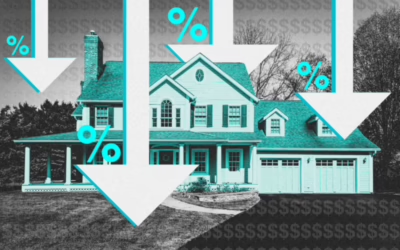
Should You Refinance Your Mortgage After Fed Rate Cuts?
With recent rate cuts and the likelihood of more to come, many homeowners are asking: Should I refinance my home? Refinancing can lower monthly payments, reduce interest over time, or help you pay off your mortgage sooner. However, the decision isn’t always simple. Here are the key points to consider, how to decide, and steps to get the best deal. Does Refinancing Make Sense? Recent interest rate cuts have created favorable conditions for refinancing. The Federal Reserve approved a widely anticipated rate cut. It indicated that two more cuts could be coming before the end of the year, according to CNBC. In an 11-to-1 vote, the Federal Open Market Committee lowered its benchmark overnight lending rate by a quarter percentage point, putting the overnight funds rate in a range between 4.00% and 4.25%. This is far from the best we’ve seen in the last decade, but with additional cuts, the rate could soon be closer to historic lows, creating an ideal window for homeowners to refinance. (RELATED NEWS: Protect Your Home Like Family: Smart Budgeting Tips) Homeowners who previously locked in higher rates could save significantly by refinancing today. Short-term and long-term mortgage rates may vary, but lenders often offer especially attractive terms for fixed-rate refinances. If your credit has improved or your home has increased in value, you might now qualify for better refinancing offers than in the past. Is There an Advantage to Staying with Your Current Lender? For many, staying with their current mortgage lender seems the easiest option. Convenience is a strong advantage. You already know the paperwork, process, and the people. You may avoid setting up new escrow accounts or dealing with new underwriters. Many lenders also offer retention incentives such as special rates, waived fees, or loyalty discounts to keep you as a customer. Refinancing with your existing lender can also be a faster process. Since they already hold your mortgage, internal transfers of information may reduce the documentation and verification steps required. As a result, your refinance could close more quickly than if you switched lenders. Potential Drawbacks of Not Shopping Around Convenience can come at a cost. Your current lender might not offer the lowest rate or best terms. They may assume you prefer to stay and therefore may not be as aggressive as new lenders who are trying to win your business. Additionally, fees and closing costs may still apply. Some lenders charge extra fees for new refinances, and sticking with your current lender could mean accepting higher costs or less favorable loan terms. Even small differences in rates or terms can add up to thousands of dollars over the life of your mortgage. Failing to compare offers could cost you more than the effort saved. Key Steps to Make the Best Refinance Decision Gather multiple offers: Get at least three quotes from different lenders to compare interest rates, closing costs, points, fees, and loan terms. Check your credit score and finances: A higher credit score or lower debt could qualify you for better rates. Stable income and solid home equity will strengthen your application. Compare loan terms: Shorter-term loans often have lower rates but higher monthly payments, while longer terms lower monthly payments but may cost more in interest over time. Calculate the break-even point: Determine how long it will take for the savings from a lower rate to outweigh the costs of refinancing. If you plan to move before then, refinancing may not be worth it. (RELATED NEWS: Gen Z Credit Scores Drop, But Future Looks Bright) Negotiate with your current lender: Show them competing offers. Lenders often match or beat better rates to retain existing customers, sometimes lowering fees or offering perks. Making a Lender Decision By the time you’ve gathered quotes and compared terms, the choice often becomes clear. If your current lender offers a competitive rate and low fees, the simpler process might tip the scales in their favor. If another lender’s offer means real long-term savings or better terms, switching is worth the extra paperwork. Focus on which option saves you the most money over time and fits your financial goals. Final Thoughts: Lock In or Wait With the Federal Reserve cutting rates and signaling more reductions ahead, homeowners face an important decision. Refinancing now could lock in lower payments and protect against future rate increases. Some borrowers may benefit from acting immediately, especially if a lender offers terms that align with long-term goals and meaningful savings compared to their current loan. Others might wait, as the Fed’s anticipated cuts later this year could push rates even lower. Waiting is an option if your current rate is manageable and you can tolerate some uncertainty. Remember, mortgage rates don’t always move in step with the Fed. Global events, bond market demand, and inflation trends can all influence rates. The best approach is to be prepared: gather quotes, know your break-even point, and keep your finances ready. Whether you refinance now, switch lenders, or wait for potential lower rates, choose the option that fits your budget, timeline, and financial goals. Expose the Spin. Shatter the Narrative. Speak the Truth. At The Modern Memo, we don’t cover politics to play referee — we swing a machete through the spin, the double-speak, and the partisan theater. While the media protects the powerful and buries the backlash, we dig it up and drag it into the light. If you’re tired of rigged narratives, selective outrage, and leaders who serve themselves, not you — then share this. Expose the corruption. Challenge the agenda. Because if we don’t fight for the truth, no one will. And that fight starts with you.

Gen Z Credit Scores Drop, But Future Looks Bright
FICO released their annual FICO Score Credit Insights Report and Gen Z has seen its credit scores fall more than any other generation over the past year. The average FICO score for all U.S. consumers dropped two points to 715. For Gen Z, the decline was three points, bringing their average to 676 — the largest year-over-year decrease for any age group since 2020. Insights From FICO: Gen Z Is Leading in Financial Health, Too Despite the drop in scores, Gen Z is showing unusual engagement with their financial health. According to FICO’s “Financial Health Revolution: How Gen Z Is Leading the Charge,” Gen Z and Millennials check their credit scores monthly at about one and a half times the rate of older generations. The same report finds that among Gen Z and Millennial consumers, 44% and 45% respectively report credit score improvements over the past six months, suggesting the trend is already turning upward. Gen Z also often uses credit strategically. When income dropped or unexpected expenses came, about half of this age group used credit cards or Buy Now, Pay Later loans to make ends meet. Why Credit Scores Are Declining Several factors contribute to the decline for Gen Z. Student loan debt plays a major role. About one-third of these borrowers have active student loans, which is roughly double the rate for the overall population. (RELATED NEWS: Skipping Coverage: The New Trend Among Young Adults) Delinquency reporting for student loans resumed recently. During the COVID-19 pandemic, payments were paused. Now that collections have restarted, late or missed payments are appearing on credit reports again. Economic pressures hit the young generation especially hard. Inflation, high housing and living costs, and a tougher job market make it harder for many in this age bracket to stay current on bills. What This Means Lower credit scores can make daily financial life harder. It may cost more or be harder to get approved for car loans, mortgages, or credit cards. Higher interest rates or fees can result from weaker scores. Insurance rates, rental applications, and other services sometimes depend on credit strength. (MORE NEWS: AI Is Taking Entry-Level Jobs and Shaking Up the Workforce) At the same time, FICO’s report shows that Gen Z is not passive. Their frequent credit score checks and willingness to take steps to build financial health suggest potential for recovery. Steps Gen Z Can Take to Improve Their Credit Scores Even with these challenges, there are clear actions that can help: Check your credit score regularly so you know where you stand. Pay bills on time. Even the minimum payment helps; late payments hurt credit a lot. Set up automatic payments to avoid forgetting due dates. Keep your credit utilization low — aim to use a modest portion of your available credit. Avoid taking on unnecessary new debt, especially if you already have student loans or variable expenses. Because this group is already engaging with financial tools more often, these habits can build up sooner. The Bright Side: Gen Z’s Recovery Potential Ultimately, Gen Z has something many generations do not: high levels of awareness about credit health. FICO reports that they treat credit scores like a fitness tracker — checking them often, making improvements, and using credit tools as financial safety nets when needed. Even though their scores have dropped, many in this group are reporting improvements in the past few months. Small but consistent efforts can make a real difference. Final Thoughts Headlines focus on falling scores, but there’s another side to the story. Gen Z is changing how people manage money. They use apps, track spending in real time, and share money tips with friends online. Credit scores matter, but they are only part of the bigger picture. What makes Gen Z different is their awareness and adaptability. They don’t ignore money problems — they try things, learn fast, and adjust. With that kind of energy, this generation has the potential to become one of the most financially resilient yet. Forget the narrative. Reject the script. Share what matters. At The Modern Memo, we call it like it is — no filter, no apology, no corporate leash. If you’re tired of being lied to, manipulated, or ignored, amplify the truth. One share at a time, we dismantle the media machine — with facts, boldness, and zero fear. Stand with us. Speak louder.

1 in 3 U.S. Drivers Lack Enough Car Insurance, Study Warns
Imagine getting into a fender-bender on the way to work, only to discover the other driver is uninsured. Suddenly, you’re not just late for a meeting, you’re staring down thousands of dollars in bills. Replacing a bumper today costs more than some used cars did a decade ago. And a single ER visit can run higher than your monthly mortgage. That’s why the latest study showing one in three drivers lack enough insurance should make everyone pay attention. A 2025 report from the Insurance Research Council (IRC) reveals that more than one in three drivers in the United States were either uninsured or underinsured in 2023. The study, Uninsured and Underinsured Motorists: 2017–2023, shows the combined rate climbed to 33.4 percent, a sharp increase from 23.8 percent in 2017. This growing problem highlights the financial risks drivers face every time they get behind the wheel. Breaking Down the Numbers The IRC study provides a clear picture of how widespread the problem has become: 15.4 percent of drivers in 2023 carried no auto insurance at all. 18.0 percent of drivers carried insurance that failed to fully cover the costs of a serious accident. Together, uninsured and underinsured drivers accounted for more than one in three motorists nationwide. The report explains, “Uninsured motorist and Underinsured motorist claim frequencies increased at faster rates than Bodily Injury claim frequency, leading to a sharp increase in the combined rate of uninsured and underinsured motorists.” In other words, accidents are costing more, and too many policies are falling short. (RELATED NEWS: Skipping Coverage: The New Trend Among Young Adults) State-by-State Differences The risk is not evenly spread across the country. According to the IRC, “Uninsured motorist rates varied dramatically by state in 2023, ranging from a low of 5.7 percent in Maine to a high of 28.2 percent in Mississippi.” Insurance Information Institute reports: New Mexico had an uninsured rate of 24.1 percent, while the District of Columbia followed with 23.1 percent. On the lower end, Utah posted 6.2 percent, and Idaho recorded 6.4 percent. Underinsured motorist rates climbed in nearly every state between 2017 and 2023, with the only exceptions being New York and the District of Columbia. This means drivers in certain regions face a much greater chance of being hit by someone without adequate insurance. Why the Numbers Are Rising Coverage reflects economic and legal factors at the time. The report notes that “UM rates rose in nearly every state from 2019 to 2020,” showing the strain of the pandemic on household budgets. Even as the economy improved, rates did not return to pre-pandemic levels. Rising medical and repair costs push up claim amounts, and when policies fail to keep pace, the gap between coverage and actual costs grows wider. Many states also set low minimum coverage requirements. Florida, for example, is the lowest in the country. The state only requires $10,000 property damage liability. These minimums are not enough to cover the expenses of a modern accident, leaving even insured drivers underinsured when serious injuries or major property damage occur. The Risks for Fully Insured Drivers Drivers who carry good insurance may think they are safe, but the study underscores the risk for everyone. If an uninsured or underinsured driver causes a crash, the other party often has to rely on their own coverage to pay for damages. Without uninsured or underinsured motorist protection, victims may face overwhelming medical bills, repair costs, and lost income. The IRC warns that higher underinsured motorist rates can also “worsen affordability” for everyone, since insurers spread the rising costs across all policyholders. This means responsible drivers end up paying higher premiums as the pool of underinsured drivers grows. (MORE NEWS: United CEO Scott Kirby Says Spirit Airlines Will Collapse) How Drivers Can Protect Themselves The study makes it clear that every driver should take a closer look at their own coverage. Practical steps include: Review your policy to confirm you carry uninsured and underinsured motorist coverage. Raise liability limits above state minimums to guard against lawsuits and high-cost accidents. Consider collision and comprehensive coverage if your vehicle is valuable or still financed. Shop around for competitive rates, look for discounts, and adjust deductibles to keep premiums manageable. Taking these measures ensures you are not left exposed when facing an at-fault driver who lacks enough insurance. Final Word The IRC’s findings send a clear warning: Drivers are often unprepared for tragedy. They take risks—not only with their own health and property, but everyone else’s too. They also leave themselves open to lawsuits if they are not full covered. One mistake by an uninsured driver, or one decision to carry too little coverage, can alter the course of your life. We’re all just one accident away from a financial mess. Don’t let someone else’s mistake ruin your life. Review your policy today, raise your limits if needed, and give yourself the peace of mind you deserve. Forget the narrative. Reject the script. Share what matters. At The Modern Memo, we call it like it is — no filter, no apology, no corporate leash. If you’re tired of being lied to, manipulated, or ignored, amplify the truth. One share at a time, we dismantle the media machine — with facts, boldness, and zero fear. Stand with us. Speak louder.