
Canada

WBC Quarterfinals: USA and Canada Clash for Semifinal Spot
The lights of Daikin Park in Houston will shine on one of the most storied rivalries in North American sports tonight as Team USA faces Team Canada in a high-stakes World Baseball Classic (WBC) quarterfinal. With a trip to Miami’s semifinals on the line, tonight’s “Border Battle” carries the weight of national pride and a shot at global redemption. At The Modern Memo, we analyze the road to the quarterfinals, the tactical pitching matchup, and the pressure on a star-studded American roster to find its rhythm. The Road to the Quarterfinals: Shock and Resilience Both teams enter tonight with 3-1 records from pool play, but their paths to Houston couldn’t have been more different. Team USA’s Wake-Up Call: After dominant early wins, the Americans suffered a stunning 8-6 upset at the hands of Italy. The loss sent shockwaves through the tournament and left the U.S. briefly vulnerable to elimination. They advanced as the runner-up in Pool B, now facing a “must-win” narrative to silence critics who claim the superstar-laden roster is coasting. Canada’s Historic Run: For the first time in program history, Canada has advanced beyond the opening round. By defeating baseball powerhouses like Cuba and Puerto Rico, the Canadians topped Pool A. This breakthrough, following the Blue Jays’ deep postseason run last fall, has sparked a “baseball boom” across the Great White North. The Pitching Matchup: Webb vs. Soroka The outcome tonight will likely be decided by the chess match between two right-handers with a history of big-game experience. Logan Webb (USA): The Giants’ ace gets the nod for the U.S. Known for his elite sinker and ability to eat innings, Webb is tasked with keeping a hot Canadian lineup off balance. After the Italy upset, the U.S. bullpen is rested, but the pressure is on Webb to provide a “shut-down” start and save the relief arms for Miami. Michael Soroka (Canada): The Canadians turn to the resilient Michael Soroka. After navigating years of injury hurdles, Soroka has looked sharp in 2026, recently touching 97 mph in his WBC debut against Colombia. His mission is to use his heavy sinker and command to induce ground balls against an American lineup that thrives on power. Venue and Atmosphere: Deep in the Heart of Texas A sell-out crowd of over 41,000 is expected at Houston’s Daikin Park. While the venue is on American soil, the Canadian “Snowbirds” and traveling fans are expected to make their presence felt, creating the kind of electric, soccer-style atmosphere that has defined this year’s WBC. Final Word Tonight isn’t just a baseball game; it’s a collision of two different national trajectories. When you look past the star power and focus on the data—Team USA’s narrow escape from Pool B and Canada’s breakthrough win over Cuba—you gain a clearer picture of the volatility in this single-elimination format. Quality information replaces the noise of “David vs. Goliath” clichés with the reality of two teams that are statistically evenly matched in this tournament. It allows you to see this game as a critical test of whether the U.S. can handle the target on its back. By choosing to follow the verified pitch-by-pitch drama tonight, you align your perspective with a new era of international baseball where no outcome is guaranteed. Where Facts, Context, and Perspective Matter At The Modern Memo, our goal is simple: to provide clear, well-researched reporting in a media landscape that often feels overwhelming. We focus on substance over sensationalism, and context over commentary. If you value thoughtful analysis, transparent sourcing, and stories that go beyond the headline, we invite you to share our work. Informed conversations start with reliable information, and sharing helps ensure important stories reach a wider audience. Journalism works best when readers engage, question, and participate. By reading and sharing, you’re supporting a more informed public and a healthier media ecosystem. The Modern Memo may be compensated and/or receive an affiliate commission if you click or buy through our links. Featured pricing is subject to change. 📩 Love what you’re reading? Don’t miss a headline! Subscribe to The Modern Memo here!
Tragedy in Tumbler Ridge: Nine Dead in Canada’s Deadliest School Shooting in Decades
A quiet mining town in northeastern British Columbia has been shattered by a horrific mass shooting that left nine people dead, including the perpetrator. On Tuesday, February 10, 2026, 18-year-old Jesse Van Rootselaar carried out a deadly rampage that began at a private residence and ended at Tumbler Ridge Secondary School. As of Friday, February 13, the town of 2,400 people is observing seven days of mourning, with flags across Canada flying at half-staff. Timeline of the Attack The violence unfolded in a terrifyingly short window on Tuesday afternoon, catching the remote community completely off guard. The Initial Attack: Police believe Van Rootselaar first killed her 39-year-old mother, Jennifer Strang, and her 11-year-old stepbrother, Emmett Jacobs, at their home on Fellers Avenue. A young relative managed to flee to a neighbor’s house to raise the alarm. The School Shooting: At approximately 1:20 PM MST, the shooter arrived at the secondary school armed with a long gun and a modified handgun. The first victim was shot in a stairwell, followed by a lethal assault in the school library. The Lockdown: Students and staff barricaded doors with tables and benches as the principal shouted “Lockdown!” over the alarms. The Conclusion: Royal Canadian Mounted Police (RCMP) arrived within minutes. Upon entering the school, they found the suspect dead from a self-inflicted gunshot wound. The Victims: A Community in Mourning The RCMP has officially confirmed the names of the eight victims lost in the tragedy. The loss has hit the small, tight-knit town particularly hard, as most victims were children just beginning their teenage years. At the School: Education assistant Shannda Aviugana-Durand (39), and students Abel Mwansa (12), Ezekiel Schofield (13), Kylie Smith (12), Zoey Benoit (12), and Ticaria Lampert (12). At the Home: Jennifer Strang (39) and Emmett Jacobs (11). The Injured: Twenty-seven others were treated for injuries. Two victims—a 12-year-old girl and a 19-year-old woman—remain in critical condition after being airlifted to specialized hospitals. The Suspect and Motive The RCMP identified the shooter as Jesse Van Rootselaar, a former student and high school dropout. Prior History: Authorities confirmed that Van Rootselaar was known to police due to prior mental health calls. Firearms had previously been removed from the home but were later returned to the “lawful owner” after a petition. Identity: Deputy Commissioner Dwayne McDonald confirmed that Van Rootselaar was a transgender woman who had been transitioning for six years. Motive: Police have found no suicide note or manifesto. Investigations are ongoing, but officials state there is currently no evidence that specific individuals were targeted at the school. National and Global Response Prime Minister Mark Carney cancelled an international trip to Europe to visit Tumbler Ridge today for a community vigil. He described the event as an “unimaginable tragedy” and “one of the country’s worst acts of mass violence.” The attack is the deadliest school shooting in Canada since the 1989 École Polytechnique massacre. World leaders, including King Charles III and President Donald Trump, have sent messages of solidarity to the grieving families. Final Word Staying informed on the Tumbler Ridge tragedy isn’t just about reading a headline—it plays a powerful role in your understanding of the systemic gaps in mental health and the ongoing debate over firearm accessibility. When you look past the shock and focus on the data of the prior police calls and the timeline of the attack, you gain a clearer picture of how “red flag” warnings are managed in modern society. Quality information replaces the noise of social media rumors with the clarity of verified RCMP briefings. It allows you to see this tragedy not just as a statistic, but as a critical moment for national reflection on safety and support systems. By choosing to follow the facts of the investigation rather than the speculation surrounding the perpetrator, you align your perspective with the realities of the victims’ lives and support a more informed, resilient public consciousness. Where Facts, Context, and Perspective Matter At The Modern Memo, our goal is simple: to provide clear, well-researched reporting in a media landscape that often feels overwhelming. We focus on substance over sensationalism, and context over commentary. If you value thoughtful analysis, transparent sourcing, and stories that go beyond the headline, we invite you to share our work. Informed conversations start with reliable information, and sharing helps ensure important stories reach a wider audience. Journalism works best when readers engage, question, and participate. By reading and sharing, you’re supporting a more informed public and a healthier media ecosystem. The Modern Memo may be compensated and/or receive an affiliate commission if you click or buy through our links. Featured pricing is subject to change. 📩 Love what you’re reading? Don’t miss a headline! Subscribe to The Modern Memo here!

Trump Ends Canada Trade Talks Over Reagan Ad
President Donald Trump has abruptly ended trade talks with Canada after condemning a controversial Ontario government ad that featured a fake version of Ronald Reagan’s voice. The ad used edited audio from a 1987 Reagan speech, which Trump called “egregious” and “misleading.” He accused Canada of using deception to influence U.S. policy and said the country has long taken advantage of American farmers through unfair tariffs. As a result, he announced that all trade discussions with Canada were officially over. 🚨 WOW! Canada used a fake Ronald Reagan quote to run advertisements against President Trump’s tariffs — so 47 just terminated ALL trade negotiations. Massive FAFO. “The ad was for $75,000,000. They only did this to interfere with the decision of the U.S. Supreme Court, and… pic.twitter.com/kyBiXcMKNq — Eric Daugherty (@EricLDaugh) October 24, 2025 Why It Matters This decision affects more than political posturing—it has real trade, economic and diplomatic implications. Because Canada is one of the U.S.’s largest trading partners, ending talks could ripple through supply chains, sector relationships, and broader North American trade dynamics. Moreover, the use of a historical presidential audio clip in a modern ad campaign raises serious questions about how political messaging, trade policy, and media tactics intersect. Finally, the move signals Trump’s outlook: He views tariffs not just as economic tools but as matters of national security. That suggests a more aggressive posture toward Canada and possibly other trade partners. The Ad Itself: What Was the Issue? The Reagan Foundation said that the Ontario government did not request permission to use and edit Reagan’s remarks. They also described the use of “selective audio” as misrepresenting what he originally said. The dispute is not only about trade policy—it’s about authenticity, intellectual property, and the boundaries of political advertising. Since the foundation is reviewing its legal options, the case may proceed into courts or at least become part of future regulatory scrutiny. Listen to President Reagan’s unedited remarks here: https://t.co/1gQUcbR4eZ pic.twitter.com/iqmjSuypp0 — Ronald Reagan Presidential Foundation & Institute (@RonaldReagan) October 24, 2025 What This Means for U.S.–Canada Trade With talks now terminated, uncertainty looms over several fronts: U.S. exporters may face less favorable conditions if Canada responds by tightening its own policies or renegotiations stall. Canadian imports into the U.S. could see additional scrutiny or higher tariffs, especially if Trump follows through on his broader tariff rhetoric. The broader North American trade posture may shift: allies might rethink how they approach trade talks with the U.S., knowing that domestic messaging can trigger abrupt policy changes. In short, this isn’t just a PR skirmish—it could set off a chain of trade policy shifts. The Bigger Picture: Messaging, Trust, and Trade This situation illustrates how trade policy can hinge on trust and messaging just as much as economics. (MORE NEWS: Thieves Steal Napoleon’s Jewels in Daring Daylight Heist) When a powerful trade partner believes it has been misrepresented or disrespected—whether via an ad or otherwise—it may pull back or explode into full-scale policy retaliation. For the U.S., it highlights a willingness to link cultural or communication issues directly to trade decisions. For Canada (and other partners), the message is clear: even long-standing alliances are vulnerable if perceived misconduct occurs. Next Steps and What to Watch Going forward, keep an eye on several developments: Legal outcomes: Will the Reagan Foundation file suit or reach settlement regarding the ad? Canadian reaction: Will Canada counter-respond with trade measures, or seek diplomatic channels to de-escalate? U.S. policy shifts: Does Trump’s move signal a broader pivot away from cooperation with Canada in favor of unilateral action? Market effects: How do businesses that rely on U.S.–Canada trade respond? Supply chains may adjust, costing time and money. Precedent setting: Will this episode change how trade partners view honoring past figures’ legacies or using historical material in modern trade-campaign contexts? Final Word This decision marks a serious setback for North American trade relations. By ending talks, Trump signaled that the U.S. will not tolerate actions it views as deceptive or disrespectful. The controversy over the Reagan ad has cast doubt on Canada’s credibility, making it appear less committed to good-faith negotiations. It would be in Canada’s best interest to issue an immediate apology and demonstrate a genuine desire to move forward after this misstep. For now, trade cooperation between the two nations remains uncertain — and rebuilding trust may prove far more difficult than restarting talks. Cut Through the Noise. Slice Through the Lies. Share the Truth. At The Modern Memo, we don’t tiptoe around the narrative—we swing a machete through it. The mainstream won’t say it, so we will. If you’re tired of spin, censorship, and sugar-coated headlines, help us rip the cover off stories that matter. Share this article. Wake people up. Give a voice to the truth the powerful want buried. This fight isn’t just ours—it’s yours. Join us in exposing what they won’t tell you. America needs bold truth-tellers, and that means you.
‘Will Be Punished’: Consequences Arrive Early For Canadian Voters After Doubling Down On Wokeism
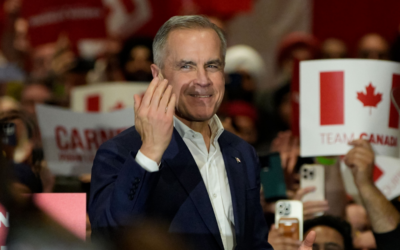
This article was written by James Davis for WokeSpy. Canada doubled down on Wokeism by returning Justin Trudeau’s party, the Liberal Party of Canada, to power, ensuring that his clone Mark Carney remains as the prime minister, a decision they might soon regret. Many Canadians voted for Trudeau’s ally out of spite for President Trump after he made the generous offer inviting them to become America’s 51st state, but also threatened to impose tariffs on their products. However, the globalist Prime Minister has unveiled a raft of left-leaning policies that threaten to damage the Canadian economy than the much-feared Trump tariffs ever could. To achieve net zero in carbon emissions, he hinted at a proposal to punish companies that pollute the air and reward those who control their emissions, essentially carbon taxes and incentives. (RELATED: EXCLUSIVE: 20,000,000 Sick Americans Abandoned By Medical ‘Oligarchy’ Controlled By Elites; Can We Fix It?) Outrageously, Carney might have pulled a fast one on Canadians, having suggested during the campaigns that he would pause the carbon taxes initiative, only to turn around and do the opposite. Mark Carney is already calling for the punishing of companies that don’t bow to the woke climate mob. Canadians are f*cked. pic.twitter.com/TETDRbloG0 — Gunther Eagleman™ (@GuntherEagleman) May 1, 2025 Canada Becomes Poster-Child For Globalist Assault? Based off this speech, there is suggestions that Canadian Prime Minister Mark Carney will BAN social media platforms such as 𝕏. Australia in the end will follow suit on this under the guise of ‘Protecting Australians’ Make no mistake, they fear you. pic.twitter.com/DeTCxp4l0H — Mickamious (@MickamiousG) May 5, 2025 We truly hope we’re wrong in our trend forecasting analysis of the latest data coming out of Canada. At this rate, expect to see (in the next decade or so should things stay on-trend): Canadian political asylum-seekers moving to the U.S. in the coming years; Large numbers of Canadian citizens moving to the U.S. in search of greater job opportunities and freedom; At least one major catastrophe linked to the backing of climate change, whether that be a financial crisis or an energy crisis; Large numbers of legal and illegal immigrants moving into Canada to replace current population (similar trends witnessed in U.K.); Similar trends will spread throughout the Commonwealth, including mass-censorship of free speech; Decreased tourism to Canada as climate policies price out many once-affordable commodities.