

CDC

Salmonella Outbreak Tied to Jalapeños Sickens 431 Across 32 States, Chipotle and QDOBA Affected
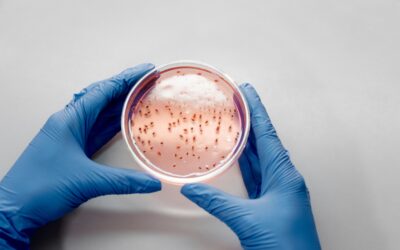
The CDC is investigating a multistate Salmonella outbreak linked to contaminated jalapeño peppers that has sickened at least 431 people across 32 states, with dozens of illness clusters traced back to Chipotle Mexican Grill and QDOBA locations. The outbreak involves a strain known as Salmonella Javiana. As of August 19, the CDC had confirmed 57 hospitalizations — about 15% of patients for whom information was available — and no deaths. Illness onset dates range from June 19 through August 2, though the agency cautioned that “the true number of sick people in this outbreak is likely much higher than the number reported,” since many people recover without seeking medical care or being tested. Investigators traced the contamination to jalapeño peppers grown in Sinaloa, Mexico and distributed in the U.S. by Coast Citrus Distributors. Of 224 people interviewed by health officials, 203 — 91% — reported eating at a Mexican-style restaurant before falling ill, and the CDC identified 28 separate illness clusters tied to Chipotle and QDOBA locations across eight states. Multiple recalls have followed the investigation. Coast Citrus Distributors recalled the affected jalapeños, Taylor Fresh Foods issued its own recall of jalapeño peppers on August 8, and Whole Foods Market recalled jalapeño pepper-containing products on August 12. Additional recalls have since been issued for meat and poultry products that contained the recalled peppers as an ingredient. Both Chipotle and QDOBA stopped serving the affected peppers once they were notified by health officials. The CDC is urging consumers to check whether any jalapeños in their homes or purchased from affected retailers match the recalled lots, and “not eat, sell, or serve” them if so. People who develop diarrhea, fever or stomach cramps after eating jalapeños from the affected supply chain are advised to contact a healthcare provider, particularly if symptoms are severe or persistent. Most healthy adults recover from Salmonella infection within four to seven days without treatment, though the illness can be more serious for young children, older adults and people with weakened immune systems. The investigation remains active, and the CDC said the case count is likely to rise as additional states report illnesses and more product testing is completed.
Senate Confirms Dr. Erica Schwartz as CDC Director, Ending Yearlong Leadership Vacuum
The Senate voted Wednesday to confirm Dr. Erica Schwartz as director of the Centers for Disease Control and Prevention, giving the nation’s top public health agency its first permanent leader in nearly a year and closing out a turbulent stretch that saw two previous picks fail to make it through the confirmation process or survive on the job. A Steady Hand After a Rocky Stretch Schwartz was confirmed on a largely party-line 51-44 vote, with Sen. Tim Kaine, D-Va., the lone Democrat crossing over to support her. She becomes the 22nd director in the CDC’s history and the first Senate-confirmed leader of the agency in roughly a year, taking over from Dr. Jay Bhattacharya, who had been serving as acting director since February while also leading the National Institutes of Health. Her path to the job was notably smoother than her two predecessors. The administration’s first pick, former Rep. Dave Weldon, R-Fla., withdrew his own nomination after it became clear he lacked the votes, largely over concerns about his vaccine skepticism. His successor, Susan Monarez, was confirmed but fired less than a month later after what she described as a clash with HHS Secretary Robert F. Kennedy Jr. over his push to roll back childhood vaccine recommendations. A Resume Built on Public Health Experience Schwartz brings a substantial public health and military background to the role. A Brown University-trained physician, she served as deputy surgeon general during Trump’s first term and previously served as chief medical officer for the U.S. Coast Guard, in addition to time in the Navy and the Public Health Service Commissioned Corps. At 54, she also becomes the first Black woman to lead the CDC. President Trump nominated her in April, calling her “incredibly talented.” Notably, Schwartz represents something of a departure from earlier contenders the administration considered, who more closely toed the “Make America Healthy Again” line associated with Kennedy’s tenure at HHS. Her lengthy record overseeing vaccination programs and public health crisis response stands in contrast to the more skeptical posture that sank Weldon’s nomination. Questions About Independence Schwartz’s confirmation hearing last month put her in a difficult spot: reassuring senators that she’d bring scientific rigor to the job without appearing to publicly break with Kennedy, her eventual boss. She told the Senate HELP Committee she accepts there is “overwhelming evidence” that vaccines don’t cause autism, but stopped short of committing to remove a CDC webpage — updated last November — that critics say downplays that evidence. When Sen. Bill Cassidy, R-La., the committee’s chairman, pressed her on whether she’d challenge Kennedy directly, she described handling disagreements the way she had in the military — through private conversations with superiors rather than public confrontation. That answer didn’t satisfy everyone. Sen. Bernie Sanders, I-Vt., the committee’s ranking member, voted against her both in committee and on the floor, saying he was impressed by her credentials but didn’t believe she was prepared to stand up to what he characterized as false statements on vaccines coming from Kennedy’s HHS. “I think the American people are owed better than what President Trump has nominated,” Sanders said. Others in the public health community took a more measured view of her approach. Dr. Georges Benjamin, CEO of the American Public Health Association, suggested her measured public posture during confirmation was a pragmatic choice rather than a red flag. “Public health people in these positions often have to manage through influence,” Benjamin said. “You don’t get influence by disagreeing with your boss publicly before you even get the job.” The Challenges Waiting for Her Schwartz inherits an agency that has been significantly reshaped over the past year and a half. The CDC has lost more than a quarter of its workforce through layoffs and resignations amid broader restructuring at HHS, and morale has reportedly suffered as a result. She also takes over amid two active public health challenges: the nation’s worst measles outbreak since before elimination was declared in 2000, and a growing cyclosporiasis outbreak that has already been linked to at least two deaths in Michigan. Benjamin, among others, argues the agency’s credibility has taken a real hit during the period of acting leadership and restructuring. “The CDC’s influence has diminished dramatically since they’ve taken over,” he said. “You have to second-guess and verify what is said. We never had to do that before.” Supporters of the administration’s broader health agenda counter that a leaner, more accountable CDC — one less resistant to oversight from elected officials — is a feature of the reform effort, not a flaw, and that Schwartz’s credentials make her well-positioned to restore both competence and public trust to the role regardless of the political noise surrounding her confirmation. What’s Next Schwartz is expected to be sworn in within the next several days. Her first major tests will likely come quickly, given the ongoing measles situation and the upcoming August meeting of the newly reconstituted U.S. Preventive Services Task Force — both flashpoints that will offer an early read on how independently she’s able to operate within Kennedy’s HHS. This story is developing.

US Measles Cases Hit 30-Year High, But CDC Official Says Losing Elimination Status “Not Really” a Concern
The United States has recorded more measles cases in 2026 than in any full year since the disease was declared eliminated in 2000, putting the country’s quarter-century-old elimination status at real risk — but a top CDC official says the milestone, if it happens, isn’t the alarming development some public health voices are making it out to be. The Numbers Behind the Headlines As of July 30, the CDC had confirmed 2,371 measles cases nationwide in 2026, already surpassing the 2,289 cases recorded for all of 2025 — itself the highest annual total since 1991. The case count spans 37 separate outbreaks so far this year, with active clusters currently being tracked in states including Virginia, Pennsylvania, and Utah. Johns Hopkins researcher William Moss noted that hitting this milestone so early in the year, with five months still remaining, is a particularly striking sign of how persistent this year’s spread has been. The largest single outbreak of the year unfolded in South Carolina’s Spartanburg County, which saw the biggest measles outbreak the U.S. has experienced in decades before state health officials declared it over in late April, with just under 1,000 total cases. Utah has since emerged as the new center of concern, with more than 500 confirmed cases so far in 2026 alone. What “Elimination Status” Actually Means Measles elimination doesn’t mean the disease has vanished from American soil entirely — it’s a technical designation meaning the virus hasn’t achieved continuous, uninterrupted domestic transmission for more than 12 months. The U.S. earned that status in 2000 after decades of successful vaccination campaigns nearly wiped the virus out. If health officials determine that this year’s outbreaks are genetically and epidemiologically linked to a chain of transmission stretching back more than a year — potentially connecting back to an outbreak that began in West Texas in January 2025 — the country could officially lose the designation for the first time in a generation. That determination isn’t made by the CDC alone. An external panel called the Measles, Rubella, and Congenital Rubella Syndrome Elimination Regional Verification Commission, operating under the Pan American Health Organization, is responsible for the final call, relying in part on genetic sequencing data that CDC scientists are still working to compile and publish. A CDC Official Pushes Back on the Alarm Not everyone in the federal health apparatus is treating the potential loss of elimination status as a five-alarm fire. CDC Principal Deputy Director Dr. Ralph Abraham, a former Louisiana surgeon general who previously scaled back vaccine promotion efforts in that state, told reporters at a briefing that losing the designation wouldn’t fundamentally change how the country handles the disease. “Losing elimination status … does not mean that the measles would be widespread, nor would it alter any key measles elimination strategies,” Abraham said, while adding that he continues to personally support vaccination as the most effective tool against the disease — even as he also emphasized the importance of personal freedom in health decisions. Abraham also pushed back on claims that ongoing outbreaks in different states are necessarily connected, arguing that continuous transmission between the various clusters “has not been proved” and shouldn’t be assumed just because outbreaks are occurring simultaneously in multiple regions. The Vaccination Rate Debate Public health researchers point to declining childhood MMR vaccination rates as the central driver behind the resurgence. National kindergarten MMR coverage has slipped to around 92.5%, below the roughly 95% threshold considered necessary to maintain herd immunity against a virus as contagious as measles — the CDC estimates that if one infected person is in a room with unprotected people, up to nine out of ten will catch it. The vast majority of this year’s cases, more than 95%, have occurred in people who were unvaccinated or whose vaccination status was unknown. Some researchers argue the stakes of continued vaccination decline are significant: one estimate suggests that just a single percentage-point drop in the childhood MMR vaccination rate could translate into roughly 17,000 additional measles cases, 4,000 hospitalizations, and 36 preventable deaths nationally each year. Three deaths and 243 hospitalizations were attributed to last year’s outbreaks alone, with about a quarter of 2025’s cases occurring in children under five. Personal Choice Versus Public Health The debate over how aggressively to respond has become something of a proxy fight in the broader national conversation about vaccine mandates, parental rights, and the proper role of government in personal health decisions — a conversation Health and Human Services Secretary Robert F. Kennedy Jr. has placed at the center of his tenure leading the department. Supporters of the administration’s more hands-off approach argue that decisions about vaccination ultimately belong to individual families, not federal health bureaucrats, and that framing a technical elimination-status change as a public health emergency risks stoking unnecessary panic over a disease that, while serious, remains treatable and preventable for those who choose vaccination. Critics, including some public health researchers, counter that measles’ extraordinary contagiousness means individual choices carry real consequences for the broader community, particularly for infants too young to be vaccinated and people with compromised immune systems who can’t be vaccinated even if they wanted to be. Dr. Dave Chokshi, chair of the Common Health Coalition, framed it directly: “Vaccination is one of the most powerful investments we can make for the health of our children, but when we fail to maintain high vaccination rates, we all pay the price.” The International Backdrop The U.S. wouldn’t be alone if it loses its elimination status. Canada lost its own measles-free designation in late 2025, and the United Kingdom and several other European countries have also lost their elimination status in recent years amid similar declines in vaccination coverage — suggesting the trend driving America’s numbers is part of a broader pattern playing out across the developed world, rather than an isolated domestic failure. What Happens Next CDC scientists continue working with state and international partners to complete the genetic sequencing analysis that will ultimately determine whether this year’s…