

Drone
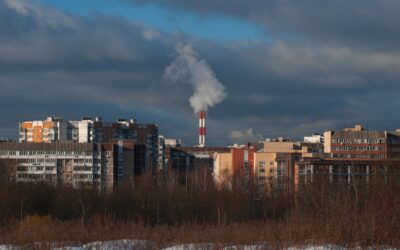
‘Pure Hell’ in Moscow: Ukrainian Drone Swarm Blasts Capital’s Main Refinery, Crippling Fuel Market
The war of economic attrition has breached the gates of the Russian capital. In one of the most structurally devastating and massive aerial barrages since the outbreak of hostilities, a sophisticated swarm of over 130 Ukrainian drones systematically penetrated the dense, layered air defense networks shielding Moscow. The primary target was the strategically vital Moscow Oil Refinery (MNPZ) in the southeastern Kapotnya district—the crown jewel of the capital’s domestic energy grid. The successful strike sent catastrophic firestorms through the processing units, grounding commercial aviation, leaving at least 16 people injured across the region, and forcing a panicked Kremlin to deploy machine-gunners around Red Square. At The Modern Memo, we break down the operational data from the high-desert-style drone corridor, the critical failure of Moscow’s missile defenses, and how the destruction of the Kapotnya refinery plunges Russia’s domestic fuel market into a 21-year low. The Chaos: “Pure Hell” and Fortress Moscow The assault shattered the illusion of safety for everyday Muscovites, lighting up the sky between 4:00 a.m. and 7:00 a.m.. The Inhabitant Terror: “This is pure hell, I’ve never felt such terror,” one traumatized Moscow resident reported to local outlets as the shockwaves rattled high-rise apartment complexes across the metropolitan area. In nearby Balashikha, residents woke up to a toxic “black rain,” capturing footage of streets, infrastructure, and civilian vehicles completely blanketed in a dark, greasy chemical residue. The Red Square Lockdown: Fear of a decapitation strike or saboteur infiltration prompted an immediate military lockdown of the state’s political core. Armed security forces completely sealed off Red Square, positioning heavy machine-gunners on Kremlin towers, ramparts, and directly adjacent to Vladimir Lenin’s Mausoleum. The Aviation Freeze: The scale of the threat forced aviation authorities to slam the brakes on commercial travel. Hundreds of flights were instantly suspended, and temporary air-traffic restrictions were slapped across all major Moscow international hubs. The Casualty Count: Moscow Region Governor Andrei Vorobyov confirmed that at least 16 people sustained various injuries across the territory as falling shrapnel and drone impacts damaged residential sectors and private homes. The Strike Mechanics: Straining the Densest Air Defense Grid Moscow famously boasts the tightest, most redundant air defense umbrella in the Russian Federation. Yet, Kyiv’s multi-layered tactics completely overwhelmed the system. The Numbers Game: Moscow Mayor Sergey Sobyanin claimed air defenses downed over 130 drones, while Russia’s Defense Ministry alleged 550 intercepts nationally. However, the sheer volume of the swarm intentionally saturated local radar capabilities. The Jet-Drone Evolution: This operation wasn’t just limited to slow, propeller-driven long-range drones. Ukraine deployed its advanced, jet-powered missile-drones—including the Bars hybrid cruise-missile drone. Traveling at vastly higher velocities, these hybrid assets give Russian Pantsir and S-400 crews mere seconds to react. The Close-Quarter Scramble: Viral footage uploaded by terrified onlookers showed a Russian soldier desperately trying to shoulder-launch a MANPADS anti-aircraft missile at an incoming drone from a nearby roof, failing to intercept the weapon seconds before it plowed directly into the refinery infrastructure. The Economic Hit: Paralyzing the Capital’s Fuel Lifeline For Ukraine, targeting the MNPZ facility in Kapotnya is a calculated mathematical play designed to choke off the literal fuel of the Russian war machine. The 40% Deficit: The Kapotnya refinery is the exclusive fuel engine of the capital, single-handedly supplying up to 40% of Moscow’s commercial gasoline and nearly 50% of its diesel needs. The Double Tap: Crucially, this strike marked the second time in a single week that Ukrainian drones successfully hit the facility. Already operating at heavily degraded capacities from the prior raid, the secondary detonation of a major fuel tank caused a partial or total operational shutdown. The 21-Year National Low: The compounding destruction of Russia’s refining nodes has triggered a massive systemic emergency. Russia’s overall refining output has plummeted below 4 million barrels per day—crashing to its lowest mark in 21 years. Approximately one-third of Russia’s total domestic refining capacity is now offline or severely crippled, leaving more than 25 distinct Russian regions wrestling with acute fuel shortages and forcing the Kremlin to look into importing gasoline by sea to prevent domestic market collapse. Final Word The catastrophic strike on the Moscow Oil Refinery is the definitive proof that Ukraine has successfully brought the material costs of the war directly to the doorsteps of the Russian elite. When you look past the standard Ministry of Defense claims of “total interception” and focus entirely on the raw data—a critical fuel hub that satisfies 40% of the capital’s market left in flames, Russian refining capacity crippled to a 21-year low, and machine-gunners guarding Lenin’s tomb from an aerial swarm—you gain an unvarnished view of a shifting conflict. Quality information replaces the Kremlin’s narrative of a contained, faraway “special operation” with the reality of an empire struggling to defend its own airspace. Kyiv has demonstrated that no amount of state media censorship can hide the smoke rising over Moscow, and as long as Russian oil funds the frontline, the skies above the capital will continue to burn.
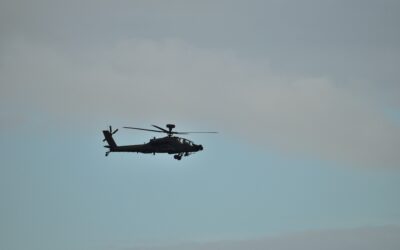
The Hormuz Ambush: Trump Vows Retaliation After Iranian Drone Downs U.S. Apache Helicopter
A fragile regional ceasefire completely shattered over the Persian Gulf. In an escalation that threatens to plunge the Middle East back into all-out war, President Donald Trump announced that Iranian forces shot down a U.S. Army AH-64 Apache attack helicopter patrolling near the strategic Strait of Hormuz. While initial military reports were guarded, U.S. defense officials subsequently confirmed that Iran utilized an uncrewed aerial vehicle (UAV) to down the American aircraft off the coast of Oman. The high-stakes shootdown occurred just hours after Trump declared that long-sought peace negotiations with Tehran were in their “final throes.” At The Modern Memo, we break down the tactical data behind this unprecedented drone-on-helicopter engagement, the historic maritime robotic rescue that saved the American crew, and the retaliatory options sitting on the Resolute Desk. The Engagement: A Drone In The Dark The shootdown materialized around 3:30 a.m. local time on Tuesday during a routine maritime patrol mission conducted by the U.S. Army’s attack helicopter fleet. The Fateful Patrol: The AH-64 Apache—the heavy backbone of American low-altitude deterrence in the gulf—was flying a defensive perimeter to cover commercial shipping vessels navigating the narrow chokehold of the Strait of Hormuz. The Drone Strike: Two U.S. defense officials confirmed that an Iranian drone was the kinetic mechanism responsible for taking down the multi-million-dollar attack helicopter. Investigators are actively parsing telemetry data to determine whether the Iranian drone executed a deliberate ramming maneuver or deployed specialized air-to-air munitions to destroy the helicopter’s rotor systems. The War of Attrition: The loss adds to a growing list of American hardware consumed by the conflict. A Congressional Research Service report reveals that the U.S. military has lost or sustained damage to dozens of aircraft since major hostilites erupted on February 28, highlighting the extreme lethality of Iran’s layered asymmetric air defense network. The Rescue: First-Ever Sea Drone Recovery While the loss of the aircraft is a major strategic blow, the survival of the crew has been hailed as a triumph of cutting-edge robotic warfare, marking a definitive first in the history of the United States Armed Forces. The Search Window: Following the impact, both Army aviators managed to successfully emergency-land or eject into the dark waters off the coast of Oman. Stranded in hostile territory, a frantic countdown began to locate the airmen before Iranian fast boats could capture them. Task Force 59 Steps In: Operating out of the U.S. Fifth Fleet in Bahrain, the military deployed a Saronic Corsair unmanned surface vessel (USV)—a high-tech autonomous sea drone operated by the elite Task Force 59. The Operation: Within approximately two hours, the autonomous sea drone successfully localized the two pilots, pulled them from the water, and transported them to a secure maritime staging point where a crewed helicopter hoisted them to safety. U.S. Central Command (CENTCOM) confirmed both soldiers are currently in stable, uninjured condition. The Trump Ultimatum: “Of Necessity, Respond” The downing of the Apache has completely upended Washington’s diplomatic calculus, forcing President Trump to shift from projecting imminent peace to projecting overwhelming military deterrence. The Truth Social Threat: Taking to social media on Tuesday morning, Trump directly blamed Tehran for the assault. “I have just been informed by our Great Military that last night the Iranians shot down one of our highly sophisticated Apache Helicopters while patrolling over the Strait of Hormuz,” Trump wrote. “There were two pilots involved, both are safe and uninjured. Nevertheless, the United States must, of necessity, respond to this attack.” The Stalled Accord: The attack directly torpedoes a wave of diplomatic optimism. Just hours prior, while speaking to journalists at JFK International Airport after watching the NBA Finals, Trump insisted that a comprehensive peace deal with Iran was “largely negotiated” and could be signed within “two or three days.” The Bombing Option: Trump laid bare the stark choices now facing his administration, warning Tehran that the U.S. possesses the immediate capability to decisively flatten its remaining leadership structure. “If we go and bomb—which we could do very easily if we want, and we spend another two or three weeks bombing—they’ll have nothing left whatsoever,” Trump warned, though he noted a massive kinetic campaign would keep the vital oil transit strait locked down for months. Final Word The downing of an American Apache helicopter by an Iranian drone is the definitive proof that Tehran views diplomatic negotiations as a weakness to be exploited rather than a pathway to peace. When you look past the noise of the “final throes” peace rhetoric and focus entirely on the hard data—a U.S. attack helicopter dragged out of the sky, an unprecedented rescue executed entirely by autonomous sea drones, and an adversary willing to strike U.S. assets during a active ceasefire window—you gain an unvarnished view of a geopolitical conflict that cannot be solved by a handshake. Quality information replaces the illusion of a diplomatic breakthrough with the reality of an unyielding proxy war. It allows you to see that while Trump prefers a historic signing ceremony, the Islamic Revolutionary Guard Corps is only interested in testing American resolve. By promising an uncompromised, necessary response, the administration must now prove that the cost of striking an American pilot is a price the Iranian regime simply cannot afford to pay.