
Earthquake
Colombia’s Deadliest Earthquake in a Generation Kills More Than 160, Tests New President’s First Crisis
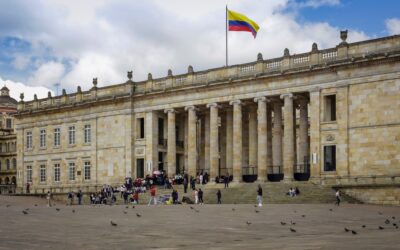
A powerful 7.4-magnitude earthquake tore through western Colombia early Monday morning, killing more than 160 people, collapsing dozens of buildings, and leaving hundreds still missing — the strongest quake to strike the country in more than two decades and an immediate, defining crisis for a president who had been sworn into office only days earlier. What Happened The earthquake struck near San José del Palmar on Colombia’s Pacific coast shortly after 7:30 a.m. local time Monday, with a depth of roughly 103 kilometers. Colombia’s Geological Service confirmed it as the strongest quake to hit the country so far this century, and it was followed by multiple aftershocks. The tremor was powerful enough to be felt across the border in neighboring Ecuador and Panama. By Monday evening, officials with the Colombian Association of Capital Cities put the death toll at 132, with 570 people reported injured — figures authorities warned were likely to keep climbing as search and rescue operations continued. By Tuesday morning, NBC News reported the confirmed death toll had risen further, to at least 169. The hardest-hit areas were concentrated in the Risaralda region, home to the city of Pereira, where at least 60 deaths were reported, and the Valle del Cauca region, home to Colombia’s third-largest city, Cali, where at least 27 people died, including three children. Widespread Destruction Across Multiple Cities The quake caused damage across a wide swath of western Colombia, hitting Cali, Pereira, Quibdó, and Manizales in particular. Local officials reported that at least 86 buildings had fully collapsed and hundreds more were damaged, with President Abelardo de la Espriella saying the quake destroyed or seriously damaged more than 1,500 homes, along with more than a dozen health centers and numerous schools. Seven airports across the affected region suspended operations in the quake’s immediate aftermath, and five capital cities were placed under a red alert. In Cali, city officials said at least 188 people remained missing as of Monday evening. Eyewitnesses described scenes of chaos and destruction. Jorge Moncayo, a 64-year-old taxi driver in the city, told the Associated Press he watched plumes of dust shoot into the air as buildings came down around him. Juan Carlos Osorio, who helped dig through rubble at a collapsed structure, told Colombian broadcaster Caracol Television that the sound of the building coming down “sounded like a bomb.” Neighbors organized themselves into human chains to help move debris by hand while waiting for heavier equipment to arrive. Álvaro López, a Cali resident who watched search efforts unfold while holding his dog, described the scope of the damage bluntly: “Our building has basically been left in ruins, and the building next to ours? Completely collapsed.” In Pereira, rescue crews evacuated 16 people who had been trapped for six hours inside a cable car system used for public transit in the mountainous city. A Region Especially Vulnerable The earthquake’s epicenter fell near Colombia’s Chocó region, one of the country’s poorest and most remote areas, nestled deep in Pacific coastal jungle and reachable in many parts only by boat or small aircraft. That remoteness has significantly complicated damage assessment and relief efforts, with communications outages in the hours after the quake leaving some areas without any mobile phone service and delaying an accurate accounting of the toll from the region closest to where the quake actually struck. Colombia sits along the Pacific “Ring of Fire,” the extensive chain of seismic fault lines encircling the Pacific Ocean responsible for the majority of the world’s earthquakes, making the country and its neighbors chronically vulnerable to major seismic events. Colombian officials noted that the country has taken concrete steps to prepare for exactly this kind of disaster since a devastating 1999 earthquake, including instituting evacuation drills conducted at least twice annually in major cities such as Bogotá, Medellín, Barranquilla, and Cali. An Unwelcome Echo of Venezuela’s Recent Disaster For many in the region, Monday’s earthquake carried an especially painful resonance: memories remain fresh of the devastating twin earthquakes that struck neighboring Venezuela in June, which together killed more than 6,000 people and left thousands more displaced, with recovery efforts there still ongoing more than a month later. NPR noted that residents and rescue workers searching through rubble in Cali described scenes strikingly similar to those still playing out across the border in Venezuela. A Test for a Brand-New President The timing of the disaster carries particular political weight in Colombia. The earthquake struck just days after Abelardo de la Espriella was sworn in as the country’s new president, thrusting his administration into a major national crisis before it had barely begun. De la Espriella declared a national state of emergency Monday afternoon, pledging the full resources of the federal government toward rescue and relief efforts. “The national government has all of its capabilities deployed to protect lives, assist affected communities and deliver aid wherever it is needed,” he said in a national address. “The first priority is rescuing the people trapped under the rubble.” International Response The United States moved quickly to offer support. The State Department announced it is committing $15.5 million to Colombia specifically for shelter, food, protection services, and ongoing earthquake damage assessments. The U.S. Embassy in Bogotá also confirmed it is actively assisting American citizens affected by the disaster — a notable point given that hundreds of thousands of Americans visit Colombia annually, making the U.S. the largest single source of tourists to the country. What Comes Next With search and rescue operations still actively underway in hard-hit cities and communications still limited in some of the more remote areas near the epicenter, officials caution that the full scope of the disaster — both in terms of lives lost and total economic damage — likely won’t be clear for days or even weeks. For a president barely into his first week in office, the response to this disaster is likely to shape public perception of his administration’s competence and priorities well beyond the immediate crisis itself, as reconstruction in…
Venezuela Earthquake Death Toll Surpasses 5,500 a Month After Twin Quakes Devastate the Country
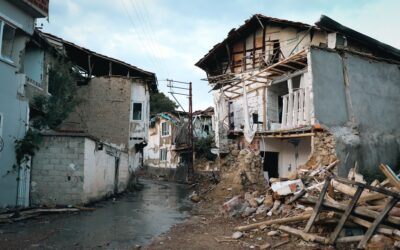
More than a month after twin earthquakes struck Venezuela, the human toll continues to climb, with officials confirming the death toll has now surpassed 5,500 and thousands more still unaccounted for as the country struggles to recover from one of the most devastating natural disasters in its recent history. A Staggering Toll The official death count now stands above 5,500, with more than 16,700 people reported injured. Damage from the twin quakes is estimated at $19.6 billion, and thousands of Venezuelans remain homeless more than a month after the disaster struck. The number of people still listed as missing has not been updated since late June, raising concerns that the final toll could climb even higher as search and recovery efforts continue. A Country Already Under Strain The earthquakes hit a nation already grappling with a battered economy and years of political instability under the Maduro regime, complicating both the government’s ability to respond and the international community’s efforts to deliver aid. The scale of destruction has strained local infrastructure and emergency services that were already stretched thin before the disaster struck. International Response The disaster has drawn attention from humanitarian organizations and foreign governments assessing how to best deliver aid to affected communities, though the specifics of international relief efforts continue to evolve as the scope of the damage becomes clearer. With thousands still displaced and rebuilding likely to take years, the long-term recovery effort is expected to remain a major humanitarian concern in the region well beyond the immediate aftermath. This story is developing.
Mainstream Media Finally Wakes Up To Massive Geological Threat To US
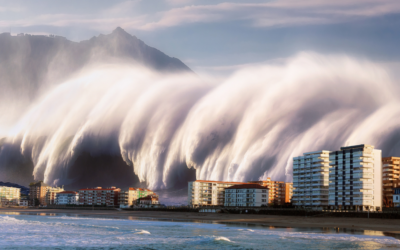
A study published in late April has finally woken up the mainstream news media to the threat of the Cascadia Subduction Zone, a boundary that could reconfigure the physical landscape of the Pacific coast when it next shakes. The Cascadia fault stretches a startling 600(ish) miles from the northern reaches of California through to British Columbia, according to AccuWeather. Quakes in this region go mostly ignored, but only because a monstrous tectonic rupture hasn’t hit for an estimated 300 or more years. When Cascadia awakens, she shakes the West coast with a magnitude-9.0 quake for upwards of five minutes, often sending a tsunami upwards of 100 feet tall toward the shoreline, NBC reported. The latest study points to a new threat posed by the fault. “Along the Washington, Oregon, and northern California coasts, the next great Cascadia subduction zone earthquake could cause up to 2 m [6.5 feet] of sudden coastal subsidence, dramatically raising sea level, expanding floodplains, and increasing the flood risk to local communities,” the authors wrote. Where Is The Risk Area? Major cities in the risk area include Vancouver, Seattle, Portland, but also those to the north and south and eastwards in-land. “This lesser talked about hazard is going to persist for decades or centuries after the earthquake,” co-author Tina Dura told NBC. “The tsunami will come in and wash away and it’s going to have big impacts, don’t get me wrong, but the lasting change of the frequency of flooding … that’s going to have to be dealt with.” (EXCLUSIVE: 20,000,000 Sick Americans Abandoned By Medical ‘Oligarchy’ Controlled By Elites; Can We Fix It?) Fossil records suggest the land-drop during previous Cascadia quakes turned dry ground into tidal mudflats along estuaries throughout the Pacific Northwest. “That’s going to happen again and we’ve built up a lot of those areas,” she added. It’s a good time to remember that the most dangerous earthquake fault on the West Coast is the Cascadia Subduction Zone, not the San Andreas Fault. The Cascadia Subduction Zone is capable of producing a megathrust earthquake with a magnitude of 9.0+ and a resulting tsunami up to… pic.twitter.com/9znJ9Sz4tM — Colin McCarthy (@US_Stormwatch) December 5, 2024 When Can We Expect Another Quake? Cascadia last shook in 1700, with previous quakes hitting once every 450-500 years on average. The National Seismic Hazard Model estimates a 15% chance of a magnitude-8.0 or stronger quake within the next 50 years. (RELATED: Joe Pags Launches ‘Unshaken And Unafraid’ With Salem Media Group; WATCH The Epic Premiere Episode) Federal officials, experts, basically anyone who knows about Cascadia believes that when the quake hits, it will likely be the worst natural disaster in the nation’s history, with reports suggesting: 14,000 fatalities* 100,000+ injuries 620,000 buildings collapsed, including 100 hospitals and 2,000 schools There are more than 2,500,000 people living between Portland and Vancouver. We believe these estimates are conservative and only represent those killed by direct impacts from the earthquake and tsunami. “There’s the flood itself and then there’s the basically permanent change to land level at the coast and that has a big impact for what those communities have to plan for,” Pacific Northwest Seismic Network Harold Tobin explained to NBC. “Where are you going to put your school or hospital? Where are you going to build your transportation network? I think it’s important to take the long view.” Long-term Planning Shortened Pain A great failure of the western mindset is our ignorance of time. We eat news in three meals a day, throw out fads faster than seasons change; we replace our politicians rapidly — and this is a good thing, as we all know how power corrupts. But we must reshape our thinking toward the natural world. We do not dominate our physical landscape. We are placed here as shepherds, existing at the will and mercy of our living planet. It would be wonderful if everyone could shut up about “issues like climate change” and instead learn to live in symbiosis with the things God gave us so we can prosper for generations to come. We hope to foster an environment of common sense education around the world and all her processes here at The Modern Memo.