

FBI

The Search for Nancy Guthrie: Reward Doubles as FBI and Sheriff Clash Over Evidence
The investigation into the disappearance of Nancy Guthrie, the 84-year-old mother of Today show co-anchor Savannah Guthrie, has entered a tense new phase. As of Friday, February 13, 2026, the search is moving into its 13th day with a significantly increased reward and a public dispute between local and federal authorities. At The Modern Memo, we analyze the new suspect descriptions, the forensic breakthrough with doorbell camera data, and the reported friction between the Pima County Sheriff’s Department and the FBI. The Suspect: New Leads from “Residual Data” After nearly two weeks of mystery, the FBI’s Operational Technology Division successfully recovered “previously inaccessible” footage from Nancy Guthrie’s doorbell camera. Despite the camera being disconnected the morning of the abduction, agents retrieved residual data from back-end systems. The Description: The suspect is now described as a male, approximately 5’9” to 5’10” tall, with an average build. Distinct Gear: High-resolution analysis confirmed the suspect was wearing a black Ozark Trail Hiker Pack (25-liter) backpack and was seen holding a flashlight in his mouth and carrying what appears to be a handgun in a holster. The Video: Footage shows the masked individual using a piece of prairie brush to attempt to obscure the camera lens before it was fully tampered with. Reward Increased to $100,000 In an effort to break the silence surrounding the case, the FBI has doubled the reward to $100,000 for information leading to Nancy’s location or the arrest of those involved. Thousands of Tips: Authorities have received over 13,000 tips since February 1, but they are now calling on residents within a two-mile radius of the Catalina Foothills home to specifically review footage from January 1 to February 2. The Search Expands: FBI agents have been spotted conducting “extensive searches” along roadways, culverts, and desert brush near both Nancy’s home and the nearby residence of her daughter, Annie Guthrie. Inter-Agency Tension: Nanos vs. the FBI A significant report surfaced on Friday morning suggesting a rift between Pima County Sheriff Chris Nanos and the FBI. The Allegation: Sources indicated that Sheriff Nanos had “blocked” the FBI’s access to key physical evidence, including DNA samples and a pair of gloves found near the scene, by sending them to a private lab in Florida rather than the FBI’s federal lab. The Defense: Sheriff Nanos pushed back against these claims in a briefing, stating he sent the evidence to the Florida lab because they were already processing other DNA markers in the case. He claimed the decision was made to expedite the results, not to hinder the federal investigation. Savannah Guthrie’s Heartbreaking Update On Thursday, Savannah Guthrie shared a poignant home video of her mother on social media, writing: “Our lovely mom. We will never give up on her. Thank you for your prayers and hope.” While the family has expressed a willingness to pay a ransom, the FBI has cautioned that several recent messages—including a new demand for one Bitcoin sent to media outlets—may be “imposter demands” rather than communication from the actual abductor. Final Word Staying informed on the Nancy Guthrie case isn’t just about following a tragic headline—it plays a powerful role in your understanding of the complexities of high-profile abductions and the vital importance of forensic persistence. When you look past the noise of inter-agency friction and focus on the data of the recovered “back-end” video and the specific gear used by the suspect, you gain a clearer picture of an investigation that is slowly but surely closing in on its target. Quality information replaces the anxiety of a slow-moving case with the clarity of verified suspect descriptions and technical breakthroughs. It allows you to see this search as more than a media event, but as a coordinated effort to rescue a vulnerable citizen before time runs out. By choosing to follow the forensic updates rather than the speculation of internet sleuths, you align your perspective with the realities of the investigation and support a more informed, resilient public effort to bring Nancy home. Where Facts, Context, and Perspective Matter At The Modern Memo, our goal is simple: to provide clear, well-researched reporting in a media landscape that often feels overwhelming. We focus on substance over sensationalism, and context over commentary. If you value thoughtful analysis, transparent sourcing, and stories that go beyond the headline, we invite you to share our work. Informed conversations start with reliable information, and sharing helps ensure important stories reach a wider audience. Journalism works best when readers engage, question, and participate. By reading and sharing, you’re supporting a more informed public and a healthier media ecosystem. The Modern Memo may be compensated and/or receive an affiliate commission if you click or buy through our links. Featured pricing is subject to change. 📩 Love what you’re reading? Don’t miss a headline! Subscribe to The Modern Memo here!
FBI Seizure in Georgia: 2020 Ballots Taken in Federal Raid
On Wednesday, January 28, 2026, the Fulton County Election Hub and Operation Center in Union City, Georgia, became the center of a high-stakes federal operation. FBI agents, executing a court-authorized search warrant, seized approximately 700 boxes of election records—including original physical ballots—from the 2020 presidential election. At Modern Memo, we analyze the legal mechanics behind this unprecedented seizure, the data at the heart of the probe, and the sharp divide between federal and local officials. The Operation: A “Court-Ordered Activity” The raid began around noon on Wednesday when agents from the FBI’s Atlanta field office, along with evidence recovery teams, arrived with a warrant signed by a federal magistrate judge. According to court filings and statements from Fulton County Clerk Che Alexander, federal agents focused specifically on the following: Physical Ballots: Every in-person and absentee ballot from the 2020 General Election. Tabulator Tapes: The physical records produced by scanners to tally votes. Digital Logs: Electronic ballot images and voter rolls. While the warrant itself remains under seal, it is reportedly linked to a Department of Justice (DOJ) lawsuit filed against Fulton County in December. That lawsuit sought to compel the county to provide access to 2020 records to “ascertain compliance with various federal election laws.” The Conflict: Chain of Custody Concerns The seizure has sparked a constitutional and logistical debate regarding the security of the ballots. The Federal Stance The DOJ and the FBI, now under the leadership of Director Kash Patel, have moved aggressively to investigate claims of “anomalies” and fraudulent tabulation in the 2020 vote—claims that have been investigated and rejected by courts and previous administrations. The current DOJ asserts that seizing the physical records is necessary for a full forensic audit to ensure “transparency” for the State Election Board. The Local Response Fulton County Commission Chair Robb Pitts expressed deep concern over the “chain of custody.” Pitts emphasized that the ballots were “safe and secure” in county custody and had been counted, recounted, and audited multiple times. “We don’t know where they’re being taken. We don’t know what’s going to happen to them. We can no longer satisfy… that those ballots are still secure,” Pitts stated. Democratic lawmakers in Georgia have condemned the raid as a “staggering use of federal power to chase ghosts,” while Republican members of the Fulton County Election Board welcomed the move, stating it is “about time that the people have answers.” Technical Context: The Recount Data Despite the renewed federal interest, the existing data on the 2020 Georgia election is extensive. Following the original vote, Georgia conducted: A Full Risk-Limiting Audit: A hand count of all 5 million ballots. A Formal Recount: Requested by the Trump campaign and conducted via machine. An Independent Review: Conducted by the Secretary of State’s office and the GBI regarding signature matching. Each of these reviews confirmed the original outcome: a victory for Joe Biden by approximately 11,779 votes. Federal agents are reportedly looking for evidence of “fraudulent tabulation” or “ballot harvesting” that they believe previous audits may have missed. FBI raids Fulton County election office, today, January 28, 2026. I first concluded in late 2021 that the evidence suggested that the hand count had been intentionally manipulated. My first report to authorities was filed in late 2021 followed by several others. 🇺🇸 pic.twitter.com/M1jGMdeZag — Jeff Fulgham (@jeffmfulgham) January 28, 2026 The Investigative History: From 2020 to Now Despite the renewed federal interest, the existing data on the 2020 Georgia election is extensive and has undergone several layers of scrutiny. Immediately following the election in November 2020, a Full Risk-Limiting Audit was conducted, which involved a hand count of all 5 million ballots and confirmed the original victory for Joe Biden. By December 2020, a formal Machine Recount requested by the Trump campaign further solidified those results. Simultaneously, the GBI Signature Audit was completed, finding no evidence of widespread fraud or systemic signature mismatching. The current FBI Federal Raid in early 2026 marks the fourth major intervention in these records. While previous counts and reviews consistently found a victory margin of approximately 11,779 votes, federal agents are now tasked with a new forensic analysis to determine if prior audits missed specific evidence of “fraudulent tabulation.” Final Word Staying informed on federal law enforcement actions isn’t just about politics—it plays a powerful role in your understanding of civic stability and the rule of law. When you follow the data behind a search warrant, you gain a clearer picture of how “voter integrity” and “federal oversight” are being redefined in 2026. Quality information improves your mental health by replacing speculative outrage with the clarity of court-authorized actions. It reduces “news fatigue” by focusing on the actual chain of custody and legal filings rather than just the rhetoric. By choosing to analyze the warrant and the response, you protect your perspective and support a more informed, resilient society. Where Facts, Context, and Perspective Matter At The Modern Memo, our goal is simple: to provide clear, well-researched reporting in a media landscape that often feels overwhelming. We focus on substance over sensationalism, and context over commentary. If you value thoughtful analysis, transparent sourcing, and stories that go beyond the headline, we invite you to share our work. Informed conversations start with reliable information, and sharing helps ensure important stories reach a wider audience. Journalism works best when readers engage, question, and participate. By reading and sharing, you’re supporting a more informed public and a healthier media ecosystem. The Modern Memo may be compensated and/or receive an affiliate commission if you click or buy through our links. Featured pricing is subject to change. 📩 Love what you’re reading? Don’t miss a headline! Subscribe to The Modern Memo here!
James Comey Indicted for False Statements, Obstruction
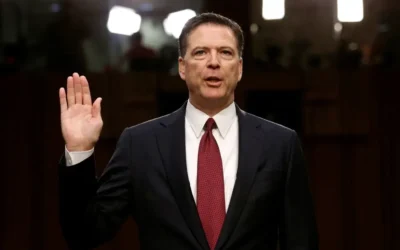
Former FBI Director James Comey has been indicted on two serious charges. A grand jury brought counts of making false statements to Congress and obstruction of a congressional proceeding. These charges focus on his testimony in 2020 about the FBI’s Russia-related investigation known as “Crossfire Hurricane.” Known to many as Russiagate, this case now brings fresh attention to Comey’s past leadership at the bureau. Details of the Charges According to the indictment, Comey lied during his September 2020 testimony. Prosecutors allege he falsely denied authorizing an FBI employee to serve as an anonymous source. In addition, the obstruction charge claims he interfered with a congressional investigation into sensitive information leaks. Both charges carry potential fines and prison time if he is convicted. Importance of Timing The indictment comes at the last possible moment under the statute of limitations. Federal prosecutors had exactly five years to act, and they filed just before that deadline. The U.S. Attorney’s Office for the Eastern District of Virginia is leading the case. This timing adds to the drama and shows the investigation had been active behind the scenes for years. Strong Reactions from Leaders Attorney General Pam Bondi responded quickly. She said that no one, regardless of status or past power, stands above the law. She explained that the Department of Justice has a duty to act when powerful people mislead Americans. No one is above the law. Today’s indictment reflects this Department of Justice’s commitment to holding those who abuse positions of power accountable for misleading the American people. We will follow the facts in this case. — Attorney General Pamela Bondi (@AGPamBondi) September 25, 2025 FBI Director Kash Patel also issued a statement. He said the FBI must hold itself accountable. According to Patel, restoring trust requires that even former leaders face consequences if they break the rules. Today, your FBI took another step in its promise of full accountability. For far too long, previous corrupt leadership and their enablers weaponized federal law enforcement, damaging once proud institutions and severely eroding public trust. Every day, we continue the fight to… — FBI Director Kash Patel (@FBIDirectorKash) September 25, 2025 President Donald Trump reacted strongly as well. He labeled Comey one of the worst figures ever to serve in government. Trump added that the indictment represents the beginning of long-delayed accountability. (RELATED NEWS: Ryan Routh Attempts To Stab Himself After Guilty Verdict For Trump Assassination Plot) Government Spying on Trump The case also ties into confirmed surveillance of Donald Trump’s campaign during the 2016 election. Under James Comey’s leadership, the FBI secured secret warrants from the Foreign Intelligence Surveillance Court (FISA) to monitor Trump campaign adviser Carter Page. Later investigations revealed that the FBI relied heavily on the Steele dossier, which contained unverified and false claims. A Justice Department inspector general’s report found that the FBI made serious errors and omitted key facts in its FISA applications. Those mistakes misled the court and enabled improper spying on a presidential campaign. These findings confirmed that the government spied on Trump’s campaign through flawed surveillance methods. This abuse of power eroded public trust and showed how political motives can corrupt law enforcement. The surveillance scandal now serves as a backdrop to Comey’s indictment. It highlights a pattern of misconduct under his leadership that continues to raise questions about the FBI’s role in politics and justice. The Background of Crossfire Hurricane The controversy reaches back to 2016, when the FBI opened its Russia election interference investigation. Inside the bureau, officials referred to the effort as “Crossfire Hurricane.” James Comey oversaw this probe while serving as FBI Director. Later, special counsel Robert Mueller took over. In 2019, Mueller’s report concluded there was not enough evidence to prove criminal conspiracy between the Trump campaign and Russian operatives. Soon afterward, another special counsel, John Durham, began reviewing how the FBI launched the investigation in the first place. Durham’s report criticized the bureau, saying it ignored warning signs and allowed itself to be influenced by political pressure. These findings added weight to claims that FBI leadership mishandled the case. Legal Stakes for Comey If convicted, James Comey could face years in prison as well as steep fines. For making false statements to Congress, the maximum penalty is up to five years in prison and significant fines. For obstruction of a congressional proceeding, the penalty is also up to five years. Combined, Comey could face as much as 10 years in prison, though sentencing would depend on the court. His defense team is expected to argue that he did not knowingly mislead Congress. They may claim memory lapses or confusion rather than deliberate lies. Lawyers could also argue that congressional testimony often leaves room for interpretation. The burden of proof lies with prosecutors, who must show deliberate deception beyond a reasonable doubt. What Happens Next The indictment is only the beginning. The case will move to federal court, where a judge will oversee pretrial motions and hearings. Both sides will exchange evidence during discovery. After that, the court will determine whether to proceed to trial. (MORE NEWS: AOC Slams Charlie Kirk with Scathing House Floor Comments) Media attention will remain intense throughout the process. Because Comey once held one of the most powerful positions in law enforcement, every development will be closely examined. Political leaders from both parties are already weighing in, ensuring that the trial will shape public debates. Why This Case Matters The James Comey indictment matters for several reasons. It tests the principle that no government official is above the law. If prosecutors succeed, it will send a message that accountability reaches the highest levels of power. In addition, this case raises concerns about public trust in institutions. The FBI has faced criticism from across the political spectrum. By charging a former director, the Department of Justice signals that even the bureau’s top leaders must answer to the public. The Comey trial could set a powerful precedent for how cases involving Congress are handled. Lying to Congress is rarely prosecuted…

Anti-Trump DIA Employee Arrested For Allegedly Leaking Top Secret Intel to Foreign Government
By Jason Walsh, originally published on WokeSpy. An IT specialist employed by the Defense Intelligence Agency (DIA) has been arrested for allegedly attempting to transmit classified national security information to a foreign government. Nathan Vilas Laatsch, 28, was arrested close to the nation’s capital and is scheduled to make his initial court appearance in June. Laatsch became a civilian employee of the DIA in 2019 and held Top Secret security clearance in the Insider Threat Division. In March, the FBI launched an investigation after receiving a tip that an individual offered classified information to a “friendly” foreign government. The federal employee apparently indicated in an email that he did not “agree or align with the values of this administration” and was therefore “willing to share classified information” to which he had access, including “completed intelligence products, some unprocessed intelligence, and other assorted classified documentation.” Following communications with an undercover FBI agent, the anti-Trump employee began transcribing classified information to a notepad at his desk. (MORE NEWS: WHO Passes ‘Pandemic Agreement’ Even Though Pretty Much None Of Us Agreed To It) He then repeatedly leaked classified information from his workspace, allegedly. “Laatsch subsequently confirmed to the FBI agent that he was prepared to transmit the information,” the U.S. Attorney’s Office for the Eastern District of Virginia announced in a press release. The FBI then organized an operation in a public park where Laatsch was said to have planned to deposit the classified information for the foreign government to retrieve. “On May 1, FBI surveillance observed Laatsch proceed to the specified location and deposit an item. Following Laatsch’s departure, the FBI retrieved the item, which was a thumb drive later found to contain a message from Laatsch and multiple typed documents, each containing information that was portion-marked up to the Secret or Top Secret levels,” prosecutors said in the press release. “The message from Laatsch indicated that he had chosen to include ‘a decent sample size’ of classified information to ‘decently demonstrate the range of types of products’ to which he had access.” After receiving confirmation that the package had been received, he again contacted the undercover FBI agent and asked for compensation. The following day, Laatsch apparently indicated that he was interested in obtaining citizenship in the unnamed country because he did not “expect[] things here to improve in the long term.” (MORE NEWS: Kay Hill On Biden’s Info Blackout & The Solar Flare Threat No One’s Talking About) Although he said he was “not opposed to other compensation,” he was not in a position where he needed to seek material compensation. Additional meetings were set up by agents after Laatsch agreed to share more classified information. On May 29, Laatsch arrived at a prearranged location in northern Virginia, where he allegedly attempted to transmit multiple classified documents to the foreign country. FBI agents arrested Laatsch, and formal charges are forthcoming. *this article is not TMM’s original reporting and may not reflect how our Editorial Team feels in reality. Please contact us for comment on this story. TMM Analysis It is terrifying to think that people could be so willing to sell out America over feelings or money. We already know that most of our elected officials would sell half the country if it meant fame and fortune for them personally, but it always unnerving to think of how many quiet actors may be working to destroy the greatest idea in history: America. It is such a relief to know that the FBI, under the leadership of Kash Patel and Dan Bongino, is working to stop allegedly plots like this from destroying American prosperity. This is precisely the type of win that we want to see in the world — where the alleged bad guy gets foiled. But there are still so many gaps in our understanding of the real threats against the U.S., and too many lawmakers ready to sell us out at the drop of a hat. You have an opportunity to replace those lawmakers in 2026 and 2028, and we can help. Tell us about your least favorite, least-American politicians, and why you think they should be replaced in the 2026 Midterms. Email [email protected] with your thoughts — and we’ll be sure to dig into what we’re told, and bring you the latest updates on the best ways to protect our future (and those helping us do it!).