

France
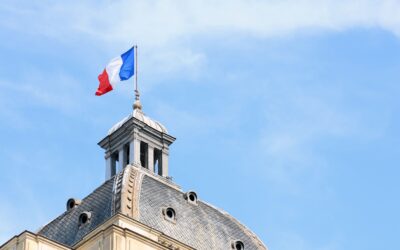
France’s Political Season Reopens With No Majority, No Budget, and a 2027 Race Already Underway
France’s political class returned from summer recess this week facing a familiar and worsening problem: a National Assembly with no working majority, a 2027 budget that must somehow pass anyway, and a presidential race that, with less than eight months to go before voters head to the polls, is already reshaping how every major party approaches the fall legislative session. Prime Minister Sébastien Lecornu, who has spent months trying to hold together a government that lacks a stable parliamentary coalition, has made passing a 2027 budget his central priority for the fall, but he is doing so under a self-imposed constraint designed to keep his own political future out of the equation. “I am not a candidate in the presidential election,” Lecornu said, an explicit attempt to signal that his budget proposals are being shaped by fiscal necessity rather than positioning for 2027 — a distinction he hopes will make it easier to find votes from lawmakers who might otherwise view any prime ministerial initiative through the lens of the coming presidential contest. Lecornu’s team has described the budget measures under consideration as deliberately “reversible,” a hedge intended to make the package more palatable to a fractured Assembly where no single bloc controls anything close to a majority. The budget fight is unfolding against a backdrop of sharpening ideological battle lines. Olivier Faure, first secretary of the Socialist Party, has staked out a position built around what he calls “ecological socialism,” combining traditional left-wing tax and spending priorities with climate policy, while explicitly ruling out any accommodation with the far right. Faure has warned that his party will not support any Lecornu-backed measure that draws backing from Marine Le Pen’s National Rally, declaring flatly that “if…the far right supports it, we will vote to censure it” — a warning that any bill perceived as dependent on far-right votes will trigger a no-confidence motion from the Socialists, regardless of the bill’s substance. That dynamic hands outsized leverage to Jordan Bardella, president of the National Rally, who has used the summer to prepare the party’s platform for the 2027 campaign rather than negotiate over the current government’s budget. Bardella said his party has “worked hard this summer on a programme to get the country back on its feet,” language aimed squarely at voters rather than at his colleagues in the Assembly, and reflecting the extent to which the National Rally now positions itself as a government-in-waiting rather than a conventional opposition party working the current legislative session for incremental wins. On the center-right and center, Édouard Philippe of the Horizons party has tried to carve out space as a unifying figure capable of pulling together right-of-center and centrist voters wary of both the National Rally and the hard-left France Unbowed. Philippe has paired that pitch with a call for fiscal restraint, positioning himself as the candidate of budgetary seriousness against both a far right he views as fiscally reckless in its own way and a resurgent left pushing for higher taxes and spending. Adding another layer to the field, former Socialist President François Hollande has signaled his own 2027 ambitions are gaining momentum, calling for tax increases to address France’s economic strains — a notable break from the fiscal caution favored by Philippe and much of the governing center, and a sign that Hollande, who left office deeply unpopular in 2017, sees an opening to reposition himself for a political comeback. The immediate legislative agenda facing Lecornu’s government extends well beyond the budget itself. Lawmakers are also expected to take up an agricultural “rescue plan” aimed at addressing financial strain among French farmers, along with a reform of the country’s sick leave policy — both politically sensitive measures in their own right that will require the same kind of fragile, ad hoc coalition-building the government has relied on for every major initiative since the last National Assembly elections left no party or bloc with a majority. The stakes of the budget fight are difficult to overstate in a political system still adjusting to a period of chronic parliamentary fragmentation. France has cycled through multiple prime ministers in rapid succession in recent years as successive governments failed to build durable coalitions, and a failure to pass a budget this fall would raise fresh questions about the viability of governing at all under the current Assembly’s composition — potentially reviving talk of new legislative elections or a fresh government reshuffle less than a year before voters choose a new president. Moderate figures across the political spectrum have used the start of the new session to warn against the further radicalization of French politics, cautioning that both a resurgent far right and an emboldened far left threaten the kind of pragmatic, compromise-based governance that a divided Assembly requires to function at all. Whether those warnings translate into actual cooperation on the budget, or whether the approaching presidential election simply accelerates the trend toward legislative gridlock as every major figure positions for 2027 rather than for the next fiscal year, is likely to become clear well before voters cast their first ballots. For now, Lecornu’s government remains dependent on a shifting, issue-by-issue patchwork of support from lawmakers who, in nearly every case, have far more to gain politically from distancing themselves from the current government than from helping it succeed — a structural problem that no amount of “reversible” budget language is likely to fully solve. The instability has broader implications beyond France’s own borders. As one of the European Union’s two largest economies alongside Germany, France’s ability to pass a credible budget carries weight for European bond markets and for the bloc’s broader fiscal credibility at a moment when several member states are already navigating their own debt and spending pressures. European officials have watched the past several years of French governmental turnover with concern, worried that prolonged instability in Paris could complicate joint EU initiatives that require French buy-in, from defense spending coordination to the bloc’s collective response to Russia’s war in Ukraine,…

Thieves Steal Napoleon’s Jewels in Daring Daylight Heist
In a stunning daylight robbery, a commando-style team of thieves broke into the Louvre Museum in Paris and stole crown jewels tied to Emperor Napoleon Bonaparte and Empress Eugénie. The theft shocked France and the wider world. It also raised urgent questions about security at the planet’s most visited museum. The Heist Unfolds On Sunday morning, around 9:30 a.m., four masked men targeted the Apollo Gallery, home to France’s imperial jewels. They reached a second-floor balcony with a furniture hoist known as a monte-meuble. Then they breached a window and moved fast. Video shows one thief cutting into a display with a handheld saw. Others smashed a second case. Within minutes, the crew grabbed several pieces, including a tiara, a necklace, a brooch, and emerald earrings linked to Empress Eugénie. They fled to waiting scooters and vanished into city streets. Later, investigators found a damaged crown near the gallery, suggesting a dropped or abandoned item during the rush to escape. (MORE NEWS: FBI Probes Hunting Stand Near Trump’s Air Force One Area) A Commando Team of Four Police now describe the suspects as a coordinated unit. They wore construction gear to blend in with renovation activity. Two entered the gallery. Two stayed outside as lookouts and drivers. Their timing looked deliberate and precise. They struck as the museum transitioned to opening hours, a moment when attention divides between staff duties and incoming visitors. Moreover, the thieves brought the right tools: a lift, cutting equipment, and likely glass-rated blades. Their plan hinted at advance scouting and knowledge of the floor plan. Consequently, investigators are examining prior access, contractor movements, and any unusual activity near the Apollo Gallery in the days before the heist. Why This Theft Matters The Louvre draws millions each year. Yet these jewels carry weight beyond tourism. They are national symbols. They link modern France to the Second Empire and the legacy of Napoleon III and Empress Eugénie. Because the pieces are highly recognizable, experts fear the thieves could melt settings or re-cut stones. If that happens, the trail grows cold. The historic objects become raw materials. Heritage turns into anonymous bullion. Therefore, the race to recover the jewels is on. Security Questions for a Global Icon Security at the Louvre has faced scrutiny before. Staff have warned about crowding and staffing pressures. Now, this daylight breach magnifies those concerns. Did the thieves exploit maintenance routines? Did equipment left on-site ease access? And did alarm responses meet the challenge of power tools and determined intruders? In response, museum leaders and cultural officials are reviewing protocols. Expect tighter controls around construction zones, more checks on contractor gear, and faster response playbooks for tool-based attacks. In addition, other major museums will reassess their own vulnerabilities, especially for small, portable, high-value objects. Political and Public Reactions National leaders condemned the crime as a humiliation and a shock to cultural identity. Opposition figures pointed to a broader decline in public order. Meanwhile, the Louvre closed for forensic work and an immediate inventory. Technicians collected prints, fiber, and tool marks. They also pulled footage from museum cameras and nearby streets, hoping to map every step of the crew’s approach and escape. The Historical Stakes The missing pieces are not merely luxury. They are artifacts of statecraft, ceremony, and image-making under the Second Empire. Empress Eugénie’s jewels embodied power and elegance. They told a story of ambition—artfully cut in diamonds, emeralds, and gold. Their loss is a cultural wound. It weakens the public’s direct connection to a pivotal chapter of French history. The Investigation So Far Authorities launched a nationwide manhunt and alerted Interpol. Customs posts and borders received warnings about distinctive gemstones and imperial designs. Detectives are reviewing bike, traffic, and street cameras across likely routes. They also monitor resale channels, both physical and online. Above all, they know time matters. Experts say the first 48 hours often determine whether intact jewels can be found before stones are removed or metal is melted. (MORE NEWS: George Santos a Free Man After Trump Commutes His Sentence) How Museums Can Respond Globally, museums face a tough balance: access and awe versus armor and alarms. This heist tips the scale. Expect more human patrols, smarter sensors, and rapid-lockdown procedures. Expect, too, fresh attention to insider risk, contractor vetting, and after-hours equipment control. Because thieves innovate, defenders must adapt—fast and continuously. What Happens Next The Louvre is expected to reopen soon, but rebuilding trust will take time. Visitors will want proof that its treasures are secure. Donors will question whether protections truly match the value of what’s inside. And the public will be watching for arrests, confessions, and, hopefully, the return of the stolen jewels. In the meantime, vigilance matters. Jewelers, auction houses, and collectors should keep an eye out for anything suspicious. Investigators will follow leads and monitor trade networks. Recovering the pieces would mean more than solving a crime — it would show that France can still defend its history. Final Thoughts The Louvre robbery is a reminder of how fragile history can be, even in the world’s most secure museums. The thieves relied on speed and precision; investigators now counter with patience and determination. With some luck — and relentless pressure — the jewels might find their way home. Whatever the outcome, this heist shows that protecting the past takes more than alarms and glass cases — it takes constant vigilance. Cut through the noise. Drown out the spin. Deliver the truth. At The Modern Memo, we’re not here to soften the blow — we’re here to land it. The media plays defense for the powerful. We don’t. If you’re done with censorship, half-truths, and gaslighting headlines, pass this on. Expose the stories they bury. This isn’t just news — it’s a fight for reality. And it doesn’t work without you.