God
The Rainbow Covenant: MLB Sparks Holy War After Cracking Down on Pitchers’ Pride Night Bible Verses
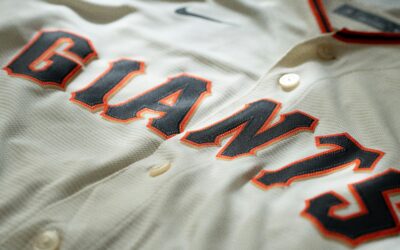
The ongoing cultural battle over corporate social messaging and religious expression has officially landed on the pitching mound. In a move that has ignited an immediate national firestorm, Major League Baseball (MLB) intervened against three San Francisco Giants pitchers who used their official “Pride Night” uniforms to display a handwritten biblical message. While widespread rumors across social media initially claimed the athletes faced immediate financial penalties, the league clarified that it has stopped short of issuing direct fines, opting instead for a formal, verbal warning regarding uniform violations. However, the warning has drawn intense backlash from federal lawmakers and conservative public figures, with high-profile celebrities stepping forward with open checkbooks to cover any future financial blowback. At The Modern Memo, we break down the tactical uniform choices made by the Giants’ pitching staff, the exact biblical text that triggered the league’s rulebook, and the growing political fallout hitting the commissioner’s desk. The Display: Etching Genesis Onto the Rainbow The controversy unfolded at Oracle Park during the Giants’ annual Pride Night game against the Chicago Cubs. As part of the team’s promotion to support the LGBTQ+ community, players were issued special-edition caps featuring a rainbow-colored version of the classic interlocking “SF” logo. The Pitching Trio: Starting pitcher Landen Roupp, along with relievers JT Brubaker and Ryan Walker, took the field with handwritten white lettering clearly etched directly onto their caps. The Rainbow Passage: The inscription read “Gen 9:12-16,” a direct reference to the Book of Genesis where God establishes the rainbow as the physical sign of His eternal covenant with humanity following the great flood. On Roupp’s cap, the text was strategically written so it partially overlapped the team’s rainbow logo. The Opt-Out Option: Highlighting the internal divide within the clubhouse, a fourth Giants pitcher, left-hander Sam Hentges, completely declined to wear the Pride-themed cap altogether. Instead, Hentges took the mound wearing the team’s standard, traditional black and orange cap. The Rulebook Defense: Content-Neutral vs. Double Standards Following a wave of viral social media coverage, MLB’s corporate offices quickly moved to enforce compliance, triggering an immediate debate over free speech in professional sports. The Verbal Warning: Pat Courtney, MLB’s chief communications officer, confirmed that the league officially flagged the writing as a uniform violation. “The writing on the cap violates our rules and consistent with normal practice we have warned the players about future violations,” Courtney stated in an official dispatch. The No-Writing Mandate: To defuse allegations of targeted religious discrimination, the league issued a secondary statement emphasizing that its uniform policy is strictly content-neutral. Under MLB uniform regulations, players are completely barred from writing, embroidering, or affixing any personal messages, nicknames, or family names onto their apparel or game gear. The league noted it has handed down identical warnings in the past to players writing messages like “Dad” or “Happy Mother’s Day”. The Stand on Faith: Speaking to reporters after the game, Roupp stood firm on his actions, emphasizing that the display was an expression of personal belief rather than an act of hostility. “There’s no hate at all, it’s just what I stand for and what I stand on,” Roupp explained. “I believe in God. It’s just about God’s covenant and a promise that he makes to us.” The Political Fallout: Checkbooks and Congressional Letters The league’s intervention has completely transformed a routine uniform enforcement action into a polarized, national debate over religious freedom and corporate overreach. Schneider’s Open Checkbook: As rumors of hypothetical financial penalties circulated online, actor and comedian Rob Schneider publicly blasted the league on social media, labeling the organization “anti-Christian”. Schneider vowed to personally bankroll any future financial fallout hitting the athletes: “I will pay the fines for any @MLB Christian player who wears a Bible verse on their uniform.” Hawley Demands Answers: On Capitol Hill, U.S. Senator Josh Hawley (R-Mo.) sent a scathing letter to MLB Commissioner Robert Manfred, demanding an exhaustive review of the league’s disciplinary history. Hawley accused the league of enforcing a “dubious” double standard, pointing out that the MLB openly designs and promotes political and social viewpoints on the field while aggressively reaching for the rulebook the second a player expresses traditional Christian beliefs. The Executive Threat: Vice President J.D. Vance also injected himself into the controversy, signaling that the administration views the crackdown as part of an outdated cultural paradigm, posting on X: “Trump won, we don’t have to do this anymore.” Final Word The MLB’s swift intervention against the San Francisco Giants pitchers is the definitive proof that the intersection of corporate branding and personal faith remains a volatile powder keg. When you strip away the social media hyperbole claiming the players were heavily fined and look strictly at the data—three pitchers using a specific biblical verse to reclaim the original meaning of the rainbow, a league scrambling to enforce a rigid, content-neutral uniform policy, and federal lawmakers demanding an accounting of the league’s disciplinary history—you gain a clear view of an institutional elite caught in a trap of its own making. Quality information replaces the outrage narrative with a lesson in structural boundaries. It allows you to see that when a professional sports league chooses to turn its official uniforms into a billboard for cultural causes, it forfeits the moral authority to act surprised when players use that exact same canvas to declare their allegiance to God.
Glorify God Among the Nations: The Resurgence of Faith During National Prayer Week 2026
As the United States celebrates the historic 75th annual National Day of Prayer, the country finds itself in the midst of a profound spiritual awakening. This year’s observance carries unprecedented weight, coinciding with the grand “America 250” celebrations marking two and a half centuries of independence. At The Modern Memo, we analyze the 2026 theme of intergenerational unity, the importance of public prayer as a pillar of American liberty, and why the administration is calling for a national rededication as “One Nation Under God.” The 2026 Theme: “Glorify God Among the Nations” The theme for this year, “Glorify God Among the Nations—Seeking Him in All Generations,” is drawn from 1 Chronicles 16:24. It marks a shift from internal petition toward a global declaration of faith and gratitude. Intergenerational Unity: A primary focus of this year’s week-long observance is bridging the “faith gap” between Gen Z and older generations. Organizers report that younger Americans are increasingly turning to prayer as a source of “hope for today” rather than just a traditional ritual. The “Golden Thread”: In his official proclamation, the President described devotion to God as the “golden thread” connecting the American experience from the Founding Fathers to the present day, emphasizing that the nation’s greatest triumphs have always been preceded by national prayer. The Historical Pillar: Why Prayer Matters to the State National Prayer Week is not merely a religious tradition; it is a fundamental acknowledgment of the source of American rights. The 1775 Precedent: The tradition began before the nation was even born, when the Continental Congress called for a day of prayer in 1775 to seek wisdom for the burgeoning revolution. The 1952 Mandate: In 1952, at the height of the Cold War, Congress and President Truman solidified the annual observance to distinguish the American system of “liberty under God” from the “atheistic communism” of the era. National Rededication: As part of the 250th-anniversary festivities, a massive gathering is scheduled for May 17 on the National Mall, where thousands will meet to rededicate the United States to its founding principles. The “America Prays” Initiative The current administration has expanded the scope of this week through the “America Prays” initiative, which challenges one million Americans to dedicate one hour a week to praying for the country. “Indispensable Supports”: Drawing on George Washington’s Farewell Address, the administration argues that religion and morality are “indispensable supports” for political prosperity. Targeted Intercession: Families are being encouraged to pray specifically for: Military Safety: Protection for those serving in the ongoing regional conflicts. Educational Integrity: Wisdom for educators to cultivate a “caring and responsible” generation. Economic Thriving: Resources for local businesses and families to earn their livelihoods with dignity. Final Word National Prayer Week 2026 is a powerful rejection of the “secular drift” that has characterized the last few decades. When you look past the noise of cultural debate and focus on the data—the 75-year tradition of the National Day of Prayer and the surging participation in the “America Prays” initiative—you gain a clearer picture of a nation that is returning to its roots. Quality information replaces the idea of prayer as a “private hobby” with the reality of prayer as a vital public service. It allows you to see that as we chart the course for the next 250 years, the American spirit remains tethered to the belief that our destiny is not our own. By choosing to “Glorify God among the nations,” the American people are signaling that the greatest days of this republic are still ahead. Where Facts, Context, and Perspective Matter At The Modern Memo, our goal is simple: to provide clear, well-researched reporting in a media landscape that often feels overwhelming. We focus on substance over sensationalism, and context over commentary. If you value thoughtful analysis, transparent sourcing, and stories that go beyond the headline, we invite you to share our work. Informed conversations start with reliable information, and sharing helps ensure important stories reach a wider audience. Journalism works best when readers engage, question, and participate. By reading and sharing, you’re supporting a more informed public and a healthier media ecosystem. The Modern Memo may be compensated and/or receive an affiliate commission if you click or buy through our links. Featured pricing is subject to change. 📩 Love what you’re reading? Don’t miss a headline! Subscribe to The Modern Memo here!