
Mexico
Mexico Claims 46% Drop in Homicides Under Sheinbaum, But Watchdogs Warn the Numbers Don’t Tell the Whole Story
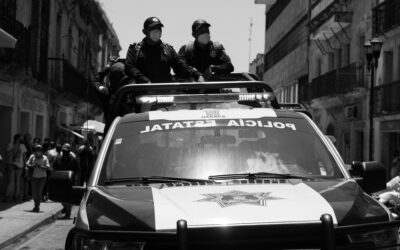
Mexican President Claudia Sheinbaum’s government says intentional homicides have fallen 46% since she took office, a dramatic decline her administration is holding up as proof that its aggressive campaign against cartel operators is working — even as independent researchers warn that other forms of criminal violence are quietly rising in the shadow of the falling murder count. According to figures presented by Sheinbaum’s government, the daily average of intentional homicides dropped from 86.9 in September 2024, when she took office, to 47.3 by May 2026, making that May the lowest for the month in twelve years. Officials say 28 of Mexico’s 32 states recorded year-over-year reductions in homicides, with some of the improvements especially dramatic: San Luis Potosí saw an 81% decline, while Zacatecas, long one of the country’s most violence-plagued states amid competition between rival cartel factions, posted a 63% drop. High-impact crimes more broadly — a category that includes homicide, kidnapping and extortion — fell 31% from October 2024 through May 2026, according to the government’s figures. The security gains, if they hold up, would represent one of the most significant declines in criminal violence in Mexico’s recent history, a country that has struggled for nearly two decades with cartel-driven violence that has claimed hundreds of thousands of lives since the government’s military confrontation with drug trafficking organizations began in earnest in the mid-2000s. Sheinbaum’s administration has pointed to a substantial law enforcement push behind the numbers: officials report more than 56,000 detentions tied to high-impact crimes, nearly 30,000 firearms seized, and approximately 420 tons of drugs confiscated, including a naval operation that alone secured more than 71 tons of cocaine. The government has paired that enforcement push with social investment it argues addresses violence at its root, enrolling more than 385,000 young people in job-training and education programs such as Jóvenes Construyendo el Futuro, alongside plans to create 200,000 new high school spaces aimed at keeping at-risk youth out of cartel recruitment pipelines. The approach marks a notable shift from the “hugs, not bullets” strategy associated with Sheinbaum’s predecessor and political mentor, former President Andrés Manuel López Obrador, whose government favored addressing the social roots of cartel violence over direct military confrontation. Sheinbaum has instead leaned into more assertive, at times militarized operations against cartel leadership structures, including a major operation in Jalisco earlier this year targeting the Jalisco New Generation Cartel, one of the country’s most powerful and violent criminal organizations. Her government has also drawn a harder line than some anticipated on U.S. relations, at one point refusing to extradite certain Mexican officials wanted on drug trafficking charges in the United States even while separately transferring dozens of cartel suspects to American custody in what her administration described as a “sovereign decision” rather than a concession to U.S. pressure. Violence remains heavily concentrated in a handful of states even as the national numbers improve. Officials say eight states now account for 54% of all homicides nationwide, led by Guanajuato, which alone represents 8.8% of the national total, followed by Baja California, Chihuahua, Sinaloa, Morelos, the State of Mexico, Guerrero and Veracruz — a list that reads as a rough map of where major cartel factions continue to compete most fiercely for territory and trafficking routes. Independent researchers and security analysts, however, have urged considerable caution about reading the declining homicide figures as evidence that Mexico’s underlying violence problem is actually improving. The 2026 Peace Index, a widely cited annual assessment of security conditions across the country, found homicides fell 22.7% over the year it examined — a smaller but still substantial decline that nonetheless came paired with concerning increases in disappearances across multiple regions and the expansion of extortion networks tied to increasingly fragmented criminal groups. Researchers behind the index cautioned that these trends reflect “the persistence of criminal structures” and continuing gaps in Mexico’s investigative and judicial capacity, warning that “structural risks threatening the sustainability of these advances persist” even as the topline homicide numbers move in the right direction. Some analysts have gone further, suggesting that at least part of the decline in reported homicides may reflect a shift in how criminal violence manifests rather than a genuine reduction in its overall scale — with disappearances, in particular, sometimes serving as a way for both criminal organizations and, in some documented cases, state actors to obscure killings that might otherwise be counted as homicides. The Peace Index report noted that domestic violence has become Mexico’s most commonly reported offense even as firearm use in street crime has risen, and pointed to Mexico’s prison population reaching a record 256,000 inmates alongside what it described as a severe deficit in the investigative and judicial capacity needed to actually process that volume of cases and hold perpetrators accountable. For the Trump administration, which has made pressuring Mexico on both cartel violence and fentanyl trafficking a signature element of its broader Western Hemisphere policy, Sheinbaum’s numbers present a complicated diplomatic dynamic. A genuine, sustained decline in cartel violence would support continued cooperation between the two governments on security matters, while persistent skepticism from independent monitors gives U.S. officials who favor a harder line on Mexico ample grounds to argue that the underlying crisis remains far from resolved regardless of which statistics get emphasized on either side of the border. U.S. law enforcement agencies have continued to report large fentanyl seizures tied to Mexican trafficking networks even as Sheinbaum’s government touts its own record hauls, underscoring that whatever progress has been made against cartel violence domestically within Mexico has not yet translated into a comparable slowdown in the flow of drugs across the border. That disconnect has fueled ongoing friction between Washington and Mexico City over how much credit Sheinbaum’s security strategy actually deserves, with American officials in border states frequently pointing to seizure statistics on their own side of the border as a more reliable gauge of cartel activity than homicide figures reported by a foreign government with an obvious political incentive to showcase improvement. Whether…
Shadow of the Syndicate: Mexican Senator Slams Sheinbaum for Protecting ‘Narco-Politicians’ Following US Indictments
A political firestorm has erupted in Mexico City, as the fallout from a massive U.S. Department of Justice indictment reaches the highest levels of the Mexican government. Following the unsealing of charges against ten current and former officials for allegedly partnering with the Sinaloa Cartel, a prominent opposition senator has accused President Claudia Sheinbaum of actively shielding “narco-politicians” within her own administration. At The Modern Memo, we analyze the “indictment heard ’round the world,” the names fueling the scandal, and why the Trump administration is signaling that “sovereignty” will no longer be a shield for cartel collaborators. The Indictment: Ten Officials in the Crosshairs The U.S. indictment, unsealed late yesterday in the Eastern District of New York, names ten individuals accused of facilitating the shipment of thousands of tons of fentanyl and cocaine into the United States. The Partners: The list includes three current state-level officials and seven former high-ranking members of the security apparatus. They are accused of providing “protection, intelligence, and safe passage” to the Sinaloa Cartel in exchange for millions in bribes. The Sinaloa Connection: Federal prosecutors allege these officials functioned as a “government wing” of the cartel, using state resources to eliminate rival traffickers and ensure the syndicate’s dominance. Extradition Demands: The U.S. has reportedly issued immediate extradition requests for all ten individuals, setting up a direct confrontation with the Sheinbaum administration. The Accusation: Sheinbaum’s ‘Shield’ During a heated session of the Mexican Senate this morning, Senator Lilly Téllez delivered a blistering critique of the President’s response to the scandal. “Protecting the Guilty”: Téllez accused President Sheinbaum of refusing to cooperate with U.S. authorities to protect her political allies. “The President talks about sovereignty, but she is really talking about impunity,” Téllez declared. “She is shielding narco-politicians because their fall would bring down her entire project.” The “Hugs, Not Bullets” Legacy: Critics argue that Sheinbaum is continuing the failed policies of her predecessor, allowing cartel influence to seep into the very foundations of the state under the guise of “social peace.” The Silence from Los Pinos: While Sheinbaum has officially stated that Mexico will “review the evidence” before taking action, her refusal to immediately suspend the current officials named in the indictment has sparked national outrage. The Trump Doctrine: “Clean House or We Will” The timing of the indictments is being viewed as a strategic move by the Trump administration to force Mexico’s hand on border security and cartel influence. Designation Warnings: Sources within the U.S. State Department suggest that if the Sheinbaum administration continues to block extraditions, the U.S. is prepared to designate several Mexican states as “narco-controlled zones,” which would trigger a range of economic sanctions and travel bans. Unilateral Action: The President has signaled that the U.S. will “no longer wait for permission” to take out cartel leadership if the Mexican government remains compromised. The recent “Operation Epic Fury” in the Gulf has already shown the administration’s willingness to use overwhelming force against hostile actors. Final Word The Sinaloa indictment has pulled back the curtain on the “Narco-State” reality that has plagued Mexico for decades. When you look past the noise of “sovereignty” and focus on the data—the ten indicted officials and the billions of dollars in cartel revenue flowing through government hands—you gain a clearer picture of a neighbor in crisis. Quality information replaces the narrative of “cooperation” with the reality of a Mexican administration that is facing a choice: purge the criminals within its ranks or face the full economic and military weight of a United States that has run out of patience. By choosing to shield these “narco-politicians,” Sheinbaum may be signing the death warrant for her own administration’s credibility. Where Facts, Context, and Perspective Matter At The Modern Memo, our goal is simple: to provide clear, well-researched reporting in a media landscape that often feels overwhelming. We focus on substance over sensationalism, and context over commentary. If you value thoughtful analysis, transparent sourcing, and stories that go beyond the headline, we invite you to share our work. Informed conversations start with reliable information, and sharing helps ensure important stories reach a wider audience. Journalism works best when readers engage, question, and participate. By reading and sharing, you’re supporting a more informed public and a healthier media ecosystem. The Modern Memo may be compensated and/or receive an affiliate commission if you click or buy through our links. Featured pricing is subject to change. 📩 Love what you’re reading? Don’t miss a headline! Subscribe to The Modern Memo here!
Cartels ‘Without Fear’: State Department Issues Dire Travel Warning for Mexican Border Cities
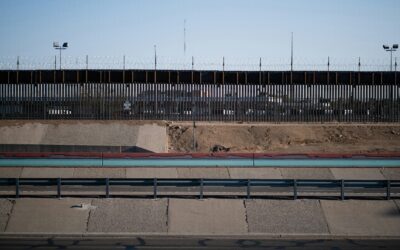
The U.S. State Department has issued a harrowing new travel advisory today, April 28, 2026, urging American citizens to avoid several Mexican cities located directly across the Texas border. The warning paints a grim picture of a region where the rule of law has been effectively supplanted by the rule of the gun, with federal officials cautioning that armed criminal groups now patrol these areas “without fear of punishment.” At The Modern Memo, we examine the breakdown of security in cities like Nuevo Laredo and Matamoros, the Biden-era legacy of border instability, and why the “Level 4: Do Not Travel” designation is a stark reminder of the chaos currently brewing just yards from American soil. The ‘Do Not Travel’ List: Border Cities in Crisis The latest advisory specifically targets cities in the state of Tamaulipas, long a flashpoint for cartel warfare, but emphasizes a dangerous new reality: these groups are no longer hiding in the shadows. Open Patrols: According to the State Department, heavily armed members of criminal organizations are frequently observed patrolling the streets in armored “monstruos” and convoys. Impunity on Display: The warning notes that these groups act with “total impunity,” often outgunning and outmaneuvering local Mexican law enforcement, which possesses “limited capacity” to respond to the rampant kidnappings and carjackings. Targeted Cities: Nuevo Laredo (across from Laredo, TX), Matamoros (across from Brownsville, TX), and Reynosa (across from McAllen, TX) remain under the strictest “Do Not Travel” category due to the pervasive risk of being caught in the crossfire of “territorial disputes.” Kidnapping and Extortion: A Growing Threat to Americans While the cartels primarily fight each other for control of narco-trafficking and human smuggling routes, American citizens have increasingly become collateral damage or specific targets for financial gain. The Ransom Economy: The advisory highlights a surge in kidnappings where U.S. citizens and lawful permanent residents are held for ransom. These incidents often occur on federal highways or immediately after crossing the international bridge. Highway Hijackings: Travelers are warned that criminal groups frequently set up illegal roadblocks, using “cloned” police vehicles or heavy machinery to stop traffic and extort passengers. The Consular Constraint: Because these areas are so dangerous, U.S. government employees are strictly prohibited from traveling there, meaning “emergency services” for Americans who find themselves in trouble are virtually non-existent. The Policy Fallout: Sovereignty vs. Spreading Chaos Critics of the current border situation argue that the State Department’s warning is a late admission of a failure to secure the southern frontier. Terrorist Designations: The warning follows growing calls from Republican leadership to officially designate these cartels as Foreign Terrorist Organizations (FTOs). Analysts argue that when a group patrols a border city “without fear,” they have moved from being a criminal gang to a de facto insurgent force. The “Spillover” Concern: For Texans living in border communities, the State Department’s admission of a “security vacuum” just across the river is a cause for immediate concern. As the cartels solidify control over the Mexican side of the bridges, the risk of violence spilling onto U.S. soil remains a persistent threat. Final Word The State Department’s warning for the Texas-Mexico border is the definitive proof of a “failed state” dynamic occurring on our doorstep. When you look past the noise of “diplomatic cooperation” and focus on the data—the Level 4 travel bans and the official recognition of armed patrols—you gain a clearer picture of a region that has been surrendered to the cartels. Quality information replaces the narrative of a “safe and orderly” border with the reality of a war zone that is literally within eyesight of American families. It allows you to see that “Do Not Travel” isn’t just an advisory; it’s a surrender of sovereignty in the face of organized terror. By choosing to warn Americans away, the government is acknowledging a reality that can no longer be ignored: the neighbor to our south is currently being governed by the highest bidder. Where Facts, Context, and Perspective Matter At The Modern Memo, our goal is simple: to provide clear, well-researched reporting in a media landscape that often feels overwhelming. We focus on substance over sensationalism, and context over commentary. If you value thoughtful analysis, transparent sourcing, and stories that go beyond the headline, we invite you to share our work. Informed conversations start with reliable information, and sharing helps ensure important stories reach a wider audience. Journalism works best when readers engage, question, and participate. By reading and sharing, you’re supporting a more informed public and a healthier media ecosystem. The Modern Memo may be compensated and/or receive an affiliate commission if you click or buy through our links. Featured pricing is subject to change. 📩 Love what you’re reading? Don’t miss a headline! Subscribe to The Modern Memo here!
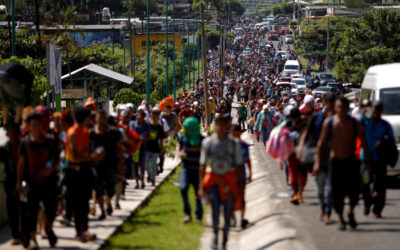
Cuban Migrant Caravan Shifts Destination to Mexico City
A new caravan led mainly by Cuban migrants is making its way through southern Mexico. But unlike past movements, this group is not trying to reach the United States. Instead, they are heading for Mexico City, hoping to build a new life there. This shift marks a dramatic change in migration patterns. For years, the U.S. was the ultimate goal for most migrants traveling through Mexico. Now, stricter border controls and changing political realities have pushed many to look for safety and opportunity elsewhere. A Journey with a New Goal The caravan began in Tapachula, near the border with Guatemala. It includes more than a thousand people from Cuba and other Latin American countries. They are traveling north on foot and by bus, aiming to reach the Mexican capital. Their message is simple: they want permission to live and work in Mexico legally. Many of them have waited months in overcrowded shelters in Tapachula. Some were stuck there for nearly a year, unable to move north or find jobs. Frustration and hunger pushed them to organize and take to the road. They believe reaching Mexico City will give them a better chance to speak directly to government officials and demand legal documents. Trump’s Policies Shift the Migration Map Since Donald Trump returned to the White House in early 2025, the U.S. has seen a sharp decline in illegal border crossings. The administration has expanded deportations, increased patrols, and enforced new agreements with Mexico and Central American nations. (MORE NEWS: Apple Pulls ICE-Tracking Apps from App Store) The New York Post is reporting that ICE is on track to deport 600,000 illegal immigrants in 2025 and 2 million have left voluntarily. “This is just the beginning.” As a result, the number of migrants attempting to cross into the U.S. has dropped to historic lows. This has forced many to rethink their plans. For the first time in years, a large number of migrants now say they intend to stay in Mexico rather than risk the journey north. Some say they no longer see the U.S. as a welcoming place. Others fear being detained or deported if they try to cross. For them, Mexico represents a chance to work, earn money, and live without constant fear of arrest. Seeking Opportunity Inside Mexico Mexico, specifically Mexico City, is becoming a new destination for migrants across the region. Many believe they can find jobs in construction, agriculture, or tourism. Some also hope to start small businesses or join family members already living in the country. The Mexican government has been trying to manage this new wave of settlement. Officials have offered temporary humanitarian permits that allow migrants to travel and seek work. However, these permits often expire after 30 days, leaving many in legal limbo once again. Many immigrants have been outright denied or have received pushback on their requests, leaving them frustrated. A migrant caravan leaves southern Mexico and heads for the capital Mexico City in search of better opportunities. The Cuban and Haitian migrants cite red tape and high costs as barriers to making life in Mexico work pic.twitter.com/G35cg1NBc9 — Reuters (@Reuters) October 2, 2025 Despite the uncertainty, migrants remain hopeful. They see Mexico City as a symbol of progress — a place where their voices can be heard and their paperwork processed faster. Hardships on the Road The journey north is dangerous and exhausting. Migrants face long days of walking under intense heat with little food or water. Some travel with small children or elderly relatives. Along the way, they risk robbery, extortion, and abuse from criminal groups that target vulnerable travelers. Local residents sometimes offer food and shelter, but others are less welcoming. Some communities fear that large groups of migrants will strain local resources or increase insecurity. Despite these challenges, the caravan continues to move forward. (RELATED NEWS: Cartel “La Diabla” Busted for Baby, Organ Ring in Mexico) Mexico’s Complex Role Mexico now faces a difficult balancing act. On one hand, it must show compassion and manage the humanitarian crisis. On the other, it must maintain cooperation with the United States, which continues to pressure Mexico to control migration flows. The Mexican National Migration Institute has been documenting participants and reviewing cases to determine who may qualify for residency. In past caravans, authorities have used a strategy of dispersing migrants to other regions to prevent large concentrations near the capital or the U.S. border. A Turning Point in Migration The Cuban-led caravan may mark the beginning of a new migration era. Instead of using Mexico as a bridge to the United States, many migrants now view it as a final destination. Economic opportunity, cultural familiarity, and proximity to home make Mexico an appealing choice. While challenges remain — from bureaucracy to discrimination — migrants say they prefer the uncertainty of Mexico over the hostility they expect at the U.S. border. This shift could reshape regional migration policies for years to come. The U.S. may see reduced border pressure, while Mexico will need stronger systems for asylum, employment, and integration. How both governments respond will define the next chapter in North American migration. The Road Ahead: A Hard Truth As the caravan moves closer to Mexico City, the country faces mounting pressure. Streets and shelters are already crowded with people waiting for government help. Local resources are stretched thin, and frustration is growing among residents who feel their communities are being overrun. Many Mexicans argue it’s time to draw a firm line. They believe the government must stop encouraging massive caravans that drain public funds and disrupt local life. What began as a humanitarian issue has become a matter of national security and social stability. The reality is that Mexico cannot absorb endless waves of migrants. Jobs are limited, infrastructure is weak, and public services are already under strain. While compassion matters, so does responsibility. Allowing thousands of undocumented migrants to remain without control invites long-term problems that will hurt ordinary citizens first. The hard truth for some is that the…

Cartel “La Diabla” Busted for Baby, Organ Ring in Mexico
Martha Alicia Mendez Aguilar, better known as “La Diabla,” thought she could hide in Juárez, Mexico. But earlier this month, she was captured in a joint U.S.–Mexico operation. The charges against her aren’t about drugs or weapons. They’re darker. She’s accused of running a cartel baby-trafficking and organ-harvesting ring—an operation so disturbing that even seasoned investigators were stunned. Her arrest is a big win for law enforcement, but the story behind it reveals something bigger. Cartels aren’t just about drugs anymore. They’re moving into crimes most people never thought possible. And that makes this case one of the most chilling in years. Who Exactly Is “La Diabla”? Aguilar isn’t just another cartel name. She worked with the Jalisco New Generation Cartel, one of Mexico’s most violent groups. Her nickname, “La Diabla,” which means “She-Devil,” says it all. She earned a reputation for being ruthless. According to investigators, she targeted poor, vulnerable women—many of them already pregnant. She promised them help, sometimes money, sometimes medical care. Once she had them in her grip, she lured them to hidden clinics. (MORE NEWS: U.S. Strike on Venezuelan Drug Cartel Boat Signals New Era) That’s where the horror began. Unregulated cesarean operations were performed under dangerous conditions. Some mothers didn’t survive. Their newborns were taken and sold. Reports say babies went for as much as $14,000 each. On top of that, the mothers’ organs were harvested and sold on the black market. Think about that for a moment. Babies sold like merchandise. Mothers treated as disposable. It’s the kind of cruelty that earns a person the name “La Diabla.” How She Got Caught Her downfall came on September 2. Authorities tracked her to Juárez, right across the border from El Paso, Texas. Mexican officials worked side by side with U.S. agencies to pull off the arrest. The U.S. National Counterterrorism Center had been involved for months. Its director, Joe Kent, said her capture was crucial to saving innocent lives. He also pointed out something many people don’t want to hear: cartels are diversifying. Drugs aren’t the only game anymore. They’re moving into new areas—human trafficking, organ sales, cybercrime—anything that brings in cash. That’s why the U.S. recently designated groups like the CJNG as foreign terrorist organizations. The goal is to give law enforcement more tools to shut them down. Aguilar’s arrest is proof that approach can work. Thanks to @POTUS, cartels are finally being treated as terrorists. @ODNIgov‘s NCTC recently provided intel to Mexican law enforcement partners that led to the arrest of Martha Alicia Mendez Aguilar, known as ‘La Diabla’ — a CJNG cartel-affiliated baby trafficker, in Juarez,… pic.twitter.com/CRNgJWVHkV — NCTC Director Joe Kent (@NCTCKent) September 24, 2025 The Office of the Director of National Intelligence, Tulsi Gabbard released a statement praising the multi-country, multi-agency operation that led to Aguilar’s arrest: Why Cartels Do This With cartels, the answer is always about money—and opportunity. Drug trafficking is risky. Border security is tougher, and competition between cartels is brutal. By branching out into other crimes, they spread the risk and increase their profits. Babies and organs fetch high prices. At the same time, poor women are easy targets. Many live in places where health care is scarce and oversight is weak. Cartels know they can operate in those shadows. And unlike drug shipments, which face heavy surveillance, these crimes are easier to hide. In short, it’s a perfect storm: desperate victims, weak systems, and greedy criminals. What Happens Next Authorities are now trying to map out Aguilar’s network. Who helped her? Were doctors involved? How far did the trafficking chain stretch? Those questions will take time to answer. There are also big legal challenges. These crimes cross borders, which means multiple countries have to work together. It’s messy, and cartels count on that. Still, her arrest sends a loud message: no one is untouchable. At the same time, this case shows prevention is just as important as prosecution. Vulnerable women need more protection. They need safe hospitals, real economic options, and information that helps them spot dangers before it’s too late. Without that, criminals like Aguilar will always find victims. Why This Story Hits Hard Cartels have always been ruthless. But this feels different. For years, people thought of cartels as drug dealers and smugglers. Now we see they’ll exploit life itself as a commodity. Babies sold to the highest bidder. Women discarded for parts. It’s a level of cruelty that forces everyone to pay attention. And it’s not just about Mexico. When babies are sold across borders and organs are trafficked into international markets, the whole world is involved—whether it wants to be or not. A Wake-Up Call The capture of “La Diabla” is a defining moment in the war on cartels. They are evolving, adapting, and looking for new ways to make money. Law enforcement can strike back when nations work together. But the bigger fight is still ahead. Networks like Aguilar’s don’t die with one arrest. They regroup, they shift, and they keep going. That’s why governments need to move fast, not just to punish criminals but to protect the people most at risk. “La Diabla” may now be in custody, but her crimes remind us of something chilling: as long as desperation exists, cartels will exploit it. Her arrest is a victory—but also a warning that the darkest chapters of cartel violence may not be behind us. Cut through the noise. Drown out the spin. Deliver the truth. At The Modern Memo, we’re not here to soften the blow — we’re here to land it. The media plays defense for the powerful. We don’t. If you’re done with censorship, half-truths, and gaslighting headlines, pass this on. Expose the stories they bury. This isn’t just news — it’s a fight for reality. And it doesn’t work without you.