

Midterm
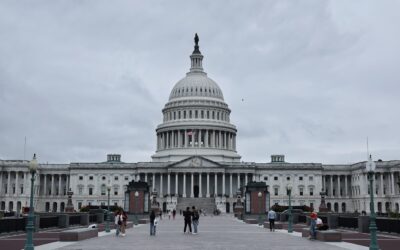
House Passes Stopgap Funding Bill, Averting Shutdown Before Midterm Elections
The House of Representatives passed a short-term government funding bill Tuesday by a lopsided 370-48 vote, sending the measure to President Trump’s desk and averting a government shutdown just weeks before voters head to the polls in the November midterms. The stopgap measure, known as a continuing resolution, keeps federal agencies funded generally at current spending levels through December 11, buying Congress additional time to negotiate full-year appropriations bills without the immediate pressure of an October 1 funding cliff. The Senate had already approved the measure by an overwhelming margin before it reached the House floor, and with Trump’s signature considered a formality, the bill is expected to become law well before the current funding deadline expires. The lopsided vote margin reflects a rare moment of bipartisan alignment on a piece of must-pass legislation, particularly notable given how badly the last two funding fights went. Lawmakers in both parties have been eager to avoid a repeat of 2025’s shutdown chaos, when the federal government endured a 43-day lapse in funding followed by a separate, even longer 76-day shutdown limited to the Department of Homeland Security — the longest shutdown of any single federal department in U.S. history. With midterm elections just two months away, neither party wanted to be blamed for a third disruptive funding lapse in as many years, a dynamic that appears to have driven Tuesday’s smooth passage far more than any newfound spirit of bipartisan cooperation on the underlying spending questions that remain unresolved. House Appropriations Committee Chairman Tom Cole framed the bill as straightforward good governance, telling reporters it provides “certainty that the government will remain open, certainty that our service members will be paid.” House Speaker Mike Johnson struck a similar tone, crediting Republicans for delivering the result and saying the House GOP is “continuing to do the grown-up thing, get the job done” — remarks aimed as much at midterm voters weighing which party can be trusted to keep basic government functions running as at colleagues on the floor. Democrats offered a more qualified endorsement. Rep. Rosa DeLauro, the top Democrat on the Appropriations Committee, pointed to a provision delaying a proposed rule that would have given Trump-appointed officials new authority to halt federal grants for programs they deem misaligned with the administration’s policy agenda, calling the delay “an important first step.” But DeLauro made clear Democrats see the underlying policy fight as far from settled, warning that “whether a community receives disaster relief should not depend on who they voted for in the last election” — a pointed reference to Democratic concerns that the administration could eventually use grant-approval authority to reward friendly states and jurisdictions while punishing others. The bill includes at least one other notable policy provision beyond the topline spending extension: language preventing the Department of Homeland Security from transferring funds internally to boost Border Patrol’s budget beyond what Congress has already appropriated, a restriction that reflects ongoing congressional efforts to maintain oversight over how immigration enforcement dollars are actually spent even as the administration has pushed to expand enforcement operations through other channels, including the National Guard deployments and ICE surges already underway in several major cities. The relatively narrow scope of the bill — a straightforward extension of current funding levels rather than a comprehensive rewrite of federal spending priorities — reflects a deliberate strategy by leadership in both chambers to keep the legislation simple enough to avoid the kind of ideological riders that have sunk previous funding bills. Appropriators on both sides have signaled they intend to use the roughly three-month runway before the December 11 deadline to try to negotiate full-year spending bills covering the various federal agencies individually, rather than relying on another continuing resolution when the current one expires. Whether that effort succeeds is an open question; previous attempts at regular-order appropriations have repeatedly broken down over disputes on individual agency budgets, immigration enforcement funding, and policy riders attached by both parties, which is part of why the government has now operated under a series of short-term patches for much of the past several years rather than the full-year budgets that were once the norm. The bill’s passage removes one significant source of uncertainty from the political landscape heading into the fall campaign season, allowing both parties to turn their full attention to the redistricting fights, the state of the economy, and other issues expected to dominate midterm messaging without the added complication of a government shutdown playing out in the final stretch before Election Day. Still, the December 11 deadline means the underlying funding fight has only been postponed, not resolved, and lawmakers on both sides say they expect a more contentious round of negotiations once Congress returns from the elections to face a lame-duck session that will need to produce either full-year spending bills or yet another short-term extension before the holidays. For federal workers and contractors who lived through last year’s back-to-back shutdowns, Tuesday’s vote offers at least a few months of certainty. Whether that certainty extends much beyond December remains very much in the hands of a Congress that has struggled repeatedly in recent years to complete its most basic constitutional task of funding the government it oversees. The timing of the new deadline is itself politically significant. By pushing the next funding cliff to December 11, congressional leaders in both parties effectively guaranteed that the fight over full-year spending bills will unfold in a lame-duck session immediately following the midterms, when the incentives facing individual lawmakers shift considerably. Members who lost reelection bids in November will have less political exposure to worry about when casting votes on politically difficult spending bills, while members who won will be looking ahead to a new two-year term rather than an immediate election. Congressional aides in both parties have said privately that lame-duck sessions, for all their reputation as chaotic and rushed, have historically proven more capable of producing genuine compromise on appropriations than sessions held in the shadow of an looming…