

New York City
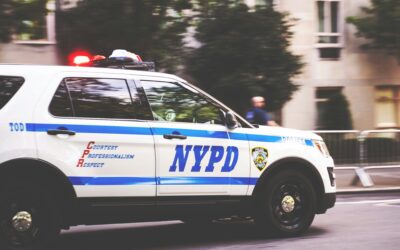
Defending the Shield: NYPD Secures Arrest in Park Ambush While Mayor Minimized Violence Against Officers
In a victory for the rule of law over political posturing, the NYPD announced on Wednesday, February 25, 2026, the arrest of a primary suspect involved in a violent assault on officers in Central Park. The apprehension comes just days after a video of the encounter went viral, sparking national outrage—not only for the brazenness of the attack but for the dismissive response from City Hall. At The Modern Memo, we analyze the disconnect between the “street reality” faced by our officers and the rhetoric of Mayor Zohran Mamdani, the failure of the “snowball fight” narrative, and the renewed call for a “Broken Windows” resurgence in the Big Apple. The Arrest: Taking Down a Known Aggressor The NYPD’s Warrant Squad tracked down 22-year-old Malik Richardson in a Bronx apartment early Wednesday morning. Richardson is facing felony charges of Assault on a Police Officer, Menacing, and Criminal Possession of a Weapon. The Evidence: Bodycam footage and third-party cell phone video clearly show Richardson and a group of several others surrounding two NYPD officers during the height of Monday’s historic blizzard. The Weaponry: While the Mayor initially suggested the exchange was playful, the footage shows Richardson hurling a frozen block of ice at an officer’s head at close range, followed by a physical struggle where he attempted to disarm an officer of his radio. Prior Record: Police sources confirmed Richardson was out on “supervised release” for a prior robbery charge—a testament to the ongoing failure of New York’s controversial bail reform laws. The “Snowball” Spin: Mamdani Under Fire The arrest has intensified the scrutiny on Mayor Zohran Mamdani, whose initial comments on the incident were viewed by many in the rank-and-file as a “betrayal” of the department. The Quote: When asked about the footage on Monday, Mamdani told reporters, “Let’s keep perspective. It’s a snow day. What we saw was a high-spirited snowball fight that perhaps got a little out of hand.” The Reality: One of the officers involved was treated for a concussion and a facial laceration. NYPD Commissioner Edward Caban fired back during the arrest announcement, stating, “There is nothing high-spirited about a felony assault. Our officers were targeted, and we will not allow a ‘snowball fight’ narrative to mask criminal intent.” The Backlash: Law enforcement unions, including the PBA, have called for a formal apology from the Mayor, arguing that his rhetoric emboldens criminals to believe that attacking the uniform carries no social or legal consequences. The “Broken Windows” Demand The incident has reignited a debate over the “de-policing” of New York City’s parks and public squares under the current administration’s “de-escalation first” policies. Erosion of Order: Critics argue that when the city’s leadership minimizes assaults on police, it signals a “green light” for smaller infractions to escalate into major violence. The Federal Lens: The Trump administration’s DOJ has reportedly been monitoring the situation in NYC. Sources suggest that if the city continues to fail in its “Basic Order” mandates, federal grants for “community policing” could be redirected toward direct federal enforcement task forces. Final Word The arrest of Malik Richardson isn’t just a win for the NYPD; it is a rebuke of a political class that chooses “optics” over the safety of those who protect us. When you look past the Mayor’s “snowball” spin and focus on the data of a concussed officer and a repeat offender back on the streets, you gain a clearer picture of the struggle to maintain civilization in our cities. Quality information replaces the noise of political gaslighting with the clarity of criminal charges and forensic evidence. It allows you to see this event as a critical moment for the restoration of respect for law enforcement. By choosing to follow the facts of the NYPD’s investigation rather than the sanitized versions from City Hall, you align your perspective with the realities of public safety and support a more informed, resilient New York. Where Facts, Context, and Perspective Matter At The Modern Memo, our goal is simple: to provide clear, well-researched reporting in a media landscape that often feels overwhelming. We focus on substance over sensationalism, and context over commentary. If you value thoughtful analysis, transparent sourcing, and stories that go beyond the headline, we invite you to share our work. Informed conversations start with reliable information, and sharing helps ensure important stories reach a wider audience. Journalism works best when readers engage, question, and participate. By reading and sharing, you’re supporting a more informed public and a healthier media ecosystem. The Modern Memo may be compensated and/or receive an affiliate commission if you click or buy through our links. Featured pricing is subject to change. 📩 Love what you’re reading? Don’t miss a headline! Subscribe to The Modern Memo here!
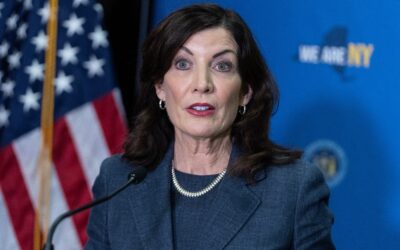
Hochul Reverses Course on Mamdani’s Costly Free Bus Plan
Governor Kathy Hochul has decided to reject Mayor-elect Zohran Mamdani’s proposal for free bus service across New York City, according to the New York Post, raising new questions about her credibility and consistency. What was once an endorsement of Mamdani and his progressive platform has now turned into a rejection of one of his key initiatives. The reversal has drawn attention not only to the plan’s feasibility but also to Hochul’s changing political calculations as she faces mounting pressure in an upcoming election year. The Cost Behind the “Free” Promise Mamdani campaigned on the idea of fare-free public transportation as a way to make commuting more affordable for working families. The concept sounded attractive in a city where the cost of living keeps rising, but the price tag tells a different story. His plan would cost roughly $700 million annually and remove one of the Metropolitan Transportation Authority’s most dependable revenue sources. To fill that gap, the state would need to raise taxes or redirect funding from other critical areas, such as education and infrastructure. What’s called “free” bus service would, in reality, come at the expense of taxpayers who already carry one of the heaviest financial burdens in the country. Hochul’s Words vs. Her Record Governor Hochul has publicly acknowledged these fiscal challenges. “We’re spending a lot of money, so I cannot set forth a plan right now that takes money out of a system that relies on the fares of the buses and the subways,” she said when addressing the proposal. Her stance may sound pragmatic, but it stands in stark contrast to her past support for Zohran Mamdani — a candidate known for championing expensive social programs. By endorsing him, Hochul effectively lent credibility to the same policy agenda she is now disavowing. The shift raises questions about whether her decisions are guided by principle or by political convenience. Taxpayers Bear the Burden For New Yorkers, the debate is not about politics — it’s about fairness. Fare revenue helps maintain and operate one of the largest and most complex public transit systems in the world. Removing it would force the state to rely more heavily on taxpayers to fund daily operations, maintenance, and payroll. That means higher taxes, fewer resources for essential programs, or both. The people who stand to pay the most are those already struggling to make ends meet. In effect, the plan would take from the many to subsidize rides for a few — a redistribution of costs disguised as a public service. The Political Reality Hochul’s reversal comes at a time when her political future is on the line. With Republican Congresswoman Elise Stefanik positioning herself as a strong challenger in next year’s gubernatorial race, Hochul appears to be pivoting toward the center. By opposing Mamdani’s free bus plan, she distances herself from the far-left economic policies that could alienate moderate voters. This calculated repositioning may help her appear more fiscally responsible, but it also highlights an uncomfortable truth: she once endorsed Mamdani’s platform and is now publicly rejecting its cornerstone ideas. That contradiction fuels skepticism about whether her decisions reflect genuine conviction or simple political survival. Leadership and Accountability Leadership requires consistency, and voters tend to remember when officials change their stance after endorsing a policy or candidate. Hochul’s endorsement of Mamdani was not a minor gesture — it was a public show of support for his priorities. Now, as she rejects his policies under pressure, her credibility is called into question. New Yorkers deserve leaders who make decisions based on sound judgment and fiscal responsibility, not shifting campaign needs. Reversing course may score short-term political points, but it can damage long-term trust. More Stories AI Job Cuts Surge: How Automation Is Reshaping the U.S. Workforce in 2025 Holiday Travelers May Face Flight Delays as Shutdown Deepens Daylight Saving Time Debate Heats Up Across States The Broader Lesson This controversy reveals a larger truth about government spending: nothing is ever truly free. Every public program has a cost, and those costs inevitably fall on taxpayers. In the case of New York’s free bus proposal, the promise of affordability would likely lead to higher taxes, reduced services, or both. As the city continues to navigate economic challenges, policymakers must prioritize sustainability over symbolism. A program that drains public funds without a viable revenue source is not compassionate. It’s careless and irresponsible. Final Thoughts Governor Hochul’s rejection of the free bus plan is the right move financially, but it comes too late to erase her earlier support for the movement that created it. Her shift illustrates how political pressure and electoral vulnerability can reshape policy positions overnight. For voters, it’s a reminder to look beyond campaign slogans and pay attention to consistency and credibility. Fiscal responsibility is just common sense. And in a city already burdened by high taxes and debt, that’s what New Yorkers need most from their leaders. Cut through the noise. Drown out the spin. Deliver the truth. At The Modern Memo, we’re not here to soften the blow — we’re here to land it. The media plays defense for the powerful. We don’t. If you’re done with censorship, half-truths, and gaslighting headlines, pass this on. Expose the stories they bury. This isn’t just news — it’s a fight for reality. And it doesn’t work without you. 📩 Love what you’re reading? Don’t miss a headline! Subscribe to The Modern Memo here! Explore More News AI Job Cuts Surge: How Automation Is Reshaping the U.S. Workforce in 2025 Holiday Travelers May Face Flight Delays as Shutdown Deepens Daylight Saving Time Debate Heats Up Across States Retirement 2025: America’s Safest and Wealthiest Towns to Call Home
Election 2025 Analysis: Democrats Sweep as Shutdown Continues
The November 2025 election reaffirmed Democratic dominance in some of the nation’s bluest regions. From Virginia to New Jersey, Pennsylvania, and California, Democrats held control and even expanded their reach. These results weren’t shocking — they happened in states where Democrats already hold strong structural advantages. But what makes this election worth examining is why they performed so well now. Voters went to the polls as the federal government shutdown continues, disrupting lives and amplifying frustration with Washington. Many are exhausted by the constant partisanship and gridlock. Democrats stayed disciplined and united, running on a simple, emotional strategy: “Get Trump.” Republicans, meanwhile, struggled to translate frustration into votes. (MORE NEWS: Kamala Teases 2028 Run — Democrats Scramble for Strategy) Spanberger Makes History in Virginia Virginia delivered a full Democratic sweep in 2025, marking a turning point for a state that was once considered a swing battleground but now sits firmly in blue territory. Governor’s Race: Abigail Spanberger made history as Virginia’s first female governor, defeating Republican Winsome Earle-Sears. Her victory came despite controversy over her refusal to call on Attorney General candidate Jay Jones to step down after his violent comments about a political rival and his children. Attorney General’s Race: Jay Jones won despite the release of text messages showing violent rhetoric against a political opponent and their family. The scandal barely affected his campaign, and Democrats closed ranks around him. Lieutenant Governor’s Race: Ghazala Hashmi made history as Virginia’s first Muslim woman elected to statewide office, completing the Democratic sweep and underscoring how decisively the state has shifted left. Virginia’s election results highlight the power of party unity and message discipline — even when controversy and ethics questions hang over the campaign. New Jersey and Pennsylvania Stay Solidly Democratic In New Jersey, Mikie Sherrill captured the governorship despite questions about honesty in her past. In Pennsylvania, Democrats held onto their state Supreme Court majority, giving the party a key advantage heading into the 2026 midterms. Across these states, Democratic organization, turnout, and message discipline carried the night. Republicans couldn’t shift the conversation toward economic recovery or accountability in Washington. Mamdani’s Controversial Win in New York In New York City, Zohran Mamdani, a self-described democratic socialist, won the mayor’s race, energizing progressives and drawing sharp criticism from conservatives. Representative Andy Ogles (R–Tenn.) told Fox News, “Deport Mamdani! He’s an antisemitic, socialist, communist who will destroy the great City of New York.” Ogles also told Newsmax, “In 2018 when he was naturalized, he failed to disclose some of the things that he had been doing, one of which was joining the [Democratic] Socialists of America. That’s a communist organization which, quite frankly, at that time, would have disqualified him from becoming a United States citizen.” (RELATED NEWS: 2025 Elections: Five Key Races to Watch) U.S. immigration law bars naturalization for those affiliated with Communist or totalitarian parties. The application form explicitly asks whether applicants have ever been members of such groups. Mamdani denies being a communist, though his ties to socialist organizations continue to spark debate. President Trump called him a “communist lunatic” before the election in a Truth Social post: Then Mamdani taunted Trump in his victory speech: Zohran Mamdani has won the race to become the next mayor of New York City. Mr Mamdani – who will be the first Muslim, first South Asian, and youngest person in a century to be elected as the famous city’s mayor – used a victory speech to throw down the gauntlet to Donald Trump. pic.twitter.com/8IVr4kMQQH — Sky News (@SkyNews) November 5, 2025 The back and forth between these two will be interesting the next few years — to say the very least. California’s Prop 50: One-Party Control Locked In In California, Governor Newsom’s Proposition 50 solidified Democratic dominance through a last-minute sweeping redistricting overhaul that passed after more than $300 million was spent promoting it. Republicans were not left with enough time to properly prepare and fight it. Although roughly 40% of Californians vote Republican, the new map would leave the GOP with only 7% of the state’s congressional seats. That amounts to political engineering with no balance in sight. Democrats claimed Prop 50 would improve representation, but it is actually gerrymandering on a historic scale. They claim this is a counterbalance to Texas redistricting, but Texas doesn’t have anything close to this kind of structural bias. Prop 50 effectively locks Republicans out of power in California for the foreseeable future. That was their goal, and they achieved it. Why Democrats Dominated So why did Democrats sweep this election? The answer lies in timing, perception, and focus. These were deep-blue states where Democratic infrastructure was already strong. But the ongoing government shutdown, combined with national fatigue and slow economic recovery, set the stage for a default vote for “stability.” Many voters simply didn’t see a strong Republican alternative. Democrats kept their messaging unified and emotional. They tied every issue — from policy to personality — back to President Trump. Republicans, on the other hand, failed to connect their arguments to everyday voter concerns or to demonstrate how things would improve under continued conservative leadership. Economic Strain and the Trump Challenge The economy remains uncertain. Costs for essentials like food, gas, and housing are still high — the lingering effects of inflation that began under President Biden. President Trump’s economic strategy is aimed at long-term correction through tariffs, trade reform, and energy expansion. But that kind of recovery takes time, and many voters haven’t felt the benefits yet. The administration now faces the challenge of making progress visible. Americans don’t want to hear about macroeconomic data; they want relief they can see — at the pump, in the grocery store, and in their mortgage or rent payments. The Road to 2026 The lesson from the 2025 election is straightforward: Democrats win when Republicans fail to connect on the issues that matter most. The “Get Trump” strategy continues to energize the left and distract from their lack of sound policy. For President Trump,…
2025 Elections: Five Key Races to Watch
With just two weeks until 2025 Elections, five major races are drawing national attention. These contests go beyond local politics: they have significant implications for party momentum, national strategies, and the balance of power. As each campaign intensifies, voters will be watching closely. Virginia Governor’s Contest: Turbulence on the Trail In Virginia, the gubernatorial race between Democrat Abigail Spanberger and Republican Winsome Earle-Sears is undergoing turbulence. The Republican nominee has seized on a scandal involving Democratic attorney-general nominee Jay Jones to bring pressure on Spanberger. Spanberger’s lead appeared sizable in earlier polling, yet the controversy has stirred questions and could shift dynamics. (RELATED NEWS: Democrats Rally Behind Jay Jones Despite Disturbing Texts) As a result, the race in Virginia is now more uncertain than it seemed. Sears is closing the gap. The outcome of this one is drawing serious attention, given the state’s competitive nature and national focus on statewide offices. New Jersey Governor’s Race: A Photo Finish? In New Jersey, the contest for governor between Republican Jack Ciattarelli and Democrat Mikie Sherrill has tightened dramatically. While Sherrill held a roughly five-point lead in the latest Fox News poll, that advantage has shrunk from earlier in the year. New Jersey remains a largely Democratic-registered state, yet Republican governors have succeeded here before. Sherrill has also faced growing scrutiny over questions about her transparency and past conduct at the Naval Academy, which have fueled voter doubts about her credibility. The result in New Jersey will serve not only as a state result but as an indicator of broader party strength heading toward the midterms. Ciattarelli just might pull this one out. One thing is for certain — this race will be a nail-biter until the very end. New York City Mayoral Election: Big Spotlight, Big Implications In New York City, the mayoral race is shaping up as one of the most-watched campaigns of the year. The Democratic nominee, Zohran Mamdani — a 33-year-old state lawmaker — stands out as a possible first Muslim and first millennial mayor of the city. He faces a crowded field, including former governor Andrew Cuomo, running as an independent, and Republican Curtis Sliwa. Current mayor, Eric Adams, dropped out of the race in September. Mamdani, a democratic socialist, has sparked controversy over his past associations and statements — including refusing to directly condemn Hamas and meeting with controversial figures. Meanwhile, many critics and prominent figures are urging Sliwa to drop out because of his weak polling numbers — a move that would boost Cuomo’s chances in a direct two-way race — but Sliwa has so far refused to withdraw. Mamdani will be almost impossible to beat as long as Sliwa remains. Given New York’s size and influence, the mayoral outcome will ripple outward. It may affect how national strategists view urban elections, how policy priorities are framed, and how parties attempt to reach key demographic groups. California’s Proposition 50 & Redistricting Battle In California, voters will decide a ballot measure known as Proposition 50. This proposal would turn redistricting power over to the state legislature. This would alter how congressional districts are drawn for the next three election cycles. Supporters argue it gives accountability to elected officials; opponents warn it undermines independent maps. Polls suggest a majority might support it. (MORE NEWS: Viral 2019 Debate Clip Shows Democrats Back Healthcare for Illegal Immigrants) Given California’s size and its congressional delegation, the vote has national significance: it could shift how many seats lean Democratic or Republican in future U.S. House battles. Analysts say the new maps could create as many as five additional Democratic congressional seats. This would effectively answer the five new seats Texas lawmakers are attempting to add with a newly drawn congressional map. Pennsylvania Supreme Court Retention Elections: Quiet but Critical In Pennsylvania — a major battleground state — three justices on the state Supreme Court face retention elections this year. Democrats currently hold a 5-2 majority on the court. Though these races don’t get as much attention as governor or mayor contests, their impact is substantial. The composition of the court can influence rulings on cases regarding elections and abortion. So while the spotlight may be lower, the stakes remain very high. These judicial outcomes could influence legal decisions for years and shape the balance of power across state government. Why These Races Matter — Across the Board Taken together, these five races illustrate a larger trend: parties are fighting not just for seats but for narratives, momentum, and control of key levers of power. Democrats are attempting a rebound after setbacks in recent national elections; they point to special-election wins as evidence of momentum. At the same time, Republicans are pushing back by highlighting major challenges facing Democrats, including low approval ratings and voter losses. Furthermore, these contests serve as early tests ahead of the 2026 midterms — giving both sides data on what works, where voters are shifting, and how campaigns should operate. What to Watch the Next Few Weeks Voter turnout: With less attention than presidential years, mobilizing voters in these five races will be key. Campaign messaging: How candidates frame issues like the economy and public safety will matter. External endorsements and funding: Big money and national players are already involved, especially in states like Pennsylvania and New Jersey where outside spending has soared. Polling movement: Shifts of even a few points can signal momentum — as seen in New Jersey where the lead narrowed. Local issue resonance: Issues specific to each region — such as redistricting in California or taxes in New Jersey — may sway undecided voters. Conclusion In short, these five races — in New Jersey, Virginia, New York City, California, and Pennsylvania — are far more than just elections. They are barometers of national political energy, tests of party strategies, and indicators of the shape of American politics heading into 2026. As we count down to Election Day, every campaign move, every polling shift, and every turnout effort will carry outsized weight. These last few…
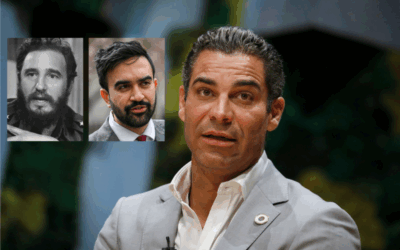
Miami Mayor’s Warning: NYC’s Mamdani Echoes Castro
Miami Mayor Francis Suarez ignited a firestorm this week in an interview with the New York Post. He made a bold comparison that links New York City’s mayoral frontrunner to one of history’s most notorious dictators. Drawing from his family’s painful escape from Cuba, Suarez likened Democratic socialist Zohran Mamdani to a young Fidel Castro. He cautions that electing Mamdani could steer the Big Apple down a “very dark path” of economic ruin and repression. As the November 4, 2025, election looms, Suarez’s words cut deep, urging New Yorkers to confront the ghosts of socialism head-on. His call to the people of NYC is rooted in personal history and political conviction. Suarez’s Family Legacy Fuels His Fierce Stance Francis Suarez, Miami’s dynamic mayor since 2017, carries the weight of his parents’ exile from Castro’s Cuba in the early 1960s. They fled a regime that promised equality but delivered despair. In an exclusive with the New York Post, Suarez channeled that trauma into a vivid warning. He recounted, “My parents fled [Cuba] . . . because a young charismatic leader said ‘Give us all your property, give us all your businesses, and don’t worry, we’ll make everybody equal.’ And he did.” Suarez didn’t mince words: “He made everybody equally poor, equally miserable, and equally repressed. And that’s all that communism has delivered throughout the history of humanity.” At 47, Suarez embodies Miami’s transformation into the “Capital of Latin America.” Term-limited and eyeing national ambitions, he refuses to watch silently as New York flirts with policies he sees as disastrous. (RELATED NEWS: Rising Socialism Exposes the Democratic Party’s Identity Crisis) His father, Xavier Suarez, Miami mayor from 1985 to 1993 and then from November 1997 to March 1998, is running again, but Francis stays neutral there. Instead, he trains his focus northward, where the stakes feel personal. Transitioning from family scars to public alarm, Suarez begs New Yorkers to heed history’s lessons before it’s too late. Mamdani’s Rise: Charisma Meets Controversy Enter Zohran Mamdani, the Queens Assemblyman positioning himself as the Democratic socialist frontrunner in the 2025 NYC mayoral race. At just 33, Mamdani pushes an agenda of so-called “affordable” housing, government-run healthcare, and heavy wealth taxes—policies critics warn could destabilize the city’s fragile economy. Despite his limited experience, Mamdani’s rhetoric has gained traction in a city already struggling with soaring costs. Polls suggest he could even unseat incumbent Eric Adams, now running as an independent. But many see his rise less as a sign of strength and more as a symptom of voter frustration. Suarez, however, sees dangerous echoes in Mamdani’s appeal. He compares the young Assemblyman’s charisma to that of Fidel Castro in his early days—the polished revolutionary who promised hope but delivered repression. Mamdani’s public missteps have only added fuel. His inability to bench-press 135 pounds at a Brooklyn “Men’s Day” event became an embarrassing moment that Suarez quickly capitalized on. The Miami mayor later posted an Instagram reel showcasing his own strength—benching 225 pounds 13 times—captioned “Socialism VS Capitalism.” The clip went viral, underlining the contrast. Mamdani’s campaign brushed off the criticism, but Suarez points to it as a broader symbol of weakness—ideological and literal. Even as supporters brand him a fresh voice against corporate greed, opponents fear his “seize the means” mindset would chase businesses and jobs out of the city. Most telling, perhaps, is Mamdani’s silence. He refused to address Suarez’s attacks, leaving voters to wonder if he can withstand scrutiny. In a city of 8.8 million, the whispers of “Castro 2.0” grow louder with each passing week. (MORE NEWS: Pregnant Women Take Tylenol to Defy Trump in Viral Trend) A “Dark Path” Looms: Suarez’s Dire Predictions Suarez doesn’t sugarcoat the fallout. He envisions New York crumbling under socialist weight: businesses fleeing, taxes soaring, and innovation stifled. “There’s some people that say . . . that maybe [electing a socialist mayor in NYC] is best for America in a backwards way because, once you see the abject failure that it will be, there will be a correction and a reset,” he told the New York Post. But Suarez rejects that cruelty: “I don’t want people to suffer for that to happen.” He implores New Yorkers to feel “terrified” of socialism’s track record, from Cuba’s ration lines to Venezuela’s collapse. He also praised Adams, calling him a “good relationship” ally as the two mayors have connected over shared urban challenges. Broader forces shape the narrative: National Republicans cast Mamdani’s rise as a cautionary tale, while Democrats defend his equity-driven proposals. Suarez’s Castro analogy isn’t isolated—it resonates strongly in Cuban-American communities and beyond. As election day nears, his words ripple through op-eds and talk shows, sharpening the stakes of the contest as one of freedom versus folly. Echoes in Miami: A Tale of Two Cities Contrast Miami’s boom with New York’s struggles, and Suarez’s warning becomes clearer. The Sunshine City continues to attract tech leaders and investors with its low taxes, limited regulation, and unapologetically pro-business climate. As host of the American Business Forum on November 5-6, 2025—just after the election—Suarez plans to highlight Miami’s success as a model. “Miami is a truly great global city,” he says, framing it as the antidote to socialist experiments. Attendees will see firsthand how free enterprise and hard work have turned exile stories into prosperity. Meanwhile, New York—once the envy of the world—faces a shrinking tax base, businesses leaving, and mounting fiscal troubles. Suarez warns that a Mamdani victory would only accelerate the decline, echoing the collapse seen in nations that embraced socialism and paid the price. Mamdani’s supporters push for sweeping reforms, but socialism is no bold new idea—it has been tried repeatedly, and it has failed every time. The choice is stark: stay on the proven path of growth and opportunity, or repeat history’s mistakes and risk turning America’s greatest city into another cautionary tale. Backlash and Broader Ripples Mamdani’s camp stays quiet, while allies dismiss Suarez’s warning as “fearmongering.” Progressive voices call it a smear, but critics argue it’s simply…
NYC Mayoral Candidate Zohran Mamdani’s Comments on Domestic Violence Spark Outrage from Abuse Survivors
This article was written by John Zambenini for WokeSpy. Communist New York City mayoral candidate Zohran Mamdani continues to receive backlash online, this time from victims of domestic violence. Recently, Mamdani provoked the ire of domestic violence victims by opposing police responding to domestic violence incidents. According to the CDC, one in four women and one in ten men experience some form of domestic violence in their lifetime, ranging from stalking, mental abuse, to physical abuse, and life-threatening injuries involving knives and firearms. However, the Mamdani does not believe that armed police should respond to these situations. Horrifying Potential Future For Victims In NYC “Police do not create safety… there are so many responsibilities we’ve given to police that, frankly, should have nothing to do with their departments… if somebody is jaywalking, if somebody is surviving, going through domestic violence—there are so many different, different situations that would be far better handled by people trained to deal with those specific situations, as opposed to an individual with a gun,” he said, according to the Washington Free Beacon. (RELATED: Wealthy White Liberals Reportedly Urge Democrats To ‘Be Willing To Get Shot’ Opposing Trump) It is highly unlikely, however, that marriage counselors are the best choice for first-time responders when a spouse is being held at gunpoint. According to Victims Rights Reform Council founder, Michelle Esquenazi, domestic violence is often a life and death situation. It remains unclear how mental health counselors and social workers would be able to respond to a spouse holding their partner captive at gunpoint or knifepoint – as Mamdani would want. Victims Must Not Support Mamdani “There’s a lot of humans who are victims in the city of New York, and they need protection because sometimes it’s a matter of life and death,” Esquenazi told Fox News Digital. “They’re hiding in the bathroom with their children, and they need someone to come immediately.” Esquenazi claims that Mamdani’s statements affect her personally, as the New York Police Department (NYPD) saved her life when her ex-husband attacked her while she was pregnant in 1993. “I called 911, and they came running. They made sure that me and my children, and I was pregnant at the time, were safe. One of the officers took us to a back bedroom and made sure that we were calmed down and made sure that we had what we needed. They separated him from the situation immediately and essentially saved our lives,” she said. Make NYC A Death-Trap Again? Meanwhile, Mamdani’s comments align anti-police sentiments stoked by the George Floyd riots, resulting in calls for the defunding of entire law enforcement departments. Many deep blue cities have even changed their emergency response protocols for domestic violence, with some ending armed police response altogether. (RELATED: ‘If I Was Waiting For FEMA, I Would Be Screwed’: You’ll Sob Watching What’s Happening In NC Months After Hurricane Helene) Mamdani has repeatedly called for the defunding of the police, including proposals to delegate certain law enforcement responsibilities to the “Department of Community Safety.” However, in classic liberal subterfuge, Mr. Mamdani later denied pushing for the defunding of police, and even promised to work with them. TMM Analysis If you are pro-domestic violence, then you should vote for Mamdani. If you are in favor of women, children, and even men being murdered by their parents or partners, vote for Mamdani. If you are a fundamental monster, vote for Mamdani, Is it that simple.