

Relief
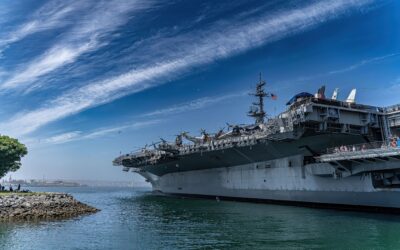
Relief Is Finally Coming: USS George Washington Racing to Bring Home Weary Crew of USS Abraham Lincoln
The Pentagon is sending the aircraft carrier USS George Washington racing across the Pacific and Indian Oceans to relieve the USS Abraham Lincoln after more than 265 consecutive days at sea, giving the Lincoln’s roughly 5,000 sailors and Marines a long-awaited path home following weeks of mounting scrutiny over living conditions and crew welfare aboard the ship. The Relief Is Underway Defense officials confirmed the move Thursday after it was first reported by The Wall Street Journal. The George Washington, the Navy’s only forward-deployed carrier and normally homeported in Yokosuka, Japan, had recently completed a port call in Da Nang, Vietnam, before beginning its transit through the Strait of Malacca toward the Arabian Sea. Officials say the journey could take about a week. Once the George Washington arrives on station, the Lincoln is expected to begin the long voyage back to its home port of San Diego, though the Pentagon has not announced a specific return date, citing operational security. The Lincoln departed San Diego on Nov. 21, 2025, for what was originally billed as a routine Pacific deployment before being redirected to the Middle East in January to support the escalating conflict with Iran. Its deployment was initially expected to conclude in May; instead, it has been extended repeatedly, with the carrier now having gone more than 240 consecutive days without a standard port call — among the longest stretches of continuous carrier deployment in recent Navy history. A Rotation the Navy Says Was Already Planned U.S. officials have been careful to characterize the relief operation as a previously scheduled rotation rather than a direct response to the recent wave of public reporting on morale and living conditions aboard the Lincoln. A U.S. official told The Wall Street Journal that plans to send the George Washington were already underway before this week’s reports about crew welfare became public, framing the move as operational rather than remedial. At an Aug. 6 town hall at Naval Air Station North Island in San Diego, acting Navy Secretary Hung Cao told roughly 200 family members that a relief carrier strike group was being prepared, though he stopped short of offering a firm return date for the Lincoln. Whatever the precise motivation, the timing lines up closely with a period of intense scrutiny. Reports emerged in recent weeks describing sailors struggling with exhaustion and declining morale during the extended deployment, including instances in which crew members reportedly attempted to jump overboard or were prevented from doing so. Family members told Navy leadership that conditions aboard the ship had deteriorated, citing food shortages, plumbing and hygiene issues, and mail delays that left care packages stuck in transit for months. Hegseth Defends the Deployment Defense Secretary Pete Hegseth has firmly defended the Navy’s handling of the deployment throughout the controversy, calling reports of deteriorating conditions “completely misrepresented” in comments to Newsmax last week. “We make sure that every ship, every crew, every captain has everything we can provide them at every single moment,” Hegseth said, adding that he holds “more respect and gratitude for those sailors than anybody” for enduring what he described as genuinely difficult, austere conditions at sea. A Navy official separately told reporters the command has not identified an increase in reported suicidal ideation or suicide attempts aboard the ship, and pointed to the range of support resources available to sailors, including onboard counselors, chaplains, and medical staff. Rep. Derek Schmidt and other members of Congress have continued pressing for greater transparency regardless of the Pentagon’s public reassurances. Sen. Richard Blumenthal, D-Conn., a member of the Senate Armed Services Committee, has written to Hegseth and Cao demanding answers about the deployment’s extended length, and Sen. Ruben Gallego, D-Ariz., has called for a formal, bipartisan oversight visit to the ship. The Strategic Trade-Off The relief operation isn’t without real costs elsewhere. The George Washington is the Navy’s only carrier forward-deployed overseas specifically so that American naval airpower sits within days of the East China Sea and the Taiwan Strait — a posture explicitly designed to deter Chinese aggression in the region. Sending it west to the Middle East leaves that station empty at a moment when tensions between China and Taiwan continue generating near-daily air and naval activity. Filling that Pacific gap with a carrier sailing from the U.S. West Coast would take two to three weeks, meaning the western Pacific will go without a U.S. carrier presence for some period during the transition. Supporters of the administration’s overall Iran strategy argue that this kind of trade-off, while genuinely costly, reflects the unavoidable reality of fighting a sustained conflict while also maintaining deterrence elsewhere in the world, and that the Navy’s willingness to accept a temporary gap in the Pacific in order to relieve an overstretched crew demonstrates that sailor welfare is, in fact, being taken seriously at the highest levels. Critics counter that the entire situation — an open-ended war against Iran stretching carrier deployments to record lengths, with no clear end date in sight — reflects a broader strategic overreach that Congress never formally authorized, one that is now forcing difficult trade-offs between deterring China and sustaining operations in the Middle East. The Broader Context: A War Without a Clear End The Lincoln’s marathon deployment has unfolded against the backdrop of a conflict that has now stretched nearly six months, with the George H.W. Bush also currently deployed to the Arabian Sea as part of the broader campaign pressuring Iran to reopen the Strait of Hormuz to normal shipping. That pressure campaign has yet to produce a lasting resolution: traffic through the strait remains well below its pre-war baseline, and the Navy has acknowledged it cannot sustain the current tempo of continuous carrier presence in the region indefinitely without eventually rotating fresh crews and ships into the fight. What Happens Next Once the George Washington reaches the Arabian Sea and formally relieves the Lincoln, the latter carrier’s crew will finally begin the journey home after what will likely stand as one…