

Space

History in the Making: Artemis II Crew Enters Lunar Domain, Sets Sights on All-Time Distance Record
In a monumental moment for human exploration, the four-person crew of Artemis II officially entered the Moon’s “sphere of influence” at 12:37 a.m. EDT today, April 6, 2026. For the first time in over five decades, the Moon’s gravity now has a stronger pull on a human-crewed spacecraft than the Earth’s—marking the definitive beginning of the mission’s high-stakes lunar flyby. At The Modern Memo, we analyze the “free-return” physics bringing our astronauts home, the record-breaking distance they are about to reach, and why this mission is the ultimate validation of the Artemis program’s engineering. The Milestone: “Falling Toward the Moon” The Orion spacecraft, carrying Commander Reid Wiseman, Pilot Victor Glover, and Mission Specialists Christina Koch and Jeremy Hansen, has spent the last five days rising away from Earth. Today, that trajectory shifted. A New Perspective: “We are now falling to the Moon rather than rising away from Earth. It is an amazing milestone!” Mission Specialist Christina Koch reported to Houston shortly after crossing the gravitational threshold. The Record Breakers: Later today, at approximately 1:46 p.m. EDT, the crew is expected to surpass the all-time distance record for humans in space—a record held for 56 years by the crew of Apollo 13 (248,655 miles). By tonight, Artemis II will reach a maximum distance of 252,760 miles from our home planet. The Flyby: Observations of the Far Side As Orion swings around the Moon, the crew will be the first humans to see the lunar far side with the naked eye since 1972. NASA has identified 35 geological features for the crew to photograph and analyze, including the massive Orientale Basin. The Communication Blackout: Starting at roughly 6:44 p.m. EDT, the mission will enter a planned 40-minute communications blackout as Orion passes behind the Moon. Closest Approach: While behind the lunar disc and out of contact with Earth, the crew will make their closest approach to the surface—just 4,070 miles above the lunar crust—at 7:02 p.m. EDT. Earthset: The astronauts are expected to witness a rare “Earthset,” seeing our planet sink beneath the lunar horizon, a view that has historically united humanity in awe. Strategic Safety: The Free-Return Trajectory A key highlight of the Artemis II mission is its “free-return trajectory.” Unlike complex orbital insertions, this path uses the Moon’s gravity as a natural slingshot. Physics Over Propulsion: By looping around the Moon, Orion is naturally propelled back toward Earth without the need for a massive engine burn. This “fail-safe” design ensures that even if the main service module engine encountered an issue, the crew would still be on a direct path to a Pacific Ocean splashdown. The “Good Morning” Wakeup: The crew began their historic day to the sounds of “Good Morning” by Mandisa and TobyMac, following a lighthearted “Easter egg hunt” yesterday where they hid dehydrated scrambled eggs around the cabin to celebrate the holiday in orbit. Final Word The Artemis II lunar flyby is more than a technical demonstration; it is a restoration of American exceptionalism in deep space. When you look past the noise of “space race” comparisons and focus on the data—the crossing of the gravitational sphere of influence and the shattering of a 56-year-old distance record—you gain a clearer picture of a nation that has finally reclaimed the high ground. Quality information replaces the nostalgia of the 1960s with the reality of 21st-century precision. It allows you to see this mission not as a repeat of history, but as the essential bridge to the 2027 lunar landing. By choosing to follow this journey today, you align your perspective with the reality that humanity’s reach is once again exceeding its grasp. Where Facts, Context, and Perspective Matter At The Modern Memo, our goal is simple: to provide clear, well-researched reporting in a media landscape that often feels overwhelming. We focus on substance over sensationalism, and context over commentary. If you value thoughtful analysis, transparent sourcing, and stories that go beyond the headline, we invite you to share our work. Informed conversations start with reliable information, and sharing helps ensure important stories reach a wider audience. Journalism works best when readers engage, question, and participate. By reading and sharing, you’re supporting a more informed public and a healthier media ecosystem. The Modern Memo may be compensated and/or receive an affiliate commission if you click or buy through our links. Featured pricing is subject to change. 📩 Love what you’re reading? Don’t miss a headline! Subscribe to The Modern Memo here!
Soviet Spacecraft May Hit US Thanks To Uncontrolled Reentry
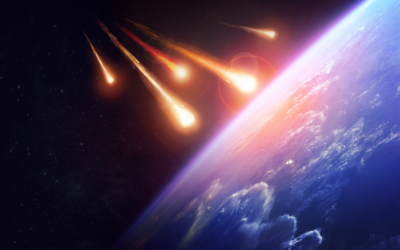
AccuWeather reported Friday that a defunct Soviet spacecraft may crash into Earth, possibly somewhere in the contiguous U.S., between May 9 and May 11. The spacecraft named Kosmos 482 launched in 1972 on a voyage to Venus, but an issue trapped it in orbit around Earth, where it sat in a state of limbo, according to AccuWeather. “Because the probe was designed to withstand entry into the Venus atmosphere, it is possible the probe (or parts of it) will survive reentry at Earth and reach the surface,” NASA said in a statement. The “uncontrolled” reentry could see the spacecraft hit anywhere in “Africa, South America, the contiguous United States, Australia and New Zealand, most of Europe and most of Asia,” AccuWeather noted. Even though this sounds like most of the inhabited world, a majority of this area is ocean. Should the craft land in our oceans, it likely wouldn’t pose any threat to human life. Before you ask, yes: the craft was fitted with a parachute for reentry, but given the existing issues and age of the materials, scientists think it’s unlikely to successfully deploy. (TAKE A POLL: Do You Believe in UFOs?) How Big Is The Risk Of Impact? The chances of Kosmos 482 hitting your home are astronomically low, but never zero. Earth is smashed about by bits of space debris — manmade and cosmic — on a daily basis. For the most part, we don’t notice when a meteorite hits the ground by our feet. All physical objects have to go through a heck of a lot of friction to reach Earth, and end up miniscule in size by the time they reach us. Then there are the space rocks that cause cataclysmic — near-extinction-sized events. When most people think of asteroids destroying the planet, their minds go back to the dinosaurs and the Chicxulub crater that turned these ferocious monsters into chickens. The Lost City of Atlantis is not a Disney Movie. The legend originates from the ancient Egyptians! 📍They said it was destroyed 11,600yrs (before present day) 📍The ‘Younger Dryas Climate Catastrophe’ was exactly 11,600yrs ago Not a coincidence. It’s evidence Atlantis existed. pic.twitter.com/SgqjXdOvLP — Jimmy Corsetti (@BrightInsight6) May 18, 2024 Just 12,800(ish)-years-ago, an asteroid may have temporarily restarted our ice age — an event known as the Younger Dryas cooling event. Geological evidence from this time period suggests mass amounts of cold, fresh water rushed into the North Atlantic, cutting off the flow of warm water north via the Gulf Stream and reshaping global coastlines entirely. (RELATED: Guys, We May Have Found The Most Addictive New Outdoors Show On YouTube) Experts and independent investigators suggest this sudden shift in climate was caused by an asteroid either hitting or bursting the ice coating our northern hemisphere. Take Action On Asteroids There are many other theories about, and surrounding, the Younger Dryas, and we’re going to talk about them as often as we can on The Modern Memo. Mounting evidence suggests we are not the first technologically advanced civilization to live on Earth. At the very least, Big Archaeology and mainstream institutions are hiding our history; either through lack of research or purposeful obfuscation. We hate that. A lot. Ignorance of our past leaves us blind to threats from the future. Right now, we don’t know exactly what you can do to help solve this issue — but a great place to begin is with educating yourself on the topic. We’ve included links to videos and our favorite experts in this article. Check back soon for more updates. Thanks for hanging out – TMM