
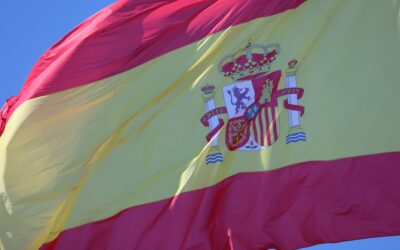
Spain
The Ankara Fracture: Trump Demands Total Trade Embargo on Spain, Calling Key NATO Ally a ‘Wasted Cause’
The delicate architecture of the North Atlantic Treaty Organization (NATO) fractured dramatically on Wednesday morning at the alliance’s high-stakes summit in Ankara, Turkey. In an explosive and unprecedented broadside against a historic European ally, U.S. President Donald Trump ordered an immediate cutoff of all American trade relations with Spain, labeling the country a “terrible partner” and an absolute “wasted cause.” The sudden, severe executive order sent shockwaves through global financial markets and completely overshadowed the summit’s opening hours. The diplomatic rupture is the culmination of a bitter, monthslong standoff between the Republican administration and Madrid’s Socialist leadership. Tensions finally reached a boiling point over Spain’s absolute refusal to meet a newly demanded 5% GDP defense spending target, coupled with its highly disruptive decision to actively block American forces from using strategic military outposts on Spanish soil during active Middle East combat operations. At The Modern Memo, we break down the operational mechanics of Trump’s trade directive, the military fallout surrounding the Rota and Morón base vetoes during Operation Epic Fury, and the complex European Union legal firewall now bracing for a historic cross-Atlantic trade war. The Ankara Eruption: “We Don’t Want Anything to Do with Them” The dramatic diplomatic breakdown transpired during a series of high-level meetings in the Turkish capital, where NATO leaders had desperately hoped to project an image of Western military cohesion. Instead, President Trump turned his microphone into a blunt-force legislative weapon. The Trade Execution: Speaking alongside NATO Secretary General Mark Rutte, Trump confirmed he had formally instructed Treasury Secretary Scott Bessent to isolate Spain economically. “Spain is a wasted cause. We don’t want to do any trade business with Spain anymore,” Trump declared. “By the way, I’d like to cut it off. Spain is a terrible partner in NATO. They don’t participate, they don’t pay… Cut off all trade with Spain, including visits.” The Transatlantic Trade Footprint: The absolute severity of a total embargo is staggering. Internal Department of Commerce metrics show that bilateral trade between the United States and Spain routinely clears $47 billion annually. A complete freeze would instantly jeopardize massive supply chains spanning aerospace, agricultural exports, machinery, and pharmaceutical sectors. The Madrid Defiance: Appearing unbothered by the presidential decree, the office of Spanish Prime Minister Pedro Sánchez issued a terse, defensive response, characterizing Trump’s fiery rhetoric as “business as usual.” Spanish Foreign Minister José Manuel Albares maintained that bilateral channels remain functional, insists that Spain remains fully committed to its foundational European defense obligations, and pointedly noted that trade policy is governed by Brussels, not individual member capitals. Operation Epic Fury: The Base Veto That Broke the Alliance While the public debate heavily centers on defense budgets, intelligence insiders confirm that Washington’s absolute fury stems directly from a major tactical betrayal that crippled U.S. air operations over the Middle East earlier this spring. The Airspace Lockdown: Following the launch of Operation Epic Fury—the intensive U.S.-led military offensive targeting strategic sites inside Iran—Prime Minister Sánchez stunned Pentagon planners by officially closing Spanish airspace to all aircraft participating in the campaign, branding the conflict an “illegal war.” The Rota and Morón Freeze: Compounding the operational friction, Madrid strictly denied the U.S. military permission to utilize Naval Station Rota and Morón Air Base—two critical, jointly operated hubs in southern Spain that serve as the primary logistical springboards for American power projection into the Mediterranean and Middle East. The Diplomatic Resentment: The base veto successfully forced the U.S. Air Force to coordinate vastly elongated, alternative transit corridors around the perimeter of the Iberian Peninsula, adding severe refueling burdens and logistical delays to active combat sorties. The White House viewed the restriction as an unforgivable act of hostility from a supposed treaty ally, with Trump firing back: “They were unfriendly, so I told them we didn’t want to [use the bases]. Spain has absolutely nothing that we need.” The 5% Chasm and the EU Brussels Firewall The secondary pillar of the dispute focuses on the administration’s aggressive, unyielding push to force European nations to fund 100% of their own regional security perimeter. While heavyweights like Germany—under Chancellor Friedrich Merz—Poland, and various Baltic states have rapidly expanded their defense outlays to accommodate Washington’s demands, Spain has remained a firm holdout, refusing to establish a credible legislative pathway to hit the massive 5% of GDP spending target. However, converting Trump’s rhetorical trade ban into a functioning economic reality presents an immense constitutional and international legal challenge. Because Spain is an integral member of the European Union, it does not maintain an independent, bilateral trade framework with Washington. The European Commission in Brussels manages all trade deals collectively for the entire bloc. A senior EU spokesperson warned that the European Union expects the United States to honor its existing international treaties, confirming that Brussels will deploy its full legal and economic arsenal to protect Spanish markets from unilateral American sanctions. Final Word The explosive showdown at the Ankara summit is the definitive proof that the United States is no longer willing to underwrite the defense of European nations that actively undermine American military operations. When you look past the standard diplomatic panicking and analyze the hard data—a $47 billion trade pipeline threatened with an immediate executive embargo, the total operational shutdown of the Rota and Morón air corridors during a hot war with Iran, and a President willing to throw a international summit into absolute disarray to enforce defense budget compliance—you gain an unvarnished view of raw power politics. Quality information replaces the media’s narrative of a “sudden tantrum” with the reality of a calculated, long-brewing strategic correction. By attempting to block the U.S. military while simultaneously underfunding its own defense, Madrid ran directly into an unyielding geopolitical wall. Whether the European Union can successfully shield Spain from Washington’s financial guillotine remains an open question, but the message from the White House is permanent: if an ally chooses to play the role of a hostile neutral during a military crisis, it will no longer enjoy the lucrative economic fruits…