

Strike

Decapitation Strike: U.S. Military Eliminates Tren de Aragua Leader in Coordinated Venezuela Raid
The global war against transnational organized crime reached a dramatic, kinetic climax deep inside South America. In an extraordinary cross-border operation, U.S. forces executed a precision strike inside Venezuela that successfully eliminated Héctor Rusthenford Guerrero Flores, better known by his street alias “Niño Guerrero,” the notorious kingpin of the ultra-violent Tren de Aragua criminal syndicate. President Donald Trump announced the successful operation on Truth Social, characterizing the mission as a “swift and lethal kinetic strike” that strips safe haven from international syndicates. The cross-border deployment represents a massive geopolitical shift, executed in close coordination with the newly recalibrated Venezuelan government following the forced removal of autocratic leader Nicolás Maduro earlier this year. At The Modern Memo, we break down the operational intelligence behind the strike, the history of the bloodthirsty prison gang, and how the administration leveraged shifting diplomatic dynamics to hunt down America’s most wanted narco-terrorist. The Operation: Blowing Up the Compound The high-stakes mission, carried out by U.S. Southern Command (SOUTHCOM), targeted a heavily fortified hideout used by the gang’s leadership structure. The Lethal Strike: Defense Secretary Pete Hegseth confirmed the operation took place in a remote, southeastern region of Venezuela’s Bolívar state. Trump’s social media announcement included unclassified, overhead surveillance footage capturing the exact moment a precision projectile struck a green-roofed building, instantly engulfing the compound in flames. The Firefight on the Ground: Venezuela’s communications ministry corroborated the timeline, issuing a formal statement confirming that local security forces engaged in fierce firefights with Tren de Aragua militants on the perimeter, culminating in the verified death of the 43-year-old gang lord. The Intelligence Pipeline: According to administration officials, the operation relied on extensive intelligence sharing, with the CIA reportedly mapping the target’s movements. SOUTHCOM Commander General Francis Donovan expressed profound gratitude to the local Venezuelan security services for their tactical support during the combined assault. The Target: Inside the Empire of ‘Niño Guerrero’ Héctor Guerrero Flores was not a standard street-level cartel boss; he was the primary mastermind behind an expansive criminal network that stretched from the lawless interior of South American prisons all the way into major American metropolitan hubs. The Prison Fortress: More than a decade ago, Guerrero assumed total control over the infamously corrupt Tocorón prison in Aragua state. Under his rule, the prison was transformed into a luxurious, fortified command center complete with a pool, a private zoo, a casino, restaurants, and a baseball field, allowing him to run international operations from a lavish private suite. The Transnational Army: Utilizing the mass migration of millions of Venezuelans escaping economic collapse, Tren de Aragua weaponized human smuggling pipelines to embed operatives throughout Peru, Colombia, Chile, and the United States. The gang established an empire built on extortion, contract murder, drug trafficking, and the severe sexual exploitation of women and children. The Federal Hunting License: Late last year, federal prosecutors in New York indicted Guerrero on sweeping racketeering, drug conspiracy, and material support for terrorism charges. The U.S. State Department had placed a $5 million bounty on his head, while the Trump administration formally designated Tren de Aragua as a Foreign Terrorist Organization. The Geopolitical Pivot: The New Alliance in Caracas The ability of the U.S. military to safely drop munitions inside Venezuelan territory marks a complete rewriting of Western Hemisphere defense strategy, made possible by the dramatic collapse of the old regime. The Maduro Arrest Factor: For months, the White House maintained that Tren de Aragua operated under the protection of Venezuelan dictator Nicolás Maduro. That protection permanently dissolved in January, when a daring U.S. military operation whisked Maduro out of the country to face federal drug trafficking charges in the United States. Partnering with Rodríguez: Following Maduro’s capture, the administration backed Acting President Delcy Rodríguez. In exchange for a gradual rollback of paralyzing economic sanctions and the opening of oil reserves, the temporary Venezuelan government has completely aligned its security forces with Washington to aggressively clean out transnational cartels. Retribution for the Victims: In his victory address, Trump tied the execution of Niño Guerrero directly to his domestic borders-and-justice platform. He explicitly dedicated the military strike to the families of American citizens killed in high-profile violent crimes involving undocumented gang members, including 12-year-old Jocelyn Nungaray and 22-year-old Laken Riley. “Tren de Aragua terrorists no longer have safe haven in Venezuela or anywhere else,” Trump wrote. “Under my leadership, we will find these vicious murderers and drug lords anytime, anyplace, and send them to the depths of hell where they belong.” Final Word The precision elimination of Niño Guerrero in his own backyard is the definitive proof that the administration has completely discarded the traditional, passive boundaries of international law enforcement to wage an offensive war against global cartels. When you look past the political noise and look directly at the data—the absolute decapitation of a Foreign Terrorist Organization’s supreme leader, the deployment of U.S. strike packages inside sovereign Venezuelan airspace with the explicit invite of local authorities, and the complete reversal of a decades-long anti-American regime in Caracas—you gain an unvarnished view of raw power politics. Quality information replaces the narrative of “unstoppable migrant gangs” with the reality of targeted military liquidation. It shows that when a rogue criminal empire expands its theater of operations into American suburbs, it forfeits its safety everywhere on earth. By executing a kinetic raid on the compounds of Bolívar state, Washington has delivered an unyielding message to the underworld: no prison wall, no remote jungle, and no foreign border will ever be enough to hide from an American missile.
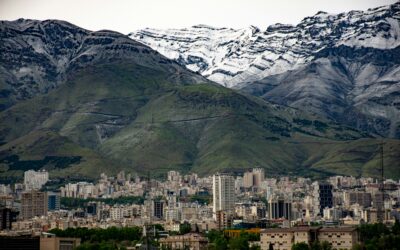
The Master Dealmaker’s Brake: Trump Abruptly Cancels Massive Iran Strike Package, Claiming Near-Certain Peace Agreement
The high-stakes game of geopolitical chicken between Washington and Tehran took its most dramatic, unexpected turn yet. Hours after vowing to unleash an devastating wave of military bombings that would hit the Islamic Republic “VERY HARD TONIGHT”, President Donald Trump abruptly pulled the plug on the scheduled operation. Taking to social media, Trump revealed that he issued a last-minute cancellation order after receiving direct confirmation that negotiations had successfully breached the highest echelons of the Iranian regime. The president boldly declared that the foundational components of a historic transaction have been approved by a massive multi-national coalition, signaling an imminent end to the localized war. At The Modern Memo, we break down the dramatic 24-hour timeline that brought the U.S. to the brink of a massive escalation, the structural terms of the purported draft agreement, and the permanent naval stranglehold Trump is maintaining until the ink dries. The Brink of Devastation: Threatening Kharg Island The sudden de-escalation followed an intense, multi-day military build-up characterized by direct hits on Iranian energy infrastructure and a dramatic escalation of public rhetoric. The Stalled Ultimatum: On Wednesday, Trump declared that regional ceasefires had become effectively “meaningless” over Tehran’s refusal to lock in a permanent peace deal. Following a series of retaliatory strikes executed by U.S. Central Command (CENTCOM) against Iranian radar and surveillance hubs, Trump warned that a massive, secondary air campaign was finalized for Thursday night. Targeting the Economic Core: In a series of provocative statements, Trump laid bare his ultimate preference: seizing control of Kharg Island, the vital heart of Iran’s domestic oil industry through which roughly 90% of its petroleum exports flow. “At some point in the not too distant future, we will be taking Kharg Island, and other oil infrastructure points, and assume total control of their Oil and Gas Markets,” Trump had warned. The “Appetite” Restraint: Despite the heavy posturing, Trump pulled back from a full land-invasion narrative during a Thursday phone interview with Fox News, acknowledging a desire to avoid an endless military occupation. “My preference has always been to take Kharg Island,” Trump told the network. “I don’t know that America has the stomach for it to be honest… I don’t want to have boots on the ground.” The Truth Social Pivot: Citing a Breakthrough at the Top Just as fighter jets were preparing for deployment, Trump completely shifted the regional dynamic with an emergency declaration posted to Truth Social, announcing that the planned bombings were officially stood down. “Based on the fact that discussions with the Islamic Republic of Iran have been brought to the highest level of Iranian leadership and approved, I have, as President of the United States of America, cancelled the scheduled strikes and bombings against Iran this evening,” Trump announced. The Multi-National Blueprint: The president insisted that the final points and structural concepts of a comprehensive peace package have been vetted “in both concept and great detail” by an expansive roster of regional powers. According to Trump, the parameters have already received explicit sign-offs from the United States, Israel, Saudi Arabia, the UAE, Qatar, Turkey, Pakistan, Bahrain, Kuwait, Jordan, and Egypt. The Proposed Pillars: While Iranian state media has remained conspicuously quiet regarding a final endorsement, diplomatic mediators close to the talks indicate the draft agreement rests on three strict pillars: a formalized extension of regional ceasefires, the immediate reopening of the Strait of Hormuz to international shipping, and the launch of an aggressive, 60-day negotiation window strictly focused on dismantling Iran’s nuclear enrichment capabilities. A Deal on Deck: Trump concluded his statement by teasing another signature foreign policy triumph, noting that the specific “time and place of the signing to be announced shortly”. Maximum Pressure Remains: The Stranglehold Extends While the bombs are staying on their racks for now, the administration made it explicitly clear that Washington is not letting its guard down or offering pre-signature concessions to Tehran. The Blockade Stands: Trump issued a stern warning to Iranian commanders that any attempt to stall or exploit the pause will result in an immediate resumption of hostilities. “The Naval Blockade will remain in full force and effect until this Transaction is finalized,” Trump emphasized, guaranteeing that Iranian oil vessels attempting to break the defensive line will continue to be aggressively intercepted by U.S. warships. Draining Frozen Accounts: To reinforce the economic pain of the maximum pressure campaign, U.S. Treasury Secretary Scott Bessent announced a new punitive financial directive. The U.S. will begin actively extracting funds directly from frozen Iranian bank accounts to offset the exact costs of military damage sustained by American regional allies—such as Jordan, Bahrain, and Kuwait—during previous proxy missile exchanges. Final Word The eleventh-hour cancellation of the Iranian strike package is the definitive proof of the Trump Doctrine in action: utilizing the credible threat of total economic and military annihilation to force an adversary to the negotiating table. When you look past the whiplash of the fast-moving news cycle and focus on the raw data—a target package that included the core of Iran’s oil economy stood down at the absolute zero hour, a 12-nation consensus claim approved by regional partners, and a heavy naval blockade remaining firmly locked in place—you gain an unvarnished view of high-stakes transactional diplomacy. Quality information replaces the fear of an endless Middle Eastern quagmire with the cold reality of a calculated leverage play. It allows you to see that while Trump prefers the theater of a signing ceremony, the threat of flattening Kharg Island remains fully loaded on the Resolute Desk. By choosing to pause the bombers, Washington has handed Tehran one final, ultimate choice: sign the deal, or watch your entire economic lifeline evaporate overnight.

Strategic Developments: Israeli Operations Target Iranian Intelligence Leadership
In a significant escalation of regional tensions, Israeli officials confirmed on Wednesday, March 18, 2026, that an Israeli Air Force strike in Tehran resulted in the death of Iranian Intelligence Minister Esmaeil Khatib. The overnight operation follows a series of high-profile strikes over the last 48 hours, marking a shift toward targeting senior command structures within the Islamic Republic. At The Modern Memo, we analyze the removal of a key figure in Iran’s security apparatus, the reaction from Tehran, and the evolving military landscape as both sides brace for further developments. The Operation in Tehran The strike targeting Khatib took place at the Ministry of Intelligence and Security (MOIS) headquarters. Khatib, a veteran cleric who managed Iran’s domestic and international intelligence networks, is the third high-ranking official reported killed this week, following National Security Secretary Ali Larijani and Basij Commander Gholamreza Soleimani. Impact on Intelligence: As the head of MOIS, Khatib was central to the regime’s information-gathering and cyber-espionage capabilities. His absence creates an immediate void in the leadership of Iran’s internal security services during a period of heightened external pressure. Israeli Objectives: Israeli Defense Minister Israel Katz stated that the operations are part of a broader strategy to degrade the regime’s ability to coordinate proxy activities. By focusing on individual leaders, the IDF aims to disrupt the decision-making cycle of the Iranian Revolutionary Guard Corps (IRGC). Retaliatory Measures and “Multiple-Warhead” Technology Tehran has responded to the loss of its senior leadership with a surge in missile activity, demonstrating its intent to maintain a credible deterrent despite the degradation of its command staff. Targeting Central Israel: Following the earlier strikes this week, Iran launched a salvo of “multiple-warhead” ballistic missiles toward the Tel Aviv metropolitan area. While the majority were neutralized by the Arrow and David’s Sling defense systems, debris and impacts in areas like Ramat Gan have resulted in civilian casualties and property damage. Broadened Scope: There are increasing reports of hostilities extending beyond the primary combatants. On Wednesday, security alerts were issued near energy facilities and military bases in the UAE and Saudi Arabia, suggesting a desperate attempt by Tehran to internationalize the conflict and pressure global energy markets into seeking a ceasefire. Operational Shifts in the North While the strikes in Iran target the central government, the military theater in Lebanon is undergoing a simultaneous transformation. Severing Supply Lines: The IDF has moved to permanently isolate Hezbollah forces by targeting all major bridges on the Litani River. This tactical shift is designed to prevent the replenishment of rocket stockpiles and the movement of personnel toward the border. The “Surprise” Doctrine: Minister Katz hinted that further “significant surprises” are planned for the coming days. Analysts suggest this could involve further cyber operations or the targeting of underground munitions manufacturing sites that have previously been shielded from standard aerial bombardment. Final Word The neutralization of Esmaeil Khatib represents a critical juncture in the ongoing conflict. When you look past the headlines of “chaos” and focus on the data—the targeted removal of three top-tier officials and the demonstrated reach of Israeli intelligence—you gain a clearer picture of a conflict that has moved far beyond border skirmishes. Quality information replaces the noise of regional panic with the clarity of a systematic military campaign. It allows you to see these events as a calculated effort to force a total reset of the regional balance of power. By staying informed on these high-level shifts, you align your perspective with the reality of a Middle East where the old rules of engagement no longer apply. Where Facts, Context, and Perspective Matter At The Modern Memo, our goal is simple: to provide clear, well-researched reporting in a media landscape that often feels overwhelming. We focus on substance over sensationalism, and context over commentary. If you value thoughtful analysis, transparent sourcing, and stories that go beyond the headline, we invite you to share our work. Informed conversations start with reliable information, and sharing helps ensure important stories reach a wider audience. Journalism works best when readers engage, question, and participate. By reading and sharing, you’re supporting a more informed public and a healthier media ecosystem. The Modern Memo may be compensated and/or receive an affiliate commission if you click or buy through our links. Featured pricing is subject to change. 📩 Love what you’re reading? Don’t miss a headline! Subscribe to The Modern Memo here!