

tragedy

Tragedy at LaGuardia: Pilot and Co-Pilot Killed in Runway Collision Amid Shutdown Strain
A devastating ground collision at New York’s LaGuardia Airport late Sunday night has left two pilots dead and dozens injured, paralyzed one of the nation’s busiest travel hubs, and raised urgent questions about aviation safety during the ongoing federal funding lapse. At The Modern Memo, we analyze the timeline of the Air Canada Express crash, the communication breakdown in the tower, and how a hollowed-out DHS workforce is struggling to maintain order under the pressure of a month-long shutdown. The Incident: A Fatal Miscalculation on Runway 4 Just before midnight on March 22, 2026, Air Canada Express Flight 8646—a Bombardier CRJ-900 operated by Jazz Aviation—was completing its arrival from Montreal. As the jet touched down and began to decelerate, it struck a Port Authority Aircraft Rescue and Firefighting (ARFF) vehicle at high speed. The Impact: The force of the collision crushed the nose of the aircraft and severed the cockpit. Tragically, both the pilot and the co-pilot were killed instantly. The Injury Count: Beyond the two fatalities, 41 people were transported to local hospitals. This included 39 individuals from the aircraft and the two officers inside the fire truck. While most have been released, nine remain hospitalized with serious injuries, including one passenger suffering from a brain bleed. The Miraculous Survival: In a harrowing detail, a flight attendant was reportedly ejected from the aircraft while still strapped to her jumpseat. Rescuers found her on the tarmac; she is currently in stable condition. The Tower Audio: “Stop, Stop, Stop!” Preliminary investigations and leaked Air Traffic Control (ATC) recordings suggest a catastrophic breakdown in runway coordination. The fire truck was responding to a separate emergency—a United Airlines flight reporting a suspicious odor—and had been granted permission to cross the active runway. Conflicting Clearances: Audio captures the moment a controller cleared the fire truck to “cross Four at Delta” just as the Air Canada flight was on its landing roll. The Frantic Correction: Seconds later, the same controller realized the impending disaster, shouting, “Stop, Truck 1, stop! Stop, stop, stop!” It was too late. Admission of Error: Roughly 20 minutes after the crash, the controller was heard on an open mic stating, “We were dealing with an emergency earlier… I messed up.” The Shutdown Context: A System at the Breaking Point While the NTSB has launched a full investigation, the crash occurred against the backdrop of a 37-day Department of Homeland Security (DHS) shutdown. The strain on the aviation system has moved from “inconvenience” to “lethal vulnerability.” Staffing Impacts: LaGuardia was already reeling from high TSA and FAA absenteeism as workers faced their second $0 paychecks this week. Fatigue and “minimalist” staffing levels in high-stress environments like ATC towers are now being scrutinized as contributing factors. The National Gridlock: With LaGuardia’s runways shuttered for nearly 15 hours, over 600 flights were canceled on Monday alone. The closure rippled through the East Coast, exacerbating a travel landscape already thinned by the funding impasse. Final Word The tragedy at LaGuardia is the nightmare scenario critics of the shutdown have feared. When you look past the official “accident” labels and focus on the data—the two dead pilots, the frantic tower recordings, and the exhausted, unpaid workforce—you gain a clearer picture of a national infrastructure in decline. Quality information replaces the noise of partisan finger-pointing with the reality of a system that cannot function on “essential” status alone. It allows you to see this crash not as an isolated mistake, but as a definitive warning that security and safety are the first casualties of political gridlock. By staying informed on the investigation’s findings, you align your perspective with the urgent need for a fully funded, fully focused defense of our skies. Where Facts, Context, and Perspective Matter At The Modern Memo, our goal is simple: to provide clear, well-researched reporting in a media landscape that often feels overwhelming. We focus on substance over sensationalism, and context over commentary. If you value thoughtful analysis, transparent sourcing, and stories that go beyond the headline, we invite you to share our work. Informed conversations start with reliable information, and sharing helps ensure important stories reach a wider audience. Journalism works best when readers engage, question, and participate. By reading and sharing, you’re supporting a more informed public and a healthier media ecosystem. The Modern Memo may be compensated and/or receive an affiliate commission if you click or buy through our links. Featured pricing is subject to change. 📩 Love what you’re reading? Don’t miss a headline! Subscribe to The Modern Memo here!
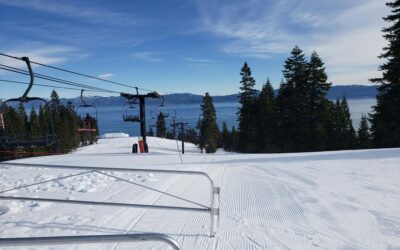
Sierra Tragedy: 8 Dead, 1 Missing Following Catastrophic Lake Tahoe Avalanche
The Sierra Nevada has been struck by its deadliest avalanche in nearly half a century. On Wednesday, February 18, 2026, Nevada County authorities confirmed that eight backcountry skiers were found dead and one remains missing after a massive slide near Castle Peak, approximately 10 miles north of Lake Tahoe. At The Modern Memo, we analyze the timeline of the disaster, the perilous rescue operations, and the “perfect storm” of conditions that triggered the deadliest U.S. avalanche since 1981. The Incident: A Three-Day Journey Ends in Disaster The tragedy involved a guided group from Blackbird Mountain Guides, consisting of 11 clients and four guides. The group was on the final leg of a three-day backcountry expedition, returning from the remote Frog Lake huts, when the mountain gave way. The Timeline: The avalanche was reported at approximately 11:30 a.m. on Tuesday, February 17. A distress call was made via satellite beacon, signaling a mass-casualty event at an elevation of roughly 8,200 feet. The Scale: Officials described the slide as massive, spanning the length of a football field. It occurred during a “monster” winter storm that dropped over 30 inches of snow in a single 24-hour period. The Survivors: Of the 15 people in the group, six were rescued alive Tuesday evening. These survivors—five women and one man, ranging in age from 30 to 55—were found in a makeshift shelter they had constructed from tarps while awaiting help. Two were hospitalized with significant injuries. The Recovery Mission: Treacherous Conditions The search for the remaining nine skiers transitioned from a rescue to a recovery mission on Wednesday morning as Nevada County Sheriff Shannan Moon delivered the grim update to grieving families. Eight Bodies Located: Search crews using avalanche probes and emergency beacons located eight of the nine missing individuals on Wednesday. One Still Unaccounted For: One skier remains missing. While the search continues, authorities have stated they are “presuming the individual has perished” due to the extreme conditions and depth of the snow. Extraction Delays: Due to gale-force winds and the high risk of secondary avalanches, the bodies of the deceased have not yet been removed from the site. Crews have marked the locations with poles to ensure they can be recovered once the weather stabilizes. The “Perfect Storm”: Why Now? The Sierra Avalanche Center had issued a “High” avalanche warning (Level 4 out of 5) on Tuesday morning, specifically warning against travel in the backcountry. Fragile Snowpack: The disaster was caused by a “slab avalanche,” where a heavy load of new, rapidly accumulating snow sat atop a fragile, weak layer of older snow. Gale-Force Winds: High winds created “wind slabs,” further overloading the unstable slopes. Backcountry Risk: Unlike commercial ski resorts—which were partially closed Tuesday and use controlled explosions to mitigate risk—the backcountry offers no such protections. Even with beacons, shovels, and expert guides, the sheer volume of this slide made survival nearly impossible. Final Word Staying informed on the Castle Peak tragedy isn’t just about reading a headline—it plays a powerful role in your understanding of the lethal realities of the “Great Outdoors.” When you look past the shock and focus on the data of the Level 4 avalanche warning and the technicality of “slab release,” you gain a clearer picture of why situational awareness is non-negotiable in the backcountry. Quality information replaces the noise of social media speculation with the clarity of official sheriff briefings and avalanche forecaster data. It allows you to see this event as a somber reminder of the power of the Sierra Nevada. By choosing to follow the facts of the investigation rather than the theories of internet sleuths, you align your perspective with the realities of mountain safety and support a more informed, resilient community of winter enthusiasts. Where Facts, Context, and Perspective Matter At The Modern Memo, our goal is simple: to provide clear, well-researched reporting in a media landscape that often feels overwhelming. We focus on substance over sensationalism, and context over commentary. If you value thoughtful analysis, transparent sourcing, and stories that go beyond the headline, we invite you to share our work. Informed conversations start with reliable information, and sharing helps ensure important stories reach a wider audience. Journalism works best when readers engage, question, and participate. By reading and sharing, you’re supporting a more informed public and a healthier media ecosystem. The Modern Memo may be compensated and/or receive an affiliate commission if you click or buy through our links. Featured pricing is subject to change. 📩 Love what you’re reading? Don’t miss a headline! Subscribe to The Modern Memo here!