
United States
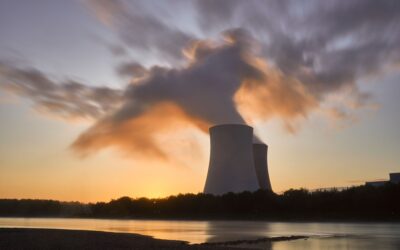
Iran Accuses US of Using Nuclear Watchdog as Pretext for Strikes as IAEA Reports Tehran Still Blocking Inspectors
Iran has accused the United States of using the International Atomic Energy Agency’s inspection findings as political cover to justify military strikes on its nuclear facilities, escalating a standoff that shows no sign of resolution more than a year after American and Israeli warplanes bombed some of the country’s most sensitive atomic sites. The accusation, leveled by Iranian officials this week, comes just days after the IAEA’s confidential quarterly report documented that Tehran continues to deny inspectors access to more than 20 nuclear-related sites and has refused to account for its stockpile of roughly 440 kilograms of uranium enriched to near weapons-grade levels — enough material, according to nuclear experts cited in the report, to produce several nuclear weapons if enriched further. Iran maintains, as it has throughout the crisis, that it has no intention of building a nuclear weapon and says its program exists solely for civilian energy and research purposes. IAEA Director General Rafael Grossi has repeatedly pressed Tehran to restore the access it suspended in the aftermath of last year’s strikes, telling the agency’s Board of Governors in Vienna on September 7 that he was calling “on Iran to engage with the Agency constructively in order to make possible the full and effective implementation of Agency safeguards in Iran.” Iranian officials have responded by casting the IAEA’s reporting itself as compromised, arguing that Washington and its allies have weaponized the agency’s technical findings to manufacture justification for military action rather than to genuinely verify the peaceful nature of Iran’s program. The dispute traces back to June 2025, when Israel launched a 12-day bombing campaign against Iranian military and nuclear infrastructure, a campaign the United States joined less than two weeks later with strikes on the heavily fortified enrichment facilities at Natanz, Fordow and Isfahan. Iranian Foreign Minister Abbas Araghchi has previously dismissed the notion that the strikes were prompted by an “imminent nuclear threat” from Iran as a “heinous lie,” arguing the claim had been “thoroughly debunked” even by Grossi’s own agency and by Oman’s foreign minister, who had been mediating indirect talks between Tehran and Washington before the bombing campaign began. Those talks, which had reached five rounds of negotiation aimed at easing American sanctions in exchange for constraints on Iran’s nuclear activities, collapsed once the strikes began. Araghchi has insisted Iran did not “kill diplomacy,” saying instead that “those who blew up the negotiating table did.” Tensions flared again in February 2026, when a second round of conflict brought additional strikes on Iranian nuclear facilities, further hardening Tehran’s position toward international inspectors. In June 2026, American and Iranian negotiators reached a framework agreement under which Iran would dilute its stockpile of highly enriched uranium under IAEA supervision, a deal that both sides hoped might de-escalate the standoff and restore some measure of international oversight. That agreement, however, remains unimplemented three months later, with Washington and Tehran each accusing the other of failing to uphold its end of the bargain — a dynamic that has left the IAEA effectively locked out of much of Iran’s nuclear infrastructure even as international concern over the unaccounted-for enriched uranium stockpile continues to grow. Iran suspended its cooperation with IAEA inspectors almost immediately after the June 2025 strikes, arguing that continuing to grant international access to facilities that had just been bombed by two of the same countries pushing for that access amounted to a security risk it could not accept. Tehran has also pointed to what it characterizes as a pattern of politically motivated resolutions from the IAEA’s Board of Governors, arguing that the agency has allowed itself to become an instrument of pressure from Washington and Israel rather than functioning as a neutral technical body. Iranian state media and officials have periodically floated the idea that the agency’s own reporting effectively provided Israel and the United States with a roadmap for targeting, a claim the IAEA has firmly rejected as both false and dangerous, since it undermines the case for the kind of transparency that would actually reduce the risk of further military action. For the Trump administration, the unresolved standoff presents a genuine dilemma. Officials have continued to cite Iran’s stockpile of near-weapons-grade uranium and its refusal to grant inspectors access as justification for maintaining maximum economic pressure and keeping the option of further military action on the table. At the same time, the administration has faced criticism from arms-control advocates who argue that walking away from verified inspections — even inspections Iran itself suspended — leaves the international community with far less visibility into Iran’s actual nuclear activities than it had before the strikes, potentially making it harder, not easier, to detect a genuine dash toward weaponization if Tehran ever decided to pursue one. Regional dynamics add further urgency to the standoff. Israel has continued to describe Iran’s nuclear program as an existential threat and has signaled it would consider additional strikes if it judged Tehran to be reconstituting its enrichment capacity at any of the damaged or newly hardened facilities. Gulf Arab states, meanwhile, have expressed a mix of relief that Iran’s program has been set back and anxiety that the unresolved standoff could reignite into a broader regional conflict with little warning, particularly given the unrelated but overlapping tensions already playing out between Saudi Arabia and Iran-aligned Houthi forces in Yemen. Diplomats tracking the dispute say a durable resolution likely requires Iran to accept some restoration of IAEA access in exchange for tangible sanctions relief, mirroring the broad contours of the framework agreement reached in June — but implementing even that limited arrangement has proven difficult given the deep mistrust on both sides following two rounds of military strikes in less than a year. Grossi has continued to describe the situation as urgent, warning that the international community’s ability to verify Iran’s nuclear intentions deteriorates further with each month that inspectors remain locked out, while Iranian officials counter that restoring the access Washington and Israel now demand would mean trusting the same governments…
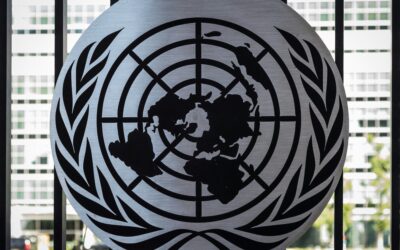
A Historic Gavel: First Lady Melania Trump Presides Over UN Security Council in “Age of Imagination” Address
In an unprecedented move that has redefined the diplomatic role of the American First Lady, Melania Trump presided over a United Nations Security Council meeting on Monday, March 2, 2026. As the United States assumed the rotating presidency of the 15-member council for the month of March, Mrs. Trump became the first spouse of a sitting world leader in history to occupy the president’s chair at the horseshoe table, leading a high-level session on the intersection of children, technology, and education in conflict zones. At The Modern Memo, we analyze the historic nature of this gavel handoff, the core tenets of her “Age of Imagination” framework, and the intense geopolitical backdrop that turned this session into a lightning rod for global tensions. A Historic First on the Global Stage While previous First Ladies have engaged with UN agencies, none have ever taken the gavel to chair a formal Security Council session. The decision by the White House to place Mrs. Trump at the helm of this meeting signaled a deliberate attempt to prioritize child welfare diplomacy as a signature pillar of the administration’s foreign policy agenda. Symbolic Shift: UN spokesman Stephane Dujarric noted that the move demonstrated “the importance that the United States feels towards the Security Council and the subject.” “Peace Does Not Need to be Fragile”: In her opening remarks, Mrs. Trump set a defiant tone for the session. Rather than dwelling on the status quo of diplomatic gridlock, she challenged council members to move beyond “rigid thinking” and embrace a more proactive role in fostering international stability through the democratization of knowledge. The “Age of Imagination”: An AI-Driven Diplomacy The central theme of the First Lady’s address was the concept of the “Age of Imagination”—a vision she has been refining since early 2026. Mrs. Trump argued that artificial intelligence (AI) is not merely a technological advancement but a “primary engine for creative exploration” that can dismantle the barriers of geography, religion, and socioeconomic status. Democratizing Knowledge: Mrs. Trump argued that AI disrupts the traditional, often gate-kept academic paths to information, allowing a “quiet genius in Somalia” or a “dreamer in uptown Manhattan” to access the same vast treasury of human knowledge. The “Elevate” Mandate: Her call to action was clear: “Now is the time for our generation to elevate our children above ideology through access to wisdom.” She posited that conflict is often born of ignorance and that providing children in the most remote corners of the globe with digital connectivity and AI-enhanced learning tools creates an infrastructure of understanding that transcends national borders. The Backdrop: A Council in Crisis The historic nature of the session was starkly contrasted by the immediate reality of the region. The First Lady’s call for the protection of children and education coincided with the third day of U.S.-led military operations in Iran, following strikes that hit targets including an elementary school in the town of Minab. Diplomatic Friction: The session became a stage for international theater. Iran’s ambassador to the UN, Amir Saeid Iravani, condemned the meeting as “deeply shameful and hypocritical,” characterizing the hosting of a summit on child safety while simultaneously conducting airstrikes as a fundamental betrayal of the UN Charter. The “General Silence”: Notably, in her prepared remarks, Mrs. Trump did not explicitly name the ongoing conflict or the Iranian school strikes, focusing instead on her broader educational initiative. This omission led to criticism from some humanitarian advocacy organizations, which argued that the focus on “future education” felt incongruous with the current survival crisis facing children in the war zone. A Counter-Narrative: Conversely, proponents of the administration’s strategy argue that the First Lady’s refusal to engage in the day-to-day “noise” of the conflict allows the mission to remain focused on its long-term goals—building a coalition of nations committed to the well-being of the next generation rather than being pulled into the immediate political theater. Final Word The decision to have Melania Trump chair the UN Security Council is a bold, high-stakes signal that the White House is prioritizing its own “soft power” agenda over traditional diplomatic protocols. When you look past the immediate geopolitical firestorm and focus on the data of the gavel handoff and the specific “Age of Imagination” educational framework, you gain a clearer picture of an administration attempting to bypass the slow-moving bureaucracies of the UN. Quality information replaces the noise of partisan condemnation with the clarity of the session’s stated goals and the evolving role of the First Lady. It allows you to see this event as a strategic move to define the American footprint on the global stage. By choosing to analyze the substance of her remarks on technology and intellectual freedom rather than just the optics of the gavel, you align your perspective with the realities of modern statecraft and support a more informed, resilient outlook on international relations. Where Facts, Context, and Perspective Matter At The Modern Memo, our goal is simple: to provide clear, well-researched reporting in a media landscape that often feels overwhelming. We focus on substance over sensationalism, and context over commentary. If you value thoughtful analysis, transparent sourcing, and stories that go beyond the headline, we invite you to share our work. Informed conversations start with reliable information, and sharing helps ensure important stories reach a wider audience. Journalism works best when readers engage, question, and participate. By reading and sharing, you’re supporting a more informed public and a healthier media ecosystem. The Modern Memo may be compensated and/or receive an affiliate commission if you click or buy through our links. Featured pricing is subject to change. 📩 Love what you’re reading? Don’t miss a headline! Subscribe to The Modern Memo here!