

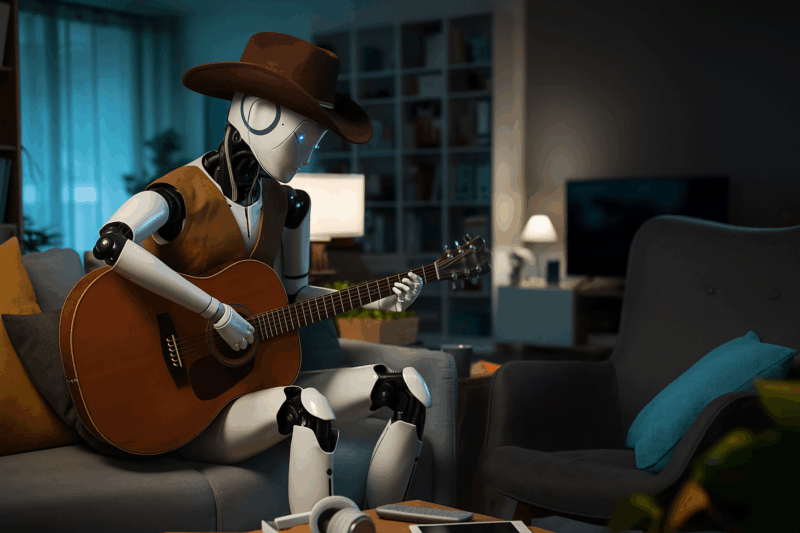
The country music world is buzzing over a new number-one song, “Walk My Walk,” that wasn’t written or performed by humans. The tune by a group called Breaking Rust has climbed to the top of the Country Digital Song Sales chart, as reported by Breitbart News. The surprise is that Breaking Rust is entirely AI-generated. The vocals, melody, and even the album artwork were created through artificial intelligence.
The song blends classic country themes—heartache, resilience, and pride—with modern production polish. Many fans admitted they didn’t realize a computer made it until they read about it online. That shock alone has fueled conversation across Nashville and beyond.
How the Song Came to Life
Breaking Rust exists mainly as a digital persona. Its cowboy image, voice, and lyrics were produced by an algorithm trained on thousands of popular country hits. The program assembled melodies and verses designed to appeal to mainstream listeners. The result is a tune that sounds oddly familiar, like something already on the radio, yet completely new in origin.
Music analysts say “Walk My Walk” demonstrates how far generative technology has come. What once required a team of musicians and producers can now be accomplished in hours by a computer. For some, it’s exciting innovation; for others, it’s a warning sign for the future of artistry.
Artists React with Concern
The song’s success has rattled human performers. Country stars such as Darius Rucker and Matthew Ramsey from Old Dominion have spoken out, warning that AI could threaten jobs and the soul of the genre. They argue that music is built on storytelling and lived emotion—qualities that machines can imitate but never truly feel.
Many artists fear a flood of cheap, computer-made songs will crowd out real musicians. They worry record labels might prioritize quantity over creativity. The debate has spread to social media, where fans are split between fascination and frustration.

Why It Matters
This milestone signals a turning point in entertainment. If listeners can no longer distinguish between human and artificial creation, what happens to authenticity? Music has always been a reflection of human experience, but AI challenges that definition. At the same time, streaming platforms reward output and engagement more than emotional depth, giving machine-made songs an advantage.
Industry experts predict that AI will change how royalties, licensing, and songwriting credits are handled. Some see opportunity for collaboration between artists and algorithms. Others fear automation could hollow out the creative middle class of musicians who rely on writing songs for a living.
Expanding Beyond Country
AI’s influence is spreading well beyond country music. Similar acts have surfaced in pop, rock, and gospel. In the past few months alone, at least half a dozen AI-assisted artists have appeared on various charts. This shift shows how technology is disrupting not just production but also marketing and audience engagement.
Record labels are experimenting with AI to predict hits, customize sounds, and even generate social media content. The line between art and algorithm continues to blur, forcing both creators and fans to rethink what originality means in the digital age.
Legal and Ethical Challenges
The rise of AI-generated songs raises tough legal questions. Who owns a song that no human wrote? Can an algorithm claim copyright protection? Legislators are scrambling to catch up. Last year, more than 200 musicians signed an open letter urging technology companies to protect human artistry and prevent machines from replacing creative labor.
Some lawmakers are proposing rules that require full disclosure when a song is AI-generated. Others suggest new categories of copyright for digital creations. The conversation is just beginning, but the stakes are enormous for an industry built on intellectual property.
Related Stories

AI Job Cuts Surge: How Automation Is Reshaping the U.S. Workforce in 2025

Amazon Smart Glasses Redefine Delivery with AI Power

Biotech Breakthrough Could End the Need for Liver Transplants
The Human Element Still Matters
Despite all the buzz, most critics agree that AI can’t replicate genuine emotion. A computer can analyze patterns, but it can’t live through heartbreak or hope. The strength of country music lies in its storytelling—real people expressing real struggles. That human touch remains irreplaceable, even as algorithms learn to mimic it with eerie accuracy.
Some producers see potential in blending both worlds. By using AI to handle technical work, artists can focus on creativity. The balance between innovation and authenticity may define the next era of popular music.
What the Future Holds
Looking forward, the industry may settle into a hybrid model where humans and AI collaborate rather than compete. Machine learning could help songwriters explore new styles, improve sound quality, and reach wider audiences. Yet there will always be listeners who crave the imperfect beauty of a voice that comes from experience.
The success of “Walk My Walk” shows that audiences are open to experimentation. Whether they embrace or reject AI long-term will depend on how the technology is used. If it enhances creativity, it may become a powerful ally. If it replaces the artist entirely, it could spark a cultural backlash.
Final Thoughts
“Walk My Walk” marks a defining moment in music history. It challenges long-held ideas about creativity, authorship, and authenticity. Whether seen as progress or peril, the arrival of AI in Nashville proves that the future of country music—and all music—will be shaped by how humanity chooses to engage with its own inventions.
Unmask the Narrative. Rip Through the Lies. Spread the Truth.
At The Modern Memo, we don’t polish propaganda — we tear it to shreds.
The corporate press censors, spins, and sugarcoats. We don’t.
If you’re tired of being misled, silenced, and spoon-fed fiction, help us expose what they try to hide.
Truth matters — but only if it’s heard.
So share this. Shake the silence. And remind the powerful they don’t own the story.
Subscribe to The Modern Memo here!
Explore More News
AI Job Cuts Surge: How Automation Is Reshaping the U.S. Workforce in 2025

ACA Premiums Are Rising — But Not Because of Expiring Subsidies

Daylight Saving Time Debate Heats Up Across States

Retirement 2025: America’s Safest and Wealthiest Towns to Call Home
