

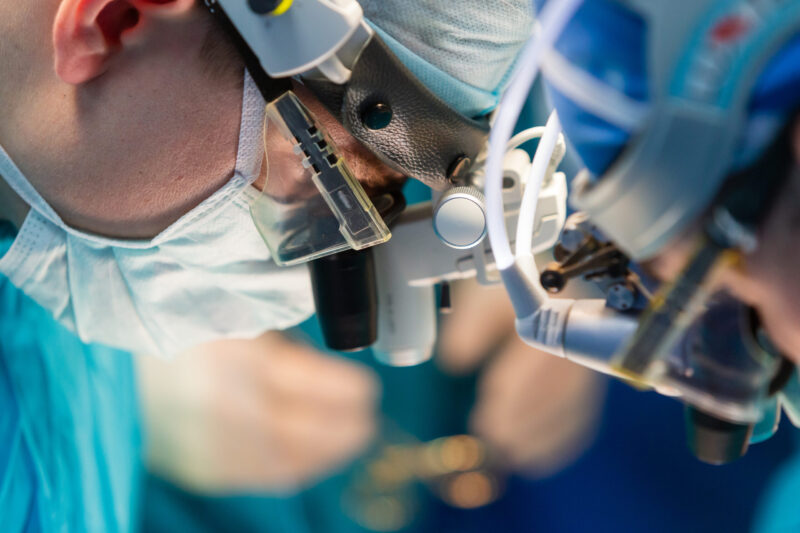
Every year, thousands of people wait sadly for a liver transplant. Many never get one in time. Now, a biotech company is working hard to change that. Their goal: make liver transplants unnecessary.
The Scale of the Crisis
According to the National Institutes of Health (NIH), “more than 11,000 people are on the liver transplant list each year in the United States. Nearly 3,000 of those never happen.” Some become too ill, and others die before a transplant arrives. Meanwhile, chronic liver disease remains a major killer — about 50,000 Americans die annually from it. In short, demand far outpaces supply, and the gap only seems to widen.
The Company Aiming for Change
Meet Ochre Bio, a UK-based biotech firm with labs in the United Kingdom, Taiwan, and New York City. Their mission is to develop therapies that repair and regenerate damaged livers so transplants become a thing of the past. The liver is the only human organ capable of regenerating and repairing itself. (MORE NEWS: Health Insurance Open Enrollment: What to Know Before Jan 15)
Their technique is cutting-edge. They keep donated human livers alive in a lab, studying how to stop cell death, reverse scarring, and regenerate liver tissue. In their New York lab, they take livers donated for research and maintain them under life-support conditions. That lets them test therapies on real human organs before moving into human trials.
Their CEO, Quin Wills, tells the New York Post it’s “running the clinical trial before the clinical trial.” Ochre Bio hopes human trials will begin in about two years.
How Their Approach Works
Ochre Bio’s scientists work with donated human livers that cannot be transplanted but can still be studied in a lab. These organs are kept alive for several days so researchers can observe how different treatments affect their function and recovery.
“We have technologists, we have scientists,” Wills told The Post. “We have surgeons keeping these human livers alive so we can study how to repair them and regenerate them.”
In addition to studying full livers, the team creates miniature liver models from biopsy samples. These “mini livers” allow scientists to test a wide range of therapies in controlled lab settings and see how each treatment supports cell repair. (MORE NEWS: The Man Who Defied Alzheimer’s and Stumped Scientists)
The biotech company’s main goal is to stop liver cell death and reverse fibrosis, the scarring that builds up with chronic liver disease. By protecting cells and reducing inflammation, they hope to restore the liver’s natural ability to heal itself.
Once these therapies prove effective in the lab, the next step will be human testing. If successful, these treatments could make liver transplant surgery unnecessary for many patients.
Why This Matters
Given the shortage of donor livers, finding a way to treat liver disease without a transplant would be a game-changer. It could reduce the number of people who die waiting. It could lower the cost and complexity of transplants. And it could broaden access to treatment, especially for patients who are not good transplant candidates.
Moreover, because chronic liver disease is rising — driven by issues such as fat accumulation in the liver and alcohol-related damage — the need for better alternatives is urgent.

Challenges and Next Steps
Of course, there are hurdles. Laboratory success doesn’t always translate to human therapy. The therapy must be safe, effective, and affordable. Regulatory approval will take time — two years is optimistic for moving into human trials. Scaling production and distribution of such therapies will require investment and infrastructure.
Yet, Ochre’s approach is bold and hopeful. They are pushing the boundaries of regenerative medicine and organ therapy.
A Look at the Bigger Picture
This innovator joins other efforts aimed at improving transplant outcomes and organ availability. For example, new technologies are extending how long donor livers can remain viable outside the body, helping increase usable organs. Policy reforms aim to reduce waiting list deaths and improve equity of access. Living-donor liver transplants are also improving outcomes for high-risk patients.
But each of these still depends on some form of transplant. What makes this biotech company’s strategy different is the goal of eliminating the need for transplants entirely for many patients.
What This Means for Patients
For patients with chronic liver disease, this research offers real hope. If therapies can restore liver function before the disease becomes terminal, then:
- You may avoid being placed on a transplant waitlist.
- You may avoid the risks and recovery associated with major surgery.
- Your outcomes might improve, and your quality of life may be better.
While the therapy is still in development, patients and caregivers can stay informed and continue following medical advice on liver health — early detection and treatment remain key.
The Takeaway
In summary, the shortage of donor livers has left many patients waiting — and too many dying — while the solution has been out of reach. Now, with the work from Ochre Bio and breakthroughs in organ science, that may be changing.
Their goal is nothing less than to end the need for liver transplants for many people. If they succeed, it will rewrite the future of liver disease treatment. Until then, the breakthroughs in lab and regenerative medicine mark a critical step forward. For patients living with liver disease, the message is this: a major shift may be on the horizon — one in which waiting for a transplant could become the exception, not the rule.
Forget the narrative. Reject the script. Share what matters.
At The Modern Memo, we call it like it is — no filter, no apology, no corporate leash.
If you’re tired of being lied to, manipulated, or ignored, amplify the truth.
One share at a time, we dismantle the media machine — with facts, boldness, and zero fear. Stand with us. Speak louder. Because silence helps them win.
