

Healthcare

Price Reset: Trump Administration Launches TrumpRx.gov to End “Global Freeloading”
The Trump administration officially entered the next phase of its healthcare overhaul on February 5, 2026, with the launch of TrumpRx.gov. The new federal portal is designed to act as a direct-to-consumer gateway, allowing Americans to access “Most-Favored-Nation” (MFN) pricing—matching the lowest prices pharmaceutical companies charge in other developed countries. At The Modern Memo, we analyze the massive price drops for blockbuster drugs, the “tariff threat” strategy that brought Big Pharma to the table, and the current insurance hurdle facing patients. The “Most-Favored-Nation” Mandate For decades, Americans have effectively subsidized “socialized medicine” abroad by paying the highest drug prices in the world. TrumpRx.gov aims to flip that script. By leveraging the threat of tariffs on foreign-made pharmaceuticals, the administration secured voluntary agreements with 16 major manufacturers, including Pfizer, Eli Lilly, and Novo Nordisk. The Goal: To ensure the U.S. no longer pays more than 102% to 105% of the lowest price offered to countries like Canada, France, or Germany. Direct Access: The site serves as a referral portal, providing coupons or direct links to manufacturer cash-price platforms, bypassing the “middlemen” (Pharmacy Benefit Managers) often blamed for inflating costs. Historic Savings on High-Cost Meds The launch features 43 initial medications, focusing on high-expenditure categories like weight loss (GLP-1s), diabetes, and fertility. The savings are substantial compared to former list prices: Wegovy (Pill): Formerly priced at $1,349, it is now available for $149, representing an 89% savings. Ozempic (Pen): Formerly $1,028, it has dropped to as low as $199, an 81% reduction. Gonal-F (IVF): Previously costing over $1,000, it is now as low as $168, an 83% saving. Insulin Lispro: Formerly over $100, the price is now capped at $25, a 75% decrease. CMS Administrator Dr. Mehmet Oz called the fertility discounts a “game-changer” for American families, predicting a surge in “Trump babies” as IVF treatments finally become affordable for the middle class. The Catch: The “Deductible Gap” While the cash prices on TrumpRx.gov are undeniably lower than most insurance co-pays, there is a significant catch for the roughly 150 million Americans with private health insurance: these purchases currently do not count toward your insurance deductible. The Conflict: Because these are “cash-pay” transactions outside the traditional insurance network, insurers are not currently required to track them. The Risk: A patient might save $300 a month on Ozempic via TrumpRx, but because that $300 isn’t “counting” toward their annual deductible, they may end up paying more out-of-pocket for other medical procedures later in the year. The Solution: President Trump has called on Congress to pass “The Great Healthcare Plan,” which would legally mandate that all TrumpRx purchases count toward insurance deductibles and out-of-pocket maximums. Critics vs. Proponents Critics from the left have characterized the site as a “glorified coupon book,” arguing it does nothing to address the underlying issues of medication pricing. However, proponents argue that by creating a transparent, government-backed marketplace, the administration is finally using American market power to force global price parity and bypass costly intermediaries. “The political establishment said this wasn’t possible,” the President stated during the launch. “We are ending the global freeloading on American innovation once and for all.” Final Word Staying informed on the launch of TrumpRx.gov isn’t just about finding a coupon—it plays a powerful role in your understanding of the total transformation of the American pharmacy model. When you look past the partisan debate and focus on the data of “Most-Favored-Nation” pricing and the technicality of “deductible accounting,” you gain a clearer picture of the risks and rewards of this new system. Quality information replaces the noise of political rhetoric with the clarity of actual price comparisons and policy benchmarks. It allows you to see this portal as a tool for immediate relief, while also understanding the legislative steps still needed to fully integrate it into the insurance market. By choosing to follow the facts of the agreements rather than the slogans of the critics, you align your perspective with the realities of modern healthcare and support a more informed, resilient financial future. Where Facts, Context, and Perspective Matter At The Modern Memo, our goal is simple: to provide clear, well-researched reporting in a media landscape that often feels overwhelming. We focus on substance over sensationalism, and context over commentary. If you value thoughtful analysis, transparent sourcing, and stories that go beyond the headline, we invite you to share our work. Informed conversations start with reliable information, and sharing helps ensure important stories reach a wider audience. Journalism works best when readers engage, question, and participate. By reading and sharing, you’re supporting a more informed public and a healthier media ecosystem. The Modern Memo may be compensated and/or receive an affiliate commission if you click or buy through our links. Featured pricing is subject to change. 📩 Love what you’re reading? Don’t miss a headline! Subscribe to The Modern Memo here!
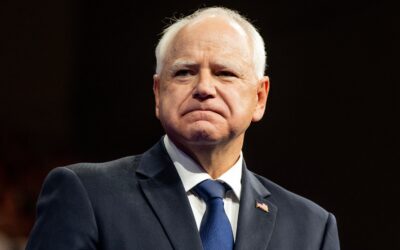
Somali Immigrant Fraud in Minnesota and the Collapse of State Oversight
When photos surfaced showing Somali criminal immigrant Abdul Dahir Ibrahim posing with prominent Minnesota Democrats, the images spread fast. People wanted to know why a man with a long record of fraud — and a long-standing deportation order — was anywhere near elected leaders. But the conversation didn’t stop with the photos. Instead, it kicked open a deeper discussion about Minnesota’s growing list of taxpayer-funded fraud scandals, including the massive Feeding Our Future pandemic case and even a recent decision by a judge to overturn a multimillion-dollar Medicaid-fraud conviction. A lot has happened in Minnesota over the past few years, and each story connects to a much larger pattern: serious failures in state government oversight, slow responses by state agencies, and enormous losses of taxpayer money. The Ibrahim Case: A Symbol of Bigger Problems Abdul Dahir Ibrahim had a long history of fraud before U.S. authorities arrested him in December 2025. Before arriving in Minnesota, he’d already been convicted of asylum and welfare fraud in Canada. After his arrival, he was involved in additional criminal activity, including providing false information to police and driving without a valid license. Because of these offenses, he’d been under a deportation order since 2004. For years, though, that order wasn’t enforced. So when photos emerged showing the Somali criminal immigrant standing next to Minnesota political figures, it didn’t sit well with the public. And honestly, it wasn’t just about him — it was about what he represented. His arrest happened at the same time Minnesota was dealing with some of the largest fraud cases in state history, many involving public-benefit programs. This was the moment people started connecting dots. Feeding Our Future: The Massive $250M Pandemic Fraud Case The Feeding Our Future scandal remains one of the biggest COVID-era fraud cases in America. Federal prosecutors charged dozens of Somali immigrants with stealing roughly $250 million from the federal child-nutrition program. That’s not speculation — that’s the number straight from federal indictments. The scheme worked like this: Fake meal sites were set up across Minnesota. Fraudulent invoices were submitted to claim reimbursed meals. Very few — if any — actual meals were served to children. Those involved then spent the money on luxury cars, real estate, and travel. Dozens of defendants have since pleaded guilty or been convicted. It’s a staggering case, and Minnesota is still dealing with the fallout. White House Deputy Chief of Staff for Policy Stephen Miller didn’t mince words. In an interview with Fox News, he called the scandal: “the single greatest theft of taxpayer dollars through welfare fraud in American history.” His comment reflected a growing national opinion: that this fraud wasn’t just large — it was a catastrophic failure of Minnesota state government oversight. More Stories Drowning in Bills? These Debt Solutions Could Be the Break You Need Out-of-Town Renters Are Driving Up Demand in These Five Cities Under Siege: My Family’s Fight to Save Our Nation – Book Review & Analysis Scott Jensen: “Their timeline’s a year off.” Minnesota gubernatorial candidate Dr. Scott Jensen also weighed in, specifically pointing the finger at Governor Tim Walz and the Minnesota Department of Education. According to Jensen, the administration knew a serious problem existed a year earlier than they’ve publicly claimed. Jensen told the New York Post: “Tim Walz and the Minnesota Department of Education knew in 2020 that there was a problem… but they didn’t get the FBI involved until 2021. And yet they’ve made claims that as soon as they learned about it, they got the FBI involved. That’s not true. Their timeline’s a year off.” This disagreement about the timeline matters. If state officials really waited a year to bring in federal investigators, that delay may have allowed the fraud to grow far beyond what it could have been. And that’s exactly what many Minnesotans are concerned about. Another Case That Shocked the State: Judge Overturns $7.2M Medicaid Fraud Conviction As if Minnesota didn’t have enough controversy already, a judge recently overturned a $7.2 million Medicaid fraud conviction involving a Somali couple accused of using taxpayer money to fund luxury living. According to reporting, Judge Sarah West threw out the conviction, citing problems with how the evidence tied the couple directly to the fraudulent billing. The case had drawn public outrage because of how the stolen money was allegedly spent — expensive clothing, high-end vehicles, and lavish travel. When the conviction was tossed, critics argued that Minnesota’s legal system was becoming too soft on major fraud cases. The timing of the reversal made the situation even more volatile, landing right in the middle of public anger over Feeding Our Future and other ongoing investigations. For many Minnesotans, it felt like yet another example of accountability slipping through the cracks. A Pattern That’s Hard to Ignore When you step back and look at all of this together — the Feeding Our Future scandal, the overturned Medicaid-fraud conviction, and the Ibrahim arrest — the common threads become obvious: Minnesota has a systemic oversight problem and a Somali criminal immigrant problem. Millions of taxpayer dollars have been stolen or misused. Feeding Our Future alone costs $250 million, and state and federal investigators now estimate the total Medicaid fraud in Minnesota has climbed to roughly $1 billion, revealing just how widespread and organized these schemes have become. Warning signs were overlooked. And political leaders are still giving conflicting timelines about when they first knew something was wrong. This is why the outrage hasn’t died down. Dr. Mehmet Oz, Administrator for the Centers for Medicare & Medicaid Services, sent Governor Walz a letter giving Minnesota 60 days to comply with directives to clean up Medicaid fraud and abuse. Dr. Oz also released a public video: You’ve probably heard the news by now: Minnesota fraudsters stole over $1 billion from Medicaid. And you deserve an explanation. Our staff at CMS told me they’ve never seen anything like this in Medicaid — and everyone from Gov. Tim Walz on down needs to be investigated,…

Biotech Breakthrough Could End the Need for Liver Transplants
Every year, thousands of people wait sadly for a liver transplant. Many never get one in time. Now, a biotech company is working hard to change that. Their goal: make liver transplants unnecessary. The Scale of the Crisis According to the National Institutes of Health (NIH), “more than 11,000 people are on the liver transplant list each year in the United States. Nearly 3,000 of those never happen.” Some become too ill, and others die before a transplant arrives. Meanwhile, chronic liver disease remains a major killer — about 50,000 Americans die annually from it. In short, demand far outpaces supply, and the gap only seems to widen. The Company Aiming for Change Meet Ochre Bio, a UK-based biotech firm with labs in the United Kingdom, Taiwan, and New York City. Their mission is to develop therapies that repair and regenerate damaged livers so transplants become a thing of the past. The liver is the only human organ capable of regenerating and repairing itself. (MORE NEWS: Health Insurance Open Enrollment: What to Know Before Jan 15) Their technique is cutting-edge. They keep donated human livers alive in a lab, studying how to stop cell death, reverse scarring, and regenerate liver tissue. In their New York lab, they take livers donated for research and maintain them under life-support conditions. That lets them test therapies on real human organs before moving into human trials. Their CEO, Quin Wills, tells the New York Post it’s “running the clinical trial before the clinical trial.” Ochre Bio hopes human trials will begin in about two years. How Their Approach Works Ochre Bio’s scientists work with donated human livers that cannot be transplanted but can still be studied in a lab. These organs are kept alive for several days so researchers can observe how different treatments affect their function and recovery. “We have technologists, we have scientists,” Wills told The Post. “We have surgeons keeping these human livers alive so we can study how to repair them and regenerate them.” In addition to studying full livers, the team creates miniature liver models from biopsy samples. These “mini livers” allow scientists to test a wide range of therapies in controlled lab settings and see how each treatment supports cell repair. (MORE NEWS: The Man Who Defied Alzheimer’s and Stumped Scientists) The biotech company’s main goal is to stop liver cell death and reverse fibrosis, the scarring that builds up with chronic liver disease. By protecting cells and reducing inflammation, they hope to restore the liver’s natural ability to heal itself. Once these therapies prove effective in the lab, the next step will be human testing. If successful, these treatments could make liver transplant surgery unnecessary for many patients. Why This Matters Given the shortage of donor livers, finding a way to treat liver disease without a transplant would be a game-changer. It could reduce the number of people who die waiting. It could lower the cost and complexity of transplants. And it could broaden access to treatment, especially for patients who are not good transplant candidates. Moreover, because chronic liver disease is rising — driven by issues such as fat accumulation in the liver and alcohol-related damage — the need for better alternatives is urgent. Challenges and Next Steps Of course, there are hurdles. Laboratory success doesn’t always translate to human therapy. The therapy must be safe, effective, and affordable. Regulatory approval will take time — two years is optimistic for moving into human trials. Scaling production and distribution of such therapies will require investment and infrastructure. Yet, Ochre’s approach is bold and hopeful. They are pushing the boundaries of regenerative medicine and organ therapy. A Look at the Bigger Picture This innovator joins other efforts aimed at improving transplant outcomes and organ availability. For example, new technologies are extending how long donor livers can remain viable outside the body, helping increase usable organs. Policy reforms aim to reduce waiting list deaths and improve equity of access. Living-donor liver transplants are also improving outcomes for high-risk patients. But each of these still depends on some form of transplant. What makes this biotech company’s strategy different is the goal of eliminating the need for transplants entirely for many patients. What This Means for Patients For patients with chronic liver disease, this research offers real hope. If therapies can restore liver function before the disease becomes terminal, then: You may avoid being placed on a transplant waitlist. You may avoid the risks and recovery associated with major surgery. Your outcomes might improve, and your quality of life may be better. While the therapy is still in development, patients and caregivers can stay informed and continue following medical advice on liver health — early detection and treatment remain key. The Takeaway In summary, the shortage of donor livers has left many patients waiting — and too many dying — while the solution has been out of reach. Now, with the work from Ochre Bio and breakthroughs in organ science, that may be changing. Their goal is nothing less than to end the need for liver transplants for many people. If they succeed, it will rewrite the future of liver disease treatment. Until then, the breakthroughs in lab and regenerative medicine mark a critical step forward. For patients living with liver disease, the message is this: a major shift may be on the horizon — one in which waiting for a transplant could become the exception, not the rule. Forget the narrative. Reject the script. Share what matters. At The Modern Memo, we call it like it is — no filter, no apology, no corporate leash. If you’re tired of being lied to, manipulated, or ignored, amplify the truth. One share at a time, we dismantle the media machine — with facts, boldness, and zero fear. Stand with us. Speak louder. Because silence helps them win.

Maxine Waters’ “Healthcare for Everybody” Stance Fuels Government Shutdown Fight
OPINION Rep. Maxine Waters (D-CA) recently summed up the Democrat position on healthcare during a tense moment on Capitol Hill. When asked if Democrats were pushing healthcare for illegal immigrants, she replied: “Democrats are demanding healthcare for everybody.” (RELATED NEWS: Trump Meeting with Congressional Leaders as Shutdown Nears) Maxine Waters admits Democrats are going to shutdown the government to try to secure healthcare for illegal immigrants. Reporter: “Are Democrats demanding healthcare for illegal aliens?” Rep. Waters: “Democrats are demanding healthcare for everybody.” pic.twitter.com/e5rxdIJrjP — Alex Pfeiffer (@AlexPfeiffer) September 30, 2025 That statement may sound broad and compassionate, but it goes straight to the heart of why Congress is deadlocked and the government is on the brink of shutting down. Democrats are willing to tie federal spending to handouts for noncitizens, while Republicans are refusing to let taxpayer dollars be used as a magnet for illegal immigration. Why the Continuing Resolution Stalled The fight is over a continuing resolution, or CR — a short-term funding bill that keeps the government open. Republicans pushed for a “clean” CR, one that simply funds essential services without adding controversial policies. Democrats, however, blocked it in the Senate, with 44 of them voting “no.” Their reasoning? They want healthcare expansion, including coverage that extends to illegal immigrants, tied into the negotiations. This is the sticking point. Democrats are holding out for benefits that reach beyond American citizens. Republicans are standing firm, insisting that the government stay focused on its constitutional responsibilities and not on expanding handouts. The White House reacted to the shutdown by changing the official website to a government shutdown clock. Citizens Are Still Struggling This entire debate exposes misplaced priorities. Millions of American citizens still can’t afford quality healthcare. Families face skyrocketing premiums and deductibles. Veterans fight for timely care. Seniors stretch their savings to cover prescriptions. Yet Democrats are willing to risk a government shutdown to push healthcare for those who came here illegally. That choice is a slap in the face to hardworking taxpayers. It shows where their priorities lie — and it’s not with the American people. (MORE NEWS: Miami Mayor’s Warning: NYC’s Mamdani Echoes Castro) The Taxpayer Burden Healthcare is not free. Every new expansion comes with a price tag that lands on the backs of taxpayers. By demanding that healthcare extend to “everybody,” Democrats are asking American citizens to shoulder even more costs. This is ignoring basic math in the name of “compassion.” The United States already runs massive deficits. Adding millions of undocumented immigrants into our healthcare system would balloon costs, put more on already strained hospitals, and create even longer wait times for citizens. Republicans are right to push back and say “enough.” Republican members of Congress weighed in on the shutdown: Remember this: House Republicans did our job by passing a temporary funding extension to keep the government open. If there’s a shutdown, it’s because Democrats put their radical agenda ahead of the American people. — Rep. Tim Burchett Press Office (@RepTimBurchett) September 29, 2025 During shutdowns, federal workers are told to “do more with less.” Meanwhile, Congress still cashes paychecks. That’s wrong. I’ve reintroduced an Amendment to end Member pay during shutdowns. Zero. No back pay either!! pic.twitter.com/WU7fxhetH7 — Rep. Ralph Norman (@RepRalphNorman) September 30, 2025 We’re going to have a government shutdown. Why? Because the loon wing of the Democratic Party is mad at Chuck Schumer, and Chuck wants them to love him. pic.twitter.com/EiIS6MrBSz — John Kennedy (@SenJohnKennedy) September 30, 2025 A Magnet for More Illegal Immigration Offering government-funded healthcare to anyone who crosses the border is not just expensive — it’s reckless. It would act like a magnet, drawing even more people to enter illegally. Why wouldn’t they, if they know free medical care awaits? Border states are already overwhelmed with surging arrivals. Hospitals, schools, and social services feel the impact daily. Expanding healthcare access to illegal immigrants would only make the crisis worse. Republicans understand this, which is why they dug in their heels during CR negotiations. Handouts vs. Responsibility Democrats frame this as an issue of compassion. But true compassion starts with responsibility — responsibility to the citizens who built this country, pay the taxes, and follow the laws. Handouts for noncitizens are not compassionate; they are unfair. They reward illegal behavior while leaving American families behind. That’s why Republicans are saying no. This shutdown fight isn’t just about numbers in a budget; it’s about drawing a line between serving our citizens and incentivizing illegal immigration. The Bigger Picture The government shutdown showdown reveals a larger truth: Democrats are willing to gamble with government operations to advance their progressive agenda. Republicans, on the other hand, are standing on principle. They are insisting that before we even talk about expanding benefits, Washington must get its house in order, secure the border, and put citizens first. The Takeaway For once, we finally got an honest answer from someone on the left. Maxine Waters admitted that Democrats want “healthcare for everybody,” even for those here illegally. That stance is exactly why the government is on the verge of shutting down. Democrats are blocking funding because they want to slip handouts for noncitizens into the deal. Republicans are refusing because they believe citizens come first. This is the real issue at stake. Will America prioritize its own people, or will it spend taxpayer dollars on benefits for those who entered illegally? Conservatives know the answer — and that’s why they are willing to fight, even if it means enduring a shutdown to hold the line. Forget the Headlines. Challenge the Script. Deliver the Truth. At The Modern Memo, we don’t tiptoe through talking points — we swing a machete through the media’s favorite lies. They protect power. We confront it. If you’re sick of censorship, narrative control, and being told what to think — stand with us. Share the story. Wake the people. Because truth dies in silence — and you weren’t made to stay quiet.