

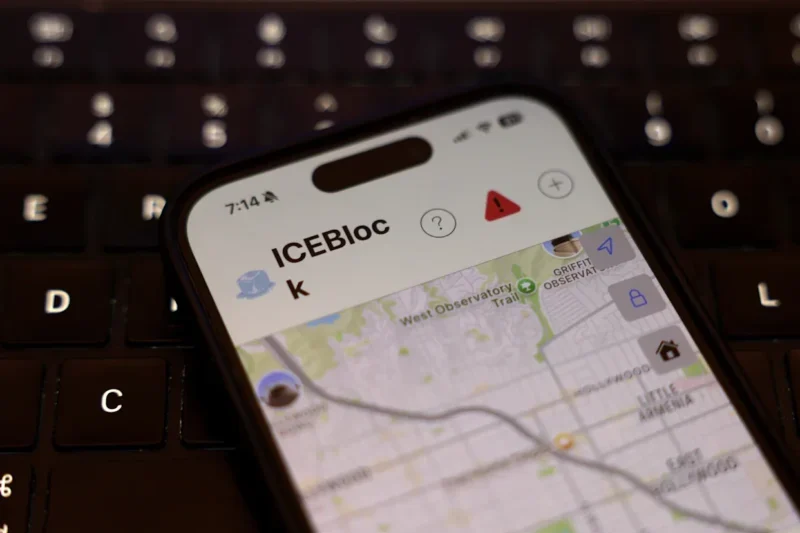
Apple has removed a number of apps from its App Store that allowed users to track the presence of ICE (Immigration and Customs Enforcement) agents, according to the New York Post. The decision came after the Trump administration threatened legal action. The removed apps included one called ICEBlock, which had gained hundreds of thousands of users.
In response, Apple confirmed that it took down ICEBlock and similar apps after being contacted by law enforcement. The company did not name which agencies or detail each app removed.
What Was ICEBlock and Why It Mattered
ICEBlock was an app that let users anonymously report and view the approximate location of ICE agents within a five-mile radius. By crowdsourcing observations, users could see where ICE enforcement was reportedly active and warn each other. The app’s creators promoted it as a tool to help immigrants avoid law enforcement encounters. The app had 1.1 million users.
Director of the FBI Kash Patel reported the shooter at the Dallas ICE facility last week used ICE tracking apps:
@FBIDallas and FBI HQ have been working 24/7 to seize devices, exploit data, and process writings obtained on location and in the subject’s person/residence/bedroom. This @FBI is committed to providing timely updates, as promised:
– The perp downloaded a document titled “Dallas…
— FBI Director Kash Patel (@FBIDirectorKash) September 25, 2025
Because of its controversial goal—to help people evade immigration enforcement—ICEBlock drew both support and criticism. Supporters viewed it as a defense against perceived overreach. But in reality, it enabled illegal behavior and endangered public safety by interfering with law enforcement.
Why Apple Acted: Legal Pressure and Enforcement
Apple’s removal of the app followed intense pressure from the Trump administration. Officials issued legal threats, demanding that Apple stop distributing apps designed to help users avoid ICE. Facing potential liability, Apple complied. (MORE NEWS: Viral 2019 Debate Clip Shows Democrats Back Healthcare for Illegal Immigrants)
In its statement, Apple said it removed the apps after being contacted by unspecified law enforcement entities. The company did not confirm whether the removal was voluntary or mandated by law.
Thus, Apple appears to have acted preemptively to avoid legal exposure. The move signals how tech firms may sometimes yield to government pressure when enforcement agencies assert regulatory or legal authority.
Reactions and Debate
The removal has sparked fierce debate. Advocates for free speech and digital tools argued that Apple’s action constitutes censorship—restricting tools that users voluntarily choose to download. On the other hand, critics claim the apps endanger enforcement and public safety.
Some supporters of ICEBlock’s removal say that no platform should host tools explicitly designed to help users dodge law enforcement. They argue developers should not assist with illegal conduct. Opponents, however, say that the government should not be able to dictate which apps people can access. The tension between safety, free speech, and corporate responsibility is central to this dispute.
What It Means for Developers and Users
For developers, the removal shows a warning: apps facilitating the evasion of law enforcement may be vulnerable to removal, especially if authorities condemn them. Even if an app is popular, it may not be safe from takedown under pressure. (RELATED NEWS: Dallas ICE Office Attack Sparks Grief and Political Uproar)
For users, this event underscores how volatile app availability can be when government interest is involved. Tools can be removed overnight if they encroach upon legally sensitive territory.
Moving forward, developers planning apps that interact with law enforcement or surveillance should tread carefully. They must anticipate potential legal challenges and consider whether their functionality may be perceived as enabling wrongdoing.
Lessons on Tech, Governance, and Power
This episode highlights how tech platforms serve as gatekeepers. Even though Apple is a private company, its control over app distribution gives it de facto regulatory power. Its decisions can shape which tools people can access and which voices gain amplification.
However, it is important to note that this action is not government overreach. It is no different from laws in some states that ban laser jammers or radar detectors. Just as those devices interfere with traffic enforcement, ICE-tracking apps directly interfere with immigration enforcement. When technology is designed to obstruct the law, removal becomes a matter of public safety, not censorship.
Moreover, the case reveals how when law enforcement deems an app inappropriate or dangerous, companies may be willing—or compelled—to submit. That is especially true when technology contributes to serious crimes, including the potential harm or even murder of innocent people. In such cases, restrictions are not about silencing dissent but about protecting lives.
At the same time, the controversy underscores the tension between security and liberty. Governments want tools and mechanisms to maintain order. Citizens and activists often want the ability to observe, document, or resist government action. When technology sits in the middle of that clash, conflict is inevitable.
Final Word
Apple’s removal of ICE-tracking apps like ICEBlock signals a major shift at the intersection of tech, law, and politics. Under pressure from the Trump administration, Apple pulled apps that helped users avoid ICE agents. The move has stirred debate about censorship, corporate responsibility, and civil liberties.
Going forward, developers must consider legal risks when building apps tied to law enforcement or surveillance. Meanwhile, users must recognize that app access is never fully secure. As technology continues to permeate government and personal lives, the boundaries of power will remain contested—and the decisions of big tech companies will carry weighty consequences.
Expose the Spin. Shatter the Narrative. Speak the Truth.
At The Modern Memo, we don’t cover politics to play referee — we swing a machete through the spin, the double-speak, and the partisan theater.
While the media protects the powerful and buries the backlash, we dig it up and drag it into the light.
If you’re tired of rigged narratives, selective outrage, and leaders who serve themselves, not you — then share this.
Expose the corruption. Challenge the agenda.
Because if we don’t fight for the truth, no one will. And that fight starts with you.
