
In July 2021, the U.S. House of Representatives passed the ALLIES Act, a bill that expanded and accelerated the special immigrant visa program (SIVs) for Afghan nationals who assisted the United States during the war. The bill passed by an overwhelming margin of 407–16. Those 16 “no” votes all came from Republican lawmakers, many of whom warned the bill allowed “rushed admittance and not enough scrutiny” during a dangerous and unstable moment.
The 16 Republicans Who Voted NO
These representatives opposed the bill to expedite the visa program:
1. Andy Biggs
2. Lauren Boebert
3. Ken Buck
4. Andrew Clyde
5. Matt Gaetz
6. Bob Good
7. Paul Gosar
8. Marjorie Taylor Greene
9. Jody Hice
10. Thomas Massie
11. Mary Miller
12. Barry Moore
13. Ralph Norman
14. Scott Perry
15. Matt Rosendale
16. Chip Roy
At the time, they argued the legislation expanded eligibility too broadly and weakened visa vetting requirements, opening the door to potential security risks. Their warnings were criticized as exaggerated, politically motivated, or unfounded.
But today, several years later, those concerns have resurfaced with renewed urgency.
More Stories


A Program Under Fire: Operation Allies Welcome
The ALLIES Act became a key pillar of Operation Allies Welcome (OAW), the massive resettlement effort that brought more than 70,000 Afghan evacuees to the United States in a matter of months. The operation unfolded in an atmosphere of chaos and fear after former President Biden’s botched military withdrawal from Afghanistan. Supporters said speed of visa approval was essential to protect U.S. allies before the Taliban took full control.
However, critics insisted the acceleration weakened vetting, relied on incomplete records, and failed to properly examine individuals with military, intelligence, or extremist backgrounds. Although government audits later stated agencies followed established vetting procedures, the question remained: Did the rush cut corners in visa issuance anyway?
This week, two violent incidents have forced the country to look hard at that question.
A Bomb Threat in Texas Raises Alarm
Earlier this week, federal agents arrested Mohammad Dawood Alokozay, an Afghan evacuee brought in under OAW. Authorities allege he posted a video of himself constructing a bomb and threatened to blow up a building in Fort Worth, Texas.
BREAKING: An Afghan national was arrested this week after posting a video of himself on TikTok indicating he was building a bomb with an intended target of the Fort Worth area, according to DHS.
Mohammad Dawood Alokozay is charged at the state level with making a terroristic… pic.twitter.com/Dmbmtp3gNs
— Fox News (@FoxNews) November 29, 2025
EXCLUSIVE: Video of Afghan National Mohammad Dawood Alokozay planning to mass murder Americans with a car bomb in Texas.
Watch his fellow Muslims cheer him on and offer support.
Dallas and Fort Worth were his targets.
Mohammad was imported into America by the Biden regime… pic.twitter.com/FP5VtxL8vo
— Benny Johnson (@bennyjohnson) November 29, 2025
He reportedly showed materials, gave instructions, and made direct threats — raising immediate fears that he was preparing for an actual attack. This incident alone reignited concerns about the visa vetting process, especially for evacuees displaying signs of radicalization.
But it was only the first shock of the week.
A Nation Stunned: Deadly Ambush of National Guard Members
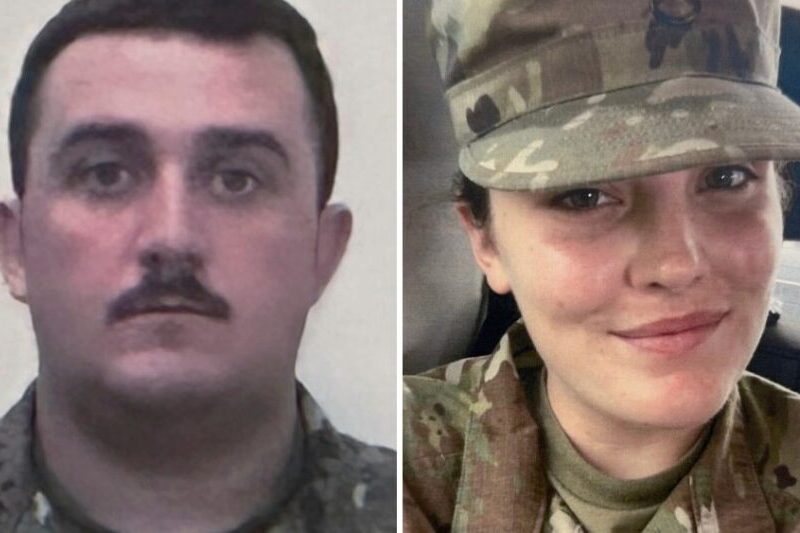
Then, the nation was rocked by a deadly attack in Washington, D.C. Two members of the West Virginia National Guard — 20-year-old Sarah Beckstrom and 24-year-old Andrew Wolfe — were ambushed while on duty near the White House.
Beckstrom died from her injuries. Wolfe remains in critical condition, fighting for his life.
Police identified the shooter as Rahmanullah Lakanwal, an Afghan national who also entered the United States under Operation Allies Welcome. According to reports, Lakanwal had ties to a CIA-backed unit in Afghanistan — a background that should have triggered heightened review.
National Guard shooter Rahmanullah Lakanwal, his wife, & five kids were moved straight into Walton Place Apartments — subsidized housing partnered with the Bellingham Housing Authority.
The waitlist for American families is six months to three years.
American elderly, disabled,… pic.twitter.com/HQnG9aHGZ4
— Derrick Evans (@DerrickEvans4WV) November 28, 2025
Authorities are treating the attack as a targeted, ambush-style assault. The killing of a young service member and the near-fatal wounding of another have devastated their families and shook the nation.
Did the Rush Create Preventable Risks?
These two high-profile cases — a credible bomb threat and a deadly ambush — have intensified criticism that the 2021 SIV expansion and evacuation effort prioritized speed over safety. Opponents of the ALLIES Act had argued:
– Eligibility was expanded too broadly
– Vetting was rushed due to political pressure
– Afghanistan’s poor record-keeping made verification difficult
– Individuals with militant or extremist ties could slip through
Supporters dismissed these claims in 2021. But now, with American service members dead or critically injured, the debate looks very different.
A Country Reeling — and Demanding Answers
Communities across America are grieving. Citizens are questioning how individuals admitted under a humanitarian program could turn violent so quickly.
After the recent attacks, the Trump administration has paused Afghan immigration processing and ordered a review of how evacuees were vetted before entering the United States.
U.S. Citizenship and Immigration Services issued a statement:
“In the wake of the shooting of two National Guard service members in Washington, D.C., Wednesday by an Afghan national, U.S. Citizenship and Immigration Services issued new guidance allowing for negative, country-specific factors to be considered when vetting aliens from 19 high-risk countries. This guidance comes after the Trump administration halted refugee resettlement from Afghanistan and the entry of Afghan nationals in its first year of office.”
Effective immediately, processing of all immigration requests relating to Afghan nationals is stopped indefinitely pending further review of security and vetting protocols.
The protection and safety of our homeland and of the American people remains our singular focus and…
— USCIS (@USCIS) November 27, 2025
Americans are asking:
– Were red flags ignored?
– Did the speed of evacuation compromise safety?
– Were political concerns prioritized over national security?
– Should the visa vetting process have taken more time, even at the risk of delaying evacuation for some allies?
These questions may shape future immigration and refugee policies for years to come.
Final Word
The Trump administration has made clear its determination to get answers and prevent further security failures. By pausing Afghan immigration and visa processing and ordering a full review of vetting procedures, the administration signaled that national security must come first.
Officials have also emphasized the need to halt or restrict immigration from regions with documented ties to terrorism until thorough, reliable screening methods can be guaranteed. Their stance reflects a broader push to reestablish strong borders, rebuild trust in the system, and ensure that dangerous individuals are never again admitted under rushed or compromised processes.
These incidents also force the country to confront an uncomfortable but necessary reality: individuals arriving from nations shaped by long-term conflict, extremist influence, or hostility toward Western ideals may struggle to adapt to Western cultural expectations, values, and legal norms. The United States has always welcomed people from many backgrounds, but integration can vary widely depending on personal history, worldview, and exposure to democratic institutions.
While many refugees and immigrants adjust successfully and peacefully, others may face serious challenges in adapting to a society built on individual freedoms, equal rights, and the rule of law. For the Trump administration, acknowledging these challenges is not an act of hostility but a recognition that cultural differences can influence security outcomes—and that immigration policy must account for those realities to protect the American people.
Cut Through the Noise. Slice Through the Lies. Share the Truth.
At The Modern Memo, we don’t tiptoe around the narrative—we swing a machete through it. The mainstream won’t say it, so we will.
If you’re tired of spin, censorship, and sugar-coated headlines, help us rip the cover off stories that matter. Share this article. Wake people up. Give a voice to the truth the powerful want buried.
This fight isn’t just ours—it’s yours. Join us in exposing what they won’t tell you. America needs bold truth-tellers, and that means you.
Subscribe to The Modern Memo here!
Explore More News
Trump Designates Muslim Brotherhood a Terrorist Organization
Trump and Elon Musk Reunite, Boosting GOP Unity

Top 5 Essential Survival Gear Items For Any Adventure
Epstein Files Bill Sparks New Questions as Jeffries Email Emerges
