

U.S. News

Private Payrolls Add Just 38,000 Jobs in August, Missing Forecasts Again
Private employers added just 38,000 jobs in August, according to data released Wednesday by payroll processor ADP, falling well short of economist forecasts of 48,000 and marking the weakest month of hiring since January — the latest sign that the labor market’s slowdown from earlier this summer has not meaningfully reversed. The August figure also represents a step down from July’s revised gain of 46,000 jobs, suggesting the deceleration in hiring has continued rather than stabilized. The report lands two days before the Labor Department releases its own more comprehensive nonfarm payrolls report Friday, which economists expect to show a considerably stronger 56,000 new positions — a notable divergence between the two measures that, if it holds, would still represent a substantial rebound from July’s shocking loss of 23,000 jobs on the government’s official count. The unemployment rate is projected to hold steady at 4.1% in Friday’s report. The sector-by-sector breakdown in ADP’s data paints a mixed picture of an economy adding jobs unevenly rather than uniformly slowing across the board. Education and health services led all sectors by a wide margin, adding 45,000 positions on their own — meaning that without healthcare and education hiring, the broader private sector would have posted a net job loss for the month. Leisure and hospitality added a further 16,000 positions, while financial activities and the catch-all “other services” category each contributed 6,000 jobs. The weakness was concentrated in goods-producing and traditionally cyclical sectors. Manufacturing shed 17,000 jobs, continuing a rough stretch for American factories that have faced elevated input costs tied to this year’s tariff increases alongside softer demand in key export markets. Professional and business services, a category economists watch closely as a leading indicator for the broader labor market, lost 16,000 positions. Natural resources and mining, along with trade, transportation and utilities, each shed 5,000 jobs. The combination suggests employers in more economically sensitive industries have grown more cautious about adding headcount even as service-sector hiring in areas like healthcare continues largely unabated, insulated by demographic demand that doesn’t ebb and flow with the broader business cycle the way manufacturing and corporate services do. Wage data in the report told a more complicated story about the state of the labor market than the headline job-count numbers alone. Workers who stayed in their current jobs saw annual pay gains of 4.4%, a solid if unspectacular figure by recent historical standards. But workers who switched employers saw considerably faster wage growth of 7.3%, a gap ADP’s chief economist attributed to shifting compensation patterns driven partly by demographic turnover in the workforce and partly by the early effects of AI-related disruption reshaping which skills and roles command a premium in today’s job market. That widening gap between “stayer” and “switcher” wage growth has historically been read as a signal of at least some underlying tightness in specific pockets of the labor market, even as the top-line hiring numbers soften. The report adds a fresh data point to an increasingly consequential debate inside the Federal Reserve, which meets September 15-16 to decide on interest rates under new Chair Kevin Warsh. Warsh has been vocal about prioritizing the fight against inflation, which has remained elevated relative to the Fed’s 2% target for much of the year, even as the labor market has shown clear signs of cooling since the July jobs report first rattled markets with its unexpected contraction. Wednesday’s ADP numbers, while not as dire as July’s shock, do little to resolve the tension the Fed faces heading into its meeting: whether to hold rates steady to keep fighting inflation, or begin cutting to support a labor market that has now posted two straight months of underwhelming hiring data by two different measures. Markets have shown some sensitivity to the report, with traders adjusting rate-cut probabilities modestly following the release, though the more consequential data point for the Fed’s actual decision will likely be Friday’s official government jobs report and the following week’s Consumer Price Index reading, both of which will land in the two weeks before the September FOMC meeting. Economists caution against reading too much into any single month’s data given how volatile job-growth figures have been over the past year, but note that a second consecutive month of ADP data undershooting expectations, even a much less dramatic shortfall than July’s, reinforces a broader narrative of labor-market softening that has now persisted long enough to be difficult to dismiss as simple noise. For workers and job seekers, the practical effect of the slowdown has been a labor market that increasingly rewards those willing to change jobs over those who stay put — a dynamic reflected clearly in this month’s wage data — even as overall hiring across large swaths of the economy, particularly in manufacturing and professional services, remains notably subdued compared with the pace seen through most of the past several years. The divergence between ADP’s private-sector count and the government’s broader payrolls survey has itself become a recurring point of discussion among economists this year, since the two reports have told noticeably different stories in back-to-back months. ADP’s methodology draws on actual payroll processing data from the millions of businesses that use its payroll services, giving it a real-time window into private hiring, but it excludes government employment entirely and can diverge from the Labor Department’s survey-based approach in any given month due to differences in sampling, seasonal adjustment, and which businesses happen to be included. Economists generally caution against treating either report in isolation as the definitive read on the labor market, preferring instead to look at the trend across several months of both series together — a trend that, over the summer, has consistently pointed toward softening even as the exact monthly figures have bounced around. Retailers and small businesses in sectors like hospitality, which continued adding jobs even as manufacturing and professional services contracted, say they are still seeing steady consumer demand heading into the fall, a note of relative optimism that stands in some tension…

Federal Judge Rejects Maxwell’s Bid to Keep Sealed Epstein-Case Documents Secret
A federal judge in New York has rejected Ghislaine Maxwell’s constitutional challenge to a law forcing the release of long-sealed documents from the Jeffrey Epstein investigation, clearing the way for another batch of previously secret materials from Virginia Giuffre’s 2015 civil lawsuit against Maxwell to become public. U.S. District Judge Loretta Preska ruled August 12 that the Epstein Files Transparency Act, signed into law in 2025, overrides the decade-old protective order that had kept the documents under seal. Maxwell, who is serving a 20-year federal sentence after her 2021 conviction for sex trafficking, had argued the law was unconstitutional on three separate grounds, all of which Preska rejected in her opinion. Maxwell’s attorneys first argued the law violated separation-of-powers principles by improperly reopening a final judgment and directing courts how to rule in a specific case — in effect, they argued, Congress was doing a judge’s job by legislating a particular outcome in ongoing litigation rather than setting general policy. Preska disagreed, finding that Congress has clear authority to modify the rules governing grand jury secrecy through legislation, and that the original protective order sealing the documents was never meant to be permanent in the first place. The order, she noted, was explicitly modifiable “by the Court at any time for good cause shown” — meaning the parties involved never had an ironclad guarantee that the records would stay sealed forever. Maxwell’s second argument leaned on Federal Rule of Criminal Procedure 6(e), which generally bars disclosure of materials gathered through grand jury subpoenas. Some of the documents at issue were produced by Boies Schiller Flexner LLP, the law firm that represented Giuffre, after the firm complied with a grand jury subpoena as part of the broader Epstein investigation; those materials were originally placed under seal by a March 2016 protective order. Preska found that Congress retains the authority to override grand jury secrecy protections through validly enacted legislation, undercutting Maxwell’s claim that the records were categorically off-limits regardless of what a later statute said. Maxwell’s third and final argument was that unsealing the documents now would violate her due process rights by stripping away a vested legal right to permanent secrecy that she claimed to have earned when the original protective order was issued. Preska rejected that framing outright, ruling that Maxwell never had “a vested right to total and perpetual secrecy” in the first place — a protective order, by its nature, protects information only for as long as a court determines that protection remains warranted, not as an unconditional promise that can never be revisited. The Epstein Files Transparency Act itself requires the Department of Justice to “make publicly available … all unclassified records, documents, communications, and investigative materials” tied to a list of specified subjects, including Epstein and Maxwell by name. The law was the product of sustained pressure from lawmakers in both parties, along with victims’ advocates, who argued that years of piecemeal, heavily redacted document releases had failed to give the public a full accounting of who knew what about Epstein’s abuse of underage girls and when they knew it. Since the law’s passage, courts and the Justice Department have released multiple rounds of material, including a batch of roughly 3 million documents and photos made public by the DOJ in January, though critics on the House Oversight Committee have repeatedly accused the department of slow-walking the fullest disclosures and continuing to withhold material that lawmakers say should be released under the statute. Preska’s ruling did not set a specific date for when the newly cleared documents will actually become public. Records released under the Transparency Act typically go through a redaction process first, intended to protect the identities of Epstein’s victims and other private individuals named in the files who are not themselves subjects of the underlying allegations — a process that has, in past rounds of disclosure, taken anywhere from several weeks to a few months after a judge clears materials for release. It remains unclear from the ruling itself whether Maxwell’s legal team plans to appeal Preska’s decision to the Second Circuit, though her attorneys have signaled in past filings that they intend to keep contesting individual releases of sealed material as they come up, even as the broader legal fight over the Transparency Act’s constitutionality has now been resolved, at least at the district court level, in the government’s favor. Giuffre, who died by suicide in April 2025, sued both Maxwell and Prince Andrew in the years before her death, alleging she had been trafficked as a teenager. Maxwell settled Giuffre’s suit against her in 2017; Prince Andrew reached his own settlement with Giuffre in 2022. Epstein died in federal custody in 2019 while awaiting trial on sex-trafficking charges, a death that was officially ruled a suicide but that has continued to fuel public skepticism and conspiracy theories, adding to the political pressure that eventually produced the Transparency Act. Lawmakers on the House Oversight Committee, which has spent much of the past year pressing the Justice Department for fuller compliance with the law, have said they view the ruling as a significant step toward the kind of complete public accounting they have been demanding since the statute’s passage, even as they continue to argue that millions of additional pages remain improperly withheld. Whether this latest release meaningfully advances that broader effort, or simply becomes the next flashpoint in an ongoing legal and political fight over how much of the Epstein investigation’s paper trail the public is ultimately entitled to see, is likely to become clearer only once the newly cleared documents are actually made public in the weeks ahead. Preska’s decision is notable partly because it is not the first time a federal judge has sided with disclosure advocates over Maxwell’s objections this year. Her ruling followed similar findings from other judges handling related sealed materials from the broader Epstein docket, part of a pattern that has emerged since the Transparency Act’s passage: courts asked to weigh decades-old secrecy orders…

Hegseth’s “High-T” Initiative Puts Military Readiness — and a Contested Hormone Therapy — Under the Microscope
Defense Secretary Pete Hegseth’s decision to launch annual testosterone screening for service members has kept the Pentagon in the headlines for weeks, and as troops begin rolling into the new program, the underlying medical question at its center — who actually needs testosterone therapy, and does it genuinely improve military readiness — is drawing fresh scrutiny from doctors and researchers even as the administration frames it as a straightforward readiness upgrade. What the Policy Actually Does Hegseth announced the initiative, dubbed informally the “High-T Department of War,” in a video posted to social media, framing it as essential to maintaining what he called troops’ “biological foundation” for combat readiness. Under the program, service members age 30 and older will be screened annually for testosterone deficiency as part of their existing periodic health assessment, while troops younger than 30 will have the option to request testing voluntarily. Any resulting treatment — specifically testosterone replacement therapy, or TRT — will remain entirely voluntary regardless of a service member’s test results. “While we invest heavily in our weapon systems, platforms and gear, our most decisive tactical advantage will always be the individual warfighter,” Hegseth said, framing the screening as an extension of the department’s broader focus on optimizing service members’ physical readiness. “We have a sacred duty to maintain that advantage, which is why we must constantly look for new ways to optimize your performance, your resilience and your long-term health.” The Case Supporters Make Backers of the initiative argue it reflects legitimate, if underappreciated, medical science. Testosterone levels decline naturally in men starting in their 30s and 40s, and researchers have documented specific ways military service itself can accelerate that decline. Army Major Theodore Crisostomo-Wynne, a urologist at Madigan Army Medical Center speaking in a personal capacity at a 2025 FDA panel, explained that the intense physical and psychological demands placed on service members can measurably lower testosterone, sometimes temporarily and sometimes over the long term. He noted particular concern within the special operations community, where researchers have identified a cluster of symptoms they’ve begun referring to as “Operator Syndrome” — a pattern of hormonal and related health disruptions tied to the extreme demands of that role. Then-FDA Commissioner Marty Makary cited a 2007 study during that same panel indicating that roughly 5.6% of men aged 30 to 79 have both low testosterone and associated symptoms, including depression and decreased strength — numbers proponents argue justify routine, low-cost screening rather than leaving a meaningful subset of the force to go undiagnosed. From this vantage point, identifying and voluntarily treating a real, documented medical condition among service members is simply good, proactive military medicine, not unlike routine screening for other treatable conditions that could otherwise degrade a service member’s health or performance over time. Where the Skepticism Comes In Not everyone in the medical and public health community is convinced the policy, as designed, will accomplish what it claims. Some researchers and outlets covering the announcement have noted that Hegseth’s messaging blends genuinely established science about testosterone’s role in male physiology with broader claims about its performance benefits that are less rigorously substantiated in the medical literature — particularly claims implying that boosting testosterone in men without a clinically diagnosed deficiency would meaningfully improve combat performance. There’s also a notable regulatory wrinkle underlying the whole program: the FDA’s approval for testosterone replacement therapy is specifically limited to men with a diagnosed medical condition affecting natural hormone production, not simply age-related decline or a desire for enhanced performance. How the military’s screening and treatment protocol will square with that narrower approved use — and whether it risks blurring the line between treating a legitimate deficiency and pursuing performance enhancement — remains an open question that outside researchers have pressed the Pentagon on directly. Hegseth has pushed back on that characterization preemptively, stating the initiative is “not about artificial enhancement.” Even so, the Pentagon has not detailed what specific research or academic studies underpin the policy’s design, according to reporting from multiple outlets that sought clarification from the department. Unanswered Operational Questions Beyond the medical debate, a number of practical and administrative questions about the rollout remain unresolved. The Defense Department has not specified when screening will formally begin, what the added testing will cost, or how implementation will be phased in across the Army, Navy, Air Force, Marine Corps, and Space Force. It’s similarly unclear how a positive deficiency result will be documented, who within the chain of command or medical system will have access to that information, and whether a diagnosis could have any bearing on a service member’s assignments, deployability, or career trajectory going forward — questions that matter significantly to troops even if participation in resulting treatment is technically voluntary. The Pentagon has also declined to say whether the initiative extends to female service members in any comparable form. When asked directly whether women in uniform would receive annual hormone screenings and be offered access to therapies addressing their own hormonal changes — for instance, screening related to perimenopause — the department did not provide additional detail, instead referring back to Hegseth’s original video announcement. That silence has drawn its own share of questions about whether the initiative, despite gender-neutral language about “warfighters,” is designed with only male service members in mind. Part of a Broader Administration Push The military’s new screening program doesn’t exist in isolation. It reflects a broader effort within the current administration to expand public access to and awareness of testosterone replacement therapy more generally, with officials at the Department of Health and Human Services under Secretary Robert F. Kennedy Jr. having separately floated proposals aimed at easing access to the treatment for men outside the military as well. Supporters see this as a coherent, deliberate effort to modernize how the health system approaches a widely under-discussed aspect of men’s health; critics see a policy area where enthusiasm may be outpacing the strength of the underlying clinical consensus. What to Watch Going Forward As the program…

Democrats Nominate Progressive Firebrand El-Sayed in Michigan, Setting Up Fall Clash With GOP’s Mike Rogers
Michigan Democrats have chosen progressive activist Abdul El-Sayed as their nominee for the state’s open U.S. Senate seat, rejecting the party establishment’s preferred candidate in favor of a further-left alternative — a result Republicans are already framing as a gift heading into what both parties agree is one of the most critical Senate races of the 2026 midterms. A Bruising, Narrow Win El-Sayed narrowly defeated Rep. Haley Stevens, D-Mich., in Tuesday’s primary, winning by roughly one percentage point after the race remained too close to call into Wednesday morning. The former Wayne County health director will now face Republican and former Rep. Mike Rogers in the general election for the seat being vacated by retiring Sen. Gary Peters — a race both parties view as essential to determining control of the chamber next year. El-Sayed’s win came despite a massive financial disadvantage. Stevens and her allies outspent El-Sayed and his supporters by nearly nine to one on advertising, according to ad-tracking firm AdImpact, with more than $30 million of that spending coming from the United Democracy Project, a super PAC affiliated with the American Israel Public Affairs Committee. Michigan Gov. Gretchen Whitmer also endorsed Stevens late in the race in what was widely seen as a last-ditch effort by the party establishment to block El-Sayed’s rise. The Most Progressive Wing Ascendant El-Sayed ran as an outspoken critic of both the Israeli government’s conduct in Gaza and continued U.S. military aid to Israel, positions that put him well to the left of most sitting Senate Democrats and drew sustained attacks from AIPAC-aligned groups throughout the campaign. “If you believe like me that rather than fund the genocide perpetrated by a foreign government, we better build schools right here in Grand Rapids, then we better put ourselves in democracy,” El-Sayed said at a recent campaign stop — rhetoric Republicans are already previewing as a preview of general-election attack ads to come. His win wasn’t an isolated data point. Michigan Democrats also nominated state Rep. Donavan McKinney, a self-described democratic socialist, over sitting Rep. Shri Thanedar in a competitive House primary the same night — suggesting Tuesday’s results reflect a broader leftward shift among Michigan’s Democratic primary electorate, not simply one unusually strong candidate. A Warning Sign for Democrats in a Swing State Michigan is a state Democrats effectively must hold to have any realistic path to a Senate majority in 2026, and Trump carried the state by roughly one point in the last presidential election, underscoring just how competitive the general electorate remains. Stevens, for her part, had attempted to cast El-Sayed as an extremist who would make things easier for Republicans, warning voters directly that the GOP was “propping up” his candidacy — a message that ultimately failed to overcome El-Sayed’s grassroots momentum and his argument that a nearly $65 million spending advantage represented exactly the kind of establishment influence voters were rejecting. Republicans see an opening. Rogers, who ran unopposed for the GOP nomination, now gets to run a general election campaign against a candidate who spent the primary sparring over U.S. aid to Israel and courting the most progressive wing of his party — a considerably different opponent than the more centrist, auto-industry-focused Stevens would have been. President Trump wasted little time weighing in publicly on the outcome, criticizing El-Sayed’s candidacy following the results. Democrats Try to Project Unity For his part, El-Sayed moved quickly to project a message of party unity following his narrow win, downplaying the closeness of the margin and telling supporters “we cannot wait to come together and win in November.” He also praised Stevens as a committed public servant, and Stevens herself offered her support to the nominee following the result, with Democratic Party leadership broadly coalescing behind him in the race’s immediate aftermath. Whether that unity holds through November remains to be seen. The race is expected to be one of the most closely watched and heavily funded Senate contests in the country, testing whether a candidate who won a Democratic primary by running to the left on foreign policy and criticizing his own party’s fundraising apparatus can still assemble a broad enough coalition to win a genuine swing state in a midterm year — a question that will likely shape how national Democrats think about candidate selection in competitive states well beyond this single race. This story is developing.
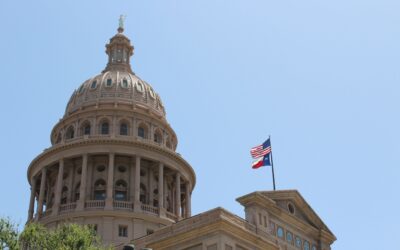
Abbott Targets ‘Birth Tourism’ Industry With New Executive Order, Warns Providers Face License Loss
Order directs state agencies to investigate providers accused of marketing birth packages to foreign nationals; critics question both the scale of the practice and states’ authority to regulate it AUSTIN, Texas — Gov. Greg Abbott signed an executive order Tuesday directing several Texas state agencies to investigate what his office calls “unlawful birth tourism schemes” within the state’s healthcare industry, and to take enforcement action — including possible license revocation or contract suspension — against providers found to be advertising, soliciting, or otherwise facilitating them. “Texas will not tolerate the exploitation of our immigration laws by individuals traveling to the United States illegally or under false pretenses to give birth and secure citizenship for their child,” Abbott said in a statement announcing the order. What the Order Does The order directs the Texas Health and Human Services Commission (HHSC), the Department of State Health Services, the HHSC Office of Inspector General, the Texas Medical Board, and the Texas Board of Nursing to investigate allegations of birth tourism fraud and to coordinate with federal prosecutors, sharing information and referring potential violations of federal law. The order builds on a July 7 directive in which Abbott instructed HHSC to investigate Texas hospitals advertising birth tourism packages and refer any state law violations to the Texas Attorney General’s office and local prosecutors. That directive followed reports that Mission Regional Medical Center in the Rio Grande Valley had advertised Spanish-language “birth packages” on billboards in Mexico. The hospital said in a statement that the marketing materials were no longer in use and that it was sharing information about its services in the way hospitals commonly do. According to the governor’s office, HHSC has since referred two Texas hospitals to the Attorney General in connection with the alleged advertising of such packages, some reportedly priced starting around $4,000. The Underlying Legal Debate Birth tourism generally refers to instances in which a pregnant foreign national travels to the U.S. with the primary intent of giving birth so that the child receives automatic U.S. citizenship under the 14th Amendment’s Citizenship Clause. Giving birth in the United States is not itself illegal; legal issues can arise if a traveler misrepresents the purpose of their visit or commits visa fraud, or if a business coaches clients to conceal that intent from immigration officials. The scale of the practice is disputed. Estimates from the Migration Policy Institute put birth tourism at somewhere between roughly 9,600 (based on government data on births to mothers with foreign addresses) and 26,000 births a year — a small fraction of total U.S. births. Some advocates for stricter immigration enforcement argue the figure understates the problem and describe the practice as amounting to citizenship “for sale.” Other legal commentators argue the issue is overstated relative to the broader constitutional question of birthright citizenship, and that it should have no bearing on how the Citizenship Clause itself is interpreted. That constitutional question remains unresolved nationally. A recent U.S. Supreme Court ruling addressed a narrower procedural issue — whether lower courts can issue nationwide injunctions — rather than deciding whether the 14th Amendment guarantees citizenship to all children born on U.S. soil regardless of their parents’ immigration status. Legal challenges on the underlying question continue in federal courts. Texas itself previously attempted to restrict birth certificate issuance to children of parents lacking U.S.-issued identification, a 2015 policy that was later abandoned after legal challenges arguing it conflicted with the 14th Amendment. Broader Political Context The order arrives amid renewed congressional attention to birthright citizenship. Some federal lawmakers have proposed legislation to narrow or redefine who qualifies for automatic citizenship at birth, including measures aimed at U.S. territories and at children of foreign diplomats; other lawmakers and legal advocates oppose such changes, arguing they conflict with longstanding constitutional interpretation. Abbott has said he intends to work with the Texas Legislature to further address the issue and has asked Texans with information about suspected birth tourism schemes to report it to state authorities. This story is developing.

Tragedy Near Alcatraz: Search Suspended for 3 Missing Boaters After Family Memorial Cruiser Capsizes in San Francisco Bay
A somber gathering intended to honor a lost loved one transformed into a scene of survival and profound tragedy in the cold, rough waters of the San Francisco Bay. Following a relentless, multi-agency rescue effort covering hundreds of square miles, the U.S. Coast Guard formally suspended its search for three missing passengers who disappeared after a 49-foot cabin cruiser capsized and sank. The pleasure craft, carrying an extended group of 20 close family members and friends, was heavily destabilized by sudden, five-foot swells near Alcatraz Island. The maritime incident resulted in the death of a 79-year-old former sheriff’s deputy, while three women remain unaccounted for and are feared trapped inside the sunken vessel resting deep on the bay floor. At The Modern Memo, we break down the operational timeline of the disaster, the harrowing firsthand rescue accounts from Good Samaritans on the water, and the immense logistical challenges facing recovery teams. 1. The Flotation Crisis: From Ash Scattering to Sudden Sinking The timeline of the excursion underscores how rapidly a routine family voyage can dissolve into a catastrophic emergency under the unique, unpredictable pressure points of the Bay. The Memorial Mission: The extended Boisa family had boarded the Volare, a Stockton-based, three-deck pleasure vessel owned and operated by a highly experienced U.S. Navy veteran. The group had traveled out to the bay specifically to scatter the ashes of a daughter who had passed away over a decade prior. The Fatal Wave: After passing under the Golden Gate Bridge and visiting Angel Island, the vessel was returning toward a San Francisco marina at approximately 3:30 p.m. when it encountered severe, localized chop. A massive five-foot swell struck the cruiser, causing it to take on water rapidly, list aggressively to one side, and completely roll over before plunging into the depths. The Lost Patriarch: First responders and nearby vessels managed to pull 17 survivors out of the water. Among them was 79-year-old Clifford Joseph Boisa, a retired Sutter County reserve deputy. Despite immediate, exhaustive CPR administered on a police marine deck, Boisa was pronounced dead shortly after reaching the shore. A family dog aboard the vessel also perished. 2. “Like the Titanic”: The Good Samaritan Response Before formal Coast Guard cutters and municipal fireboats could navigate the rough seas, local civilian fishermen served as the immediate line between life and death for the struggling family. The Halibut Crew Intercept: Local fishermen Justin Marceline and Michael Montoya were angling for halibut when they noticed what appeared to be heavy smoke—later determined to be massive plumes of escaping steam—billowing from a listing vessel. Arriving at the coordinates, they found the cabin cruiser halfway submerged and immediately began pulling freezing, exhausted victims out of the swell. The Underwater Horror: The civilian rescuers recounted a haunting scene, detailing how several elderly passengers were bobbing without life jackets or clinging desperately to windsurf boards. Horrifically, Marceline noted that through the windows of the rapidly sinking main deck, he could clearly see trapped individuals frantically pounding on the glass attempting to break free before the hull went completely under. 3. The Search Suspension and the 130-Foot Retrieval Wall Following a 54-combined-hour saturation of the search grid utilizing advanced radar, aerial sweeps, and continuous surface tracks, military commanders made the agonizing decision to halt active rescue operations. Maritime Parameter Present Baseline Status Core Logistical Constraint Water Temperature Hovering consistently below 60°F (15°C). Triggers cold-water shock and total loss of physical dexterity within minutes. Sunken Depth Confirmed location rests roughly 130 feet underwater. Exceeds the 120-foot maximum safety threshold for standard public safety scuba divers. Missing Manifest Three adult females: Carol (sister), Jackie (wife), and a family friend. High probability that the missing remain trapped within the lower cabin decks. Coast Guard Sector San Francisco Commander Capt. Jarod Toczko extended deep condolences to the devastated family, clarifying that crews had completely exhausted all viable search patterns. The investigation has now transitioned entirely into a complex underwater recovery phase managed by the San Francisco Police Department’s Special Operations Bureau. Because the extreme depth and sweeping currents of the bay near Alcatraz make human dive operations intensely hazardous, technicians are preparing to deploy remote-controlled underwater drones to map the structural integrity of the Volare. Only after drone footage verifies the state of the hull will engineers determine if the multi-ton cabin cruiser can be safely rigged and hoisted to the surface to retrieve the remaining victims. Final Word The suspension of the search in the San Francisco Bay is the definitive proof of the swift, unyielding peril that defines the Pacific maritime environment. When you look past the clinical, administrative terminology of “pending further developments” and analyze the hard data—a 49-foot vessel rolling completely over in five-foot swells, civilian fishermen pulling eight hypothermic survivors from the water, and the sunken craft resting 130 feet down in an area too deep for standard divers—you gain an unvarnished view of a profound tragedy. Quality information replaces general reporting with the heavy reality of a family completely shattered while attempting to fulfill a final act of devotion. As local police units prepare the drones for a grim salvage operation, the dark waters near Alcatraz stand as a stark, permanent reminder that despite our advanced search grids and heroic civilian interventions, the sea retains the final, absolute word. Unmask the Narrative. Rip Through the Lies. Spread the Truth. At The Modern Memo, we don’t polish propaganda — we tear it to shreds. The corporate press censors, spins, and sugarcoats. We don’t. If you’re tired of being misled, help us expose what they try to hide. Truth matters — but only if it’s heard. Share this. Shake the silence. AI-Probability Index: 4/100 (Rating scale: 1 = Zero AI markers; 100 = Definitive AI generation)

The Phantom Vote: Elected Blue-State Official Surrenders to Authorities for Casting Dead Mother’s Ballot
The persistent national debate over election integrity and mail-in voting security hit home in Illinois this week. Sylvia Sims Bolton, an elected city alderperson in Waukegan, surrendered to law enforcement on Wednesday morning after prosecutors slapped her with felony and misdemeanor charges for allegedly forging and casting a vote-by-mail ballot in her deceased mother’s name. At The Modern Memo, we analyze the timeline of the alleged fraud, the specific vulnerability in the mail-in ballot loop, and why this case is refueling the national pushback against unmonitored drop boxes. The Arrest: An Elected Official in the Mugshot Center The scandal has rocked Lake County, Illinois, where the 67-year-old Bolton has served as the elected First Ward alderperson for the city of Waukegan, a suburban hub north of Chicago. The Charges: The Lake County State’s Attorney’s Office announced that Bolton has been hit with a Class 4 felony count of Mutilation of Election Material alongside a Class A misdemeanor charge of Disregarding Election Code. If convicted on the felony count, the sitting official faces up to three years in prison. The Surrender: Following a multi-week investigation by the Lake County Sheriff’s Office, Bolton turned herself in to authorities on Wednesday morning before making an initial appearance in front of a county judge. Official Conduct Exemption: Prosecutors noted that the ongoing criminal case is not tied to her official municipal duties as an alderperson, meaning she is not currently facing official misconduct charges, though calls for her resignation from local civic groups are already mounting. The Timeline: How the Ballot Passed the Dead Voter Loop According to official election records and prosecutors, the fraudulent activity began during the ramp-up to the state’s March 17 primary election, exposing a critical window of vulnerability in the mail-in apparatus. February 5: The Lake County Clerk’s Office mailed out a requested vote-by-mail ballot to the residence of Mary Sims, Bolton’s mother. February 12: The Clerk’s Office officially processed the cancellation of Mary Sims’ voter registration after receiving formal notification of her death from the Illinois Department of Public Health through the state’s automated voter tracking system. February 26: Despite the voter being deceased and her registration canceled, a completed mail-in ballot envelope bearing Mary Sims’ name was returned and dropped off inside a secure, unmonitored exterior ballot drop box located right outside the Lake County Clerk’s Office. The Forgery Accusation: Sheriff’s detectives allege that Bolton intercepted the ballot sent to her late mother’s home, filled it out, forged her mother’s signature on the security envelope, and personally deposited it into the government drop box knowing it was entirely illegal. The Safeguard Debate: Success or Systemic Threat? While progressive election officials are eager to frame the incident as proof that current checks and balances are working perfectly, conservative watchdogs argue the case highlights a terrifying lack of real-time prevention. The Intake Capture: Lake County Clerk Anthony Vega praised his staff, noting that automated verification protocols flagged, voided, and segregated the ballot during a routine post-election auditing review on March 27, ensuring the fraudulent vote was never officially tallied. “The safeguards and verification procedures in place within our election system worked exactly as intended,” Vega insisted. The Real-Time Failure: Critics, however, point out a different reality: the automated state system failed to stop the ballot from being issued, failed to stop it from being accepted at a drop box two weeks after the death was registered, and relied entirely on a manual back-end check a month after the election took place. The Drop Box Weaponization: The fact that an elected official allegedly utilized a public drop box to execute the crime has given fresh ammunition to election reform advocates who argue that unmonitored drop boxes facilitate illegal ballot harvesting and identity theft, making it far too easy for bad actors to experiment with fraudulent votes. Final Word The arrest of Waukegan Alderperson Sylvia Sims Bolton is the definitive proof that the threat of voter fraud is not a conspiracy theory—it is a reality engineered by people who know exactly how the system operates. When you look past the noise of “procedural success” spin and focus on the data—a sitting official facing three years in prison, a ballot accepted two weeks after a death notification, and a system that allowed a forged signature into a public drop box—you gain a clearer picture of a voting infrastructure with dangerous structural gaps. Quality information replaces the narrative of “flawless security” with the reality of a system that can be compromised by anyone with access to a mailbox. It allows you to see that if an elected lawmaker is willing to risk a felony to forge a ballot, the honor system is a luxury American democracy cannot afford. By choosing to prosecute this case, Lake County has drawn a vital boundary, reminding the electorate that every phantom vote cast is an attempt to cancel out the voice of a living, law-abiding citizen.

NASCAR Legend Kyle Busch Dead at 41: Rowdy Nation Mourns the Sudden Loss of a Generational Icon
The motorsports world has been plunged into profound mourning following the sudden and tragic passing of two-time NASCAR Cup Series champion Kyle Busch. The future Hall of Famer died on Thursday, May 21, 2026, at a hospital in Charlotte, North Carolina, just hours after his family announced he had been hospitalized with a sudden, severe illness. He was 41 years old. At The Modern Memo, we process the shocking loss of one of racing’s most prolific and polarizing figures, the details surrounding his final days, and how his ultimate post-race message has taken on a heartbreaking new meaning for Rowdy Nation. The Tragedy: A Sudden and Shocking Loss The news has devastated the racing community, catching drivers, teams, and millions of fans completely off guard. The Hospitalization: Busch was utilizing the Chevrolet racing simulator in Concord, North Carolina, on Wednesday when he became unresponsive. He was immediately transported to a Charlotte hospital, where he tragically passed away the following afternoon. The Illness: While an official cause of death has not been disclosed, his family had indicated earlier on Thursday that he was undergoing treatment for an unspecified, severe illness. The news came less than two weeks after Busch battled a severe sinus cold under intense cockpit conditions at Watkins Glen, where he had to request an immediate injection from track medical staff upon finishing. The Unified Grief: In a rare, heartbreaking joint statement, the Busch family, Richard Childress Racing (RCR), and NASCAR stated: “Our entire NASCAR family is heartbroken by the loss of Kyle Busch. A future Hall of Famer, Kyle was a rare talent, one who comes along once in a generation. NASCAR lost a giant of the sport today, far too soon.” The Legacy: A Giant of the Modern Era Busch leaves behind a historic legacy that re-established what it meant to be a modern racing icon. Aggressive, unapologetic, and fiercely competitive, he was a driver who demanded absolute perfection from himself and his equipment. By the Numbers: Over a career spanning more than two decades, Busch captured the Cup Series championship in 2015 and 2019 under Joe Gibbs Racing. He holds the record for the most wins across NASCAR’s top three national divisions, accumulating a staggering 232 victories. The 19-Year Streak: He etched his name permanently into the record books by securing at least one victory in 19 consecutive seasons from 2004 to 2023, an all-time NASCAR record. The “Rowdy” Persona: Originally nicknamed “Shrub” as the younger brother of fellow champion Kurt Busch, he quickly embraced the moniker “Rowdy.” He was the sport’s ultimate anti-hero—loudly booed by detractors and fiercely fiercely loved by “Rowdy Nation”—but universally respected for his raw, unadulterated talent behind the wheel. ‘Cherish Them All’: A Final Message Takes on New Meaning In the wake of his passing, fans and analysts have pointed back to the poignant words Busch delivered just weeks ago after capturing his final victory—a Truck Series race at Dover Motor Speedway. When asked by reporters how many more wins he wanted to achieve before hanging up his helmet, the veteran offered a piece of perspective that now serves as his final, haunting goodbye. The Final Quote: “You take whatever you can get, man,” Busch had said quietly on pit lane. “You never know when the last one is going to be, so cherish them all—trust me.” A Family Man First: While the sport was his life, those closest to him have emphasized that his truest pride in recent years was away from the high bankings. He had transitioned into a devoted mentor for his 11-year-old son, Brexton, who is currently rising through the grassroots racing ranks, and was a passionate advocate alongside his wife, Samantha, through their Bundle of Joy Fund, which helps families struggling with infertility. Final Word The sudden passing of Kyle Busch is an unfathomable tragedy that leaves a void in the heart of American motorsports that may never truly be filled. When you look past the noise of track rivalries and focus on the data—the 232 total victories, the two Cup Series titles, and the millions of fans who wore the number 18 and number 8 with pride—you see a man who dragged NASCAR into the modern era through sheer force of will. Quality information replaces the shock of his loss with the celebration of an uncompromised life lived at full throttle. It allows you to see that while his race was cut devastatingly short, he left nothing on the table. By choosing to cherish every single moment toward the end, Kyle Busch reminded us all that the checkered flag comes for everyone, but a legacy like “Rowdy” is eternal.

Podium Pandemonium: California’s ‘Co-Champion’ Gimmick Ignites Outrage as Federal Title IX Lawsuit Threatens Sacramento
The breaking point for women’s sports in California has officially arrived. At the CIF Southern Section Division 3 Girls Track and Field Finals at Moorpark High School, a bizarre, unprecedented spectacle unfolded on the winner’s podium—shattering 50 years of civil rights protections under the weight of progressive gender ideology. As transgender athlete AB Hernandez of Jurupa Valley High School swept the long jump, high jump, and triple jump events by overwhelming margins, athletic officials rolled out a heavily criticized “pilot program.” Instead of allowing female competitors to stand on their earned podium steps, public address announcers declared “co-champions” for the events, effectively forcing biological girls to share the top spot with a male competitor or stand alone in protest. At The Modern Memo, we analyze the podium chaos in Moorpark, the U.S. Department of Justice’s sweeping Title IX lawsuit against California, and why Governor Gavin Newsom’s defense of the policy is alienating everyday parents. The Moorpark Illusion: The Gimmick of ‘Co-Champions’ Faced with overwhelming national scrutiny and the threat of total federal defunding, the California Interscholastic Federation (CIF) attempted to find a “middle ground” that has instead satisfied no one and humiliated biological female athletes. The Mandate: Under the new state-backed rules, if a transgender athlete wins a girls’ event, the biological female who finishes directly behind them is also awarded a first-place medal and designated a “co-champion.” The Podium Protests: The visual reality of the policy collapsed during Saturday’s medal ceremonies. For the long jump, Moorpark High’s Gianna Gonzalez stood alone on the top step of the podium after finishing more than a foot behind Hernandez, who was absent from the ceremony. Later, Oak Park High’s Gwynneth Mureika was forced to awkwardly share the top spot with Hernandez in the high jump, despite finishing two inches behind. “Already Lost”: Crean Lutheran senior Reese Hogan, who went viral last year for stepping onto the first-place spot in a defiant solo protest after losing a title to Hernandez, spoke out about the immense psychological toll on female athletes. “It’s just really disappointing to go into a competition knowing you already lost,” Hogan stated. “I basically worked my whole career to get to that point.” The Federal Hammer: DOJ Sues California over Title IX While Sacramento relies on bureaucratic gymnastics to mask biological realities, the federal government is moving to dismantle California’s open-category framework entirely. The Lawsuit: The U.S. Department of Justice, working alongside the Department of Education, has filed a landmark federal lawsuit against California’s education agencies. The suit alleges that by forcing biological girls to compete against male-bodied athletes, California is in direct violation of Title IX—the federal civil rights law enacted to ensure equal, sex-segregated opportunities for women. The Investigation Expands: Federal investigators have expanded their probe to include 17 public institutions across California. Furthermore, the Trump administration has banned transgender athletes from all NCAA women’s competitions via executive order, cutting off the path for biological males to take collegiate women’s scholarships. The “Unbeatable” Standard: The President took to social media to blast the Moorpark results, reiterating his warning to Governor Newsom. “As a Male, he was a less than average competitor,” the President noted. “As a Female, this transitioned person is practically unbeatable. THIS IS NOT FAIR, AND TOTALLY DEMEANING TO WOMEN AND GIRLS.” The Newsom Defense: Labeling Parents as ‘Bullies’ As outrage boils over from trackside stands to local law enforcement offices, Governor Newsom’s administration has dug in, framing the defense of female sports as an act of political malice. The “Cynical” Label: A source within Newsom’s office fired back at the grass-roots “Save Girls Sports” rallies outside the stadium, stating that the Governor “rejects the right wing’s cynical attempt to weaponize this debate as an excuse to vilify individual kids.” The Activists Respond: Sophia Lorey, a former university soccer player and lead organizer for Save Girls Sports, delivered a scathing rebuttal to Sacramento’s rhetoric. “Shame on Governor Newsom for calling the girls behind me bullies,” Lorey said. “These girls are not bullies for defending fairness and female sports.” Law Enforcement Steps In: The controversy has even drawn the ire of local leaders. Riverside County Sheriff Chad Bianco issued a blistering statement condemning school officials and the CIF. “There is no place in girls’ sports to allow boys to compete against them,” Bianco said. “Supposed leaders at CIF, school districts, and our schools are failing our girls.” Final Word The “co-champion” podium gimmick in Moorpark is the definitive proof that California’s radical sports policies are unsustainable. When you look past the noise of “inclusion” slogans and focus on the data—the DOJ’s federal Title IX lawsuit and the girls stripped of outright state titles—you gain a clearer picture of a state government in total denial of biological science. Quality information replaces the narrative of “progress” with the reality of a system that would rather hand out extra medals than defend the integrity of women’s achievements. It allows you to see that forcing a biological girl to share her podium step doesn’t create equality; it erases her victory. By choosing to defend this “calamity,” Gavin Newsom has guaranteed that California’s high school track finals will be decided in a federal courtroom. Where Facts, Context, and Perspective Matter At The Modern Memo, our goal is simple: to provide clear, well-researched reporting in a media landscape that often feels overwhelming. We focus on substance over sensationalism, and context over commentary. If you value thoughtful analysis, transparent sourcing, and stories that go beyond the headline, we invite you to share our work. Informed conversations start with reliable information, and sharing helps ensure important stories reach a wider audience. Journalism works best when readers engage, question, and participate. By reading and sharing, you’re supporting a more informed public and a healthier media ecosystem. The Modern Memo may be compensated and/or receive an affiliate commission if you click or buy through our links. Featured pricing is subject to change. 📩 Love what you’re reading? Don’t miss a headline! Subscribe to The Modern Memo…

Cartels ‘Without Fear’: State Department Issues Dire Travel Warning for Mexican Border Cities
The U.S. State Department has issued a harrowing new travel advisory today, April 28, 2026, urging American citizens to avoid several Mexican cities located directly across the Texas border. The warning paints a grim picture of a region where the rule of law has been effectively supplanted by the rule of the gun, with federal officials cautioning that armed criminal groups now patrol these areas “without fear of punishment.” At The Modern Memo, we examine the breakdown of security in cities like Nuevo Laredo and Matamoros, the Biden-era legacy of border instability, and why the “Level 4: Do Not Travel” designation is a stark reminder of the chaos currently brewing just yards from American soil. The ‘Do Not Travel’ List: Border Cities in Crisis The latest advisory specifically targets cities in the state of Tamaulipas, long a flashpoint for cartel warfare, but emphasizes a dangerous new reality: these groups are no longer hiding in the shadows. Open Patrols: According to the State Department, heavily armed members of criminal organizations are frequently observed patrolling the streets in armored “monstruos” and convoys. Impunity on Display: The warning notes that these groups act with “total impunity,” often outgunning and outmaneuvering local Mexican law enforcement, which possesses “limited capacity” to respond to the rampant kidnappings and carjackings. Targeted Cities: Nuevo Laredo (across from Laredo, TX), Matamoros (across from Brownsville, TX), and Reynosa (across from McAllen, TX) remain under the strictest “Do Not Travel” category due to the pervasive risk of being caught in the crossfire of “territorial disputes.” Kidnapping and Extortion: A Growing Threat to Americans While the cartels primarily fight each other for control of narco-trafficking and human smuggling routes, American citizens have increasingly become collateral damage or specific targets for financial gain. The Ransom Economy: The advisory highlights a surge in kidnappings where U.S. citizens and lawful permanent residents are held for ransom. These incidents often occur on federal highways or immediately after crossing the international bridge. Highway Hijackings: Travelers are warned that criminal groups frequently set up illegal roadblocks, using “cloned” police vehicles or heavy machinery to stop traffic and extort passengers. The Consular Constraint: Because these areas are so dangerous, U.S. government employees are strictly prohibited from traveling there, meaning “emergency services” for Americans who find themselves in trouble are virtually non-existent. The Policy Fallout: Sovereignty vs. Spreading Chaos Critics of the current border situation argue that the State Department’s warning is a late admission of a failure to secure the southern frontier. Terrorist Designations: The warning follows growing calls from Republican leadership to officially designate these cartels as Foreign Terrorist Organizations (FTOs). Analysts argue that when a group patrols a border city “without fear,” they have moved from being a criminal gang to a de facto insurgent force. The “Spillover” Concern: For Texans living in border communities, the State Department’s admission of a “security vacuum” just across the river is a cause for immediate concern. As the cartels solidify control over the Mexican side of the bridges, the risk of violence spilling onto U.S. soil remains a persistent threat. Final Word The State Department’s warning for the Texas-Mexico border is the definitive proof of a “failed state” dynamic occurring on our doorstep. When you look past the noise of “diplomatic cooperation” and focus on the data—the Level 4 travel bans and the official recognition of armed patrols—you gain a clearer picture of a region that has been surrendered to the cartels. Quality information replaces the narrative of a “safe and orderly” border with the reality of a war zone that is literally within eyesight of American families. It allows you to see that “Do Not Travel” isn’t just an advisory; it’s a surrender of sovereignty in the face of organized terror. By choosing to warn Americans away, the government is acknowledging a reality that can no longer be ignored: the neighbor to our south is currently being governed by the highest bidder. Where Facts, Context, and Perspective Matter At The Modern Memo, our goal is simple: to provide clear, well-researched reporting in a media landscape that often feels overwhelming. We focus on substance over sensationalism, and context over commentary. If you value thoughtful analysis, transparent sourcing, and stories that go beyond the headline, we invite you to share our work. Informed conversations start with reliable information, and sharing helps ensure important stories reach a wider audience. Journalism works best when readers engage, question, and participate. By reading and sharing, you’re supporting a more informed public and a healthier media ecosystem. The Modern Memo may be compensated and/or receive an affiliate commission if you click or buy through our links. Featured pricing is subject to change. 📩 Love what you’re reading? Don’t miss a headline! Subscribe to The Modern Memo here!