

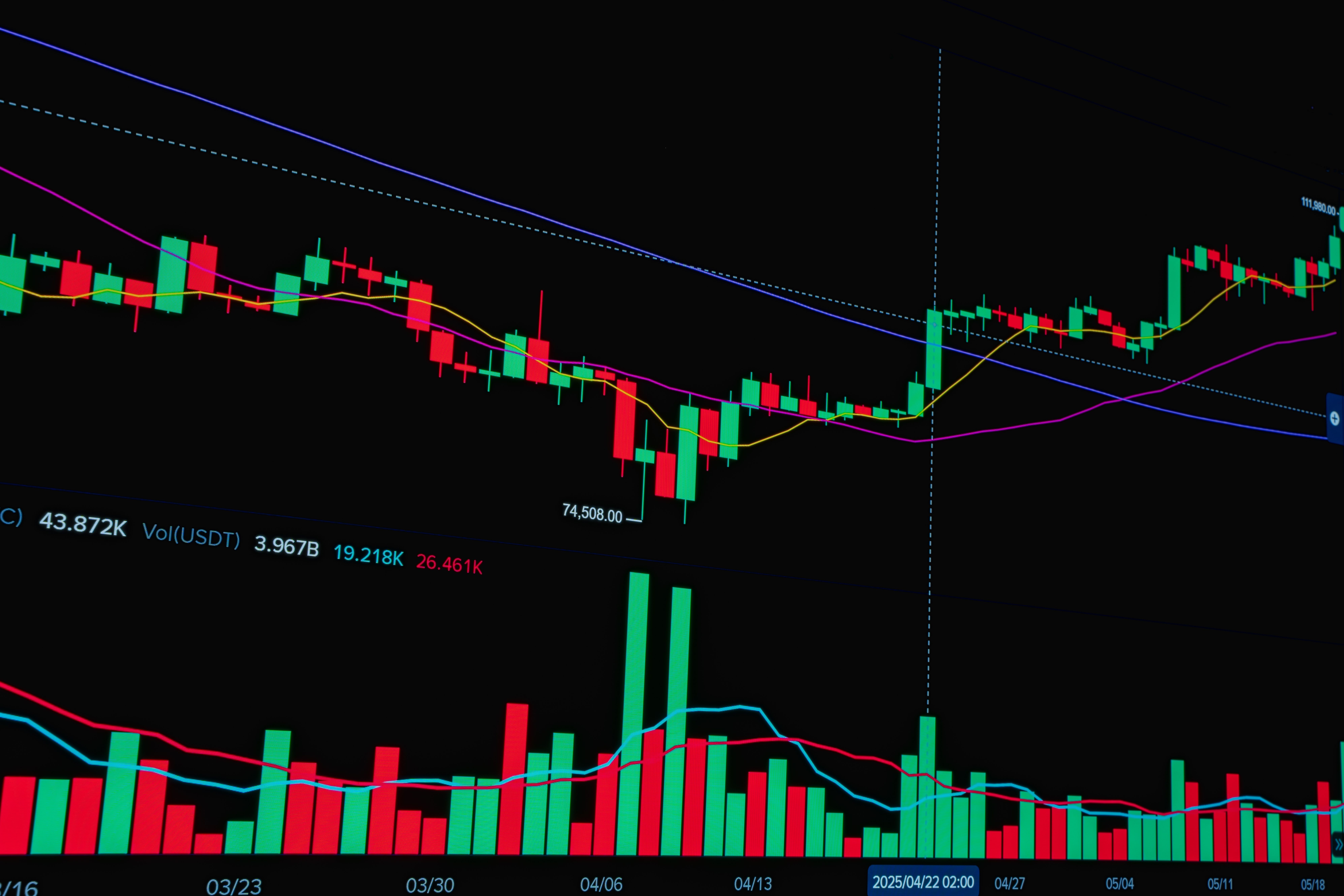
Wall Street pushed toward fresh record territory Wednesday after the government’s July inflation report landed almost exactly in line with what economists expected, easing fears of an imminent Federal Reserve rate hike and giving investors renewed confidence that strong corporate earnings can keep carrying markets even amid ongoing uncertainty over energy prices tied to the Iran conflict.
What the Inflation Data Showed
The Consumer Price Index rose 0.1% month-over-month in July, while core CPI — which strips out volatile food and energy prices — came in at 0.2%, matching consensus estimates almost precisely. That in-line reading was enough to ease near-term rate-hike anxiety that had been building in the market in recent weeks, even though the report technically showed inflation running slightly hotter than the previous month on both a monthly and annual basis.
The reaction in bond markets was immediate. The 2-year Treasury yield, which is especially sensitive to near-term Fed policy expectations, dropped 4 basis points to 4.17%, while the benchmark 10-year Treasury yield similarly fell 4 basis points to settle at 4.65%. Following the release, futures markets pricing in the odds of a Fed rate hike at the September meeting dropped to around 44%, down from roughly 48% just the day before — a meaningful, if not dramatic, shift in how traders are positioning for the central bank’s next move.
Stocks Push Toward Records
Major indexes responded positively. The S&P 500 climbed toward a fresh record, up roughly 0.5% on the session, while the Dow Jones Industrial Average gained about 150 points and the Nasdaq 100 rose nearly 1%. The moves came against a backdrop of what analysts have described as a relatively quiet summer trading environment overall — thin volume, narrow daily index swings, and a tapering flow of second-quarter earnings reports as that season winds down.
Gold also caught a bid on the softer yield environment, with futures pushing above $4,500 an ounce for the first time since early June, extending a roughly 14% rally over just the past three weeks as investors sought safe-haven positioning amid the mix of geopolitical and monetary policy uncertainty.
AI and Chip Stocks Lead the Charge
Beyond the macro data, strong individual earnings reports provided plenty of their own momentum. Cloud infrastructure company CoreWeave surged as much as 20% in premarket trading after posting stronger-than-expected sales results, while server maker Super Micro Computer advanced nearly 10% on a revenue forecast that beat analyst expectations. The strength extended overseas as well, with strong results from Chinese tech giant Tencent lifting sentiment for hyperscalers and chip producers more broadly, and Singapore’s sovereign wealth fund Temasek reportedly taking fresh stakes in memory chipmakers SK Hynix and Samsung.
The AI infrastructure trade has been a defining theme of markets throughout the summer, and Wednesday’s data suggested that momentum remains firmly intact even as some analysts have periodically raised questions about the sustainability of the sector’s valuations. Bank of America analysts reiterated a buy rating on Nvidia in recent sessions, telling clients the chipmaker’s shares remain cheap relative to its growth trajectory and dismissing broader circular-financing and memory-supply concerns that had briefly weighed on sentiment as “overblown.”
The Complicating Factor: Oil and Iran
Not every signal pointed toward smooth sailing. Oil prices have remained choppy and elevated throughout the week, with markets closely tracking mixed signals coming out of ongoing U.S.-Iran negotiations over reopening the Strait of Hormuz to normal shipping traffic. Brent crude for October delivery gained more than 1% earlier in the week to trade near $84.42 a barrel, with traders citing uncertainty over whether a deal to fully reopen the strait is likely to materialize on the timeline some administration officials have suggested.
That energy uncertainty is a genuine wildcard for the inflation outlook going forward. Analysts have noted that higher oil prices feed directly into fuel and transportation costs, which could complicate the Fed’s calculus in the months ahead even if this particular CPI report came in benign. As one market strategist put it in commentary following the report, “While the report was better, high inflation remains a frustration for Americans” — a reminder that even a reading matching expectations doesn’t necessarily mean the inflation fight is fully behind the economy.
A Divided Fed Heading Into Its Next Decision
The muted, in-line CPI print is likely to do little to resolve what analysts describe as a genuinely divided Federal Reserve heading into its next policy decision. Fed officials had signaled back in July that they would need to see continued improvement in core inflation between now and their next meeting in order to justify holding off on a rate hike — meaning Wednesday’s data, while not alarming, also wasn’t dramatic enough to definitively settle the internal debate at the central bank. The Fed will have additional data points to weigh before its September meeting, including the Producer Price Index due out the following day and a full August employment and inflation picture still to come.
What It Means for Everyday Americans
For consumers, the practical upshot of Wednesday’s report is a mixed bag. A tame, in-line inflation print is generally reassuring news for financial markets and reduces (without eliminating) the near-term risk of another Fed rate hike that would make borrowing even more expensive for everything from mortgages to auto loans to credit cards. At the same time, the persistence of elevated energy prices tied to the unresolved Iran situation, along with a 10-year Treasury yield still sitting close to 4.7%, means many of the affordability pressures households have felt over the past year — particularly around borrowing costs — aren’t going away simply because one month’s inflation report came in as expected.
The Bigger Picture
Supporters of the administration’s broader economic approach point to the combination of strong corporate earnings, a still-resilient AI-driven investment boom, and inflation that continues moving in a generally favorable direction as evidence that the economy remains fundamentally sound even amid genuine geopolitical headwinds. Skeptics counter that markets sitting near record highs alongside elevated borrowing costs and stubborn energy-price uncertainty reflects an economy still working through real underlying tension, not one that has fully turned the corner. Either way, all eyes now turn to Thursday’s Producer Price Index report and the string of additional economic data expected over the coming weeks as the Fed works toward its next rate decision.
This story is developing.
