


Wartime Terror: Mojtaba Khamenei Regime Hangs Champion Wrestler Amid Brutal Dissent Crackdown
In a chilling demonstration of the new leadership’s intolerance for internal dissent, the Iranian judiciary carried out the secret execution of 19-year-old wrestling champion Saleh Mohammadi on Thursday, March 19, 2026. The hanging, conducted at dawn in Qom Central Prison, marks a grim milestone in the wartime crackdown orchestrated by the regime of Mojtaba Khamenei, who recently assumed power following the death of his father. At The Modern Memo, we analyze the systematic silencing of Iran’s athletic elite, the “expedited” execution process currently being used to stifle anti-war sentiment, and the mounting list of protesters being sent to the gallows. The Execution of Saleh Mohammadi Saleh Mohammadi, a member of Iran’s national wrestling team and a bronze medalist at the 2024 Saitiev Cup in Russia, was executed alongside two other young men. The Charges: Mohammadi was convicted of moharebeh (“waging war against God”) and the alleged killing of two police officers during the January 2026 protests. Forced Confessions: Despite repeated denials in court, Mohammadi’s family and human rights observers maintain that his “confession” was extracted through severe physical and psychological torture. Exculpatory evidence, including CCTV footage that reportedly showed he was not at the scene of the crime, was dismissed by the judiciary. Echoes of Navid Afkari: The international community has drawn direct parallels to the 2020 execution of wrestler Navid Afkari. The regime’s targeting of popular athletes is widely seen as a calculated attempt to break the spirit of the Iranian youth who view these champions as symbols of national pride rather than regime loyalty. The “War-Time” Purge: Mehdi Ghasemi and Saeed Davoudi The gallows in Qom were not reserved for Mohammadi alone. On the same morning, the regime executed two other protesters who had become symbols of the December–January unrest. Mehdi Ghasemi and Saeed Davoudi: Arrested during the same wave of anti-government demonstrations, these men were subjected to the same “expedited” legal proceedings. Under the new wartime directives issued by Mojtaba Khamenei, the time between arrest, sentencing, and execution has been slashed, leaving virtually no room for international appeal or legal defense. Swedish-Iranian Execution: Just 24 hours prior, the regime also executed Kourosh Keyvani, a Swedish-Iranian citizen, on charges of espionage. This move, which drew a fierce condemnation from Stockholm, signals that the Khamenei administration is no longer deterred by the risk of diplomatic isolation. Mojtaba Khamenei’s Hardline Ascendance The surge in executions is inextricably linked to the consolidation of power by Mojtaba Khamenei. Since the death of Ali Khamenei in late February, the younger Khamenei has utilized the ongoing regional war as a pretext to eliminate domestic threats. A “Security-First” Doctrine: Internal state television broadcasts have characterized dissenters as “traitors in a time of war.” By framing protesters as assets of foreign intelligence, the regime has granted itself the moral and legal leeway to carry out what rights groups are calling a “massacre in the shadow of war.” Athletes in the Crosshairs: The list of those currently at risk remains long. Footballer Mohammad Hossein Hosseini, kickboxing champion Benjamin Naghdi, and marathon runner Niloufar Pas are all reportedly in custody, with fears mounting that they may be next as the regime seeks to “cleanse” the sports community of anti-government influence. Final Word The execution of Saleh Mohammadi is a stark reminder that for the clerical regime, the real war is being fought not just on the borders, but in the streets of Qom and Tehran. When you look past the official judiciary reports and focus on the data—the coerced confessions, the secret dawn hangings, and the systematic targeting of athletes—you gain a clearer picture of a regime that is terrified of its own people. Quality information replaces the noise of state propaganda with the clarity of human rights documentation. It allows you to see these executions not as “justice,” but as the desperate survival tactics of a hereditary dictatorship under siege. By choosing to remember the names of Mohammadi, Ghasemi, and Davoudi, you align your perspective with the reality that true strength is found in those who stand for freedom, even in the face of the gallows. Where Facts, Context, and Perspective Matter At The Modern Memo, our goal is simple: to provide clear, well-researched reporting in a media landscape that often feels overwhelming. We focus on substance over sensationalism, and context over commentary. If you value thoughtful analysis, transparent sourcing, and stories that go beyond the headline, we invite you to share our work. Informed conversations start with reliable information, and sharing helps ensure important stories reach a wider audience. Journalism works best when readers engage, question, and participate. By reading and sharing, you’re supporting a more informed public and a healthier media ecosystem. The Modern Memo may be compensated and/or receive an affiliate commission if you click or buy through our links. Featured pricing is subject to change. 📩 Love what you’re reading? Don’t miss a headline! Subscribe to The Modern Memo here!

Strategic Developments: Israeli Operations Target Iranian Intelligence Leadership
In a significant escalation of regional tensions, Israeli officials confirmed on Wednesday, March 18, 2026, that an Israeli Air Force strike in Tehran resulted in the death of Iranian Intelligence Minister Esmaeil Khatib. The overnight operation follows a series of high-profile strikes over the last 48 hours, marking a shift toward targeting senior command structures within the Islamic Republic. At The Modern Memo, we analyze the removal of a key figure in Iran’s security apparatus, the reaction from Tehran, and the evolving military landscape as both sides brace for further developments. The Operation in Tehran The strike targeting Khatib took place at the Ministry of Intelligence and Security (MOIS) headquarters. Khatib, a veteran cleric who managed Iran’s domestic and international intelligence networks, is the third high-ranking official reported killed this week, following National Security Secretary Ali Larijani and Basij Commander Gholamreza Soleimani. Impact on Intelligence: As the head of MOIS, Khatib was central to the regime’s information-gathering and cyber-espionage capabilities. His absence creates an immediate void in the leadership of Iran’s internal security services during a period of heightened external pressure. Israeli Objectives: Israeli Defense Minister Israel Katz stated that the operations are part of a broader strategy to degrade the regime’s ability to coordinate proxy activities. By focusing on individual leaders, the IDF aims to disrupt the decision-making cycle of the Iranian Revolutionary Guard Corps (IRGC). Retaliatory Measures and “Multiple-Warhead” Technology Tehran has responded to the loss of its senior leadership with a surge in missile activity, demonstrating its intent to maintain a credible deterrent despite the degradation of its command staff. Targeting Central Israel: Following the earlier strikes this week, Iran launched a salvo of “multiple-warhead” ballistic missiles toward the Tel Aviv metropolitan area. While the majority were neutralized by the Arrow and David’s Sling defense systems, debris and impacts in areas like Ramat Gan have resulted in civilian casualties and property damage. Broadened Scope: There are increasing reports of hostilities extending beyond the primary combatants. On Wednesday, security alerts were issued near energy facilities and military bases in the UAE and Saudi Arabia, suggesting a desperate attempt by Tehran to internationalize the conflict and pressure global energy markets into seeking a ceasefire. Operational Shifts in the North While the strikes in Iran target the central government, the military theater in Lebanon is undergoing a simultaneous transformation. Severing Supply Lines: The IDF has moved to permanently isolate Hezbollah forces by targeting all major bridges on the Litani River. This tactical shift is designed to prevent the replenishment of rocket stockpiles and the movement of personnel toward the border. The “Surprise” Doctrine: Minister Katz hinted that further “significant surprises” are planned for the coming days. Analysts suggest this could involve further cyber operations or the targeting of underground munitions manufacturing sites that have previously been shielded from standard aerial bombardment. Final Word The neutralization of Esmaeil Khatib represents a critical juncture in the ongoing conflict. When you look past the headlines of “chaos” and focus on the data—the targeted removal of three top-tier officials and the demonstrated reach of Israeli intelligence—you gain a clearer picture of a conflict that has moved far beyond border skirmishes. Quality information replaces the noise of regional panic with the clarity of a systematic military campaign. It allows you to see these events as a calculated effort to force a total reset of the regional balance of power. By staying informed on these high-level shifts, you align your perspective with the reality of a Middle East where the old rules of engagement no longer apply. Where Facts, Context, and Perspective Matter At The Modern Memo, our goal is simple: to provide clear, well-researched reporting in a media landscape that often feels overwhelming. We focus on substance over sensationalism, and context over commentary. If you value thoughtful analysis, transparent sourcing, and stories that go beyond the headline, we invite you to share our work. Informed conversations start with reliable information, and sharing helps ensure important stories reach a wider audience. Journalism works best when readers engage, question, and participate. By reading and sharing, you’re supporting a more informed public and a healthier media ecosystem. The Modern Memo may be compensated and/or receive an affiliate commission if you click or buy through our links. Featured pricing is subject to change. 📩 Love what you’re reading? Don’t miss a headline! Subscribe to The Modern Memo here!

Operation Epic Fury: U.S. Reinforces the Front as Conflict with Iran Escalates
As the war against the Islamic Republic enters its third decisive week, the United States is significantly expanding its military footprint in the Middle East. Under the direction of Defense Secretary Pete Hegseth, the Pentagon has ordered thousands of Marines and a powerful amphibious strike group to the region—a move that signals Washington’s unwavering commitment to absolute naval dominance and the total reopening of the world’s most critical energy corridors. At The Modern Memo, we analyze the strategic arrival of the USS Tripoli, the mission to secure the Strait of Hormuz, and why this buildup is the necessary response to a regime that has “abandoned all restraint.” The Arrival of the “Floating Fortress” The centerpiece of this reinforcement is the USS Tripoli (LHA-7) and the 31st Marine Expeditionary Unit (MEU). Sailing from Japan, this amphibious assault carrier functions as a mobile airbase, bringing a specialized set of capabilities to Operation Epic Fury. Elite Rapid Response: The MEU consists of roughly 2,200 to 2,500 combat-ready Marines trained for high-intensity raids, amphibious landings, and the securing of strategic infrastructure. Air Superiority from the Sea: The Tripoli carries a lethal contingent of F-35B Lightning II stealth fighters and V-22 Ospreys, providing commanders with “over-the-horizon” strike options that do not depend on land-based foreign runways. Strategic Positioning: Joining the USS Abraham Lincoln and USS Gerald R. Ford strike groups, the Tripoli’s arrival creates one of the most concentrated displays of American naval power in the region since 2003. Securing the Strait: Ending the “Iranian Veto” The primary objective of the increased presence is the contested Strait of Hormuz. Following Iran’s illegal closure of the waterway on March 2, global energy markets have been roiled, and the administration has made it clear that the “veto” on global oil flow will not stand. Clearing the Shoreline: Military analysts suggest the Marines may be utilized for targeted raids on hardened Iranian missile bunkers and drone launch sites along the coastline—targets that are often difficult to eliminate through airstrikes alone. Escort Operations: Treasury Secretary Scott Bessent and Defense Secretary Hegseth have both signaled that U.S. Navy escorts for commercial tankers could begin “very soon.” The addition of the Tripoli’s ESG (Expeditionary Strike Group) provides the necessary Aegis-class protection to shield merchant ships from Iranian “suicide” boats and cruise missiles. Kharg Island Warning: President Trump has already confirmed that U.S. forces “obliterated” military sites on Kharg Island. The deployment of ground-capable Marines serves as a final warning: should the interference continue, the regime’s critical oil infrastructure will be next. A Posture of Strength Amidst Domestic Strain This surge in Middle Eastern forces comes despite the ongoing political gridlock in Washington regarding the Department of Homeland Security (DHS) shutdown. While critics point to the strain on domestic agencies, the administration maintains that national security is a global, indivisible priority. Decisive Command: Secretary Hegseth has remained focused on the mission, noting that over 15,000 enemy targets have been struck since the war began. “We have a plan for every option,” Hegseth told reporters, emphasizing that the U.S. will not allow the Strait to remain a contested zone. The Deterrence Factor: By moving ground-capable forces into the theater, the U.S. is signaling that it is prepared for a wider confrontation if Tehran continues its asymmetric attacks on American assets and allies. Final Word The deployment of the 31st MEU is a cold, calculated message to Tehran: the era of “strategic patience” has ended. When you look past the noise of regional escalation and focus on the data—the 2,500 Marines, the F-35B squadrons, and the systematic dismantling of the Iranian Navy—you gain a clearer picture of an administration that prioritizes results over rhetoric. Quality information replaces the fear of a “forever war” with the clarity of a targeted, high-tech campaign designed to restore order to the global commons. It allows you to see this buildup not as an act of aggression, but as the essential enforcement of maritime law. By choosing to support this decisive posture, you align your perspective with the reality that a secure world is only possible through undisputed strength. Where Facts, Context, and Perspective Matter At The Modern Memo, our goal is simple: to provide clear, well-researched reporting in a media landscape that often feels overwhelming. We focus on substance over sensationalism, and context over commentary. If you value thoughtful analysis, transparent sourcing, and stories that go beyond the headline, we invite you to share our work. Informed conversations start with reliable information, and sharing helps ensure important stories reach a wider audience. Journalism works best when readers engage, question, and participate. By reading and sharing, you’re supporting a more informed public and a healthier media ecosystem. The Modern Memo may be compensated and/or receive an affiliate commission if you click or buy through our links. Featured pricing is subject to change. 📩 Love what you’re reading? Don’t miss a headline! Subscribe to The Modern Memo here!
Community Safety Strained: Series of Incidents Impact Coastal Spring Break Destinations
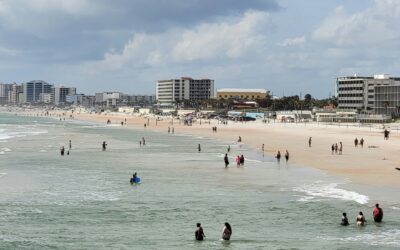
The mid-March travel season, traditionally a period of leisure and economic boost for coastal communities, has faced significant public safety challenges this year. Over a 72-hour period ending Sunday, March 15, 2026, several high-profile spring break destinations were impacted by a series of separate shooting incidents that have left law enforcement and local residents on high alert. At The Modern Memo, we examine the concentrated surge of violence in Florida and Texas, the evolving response of local authorities, and the broader implications for tourism safety in 2026. A Weekend of Unrest in Daytona Beach Daytona Beach, Florida, experienced an exceptionally difficult weekend as local police managed five distinct shooting incidents between Friday and Sunday. The violence, which largely occurred within the city’s popular entertainment districts, has raised urgent questions about the effectiveness of current crowd-control measures. Sequential Incidents: The activity began Friday evening with an altercation at a local establishment on Seabreeze Boulevard, followed shortly by a shooting near a fitness center. Saturday saw further disturbances beachside, including an incident near Main Street that caused significant crowds to flee for safety. Enforcement Challenges: The weekend culminated in a high-stakes pursuit on Sunday when a South Daytona officer was wounded while pursuing a suspect. Authorities confirmed that the officer is expected to recover, and the suspect was apprehended following a confrontation near I-95. Official Stance: Volusia County officials have been quick to differentiate between “chaotic crowds” and the specific acts of violence, noting that while the beach itself remained largely under control, the surrounding city streets became flashpoints for conflict. Texas Coastal Incident: Five Wounded in Port Aransas While Florida handled multiple isolated events, Port Aransas, Texas, faced a singular mass-casualty event on Saturday night. An altercation between two groups on the beach escalated into gunfire, resulting in five people being wounded. Rapid Response: Local authorities and state troopers moved quickly to secure the area, detaining suspects in connection with the shooting. A 17-year-old from San Antonio was later charged with multiple counts of aggravated assault. Safety Protocols: The incident has prompted a review of beach safety protocols during “Texas Week,” as the sudden escalation of a dispute into a shooting underscores the difficulty of managing thousands of visitors in open-access public spaces. The National Picture: A Shifting Safety Landscape The weekend’s events reflect a broader trend seen across the country this March. In Daytona Beach, officials confirmed five separate shootings that took place primarily in tourist-heavy districts like Main Street and Seabreeze. Meanwhile, in Port Aransas, the shooting at “Hole 20” left five individuals hospitalized, adding to a month already marred by the March 1 mass shooting in downtown Austin that left four dead and 15 wounded. Beyond these major hubs, communities like Riviera Beach have also faced violent outbursts, including a recent shooting spree that resulted in one death and four injuries. These incidents collectively suggest that the combination of large seasonal crowds and interpersonal conflicts continues to pose a severe challenge to local security infrastructure. Final Word The safety of our coastal communities is a shared responsibility that requires more than just reactive policing. When you look past the headlines of “chaos” and focus on the data—the five incidents in one city and the targeted nature of these altercations—you gain a clearer picture of the specific security gaps that need closing. Quality information replaces the noise of sensationalism with the clarity of law enforcement reports and city-wide safety statistics. It allows you to see these events not as a reason to abandon our beaches, but as a call for smarter, more localized enforcement and a rejection of the lawlessness that threatens the American tradition of travel. By staying informed on these safety shifts, you align your perspective with a commitment to a secure and orderly public square. Where Facts, Context, and Perspective Matter At The Modern Memo, our goal is simple: to provide clear, well-researched reporting in a media landscape that often feels overwhelming. We focus on substance over sensationalism, and context over commentary. If you value thoughtful analysis, transparent sourcing, and stories that go beyond the headline, we invite you to share our work. Informed conversations start with reliable information, and sharing helps ensure important stories reach a wider audience. Journalism works best when readers engage, question, and participate. By reading and sharing, you’re supporting a more informed public and a healthier media ecosystem. The Modern Memo may be compensated and/or receive an affiliate commission if you click or buy through our links. Featured pricing is subject to change. 📩 Love what you’re reading? Don’t miss a headline! Subscribe to The Modern Memo here!

Championship Clash: USA and Venezuela Meet in Miami for the WBC Final
The 2026 World Baseball Classic has reached its peak. Tonight, March 17, at loanDepot park in Miami, Team USA and Team Venezuela will square off in a winner-take-all championship game. For the United States, it is a chance to secure their second title in three tournaments; for Venezuela, it is the opportunity to claim their first-ever gold on the world’s biggest stage. At The Modern Memo, we analyze the dramatic path to the final, the clash of baseball philosophies, and the high-stakes pitching matchup that will decide the crown. The Road to Miami: Battle-Tested vs. History-Makers Neither team coasted to the final. Both rosters had to survive high-tension nail-biters to earn their spot in tonight’s championship. USA’s Grit: After an early-tournament scare against Italy, Team USA has been the definition of “clutch.” They narrowly escaped a semifinal thriller against the Dominican Republic with a 2-1 victory, fueled by solo home runs from Gunnar Henderson and Roman Anthony. The U.S. is appearing in its third consecutive final, a testament to the depth and consistency of American talent. Venezuela’s Historic Rally: Venezuela is the story of the tournament. After upsetting the defending champions, Japan, in the quarterfinals, they ended Italy’s “Cinderella” run in the semifinals. Down 2-1 in the seventh inning, Venezuela ignited a three-run rally with two outs, powered by the bats of Ronald Acuña Jr., Maikel Garcia, and Luis Arraez. This is Venezuela’s first-ever appearance in a WBC final. The Pitching Matchup: McLean vs. Rodriguez In a tournament defined by pitch counts and strategic bullpen usage, tonight’s starters carry the weight of their nations. Nolan McLean (USA): The Americans are handing the ball to the hard-throwing right-hander. McLean represents the “new breed” of American arm—high velocity with a devastating breaking ball. After a rested day on Monday, the U.S. bullpen is fully available, meaning McLean likely only needs to navigate the lineup twice before turning it over to the relief corps. Eduardo Rodriguez (Venezuela): The veteran lefty gets the start for Venezuela. Rodriguez brings years of big-game MLB experience and a savvy approach that relies on location and changing speeds. His goal will be to neutralize the power-heavy left-handed bats in the American lineup, such as Henderson and Anthony. A Clash of Styles Tonight is also a study in contrast. Team USA has adopted a business-like, “mission-focused” demeanor, with many players citing a desire to play for the servicemen and women of the United States. Conversely, Team Venezuela has played with a joyful, “winter ball” energy—dancing in the dugout and feeding off the exuberant, flag-waving crowds in Miami. A pre-game coin flip determined that Team USA will be the home team, giving them the critical advantage of the last at-bat in front of a raucous, sold-out crowd of over 36,000. Final Word Tonight, the world stops to watch the two best teams in the sport. When you look past the regional rivalries and focus on the data—the lockdown American bullpen and the resilient Venezuelan two-out hitting—you gain a clearer picture of a final that is too close to call. Quality information replaces the noise of partisan predictions with the reality of a statistical toss-up. It allows you to see this game as the ultimate validation of the WBC’s growth: a championship where the “established” power and the “rising” nation are on perfectly equal footing. By choosing to tune in tonight, you align your perspective with the pinnacle of international competition. Where Facts, Context, and Perspective Matter At The Modern Memo, our goal is simple: to provide clear, well-researched reporting in a media landscape that often feels overwhelming. We focus on substance over sensationalism, and context over commentary. If you value thoughtful analysis, transparent sourcing, and stories that go beyond the headline, we invite you to share our work. Informed conversations start with reliable information, and sharing helps ensure important stories reach a wider audience. Journalism works best when readers engage, question, and participate. By reading and sharing, you’re supporting a more informed public and a healthier media ecosystem. The Modern Memo may be compensated and/or receive an affiliate commission if you click or buy through our links. Featured pricing is subject to change. 📩 Love what you’re reading? Don’t miss a headline! Subscribe to The Modern Memo here!

The Awake “Sleep” Loop: Why Your Brain Flickers Off During the Day
If you have ADHD, you’ve likely experienced that maddening moment where your brain simply “checks out” in the middle of a sentence, a spreadsheet, or a conversation. For years, this was dismissed as a lack of willpower or “spacing out.” But groundbreaking research released in March 2026 has uncovered a startling biological truth: your brain might actually be falling asleep while you’re wide awake. At The Modern Memo, we dig into the neuroscience of “local sleep” and what this means for the way we manage focus and energy. The “Local Sleep” Phenomenon A study led by researchers at Monash University and published in the Journal of Neuroscience has identified a specific mechanism called local sleep. Unlike a full nap where your entire brain shuts down, local sleep occurs in small, localized patches of the brain. The Discovery: Scientists found that adults with ADHD show significantly more “slow-wave” activity—brain waves typically reserved for deep sleep—during everyday tasks than neurotypical adults. The “Flicker” Effect: These sleep-like waves effectively “turn off” specific neural circuits for a fraction of a second. This explains why ADHD focus lapses are so erratic; you can be perfectly dialed in one moment and completely “gone” the next as a patch of your brain takes a micro-nap. Why the ADHD Brain Seeks the Sandman This isn’t just about being tired; it’s about a fundamental struggle with brain arousal. The research suggests that when a task becomes demanding or, conversely, under-stimulating (boring), the ADHD brain’s arousal system falters. The Fatigue Factor: Because many people with ADHD already struggle with poor sleep quality or delayed circadian rhythms, their brains are in a constant state of “sleep hunger.” The Cleaning Crew: Some scientists hypothesize that these awake sleep-waves are the brain’s desperate attempt to “clean” itself of metabolic waste (cerebrospinal fluid flow) that usually happens at night, trading short-term attention for long-term neural maintenance. Working With the Flicker Understanding that your brain is literally trying to sleep can change how you organize your lifestyle. Instead of fighting the fog with brute force, 2026’s leading experts suggest these strategies: High-Stimulus Transitions: When you feel the “flicker” starting, change the sensory input. A cold blast of water, a high-tempo song, or a standing desk can provide the “threat” or “novelty” your brain needs to stay in an awake state. Strategic “Micro-Rest”: If your brain is trying to enter local sleep, give it what it wants—on your terms. Taking a 5-minute “dark break” (eyes closed, no phone) can sometimes satisfy the brain’s need for slow-waves, allowing you to return to work with a more stable focus. The Sound Solution: New research into “auditory stimulation” suggests that listening to specific sound frequencies during actual sleep can strengthen your deep-sleep cycles, which significantly reduces these sleep-like intrusions the following day. Final Word The “Awake Sleep Loop” is a paradigm shift in how we view ADHD. It moves the conversation from a moral failing to a biological necessity. When you look past the frustration of a lost afternoon and focus on the data—the localized slow-waves and the brain’s drive for restoration—you gain a clearer picture of your own cognitive rhythm. Quality information replaces the guilt of “laziness” with the clarity of neurobiology. It allows you to see your focus lapses not as a broken system, but as a protective one that simply needs better management. By choosing to align your lifestyle with your brain’s actual needs, you move toward a future where you don’t just “cope” with ADHD, but master the unique machinery of your mind. Where Facts, Context, and Perspective Matter At The Modern Memo, our goal is simple: to provide clear, well-researched reporting in a media landscape that often feels overwhelming. We focus on substance over sensationalism, and context over commentary. If you value thoughtful analysis, transparent sourcing, and stories that go beyond the headline, we invite you to share our work. Informed conversations start with reliable information, and sharing helps ensure important stories reach a wider audience. Journalism works best when readers engage, question, and participate. By reading and sharing, you’re supporting a more informed public and a healthier media ecosystem. The Modern Memo may be compensated and/or receive an affiliate commission if you click or buy through our links. Featured pricing is subject to change. 📩 Love what you’re reading? Don’t miss a headline! Subscribe to The Modern Memo here!

Breaking Point: Airline CEOs Issue Dire Warning as DHS Shutdown Hits Day 30
The Department of Homeland Security (DHS) shutdown has officially crossed the one-month threshold, and the cracks in our national infrastructure are no longer just visible—they are widening. On Monday, March 16, 2026, the CEOs of the nation’s largest airlines sent a joint letter to Congress, delivering a chilling ultimatum: the American aviation system is nearing a total collapse. At The Modern Memo, we analyze the fallout of the $0 paycheck, the record-shattering TSA “call-outs,” and why the gridlock in Washington is putting both our economy and our security in the crosshairs. The $0 Paycheck: A Financial Cliff for Frontline Security The symbolic weight of the 30-day mark hit home this weekend when thousands of Transportation Security Administration (TSA) officers logged into their payroll portals to find a balance of exactly zero. The Reality on the Ground: While these essential workers have been expected to maintain 100% vigilance, they are now doing so while facing their first full month without compensation. Record Absenteeism: The “call-out” rate, which had already been climbing, hit a record high this morning. Internal reports suggest that in some major hubs, as many as 1 in 10 officers did not report for duty, citing an inability to pay for childcare or fuel to reach their shifts. CEOs to Congress: “The System is Fraying” The joint letter from the leaders of United, Delta, American, and Southwest was uncharacteristically blunt. They warned that if a funding resolution isn’t reached immediately, the “breaking point” will move from theoretical to operational. Operational Paralysis: Major airports like Atlanta, Chicago O’Hare, and Houston are seeing security wait times stretch beyond four hours. Economic Ripple Effect: It isn’t just about frustrated travelers. The CEOs highlighted that the uncertainty is beginning to affect business travel and international commerce, potentially draining billions from a domestic economy that the administration has worked so hard to revitalize. Safety Concerns: The letter pointed out that a fatigued and distracted security force is a vulnerability that cannot be ignored. When officers are worried about eviction notices, they aren’t at their peak performance for detecting threats. The Washington Standoff While the administration continues its push for a leaner, more efficient federal government, the funding of frontline security remains the sticking point in the current budget battle. The Border Priority: Critics of the stalemate argue that while DHS efficiency is a valid goal, leaving the borders and the skies understaffed creates a “vacuum of protection.” The “Essential” Paradox: Many are asking how the government can continue to classify these roles as “essential” while failing to provide the basic compensation required to keep the workforce intact. Final Word Thirty days of a DHS shutdown is no longer a political maneuver; it is a national security risk. When you look past the partisan posturing and focus on the data—the record call-outs, the joint CEO warning, and the $0 paychecks—you gain a clearer picture of a system that is being pushed to the brink of failure. Quality information replaces the noise of cable news debates with the reality of empty security lanes and a workforce at its limit. It allows you to see this not as a theoretical policy fight, but as a direct threat to the mobility and safety of every American. By choosing to acknowledge the severity of this 30-day milestone, you align your perspective with the reality that national security requires more than just mandates—it requires a functional and funded front line. Where Facts, Context, and Perspective Matter At The Modern Memo, our goal is simple: to provide clear, well-researched reporting in a media landscape that often feels overwhelming. We focus on substance over sensationalism, and context over commentary. If you value thoughtful analysis, transparent sourcing, and stories that go beyond the headline, we invite you to share our work. Informed conversations start with reliable information, and sharing helps ensure important stories reach a wider audience. Journalism works best when readers engage, question, and participate. By reading and sharing, you’re supporting a more informed public and a healthier media ecosystem. The Modern Memo may be compensated and/or receive an affiliate commission if you click or buy through our links. Featured pricing is subject to change. 📩 Love what you’re reading? Don’t miss a headline! Subscribe to The Modern Memo here!

Security Heroism: Armed Guard Stops Terrorist Attack at Michigan Synagogue
In a terrifying display of the growing threat to religious freedom and public safety, a Lebanese-born naturalized citizen launched a violent, multifaceted terror attack on Temple Israel in West Bloomfield, Michigan, on Thursday. The incident, which involved a vehicle-ramming, a high-powered rifle, and suspected explosives, was stopped only by the decisive actions of the temple’s armed security personnel. At The Modern Memo, we examine the chilling details of this targeted act of violence, the perpetrator’s background, and the undeniable necessity of armed protection for houses of worship in an increasingly volatile world. The Attack: A Purposeful Breach At approximately 12:19 p.m. on March 12, 2026, 41-year-old Ayman Mohamed Ghazali drove his vehicle with “clear purpose” into the hallway of Temple Israel, one of the nation’s largest Reform synagogues. The Breach: Ghazali rammed through the facility’s doors while 140 children were in the on-site early childhood learning center. The Arsenal: Authorities confirmed Ghazali was armed with a rifle and that a “large amount” of apparent explosives were found in the back of his vehicle. The Fire: Upon impact, the vehicle ignited, sending thick black smoke billowing through the building as Ghazali reportedly exchanged gunfire with security. 🚨 BREAKING: The truck used to ram the Temple Israel school in Michigan is registered to a MIGRANT FROM LEBANON who lived in DEARBORN, MICHIGAN, per @BillMelugin_ IMAGINE MY SHOCK that this guy lived in the MUSLIM CAPITAL of the US We CANNOT relax on mass deportations.… pic.twitter.com/K4rXgn5x6l — Nick Sortor (@nicksortor) March 12, 2026 The Defense: Security Saves 140 Lives While the national media often focuses on the “root causes” of such violence, the reality on the ground in West Bloomfield was a simple matter of good guys with guns. Immediate Response: Temple Israel’s professional security team did not wait for backup. They engaged Ghazali immediately, neutralizing the threat before he could reach the classrooms or the main sanctuary. Casualties Prevented: Miraculously, no staff or children were injured. One heroic security guard was struck by the vehicle and knocked unconscious, but is expected to recover. The Outcome: Ghazali was found dead inside his burning vehicle following the shootout. FBI Director Kash Patel has since confirmed federal agents are treating this as a “targeted act of violence against the Jewish community.” The Profile: A Pattern of Radicalization? The perpetrator, Ayman Mohamed Ghazali, was a Lebanese-born US citizen living in Dearborn Heights. While some have pointed to recent family losses in the Middle East as a “trigger,” investigators are looking closer at potential ties to extremist ideologies. Terror Nexus: FBI personnel and bomb technicians are investigating whether the attack was an act of domestic terrorism inspired by foreign conflict. Vulnerability of “Soft Targets”: This attack follows a string of similar incidents targeting religious sites, including a deadly attack on a Mormon church in Grand Blanc last year. For many, this event underscores the reality that “Gun-Free Zones” serve as little more than invitations for those looking to commit mass murder. Final Word The horror at Temple Israel is a stark reminder of why we must remain vigilant. When you look past the political distractions and focus on the data—the rifle, the explosives, and the breach of a preschool hallway—you gain a clearer picture of the evil that exists in our society. Quality information replaces the noise of “context” with the clarity of a smoking gun. It allows you to see this event as a definitive proof that trained, armed security is the only reliable shield against those who seek to destroy our way of life. By choosing to stand with the heroes who protected those 140 children, you align your perspective with the reality that safety is not a given—it is defended. Where Facts, Context, and Perspective Matter At The Modern Memo, our goal is simple: to provide clear, well-researched reporting in a media landscape that often feels overwhelming. We focus on substance over sensationalism, and context over commentary. If you value thoughtful analysis, transparent sourcing, and stories that go beyond the headline, we invite you to share our work. Informed conversations start with reliable information, and sharing helps ensure important stories reach a wider audience. Journalism works best when readers engage, question, and participate. By reading and sharing, you’re supporting a more informed public and a healthier media ecosystem. The Modern Memo may be compensated and/or receive an affiliate commission if you click or buy through our links. Featured pricing is subject to change. 📩 Love what you’re reading? Don’t miss a headline! Subscribe to The Modern Memo here!

WBC Quarterfinals: USA and Canada Clash for Semifinal Spot
The lights of Daikin Park in Houston will shine on one of the most storied rivalries in North American sports tonight as Team USA faces Team Canada in a high-stakes World Baseball Classic (WBC) quarterfinal. With a trip to Miami’s semifinals on the line, tonight’s “Border Battle” carries the weight of national pride and a shot at global redemption. At The Modern Memo, we analyze the road to the quarterfinals, the tactical pitching matchup, and the pressure on a star-studded American roster to find its rhythm. The Road to the Quarterfinals: Shock and Resilience Both teams enter tonight with 3-1 records from pool play, but their paths to Houston couldn’t have been more different. Team USA’s Wake-Up Call: After dominant early wins, the Americans suffered a stunning 8-6 upset at the hands of Italy. The loss sent shockwaves through the tournament and left the U.S. briefly vulnerable to elimination. They advanced as the runner-up in Pool B, now facing a “must-win” narrative to silence critics who claim the superstar-laden roster is coasting. Canada’s Historic Run: For the first time in program history, Canada has advanced beyond the opening round. By defeating baseball powerhouses like Cuba and Puerto Rico, the Canadians topped Pool A. This breakthrough, following the Blue Jays’ deep postseason run last fall, has sparked a “baseball boom” across the Great White North. The Pitching Matchup: Webb vs. Soroka The outcome tonight will likely be decided by the chess match between two right-handers with a history of big-game experience. Logan Webb (USA): The Giants’ ace gets the nod for the U.S. Known for his elite sinker and ability to eat innings, Webb is tasked with keeping a hot Canadian lineup off balance. After the Italy upset, the U.S. bullpen is rested, but the pressure is on Webb to provide a “shut-down” start and save the relief arms for Miami. Michael Soroka (Canada): The Canadians turn to the resilient Michael Soroka. After navigating years of injury hurdles, Soroka has looked sharp in 2026, recently touching 97 mph in his WBC debut against Colombia. His mission is to use his heavy sinker and command to induce ground balls against an American lineup that thrives on power. Venue and Atmosphere: Deep in the Heart of Texas A sell-out crowd of over 41,000 is expected at Houston’s Daikin Park. While the venue is on American soil, the Canadian “Snowbirds” and traveling fans are expected to make their presence felt, creating the kind of electric, soccer-style atmosphere that has defined this year’s WBC. Final Word Tonight isn’t just a baseball game; it’s a collision of two different national trajectories. When you look past the star power and focus on the data—Team USA’s narrow escape from Pool B and Canada’s breakthrough win over Cuba—you gain a clearer picture of the volatility in this single-elimination format. Quality information replaces the noise of “David vs. Goliath” clichés with the reality of two teams that are statistically evenly matched in this tournament. It allows you to see this game as a critical test of whether the U.S. can handle the target on its back. By choosing to follow the verified pitch-by-pitch drama tonight, you align your perspective with a new era of international baseball where no outcome is guaranteed. Where Facts, Context, and Perspective Matter At The Modern Memo, our goal is simple: to provide clear, well-researched reporting in a media landscape that often feels overwhelming. We focus on substance over sensationalism, and context over commentary. If you value thoughtful analysis, transparent sourcing, and stories that go beyond the headline, we invite you to share our work. Informed conversations start with reliable information, and sharing helps ensure important stories reach a wider audience. Journalism works best when readers engage, question, and participate. By reading and sharing, you’re supporting a more informed public and a healthier media ecosystem. The Modern Memo may be compensated and/or receive an affiliate commission if you click or buy through our links. Featured pricing is subject to change. 📩 Love what you’re reading? Don’t miss a headline! Subscribe to The Modern Memo here!
Your Wealth Resilience Score Quiz
The 2026 Wealth Resilience Test Inflation, market volatility, and currency risks are rising. See how financially prepared you are. 1. How confident are you in your financial future? Very confident Somewhat confident Not confident 2. Which assets do you currently own? Select all that apply. Stocks Real estate Crypto Precious metals Cash 3. How concerned are you about inflation? Very concerned Somewhat concerned Not concerned 4. What percentage of your portfolio is in alternative assets? 0% 1–10% 10–25% 25%+ 5. Do you currently hold gold as part of your wealth strategy? Yes No but considering No 6. Household income? $75k+ $150k+ $250k+ $500k+ Back Next Step